Results by title
122 books match the query 'Business Aspects' and 20 start with t
Talking Art
The Culture of Practice and the Practice of Culture in MFA EducationGary Alan Fine
University of Chicago Press, 2018
Tell Tchaikovsky the News
Rock 'n' Roll, the Labor Question, and the Musicians' Union, 1942-1968Michael James Roberts
Duke University Press, 2014

The Art Rules
Wisdom and Guidance from Art World ExpertsPaul Klein
Intellect Books, 2015
Based on his many years in both the art world as a gallery owner and educator, The Art Rules is a practical, operational guide for visual artists that demystifies the art world and empowers practitioners to find success on their own terms. Bringing together the personal experiences of hundreds of major art world leaders, Klein chronicles their success, their staying power, their interests, and their passions. Filling a major void, The Art Rules gives practitioners the tools they need to realize their potential. Ultimately, Klein shows, success is not particularly complicated, but it is rarely taught, shared, or demonstrated for the visual artist. This book does precisely that.
The Business of Being a Writer
Jane Friedman
University of Chicago Press, 2018
The Business of Being a Writer offers the business education writers need but so rarely receive. It is meant for early-career writers looking to develop a realistic set of expectations about making money from their work or for working writers who want a better understanding of the industry. Writers will gain a comprehensive picture of how the publishing world works—from queries and agents to blogging and advertising—and will learn how they can best position themselves for success over the long term.
Jane Friedman has more than twenty years of experience in the publishing industry, with an emphasis on digital media strategy for authors and publishers. She is encouraging without sugarcoating, blending years of research with practical advice that will help writers market themselves and maximize their writing-related income. It will leave them empowered, confident, and ready to turn their craft into a career.
The Business of Being a Writer, Second Edition
Jane Friedman
University of Chicago Press, 2025
Writers talk about their work in many ways: as an art, as a calling, as a lifestyle. Too often missing from these conversations is the fact that writing is also a business, and those who want to make a living from their writing must understand the basic business principles underlying the industry. The Business of Being a Writer offers the business education writers need but so rarely receive.
Jane Friedman is one of today’s leading experts on the publishing industry. Through her website, social media presence, online courses, email newsletters, and other media, she helps writers understand how to navigate the industry with confidence and intentionality. This book advises writers on how to build a platform in a way that aligns with their values, how to spot critical mindset issues that might sabotage their efforts before they even begin, how to publish strategically, and what it means to diversify income streams beyond book sales. For this second edition, Friedman has updated every topic to reflect how the industry has evolved over the past half decade. New features include a section on business and legal issues commonly faced by writers, exercises at the end of each chapter, and a wealth of sample materials posted on a companion website.
Reaching beyond the mechanical aspects of publishing, The Business of Being a Writer will help both new and experienced writers approach their careers with the same creative spirit as their writing. Friedman is encouraging without sugarcoating reality, blending years of research with practical advice that will help writers market themselves and maximize their writing-related income. Her book will leave them empowered, confident, and ready to turn their craft into a sustainable career.

The Business of Professional Sports
Edited by Paul D. Staudohar and James A. Mangan
University of Illinois Press, 1991
Beyond the highly publicized heroics and foibles of players and teams, when the grandstands are empty and the scoreboards dark, there is a world of sport about which little is known by even the most ardent fan. It is the business world of sport; it is characterized by a thirst for power and money, and its players are just as active as those on the professional teams they oversee. In this collection, some of the best scholars in the field use examples from baseball, football, basketball, and hockey to illuminate the significant economic, legal, social, and historic aspects of the business of professional sports.
Contributors: Dennis A. Ahlburg, Rob B. Beamish, Joan M. Chandler, James B. Dworkin, Lawrence M. Kahn, Charles P. Korr, John J. MacAloon, David Mills, Roger G. Noll, Steven A. Reiss, Gary R. Roberts, Stephen F. Ross, Peter D. Sherer, Leigh Steinberg, and David G. Voigt,
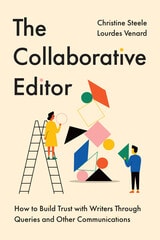
The Collaborative Editor
How to Build Trust with Writers Through Queries and Other CommunicationsChristine Steele and Lourdes Venard
University of Chicago Press, 0
Discover the techniques and tools for building a successful editor-writer relationship.
Becoming an effective editor involves not only working proficiently with words but also learning to forge successful working relationships with the people responsible for those words. Yet this critical element of the profession is often treated as an afterthought. In this book, long-time editors Christine Steele and Lourdes Venard offer strategies for approaching the editor-writer relationship in a spirit of collaboration and trust.
The Collaborative Editor moves beyond the red pen to explore editing as a creative partnership. It teaches editors how to communicate clearly and confidently, how to listen deeply to the writer, and how to thoughtfully ask questions. By prioritizing empathy and communication, editors can build trust with writers and strip away the adversarial tension that can, at times, characterize the feedback process. With advice based on their own years of experience and drawing from interviews with a wide range of editorial professionals, Steele and Venard begin by establishing what an ideal editor-writer relationship looks like in different settings, whether freelance developmental editing for a publishing house, copyediting in a corporate setting, or other scenarios in journalism, academic publishing, and other fields. They also discuss the elements of effective feedback and how to honor cultural and contextual sensitivity in a writer’s work. Several chapters concern querying, including specific examples and suggestions. The final part of the book covers tools to help editors communicate better with writers—including generative AI—and mental health and well-being practices that support both writers and editors.
Whether you are a beginning editor or a seasoned professional, this book will help you transform your workflow from a transactional service into a true collaboration.
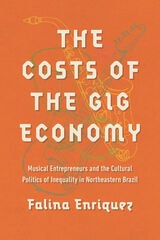
The Costs of the Gig Economy
Musical Entrepreneurs and the Cultural Politics of Inequality in Northeastern BrazilFalina Enriquez
University of Illinois Press, 2022
Drawing on years of fieldwork, Enriquez shows how forcing artists to adopt “neutral” market solutions reinforces, and generates, overlapping racial and class-based inequalities. Lacking the social and financial resources of their middle-class peers, working-class musicians find it difficult to uphold institutional goals of connecting the city’s cultural roots to global markets and consumers. Enriquez also links the artists’ situation to that of cultural and creative workers around the world. As she shows, musical sponsorship in Recife and the contemporary gig economy elsewhere employ processes that, far from being neutral, uphold governmental and corporate ideologies that produce social stratification.
Rich and vibrant, The Costs of the Gig Economy offers a rare English-language portrait of the changing musical culture in Recife.

The Creative Underclass
Youth, Race, and the Gentrifying CityTyler Denmead
Duke University Press, 2019
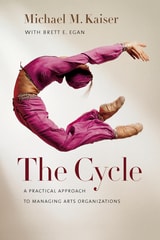
The Cycle
A Practical Approach to Managing Arts OrganizationsMichael M. Kaiser and Brett E. Egan
Brandeis University Press, 2013
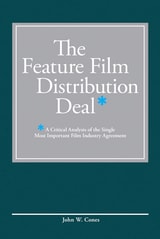
The Feature Film Distribution Deal
A Critical Analysis of the Single Most Important Film Industry AgreementJohn W. Cones
Southern Illinois University Press, 1997
John W. Cones, whose real goal is to stimulate a long-term film industry reform movement, shows how the financial control of the film industry in the hands of the major studios and distributors actually translates into creative control of the industry.
Cones discusses the pros and cons of the debate relating to the industry’s so-called net profit problem and the way in which the distribution deal plays an integral part in that problem. He then breaks down five major film finance/distribution scenarios, explaining various distribution deals and suggesting ways of negotiating distribution.
Critically examining the specific terms of the distribution deal itself, Cones covers gross receipts exclusions, distributor fees, and distribution expenses. He also investigates the various forms of interest, issues of production costs, matters of creative control, and general contractual provisions.
For handy reference, Cones includes an extensive checklist for negotiating any feature film distribution deal. The list deals with distribution fees, distribution expenses, interest, production costs, creative control issues, general contractual provisions, distributor commitments, and the limits of negotiating. His nine appendixes present a "Motion Picture Industry Overview," "Profit Participation Audit Firms," "ADI (Top 50) Market Rankings," an "AFMA Member List, 1992–1993," a "Production-Financing/Distribution Agreement," a "Negative Pickup Distribution Agreement," a "Distribution Rights Acquisition Agreement," a "Distribution Agreement (Rent-a-Distributor Deal)," and a "Foreign Distribution Agreement."
Cones wrote this book for independent producers, executive and associate producers and their representatives, directors, actors, screenwriters, members of talent guilds, distributors, and entertainment, antitrust, and securities attorneys. Securities issuers and dealers, investment bankers, and money finders, investors, and financiers of every sort also will be interested. In addition, Cones suggests and hopes that the book will interest "Congress, their research staff, government regulators at the Internal Revenue Service, the Securities and Exchange Commission, the Federal Trade Commission, and law enforcement officials such as the Los Angeles District Attorney and the U.S. Justice Department."
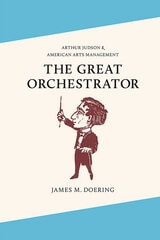
The Great Orchestrator
Arthur Judson and American Arts ManagementJames M. Doering
University of Illinois Press, 2013
The Hours Are Long, But the Pay Is Low
A Curious Life in Independent MusicRob Miller
University of Illinois Press, 2025
Rob Miller arrived in Chicago wanting to escape the music industry. In short order, he co-founded a trailblazing record label revered for its artist-first approach and punk take on country, roots, and so much else. Miller’s gonzo memoir follows a music fan’s odyssey through a singular account of Bloodshot Records, the Chicago scene, and thirty years as part of a community sustaining independent artists and businesses.
Hilarious and hundred-proof, The Hours Are Long, But the Pay Is Low delivers a warm-hearted yet clear-eyed account of loving and living music on the edge, in the trenches, and without apologies.
The Mouse Machine
Disney and TechnologyJ. P. Telotte
University of Illinois Press, 2007
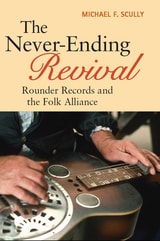
The Never-Ending Revival
Rounder Records and the Folk AllianceMichael F. Scully
University of Illinois Press, 2013
In recent years, there has been an upsurge in interest in "roots music" and "world music," popular forms that fuse contemporary sounds with traditional vernacular styles. In the 1950s and 1960s, the music industry characterized similar sounds simply as "folk music." Focusing on such music since the 1950s, The Never-Ending Revival: Rounder Records and the Folk Alliance analyzes the intrinsic contradictions of a commercialized folk culture. Both Rounder Records and the North American Folk Music and Dance Alliance have sought to make folk music widely available, while simultaneously respecting its defining traditions and unique community atmosphere. By tracing the histories of these organizations, Michael F. Scully examines the ongoing controversy surrounding the profitability of folk music. He explores the lively debates about the difficulty of making commercially accessible music, honoring tradition, and remaining artistically relevant, all without "selling out."
In the late 1950s through the 1960s, the folk music revival pervaded the mainstream music industry, with artists such as Bob Dylan and Joan Baez singing historically or politically informed ballads based on musical forms from Appalachia and the South. In the twenty-first century, the revival continues, and it includes a variety of music derived from Cajun, African American, and Mexican traditions, among many others. Even though the mainstream music industry and media largely ignore the term "folk music," a strong allure based on nostalgia, the desire for community, and a sense of exclusiveness augments an enthusiastic following connected by word-of-mouth, numerous festivals, and the Internet. There are more folk festivals now than there were during the original boom of the 1960s, suggesting that music artists, agents, and record label representatives are striking a successful balance between tradition and profitability. Scully combines rich interviews of music executives and practicing folk musicians with valuable personal experience to reveal how this American subculture remains in a "never-ending revival" based on fluid definitions of folk and folk music.
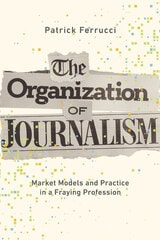
The Organization of Journalism
Market Models and Practice in a Fraying ProfessionPatrick Ferrucci
University of Illinois Press, 2024
Using rich interviews and participant observation, Patrick Ferrucci examines institutions with funding mechanisms that range from traditional mogul ownership and online-only nonprofits to staff-owned cooperatives and hedge fund control. The variations in market models have frayed the tenets of professionalization, with unique work cultures emerging from each organization’s focus on its mission and the implantation of its own processes and ethical guidelines. As a result, the field of American journalism no longer shares uniform newsgathering practices and a common identity, a break with the past that affects what information we consume today and what the press will become tomorrow.
An inside look at a fracturing profession, The Organization of Journalism illuminates the institution’s expanding impact on newsgathering and the people who practice it.
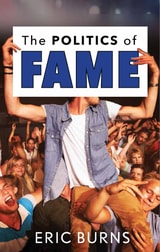
The Politics of Fame
Burns, Eric
Rutgers University Press, 2019
In search of answers, cultural historian Eric Burns delves deep into the biographies of some of the most famous figures in American history, from Benjamin Franklin to Fanny Kemble, Elvis Presley to Gene Tierney, and Michael Jordan to Oprah Winfrey. Through these case studies, he considers the evolution of celebrity throughout the ages. More controversially, he questions the very status of fame in the twenty-first century, an era in which thousands of minor celebrities have seen their fifteen minutes in the spotlight.
The Politics of Fame is a provocative and entertaining look at the lives and afterlives of America’s most beloved celebrities as well as the mad devotion they inspired. It raises important questions about what celebrity worship reveals about the worshippers—and about the state of the nation itself
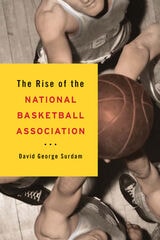
The Rise of the National Basketball Association
david G. Surdam
University of Illinois Press, 2012
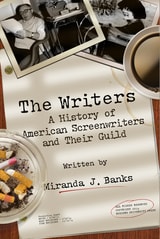
The Writers
A History of American Screenwriters and Their GuildBanks, Miranda J
Rutgers University Press, 2016

Ticket Operations and Sales Management in Sport
James T. Reese
FiT Publishing, 2013
In one of the most current and comprehensive textbooks on the topic of ticket operations and sales management, James T. Reese and a collection of academicians and practitioners provide insight, practical tips, and first-hand accounts of what it takes to excel in this growing and ever-changing industry. Chapters cover topics such as customer service, sales, pricing, distribution, the secondary ticket market, and new ticketing technology.
"This book is the 'how to' book on ticket operations and sales management. Students utilizing this book will be prepared to sell and operate one of the most important revenue streams in sport ticketing."
—From the foreword by Rick Nichols, owner of Admissions Sport Consulting