Results by title
69 books match the query 'Capital' and 14 start with t
The Body as Capital
Masculinities in Contemporary Latin American FictionVinodh Venkatesh
University of Arizona Press, 2015
Addressing this, Vinodh Venkatesh uses contemporary Latin American literature to examine how masculinity is constructed and conceived. The Body as Capital centers socioeconomic and political concerns, anxieties, and paradigms on the male anatomy and on the matrices of masculinities presented in fiction. Developing concepts such as the “market of masculinities” and the “transnational theater of masculinities,” the author explains how contemporary fiction centers the male body and masculine expressions as key components in the relationship between culture, space, and global tensile forces.
Venkatesh includes novels by canonical and newer writers from Mexico, Central America, the Caribbean, Peru, and Chile. He focuses on texts produced after 1990, coinciding with what has popularly been termed the neoliberal experiment. In addition to probing well-known novels such as La fiesta del Chivo and La mujer habitada and their accompanying body of criticism, The Body as Capital defines and examines several masculine tropes that will be of interest to scholars of contemporary Latin American literature and gender studies. Ultimately, Venkatesh argues for a more holistic approximation of discursive gender that will feed into other angles of criticism, forging a new path in the critical debates over gender and sexuality in Latin American writing.
The Capitals of Capital
The Rise and Fall of Trading Floors, 1960–2001Aaron Shkuda
University of Chicago Press, 0
How the transition from physical trading floors to automated ones changed central business districts and urban policy.
Wall Street is defined by the New York Stock Exchange’s headquarters, while the Chicago Board of Trade’s iconic building anchors LaSalle Street in the city’s Loop. These buildings have not moved in a century, but their trading floors have experienced dramatic changes over the past sixty years. While thousands of commuters still work in and around Wall Street, most stocks are traded via computer. Not even the NYSE’s servers are onsite.
The Capitals of Capital charts the rise and dematerialization of stock-exchange trading floors in New York and Chicago, demonstrating how the finance industry has long been entwined with urban planning and development. Aaron Shkuda shows in detail how the industry came to dominate cities both economically and spatially, tracing the demands of firms like Chase Manhattan Bank and the Chicago Mercantile Exchange for larger central facilities, better tax breaks, and other accommodations—until technological developments shifted their priorities from spaces for people to capacity for machines. Shkuda’s history of trading floors reveals financial institutions as change agents in urbanism; through their evolving construction proposals, they forced elected officials, urban planners, architects, and voters to consider the value of trading floors, their significance to a city and its people, and what kind of resources they deserved. Today, as Wall Street towers are converted to apartments and server farms, The Capitals of Capital sheds light on the ever-shifting relationship between the finance industry and urban spaces.
The Conspiracy of Capital
Law, Violence, and American Popular Radicalism in the Age of MonopolyMichael Mark Cohen
University of Massachusetts Press, 2019
In this detailed cultural history, Michael Mark Cohen argues that a legal, ideological, and representational politics of conspiracy contributed to the formation of a genuinely revolutionary mass culture in the United States, starting with the 1886 Haymarket bombing. Drawing on a wealth of primary sources, The Conspiracy of Capital offers a new history of American radicalism and the alliance between the modern business corporation and national security state through a comprehensive reassessment of the role of conspiracy laws and conspiracy theories in American social movements.
The Displaced of Capital
Anne Winters
University of Chicago Press, 2004
The long-awaited follow-up to The Key to the City—a finalist for the National Book Critics Circle Award in 1986—Anne Winters's The Displaced of Capital emanates a quiet and authoritative passion for social justice, embodying the voice of a subtle, sophisticated conscience.
The "displaced" in the book's title refers to the poor, the homeless, and the disenfranchised who populate New York, the city that serves at once as gritty backdrop, city of dreams, and urban nightmare. Winters also addresses the culturally, ethnically, and emotionally excluded and, in these politically sensitive poems, writes without sentimentality of a cityscape of tenements and immigrants, offering her poetry as a testament to the lives of have-nots. In the central poem, Winters witnesses the relationship between two women of disparate social classes whose friendship represents the poet's political convictions. With poems both powerful and musical, The Displaced of Capital marks Anne Winters's triumphant return and assures her standing as an essential New York poet.
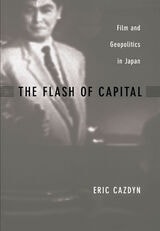
The Flash of Capital
Film and Geopolitics in JapanEric Cazdyn
Duke University Press, 2002
Cazdyn focuses on three key moments of historical contradiction: colonialism, post-war reconstruction, and globalization. Considering great classics of Japanese film, documentaries, works of science fiction, animation, and pornography, he brings to light cinematic attempts to come to terms with the tensions inherent in each historical moment—tensions between the colonizer and the colonized, between the individual and the collective, and between the national and the transnational. Paying close attention to political context, Cazdyn shows how formal inventions in the realms of acting, film history and theory, thematics, documentary filmmaking, and adaptation articulate a struggle to solve implacable historical problems. This innovative work of cultural history and criticism offers explanations of historical change that challenge conventional distinctions between the aesthetic and the geopolitical.
The Measurement of Capital
Edited by Dan Usher
University of Chicago Press, 1980
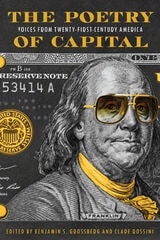
The Poetry of Capital
Voices from Twenty-First-Century AmericaEdited by Benjamin S. Grossberg and Clare Rossini
University of Wisconsin Press, 2021
Editors Benjamin S. Grossberg and Clare Rossini selected poems to reflect broad themes of labor, history and economic forces, social equity, and the environment. In addition, they asked each poet to provide a brief prose comment to introduce their work. Some give broad statements on the nature of wealth in America today; others are intimate, offering insight into how life experiences inform their writing; still others reflect on the art of poetry itself and its unique power to speak to economic pressures of the moment.
Contributors include Mary Jo Bang, Xochiquetzal Candelaria, Alan Chazaro, Mark Doty, Denise Duhamel, Tony Hoagland, Yusef Komunyakaa, Dorianne Laux, Kimiko Hahn, Sharon Olds, George Perreault, Robert Pinsky, Minnie Bruce Pratt, Afaa Michael Weaver, David Wojahn, and others.
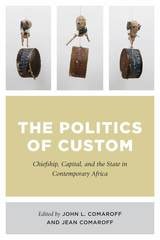
The Politics of Custom
Chiefship, Capital, and the State in Contemporary AfricaEdited by John L. Comaroff and Jean Comaroff
University of Chicago Press, 2018
This pathbreaking volume, edited by anthropologists John L. Comaroff and Jean Comaroff, explores the reasons behind the increasingly assertive politics of custom in many corners of Africa. Chiefs come in countless guises—from university professors through cosmopolitan businessmen to subsistence farmers–but, whatever else they do, they are a critical key to understanding the tenacious hold that “traditional” authority enjoys in the late modern world. Together the contributors explore this counterintuitive chapter in Africa’s history and, in so doing, place it within the broader world-making processes of the twenty-first century.
The Pure Theory of Capital
F. A. Hayek
University of Chicago Press, 2007
The Pure Theory of Capital, F. A. Hayek’s long-overlooked, little-understood volume, was his most detailed work in economic theory. Originally published in 1941 when fashionable economic thought had shifted to John Maynard Keynes, Hayek’s manifesto of capital theory is now available again for today’s students and economists to discover.
With a new introduction by Hayek expert Lawrence H. White, who firmly situates the book not only in historical and theoretical context but within Hayek’s own life and his struggle to complete the manuscript, this edition commemorates the celebrated scholar’s last major work in economics. Offering a detailed account of the equilibrium relationships between inputs and outputs in an economy, Hayek’s stated objective was to make capital theory—which had previously been devoted almost entirely to the explanation of interest rates—“useful for the analysis of the monetary phenomena of the real world.” His ambitious goal was nothing less than to develop a capital theory that could be fully integrated into the business cycle theory.
The Structure of World History
From Modes of Production to Modes of ExchangeKojin Karatani
Duke University Press, 2014
The Sublime Perversion of Capital
Marxist Theory and the Politics of History in Modern JapanGavin Walker
Duke University Press, 2016
The Taxation of Income from Business and Capital in Colombia
Charles E. McLure, Jr., John Mutti, Victor Thuronyi, and George R. Zodrow
Duke University Press, 1990
“[The book’s] most important contribution, however, is undoubtedly with respect to consumption taxes. No one, anywhere, has thought through with such care just how the so-called ‘simplified alternative tax’ (essentially a direct personal consumption tax combined with a cash-flow corporate tax) might work in the real world. Since such taxes are increasingly being considered—if not adopted—all over the world, in developing and developed countries alike, for this reason alone this book should be high on the reading list of all those concerned with the design and implementation of efficient and equitable direct tax systems.”—From the Foreword by Richard M. Bird
The Taxation of Income from Capital
A Comparative Study of the United States, the United Kingdom, Sweden and West GermanyMervyn A. King and Don Fullerton
University of Chicago Press, 1984
Theater of Capital
Modern Drama and Economic LifeAlisa Zhulina
Northwestern University Press, 2024
Emerging amid the turbulent rise of market finance and wider socioeconomic changes, modern drama enacted vital critiques of art and life under capitalism. Alisa Zhulina shows how fin-de-siècle playwrights such as Henrik Ibsen, August Strindberg, Anton Chekhov, George Bernard Shaw, and Gerhart Hauptmann interrogated the meaning of this newly coined economic concept. Acutely aware of their complicity in the system they sought to challenge, these playwrights staged economic questions as moral and political concerns, using their plays to explore the theories of Adam Smith, Karl Marx and Friedrich Engels, Max Weber, and others within the boundaries of bourgeois theater.
Theater of Capital: Modern Drama and Economic Life reveals the prescient and unsettling visions of life in a new financial and societal reality in now-canonical plays such as A Doll’s House, Miss Julie, and The Cherry Orchard, as well as in lesser-known and long-overlooked works. This wide-ranging study prompts us to reevaluate modern drama and its legacy for the urgent economic and political questions that haunt our present moment.