Results by title
59 books match the query 'Caribbean' and 8 start with t
Tempest In The Caribbean
Jonathan Goldberg
University of Minnesota Press, 2003
The Archaeology of Tibes
Life, Death, and Memory at an Early Ceremonial Center in the CaribbeanEdited by L. Antonio Curet and Lisa M. Stringer
University of Alabama Press, 2025
A collection of new essays that brings archaeological insights and discoveries at the Tibes Ceremonial Center up to date
The Archaeology of Tibes is a collection of essays offering a fresh analysis of this important ceremonial center. It brings new insights about social structure, illuminating the smaller-scale daily lives of ancient peoples rather than focusing on large-scale chiefdoms.
Tibes is the earliest known (ca. 400 to 1300 CE) ceremonial center in Puerto Rico. It has been the focus of one of the largest and longest-running archaeological programs in the Caribbean. Early researchers interpreted evidence in the area of a shift from dispersed villages to a ceremonial center as suggesting the development of social stratification and accumulation of power. Seen as the seat of an early chiefdom, Tibes served as a model applied broadly across the Greater Antilles.
New discoveries prompted archaeologists to question their original assumptions about ancient Puerto Rico, and later research failed to produce evidence of social stratification at Tibes. The Archaeology of Tibes therefore incorporates updated and wider perspectives on social formation. It considers agency, decisions, and events and the possibility of more than one form of social organization. It also presents a more accurate “humanized” past: the sociological meanings of that space and its significance for the people who created, used, and occupied it and who influenced rituals, social memory, and community.
Summarizing findings from excavations at Tibes after 2010, the collection also reviews the geoarchaeology of the site. Additional essays cover ceramic pastes, lithic production, faunal remains, coral, burials, and rock art. This work will engender discussion and future research by archaeologists across the Caribbean and beyond.
The Borders of America
Migration, Control, and Resistance Across Latin America and the CaribbeanSoledad Álvarez Velasco, Nicholas De Genova, Gustavo Dias, and Eduardo Domenech, editors
Duke University Press, 2026
Contributors. Soledad Álvarez Velasco, Tanya Basok, Janneth Clavijo, Nicholas De Genova, Gustavo Dias, Eduardo Domenech, Roberto Dufraix-Tapia, Jonathan Echeverri Zuluaga, Valentina Glockner Fagetti, Luin Goldring, Patricia Landolt, Carolina Moulin, Margarita Luz Núñez Chaim, Juan Ordóñez, Daniel Quinteros, Romina Ramos, Martha Rojas-Wiesner, Fabio Santos, Amarela Varela-Huerta, and Laura Velasco Ortiz
The Caribbean
A History of the Region and Its PeoplesEdited by Stephan Palmié and Francisco A. Scarano
University of Chicago Press, 2011
Combining fertile soils, vital trade routes, and a coveted strategic location, the islands and surrounding continental lowlands of the Caribbean were one of Europe’s earliest and most desirable colonial frontiers. The region was colonized over the course of five centuries by a revolving cast of Spanish, Dutch, French, and English forces, who imported first African slaves and later Asian indentured laborers to help realize the economic promise of sugar, coffee, and tobacco. The Caribbean: A History of the Region and Its Peoples offers an authoritative one-volume survey of this complex and fascinating region.
This groundbreaking work traces the Caribbean from its pre-Columbian state through European contact and colonialism to the rise of U.S. hegemony and the economic turbulence of the twenty-first century. The volume begins with a discussion of the region’s diverse geography and challenging ecology and features an in-depth look at the transatlantic slave trade, including slave culture, resistance, and ultimately emancipation. Later sections treat Caribbean nationalist movements for independence and struggles with dictatorship and socialism, along with intractable problems of poverty, economic stagnation, and migrancy.
Written by a distinguished group of contributors, The Caribbean is an accessible yet thorough introduction to the region’s tumultuous heritage which offers enough nuance to interest scholars across disciplines. In its breadth of coverage and depth of detail, it will be the definitive guide to the region for years to come.

The Convict and the Colonel
A Story of Colonialism and Resistance in the CaribbeanRichard Price
Duke University Press, 2006
In a stunning combination of scholarship and storytelling, the award-winning anthropologist Richard Price draws on long-term ethnography, archival documents, cinema and street theater, and Caribbean fiction and poetry to explore how one generation’s powerful historical metaphors could so quickly become the next generation’s trivial pursuit, how memories of oppression, inequality, and struggle could so easily become replaced by nostalgia, complicity, and celebration.
“A superb callaloo of a book. . . . Richard Price has a remarkable grasp of the literatures of the Caribbean, and draws on this resource to explore the underlying insanity of the colonial experience, as well as the bewildering complexities of the postcolonial world where memory is erased or invented according to the demands of a market modernity.”—George Lamming, author of The Pleasures of Exile
“By beautifully crafting elements as disparate as biographical data, sociological studies, literary sources, and archival documents, Richard Price’s research is more fascinating than a piece of fiction.”—Maryse Condé, author of I, Tituba, Black Witch of Salem
“Price does it again. Mixing eras, genres, and voices, he carries the reader through the contradictory streams of historical consciousness in the Caribbean island of Martinique. The result is as complex and as enticing as the sea it evokes.”—Michel-Rolph Trouillot, author of Silencing the Past
“Filled with insights that are at once theoretical, methodological, and ethnographic, The Convict and the Colonel is required reading for anyone interested in colonialism, memory, and contemporary Caribbean societies.”—Jennifer Cole, American Ethnologist

The Non-Independent Territories of the Caribbean and Pacific
Continuity or Change?Edited by Peter Clegg and David Killingray
University of London Press, 2012
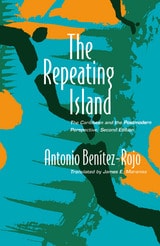
The Repeating Island
The Caribbean and the Postmodern PerspectiveAntonio Benitez-Rojo
Duke University Press, 1996
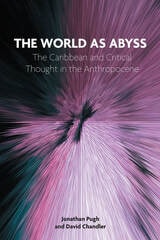
The World as Abyss
The Caribbean and Critical Thought in the AnthropoceneJonathan Pugh and David Chandler
University of Westminster Press, 2023
This book is about a distinctive ‘abyssal’ approach to the crisis of modernity. In this framing, influenced by contemporary critical Black studies, another understanding of the world of modernity is foregrounded – a world violently forged through the projects of Indigenous dispossession, chattel slavery and colonial world-making. Modern and colonial world-making violently forged the ‘human’ by dividing those with ontological security from those without, and by carving out the ‘world’ in a fixed grid of space and time, delineating a linear temporality of ‘progress’ and ‘development’. The distinctiveness of abyssal thought is that it inverts the stakes of critique and brings indeterminacy into the heart of ontological assumptions of a world of entities, essences, and universal determination. This is an approach that does not focus upon tropes of rescue and salvation but upon the generative power of negation. In doing so, it highlights how Caribbean experiences and writings have been drawn upon to provide an important and distinct perspective for critical thought.
"How is it that ontology has come to be seen as the antidote for modernity? While Foucault denigrated ontology as a mistaken and parochial exercise, contemporary social theory holds out the promise that new modes of planetary knowledge will save us from our own excesses. Drawing together long traditions in Caribbean scholarship with Afro-pessimist thought, Pugh and Chandler illustrate how the search for more emancipatory ontologies - relational ontologies, indigenous ontologies, non-human ontologies, etc. – not only misunderstands the problem of modernity but (more importantly) works to veil the negative force that marks both the limit and cause of all such knowledge practices: what they term the abyss. To engage in abyssal thought – as they lay out – is to inhabit a site of refusal: a determination not to be drawn into the lure of ontological ‘correction’ and to recognise that the practice of world making cannot not bear the imprint of colonial violence. Articulated in passionate declarative prose, these authors powerfully illuminate the trap of the emancipatory instinct and the promise of a deconstructive ethic." — Mitch Rose, Senior Lecturer in Human Geography, Aberystwyth University, UK
“A much-needed intellectual effort in the non-reductionist and non-essentialising style of Pugh and Chandler's previous book. The World as Abyss gives Caribbean thought and culture the place they deserve within critical theory and materialist studies.” — Mónica Fernández Jiménez, Valladolid University, Spain
“For some time now scholars have questioned the overly general assumptions about the ‘anthropos’ of the Anthropocene, but much work needs to be done to flesh out what a decolonized Anthropocene might be. Pugh and Chandler’s The World as Abyss provides an original, intriguing and compelling counterpoint to bland Anthropocene humanism (and posthumanism). This timely work explores the poetics of the Caribbean and provides a way to think about the Anthropocene and the future beyond the managerialism of the present. This book is essential reading for those working in the environmental humanities or Anthropocene studies.” — Claire Colebrook, Professor, Penn State University, USA
“This book names an apocalypse that began long ago. Pugh and Chandler patiently follow the journey of thought as it travels from the Middle Passage to the Caribbean. This brings them face-to-face with the horror of anti-Black violence, not as just another resource to strip-mine, but as an unavoidable abyss that confines all thought. Its reminder: that we have still not yet begun to think a truly Black world.” — Andrew Culp, Professor, California Institute of the Arts, USA
"With the force of a manifesto, the intensity of a polemic, and the nuance of a treatise, thisbook sets out to disavow the disavowal of Colonial violence in the making of thecontemporary world and thought. Learning from Caribbean thinkers, writers, and poets, itsets to work unworking, desedimenting and deconstructing, the violent ontologicalfoundations by which anti-Black worlds maintain and reproduce their innocence andignorance. Replaying and reiterating, extending and multiplying, gestures of refusal –refusals of subjection, of History, of Geography, of meaning, of Being – there is the refusalof the World as it is and of the World as it could be. The World as Abyss artfully combines acritique of the historical forces which make and unmake the contemporary moment withthe suspension of horizons, of ends, of grounds. What emerges in the wake is anintensification of the generative capacity of this refusal; voids, arrhythmia, counter-times,displacements, dislocations, the abyssal. First as threat and then as promise" — PaulHarrison, Associate Professor of Human Geography, Durham University, UK