Results by title
63 books match the query 'Cases' and 16 start with t
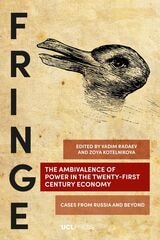
The Ambivalence of Power in the Twenty-First Century Economy
Cases from Russia and BeyondEdited by Vadim Radaev and Zoya Kotelnikova
University College London, 2022
This book explores the ambivalent nature of power as wielded in economic practices from an empirical perspective. It offers a collection of country-based cases and critically assesses the existing conceptions of power from a cross-disciplinary perspective. Analyzing power at the macro, meso, and micro levels allows the volume to highlight the complexity of political economy in the twenty-first century. Each chapter addresses key elements of a given political economy (from the ambivalence of the cases of former communist countries that do not conform with the grand narratives about democracy and markets to the dual utility of new technologies such as face-recognition), thus providing mounting evidence for the centrality of understanding ambivalence in the analysis of power.
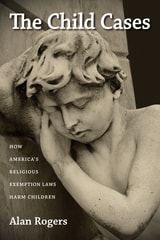
The Child Cases
How America's Religious Exemption Laws Harm ChildrenAlan Rogers
University of Massachusetts Press, 2014
When a four-year-old California girl died on March 9, 1984, the state charged her mother with involuntary manslaughter because she failed to provide her daughter with medical care, choosing instead to rely on spiritual healing. During the next few years, a half dozen other children of Christian Science parents died under similar circumstances. The children's deaths and the parents' trials drew national attention, highlighting a deeply rooted, legal/political struggle to define religious freedom.
Through close analysis of these seven cases, legal historian Alan Rogers explores the conflict between religious principles and secular laws that seek to protect children from abuse and neglect. Christian Scientists argued—often with the support of mainline religious groups—that the First Amendment's “free exercise” clause protected religious belief and behavior. Insisting that their spiritual care was at least as effective as medical treatment, they thus maintained that parents of seriously ill children had a constitutional right to reject medical care.
Congress and state legislatures confirmed this interpretation by inserting religious exemption provisos into child abuse laws. Yet when parental prayer failed and a child died, prosecutors were able to win manslaughter convictions by arguing—as the U.S. Supreme Court had held for more than a century—that religious belief could not trump a neutral, generally applicable law. Children's advocates then carried this message to state legislatures, eventually winning repeal of religious exemption provisions in a handful of states.

The Collected Works of William Howard Taft, Volume VIII
“Liberty under Law” and Selected Supreme Court OpinionsFrancis Graham Lee
Ohio University Press, 2004
William Howard Taft’s presidency (1909-1913), succeeding Theodore Roosevelt’s, was mired in bitter partisan fighting, and Taft sometimes blundered politically. However, this son of Cincinnati assumed his true calling when President Warren G. Harding appointed him to the U.S. Supreme Court in 1921. Taft remains the only person to have served both as president of the United States and as chief justice of the Supreme Court.
The Collected Works of William Howard Taft, Volume VIII, consists of “Liberty under Law” and selected Supreme Court opinions, among the most instructive accomplishments of Taft’s ten years at the helm of the court. The writings reveal the sober judgments of a federalist who viewed state regulation with suspicion, championed national government, and saw an independent and powerful judiciary as the bulwark protecting the “vested rights” that the framers of the U.S. Constitution sought to guarantee.
Whatever his failings as a politician, Taft was an intellectual powerhouse who knew how to use the law as a lever to encourage society to move toward more stable and productive ends. Although Taft is considered an average president at best, historians and political scientists rank him among fifteen “near greats” who have served on the high court. His ability and his love for the law shine through in Volume VIII, the concluding volume of The Collected Works of William Howard Taft. As Taft reportedly said to President Harding upon his appointment as chief justice, “I love judges and I love courts. They are my ideals on earth of what we shall meet afterward in heaven under a just God.”
The Constitutional Jurisprudence of the Federal Republic of Germany
Third edition, Revised and ExpandedDonald P. Kommers and Russell A. Miller
Duke University Press, 2012
Compared to previous editions of The Constitutional Jurisprudence of the Federal Republic of Germany, this third edition more closely tracks Germany's Basic Law and, therefore, the systematic approach reflected in the most-respected German constitutional law commentaries. Entirely new chapters address the relationship between German law and European and international law; social and economic rights, including the property and occupational rights cases that have emerged from Reunification; jurisprudence related to issues of equality, particularly gender equality; and the tension between Germany's counterterrorism efforts and its constitutional guarantees of liberty. Kommers and Miller have also updated existing chapters to address recent decisions involving human rights, federalism, European integration, and religious liberty.
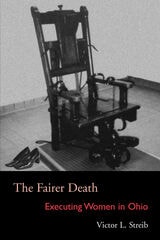
The Fairer Death
Executing Women in OhioVictor L. Streib
Ohio University Press, 2006
Women on death row are such a rarity that, once condemned, they may be ignored and forgotten. Ohio, a typical, middle-of-the-road death penalty state, provides a telling example of this phenomenon. The Fairer Death: Executing Women in Ohio explores Ohio’s experience with the death penalty for women and reflects on what this experience reveals about the death penalty for women throughout the nation.
Victor Streib’s analysis of two centuries of Ohio death penalty legislation and adjudication reveals no obvious exclusion of women or even any recognition of an issue of sex bias. In this respect, Ohio’s justice system exemplifies the subtle and insidious nature of this cultural disparity.
Professor Streib provides detailed descriptions of the cases of the four women actually executed by Ohio since its founding and of the cases of the eleven women sentenced to death in Ohio in the current death penalty era (1973–2005). Some of these cases had a profound impact on death penalty law, but most were routine and drew little attention. A generation later, reversals and commutations have left only one woman on Ohio’s death row.
Although Streib focuses specifically on Ohio, the underlying premise is that Ohio is, in many ways, a typical death penalty state. The Fairer Death provides insight into our national experience, provoking questions about the rationale for the death penalty and the many disparities in its administration.

The Grasping Hand
"Kelo v. City of New London" and the Limits of Eminent DomainIlya Somin
University of Chicago Press, 2015
In this detailed study of one of the most controversial Supreme Court cases in modern times, Ilya Somin argues that Kelo was a grave error. Economic development and “blight” condemnations are unconstitutional under both originalist and most “living constitution” theories of legal interpretation. They also victimize the poor and the politically weak for the benefit of powerful interest groups and often destroy more economic value than they create. Kelo itself exemplifies these patterns. The residents targeted for condemnation lacked the influence needed to combat the formidable government and corporate interests arrayed against them. Moreover, the city’s poorly conceived development plan ultimately failed: the condemned land lies empty to this day, occupied only by feral cats. The Supreme Court’s unpopular ruling triggered an unprecedented political reaction, with forty-five states passing new laws intended to limit the use of eminent domain. But many of the new laws impose few or no genuine constraints on takings. The Kelo backlash led to significant progress, but not nearly as much as it may have seemed.
Despite its outcome, the closely divided 5-4 ruling shattered what many believed to be a consensus that virtually any condemnation qualifies as a public use under the Fifth Amendment. It also showed that there is widespread public opposition to eminent domain abuse. With controversy over takings sure to continue, The Grasping Hand offers the first book-length analysis of Kelo by a legal scholar, alongside a broader history of the dispute over public use and eminent domain and an evaluation of options for reform.

The Grasping Hand
"Kelo v. City of New London" and the Limits of Eminent DomainIlya Somin
University of Chicago Press, 2015
In this detailed study of one of the most controversial Supreme Court cases in modern times, Ilya Somin argues that Kelo was a grave error. Economic development and “blight” condemnations are unconstitutional under both originalist and most “living constitution” theories of legal interpretation. They also victimize the poor and the politically weak for the benefit of powerful interest groups and often destroy more economic value than they create. Kelo itself exemplifies these patterns. The residents targeted for condemnation lacked the influence needed to combat the formidable government and corporate interests arrayed against them. Moreover, the city’s poorly conceived development plan ultimately failed: the condemned land lies empty to this day, occupied only by feral cats. The Supreme Court’s unpopular ruling triggered an unprecedented political reaction, with forty-five states passing new laws intended to limit the use of eminent domain. But many of the new laws impose few or no genuine constraints on takings. The Kelo backlash led to significant progress, but not nearly as much as it may have seemed.
Despite its outcome, the closely divided 5-4 ruling shattered what many believed to be a consensus that virtually any condemnation qualifies as a public use under the Fifth Amendment. It also showed that there is widespread public opposition to eminent domain abuse. With controversy over takings sure to continue, The Grasping Hand offers the first book-length analysis of Kelo by a legal scholar, alongside a broader history of the dispute over public use and eminent domain and an evaluation of options for reform.
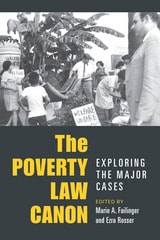
The Poverty Law Canon
Exploring the Major CasesMarie A. Failinger and Ezra Rosser, Editors
University of Michigan Press, 2016
Noted legal scholars explain the legal precedent created by each case and set the case within its historical and political context in a way that will assist students and advocates in poverty-related disciplines in their understanding of the implications of these cases for contemporary public policy decisions in poverty programs. Whether the focus is on the clients, on the lawyers, or on the justices, the stories in The Poverty Law Canon illuminate the central legal themes in federal poverty law of the late 20th century and the role that racial and economic stereotyping plays in shaping American law.
The Supreme Court Review, 2013
Edited by Dennis J. Hutchinson, David A. Strauss, and Geoffrey R. Stone
University of Chicago Press Journals, 2014
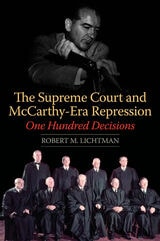
The Supreme Court and McCarthy-Era Repression
One Hundred DecisionsRobert M. Lichtman
University of Illinois Press, 2015

The Supreme Court and Patents and Monopolies
Edited by Philip B. Kurland
University of Chicago Press, 1975
Thinking in Cases
Fiction, Law, and the Case HistoryPeter Brooks
University of Chicago Press, 2027
How the form of the case history became an important way of studying the individual as an exemplary case in medicine, psychoanalysis, law, and the novel.
What does it mean when we address ourselves to a specific problem and treat it as a “case” that needs resolution, a resolution that may in turn offer us more general lessons? The “case history” has become a central form of thought and analysis in our culture, but rarely has it been studied on its own. In Thinking in Cases, the distinguished critic Peter Brooks zeroes in on a kind of thinking that we all know—and often use—without understanding its dimensions and its history.
This book ponders what we do and mean when we think in cases—when we take up specific instances with a view to making them exemplary. Brooks brings to this study decades of reflection on the psychoanalytic case history, on the rhetoric of the legal case, and on novels that unfold as cases seeking solutions. Brooks focuses on the case-history’s emergence in the late nineteenth century: first, he examines how Henry James’s uses of narrative parallel case-study methods in law, medicine, and psychoanalysis. Elsewhere, he traces the case history from Hippocratic medicine through Sir Arthur Conan Doyle’s detective fiction to a startling legal case from Victorian England involving shipwreck and cannibalism. Other chapters discuss a tale of madness by Balzac and Freud’s most speculative works, especially Moses and Monotheism. A final chapter examines recent novels—Duras’s The Ravishing of Lol Stein, Coetzee’s Disgrace, Modiano’s Dora Bruder, and Erpenbeck’s Kairos—as case studies.
This Is Not Civil Rights
Discovering Rights Talk in 1939 AmericaGeorge I. Lovell
University of Chicago Press, 2012
Thus Ruled Emir Abbas
Selected Cases from the Records of the Emir of Kano's Judicial CouncilAllen Christelow
Michigan State University Press, 1994
Thus Ruled Emir Abbas is an important new research tool that reveals much about daily life in Kano, the wealthiest and most populous emirate of the African Sokoto Caliphate. It contains a selection of Kano Judicial Council documents, as well as their English translations, that deal with matters such as land disputes, tax collection disputes, and theft. These documents are invaluable resources that reveal much about Kano social, economic, and political life before the region came under the influence of colonial institutions, law, and language. This selection of records for more than 415 cases, along with their translations, will become essential reading for those interested in Nigeria’s past and will certainly become a standard work in the field of Nigerian history and anthropology.

Too Much Free Speech?
Randall P. Bezanson
University of Illinois Press, 2012
Toward a Behavioral Ecology of Lithic Technology
Cases from Paleoindian ArchaeologyTodd A. Surovell
University of Arizona Press, 2009
Because the fundamental processes of making, using, and discarding stone tools are, at root, exercises in problem solving, Todd Surovell asks what conditions favor certain technological solutions. Whether asking if a biface should be made thick or thin or if a flake should be saved or discarded, Surovell seeks answers that extend beyond a case-by-case analysis. One avenue for addressing these questions theoretically is formal mathematical modeling.
Here Surovell constructs a series of models designed to link environmental variability to human decision making as it pertains to lithic technology. To test the models, Surovell uses data from the analysis of more than 40,000 artifacts from five Rocky Mountain and Northern Plains Folsom and Goshen complex archaeological sites dating to the Younger Dryas stadial (ca. 12,600-11,500 years BP). The primary result is the production of powerful new analytical tools useful to the interpretation of archaeological assemblages.
Surovell's goal is to promote modeling and explore the general issues governing technological decisions. In this light, his models can be applied to any context in which stone tools are made and used.