66 books match the query 'Central' and 12 start with t
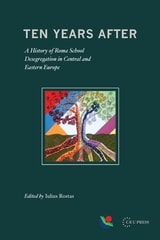
cover of Ten Years After: A History of Roma School Desegregation in Central and Eastern Europe

Ten Years After

A History of Roma School Desegregation in Central and Eastern Europe

Iulius Rostas

Central European University Press, 2012
The volume presents the results collated in the frames of the fact finding project led by the editor. The analysis includes the examination of a large number of legal documents and policy statements issued by national authorities and the international community on the matter. A critical overview is also made about the various Roma-specific political campaigns on national and European scale. The second half of the book contains interviews with activists that assumed a leading role in school desegregation. These testimony pieces have been critically reviewed by educational and policy analysts from the concerned countries.
[more]
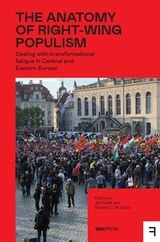
cover of The Anatomy of Right-Wing Populism: Dealing with Transformational Fatigue in Central and Eastern Europe

The Anatomy of Right-Wing Populism

Dealing with Transformational Fatigue in Central and Eastern Europe

Edited by Jan Kubik and Richard C. M. Mole

University College London, 2025

A multidisciplinary analysis of right-wing populist movements in post-communist Europe and the reasons for their success. 

Over the past two decades, populist politicians and parties have enjoyed remarkable success across the globe. To develop a multidisciplinary understanding of the rise and functioning of right-wing populism in Central and Eastern Europe, The Anatomy of Right-Wing Populism examines two original concepts. The first, neo-feudalism, refers to an economic system whereby a relatively small group of elites holds most of the political power and controls a significant portion of the country’s economy. The second concept, neo-traditionalism, is a cultural strategy that aims to legitimize neo-feudal systems. Based on this framework, this volume provides empirical and theoretical analysis of populist movements and offers policy recommendations on how to resist illiberalism.
[more]
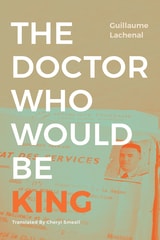
cover of The Doctor Who Would Be King

The Doctor Who Would Be King

Guillaume Lachenal

Duke University Press, 2022
In The Doctor Who Would Be King Guillaume Lachenal tells the extraordinary story of Dr. Jean Joseph David, a French colonial army doctor who governed an entire region of French Cameroon during World War II. Dr. David—whom locals called “emperor”—dreamed of establishing a medical utopia. Through unchecked power, he imagined realizing the colonialist fantasy of emancipating colonized subjects from misery, ignorance, and sickness. Drawing on archives, oral histories, and ethnographic fieldwork, Lachenal traces Dr. David’s earlier attempts at a similar project on a Polynesian island and the ongoing legacies of his failed experiment in Cameroon. Lachenal does not merely recount a Conradian tale of imperial hubris, he brings the past into the present, exploring the memories and remains of Dr. David’s rule to reveal a global history of violence, desire, and failure in which hope for the future gets lost in the tragic comedy of power.
[more]
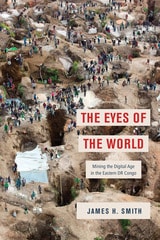
cover of The Eyes of the World: Mining the Digital Age in the Eastern DR Congo

The Eyes of the World

Mining the Digital Age in the Eastern DR Congo

James H. Smith

University of Chicago Press, 2022

The Eyes of the World focuses on the lives and experiences of Eastern Congolese people involved in extracting and transporting the minerals needed for digital devices.

The digital devices that, many would argue, define this era exist not only because of Silicon Valley innovations but also because of a burgeoning trade in dense, artisanally mined substances like tantalum, tin, and tungsten. In the tentatively postwar Eastern DR Congo, where many lives have been reoriented around artisanal mining, these minerals are socially dense, fueling movement and innovative collaborations that encompass diverse actors, geographies, temporalities, and dimensions. Focusing on the miners and traders of some of these “digital minerals,” The Eyes of the World examines how Eastern Congolese understand the work in which they are engaged, the forces pitted against them, and the complicated process through which substances in the earth and forest are converted into commodified resources. Smith shows how violent dispossession has fueled a bottom-up social theory that valorizes movement and collaboration—one that directly confronts both private mining companies and the tracking initiatives implemented by international companies aspiring to ensure that the minerals in digital devices are purified of blood.
[more]
cover of The Land beyond the Mists: Essays on Identity and Authority in Precolonial Congo and Rwanda

The Land beyond the Mists

Essays on Identity and Authority in Precolonial Congo and Rwanda

David Newbury

Ohio University Press, 2009

The horrific tragedies of Central Africa in the 1990s riveted the attention of the world. But these crises did not occur in a historical vacuum. By peering through the mists of the past, the case studies presented in The Land Beyond the Mists illustrate the significant advances to have taken place since decolonization in our understanding of the pre-colonial histories of Rwanda, Burundi, and eastern Congo.

Based on both oral and written sources, these essays are important both for their methods—viewing history from the perspective of local actors—and for their conclusions, which seriously challenge colonial myths about the area.
[more]
cover of The Licit Life of Capitalism: US Oil in Equatorial Guinea

The Licit Life of Capitalism

US Oil in Equatorial Guinea

Hannah Appel

Duke University Press, 2019
The Licit Life of Capitalism is both an account of a specific capitalist project—U.S. oil companies working off the shores of Equatorial Guinea—and a sweeping theorization of more general forms and processes that facilitate diverse capitalist projects around the world. Hannah Appel draws on extensive fieldwork with managers and rig workers, lawyers and bureaucrats, the expat wives of American oil executives and the Equatoguinean women who work in their homes, to turn conventional critiques of capitalism on their head, arguing that market practices do not merely exacerbate inequality; they are made by it. People and places differentially valued by gender, race, and colonial histories are the terrain on which the rules of capitalist economy are built. Appel shows how the corporate form and the contract, offshore rigs and economic theory are the assemblages of liberalism and race, expertise and gender, technology and domesticity that enable the licit life of capitalism—practices that are legally sanctioned, widely replicated, and ordinary, at the same time as they are messy, contested, and, arguably, indefensible.
[more]
cover of The Rise and Decline of the Zairian State

The Rise and Decline of the Zairian State

Crawford Young and Thomas Edwin Turner

University of Wisconsin Press, 1985
Zaire, apparently strong and stable under Presdident Mobutu in the early 1970s, was bankrupt and discredited by the end of that decade, beset by hyperinflation and mass corruption, the populace forced into abject poverty. Why and how, in a new african state strategically located in Central Africa and rich in mineral resources, did this happen? How did the Zairian state become a “parasitic predator” upon its own people?
[more]
cover of The Specter of Global China: Politics, Labor, and Foreign Investment in Africa

The Specter of Global China

Politics, Labor, and Foreign Investment in Africa

Ching Kwan Lee

University of Chicago Press, 2017

China has recently emerged as one of Africa’s top business partners, aggressively pursuing its raw materials and establishing a mighty presence in the continent’s booming construction market. Among major foreign investors in Africa, China has stirred the most fear, hope, and controversy. For many, the specter of a Chinese neocolonial scramble is looming, while for others China is Africa’s best chance at economic renewal. Yet, global debates about China in Africa have been based more on rhetoric than on empirical evidence. Ching Kwan Lee’s The Specter of Global China is the first comparative ethnographic study that addresses the critical question: Is Chinese capital a different kind of capital?
 
Offering the clearest look yet at China’s state-driven investment in Africa, this book is rooted in six years of extensive fieldwork in copper mines and construction sites in Zambia, Africa’s copper giant. Lee shadowed Chinese, Indian, and South African managers in underground mines, interviewed Zambian miners and construction workers, and worked with Zambian officials. Distinguishing carefully between Chinese state capital and global private capital in terms of their business objectives, labor practices, managerial ethos, and political engagement with the Zambian state and society, she concludes that Chinese state investment presents unique potential and perils for African development. The Specter of Global China will be a must-read for anyone interested in the future of China, Africa, and capitalism worldwide.
[more]
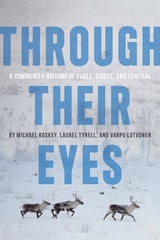
cover of Through Their Eyes: A Community History of Eagle, Circle, and Central

Through Their Eyes

A Community History of Eagle, Circle, and Central

Edited by Michael Koskey, Laurel Tyrrell, and Varpu Lotvonen

University of Alaska Press, 2018

The towns of Eagle, Circle, and Central are tucked away in the cold, rugged, and sparsely populated central-eastern interior of Alaska. These communities have fewer than three hundred residents in an area of more than 22,000 square miles. Yet they are closely linked by the Yukon River and by history itself.
Through their Eyes is a glimpse into the past and present of these communities, showing how their survival has depended on centuries of cooperation. The towns have roots in the gold rushes but they are also located within the traditional territories of the Hän Hwëch’in, the Gwichyaa Gwich’in, and Denduu Gwich’in Dena (Athabascan) peoples. Over time, residents have woven together new heritages, adopting and practicing each other’s traditions. This book combines oral accounts with archival research to create a rich portrayal of life in rural Alaska villages. Many of the stories come directly from the residents of these communities, giving an inside perspective on the often colorful events that characterize life in Eagle, Circle, and Central.

[more]
cover of Thus Ruled Emir Abbas: Selected Cases from the Records of the Emir of Kano's Judicial Council

Thus Ruled Emir Abbas

Selected Cases from the Records of the Emir of Kano's Judicial Council

Allen Christelow

Michigan State University Press, 1994

Thus Ruled Emir Abbas is an important new research tool that reveals much about daily life in Kano, the wealthiest and most populous emirate of the African Sokoto Caliphate. It contains a selection of Kano Judicial Council documents, as well as their English translations, that deal with matters such as land disputes, tax collection disputes, and theft. These documents are invaluable resources that reveal much about Kano social, economic, and political life before the region came under the influence of colonial institutions, law, and language. This selection of records for more than 415 cases, along with their translations, will become essential reading for those interested in Nigeria’s past and will certainly become a standard work in the field of Nigerian history and anthropology.
[more]
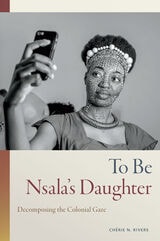
cover of To Be Nsala's Daughter: Decomposing the Colonial Gaze

To Be Nsala's Daughter

Decomposing the Colonial Gaze

Chérie N. Rivers

Duke University Press, 2023

In To Be Nsala’s Daughter, Chérie N. Rivers shows how colonial systems of normalized violence condition the way we see and, through collaboration with contemporary Congolese artists, imagines ways we might learn to see differently. Rivers focuses on a photograph of a Congolese man, Nsala, looking at the disembodied hand and foot of his daughter, which were removed as punishment for his failure to deliver the requisite amount of rubber in King Léopold’s Congo. This photograph, taken by British missionary Alice Seeley Harris, featured prominently in abolitionist campaigns to end colonial atrocities in Central Africa in the early twentieth century. But in addition to exposing the visible violence of colonialism, Rivers argues, this photograph also exposes the invisible—and continued—violence of the colonial gaze. With a poetic, personal collage of stories and images, To Be Nsala’s Daughter traces the past and present of the colonial gaze both in Congo and in the author’s lived experience as a mixed-race Black woman in the United States.
[more]
cover of Troubled Minds: Shaping Modern Mental Care in Central and Eastern Europe, 1780–1930

Troubled Minds

Shaping Modern Mental Care in Central and Eastern Europe, 1780–1930

Eva Hajdinová

Central European University Press, 2027

This volume offers a supra-regional view of how psychiatry developed in Central and Eastern Europe during the long nineteenth century. Case studies from the German lands, the Habsburg monarchy, and the Russian Empire show that the field did not follow a single linear story of medical progress. Instead, it grew through circulation of ideas, local adaptation, and often ongoing negotiation among institutions and actors. The chapters trace psychiatry’s Enlightenment roots in debates on the soul and passions, then follow its legal and institutional consolidation under absolutist and later constitutional regimes. They also examine changing diagnostic and therapeutic practices and the everyday encounters they produced among doctors, patients, clergy, and administrators. Rejecting a core–periphery model, the book presents these regions as sites of conceptual innovation and institutional experimentation. By pairing local specificities with transnational connections, it helps rethink psychiatry’s history as culturally, politically, and socially deeply embedded in nineteenth-century Europe.
[more]