95 books match the query 'Christian Living' and 16 start with t
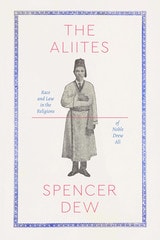
cover of The Aliites: Race and Law in the Religions of Noble Drew Ali

The Aliites

Race and Law in the Religions of Noble Drew Ali

Spencer Dew

University of Chicago Press, 2019

“Citizenship is salvation,” preached Noble Drew Ali, leader of the Moorish Science Temple of America in the early twentieth century. Ali’s message was an aspirational call for black Americans to undertake a struggle for recognition from the state, one that would both ensure protection for all Americans through rights guaranteed by the law and correct the unjust implementation of law that prevailed in the racially segregated United States. Ali and his followers took on this mission of citizenship as a religious calling, working to carve out a place for themselves in American democracy and to bring about a society that lived up to what they considered the sacred purpose of the law.

In The Aliites, Spencer Dew traces the history and impact of Ali’s radical fusion of law and faith. Dew uncovers the influence of Ali’s teachings, including the many movements they inspired. As Dew shows, Ali’s teachings demonstrate an implicit yet critical component of the American approach to law: that it should express our highest ideals for society, even if it is rarely perfect in practice. Examining this robustly creative yet largely overlooked lineage of African American religious thought, Dew provides a window onto religion, race, citizenship, and law in America.
[more]
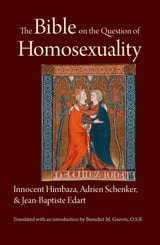
cover of The Bible on the Question of Homosexuality

The Bible on the Question of Homosexuality

Innocent Himbaza

Catholic University of America Press, 2012
The Bible on the Question of Homosexuality addresses the hotly debated topic of whether the Bible condemns homosexuality by a close reading of the biblical texts without taboo or prejudice, without personal or church interpretation
[more]
cover of The Complementarity of Women and Men: Philosophy, Theology, Psychology, and Art

The Complementarity of Women and Men

Philosophy, Theology, Psychology, and Art

Paul C. Vitz

Catholic University of America Press, 2021
The Complementarity of Women and Men provides a Catholic Christian case that men and women are in certain respects quite different but also have a positive, synergistic complementary relationship. Although differences and their mutually supporting relationships are focused on throughout the volume, men and women are assumed to have equal dignity and value. This underlying interpretation comes from the familiar, basic theological position in Genesis that both sexes were made in the image of God. After a cogent philosophical introduction to complementary differences by J. Budziszewski, this position is developed from theological, philosophical, and historical perspectives by Sr. Prudence Allen. Next Deborah Savage, building upon the writings of St. John Paul II, gives a strong theological basis for complementarity. This is followed by Elizabeth Lev’s chapter presenting new and surprising art history evidence from the paintings of Michelangelo in the Sistine Chapel supporting the complementarity interpretation. A final chapter by Paul Vitz documents and summarizes the scientific evidence supporting sexual difference and complementarity in the disciplines of psychology and neuroscience. As a consequence of both the individual chapters and the integrated understanding they present The Complementarity of Women and Men is a significant contribution to the important, complex, contemporary debate about men, women, sex, and gender.
[more]
cover of The Divine Institution: White Evangelicalism's Politics of the Family

The Divine Institution

White Evangelicalism's Politics of the Family

Sophie Bjork-James

Rutgers University Press, 2021

Winner of the Anne Bolin & Gil Herdt Book Prize from the Human Sexuality and Anthropology Interest Group (HSAIG)

The Divine Institution provides an account of how a theology of the family came to dominate a white evangelical tradition in the post-civil rights movement United States, providing a theological corollary to Religious Right politics.

This tradition inherently enforces racial inequality in that it draws moral, religious, and political attention away from problems of racial and economic structural oppression, explaining all social problems as a failure of the individual to achieve the strong gender and sexual identities that ground the nuclear family. The consequences of this theology are both personal suffering for individuals who cannot measure up to prescribed gender and sexual roles, and political support for conservative government policies. Exposure to experiences that undermine the idea that an emphasis on the family is the solution to all social problems is causing a younger generation of white evangelicals to shift away from this narrow theological emphasis and toward a more social justice-oriented theology. The material and political effects of this shift remain to be seen.
[more]
cover of The Family as Basic Social Unit: Living Out Catholic Social Teaching

The Family as Basic Social Unit

Living Out Catholic Social Teaching

Kevin Schemenauer

Catholic University of America Press, 2024
The Family as Basic Social Unit seeks to take seriously the claim that a family is a basic social unit. As a basic social unit, a family is both internally social, and socially interdependent with other communities. Since a family is a basic social unit, Schemenauer proposes that family life is a location for applying Catholic social teaching. Kevin Schemenauer specifically applies Catholic social principles concerning the dignity of work and peacemaking to household labor and violence among siblings, and he reflects on how individuals feed the hungry and care for the sick when they care for their family members. In the second part of the volume, Schemenauer describes the social interdependence of families. He analyzes the relationship between families and the Church, civil society, the economy, and the state. Schemenauer proposes that the question for families is not whether to engage with other social communities but how to do so well. He explicitly highlights how consumer capitalism creates obstacles for families attempting to live as a basic social unit. Then, employing the categories of infused simplicity and moral cooperation, he provides a framework for discerning family engagement with broader society. Finally, Schemenauer analyzes the relationship between family commitments and social ministry. Working from the family outward, Schemenauer describes how family commitments can motivate broader social service, but then employs the example of families involved in the Catholic Worker Movement to reflect on the joys and dangers of balancing commitment to one’s family with social ministry focused on the urgent needs of those outside of one’s household.
[more]
cover of The Holy Mass

The Holy Mass

Mike Aquilia

Catholic University of America Press, 2021
The Catholic University of America Press is proud to present the third volume in its Sayings of the Fathers of the Church series. Featuring esteemed scholars and writers compiling material from our acclaimed Fathers of the Church volumes, each title is devoted to select areas of theology. The inaugural volumes covered the Seven Deadly Sins and the Four Last Things, and now we turn to The Holy Mass. The documents of early Christianity are rich in mentions of the Mass and its component parts. Sometimes they’re detailed descriptions, sometimes quick allusions. In this volume Mike Aquilina, a popular author on early Christianity, takes readers step by step through the Mass, from the Sign of the Cross through the Dismissal, illuminating the way with the words of the Fathers. Along the way readers encounter familiar rites, words, and gestures, but also familiar complaints — about long homilies, bad singing, liturgical abuses, and distracted congregations. The Holy Mass is divided into chapters based on the parts of the Mass known to modern Catholics of the Roman Rite. The Mass did not follow this sequence through the entirety of the era of the Fathers. Gregory the Great moved the position of the Lord’s Prayer. There were geographic variants for the placement of the Sign of Peace. Some ancient liturgies lacked a specific penitential rite — though all the liturgies had a penitential dimension to their prayers. Mike Aquilina’s introduction provides historical context and describes the rich development of the liturgy through the Church’s first few centuries. A foreword by Thomas Weinandy, a member of the Vatican’s International Theological Commission, speaks of the relevance of this material for worshipers today.
[more]
cover of The Miracle of the Kent: A Tale of Courage, Faith, and Fire

The Miracle of the Kent

A Tale of Courage, Faith, and Fire

Nicholas Tracy

Westholme Publishing, 2008

An Extraordinary Rescue and One of the Greatest Human Interest Stories of All Time

“A naturally gripping adventure tale.”—Publishers Weekly 
“Powerful and intensely focused.”—Booklist 
“Tracy's satisfying narrative constitutes the first modern account. A finely detailed maritime history.”—Kirkus Reviews

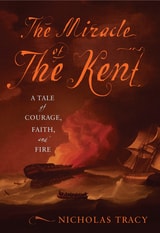
In 1825, the Kent, an East Indiaman, set sail from England for India with a crew and nearly 600 men, women, and children on board. North of Spain, the ship was slammed by a ferocious gale, and while a sailor was inspecting the hold for damage, his lantern ignited a cask of spirits. A fire quickly erupted, and even with the desperate expedient of opening hatches and flooding the ship, the fire burned out of control. As night wore on, the ship became an inferno, with the flames moving toward stores of gunpowder. At this point, everyone on board knew that they would perish, and they began preparing for their ghastly deaths. Despite the raging tempest a sailor climbed one last time to the top of the Kent’s mainmast and—miraculously—a sail was sighted on the horizon. It was the Cambria, a small brig on its way to Mexico. The Cambriaspied the burning Kentand through determination and dogged seamanship in towering seas, the little brig closed the doomed vessel. Launching their boats, the Kent’s and Cambria’s crews were able to transfer nearly all of the children, women, and men to the brig and pull away before the Kent exploded. Dangerously overloaded, the Cambriamade the Cornish coast three days later.
In The Miracle of the Kent: A Tale of Courage, Faith, and Fire, award-winning historian Nicholas Tracy reconstructs this extraordinary tale through records left by the participants, revealing how those aboard the Kent faced their deaths, and their reactions to being offered a second chance. The story of the Kentis both a page-turning adventure and an inspirational homage to the capacity of the human spirit.
[more]
cover of The Mystery of Death and Beyond

The Mystery of Death and Beyond

Kenneth Baker, S.J.

St. Augustine's Press, 2016

The purpose of this little book is to answer certain questions that many people have about the nature of death. Most people feel that there is something wrong about death. We all want to live a happy life and we do not want to die. Life is experienced as something very good and we want to preserve it. But the reality is that man is by nature mortal, which means that he is destined to die sooner or later. The fact is that we begin to die the moment we are conceived in our mother’s womb.
     Man is unlike all other animals, because he has a soul endowed with intelligence and free will. Because man’s soul is spiritual, it is immortal. Death is the separation of that soul from the body; the body decays and returns to the dust from which it was taken, but the soul continues to live and is in the hands of God. But what happens to the soul after death? There are two possibilities—heaven or hell. We know from divine revelation and from the infallible teaching of the Church that the soul after death goes immediately to heaven (perhaps first for a time to purgatory to be totally cleansed and sanctified), or immediately to hell, a state or place of eternal misery.
     The next life is a life without time—it is a perpetual now, with no before and after. It has a beginning but not end. It is also unchangeable, that is, souls in heaven are there forever and they cannot lose it; souls in hell are there forever and they can never be freed from it.
     This is a very serious and certain reality for each one of us. The most important thing we will ever do is to die, and to die in the state of God’s grace so that we are his friends and will be admitted to his presence, which is what is meant by heaven. Therefore we must prepare ourselves to die in the grace of God, which is our ticket to heaven. We do that by doing God’s will for us, which means to keep his commandments, especially to love God above all things and practice love of neighbor.
     This short book will help people think about their death and how important it is for their permanent happiness. It will help them to arrange their life in such a way that they will live it as God wants them to live it and so ultimately obtain eternal life with God because: “no eye has seen, nor ear heard, nor the heart of man conceived, what God has prepared for those who love him” (1 Cor. 2:9).

 
[more]
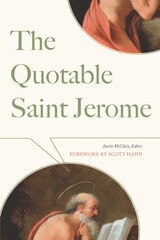
cover of The Quotable Saint Jerome

The Quotable Saint Jerome

Jerome Saint Jerome

Catholic University of America Press, 2020
Among the illustrious writers of the early Church, Saint Jerome (345-420) had a way with words few could equal. To honor the 1600th anniversary of the death of this patron saint of librarians and Scripture scholars, the Catholic University of America Press is releasing The Quotable Jerome, a well-organized collection of memorable wisdom from this early witness to Catholic truth. While Jerome is known for acerbic wits, editor Justin McClain shows that much of the time, Jerome's writings are instructive and even inspiring. Homilists will easily be able to find what Jerome said on any number of topics--Scripture, the Trinity, the sacraments, persecution, heresy, divine revelation, or chastity--just to name a few. All citations are clearly sourced if the reader wants to pursue the longer passage in question. “I am upset because I am human; I control my tongue because I am a Christian. Anger surges up in my heart, but I do not give vent to it.” - Homilies on the Psalms, Homily 10, Psalm 76 (77) (FOTC 48) “The doer of evil has, indeed, killed his own soul; but the heretic—the liar—has killed as many souls as he has seduced.” - Homilies on the Psalms, Homily 2, Psalm 5 (FOTC 48) “The Church does not consist in walls, but in the truths of her teachings. The Church is there where there is true faith.” - Homilies on the Psalms, Homily 46, Psalm 133 (134) “To err is human, but to lay snares is diabolical.” - Dogmatic and Polemical Works, The Apology Against the Books of Rufinus, Book Three, paragraph 33 (FOTC 53) “So much for what Scripture says; learn now what it means.” - Homilies on the Psalms, Homily 15, Psalm 82 (83) (FOTC 48)
[more]
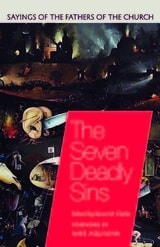
cover of The Seven Deadly Sins: Sayings of the Fathers of the Church

The Seven Deadly Sins

Sayings of the Fathers of the Church

Kevin M. Clarke

Catholic University of America Press, 2018

The Seven Deadly Sins: Sayings of the Fathers of the Church is the inaugural volume in a new series from the Catholic University of America Press. This series will feature a wide range of scholars compiling material from the Fathers of the Church series to focus on a specific area of theology. Forthcoming titles will focus on Death, Judgement, Heaven and Hell, and Angels and Demons, with others to be announced shortly.

Sacred Scripture did not neatly list the seven deadly sins, so where did this tradition come from? Unsurprisingly, it can be traced back to the Church Fathers. But were there eight or seven? In a sense, the answer is “both.” The tradition of the capital sins has a rich development in the patristic era, not only in the presentation of the list of vices but in the preaching and teaching of the early shepherds of the Church. So how do the capital sins spawn other vices in the soul? How does one cultivate the virtues that heal the soul from those vices? How are gluttony and lust related? Is sadness really a vice? How is vainglory different from pride? What role does almsgiving have in soothing the passion of anger? The Fathers of the Church answer these questions and more in this volume.

The capital vices are the gateway drugs to countless sins. The path of the book descends through the vices, culminating with their queen ruler, pride. The words of the Fathers will assist the reader in being more realistic about the attacks upon the soul. The text should also be edifying and medicinal. Since each chapter begins with vice and ends with virtue, one’s path through the chapters represents a sort of ascent out of vice and into the freedom of the virtues. The text gives special attention throughout to the thought of Augustine of Hippo, Evagrius of Pontus, John Cassian, Gregory the Great, and Maximus the Confessor.
[more]
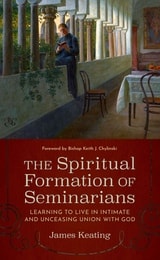
cover of The Spiritual Formation of Seminarians: Learning to Live in Intimate and Unceasing Union with God

The Spiritual Formation of Seminarians

Learning to Live in Intimate and Unceasing Union with God

James Keating

Catholic University of America Press, 2025
In this book, Deacon James Keating provides an opportunity for one spiritual director to introduce his mind to the minds of other directors with the hope that his ideas may season their own already developed method of direction. The book does not attend to all the possible realities a director may encounter within his or her training or within the daily execution of this ministry. The author wishes to share his approach to directing seminarians by reflecting upon themes and experiences which regularly appear within direction sessions. Spiritual direction certainly has some universal components to it. All directors want their directees to internalize a habit of prayer, to choose a life of remaining with God, to suffer the vulnerability necessary to know divine love and to then embody that love as heralds of the Gospel. But each director approaches his or her directees from within their own skin, from within a personality that is unique, and by way of a formation that reflects the unique attractions of each director and his or her own sufferings, failures, and fidelities. These unique embodiments no one writer can know or capture in a book. And so, this book simply begins a conversation that the author invites other directors to enter and add to according to their own insights. The spiritual life of those in seminary occupies the integrating center of a projected life of priestly ministry. Time needed to secure an interior life of prayer is one of the key reasons the Church demands years of formation before the celibate state is entered. Such a state in life is entered as a testimony to the reality that God lives and loves. In light of such love a man enters seminary to discern if he desires to surrender his whole life in response to God sharing His own. To live as a cleric without a vital interior life leaves a man in a state of meaninglessness. Instilling the virtue of prayer during priestly formation can help assure that celibate priesthood retains its inspiration and meaning throughout the life of a priest. Spiritual directors minister to assist a future priest to secure a lifetime habit of prayer so as to secure his commitment to communicate with the living God.
[more]
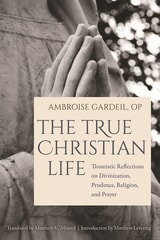
cover of The True Christian Life: Thomistic Reflections on Divinization, Prudence, Religion, and Prayer

The True Christian Life

Thomistic Reflections on Divinization, Prudence, Religion, and Prayer

Ambroise Gardeil, OP

Catholic University of America Press, 2022
Although not well-known in the English-speaking world, Fr. Ambroise Gardeil, OP (1859-1931) was a Dominican of significant influence in French Catholic thought at the turn of the 20th century. Conservative theologians like Frs. Reginald Garrigou-Lagrange, OP, Michel Labourdette, OP, Jean-Hervé Nicolas, OP and many others hailed him as a careful expositor of the supernaturality of faith, a defender of the theological nature of rational apologetics, and a spiritual master. In his controversial Le Saulchoir: Une école de théologie, Fr. Marie-Dominique Chenu, OP praised Fr. Gardeil as an important Dominican initiator of reforms in historical theology, presenting the latter as a kind of precursor to one of the streams of what is now referred to historically as the “Nouvelle Théologie.” And one cannot read the words of Fr. Gardeil’s contemporary Fr. Antoine Lemonnyer, OP, without hearing echoes and re-echoes of common cause regarding our lofty spiritual vocation, resounding within the halls of the Saulchoir. With such a broad appeal, it is no surprise that in private correspondence, a young Yves Simon, writing to Jacques Maritain, referred to Fr. Gardeil as “The Great Gardeil.” The True Christian Life provides a thorough and stirring introduction to Fr. Gardeil’s work in spiritual theology. The volume was originally published posthumously through the collaboration of Fr. Gardeil’s nephew, Fr. Henri-Dominique Gardeil, OP and Jacques Maritain. Fr. Ambroise, prior to beginning work on his masterpiece on spiritual experience, La Structure de l'âme et l'expérience mystique, drafted nearly eight-hundred pages that would have set forth a full presentation of moral-ascetical theology. While drafting this massive work, his reflection on the soul’s receptive capacity for grace led him to the two-volume study, La Structure, and he never was able to finish his original designs for a comprehensive study of the Christian moral-spiritual life. Soon after his death, his nephew gathered several essays from the Revue thomiste and Revue de Jeunes, along with a complete-but-unpublished study on prayer. Drafting a lengthy introduction on the basis of Fr. Ambroise’s unpublished notes, Fr. Henri-Dominique assembled a volume of moral / spiritual theology that sets out the principles of many important themes: divinization through grace, Christian prudence /conscience, the virtue of religion, devotion, and prayer. In his In memoriam written after the passing of Fr. Gardeil, Fr. Reginald Garrigou-Lagrange emphasized Fr. Gardeil’s ability to meditate on a given topic’s central principles, like someone who sees the highest peaks that give structure to the entire mountain range of theology. In this volume, the reader will find a clear and rhetorically striking presentation of the central mysteries of the spiritual life, presented with stirring and beautiful rhetoric by a theological master from the Thomist tradition.
[more]
cover of The Winning Side: Why the Culture of Death Is Dying

The Winning Side

Why the Culture of Death Is Dying

Charles E. Rice

St. Augustine's Press, 0
[more]
cover of Thrift & Generosity: Joy Of Giving

Thrift & Generosity

Joy Of Giving

John M. Templeton

Templeton Press, 2004

In these difficult economic times, thrift may seem like a necessity, rather than a route to joy. But in this handbook, the reader learns about the virtue of thrift, and how, in combination with gratitude and generosity, it can lead to deep, lasting contentment.
The book explores the qualities that distinguish thriftiness from merely being cheap; it looks at thrift and wisdom, thrift and gratitude, thrift and ethical standards, and thrift and hard work. With references from the Bible, literature, poetry, and philosophy, as well as examples from daily life, thrift is shown to be more than just understanding the bottom line. Indeed, thrift is part of a religious and cultural understanding of how we use our time, our talents, and our resources.


[more]
cover of Ties That Enable: Community Solidarity for People Living with Serious Mental Health Problems

Ties That Enable

Community Solidarity for People Living with Serious Mental Health Problems

Teresa L. Scheid

Rutgers University Press, 2021
Ties that Enable is written for students, providers, and advocates seeking to understand how best to improve mental health care – be it for themselves, their loved ones, their clients, or for the wider community. The authors integrate their knowledge of mental health care as researchers, teachers, and advocates and rely on the experiences of people living with severe mental health problems to help understand the sources of community solidarity. Communities are the primary source of social solidarity, and given the diversity of communities, solutions to the problems faced by individuals living with severe mental health problems must start with community level initiatives. “Ties that Enable” examines the role of a faith-based community group in providing a sense of place and belonging as well as reinforcing a valued social identity. The authors argue that mental health reform efforts need to move beyond a focus on individual recovery to more complex understandings of the meaning of community care. In addition, mental health care needs to move from a medical model to a social model which sees the roots of mental illness and recovery as lying in society, not the individual. It is our society’s inability to provide inclusive supportive environments which restrict the ability of individuals to recover. This book provides insights into how communities and system level reforms can promote justice and the higher ideals we aspire to as a society.
[more]
cover of To Offer Compassion: A History of the Clergy Consultation Service on Abortion

To Offer Compassion

A History of the Clergy Consultation Service on Abortion

Doris Andrea Dirks and Patricia A. Relf

University of Wisconsin Press, 2019

In 1967, when abortion was either illegal or highly restricted in every U.S. state, a group of ministers and rabbis formed to counsel women with unwanted pregnancies—including referral to licensed physicians willing to perform the procedure. By 1973, when the Roe v. Wade court decision made abortion legal nationwide, the Clergy Consultation Service on Abortion (CCS) had spread from coast to coast, referred hundreds of thousands of women for safe abortions without a single fatality, become a medical consumer advocacy group, and opened its own clinic in New York City.

As religious leaders spoke out on issues of civil rights, peace, or poverty, CCS members were also called to action by the suffering of women who had approached them for help. Overwhelmingly male, white, affluent, and middle-aged, these mainline Protestant and Jewish clergy were nonetheless outspoken advocates for the rights of women, particularly poor women. To Offer Compassion is a detailed history of this unique and largely forgotten movement, drawing on extensive interviews with original participants and on primary documents from the CCS's operations.
[more]