Results by title
74 books match the query 'Church' and 22 start with t
That Which Is Just in the Church
An Introduction to Canon Law: Volume 1Carlos José Errázuriz
St. Augustine's Press, 2021
Errázuriz presents more than the current Code of Canon Law. He instills a realistic perspective of right and law in the Church, and in so doing fills a massive gap in English scholarship. No introduction to canon law available in English rivals Errázuriz's description of justice in the Church and its relationship with communion and sacramentality.
Volume I is comprised of the first three chapters of the original, Corso fondamentale sul diritto nella Chiesa (in two volumes, Giuffrè: Milan, 2009 and 2017): "Rights, Justice and Law in the Church," "Canon Law in History," and "The Configuration of Rights and Law in the Church."
That Which Is Just in the Church
Volume 2: The Human Person in the ChurchCarlos José Errázuriz
St. Augustine's Press, 2023
Being subject to law, Errázuriz observes, does not undermine the freedom and dignity of the person. Rather, ecclesial law intends to confront the human person with his true supernatural inheritance, while preserving him in the mystery of communion within which the Church herself exists. Indeed, the human person has both natural and supernatural dignity, and likewise responsibilities that bear upon the seen and unseen realms of communion.
Prof. Errázuriz examines the practical applications of personhood and law, as well as the perspectives of the human subject that derive from his ontological status. This is further drawn across various states of life that occur within the Church and the differing juridical relations encountered. Also considered is the nature of association in the Church, and Errázuriz breaks down the concepts and particular realities pertaining to this natural tendency and the legal discipline.
The Academic Sermons (The Fathers of the Church, Mediaeval Continuation, Volume 11)
Thomas Aquinas
Catholic University of America Press, 2010
The Church and the Land
The National Catholic Rural Life Conference and American Society, 1923–2007David S. Bovée
Catholic University of America Press, 2010

The Church and the Left
Adam Michnik
University of Chicago Press, 1992
Years in advance of the collapse of communism in Eastern Europe, Poland underwent one of the most radical and painful social and political upheavals of our century. Through a wide body of writing and an unswerving political commitment that took him from prison to parliament, Adam Michnik was a central figure in these events—culminating in 1989 with his role in formulating the political deal that brought Solidarity to power. Michnik's writings, most of them smuggled out of prison, have been translated into many languages; but until now, only isolated essays have appeared in English.
In The Church and the Left, Michnik gives full expression to the ideas that have shaped the drama of Poland and of our time. The unlikely alliance of the Catholic Church and the dissident Left is one of the most fascinating and confusing features of the Polish revolutionary movement. No other book better explains the logic of this powerful coalition—or its future implications. In superb discussions of liberalism and nationalism, of secularism and clericalism, Michnik illuminates the unique makeup and direction of Poland's social revolution and, at the same time, offers unparalleled insight into the internal struggles still present in Eastern Europe.
Today, as religious revivals proliferate and secular progress, whether liberal or communist, comes under suspicion, the relationship of religion to politics has become a pressing issue far beyond the boundaries of Poland. As none has done before, Michnik's clear and thoughtful book gives us the means to understand this volatile mix as it has transformed Poland and as it figures in the future we see taking shape.
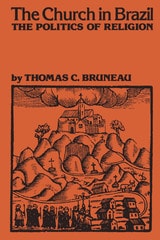
The Church in Brazil
The Politics of ReligionBy Thomas C. Bruneau
University of Texas Press, 1982
In 1980, Brazil was the largest Roman Catholic country in the world, with 90 percent of its more than 120 million people numbered among the faithful. The Church hierarchy became aware, however, that the religion practiced by the majority of its members was not that promoted by the institution, a point dramatized by the rapid growth of other religious movements in Brazil—particularly Protestant sects and spirit-possession cults. In response, the Church created and assumed new roles. The Church in Brazil is a case study of the changes within the Church and their impact on Brazilian society.
In an original and illuminating discussion, Thomas Bruneau combines institutional analysis and survey data to explore the relationship between structural changes in the Church and evolving patterns of practice and belief. His discussion displays the richness and variety of devotion in Brazil—characteristics recognized by many observers—and examines the Church's potential for influencing the people's religious life.
Moving from the historical and national to the regional, Bruneau analyzes and compares changes among eight dioceses. He concludes that the Church is actively promoting a progressive social role for itself and, by backing its statements with actions, is perceived as being socially effective by both supporters and opponents.
The first study in which the national and diocesan levels of the Church are analyzed together, it is also the first to inspect systematically the Basic Christian Communities, thought by some to be the most significant grass-roots movement in the Catholic world of that time.
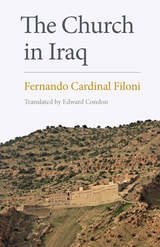
The Church in Iraq
Fernando Cardinal Filoni
Catholic University of America Press, 2017
The Church in Iraq is both a diligent record and loving testimonial to a community that is struggling desperately to exist. Filoni guides the reader through almost two thousand years of history, telling the story of a people who trace their faith back to the Apostle Thomas. The diversity of peoples and churches is brought deftly into focus through the lens of their interactions with the papacy, but The Church in Iraq does not shy away from discussing the local political, ethnic, and theological tensions that have resulted in centuries of communion and schism. Never losing his focus on the people to whom this book is so clearly dedicated, Cardinal Filoni has produced a personal and engaging history of the relationship between Rome and the Eastern Churches. This book has much to teach its reader about the church in the near East. Perhaps its most brutal lesson is the ease with which such a depth of history and culture can be wiped away in a few short decades.
The Church in the Republic
Gallicanism & Political Ideology in Renaissance FranceJotham Parsons
Catholic University of America Press, 2004
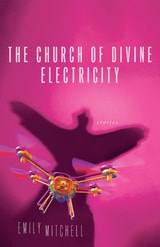
The Church of Divine Electricity
Emily Mitchell
University of Wisconsin Press, 2025
Whether being held by a giant and comforting machine, allowing micro-drones to record one’s every moment for a year to win prize money, or choosing self-mutilation in exchange for a bionic hand, these characters navigate technological and social change. The familiar can turn unrecognizable and disorienting—sometimes in a flash, sometimes gradually. Lyrical, haunting, and often funny, these stories ask us to consider what—and who—gets left out of a seemingly utopian future of technological advancements. Finely observed, thoughtful, and vivid, Mitchell’s stories get under your skin. It’s not that the best-laid plans could lead us astray—it’s that they may already have.
The Church of God in Jesus Christ
A Catholic EcclesiologyRoch A. Kereszty
Catholic University of America Press, 2019
The Church, the Councils, and Reform
The Legacy of the Fifteenth CenturyGerald Christianson
Catholic University of America Press, 2008
The Consensus of the Church and Papal Infallibility
A Study in the Background of Vatican IRichard F. Costigan, S.J.
Catholic University of America Press, 2005
The Didache
A Missing Piece of the Puzzle in Early ChristianityJonathan A. Draper
SBL Press, 2015
An intriguing dilemma for those who study ancient Christian contexts and literature
This edited volume includes essays and responses from specialists in the Didache and in early church history in general.
Features:
- Strategies for understanding liturgical constructions and ritual worship found in the text
- Studies that apply generally to the overall content and background of the Didache
- Essays on the relationship between the Didache and scripture—particularly with respect to the Gospel of Matthew
The Fathers of the Church in Christian Theology
Catholic University of America Press, 2019
The Megachurch and the Mainline
Remaking Religious Tradition in the Twenty-first CenturyStephen Ellingson
University of Chicago Press, 2007
Religious traditions provide the stories and rituals that define the core values of church members. Yet modern life in America can make those customs seem undesirable, even impractical. As a result, many congregations refashion church traditions so they may remain powerful and salient. How do these transformations occur? How do clergy and worshipers negotiate which aspects should be preserved or discarded?
Focusing on the innovations of several mainline Protestant churches in the San Francisco Bay Area, Stephen Ellingson’s The Megachurch and the Mainline provides new understandings of the transformation of spiritual traditions. For Ellingson, these particular congregations typify a new type of Lutheranism—one which combines the evangelical approaches that are embodied in the growing legion of megachurches with American society’s emphasis on pragmatism and consumerism. Here Ellingson provides vivid descriptions of congregations as they sacrifice hymns in favor of rock music and scrap traditional white robes and stoles for Hawaiian shirts, while also making readers aware of the long history of similar attempts to Americanize the Lutheran tradition.
This is an important examination of a religion in flux—one that speaks to the growing popularity of evangelicalism in America.
The Politics of Morality
The Church, the State, and Reproductive Rights in Postsocialist PolandJoanna Mishtal
Ohio University Press, 2015
After the fall of the state socialist regime and the end of martial law in 1989, Polish society experienced both a sense of relief from the tyranny of Soviet control and an expectation that democracy would bring freedom. After this initial wave of enthusiasm, however, political forces that had lain concealed during the state socialist era began to emerge and establish a new religious-nationalist orthodoxy. While Solidarity garnered most of the credit for democratization in Poland, it had worked quietly with the Catholic Church, to which a large majority of Poles at least nominally adhered. As the church emerged as a political force in the Polish Sejm and Senate, it precipitated a rapid erosion of women’s reproductive rights, especially the right to abortion, which had been relatively well established under the former regime.
The Politics of Morality is an anthropological study of this expansion of power by the religious right and its effects on individual rights and social mores. It explores the contradictions of postsocialist democratization in Poland: an emerging democracy on one hand, and a declining tolerance for reproductive rights, women’s rights, and political and religious pluralism on the other. Yet, as this thoroughly researched study shows, women resist these strictures by pursuing abortion illegally, defying religious prohibitions on contraception, and organizing into advocacy groups. As struggles around reproductive rights continue in Poland, these resistances and unofficial practices reveal the sharp limits of religious form of governance.
The Rhetoric of Church and State
A Critical Analysis of Religion Clause JurisprudenceFrederick Mark Gedicks
Duke University Press, 1995
Gedicks suggests that the Supreme Court’s inconsistent decisions mirror a divergence in American society between an increasingly secular public culture and the primarily devout private lives of the majority of Americans. He notes that while the Court is committed to principles of secular individualism, it has repeatedly endorsed government actions that violate those principles—actions that would be far more justifiable under the discourse of religious communitarianism. The impossibility of reconciling the two discourses leaves the Court no choice but to efface—often implausibly—the religious nature of practices it deems permissible. Gedicks concludes that the road to a coherent religion clause doctrine lies neither in a return to religious communitarianism nor in its complete displacement by secular individualism, but in a yet-to-be-identified discourse that would attract popular support while protecting a meaningful measure of religious freedom.
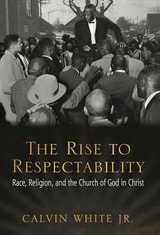
The Rise to Respectability
Race, Religion, and the Church of God in ChristCalvin White
University of Arkansas Press, 2015
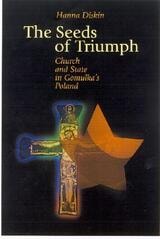
The Seeds of Triumph
Church and State in Gomulka's PolandHannah Diskin
Central European University Press, 2001
The Roman Catholic Church has played a unique role in the history of Poland in the twentieth century: the people and the Church drew closer and closer together during Nazi rule, the Stalinist period and the somewhat milder, though strongly anti-religious and repressive Gomulka regime (1956-1970). The power struggle between the Church and the communist government did in fact play a role in shaping world politics, the Polish Church having been the force behind the opposition movement in Poland. Against this background, a Polish pope appeared and made a major contribution to the collapse of communism.
The Seeds of Triumph, the most comprehensive recent book on the opposition of Church and State in post-war Poland, compares the characteristics and consequences of this relationship during three different periods: the first and second periods of Gomulka's rule, and the Stalinist era between the two Gomulka periods. It examines the balance of power, studying to what degree the Church and other factors in the political environment influenced governmental policy-making. The author disproves the common stereotype, held at the time, that domestic conditions played only a marginal role. In examining the regime's policies, she covers the legal background, the general policy characteristics, the specific policies implemented during the period, and the role of the individual actors, most notably the pivotal role of the two main protagonists, Cardinal Wyszynski and Wladislaw Gomulka.
In her landmark study, Diskin makes a significant contribution to the study of authoritarian systems and greatly enhances our understanding of the centrality of the Church in recent Polish history.
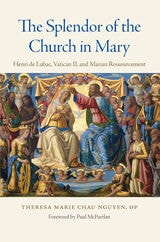
The Splendor of the Church in Mary
Henri de Lubac, Vatican II, and Marian RessourcementTheresa Marie Chau Nguyen
Catholic University of America Press, 2023
Time & Eternity
The Question of Time in Church, Science and TheologyAntje Jackelen
Templeton Press, 2005
What is time? Is there a link between objective knowledge about time and subjective experience of time? And what is eternity? Does religion have the answer? Does science?
•Theological approaches to time and eternity, as well as a look at Trinitarian theology and its relation to time
•The discussion of scientific theories of time, including Newtonian, relativistic, quantum, and chaos theories
•The formulation of a "theology of time," a theological-mathematical model incorporating relational thinking oriented toward the future, the doctrine of trinity, and the notion of eschatology
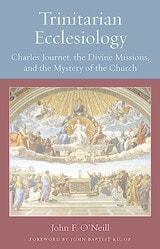
Trinitarian Ecclesiology
Charles Journet, the Divine Missions, and the Mystery of the ChurchJohn F. O'Neill
Catholic University of America Press, 2023