Results by title
129 books match the query 'City and town life' and 30 start with t
Tales and Towns of Northern New Jersey
Beck, Henry
Rutgers University Press, 1967
The Avenue, Clayton City
C. Eric Lincoln
Duke University Press, 1996
In this novel, originally published in 1988, Lincoln creates with deft skill the drama that rises from the lives of the people of Clayton City. In turn amusing, disgusting, enraging, wistful, and, as one hears the secrets hidden deep in their hearts, shocking, they exist in a place whose vibrant personality is itself a unique configuration of geography, relationships, patterns of behavior, and events. It is also a place whose unspoken and hidden power lies in its crushing compulsion to maintain itself as it already is—a power that forces everyone to succumb to an inflexible social order.
The Backcountry and the City
Colonization and Conflict in Early AmericaEd White
University of Minnesota Press, 2005
Ed White explores the backcountry-city divide as well as the dynamics of indigenous peoples, bringing together two distinct bodies of scholarship: one stressing the political culture of the Revolutionary era, the other taking an ethnohistorical view of white–Native American contact. White concentrates his study in Pennsylvania, a state in which the majority of the population was rural, and in Philadelphia, a city that was a center of publishing and politics and the national capital for a decade. Against this backdrop, White reads classic political texts such as Crèvecoeur’s Letters from an American Farmer, Franklin’s Autobiography, and Paine’s “Agrarian Justice,” alongside missionary and captivity narratives, farmers’ petitions, and Native American treaties. Using historical and ethnographic sources to enrich familiar texts, White demonstrates the importance of rural areas in the study of U.S. nation formation and finds unexpected continuities between the early colonial period and the federal ascendancy of the 1790s.
Ed White is associate professor of English at the University of Florida.
The Book of Famous Iowans
A NovelDouglas Bauer
University of Iowa Press, 2014
But mostly what Will summons up in his intimate remembrance are those few catastrophic days in early June when he was “three months shy of twelve,” more than a decade after his parents have married and returned to the Vaughns’ home place, where Lewis farms his family’s land. For it is during those days that Leanne’s affair with a local man named Bobby Markum becomes known—first to Lewis and then, in a fiercely dramatic public confrontation, to young Will, to his beloved Grandmother Vaughn, and by nightfall to all the citizens of the town. The knowledge of such scandal, in so small a place, sets off a series of highly charged reactions, vivid consequences that surely determine the fates of every member of this unforgettable family.
A tale of memory and hero worship and the restless pulse of longing, The Book of Famous Iowans examines those forces that define not only a state made up of a physical geography, but more important, those states of the wholly human spirit.
The City in Texas
A HistoryBy David McComb
University of Texas Press, 2015
Texans love the idea of wide-open spaces and, before World War II, the majority of the state’s people did live and work on the land. Between 1940 and 1950, however, the balance shifted from rural to urban, and today 88 percent of Texans live in cities and embrace the amenities of urban culture. The rise of Texas cities is a fascinating story that has not been previously told. Yet it is essential for understanding both the state’s history and its contemporary character.
In The City in Texas, acclaimed historian David G. McComb chronicles the evolution of urban Texas from the Spanish Conquest to the present. Writing in lively, sometimes humorous and provocative prose, he describes how commerce and politics were the early engines of city growth, followed by post–Civil War cattle shipping, oil discovery, lumbering, and military needs. McComb emphasizes that the most transformative agent in city development was the railroad. This technology—accompanied by telegraphs that accelerated the spread of information and mechanical clocks that altered concepts of time—revolutionized transportation, enforced corporate organization, dictated town location, organized space and architecture, and influenced thought. McComb also thoroughly explores the post–World War II growth of San Antonio, Dallas, Fort Worth, Austin, and Houston as incubators for businesses, educational and cultural institutions, and health care centers.
The City of Mexico in the Age of Díaz
By Michael Johns
University of Texas Press, 1997
Mexico City assumed its current character around the turn of the twentieth century, during the dictatorship of Porfirio Díaz (1876-1911). In those years, wealthy Mexicans moved away from the Zócalo, the city's traditional center, to western suburbs where they sought to imitate European and American ways of life. At the same time, poorer Mexicans, many of whom were peasants, crowded into eastern suburbs that lacked such basic amenities as schools, potable water, and adequate sewerage. These slums looked and felt more like rural villages than city neighborhoods. A century—and some twenty million more inhabitants—later, Mexico City retains its divided, robust, and almost labyrinthine character.
In this provocative and beautifully written book, Michael Johns proposes to fathom the character of Mexico City and, through it, the Mexican national character that shaped and was shaped by the capital city. Drawing on sources from government documents to newspapers to literary works, he looks at such things as work, taste, violence, architecture, and political power during the formative Díaz era. From this portrait of daily life in Mexico City, he shows us the qualities that "make a Mexican a Mexican" and have created a culture in which, as the Mexican saying goes, "everything changes so that everything remains the same."
The City of Our Dreaming
The Alchemy LectureLaleh Khalili, V. Mitch McEwen, Gabriela Leandro Pereira, and Leanne Betasamosake Simpson
Duke University Press, 2026
The Colonel's Dream
Charles W. Chesnutt
West Virginia University Press, 2014
Charles Waddell Chesnutt (1858-1932) was an African American writer, essayist, Civil Rights activist, legal-stenography businessman, and lawyer whose novels and short stories explore race, racism, and the problematic contours of African Americans’ social and cultural identities in post-Civil War South. He was the first African American to be published by a major American publishing house and served as a beacon-point for future African American writers.
The Colonel’s Dream, written in 1905, is a compelling tale of the post-Civil War South’s degeneration into a region awash with virulent racist practices against African Americans: segregation, lynchings, disenfranchisement, convict-labor exploitation, and endemic violent repression. The events in this novel are powerfully depicted from the point of view of a philanthropic but unreliable southern white colonel. Upon his return to the South, the colonel learns to abhor this southern world, as a tale of vicious racism unfolds. Throughout this narrative, Chesnutt confronts the deteriorating position of African Americans in an increasingly hostile South. Upon its publication The Colonel’s Dream was considered too controversial and unpalatable because of its bitter criticisms of southern white prejudice and northern indifference, and so this groundbreaking story failed to gain public attention and acclaim.
This is the first scholarly edition of The Colonel’s Dream. It includes an introduction and notes by R. J. Ellis and works to reestablish this great novel’s reputation.
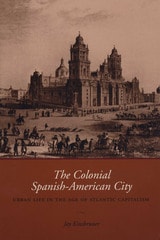
The Colonial Spanish-American City
Urban Life in the Age of Atlantic CapitalismBy Jay Kinsbruner
University of Texas Press, 2005
The colonial Spanish-American city, like its counterpart across the Atlantic, was an outgrowth of commercial enterprise. A center of entrepreneurial activity and wealth, it drew people seeking a better life, with more educational, occupational, commercial, bureaucratic, and marital possibilities than were available in the rural regions of the Spanish colonies. Indeed, the Spanish-American city represented hope and opportunity, although not for everyone.
In this authoritative work, Jay Kinsbruner draws on many sources to offer the first history and interpretation in English of the colonial Spanish-American city. After an overview of pre-Columbian cities, he devotes chapters to many important aspects of the colonial city, including its governance and administrative structure, physical form, economy, and social and family life. Kinsbruner's overarching thesis is that the Spanish-American city evolved as a circumstance of trans-Atlantic capitalism. Underpinning this thesis is his view that there were no plebeians in the colonial city. He calls for a class interpretation, with an emphasis on the lower-middle class. His study also explores the active roles of women, many of them heads of households, in the colonial Spanish-American city.
The Courthouse Square in Texas
By Robert E. Veselka
University of Texas Press, 2000
With its dignified courthouse set among shade trees and lawns dotted with monuments to prominent citizens and fallen veterans, the courthouse square remains the civic center in a majority of the county seats of Texas. Yet the squares themselves vary in form and layout, reflecting the different town-planning traditions that settlers brought from Europe, Mexico, and the United States. In fact, one way to trace settlement patterns and ethnic dispersion in Texas is by mapping the different types of courthouse squares.
This book offers the first complete inventory of Texas courthouse squares, drawn from extensive archival research and site visits to 139 of the 254 county seats. Robert Veselka classifies every existing plan by type and origin, including patterns and variants not previously identified. He also explores the social and symbolic functions of these plans as he discusses the historical and modern uses of the squares. He draws interesting new conclusions about why the courthouse square remains the hub of commercial and civic activity in the smaller county seats, when it has lost its prominence in others.

The Dallas Myth
The Making and Unmaking of an American CityHarvey J. Graff
University of Minnesota Press, 2010
In The Dallas Myth, Harvey J. Graff presents a novel interpretation of a city that has proudly declared its freedom from the past. He scrutinizes the city's origin myth and its governance ideology, known as the "Dallas Way," looking at how these elements have shaped Dallas and served to limit democratic participation and exacerbate inequality. Advancing beyond a traditional historical perspective, Graff proposes an original, integrative understanding of the city's urban fabric and offers an explicit critique of the reactionary political foundations of modern Dallas: its tolerance for right-wing political violence, the endemic racism and xenophobia, and a planning model that privileges growth and monumental architecture at the expense of the environment and social justice.
Revealing the power of myths that have defined the city for so long, Graff presents a new interpretation of Dallas that both deepens our understanding of America's urban landscape and enables its residents to envision a more equitable, humane, and democratic future for all.
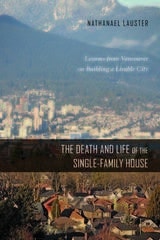
The Death and Life of the Single-Family House
Lessons from Vancouver on Building a Livable CityNathanael Lauster
Temple University Press, 2016
Vancouver today is recognized as one of the most livable cities in the world as well as an international model for sustainability and urbanism. Single-family homes in this city are “a dying breed.” Most people live in the various low-rise and high-rise urban alternatives throughout the metropolitan area.
The Death and Life of the Single-Family House explains how residents in Vancouver attempt to make themselves at home without a house. Local sociologist Nathanael Lauster has painstakingly studied the city’s dramatic transformation to curb sprawl. He tracks the history of housing and interviews residents about the cultural importance of the house as well as the urban problems it once appeared to solve.
Although Vancouver’s built environment is unique, Lauster argues that it was never predestined by geography or demography. Instead, regulatory transformations enabled the city to renovate, build over, and build around the house. Moreover, he insists, there are lessons here for the rest of North America. We can start building our cities differently, and without sacrificing their livability.
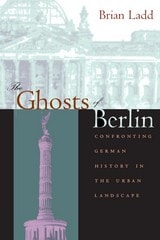
The Ghosts of Berlin
Confronting German History in the Urban LandscapeBrian Ladd
University of Chicago Press, 1997
"Written in a clear and elegant style, The Ghosts of Berlin is not just another colorless architectural history of the German capital. . . . Mr. Ladd's book is a superb guide to this process of urban self-definition, both past and present."—Katharina Thote, Wall Street Journal
"If a book can have the power to change a public debate, then The Ghosts of Berlin is such a book. Among the many new books about Berlin that I have read, Brian Ladd's is certainly the most impressive. . . . Ladd's approach also owes its success to the fact that he is a good storyteller. His history of Berlin's architectural successes and failures reads entertainingly like a detective novel."—Peter Schneider, New Republic
"[Ladd's] well-written and well-illustrated book amounts to a brief history of the city as well as a guide to its landscape."—Anthony Grafton, New York Review of Books
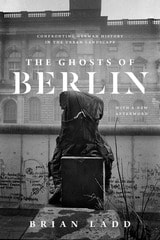
The Ghosts of Berlin
Confronting German History in the Urban LandscapeBrian Ladd
University of Chicago Press, 2018

The Gudge Creek and Wad Chronicles
Richard Allin
University of Arkansas Press, 1989
The Looking-Glass
William March
University of Alabama Press, 1943
Third in the "Pearl County" series, The Looking-Glass is March's story of a small Alabama town in the early days of the twentieth century. Connected by relationships that bind, support, and strangle, the citizens of Reedyville are drawn ineluctably toward a single climactic night. March's skillful blend of humor and pathos evinces his deep insights and empathy into the problems of the mind and heart that are both peculiar to Reedyville yet found in every town and family.
The Public and Its Possibilities
Triumphs and Tragedies in the American CityJohn D. Fairfield
Temple University Press, 2012
In his compelling reinterpretation of American history, The Public and Its Possibilities, John Fairfieldargues that our unrealized civic aspirations provide the essential counterpoint to an excessive focus on private interests. Inspired by the revolutionary generation, nineteenth-century Americans struggled to build an economy and a culture to complement their republican institutions. But over the course of the twentieth century, a corporate economy and consumer culture undercut civic values, conflating consumer and citizen.
Fairfield places the city at the center of American experience, describing how a resilient demand for an urban participatory democracy has bumped up against the fog of war, the allure of the marketplace, and persistent prejudices of race, class, and gender. In chronicling and synthesizing centuries of U.S. history—including the struggles of the antislavery, labor, women’s rights movements—Fairfield explores the ebb and flow of civic participation, activism, and democracy. He revisits what the public has done for civic activism, and the possibility of taking a greater role.
In this age where there has been a move towards greater participation in America's public life from its citizens, Fairfield’s book—written in an accessible, jargon-free style and addressed to general readers—is especially topical.
The Quick-Change Artist
StoriesCary Holladay
Ohio University Press, 2006
In these stories of magic and memory, clustered around a resort hotel in a small Virginia community, Cary Holladay takes the reader on an excursion through the changes wrought by time on the community and its visitors. From the quiet of a rural forest to the rhythms of rock and roll, The Quick-Change Artist is at once whimsical and hard-edged, dizzying in its matter-of-fact delivery of the fantastic.
Romance, a sense of place and belonging, and the supernatural—especially in the lives of children coming of age—offer windows into worlds beyond the ordinary throughout The Quick-Change Artist. In the title story, a young chambermaid is in love with a foreign magician who performs at the hotel where she works. In “Heaven,” set during the 1918 flu epidemic, a struggling mother and son rely on the support of their fortune-telling plow horse. The narrator of “Jane’s Hat” recalls a childhood enlivened by an unusual school principal and a friend who starts finding beauty everywhere.
Horses and the people who love them, wanderers and those who feed them, creatures that disappear and those who search for them: these are stories with a constant heart.
The Republican Aventine and Rome’s Social Order
Lisa Marie Mignone
University of Michigan Press, 2016
The myth of the “plebeian Aventine” became embedded not only in classical scholarship, but also in modern political and cultural consciousness; it has even been used by modern figures to support their political agenda. Yet The Republican Aventine and Rome’s Social Order makes bold new claims regarding the urban design and social history of ancient Rome and raises a significant question about ancient urbanism and social stability more generally: Did social integration reduce violence in premodern cities and promote urban concord?
The Strange Side of the Tracks
George Avant
Parkhurst Brothers, Inc., 2015
Some kids have to grow up fast. This is the story of Lonnie Tobin, one such young man. Weary of the physical abuse his mother is subjected to from his father, he takes matt ers into his own hands. Convincing her to flee their fearful home life, son and mother sneak away in the night to the small town of Rocky Branch, where they find peace with her family. It is a corner of the world he thought they had left behind forever. But mysteries abound in this little wooded village, and an unexpected adventure begins when word of a nightly monster on the loose stirs fear among the residents. Young Lonnie soon forgets about his father and becomes fascinated by the story, only to find he might be spending a litt le too much time on The Strange Side of the Tracks.
The Third City
Chicago and American UrbanismLarry Bennett
University of Chicago Press, 2010
Our traditional image of Chicago—as a gritty metropolis carved into ethnically defined enclaves where the game of machine politics overshadows its ends—is such a powerful shaper of the city’s identity that many of its closest observers fail to notice that a new Chicago has emerged over the past two decades. Larry Bennett here tackles some of our more commonly held ideas about the Windy City—inherited from such icons as Theodore Dreiser, Carl Sandburg, Daniel Burnham, Robert Park, Sara Paretsky, and Mike Royko—with the goal of better understanding Chicago as it is now: the third city.
Bennett calls contemporary Chicago the third city to distinguish it from its two predecessors: the first city, a sprawling industrial center whose historical arc ran from the Civil War to the Great Depression; and the second city, the Rustbelt exemplar of the period from around 1950 to 1990. The third city features a dramatically revitalized urban core, a shifting population mix that includes new immigrant streams, and a growing number of middle-class professionals working in new economy sectors. It is also a city utterly transformed by the top-to-bottom reconstruction of public housing developments and the ambitious provision of public works like Millennium Park. It is, according to Bennett, a work in progress spearheaded by Richard M. Daley, a self-consciously innovative mayor whose strategy of neighborhood revitalization and urban renewal is a prototype of city governance for the twenty-first century. The Third City ultimately contends that to understand Chicago under Daley’s charge is to understand what metropolitan life across North America may well look like in the coming decades.
The Thirty-Foot Elvis
A novelJane F. Hankins
Parkhurst Brothers, Inc., 2013
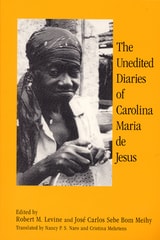
The Unedited Diaries of Carolina Maria De Jesus
Levine, Robert M
Rutgers University Press, 1998
Carolina Maria de Jesus' book, Quarto de Despejo (The Trash Room), depicted the harsh life of the slums, but it also spoke of the author's pride in her blackness, her high moral standards, and her patriotism. More than a million copies of her diary are believed to have been sold worldwide. Yet many Brazilians refused to believe that someone like de Jesus could have written such a diary, with its complicated words (some of them misused) and often lyrical phrasing as she discussed world events. Doubters prefer to believe the book was either written by Audáulio Dantas, the enterprising newspaper reporter who discovered her, or that Dantas rewrote it so substantially that her book is a fraud. With the cooperation of de Jesus' daughter, recent research shows that although Dantas deleted considerable portions of the diary (as well as a second one), every word was de Jesus'.
But Dantas did "create" a different Carolina from the woman who coped with her harsh life by putting things down on paper. This book sets the record straight by providing detailed translations of de Jesus' unedited diaries and explains why Brazilian elites were motivated to obscure her true personality and present her as something she was not. It is not only about the writer but about Brazil as recorded by her sarcastic pen. The diary entries in this book span from 1958 to 1966, five years beyond text previously known to exist. They show de Jesus as she was, preserving her Joycean stream-of-consciousness language and her pithy characterizations.
The Urban Questions
Interdisciplinary and Multiscalar Approaches to Investigating the Ancient Mesoamerican CityLisa Johnson and Arianna Campiani
University of Utah Press, 2025
This groundbreaking volume presents a fresh and comprehensive look at the urban development of Mesoamerican cities. Moving beyond traditional methods, The Urban Questions adopts a dynamic, multidisciplinary approach to understanding the complexity and diversity of ancient settlements. By examining urbanism at multiple scales—from individual events to households, neighborhoods, and entire regions—it offers a nuanced view of how these cities evolved over time.
Contributors explore key themes such as community identity, infrastructure management, and the intersection of social, political, and economic processes. Rich in both spatial and material analysis, the chapters provide insights into the lived experience of ancient Mesoamerican inhabitants and the gradual expansion of their cities. With innovative archaeological methodologies and theoretical frameworks, this volume is an essential resource for scholars of Mesoamerican studies, archaeology, and urban history, shedding new light on the dynamic nature of ancient cities.
The Wall Jumper
A Berlin StoryPeter Schneider
University of Chicago Press, 1998
When the Berlin Wall was still the most tangible representation of the Cold War, Peter Schneider made this political and ideological symbol into something personal, that could be perceived on a human level, from more than one side. In Schneider's Berlin, real people cross the Wall not to defect but to quarrel with their lovers, see Hollywood movies, and sometimes just because they can't help themselves—the Wall has divided their emotions as much as it has their country. This unforgettable novel, originally published in 1982, takes us back to a time when the Cold War seemed to have no end in sight and the Wall loomed over everyday life on both sides of Berlin.
The Water Carrier
Steve Straight
Northwestern University Press, 2002
Steve Straight's skillfully crafted poems cover a wide range of topics—love, marriage, family, work, and class issues. Not since E. A. Robinson has anyone captured the essence of the New England town with such keen observation. What gives this volume its distinctive voice is a Buddhist calm, tinged with irony and humor. Steve Straight touches the ordinary things of life with a magical whimsy and a delightful self-deprecating humor.
The World Is Always Coming to an End
Pulling Together and Apart in a Chicago NeighborhoodCarlo Rotella
University of Chicago Press, 2019
In the late 1960s and 1970s Carlo Rotella grew up in Chicago’s South Shore neighborhood—a place of neat bungalow blocks and desolate commercial strips, and sharp, sometimes painful social contrasts. In the decades since, the hollowing out of the middle class has left residents confronting—or avoiding—each other across an expanding gap that makes it ever harder for them to recognize each other as neighbors. Rotella tells the stories that reveal how that happened—stories of deindustrialization and street life; stories of gorgeous apartments with vistas onto Lake Michigan and of Section 8 housing vouchers held by the poor. At every turn, South Shore is a study in contrasts, shaped and reshaped over the past half-century by individual stories and larger waves of change that make it an exemplar of many American urban neighborhoods. Talking with current and former residents and looking carefully at the interactions of race and class, persistence and change, Rotella explores the tension between residents’ deep investment of feeling and resources in the physical landscape of South Shore and their hesitation to make a similar commitment to the community of neighbors living there.
Blending journalism, memoir, and archival research, The World Is Always Coming to an End uses the story of one American neighborhood to challenge our assumptions about what neighborhoods are, and to think anew about what they might be if we can bridge gaps and commit anew to the people who share them with us. Tomorrow is another ending.
To The City
Urban Photographs of the New DealAuthored by Julia L. Foulkes
Temple University Press, 2011
In the 1930s and 1940s, as the United States moved from a rural to an urban nation, the pull of the city was irrepressible. It was so strong that even a photographic mission designed to record the essence of rural America could not help but capture the energy of urbanization too. To the City showcases over 100 photographs from the Farm Security Administration (FSA) project along with extracts from the Works Progress Administration (WPA) guidebooks and oral histories, to convey the detail and dimensions of that transformation.
This artfully grouped collection of photographs includes magnificent images by notable photographers Dorothea Lange, Walker Evans and Gordon Parks, among many others. Foulkes organizes this history of Americana into five themes: Intersection; Traffic; High Life and Low Life; The City in the Country; and Citizens to illuminate the changes in habits, landscapes, and aspirations that the march to cities encompassed.
As the rural past holds symbolic sway and the suburb presents demographic force, the urban portion of our history—why and how cities have been a destination for hope—recedes from view. To the City is a thoughtful, engaging reminder.
Town in the Empire
Government, Politics, and Society in Seventeenth Century PopayánBy Peter Marzahl
University of Texas Press, 1979
During the seventeenth century, many of the fundamental characteristics of Spanish America were established. Peter Marzahl adds significantly to our understanding of this period with this study of Popayán, a town in what was then part of New Granada and is now Colombia. New Granada was something of a backwater of the empire, but very likely Popayán was more typical of everyday colonial life than the major centers that have drawn most attention from historians.
In the first part of his study, Marzahl describes both town and region, depicts economic activities (agriculture, gold mining, trade), and analyzes urban and rural society. Of particular interest is his discussion of the complex interaction among the different ethnic groups: Spaniards, Mestizos, Indians, and Blacks. In the longer second part he presents a detailed account of the makeup and operations of the town councils. His extensive research in primary sources makes possible a thorough examination of Popayán's administration and politics and their relationship to economic and social patterns. He also describes the councils' relations with the provincial governors, the viceregal authorities in Bogotá, and the Church. Because this study treats a neglected period and region and, in so doing, offers fresh materials and insights, it is an important contribution to our knowledge and comprehension of colonial Spanish America.
Townships
Michael Martone
University of Iowa Press, 1992
Townships establishes the Midwest as an important center of creativity, a region to be noted for more than corn and prairie and neat, square patches of land. The reverberations in sensibility that make their way through these essays speak to all midwesterners and to all those for whom a sense of place is a source of inspiration.