Results by title
129 books match the query 'Civics & Citizenship' and 26 start with t
Table Talk
Building Democracy One Meal at a TimeJanet A. Flammang
University of Illinois Press, 2016
The civic virtues of a seat at the table
Etiquette books insist that we never discuss politics during a meal. In Table Talk, Janet A. Flammang offers a polite rebuttal, presenting vivid firsthand accounts of people's lives at the table to show how mealtimes can teach us the conversational give-and-take foundational to democracy. Delving into the ground rules about listening, sharing, and respect that we obey when we break bread, Flammang shows how conversations and table activities represent occasions for developing our civil selves. If there are cultural differences over practices--who should speak, what behavior is acceptable, what topics are off limits, how to resolve conflict--our exposure to the making, enforcement, and breaking of these rules offers a daily dose of political awareness and growth. Political table talk provides a forum to practice the conversational skills upon which civil society depends. It also ignites the feelings of respect, trust, and empathy that undergird the idea of a common good that is fundamental to the democratic process.
The Chicago Companion to Tocqueville's Democracy in America
James T. Schleifer
University of Chicago Press, 2012
An compact, accessible, authoritative companion to Tocqueville's classic work
One of the greatest books ever to be written on the United States, Democracy in America continues to find new readers who marvel at the lasting insights Alexis de Tocqueville had into our nation and its political culture. The work is, however, as challenging as it is important; its arguments can be complex and subtle, and its sheer length can make it difficult for any reader, especially one coming to it for the first time, to grasp Tocqueville’s meaning. The Chicago Companion to Tocqueville’s “Democracy in America” is the first book written expressly to help general readers and students alike get the most out of this seminal work.
Now James T. Schleifer, an expert on Tocqueville, has provided the background and information readers need in order to understand Tocqueville’s masterwork. In clear and engaging prose, Schleifer explains why Democracy in America is so important, how it came to be written, and how different generations of Americans have interpreted it since its publication. He also presents indispensable insight on who Tocqueville was, his trip to America, and what he meant by equality, democracy, and liberty.
Drawing upon his intimate knowledge of Tocqueville’s papers and manuscripts, Schleifer reveals how Tocqueville’s ideas took shape and changed even in the course of writing the book. At the same time, Schleifer provides a detailed glossary of key terms and key passages, all accompanied by generous citations to the relevant pages in the University of Chicago Press Mansfield/Winthrop translation. The Chicago Companion will serve generations of readers as an essential guide to both the man and his work.
The Dialectics of Citizenship
Exploring Privilege, Exclusion, and RacializationBernd Reiter
Michigan State University Press, 2013
The Effective Republic
Administration and Constitution in the Thought of Alexander HamiltonHarvey Flaumenhaft
Duke University Press, 1992
Although Hamilton exterted an extraordinary influence on American institutions, his contribution and the thinking behind it often have been obscured and misconstrued by piecemeal approaches to his voluminous writings. Here, Flaumenhaft draws upon more than two dozen volumes of Hamilton’s papers to produce a comprehensive account of his thought on the principles of politics—the account which Hamilton himself hoped to give in a multivolume treatise, but died before producing.
Beginning with a discussion of the place of general principles in Hamilton’s thought, The Effective Republic proceeds to his views on popular representation as a safeguard of individual liberty. Flaumenhaft then elaborates on Hamilton’s thinking about efficacious administration, especially how the President and Senate meet the requirements of unity and duration in a republic, and on the importance of an independent judiciary for constitutional integrity. What emerges clearly as Hamilton’s chief concern is the need to make government not only safe but effective—hindered from doing harm by its popular base, but also, through the differentiation of administrative powers and tasks, capable of doing good.
Interpreting, linking, and, and arranging Hamilton’s words, Flaumenhaft allows Hamilton to speak for himself, to explain his benificiaries his vision of what the republican experiment needed in order to succeed.
The Fog of Accountability
How Institutions Keep Voters from Holding Their Local Governments AccountableJustin de Benedictis-Kessner
University of Chicago Press, 2026
An astute, data-rich examination of the structural reasons that elections fail to hold US city officials accountable.
In the United States, hundreds of thousands of elected and appointed officials serve more than 50,000 subnational governments, making important decisions about services ranging from education to infrastructure to policing. The provision of critical city services shapes citizens’ everyday lives.
Supposedly, local politicians are the elected representatives closest to the people they serve, but are they actually accountable to their constituents? Justin de Benedictis-Kessner shows that they are not: local elections routinely fail to punish bad politicians or reward strong performers. The Fog of Accountability argues that this is because urban politics is defined by minimally effective competition, complex institutions that confuse voters, and a lack of effective media coverage. These institutional features combine to stymie even well-intentioned voters and make accountability difficult. Fixing these problems is challenging, but, as de Benedictis-Kessner shows, change is possible if we can enable citizens to reclaim and assert their political power.
The Future of Democracy
Developing the Next Generation of American CitizensPeter Levine
University Press of New England, 2015
The Muslim Question in Europe
Political Controversies and Public PhilosophiesPeter O'Brien
Temple University Press, 2016
An estimated twenty million Muslims now reside in Europe, mostly as a result of large-scale postwar immigration. In The Muslim Question in Europe, Peter O’Brien challenges the popular notion that the hostilities concerning immigration—which continues to provoke debates about citizenship, headscarves, secularism, and terrorism—are a clash between “Islam and the West.” Rather, he explains, the vehement controversies surrounding European Muslims are better understood as persistent, unresolved intra-European tensions.
O’Brien contends that the best way to understand the politics of state accommodation of European Muslims is through the lens of three competing political ideologies: liberalism, nationalism, and postmodernism. These three broadly understood philosophical traditions represent the most influential normative forces in the politics of immigration in Europe today. He concludes that Muslim Europeans do not represent a monolithic anti-Western bloc within Europe. Although they vehemently disagree among themselves, it is along the same basic liberal, nationalist, and postmodern contours as non-Muslim Europeans.
The Necessity of Politics
Reclaiming American Public LifeChristopher Beem
University of Chicago Press, 1999
In response to this bleak assessment, advocates of "civil society" argue that rejuvenating our neighborhoods, churches, and community associations will lead to a more moral, civic-minded polity. Christopher Beem argues that while the movement's goals are laudable, simply restoring local institutions will not solve the problem; a civil society also needs politics and government to provide a sense of shared values and ideas. Tracing the concept back to Tocqueville and Hegel, Beem shows that both thinkers faced similar problems and both rejected civil society as the sole solution. He then shows how, in the case of the Civil Rights movement, both political groups and the federal government were necessary to effect a new consensus on race.
Taking up the arguments of Robert Putnam, Michael Sandel, and others, this timely book calls for a more developed sense of what the state is for and what our politics ought to be about.
"This book is bound to incite controversy and to contribute to our ongoing grappling with where our own democratic political culture is going. . . . Beem helps us to get things right by offering a corrective to any and all visions of civil society sanitized from politics."—Jean Bethke Elshtain, from the Foreword
"[Beem] makes an impressive case. At the end of the day, there really is no substitute for governmental authority in fostering the moral identity of the body politic."—Robert P. George, Times Literary Supplement
The Obligation Mosaic
Race and Social Norms in US Political ParticipationAllison P. Anoll
University of Chicago Press, 2022
In The Obligation Mosaic, Allison P. Anoll shows that the obligations that bring people into the political world—or encourage them to stay away—vary systematically by race in the United States, with broad consequences for representation. Drawing on a rich mix of interviews, surveys, and experiments with Asian, Black, Latino, and White Americans, the book uncovers two common norms that centrally define concepts of obligation: honoring ancestors and helping those in need. Whether these norms lead different groups to politics depends on distinct racial histories and continued patterns of segregation.
Anoll’s findings not only help to explain patterns of participation but also provide a window into opportunities for change, suggesting how activists and parties might better mobilize marginalized citizens.
The People Shall Rule
ACORN, Community Organizing, and the Struggle for Economic JusticeRobert Fisher
Vanderbilt University Press, 2009
The twelve chapters in this volume present the perspectives of insiders like founder Wade Rathke and leading outside practitioners and academics. The result is a thorough detailing of ACORN's founding and its changing strategies, including vivid accounts and analyses of its campaigns on the living wage, voter turnout, predatory lending, redlining, school reform, and community redevelopment, as well as a critical perspective on ACORN's place in the community organizing landscape.
The Philadelphia Irish
Nation, Culture, and the Rise of a Gaelic Public SphereMichael L. Mullan
Rutgers University Press, 2021
Using Jurgen Habermas’s concept of a public sphere, the author reveals how the Irish constructed a plebian “counter” public of Gaelic meaning through various mechanisms of communication, the ethnic press, the meeting rooms of Irish societies, the consumption of circulating pamphlets, oratory, songs, ballads, poems, and conversation.
Settled in working class neighborhoods of vast spatial separation in an industrial city, the Irish resisted a parochialism identified with neighborhood and instead extended themselves to construct a vibrant, culturally engaged network of Irish rebirth in Philadelphia, a public of Gaelic meaning.
The Public and Its Possibilities
Triumphs and Tragedies in the American CityJohn D. Fairfield
Temple University Press, 2012
In his compelling reinterpretation of American history, The Public and Its Possibilities, John Fairfieldargues that our unrealized civic aspirations provide the essential counterpoint to an excessive focus on private interests. Inspired by the revolutionary generation, nineteenth-century Americans struggled to build an economy and a culture to complement their republican institutions. But over the course of the twentieth century, a corporate economy and consumer culture undercut civic values, conflating consumer and citizen.
Fairfield places the city at the center of American experience, describing how a resilient demand for an urban participatory democracy has bumped up against the fog of war, the allure of the marketplace, and persistent prejudices of race, class, and gender. In chronicling and synthesizing centuries of U.S. history—including the struggles of the antislavery, labor, women’s rights movements—Fairfield explores the ebb and flow of civic participation, activism, and democracy. He revisits what the public has done for civic activism, and the possibility of taking a greater role.
In this age where there has been a move towards greater participation in America's public life from its citizens, Fairfield’s book—written in an accessible, jargon-free style and addressed to general readers—is especially topical.
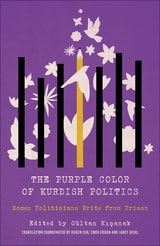
The Purple Color of Kurdish Politics
Women Politicians Write from PrisonGultan Kisanak
Pluto Press, 2022
Prison writings from twenty-two Kurdish women who were elected to office in Turkey and then imprisoned by the state on political grounds.
Gültan Kışanak, a Kurdish journalist and former MP, was elected co-mayor of Diyarbakır in 2014. Two years later, the Turkish state arrested and imprisoned her. Her story is remarkable, but not unique. While behind bars, she wrote about her own experiences and collected similar accounts from other Kurdish women, all co-chairs, co-mayors, and MPs in Turkey; all incarcerated on political grounds.
The Purple Colour of Kurdish Politics is a one-of-a-kind collection of prison writings from twenty-two Kurdish women politicians. Here they reflect on their personal and collective struggles against patriarchy and anti-Kurdish repression in Turkey; on the radical feminist principles and practices through which they transformed the political structures and state offices in which they operated. They discuss what worked and what didn’t, and the ways in which Turkey’s anti-capitalist and socialist movements closely informed their political stances and practices.
Demonstrating Kurdish women’s ceaseless political determination and refusal to be silenced – even when behind bars – the book ultimately hopes to inspire women living under even the most unjust conditions to engage in collective resistance.
The Road to Citizenship
What Naturalization Means for Immigrants and the United StatesAptekar, Sofya
Rutgers University Press, 2015

The Rule of Law in Latin America
The International Promotion of Judicial ReformEdited by Pilar Domingo and Rachel Sieder
University of London Press, 2001
The Sciences of the Democracies
Jean-Paul Gagnon and Benjamin Abrams
University College London, 2025
The Sciences of the Democracies issues a direct challenge to one of the most influential advice books on democracy ever published—the (in)famous “Trilateral Report” written in 1975, better known as The Crisis of Democracy—on the occasion of its fiftieth anniversary. This collaborative project is ambitious, aiming not only to capture the great diversity of democratic practices and institutions but also to introduce a new theory of democracy altogether. The contributors propose a holistic approach to democracy that draws on five sources of knowledge: individual people, groups of people, non-textual media, texts, and non-humans. The outcome is both an innovative account of democratic history and a practical guide for future democracy scholars.

The State and the City
Ted Robert Gurr and Desmond King
University of Chicago Press, 1987
Gurr and King's analysis assumes modern states have their own interests, institutional momentum, and the capacity to act with relative autonomy. Their historically based analysis begins with an account of the evolution of the Western state's interest in the viability of cities since the industrial revolution. Their agument extends to the local level, examining the nature of the local state and its autonomy from national political and economic forces.
Using cross-national evidence, Gurr and King examine specific problems of urban policy in the United States and Britain. In the United States, for example, they show how the dramatic increases in federal assistance to cities in the 1930s and the 1960s were made in response to urban crises, which simultaneously threatened national interests and offered opportunities for federal expansion of power. As a result, national and local states now play significant material and regulatory roles that can have as much impact on cities as all private economic activities.
A comparative analysis of thirteen American cities reflects the range and impact of the state's activities at the urban level. Boston, they argue, has become the archetypical postindustrial public city: half of its population and personal income are directly dependent on government spending. While Gurr and King are careful to delineate the limits to the extent and effectiveness of state intervention, they conclude that these limits are much broader than formerly thought. Ultimately, their evidence suggests that the continued decline of most of the old industrial cities is the result of public decisions to allow their economic fate to be determined in the private sector.
The Taiwan Voter
Christopher H. Achen and T. Y. Wang, Editors
University of Michigan Press, 2017
Taiwan’s electoral politics draws international scholarly interest because of the prominent role of ethnic and national identification. While in most countries the many tangled strands of competing identities are daunting for scholarly analysis, in Taiwan the cleavages are powerful and limited in number, so the logic of interrelationships among issues, partisanship, and identity are particularly clear. The Taiwan Voter unites experts to investigate the ways in which social identities, policy views, and partisan preferences intersect and influence each other. These novel findings have wide applicability to other countries, and will be of interest to a broad range of social scientists interested in identity politics.
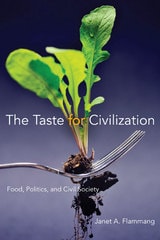
The Taste for Civilization
Food, Politics, and Civil SocietyJanet A. Flammang
University of Illinois Press, 2009
This book explores the idea that table activities--the mealtime rituals of food preparation, serving, and dining--lay the foundation for a proper education on the value of civility, the importance of the common good, and what it means to be a good citizen. The arts of conversation and diplomatic speech are learned and practiced at tables, and a political history of food practices recasts thoughtfulness and generosity as virtues that enhance civil society and democracy. In our industrialized and profit-centered culture, however, foodwork is devalued and civility is eroding.
Looking at the field of American civility, Janet A. Flammang addresses the gendered responsibilities for foodwork's civilizing functions and argues that any formulation of "civil society" must consider food practices and the household. To allow space for practicing civility, generosity, and thoughtfulness through everyday foodwork, Americans must challenge the norms of unbridled consumerism, work-life balance, and domesticity and caregiving. Connecting political theory with the quotidian activities of the dinner table, Flammang discusses practical ideas from the "delicious revolution" and Slow Food movement to illustrate how civic activities are linked to foodwork, and she points to farmers' markets and gardens in communities, schools, and jails as sites for strengthening civil society and degendering foodwork.
Theatre Symposium, Vol. 28
Theatre and CitizenshipEdited by Andrew Gibb
University of Alabama Press, 2020
A collection of essays whose authors reach beyond simple definitions of citizenship as determined by documents and legal rights
The scholarly conference from which this publication emerged was circulated in the waning months of 2018, following a summer of urgent and emotional debate surrounding new US immigration policies regarding immigrant family separations, arguments fueled on one side by fears about the loss of social cohesion, and on the other by photographs of incarcerated children. Given the then-prevailing political atmosphere, editor Andrew Gibb anticipated that a good number of submissions might draw connections between the patterns, policies, and histories of immigration on the one hand, and theatrical or otherwise performance-centered expressions of citizenship, whether inclusive or exclusionary, on the other. In retrospect, what could have been foreseen is that theatre scholars, educators, and professionals would interpret recent events against a wider and more complex backdrop. The ultimate result of that initial call is this volume, a collection of essays whose authors reach beyond simple definitions of citizenship as determined by documents and legal rights, and who engage in larger conversations about what citizenship can mean, and how such meanings are expressed through theatre and performance.
Interestingly, while none of the authors published herein take up immigration as a central issue, they all make use of some combination of three particular analytical frameworks, all of which happen to be pertinent to the current immigrant experience and attempts to regulate it: bodies, institutions, and technologies.
To Keep the Republic
Thinking, Talking, and Acting Like a Democratic CitizenElizabeth C. Matto
Rutgers University Press, 2024
To Keep the Republic is a wake-up call about the responsibilities that come with being a citizen in a participatory democracy. It describes the many ways that individuals can make a difference on both local and national levels—and explains why they matter. Political scientist Elizabeth C. Matto highlights the multiple facets of democratic citizenship, identifies American democracy’s sometimes competing values and ideals, and explains how civic engagement can take various forms, including political conversation. Combining political philosophy with concrete suggestions for how to become a more engaged citizen, To Keep the Republic reminds us that democracy is not a spectator sport; it only works when we get off the sidelines and enter the political arena to make our voices heard.
Town Hall Meetings and the Death of Deliberation
Jonathan Beecher Field
University of Minnesota Press, 2019
Tracing the erosion of democratic norms in the US and the conditions that make it possible
Jonathan Beecher Field tracks the permutations of the town hall meeting from its original context as a form of democratic community governance in New England into a format for presidential debates and a staple of corporate governance. In its contemporary iteration, the town hall meeting models the aesthetic of the former but replaces actual democratic deliberation with a spectacle that involves no immediate electoral stakes or functions as a glorified press conference. Urgently, Field notes that though this evolution might be apparent, evidence suggests many US citizens don’t care to differentiate.
Forerunners: Ideas First
Short books of thought-in-process scholarship, where intense analysis, questioning, and speculation take the lead
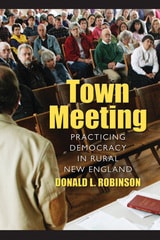
Town Meeting
Practicing Democracy in Rural New EnglandDonald L. Robinson
University of Massachusetts Press, 2011
At Gettysburg, Abraham Lincoln described government by the people as “the great task remaining before us.” Many citizens of modern America, frustrated and disheartened, are tempted to despair of realizing that ideal. Yet, it is a project still alive in parts of New England.
This book traces the origins of town-meeting democracy in Ashfield, a community of just under 2,000 people in the foothills of the Berkshires in western Massachusetts. Donald Robinson begins by recounting several crises at the town's founding in the eighteenth century that helped to shape its character. He shows how the town has changed since then and examines how democratic self-government functions in the modern context.
The picture is not pretty. Self-government carries no guarantees, and Ashfield is no utopia. Human failings are abundantly on display. Leaders mislead. Citizens don't pay attention and they forget hard-earned lessons.
But in this candid account of the operation of democracy in one New England town, Robinson demonstrates that for better and for worse, Ashfield governs itself democratically. Citizens control the actions of their government. Not everyone participates, but all may, and everyone who lives in the town must accept and obey what town meeting decides.
Transformative Civic Education in Democratic Societies
Tetyana Hoggan-Kloubert
Michigan State University Press, 2023
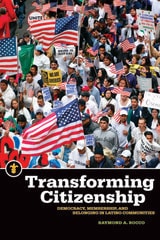
Transforming Citizenship
Democracy, Membership, and Belonging in Latino CommunitiesRaymond A. Rocco
Michigan State University Press, 2014
Transnational Marriage and Partner Migration
Constellations of Security, Citizenship, and RightsAnne-Marie D'Aoust
Rutgers University Press, 2022