50 books match the query 'Cognitive Psychology & Cognition' and 15 start with t
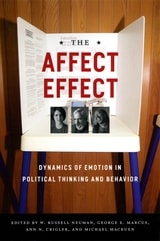
cover of The Affect Effect: Dynamics of Emotion in Political Thinking and Behavior

The Affect Effect

Dynamics of Emotion in Political Thinking and Behavior

Edited by W. Russell Neuman, George E. Marcus, Michael MacKuen, and Ann N. Crigler

University of Chicago Press, 2007

Passion and emotion run deep in politics, but researchers have only recently begun to study how they influence our political thinking. Contending that the long-standing neglect of such feelings has left unfortunate gaps in our understanding of political behavior, The Affect Effect fills the void by providing a comprehensive overview of current research on emotion in politics and where it is likely to lead.

In sixteen seamlessly integrated essays, thirty top scholars approach this topic from a broad array of angles that address four major themes. The first section outlines the philosophical and neuroscientific foundations of emotion in politics, while the second focuses on how emotions function within and among individuals. The final two sections branch out to explore how politics work at the societal level and suggest the next steps in modeling, research, and political activity itself. Opening up new paths of inquiry in an exciting new field, this volume will appeal not only to scholars of American politics and political behavior, but also to anyone interested in political psychology and sociology.
[more]
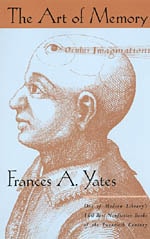
cover of The Art of Memory

The Art of Memory

Frances A. Yates

University of Chicago Press, 1974

One of Modern Library's 100 Best Nonfiction Books of the Twentieth Century!
 
How did people remember essential information before the invention of the printed page? In 1966 Frances Yates revealed the answer, which, ironically had been forgotten for centuries: A system of mnemonics that has become known as the memory palace. In this system, people deliberately associated details they wanted to remember with specific locations in a landscape or building in their mind, thus making them easier to recall. As people even today have discovered, this technique, which at first may seem complicated, turns out to be astonishingly effective, enabling practitioners to recall vast amounts of information without external aids.

In The Art of Memory Yates traces this technique of memorization from its treatment by Greek orators through its Gothic transformations in the Middle Ages to the occult forms it took in the Renaissance, and finally to its use in the seventeenth century. This book, the first to relate the art of memory to the history of culture as a whole, was revolutionary when it first appeared and continues to mesmerize readers with its lucid and revelatory insights.
 
A work of profound, groundbreaking scholarship, The Art of Memory is also remarkably engaging and readable, full of fascinating details and useful information for anyone, scholar or not, who is interested in how our memory works, how we made it work in the past, and how we might still use those insights today.
[more]
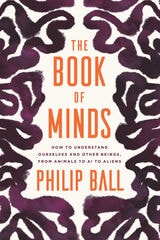
cover of The Book of Minds: How to Understand Ourselves and Other Beings, from Animals to AI to Aliens

The Book of Minds

How to Understand Ourselves and Other Beings, from Animals to AI to Aliens

Philip Ball

University of Chicago Press, 2022

Popular science writer Philip Ball explores a range of sciences to map our answers to a huge, philosophically rich question: How do we even begin to think about minds that are not human?
 
Sciences from zoology to astrobiology, computer science to neuroscience, are seeking to understand minds in their own distinct disciplinary realms. Taking a uniquely broad view of minds and where to find them—including in plants, aliens, and God—Philip Ball pulls the pieces together to explore what sorts of minds we might expect to find in the universe. In so doing, he offers for the first time a unified way of thinking about what minds are and what they can do, by locating them in what he calls the “space of possible minds.” By identifying and mapping out properties of mind without prioritizing the human, Ball sheds new light on a host of fascinating questions: What moral rights should we afford animals, and can we understand their thoughts? Should we worry that AI is going to take over society? If there are intelligent aliens out there, how could we communicate with them? Should we? Understanding the space of possible minds also reveals ways of making advances in understanding some of the most challenging questions in contemporary science: What is thought? What is consciousness? And what (if anything) is free will?

Informed by conversations with leading researchers, Ball’s brilliant survey of current views about the nature and existence of minds is more mind-expanding than we could imagine. In this fascinating panorama of other minds, we come to better know our own.
[more]
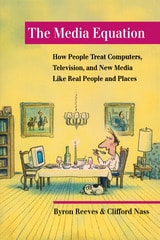
cover of The Media Equation: How People Treat Computers, Television, and New Media Like Real People and Places

The Media Equation

How People Treat Computers, Television, and New Media Like Real People and Places

Byron Reeves and Clifford Nass

CSLI, 2003

Can human beings relate to computer or television programs in the same way they relate to other human beings? Based on numerous psychological studies, this book concludes that people not only can but do treat computers, televisions, and new media as real people and places. Studies demonstrate that people are "polite" to computers; that they treat computers with female voices differently than "male" ones; that large faces on a screen can invade our personal space; and that on-screen and real-life motion can provoke the same physical responses. Using everyday language to engage readers interested in psychology, communication, and computer technology, Reeves and Nass detail how this knowledge can help in designing a wide range of media.
[more]
cover of The Memory Sessions

The Memory Sessions

Suzanne Farrell Smith

Bucknell University Press, 2019

Suzanne Farrell Smith’s father was killed by a drunk driver when she was six, and a devastating fire nearly destroyed her house when she was eight. She remembers those two—and only those two—events from her first nearly twelve years of life. While her three older sisters hold on to rich and rewarding memories of their father, Smith recalls nothing of him. Her entire childhood was, seemingly, erased. In The Memory Sessions, Smith attempts to excavate lost childhood memories. She puts herself through multiple therapies and exercises, including psychotherapy, hypnotherapy, somatic experiencing, and acupuncture. She digs for clues in her mother’s long-stored boxes. She creates—with objects, photographs, and captions—a physical timeline to compensate for the one that’s missing in her memory. She travels to San Diego, where her family vacationed with her father right before he died. She researches, interviews, and meditates, all while facing down the two traumatic memories that defined her early life. The result is an experimental memoir that upends our understanding of the genre. Rather than recount a childhood, The Memory Sessions attempts to create one from research, archives, imagination, and the memories of others. 

Published by Bucknell University Press. Distributed worldwide by Rutgers University Press.
[more]
cover of The Neural Mind: How Brains Think

The Neural Mind

How Brains Think

George Lakoff and Srini Narayanan

University of Chicago Press, 2025

Offers an expansive, unified theory of thought that brings together the vast resources of neuroscience, computation, and cognitive linguistics.

What is an idea, and where does it come from? We experience thought as if it were abstract, but every thought is actually a physical thing, carried out by the neural systems of our brains. Thought does not occur neuron-by-neuron; it happens when neurons come together to form circuits and when simple circuits combine to form complex ones. Thoughts, then, derive their structures from the circuitry we also use for vision, touch, and hearing. This circuitry is what allows simple thoughts to come together into complex concepts, making meaning, creating metaphors, and framing our social and political ideas.

With The Neural Mind, George Lakoff, a pioneering cognitive linguist, and computer scientist Srini Narayanan deftly combine insights from cognitive science, computational modeling, and linguistics to show how thoughts arise from the neural circuitry that runs throughout our bodies. They answer key questions about the ways we make meaning: How does neural circuitry create the conceptual “frames” through which we understand our social lives? What kind of neural circuitry characterizes metaphorical thought, in which ideas are understood in terms of other ideas with similar structures? Lively and accessible, the book shows convincingly that the “metaphors we live by”—to use Lakoff’s famous phrase—aren’t abstractions but deeply embodied neural constructs.

The Neural Mind is the first book of its kind, bringing together the ideas of multiple disciplines to offer a unified, accessible theory of thought. A field-defining work, Lakoff and Narayanan’s book will be of interest not just to linguists and cognitive scientists but also to psychologists, philosophers, anthropologists, journalists, sociologists, and political scientists—and anyone who wants to understand how we really think.
[more]
cover of The Open Mind: Cold War Politics and the Sciences of Human Nature

The Open Mind

Cold War Politics and the Sciences of Human Nature

Jamie Cohen-Cole

University of Chicago Press, 2013

The Open Mind chronicles the development and promulgation of a scientific vision of the rational, creative, and autonomous self, demonstrating how this self became a defining feature of Cold War culture. Jamie Cohen-Cole illustrates how from 1945 to 1965 policy makers and social critics used the idea of an open-minded human nature to advance centrist politics. They reshaped intellectual culture and instigated nationwide educational reform that promoted more open, and indeed more human, minds. The new field of cognitive science was central to this project, as it used popular support for open-mindedness to overthrow the then-dominant behaviorist view that the mind either could not be studied scientifically or did not exist. Cognitive science also underwrote the political implications of the open mind by treating it as the essential feature of human nature.     
           
While the open mind unified America in the first two decades after World War II, between 1965 and 1975 battles over the open mind fractured American culture as the ties between political centrism and the scientific account of human nature began to unravel. During the late 1960s, feminists and the New Left repurposed Cold War era psychological tools to redefine open-mindedness as a characteristic of left-wing politics. As a result, once-liberal intellectuals became neoconservative, and in the early 1970s, struggles against open-mindedness gave energy and purpose to the right wing.
[more]
cover of The Origins of Self: An Anthropological Perspective

The Origins of Self

An Anthropological Perspective

Martin P. J. Edwardes

University College London, 2019
The Origins of Self explores the role selfhood plays in defining both human society and each individual in that society. It considers the genetic and cultural origins of self, the role that self plays in socialization and language, and the types of selves we generate in our individual journeys to and through adulthood. Martin P. J. Edwardes argues that other-awareness is a relatively early evolutionary development, present throughout the primate clade and perhaps beyond, but self-awareness is a product of the sharing of social models, something only humans appear to do. The self of which we are aware is not something innate within us, it is a model of our self produced as a response to the models of us offered to us by other people. Edwardes proposes that human construction of selfhood involves seven different types of self. All but one of them are internally generated models, and the only nonmodel, the actual self, is completely hidden from conscious awareness. We rely on others to tell us about our self, and even to let us know we are a self. Developed in relation to a range of subject areas—linguistics, anthropology, genomics, and cognition, as well as sociocultural theory—The Origins of Self is of particular interest to students and researchers studying the origins of language, human origins in general, and the cognitive differences between human and other animal psychologies.
 
[more]
cover of The Reality of Illusion: An Ecological Approach to Cognitive Film Theory

The Reality of Illusion

An Ecological Approach to Cognitive Film Theory

Joseph D. Anderson

Southern Illinois University Press, 1998

Applying research findings from studies in visual perception, neurophysiology, cognitive psychology, developmental psychology, and anthropology, Joseph D. Anderson defines the complex interaction of motion pictures with the human mind and organizes the relationship between film and cognitive science. Anderson’s primary argument is that motion picture viewers mentally process the projected images and sounds of a movie according to the same perceptual rules used in response to visual and aural stimuli in the world outside the theater. To process everyday events in the world, the human mind is equipped with capacities developed through millions of years of evolution. In this context, Anderson builds a metatheory influenced by the writings of J. J. and Eleanor Gibson and employs it to explore motion picture comprehension as a subset of general human comprehension and perception, focusing his ecological approach to film on the analysis of cinema’s true substance: illusion.

Anderson investigates how viewers, with their mental capacities designed for survival, respond to particular aspects of filmic structure—continuity, diegesis, character development, and narrative—and examines the ways in which rules of visual and aural processing are recognized and exploited by filmmakers. He uses Orson Welles’s Citizen Kane to disassemble and redefine the contemporary concept of character identification; he addresses continuity in a shot-by-shot analysis of images from Casablanca; and he uses a wide range of research studies, such as Harry F. Harlow’s work with infant rhesus monkeys, to describe how motion pictures become a substitute or surrogate reality for an audience. By examining the human capacity for play and the inherent potential for illusion, Anderson considers the reasons viewers find movies so enthralling, so emotionally powerful, and so remarkably real.

[more]
cover of The Recovery of Unconscious Memories: Hypermnesia and Reminiscence

The Recovery of Unconscious Memories

Hypermnesia and Reminiscence

Matthew Hugh Erdelyi

University of Chicago Press, 1996

Memory has recently become the focus of media attention because of the emotionally charged uses made of delayed recall of repressed memories. Integrating literatures from all corners of psychology, The Recovery of Unconscious Memories includes historical accounts, analysis of experiments, and treatment topics, providing the first comprehensive scientific account of memory and how can it can increase over time. Erdelyi includes his own important contributions to this field, ranging from his early attempts to use free-association to produce hypermnesia to his most recent research with hypnosis, subliminal stimuli, forced-recall techniques, and very long-delayed recall probes.

Sketching out the scientific foundations for a unified theory of repression that integrates the findings of the laboratory and the clinic, this comprehensive and authoritative synthesis of a century of memory research will be crucial reading for psychologists and clinicians, as well as forensic and legal professionals interested in the recovery of "inaccessible" memories.

"By debunking hypnosis, [Erdelyi] has allowed the debate on memory to move forward. . . . Erdelyi's work on hypermnesia is very important to our understanding of the mechanisms of memory and the brain."—Janet D. Feigenbaum, Times Literary Supplement
[more]
cover of The Science of Religion and the Religion of Scientism: A Neuroscientist's Perspective on Consciousness, Morality, and the New Atheism

The Science of Religion and the Religion of Scientism

A Neuroscientist's Perspective on Consciousness, Morality, and the New Atheism

Christopher Breitmeyer

Catholic University of America Press, 2026
Scientism claims that religion has nothing to offer our understanding of reality. But since religion can be subjected to scientific methods of study, it paradoxically becomes part of a reality larger than that investigated by the sciences. Scientism is the belief that the empirical sciences provide the sole methods of knowing the truths about reality, and that anything not scientifically observable cannot be real. Hence, religion, theology, ethics, morality, and the creative arts cannot add to our understanding of reality. Scientism, moreover, maintains that scientific and religious understandings of reality relate to each other in distinctively oppositional ways. Amply informed by philosophical and historical scholarship and by knowledge of evolutionary and neurocognitive methods of research, Bruno G. Breitmeyer offers an in-depth look at the relation between scientism and the sciences of religion. In Part 1 Breitmeyer covers the sciences of religion and of related fields of morality and art. In all fields, scientistic influences are clearly discernable. In Part 2 he looks at “nice” and “pernicious” versions of scientism and, despite the latter version, at how it constitutes an atheistic ersatz-religion, especially among scientifically informed neoatheists. In Part 3 he goes beyond scientism in two ways. He first introduces the concept of technoscientism—the belief that modern technology can address and solve any problem facing humanity—and traces its history back to Promethean and Gnostic philosophies. Second, he proposes a novel theology of science in which God is conceived as Creative Mind. The concept of conscious mind, evident throughout the book, points to the crucial role that human subjective experiences plays in scientific and religious practices. Breitmeyer argues that however resolutely scientism attempts to sever science from religion, a supremely creative and conscious Intelligence unites them. Without such Intelligence—theists call it God—neither science nor religion could exist.
[more]
cover of The Search for Ability: Standardized Testing in Social Perspective

The Search for Ability

Standardized Testing in Social Perspective

David A. Goslin

Russell Sage Foundation, 1963
A significant and eye-opening examination of the current state of the testing movement in the United States, where more than 150 million standardized intelligence, aptitude, and achievement tests are administered annually by schools, colleges, business and industrial firms, government agencies, and the military services. Despite widespread acceptance of these ability tests, there is surprisingly little systematic information about their use or effect. This book examines, raises questions about, and points the way to needed research on ability testing. It considers the possible social, legal, and emotional impact on society, the groups and organizations that make use of the tests, and the individuals who are directly affected by the results.
[more]
cover of The Sensory Order: An Inquiry into the Foundations of Theoretical Psychology

The Sensory Order

An Inquiry into the Foundations of Theoretical Psychology

F. A. Hayek

University of Chicago Press, 1952

The Sensory Order, first published in 1952, sets forth F. A. Hayek's classic theory of mind in which he describes the mental mechanism that classifies perceptions that cannot be accounted for by physical laws. Hayek's substantial contribution to theoretical psychology has been addressed in the work of Thomas Szasz, Gerald Edelman, and Joaquin Fuster.

"A most encouraging example of a sustained attempt to bring together information, inference, and hypothesis in the several fields of biology, psychology, and philosophy."—Quarterly Review of Biology

F. A. Hayek (1899-1992), recipient of the Medal of Freedom in 1991 and co-winner of the Nobel Memorial Prize in Economics in 1974, taught at the University of London, the University of Chicago, and the University of Freiburg.
[more]
cover of The Truth about Language: What It Is and Where It Came From

The Truth about Language

What It Is and Where It Came From

Michael C. Corballis

University of Chicago Press, 2017

Evolutionary science has long viewed language as, basically, a fortunate accident—a crossing of wires that happened to be extraordinarily useful, setting humans apart from other animals and onto a trajectory that would see their brains (and the products of those brains) become increasingly complex.
 
But as Michael C. Corballis shows in The Truth about Language, it’s time to reconsider those assumptions. Language, he argues, is not the product of some “big bang” 60,000 years ago, but rather the result of a typically slow process of evolution with roots in elements of grammatical language found much farther back in our evolutionary history. Language, Corballis explains, evolved as a way to share thoughts—and, crucially for human development, to connect our own “mental time travel,” our imagining of events and people that are not right in front of us, to that of other people. We share that ability with other animals, but it was the development of language that made it powerful: it led to our ability to imagine other perspectives, to imagine ourselves in the minds of others, a development that, by easing social interaction, proved to be an extraordinary evolutionary advantage.


Even as his thesis challenges such giants as Chomsky and Stephen Jay Gould, Corballis writes accessibly and wittily, filling his account with unforgettable anecdotes and fascinating historical examples. The result is a book that’s perfect both for deep engagement and as brilliant fodder for that lightest of all forms of language, cocktail party chatter.
 
[more]
cover of The Wealth of Reality: An Ecology of Composition

The Wealth of Reality

An Ecology of Composition

Margaret A. Syverson

Southern Illinois University Press, 1999

Margaret A. Syverson discusses the ways in which a theory of composing situations as ecological systems might productively be applied in composition studies. She demonstrates not only how new research in cognitive science and complex systems can inform composition studies but also how composing situations can provide fruitful ground for research in cognitive science.

Syverson first introduces theories of complex systems currently studied in diverse disciplines. She describes complex systems as adaptive, self-organizing, and dynamic; neither utterly chaotic nor entirely ordered, these systems exist on the boundary between order and chaos. Ecological systems are "metasystems" composed of interrelated complex systems. Writers, readers, and texts, together with their environments, constitute one kind of ecological system.

Four attributes of complex systems provide a theoretical framework for this study: distribution, embodiment, emergence, and enaction. Three case studies provide evidence for the application of these concepts: an analysis of a passage from an autobiographical poem by Charles Reznikoff, a study of first-year college students writing collaboratively, and a conflict in a computer forum of social scientists during the Gulf War. The diversity of these cases tests the robustness of theories of distributed cognition and complex systems and suggests possibilities for wider application.

[more]