Results by title
69 books match the query 'Coming of Age' and 15 start with t
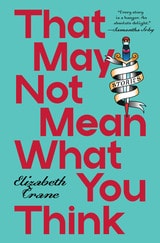
That May Not Mean What You Think
StoriesElizabeth Crane
Northwestern University Press, 2026
A visionary and profound new collection from innovative author Elizabeth Crane
Throughout her body of work, Elizabeth Crane’s literary vision has always been singular and innovative, twisting form and bending reality into new universes. Her latest collection, That May Not Mean What You Think, explores themes of aging and youth, gender and discrimination, and sex and love. In “Training Module,” Crane takes the structure and protocol of workplace harassment prevention training and turns it on its head; “The Box” tells the story of a woman trying to recover from divorce with the help of a literal unicorn; and “The Youngs” follows a group of teenagers experiencing loss for the first time, clinging to the belief that they’ll live forever. Across these delightfully weird and disarmingly truthful stories, American culture is refracted through humor and heart, asking readers to consider their complicity and to imagine new possibilities of participating in a better future.
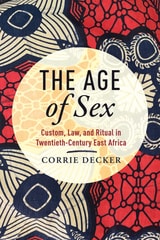
The Age of Sex
Custom, Law, and Ritual in Twentieth-Century East AfricaCorrie Decker
University of Wisconsin Press, 2025
In The Age of Sex, Decker demonstrates how maturation became defined as the hypothetical moment when a girl becomes a woman capable of engaging in heterosexual activity and a boy becomes a man imbued with the right and responsibility to have heterosexual intercourse. Colonial ethnographic studies reduced complex precolonial rites of passage to “puberty rites” fixated on these sexual transformations. The resulting stereotypes influenced, in turn, how colonial and postcolonial court officials decided age-of-consent and other sex crime cases. Court rituals thus legally transformed girls into women by ruling on their sexual maturity and boys into men by sentencing them to corporal punishment, marking their acceptance of heterosexual responsibilities.
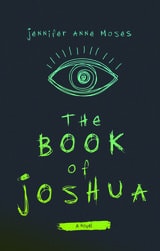
The Book of Joshua
Jennifer Anne Moses
University of Wisconsin Press, 2018
Once a popular long-distance runner, Josh is now flabby, frustrated, and furious about returning to his New Jersey high scho ol to repeat his senior year. Forced to attend meetings with other "underage weirdos," he sinks into his loneliness. But when Josh meets Elizabeth Rinaldi, things begin to change. The only other new student in his class, she has a scar on her forehead, a Southern accent, and an attitude. Sharing a status as outcasts and an aptitude for snark, Josh and Elizabeth help each other escape their pasts.
The Book of Joshua weaves an unforgettable story from family secrets, friendship, faith, love, and redemption. It brings readers deeply into the lives of those who suffer from mental illness, as well as the friends and family affected by it.
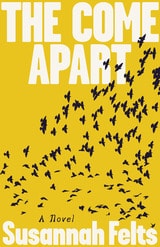
The Come Apart
A NovelSusannah Felts
Northwestern University Press, 2026
An authentic rock band story from Chicago to Nashville and, just maybe, back again
On the cusp of turning thirty, Chicago indie musician Maggie Corbin has hustled for a decade, set on making her rock and roll dreams come true. Her band, Spinning Birds, fronted by Maggie and her romantic partner Matt Turkish, releases a debut record to critical acclaim, hits the road, and begins working on a follow-up. From the outside, her path looks like success—but as streaming deconstructs the industry and Maggie’s relationships shift and slip, the question remains: Can you live for art alone?
When a sudden move back to the South forces Maggie to reframe her dreams and reckon with familial rifts and her past—while still fighting to reimagine what her future could be—a natural disaster in Nashville and a surprise encounter with a character from her childhood shift her perspective on healing, community, and the ties that bind. Drifting in and out of songwriting sessions, cozy kitchens, and moments of bearing witness to the curious power of the natural world, The Come Apart celebrates the times when we must come fully undone in order to put ourselves back together.
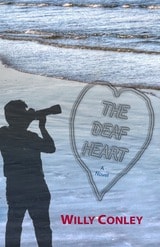
The Deaf Heart
A NovelWilly Conley
Gallaudet University Press, 2015
At the hospital, Max has to contend with hearing doctors, nurses, scientists, and teachers. While struggling through the rigors of his residency and running into bad luck in meeting women, Max discovers an ally in his hearing housemate Zag, a fellow resident who is also vying for certification. Toward the end of his residency, Max meets Maddy, a Deaf woman who helps bring balance to his life.
Author Willy Conley’s stories, some humorous, some poignant, reveal Max’s struggles and triumphs as he attempts to succeed in the hearing world while at the same time navigating the multicultural and linguistic diversity within the Deaf world.
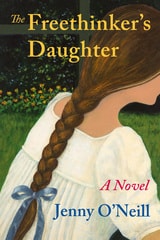
The Freethinker’s Daughter
A NovelJenny O'Neill
Ohio University Press, 2022
This historical and inspiring coming-of-age novel for young readers explores topics of both historical and contemporary relevance as it follows a harrowing year in the life of its intrepid teenaged narrator.
Lexington, Kentucky, 1833: Calendula “Cal” Farmer, a thirteen-year-old white girl, has been raised by her abolitionist, freethinking mother to reason for herself, consult her inner wisdom, and come to her own conclusions. But when a flash flood devastates her family’s home, Cal is unexpectedly thrust into domestic service in a wealthy family’s mansion. There, she encounters firsthand the physical, intellectual, and emotional brutalities of slavery. Later, a cholera outbreak kills a quarter of the population, including Cal’s mother, and Cal enters an orphanage, where she bravely begins another chapter in her young life.
Cal’s story is sure to captivate readers as she confronts the injustices and uncertainties of racism, class consciousness, epidemic disease, and personal loss with independent thinking, perseverance, and love.
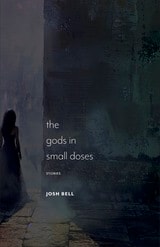
The Gods in Small Doses
StoriesJosh Bell
University of Massachusetts Press, 2026
The magical and mundane twist together in this collection of surreal stories
In this collection of stories set in an uncanny American suburbia and haunted by a lurking unease, the peculiar feeling of ephemeral youth finds its voice. The stories in The Gods in Small Doses depict childhood through a funhouse mirror, as a time of myth and damage, of tenderness and terror. Anything—except what should happen—can happen next.
A retired witch traps a goat-killing feral child, a girl becomes obsessed with the regenerative properties of her younger brother’s body, Armageddon is fought between the forces of good (those who like to go to bed early) and evil (those who prefer to stay up late), a supernatural orphan insinuates his way into an all-American family, the god Poseidon wrecks a high-school house party, and the women of a fabulated island city all mysteriously disappear overnight. In these fast, comic, and troubling tales, sweetness and violence vie to become synonymous.
This is a universe of both realism and surrealism, of magic and the mundane, where strong but deeply flawed characters fight to exert control over things—time, death, themselves—that can’t be controlled. Dreamlike moments of body horror, catastrophe, and absurdity challenge the reader to embrace the taboo and to expect—always—the unexpected. Bell’s stories offer a twisted, unique, and utterly fascinating take on what it means to “grow up,” and all of the questions that the notion inspires.
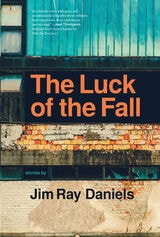
The Luck of the Fall
Jim Ray Daniels
Michigan State University Press, 2023
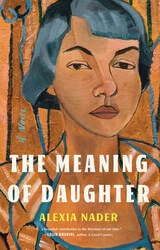
The Meaning of Daughter
Nader, Alexia
University of Iowa Press, 2026
After immigrating from Lebanon to Haiti as a young girl, Merjan comes of age in an insular, conservative community, where it seems as though her sole escape is marriage. Striking a bargain with a young art dealer, she marries and dreams of becoming a painter, only to discover her husband’s support tethered with expectations.
In the late 1970s, Merjan’s daughter Yvonne is a young woman on the cusp of a marriage of convenience. Though resentful of her mother, Yvonne dreams of establishing a Haitian art gallery in New York with the help of a well-connected older man—but her time there ends disastrously, creating a deep rift between her and her family.
In the present day, Yvonne’s daughter Eva is a student whose art draws inspiration from her grandmother Merjan’s largely undiscovered work. When Eva becomes unexpectedly pregnant, she moves back to her childhood home in Miami to sort out her ambivalent feelings, where she finds her family upended by feuds. An intimate family saga, The Meaning of Daughter explores questions about maternal ambivalence, ambition, artmaking, and how desire resists gendered expectations.
The Strange Side of the Tracks
George Avant
Parkhurst Brothers, Inc., 2015
Some kids have to grow up fast. This is the story of Lonnie Tobin, one such young man. Weary of the physical abuse his mother is subjected to from his father, he takes matt ers into his own hands. Convincing her to flee their fearful home life, son and mother sneak away in the night to the small town of Rocky Branch, where they find peace with her family. It is a corner of the world he thought they had left behind forever. But mysteries abound in this little wooded village, and an unexpected adventure begins when word of a nightly monster on the loose stirs fear among the residents. Young Lonnie soon forgets about his father and becomes fascinated by the story, only to find he might be spending a litt le too much time on The Strange Side of the Tracks.

The Three Marias
By Rachel de Queiroz
University of Texas Press, 1963
Through this translation of As Três Marias the literary achievements of Rachel de Queiroz may at last be judged and appreciated by the English-reading public. Since none of her four novels has previously been translated into English, The Three Marias will be, for many non-Brazilians, an introduction to this nationally known South American author whose books have been widely praised for their artistic merits. Her literary works are colored by her projected personality, by an intense feeling for her own people, by an omnipresent social consciousness, and by personal experiences in the arid backlands of her native state of Ceará.
Basing this story on certain of her own recollections from the nineteen-twenties, Rachel de Queiroz tells of a girl growing up in the seaport town of Fortaleza, in northeastern Brazil. Fred P. Ellison, whose special field is Brazilian and Spanish-American literature, has captured in his translation the author's graceful style and simplicity of language, and has successfully retained the perspective of an idealistic and gradually maturing girl.
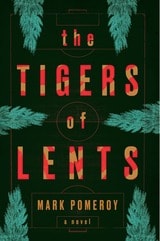
The Tigers of Lents
Mark Pomeroy
University of Iowa Press, 2024
2025 Independent Publishers Book Awards (IPPY Awards) gold medalist, Best Regional Fiction: West-Pacific
This is the story of the Garrison family, who live in Lents, an outer neighborhood of Portland, Oregon. At the heart of it all, there are the three Garrison sisters: Sara, the eldest, a fiery soccer star on the precipice of pulling herself out of the life of poverty she’s always known; Elaine, shy and struggling with the weight she carries both physically and mentally; and Rachel, a reader and poet whose imagination stalls at trying to picture a better life.
As the Garrisons struggle to communicate with each other, as they battle self-doubts and self-sabotage, they too draw on a fierce shared strength that allows them to push back at the reality that’s been handed to them. Each Garrison fights to hold on to their dignity—often through daily acts of grace and good humor, to say nothing of quiet perseverance—and to prove to themselves and each other that they shouldn’t be underestimated.

The Upside-Down Forest
The Vanished Souls Duology, Book 2Richard Zimler
Tagus Press, 2027
When cruelty is sanctified, betrayal is rewarded as virtue, and the innocent must hide their true identities to survive, seventeen-year-old Isaaque Zarco struggles to preserve the principles he lives by and protect the people he loves in this luminous and deeply moving conclusion to The Vanished Souls duology.
As Isaaque attempts to put his life back together, mysteries and conflicts continue to haunt him, most prominently his father’s inexplicable rejection and the knowledge that his survival depends on concealing his identity and faith.
His world is shaken by a letter saying his grandmother, Flor, has been arrested. Unable to abandon the woman who guided him throughout his childhood, Isaaque crosses into Spain, entering a society ruled by fear and deception, where anonymous accusations carry the force of law and compassion itself has become an act of defiance. Flor has been transferred to a prison in Madrid. She has been physically broken by imprisonment. Isaaque learns that, under torture, she revealed the names of two of his oldest friends as secret Jews. Racing back to his home village, he embarks on a desperate attempt to help them escape before the Inquisition comes for them.
The Upside-Down Forest portrays a society in which slander is revered as truth, mercy is condemned as weakness, and persecution masquerades as justice. Giving voice to victims whose suffering has too often been erased from history, Richard Zimler explores how systems of fear corrupt not only institutions but also the bonds between family, friends, and neighbors. Ultimately, it asks what remains of our humanity when the moral order itself has been turned upside down—and whether a life shaped by love, loyalty, and compassion can still endure when survival itself demands treachery and betrayal.
The Village of Vanished Souls
The Vanished Souls Duology, Book 1Richard Zimler
Tagus Press, 2027
Winner of Book of the Year in Portugal, The Village of Vanished Souls is a sweeping historical tale inspired by authentic records of the Portuguese Inquisition and the real lives of villagers whose stories have long been forgotten.
Portugal, 1671—Nine-year-old Isaaque Zarco lives a peaceful life in the remote mountain village of Castelo Rodrigo, where he helps his mother prepare meals, roams the surrounding forests with his spirited best friend Lena, and learns about nature from the village apothecary, Samuel. But his idyllic childhood is shattered when Lena and her family suddenly vanish, followed by a series of brutal murders that plunge the isolated community into fear.
When Isaaque’s formidable Castilian grandmother visits, she says what no one else dares: the Inquisition is hunting descendants of Jews who continue to secretly practice. Then she entrusts Isaaque with an even more dangerous secret—that he, too, belongs to a secret Jewish family. As she introduces him to the forbidden traditions and sacred writings of their ancestors, Isaaque’s understanding of his parents, his village, and himself is transformed forever.
As Isaaque comes of age, he is drawn into a clandestine network that helps persecuted Jews escape Portugal. Every mission carries the risk of imprisonment, torture, and death, yet this dangerous work gives Isaaque a profound sense of purpose while deepening his commitment to his heritage. When he learns that his beloved grandmother is ill, he embarks on a journey that will expose long-buried family secrets and reveal that learning to embrace his heritage is only the beginning of what will soon be asked of him.
Inspired by the names, arrest records, and testimonies preserved in Inquisitional archives, The Village of Vanished Souls recreates a little-known chapter of history with vivid historical detail and emotional depth. At once an unforgettable coming-of-age story and a moving portrait of resilience, identity, faith, and love, it gives voice to people whose courage endured despite centuries of persecution and forced silence.
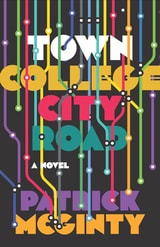
Town College City Road
Patrick McGinty
University of Wisconsin Press, 2025
Through his struggles to pass multiple masculine initiations, both real and metaphorical, Kurt ultimately discovers that the only thing tougher than running away from rural mythology is constructing a new one.