Results by title
474 books match the query 'Computers' and 77 start with t

Tarski's World
Revised and ExpandedDavid Barker-Plummer, Jon Barwise, and John Etchemendy
CSLI, 2004
A brand new feature in this revised and expanded edition is student access to Grade Grinder, an innovative Internet-based grading service that provides accurate and timely feedback to students whenever they need it. Students can submit solutions for the program’s more than 100 exercises to the Grade Grinder for assessment, and the results are returned quickly to the students and optionally to the teacher as well. A web-based interface also allows instructors to manage assignments and grades for their classes.
Intended as a supplement to a standard logic text, Tarski’s World is an essential tool for helping students learn the language of logic.

Technological Turf Wars
A Case Study of the Computer Antivirus IndustryJessica Johnston
Temple University Press, 2008
In Technological Turf Wars, Jessica Johnston analyzes the tensions and political dilemmas that coexist in the interrelationship among science, technology and society. Illustrating how computer security is as concerned with social relationships as it is with technology, Johnston provides an illuminating ethnography that considers corporate culture and the workplace environment of the antivirus industry.
Using a qualitative, interdisciplinary approach, which combines organizational and security studies with critical and social analysis of science and technology, Johnston questions the motivations, contradictions and negotiations of antivirus professionals. She examines the tensions between the service ethics and profit motives—does the industry release viruses to generate demand for antivirus software?—and considers the dynamics within companies by looking at facets such as gender bias and power politics. Technological Turf Wars is an informed, enlightened and entertaining view of how the production of computer security technology is fraught with social issues.

Technologies for Healthcare 4.0
From AI and IoT to blockchainKarthik Ramamurthy
The Institution of Engineering and Technology, 2023
Technology and Engagement
Making Technology Work for First Generation College StudentsRowan-Kenyon, Heather T.
Rutgers University Press, 2018
Technology and Engagement is based on a four-year study of how first generation college students use social media, aimed at improving their transition to and engagement with their university. Through web technology, including social media sites, students were better able to maintain close ties with family and friends from home, as well as engage more with social and academic programs at their university. This ‘ecology of transition’ was important in keeping the students focused on why they were in college, and helped them become more integrated into the university setting. By showing the gains in campus capital these first-generation college students obtained through social media, the authors offer concrete suggestions for how other universities and college-retention programs can utilize the findings to increase their own retention of first-generation college students.
Tempest
Geometries of PlayJudd Ethan Ruggill and Ken S. McAllister
University of Michigan Press, 2015

Text as Ride
Electronic Literature and New Media ArtJanez Strehovec
West Virginia University Press, 2016
The Accidental Network
How a Small Company Sparked a Global Broadband TransformationRouzbeh Yassini-Fard
West Virginia University Press, 2025
The Accidental Network shares the untold story of the invention of the cable modem by the small, struggling tech company LANcity in the early 1990s, illustrating how Yassini-Fard overcame a cascade of technical challenges, investment community naysayers, and unnerving business obstacles to create the cable modem technology that has changed the way billions of individuals across the globe now manage their daily lives and commerce. The cable modem delivered broadband, with speeds ranging from 10 megabits per second (Mbps) to 10 gigabits per second (Gbps)—a big leap from the dial-up speeds of 56 kilobits per second (Kbps). This platform, along with the adoption of the DOCSIS (Data Over Cable Service Interface Specification) standard, engendered the modern revolution in broadband Internet access. Shunned by venture capitalists and surviving on a shoestring budget, Yassini-Fard and his colleagues were willing to bet it all (including the deed for Yassini-Fard’s home) on the creation of the cable modem and the pursuit of global adoption.
The Accidental Network is both a valuable history of technology innovation and an engrossing account of business conducted at high speed. The book details Yassini-Fard’s journey from electrical engineer to entrepreneur in the race to secure technology partners, create a wholly new marketplace, and convince cable industry executives that a bold business awaited in transmitting data to households at a time when skepticism about the reach of personal computing was the norm.
Written from the lens of a devoted idealist and WVU alum known as “the father of the cable modem,” this book reveals how a perfect storm of forces—the rise of cable television, the onset of the personal computing era, a growing awareness of the Internet for information and commerce, and the development of the cable modem—converged to usher in the age of broadband access.

The Afterlife of Data
What Happens to Your Information When You Die and Why You Should CareCarl Öhman
University of Chicago Press, 2024
A short, thought-provoking book about what happens to our online identities after we die.
These days, so much of our lives takes place online—but what about our afterlives? Thanks to the digital trails that we leave behind, our identities can now be reconstructed after our death. In fact, AI technology is already enabling us to “interact” with the departed. Sooner than we think, the dead will outnumber the living on Facebook. In this thought-provoking book, Carl Öhman explores the increasingly urgent question of what we should do with all this data and whether our digital afterlives are really our own—and if not, who should have the right to decide what happens to our data.
The stakes could hardly be higher. In the next thirty years alone, about two billion people will die. Those of us who remain will inherit the digital remains of an entire generation of humanity—the first digital citizens. Whoever ends up controlling these archives will also effectively control future access to our collective digital past, and this power will have vast political consequences. The fate of our digital remains should be of concern to everyone—past, present, and future. Rising to these challenges, Öhman explains, will require a collective reshaping of our economic and technical systems to reflect more than just the monetary value of digital remains.
As we stand before a period of deep civilizational change, The Afterlife of Data will be an essential guide to understanding why and how we as a human race must gain control of our collective digital past—before it is too late.
The Apple II Age
How the Computer Became PersonalLaine Nooney
University of Chicago Press, 2023
An engrossing origin story for the personal computer—showing how the Apple II’s software helped a machine transcend from hobbyists’ plaything to essential home appliance.
Skip the iPhone, the iPod, and the Macintosh. If you want to understand how Apple Inc. became an industry behemoth, look no further than the 1977 Apple II. Designed by the brilliant engineer Steve Wozniak and hustled into the marketplace by his Apple cofounder Steve Jobs, the Apple II became one of the most prominent personal computers of this dawning industry.
The Apple II was a versatile piece of hardware, but its most compelling story isn’t found in the feat of its engineering, the personalities of Apple’s founders, or the way it set the stage for the company’s multibillion-dollar future. Instead, historian Laine Nooney shows, what made the Apple II iconic was its software. In software, we discover the material reasons people bought computers. Not to hack, but to play. Not to code, but to calculate. Not to program, but to print. The story of personal computing in the United States is not about the evolution of hackers—it’s about the rise of everyday users.
Recounting a constellation of software creation stories, Nooney offers a new understanding of how the hobbyists’ microcomputers of the 1970s became the personal computer we know today. From iconic software products like VisiCalc and The Print Shop to historic games like Mystery House and Snooper Troops to long-forgotten disk-cracking utilities, The Apple II Age offers an unprecedented look at the people, the industry, and the money that built the microcomputing milieu—and why so much of it converged around the pioneering Apple II.
The Art, Science, and Magic of the Data Curation Network
A Retrospective on Cross-Institutional CollaborationJake Carlson
Michigan Publishing Services, 2023
The Art, Science, and Magic of the Data Curation Network: A Retrospective on Cross Institutional Collaboration captures the results of a project retrospective meeting and describes the necessary components of the DCN’s sustained collaboration in the hopes that the insights will be of use to other collaborative efforts. In particular, the authors describe the successes of the community and challenges of launching a cross-institutional network. Additionally, this publication details the administrative, tool-based, and trust-based structures necessary for establishing this community, the “radical collaboration” that is the cornerstone of the DCN, and potential future collaborations to address shared challenges in libraries and research data management. This in-depth case study provides an overview of the critical work of launching a collaborative network and transitioning to sustainability. This publication will be of special interest to research librarians, data curators, and anyone interested in academic community building.

The Baroque Technotext
Literature in a Digital MediascapeElise Takehana
Intellect Books, 2020
The Best of Technology Writing 2006
Brendan I. Koerner, Editor
University of Michigan Press, 2006
—James Fallows, National Correspondent for Atlantic Monthly
“The human experience is being shaped by our symbiotic relationship to technology. What makes this collection wonderful is that it’s not about the technology, per se, but it’s about this changing human experience. I will look forward to it every year.”
—Po Bronson, author of What Should I Do With My Life?
The Best of Technology Writing 2006 brings together some of the most important, timely, and just plain readable writing in the fast-paced, high-stakes field of technology. The first annual collection to target this vibrant and versatile area, The Best of Technology Writing 2006 features innovative work from an unusually diverse array of writers: best-selling authors, noted academics, and indie journalists and bloggers. The culmination of an open, on-line nominating process, this collection covers topics ranging from jetpacks, to the ethics of genetically cloned pets, to the meaning of life in the information age. By turns epic and intimate, serious and playful, The Best of Technology Writing 2006 captures the vitality, importance, and complexity of technology today. Koerner
Featuring contributions from:
digitalculturebooks is an imprint of the University of Michigan Press and the Scholarly Publishing Office of the University of Michigan Library dedicated to publishing innovative and accessible work exploring new media and their impact on society, culture, and scholarly communication. Visit the website at www.digitalculture.org.
The Best of Technology Writing 2007
Steven Levy, Editor
University of Michigan Press, 2007
The year’s best writing on tech: a collection as imaginative and compelling as its dynamic subject
“This book is not just an illuminating and instructive guide to our high-tech frontier. It’s also a great testimony to the power of that most ancient of technologies, the written word.”
—Steven Johnson, author of Everything Bad is Good for You
Together the essays in The Best of Technology Writing 2007 capture the versatility and verve of technology writing today. Solicited through an open online nominating process, these pieces explore a wide range of intriguing topics—from “crowdsourcing” to the online habits of urban moms to the digital future of movie production. The Best of Technology Writing 2007 will appeal to anyone who enjoys stellar writing.
Steven Levy is a Senior Editor at Newsweek, where he writes the biweekly column “The Technologist.” One of the most acclaimed and versatile technology writers in the country, Levy has written six books, including The Perfect Thing (about Apple’s iPod) and Hackers, which PC Magazine’s readers voted the best sci-tech book written in the last twenty years. He has written for many publications, including the New Yorker, the New York Times Magazine, Rolling Stone, and Wired.
Featuring contributions from
Kevin Berger
Paul Boutin
Kiera Butler
Joshua Davis
Julian Dibbell
Matt Gaffney
Lori Gottlieb
John Gruber
Jeff Howe
Kevin Kelly
Jaron Lanier
Preston Lerner
Farhad Manjoo
Justin McElroy
Ben McGrath
Katharine Mieszkowski
Emily Nussbaum
Jeffrey M. O’Brien
Larry O’Brien
The Onion
Adam L. Penenberg
John Seabrook
Philip Smith
Aaron Swartz
Clive Thompson
Jeffrey R. Young
digitalculturebooks is an imprint of the University of Michigan Press and the Scholarly Publishing Office of the University of Michigan Library dedicated to publishing innovative and accessible work exploring new media and their impact on society, culture, and scholarly communication. Visit the website at www.digitalculture.org.
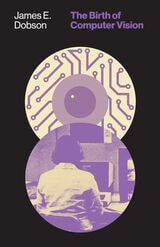
The Birth of Computer Vision
James E. Dobson
University of Minnesota Press, 2023
A revealing genealogy of image-recognition techniques and technologies
Today’s most advanced neural networks and sophisticated image-analysis methods come from 1950s and ’60s Cold War culture—and many biases and ways of understanding the world from that era persist along with them. Aerial surveillance and reconnaissance shaped all of the technologies that we now refer to as computer vision, including facial recognition. The Birth of Computer Vision uncovers these histories and finds connections between the algorithms, people, and politics at the core of automating perception today.
James E. Dobson reveals how new forms of computerized surveillance systems, high-tech policing, and automated decision-making systems have become entangled, functioning together as a new technological apparatus of social control. Tracing the development of a series of important computer-vision algorithms, he uncovers the ideas, worrisome military origins, and lingering goals reproduced within the code and the products based on it, examining how they became linked to one another and repurposed for domestic and commercial uses. Dobson includes analysis of the Shakey Project, which produced the first semi-autonomous robot, and the impact of student protest in the early 1970s at Stanford University, as well as recovering the computer vision–related aspects of Frank Rosenblatt’s Perceptron as the crucial link between machine learning and computer vision.
Motivated by the ongoing use of these major algorithms and methods, The Birth of Computer Vision chronicles the foundations of computer vision and artificial intelligence, its major transformations, and the questionable legacy of its origins.
Cover alt text: Two overlapping circles in cream and violet, with black background. Top is a printed circuit with camera eye; below a person at a 1977 computer.

The Burden of Choice
Recommendations, Subversion, and Algorithmic CultureJonathan Cohn
Rutgers University Press, 2019
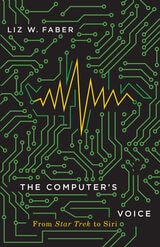
The Computer's Voice
From Star Trek to SiriLiz W. Faber
University of Minnesota Press, 2020
A deconstruction of gender through the voices of Siri, HAL 9000, and other computers that talk
Although computer-based personal assistants like Siri are increasingly ubiquitous, few users stop to ask what it means that some assistants are gendered female, others male. Why is Star Trek’s computer coded as female, while HAL 9000 in 2001: A Space Odyssey is heard as male? By examining how gender is built into these devices, author Liz W. Faber explores contentious questions around gender: its fundamental constructedness, the rigidity of the gender binary, and culturally situated attitudes on male and female embodiment.
Faber begins by considering talking spaceships like those in Star Trek, the film Dark Star, and the TV series Quark, revealing the ideologies that underlie space-age progress. She then moves on to an intrepid decade-by-decade investigation of computer voices, tracing the evolution from the masculine voices of the ’70s and ’80s to the feminine ones of the ’90s and ’00s. Faber ends her account in the present, with incisive looks at the film Her and Siri herself.
Going beyond current scholarship on robots and AI to focus on voice-interactive computers, The Computer’s Voice breaks new ground in questions surrounding media, technology, and gender. It makes important contributions to conversations around the gender gap and the increasing acceptance of transgender people.
The Convergence of AI, IoT, Smart Sensors and Remote Sensing for Sustainable Smart Environment Applications
Chaker Abdelaziz Kerrache
The Institution of Engineering and Technology, 2026
The Cost of Free Shipping
Amazon in the Global EconomyJake Alimahomed-Wilson
Pluto Press, 2021
Winner of the United Association for Labor Education Book Award 2021, this is essential reading for everyone who wants to understand the role of Amazon in our economy and society. With Amazon, supply-chain, and unionization in the news, it is both timely and incredibly informative.
Amazon is the most powerful corporation on the planet and its CEO, Jeff Bezos, has become one of the richest individuals in history, and one of the few people to profit from a global pandemic. Its dominance has reshaped the global economy itself: we live in the age of “Amazon Capitalism.”
“One-click” instant consumerism and its immense variety of products has made Amazon a worldwide household name, with over 60% of US households subscribing to Amazon Prime. In turn, these subscribers are surveilled by the corporation. Amazon is also one of the world's largest logistics companies, resulting in weakened unions and lowered labor standards.
The company has also become the largest provider of cloud-computing services and home surveillance systems, not to mention the ubiquitous Alexa.
With cutting-edge analyses, this book looks at the many dark facets of the corporation, including automation, surveillance, tech work, workers' struggles, algorithmic challenges, the disruption of local democracy and much more. The Cost of Free Shipping shows how Amazon represents a fundamental shift in global capitalism that we should name, interrogate, and be primed to resist.
The Counterfeit Coin
Videogames and Fantasies of EmpowermentChristopher Goetz
Rutgers University Press, 2023
The Cybernetic Border
Drones, Technology, and IntrusionIván Chaar López
Duke University Press, 2024
The Digital Is Kid Stuff
Making Creative Laborers for a Precarious EconomyJosef Nguyen
University of Minnesota Press, 2021
How popular debates about the so-called digital generation mediate anxieties about labor and life in twenty-first-century America
“The children are our future” goes the adage, a proclamation that simultaneously declares both anxiety as well as hope about youth as the next generation. In The Digital Is Kid Stuff, Josef Nguyen interrogates this ambivalence within discussions about today’s “digital generation” and the future of creativity, an ambivalence that toggles between the techno-pessimism that warns against the harm to children of too much screen time and a techno-utopianism that foresees these “digital natives” leading the way to innovation, economic growth, increased democratization, and national prosperity.
Nguyen engages cultural histories of childhood, youth, and creativity through chapters that are each anchored to a particular digital media object or practice. Nguyen narrates the developmental arc of a future creative laborer: from a young kid playing the island fictions of Minecraft, to an older child learning do-it-yourself skills while reading Make magazine, to a teenager posting selfies on Instagram, to a young adult creative laborer imagining technological innovations using design fiction.
Focusing on the constructions and valorizations of creativity, entrepreneurialism, and technological savvy, Nguyen argues that contemporary culture operates to assuage profound anxieties about—and to defuse valid critiques of—both emerging digital technologies and the precarity of employment for “creative laborers” in twenty-first-century neoliberal America.
The Digital Party
Political Organisation and Online DemocracyPaolo Gerbaudo
Pluto Press, 2018
These new political formations tap into the potential of social media to gain consensus, and use online participatory platforms to include the rank-and-file. Paolo Gerbaudo looks at the restructuring of political parties and campaigns in the time of Facebook, Twitter, Instagram, and big data. Drawing on interviews with key political leaders and digital organizers, he argues that the digital party is very different from the class-based “mass party” of the industrial era, and offers promising new solutions to social polarization and the failures of liberal democracy today.

The Digital Twin Handbook
Challenges, opportunities and future research directionsDhaval Thakker
The Institution of Engineering and Technology, 2025
The Digitally Disposed
Racial Capitalism and the Informatics of ValueSeb Franklin
University of Minnesota Press, 2021
Locates the deep history of digitality in the development of racial capitalism
Seb Franklin sets out a media theory of racial capitalism to examine digitality’s racial-capitalist foundations. The Digitally Disposed shows how the promises of boundless connection, flexibility, and prosperity that are often associated with digital technologies are grounded in racialized histories of dispossession and exploitation. Reading archival and published material from the cybernetic sciences alongside nineteenth-century accounts of intellectual labor, twentieth-century sociometric experiments, and a range of literary and visual works, The Digitally Disposed locates the deep history of digitality in the development of racial capitalism.
Franklin makes the groundbreaking argument that capital’s apparently spontaneous synthesis of so-called free individuals into productive circuits represents an “informatics of value.” On the one hand, understanding value as an informatic relation helps to explain why capital was able to graft so seamlessly with digitality at a moment in which it required more granular and distributed control over labor—the moment that is often glossed as the age of logistics. On the other hand, because the informatics of value sort populations into positions of higher and lower capacity, value, and status, understanding their relationship to digitality requires that we see the digital as racialized and gendered in pervasive ways.
Ultimately, The Digitally Disposed questions the universalizing assumptions that are maintained, remade, and intensified by today’s dominant digital technologies. Vital and far-reaching, The Digitally Disposed reshapes such fundamental concepts as cybernetics, informatics, and digitality.
The Economics of Attention
Style and Substance in the Age of InformationRichard A. Lanham
University of Chicago Press, 2006
With all the verve and erudition that have established his earlier books as classics, Richard A. Lanham here traces our epochal move from an economy of things and objects to an economy of attention. According to Lanham, the central commodity in our new age of information is not stuff but style, for style is what competes for our attention amidst the din and deluge of new media. In such a world, intellectual property will become more central to the economy than real property, while the arts and letters will grow to be more crucial than engineering, the physical sciences, and indeed economics as conventionally practiced. For Lanham, the arts and letters are the disciplines that study how human attention is allocated and how cultural capital is created and traded. In an economy of attention, style and substance change places. The new attention economy, therefore, will anoint a new set of moguls in the business world—not the CEOs or fund managers of yesteryear, but new masters of attention with a grounding in the humanities and liberal arts.
Lanham’s The Electronic Word was one of the earliest and most influential books on new electronic culture. The Economics of Attention builds on the best insights of that seminal book to map the new frontier that information technologies have created.
The Economics of Privacy
Edited by Avi Goldfarb and Catherine E. Tucker
University of Chicago Press, 2024
A foundational new collection examining the mechanics of privacy in the digital age.
The falling costs of collecting, storing, and processing data have allowed firms and governments to improve their products and services, but have also created databases with detailed individual-level data that raise privacy concerns. This volume summarizes the research on the economics of privacy and identifies open questions on the value of privacy, the roles of property rights and markets for privacy and data, the relationship between privacy and inequality, and the political economy of privacy regulation.
Several themes emerge across the chapters. One is that it may not be possible to solve privacy concerns by creating a market for the right to privacy, even if property rights are well-defined and transaction costs are low. Another is that it is difficult to measure and value the benefits of privacy, particularly when individuals have an intrinsic preference for privacy. Most previous attempts at valuation have focused only on quantifiable economic outcomes, such as innovation. Finally, defining privacy through an economic lens is challenging. The broader academic and legal literature includes many distinct definitions of privacy, and different definitions may be appropriate in different contexts. The chapters explore a variety of frameworks for examining these questions and provide a range of new perspectives on the role of economics research in understanding the benefits and costs of privacy and of data flows. As the digital economy continues to expand the scope of economic theory and research, The Economics of Privacy provides the most comprehensive survey to date of this field and its next steps.
The Economics of Transformative AI
Edited by Ajay Agrawal, Erik Brynjolfsson, and Anton Korinek
University of Chicago Press, 2026
A thought-provoking examination of how AI might either spur or harm human economic progress.
What happens to an economy when machines can think as well as, or even better than, humans? The Economics of Transformative AI tackles this issue, which is one of the most consequential economic questions of our time. This book brings together sixteen research studies from top economists that look closely at how transformative AI reshapes everything from innovation and market structure to employment, inequality, and human purpose. They explore both opportunities, such as personalized algorithmic assistance, accelerated scientific discovery, and new forms of organization, and profound challenges, including potential labor displacement, rising concentration of power, changes in the information ecosystem, and even possible existential risks to humanity.
The studies in this volume develop economic frameworks for understanding the conditions under which AI might enhance or undermine human flourishing. They offer policymakers, researchers, and business leaders the analytical tools needed to prepare for the potential economic transformations ahead.
The Electronic Word
Democracy, Technology, and the ArtsRichard A. Lanham
University of Chicago Press, 1993
This highly acclaimed collection of Richard Lanham's witty, provocative, and engaging essays surveys the effects of electronic text on the arts and letters. Lanham explores how electronic text fulfills the expressive agenda of twentieth-century visual art and music, revolutionizes the curriculum, democratizes the instruments of art, and poses anew the cultural accountability of humanism itself.
Persuading us with uncommon grace and power that the move from book to screen gives cause for optimism, not despair, Lanham proclaims that "electronic expression has come not to destroy the Western arts but to fulfill them."
The Electronic Word is also available as a Chicago Expanded Book for your Macintosh®. This hypertext edition allows readers to move freely through the text, marking "pages," annotating passages, searching words and phrases, and immediately accessing annotations, which have been enhanced for this edition. In a special prefatory essay, Lanham introduces the features of this electronic edition and gives a vividly applied critique of this dynamic new edition.
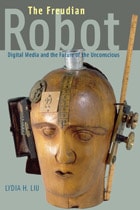
The Freudian Robot
Digital Media and the Future of the UnconsciousLydia H. Liu
University of Chicago Press, 2011
The identity and role of writing has evolved in the age of digital media. But how did writing itself make digital media possible in the first place? Lydia H. Liu offers here the first rigorous study of the political history of digital writing and its fateful entanglement with the Freudian unconscious.
Liu’s innovative analysis brings the work of theorists and writers back into conversation with one another to document significant meetings of minds and disciplines. She shows how the earlier avant-garde literary experiments with alphabetical writing and the word-association games of psychoanalysis contributed to the mathematical making of digital media. Such intellectual convergence, she argues, completed the transformation of alphabetical writing into the postphonetic, ideographic system of digital media, which not only altered the threshold of sense and nonsense in communication processes but also compelled a new understanding of human-machine interplay at the level of the unconscious.
Ranging across information theory, cybernetics, modernism, literary theory, neurotic machines, and psychoanalysis, The Freudian Robot rewrites the history of digital media and the literary theory of the twentieth century.

The Geek's Chihuahua
Living with AppleIan Bogost
University of Minnesota Press, 2015
At dinnertime: check. At a traffic light: check. In bed at the end of the day: check. In line at the coffee shop: check. In The Geek’s Chihuahua, Ian Bogost addresses the modern love affair of “living with Apple” during the height of the company’s market influence and technology dominance.
The ubiquitous iPhone and its kin saturate our lives, changing everything from our communication to our posture. Bogost contrasts the values of Apple’s massive success in the twenty-first century with those of its rise in the twentieth. And he connects living with Apple with the phenomenon of “hyperemployment”—the constant overwork of today’s technological life that all of us now experience. Bogost also reflects on the new potential function—as well as anxiety and anguish—of devices like the Apple Watch. We are tethered to our devices, and, as Bogost says: that’s just life—anxious, overworked, and utterly networked life.
Forerunners: Ideas First is a thought-in-process series of breakthrough digital publications. Written between fresh ideas and finished books, Forerunners draws on scholarly work initiated in notable blogs, social media, conference plenaries, journal articles, and the synergy of academic exchange. This is gray literature publishing: where intense thinking, change, and speculation take place in scholarship.
The Hyperlinked Society
Questioning Connections in the Digital AgeJoseph Turow and Lokman Tsui, Editors
University of Michigan Press, 2008
"Links" are among the most basic---and most unexamined---features of online life. Bringing together a prominent array of thinkers from industry and the academy, The Hyperlinked Society addresses a provocative series of questions about the ways in which hyperlinks organize behavior online. How do media producers' considerations of links change the way they approach their work, and how do these considerations in turn affect the ways that audiences consume news and entertainment? What role do economic and political considerations play in information producers' creation of links? How do links shape the size and scope of the public sphere in the digital age? Are hyperlinks "bridging" mechanisms that encourage people to see beyond their personal beliefs to a broader and more diverse world? Or do they simply reinforce existing bonds by encouraging people to ignore social and political perspectives that conflict with their existing interests and beliefs?
This pathbreaking collection of essays will be valuable to anyone interested in the now taken for granted connections that structure communication, commerce, and civic discourse in the world of digital media.
"This collection provides a broad and deep examination of the social, political, and economic implications of the evolving, web-based media environment. The Hyperlinked Society will be a very useful contribution to the scholarly debate about the role of the internet in modern society, and especially about the interaction between the internet and other media systems in modern society."
---Charles Steinfield, Professor and Chairperson, Department of Telecommunication, Information Studies, and Media, Michigan State University
Joseph Turow is Robert Lewis Shayon Professor at the Annenberg School for Communication, University of Pennsylvania. He was named a Distinguished Scholar by the National Communication Association and a Fellow of the International Communication Association in 2010. He has authored eight books, edited five, and written more than 100 articles on mass media industries. His books include Niche Envy: Marketing Discrimination in the Digital Age and Breaking up America: Advertisers and the New Media World.
Lokman Tsui is a doctoral candidate at the Annenberg School for Communication, University of Pennsylvania. His research interests center on new media and global communication.
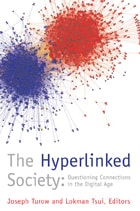
Cover image: This graph from Lada Adamic's chapter depicts the link structure of political blogs in the United States. The shapes reflect the blogs, and the colors of the shapes reflect political orientation---red for conservative blogs, blue for liberal ones. The size of each blog reflects the number of blogs that link to it.
digitalculturebooks is an imprint of the University of Michigan Press and the Scholarly Publishing Office of the University of Michigan Library dedicated to publishing innovative and accessible work exploring new media and their impact on society, culture, and scholarly communication. Visit the website at www.digitalculture.org.

The Impossible Reversal
A History of How We PlayPeter D. McDonald
University of Minnesota Press, 2026
Tracing the cultural history of play—from Fluxus to SimCity
Games and gamified activities have become ubiquitous in many adults’ lives, and play is widely valued for fostering creativity, community, growth, and empathy. But how did we come to our current understanding of what it means to play? The Impossible Reversal charts the transformation of notions of playfulness beginning in the second half of the twentieth century, when a legion of artists, academics, and engineers developed new ways of theorizing, structuring, and designing ludic activity.
Through examples ranging from experimental Fluxus games to corporate role-playing exercises and from the Easy Bake Oven to Tetris, The Impossible Reversal presents four styles of playfulness characteristic of the “era of designed play”: the impossible reversal, which puts a player in a seemingly hopeless scenario they must upend with a tiny gesture; expending the secret, which involves silly rules that gain an obscure power and require players to embrace failure; simulated freedom, a satiric criticism of the ordinary world; and oblique repetition, a way of playing that stumbles toward unimaginable outcomes through simple, meaningless, and endlessly iterated acts.
A unique genealogical account of play as both concept and practice, The Impossible Reversal illuminates how playfulness became essential for understanding cultural, technical, and economic production in the United States.
Retail e-book files for this title are screen-reader friendly with images accompanied by short alt text and/or extended descriptions.
The Inattention Economy
How Women of Color Built the InternetLisa Nakamura
University of Minnesota Press, 2026
Revealing the unheralded contributions of women of color to the foundation and development of the digital economy
The Inattention Economy challenges the widespread myth that the internet was born from the labor of a handful of white male entrepreneurs, recovering the uncredited and unpaid contributions of women of color. Focusing on three key inflection points in computing—the microchip era of the 1960s and ’70s, the rise of social media in the 2000s, and A.I.-fueled virtual reality in the 2020s—Lisa Nakamura illuminates these women’s instrumental roles in building new technologies and making them coherent to users.
From the Navajo women who manufactured the first semiconductor circuits in New Mexico to Tila Tequila, the queer Vietnamese American refugee who became the first true internet influencer in the MySpace age, to Black virtual reality creators, Nakamura highlights how women’s gendered and racialized identities have uniquely positioned them to mediate the development and proliferation of new technologies. She exposes how these women have been structurally excluded from racial capitalism’s benefits while their labor is considered as exploitable and inexhaustible as that of machines. Confronting this injustice, she focuses our attention on their work, which undergirds and makes possible the platforms ingrained in our daily lives.
Arguing for both recognition and material compensation for these women’s labor, The Inattention Economy is a powerful counterhistory of Silicon Valley and a persuasive call to imagine a different kind of internet.
Retail e-book files for this title are screen-reader friendly with images accompanied by short alt text and/or extended descriptions.
The Inspiration Machine
Computational Creativity in Poetry and JazzEitan Y. Wilf
University of Chicago Press, 2023
In The Inspiration Machine, Eitan Y. Wilf explores the transformative potentials that digital technology opens up for creative practice through three ethnographic cases, two with jazz musicians and one with a group of poets. At times dissatisfied with the limitations of human creativity, these artists do not turn to computerized algorithms merely to execute their preconceived ideas. Rather, they approach them as creative partners, delegating to them different degrees of agentive control and artistic decision-making in the hopes of finding inspiration in their output and thereby expanding their own creative horizons.
The algorithms these artists develop and use, however, remain rooted in and haunted by the specific social predicaments and human shortfalls that they were intended to overcome. Experiments in the digital thus hold an important lesson: although Wilf’s interlocutors returned from their adventures with computational creativity with modified, novel, and enriched capacities and predilections, they also gained a renewed appreciation for, and at times a desire to re-inhabit, non-digital creativity. In examining the potentials and pitfalls of seemingly autonomous digital technologies in the realm of art, Wilf shows that computational solutions to the real or imagined insufficiencies of human practice are best developed in relation to, rather than away from, the social and cultural contexts that gave rise to those insufficiencies, in the first place.
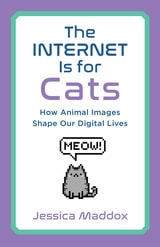
The Internet Is for Cats
How Animal Images Shape Our Digital LivesJessica Maddox
Rutgers University Press, 2023
The Internet is for Cats examines how animal images are employed to create a lighter, more playful mood, uniting users within online spaces that can otherwise easily become fractious and toxic. Placing today’s pet videos, photos, and memes within a longer history of mediated animal images, communication scholar Jessica Maddox also considers the factors that make them unique. She explores the roles that animals play within online economies of cuteness and attention, as well as the ways that animal memes and videos respond to common experiences of life under neoliberalism.
Conducting a rich digital ethnography, Maddox combines observations and textual analysis with extensive interviews of the people who create, post and share animal media, including TikTok influencers seeking to make their pets famous, activists tweeting about wildlife conservation, and Redditors upvoting every cute cat photo. The Internet is for Cats will leave you with a new appreciation for the human social practices behind the animal images you encounter online.
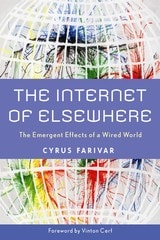
The Internet of Elsewhere
The Emergent Effects of a Wired WorldFarivar, Cyrus
Rutgers University Press, 2011
Through the lens of culture, The Internet of Elsewhere looks at the role of the Internet as a catalyst in transforming communications, politics, and economics. Cyrus Farivar explores the Internet's history and effects in four distinct and, to some, surprising societies—Iran, Estonia, South Korea, and Senegal. He profiles Web pioneers in these countries and, at the same time, surveys the environments in which they each work. After all, contends Farivar, despite California's great success in creating the Internet and spawning companies like Apple and Google, in some areas the United States is still years behind other nations.
Surprised? You won't be for long as Farivar proves there are reasons that:
- Skype was invented in Estonia—the same country that developed a digital ID system and e-voting;
- Iran was the first country in the world to arrest a blogger, in 2003;
- South Korea is the most wired country on the planet, with faster and less expensive broadband than anywhere in the United States;
- Senegal may be one of sub-Saharan Africa's best chances for greater Internet access.
The Internet of Elsewhere brings forth a new complex and modern understanding of how the Internet spreads globally, with both good and bad effects.

The Internet of Medical Things
Enabling technologies and emerging applicationsSubhendu Kumar Pani
The Institution of Engineering and Technology, 2022
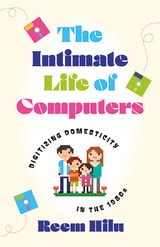
The Intimate Life of Computers
Digitizing Domesticity in the 1980sReem Hilu
University of Minnesota Press, 2024
A feminist perspective on the early history of personal computing, revealing how computers were integrated into the most intimate aspects of family life
The Intimate Life of Computers shows how the widespread introduction of home computers in the 1980s was purposefully geared toward helping sustain heteronormative middle-class families by shaping relationships between users. Moving beyond the story of male-dominated computer culture, this book emphasizes the neglected history of the influence of women’s culture and feminist critique on the development of personal computing despite women’s underrepresentation in the industry.
Proposing the notion of “companionate computing,” Reem Hilu reimagines the spread of computers into American homes as the history of an interpersonal, romantic, and familial medium. She details the integration of computing into family relationships—from helping couples have better sex and offering thoughtful simulations of masculine seduction to animating cute robot companions and giving voice to dolls that could talk to lonely children—underscoring how these computer applications directly responded to the companionate needs of their users as a way to ease growing pressures on home life.
The Intimate Life of Computers is a vital contribution to feminist media history, highlighting how the emergence of personal computing dovetailed with changing gender roles and other social and cultural shifts. Eschewing the emphasis on technologies and institutions typically foregrounded in personal-computer histories, Hilu uncovers the surprising ways that domesticity and family life guided the earlier stages of our all-pervasive digital culture.
The Laws of Cool
Knowledge Work and the Culture of InformationAlan Liu
University of Chicago Press, 2004
The Mathematical Theory of Communication
Claude E. Shannon and Warren Weaver
University of Illinois Press, 1998
The Means of Prediction
How AI Really Works (and Who Benefits)Maximilian Kasy
University of Chicago Press, 2025
AI is inescapable, from its mundane uses online to its increasingly consequential decision-making in courtrooms, job interviews, and wars. The ubiquity of AI is so great that it might produce public resignation—a sense that the technology is our shared fate.
As economist Maximilian Kasy shows in The Means of Prediction, artificial intelligence, far from being an unstoppable force, is irrevocably shaped by human decisions—choices made to date by the ownership class that steers its development and deployment. Kasy shows that the technology of AI is ultimately not that complex. It is insidious, however, in its capacity to steer results to its owners’ wants and ends. Kasy clearly and accessibly explains the fundamental principles on which AI works, and, in doing so, reveals that the real conflict isn’t between humans and machines, but between those who control the machines and the rest of us.
The Means of Prediction offers a powerful vision of the future of AI: a future not shaped by technology, but by the technology’s owners. Amid a deluge of debates about technical details, new possibilities, and social problems, Kasy cuts to the core issue: Who controls AI’s objectives, and how is this control maintained? The answer lies in what he calls “the means of prediction,” or the essential resources required for building AI systems: data, computing power, expertise, and energy. As Kasy shows, in a world already defined by inequality, one of humanity’s most consequential technologies has been and will be steered by those already in power.
Against those stakes, Kasy offers an elegant framework both for understanding AI’s capabilities and for designing its public control. He makes a compelling case for democratic control over AI objectives as the answer to mounting concerns about AI's risks and harms. The Means of Prediction is a revelation, both an expert undressing of a technology that has masqueraded as more complicated and a compelling call for public oversight of this transformative technology.
The Means of Prediction
How AI Really Works (and Who Benefits)Maximilian Kasy
University of Chicago Press, 2025
An eye-opening examination of how power—not technology—will define life with AI.
AI is inescapable, from its mundane uses online to its increasingly consequential decision-making in courtrooms, job interviews, and wars. The ubiquity of AI is so great that it might produce public resignation—a sense that the technology is our shared fate.
As economist Maximilian Kasy shows in The Means of Prediction, artificial intelligence, far from being an unstoppable force, is irrevocably shaped by human decisions—choices made to date by the ownership class that steers its development and deployment. Kasy shows that the technology of AI is ultimately not that complex. It is insidious, however, in its capacity to steer results to its owners’ wants and ends. Kasy clearly and accessibly explains the fundamental principles on which AI works, and, in doing so, reveals that the real conflict isn’t between humans and machines, but between those who control the machines and the rest of us.
The Means of Prediction offers a powerful vision of the future of AI: a future not shaped by technology, but by the technology’s owners. Amid a deluge of debates about technical details, new possibilities, and social problems, Kasy cuts to the core issue: Who controls AI’s objectives, and how is this control maintained? The answer lies in what he calls “the means of prediction,” or the essential resources required for building AI systems: data, computing power, expertise, and energy. As Kasy shows, in a world already defined by inequality, one of humanity’s most consequential technologies has been and will be steered by those already in power.
Against those stakes, Kasy offers an elegant framework both for understanding AI’s capabilities and for designing its public control. He makes a compelling case for democratic control over AI objectives as the answer to mounting concerns about AI's risks and harms. The Means of Prediction is a revelation, both an expert undressing of a technology that has masqueraded as more complicated and a compelling call for public oversight of this transformative technology.
The Music of Nobuo Uematsu in the Final Fantasy Series
Edited by Richard Anatone
Intellect Books, 2023
Japanese musician and composer Nobuo Uematsu has built his career and reputation on his soundtracks to the enduring Final Fantasy video game series, which are notable for their remarkable cinematic feel. Today Uematsu is one of Japan’s most beloved living composers, credited with inspiring a new generation of classical music fans. This volume, the first book-length study of the music of Uematsu, takes a variety of different analytical approaches to his body of work. It offers readers interested in ludomusicology—the study of and research into video game music—a variety of ways with which to understand Uematsu’s compositional process and the role that video game music has in the overall gaming experience.

The Online Advertising Tax as the Foundation of a Public Service Internet
a CAMRI extended policy reportChristian Fuchs
University of Westminster Press, 2018
Online advertising will soon form the largest share of global advertisement revenues. Google and Facebook netted profits of US $29 billion in 2016. While these two giants control more than 66% of all online advertising revenues complex legal company structures have minimised their tax liabilities. This extended policy report considers where they should be taxed and where the value of their activities is actually created. It argues that tax paid by those platforms should be levied in the country where platform users are located when they click on or view an advertisement. Furthermore, the report examines the practical steps needed to ensure transparent accounting of taxed transactions in order to avoid long term negative effects for media and democracy.
Considering counter-arguments the author makes the case for an online advertising tax alongside a public service Internet strategy that could support other viable platforms and counter the dangers of duopoly or oligopoly and the high risks of financial bubbles in a world where advertising is the Internet's dominant business model.

The Past, Present, and Future of Early Modern Digital Studies
Iter at 25Edited by Laura Estill and Ray Siemens
Iter Press, 2025
Early modern digital studies is a thriving field that draws in strands from publishing, textual studies, digital humanities, and more. Yet it is also rapidly changing. This volume shows that early modern digital studies must be reconsidered from different perspectives as new projects and tools emerge, change, or disappear, and as we make advances into better understanding the past. The chapters in this volume explore how and what we publish (digitally and otherwise), how we value, evaluate, and sustain those publications and digital projects, and how these projects enable us to ask new research questions about early modern literature and culture. This collection does not seek to be a definitive or final state-of-the-field, but rather, a celebration of existing scholarship and an invitation to further scholarship about our ever-evolving practices.
The Philosopher of Palo Alto
Mark Weiser, Xerox PARC, and the Original Internet of ThingsJohn Tinnell
University of Chicago Press, 2023
When developers and critics trace the roots of today’s Internet of Things—our smart gadgets and smart cities—they may single out the same creative source: Mark Weiser (1952–99), the first chief technology officer at Xerox PARC and the so-called “father of ubiquitous computing.” But Weiser, who died young at age 46 in 1999, would be heartbroken if he had lived to see the ways we use technology today. As John Tinnell shows in this thought-provoking narrative, Weiser was an outlier in Silicon Valley. A computer scientist whose first love was philosophy, he relished debates about the machine’s ultimate purpose. Good technology, Weiser argued, should not mine our experiences for saleable data or demand our attention; rather, it should quietly boost our intuition as we move through the world.
Informed by deep archival research and interviews with Weiser’s family and colleagues, The Philosopher of Palo Alto chronicles Weiser’s struggle to initiate a new era of computing. Working in the shadows of the dot-com boom, Weiser and his collaborators made Xerox PARC headquarters the site of a grand experiment. Throughout the building, they embedded software into all sorts of objects—coffeepots, pens, energy systems, ID badges—imbuing them with interactive features. Their push to integrate the digital and the physical soon caught on. Microsoft’s Bill Gates flagged Weiser’s Scientific American article “The Computer for the 21st Century” as a must-read. Yet, as more tech leaders warmed to his vision, Weiser grew alarmed about where they wished to take it.
In this fascinating story of an innovator and a big idea, Tinnell crafts a poignant and critical history of today’s Internet of Things. At the heart of the narrative is Weiser’s desire for deeper connection, which animated his life and inspired his notion of what technology at its best could be.
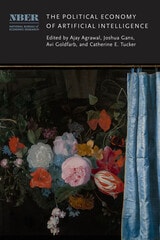
The Political Economy of Artificial Intelligence
Edited by Ajay Agrawal, Joshua Gans, Avi Goldfarb, and Catherine E. Tucker
University of Chicago Press, 2026
An authoritative look at how artificial intelligence both shapes and is shaped by the political and economic forces of the modern world.
As the effects of artificial intelligence are felt across economies and societies, many of its ramifications are still emerging. This volume brings together economists and political scientists to examine how AI intersects with regulation, military power, and political identity—offering analytical frameworks and identifying key open questions for future research.
The contributions address topics such as the allocation of property rights for AI inputs, trade-offs among alternative regulatory regimes, and the role of interest groups in shaping the technology’s trajectory. They explore how AI-related capabilities influence military effectiveness, resource allocation, and bargaining power among nations, and consider AI’s effects on political preferences, from the influence of AI-curated information on polarization to the implications of targeted political advertising and personalized education for national identity formation. The volume highlights key trade-offs that arise in AI’s political economy, and points toward empirical strategies and theoretical models that can advance understanding in this emerging field.
Drawing on diverse disciplinary perspectives, the collection provides a foundation for rigorous inquiry into how AI both shapes and is shaped by political and economic forces.
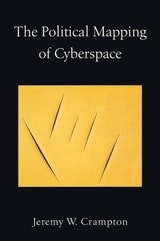
The Political Mapping of Cyberspace
Jeremy W. Crampton
University of Chicago Press, 2003
Using concepts and methods derived from the work of Michel Foucault, Crampton outlines a new mapping of cyberspace to help define the role of space in virtual worlds and to provide constructive ways in which humans can exist in another spatial dimension. He delineates the critical role maps play in constructing the medium as an object of knowledge and demonstrates that by processes of mapping we come to understand cyberspace. Maps, he argues, shape political thinking about cyberspace, and he deploys in-depth case studies of crime mapping, security maintenance, and geo-surveillance to show how we map ourselves onto cyberspace, inexorably, and indelibly.
Offering a powerful reinterpretation of technology and contemporary life, this innovative book will be an essential touchstone for the study of cartography and cyberspace in the twenty-first century.
The Politics of Bitcoin
Software as Right-Wing ExtremismDavid Golumbia
University of Minnesota Press, 2016
Since its introduction in 2009, Bitcoin has been widely promoted as a digital currency that will revolutionize everything from online commerce to the nation-state. Yet supporters of Bitcoin and its blockchain technology subscribe to a form of cyberlibertarianism that depends to a surprising extent on far-right political thought. The Politics of Bitcoin exposes how much of the economic and political thought on which this cryptocurrency is based emerges from ideas that travel the gamut, from Milton Friedman, F.A. Hayek, and Ludwig von Mises to Federal Reserve conspiracy theorists.
Forerunners: Ideas First is a thought-in-process series of breakthrough digital publications. Written between fresh ideas and finished books, Forerunners draws on scholarly work initiated in notable blogs, social media, conference plenaries, journal articles, and the synergy of academic exchange. This is gray literature publishing: where intense thinking, change, and speculation take place in scholarship.
The Power of Large Language Models and AI in the Digital Age
Technologies, applications, security and ethicsNeha Sharma
The Institution of Engineering and Technology, 2026