Results by title
54 books match the query 'Cooking, American' and 9 start with t
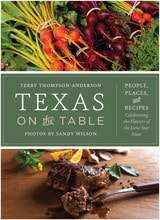
Texas on the Table
People, Places, and Recipes Celebrating the Flavors of the Lone Star StateBy Terry Thompson-Anderson, Photos by Sandy Wilson
University of Texas Press, 2014
With a bounty of locally grown meats and produce, artisanal cheeses, and a flourishing wine culture, it’s a luscious time to be cooking in Texas. From restaurant chefs to home cooks, Texans are going to local dairies, orchards, farmers’ markets, ranches, vineyards, and seafood sellers to buy the very freshest ingredients, whether we’re cooking traditional favorites or the latest haute cuisine. We’ve discovered that Texas terroir—our rich variety of climates and soils, as well as our diverse ethnic cultures—creates a unique “taste of place” that gives Texas food a flavor all its own.
Written by one of Texas’s leading cookbook authors, Terry Thompson-Anderson, Texas on the Table presents 150 new and classic recipes, along with stories of the people—farmers, ranchers, shrimpers, cheesemakers, winemakers, and chefs—who inspired so many of them and who are changing the taste of Texas food. The recipes span the full range from finger foods and first courses to soups and breads, salads, seafood, chicken, meat (including wild game), sides and vegetarian dishes, and sweets. Some of the recipes come from the state’s most renowned chefs, and all are user-friendly for home cooks. Finally, the authors and winemakers tell which recipes they turn to when opening their favorite wines.
This delicious compilation of recipes and stories of the people behind them, illustrated with Sandy Wilson’s beautiful photographs, makes Texas on the Table the must-have cookbook for everyone who relishes the flavors of the Lone Star State.
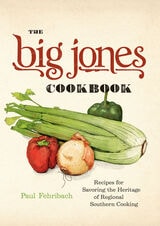
The Big Jones Cookbook
Recipes for Savoring the Heritage of Regional Southern CookingPaul Fehribach
University of Chicago Press, 2015
You expect to hear about restaurant kitchens in Charleston, New Orleans, or Memphis perfecting plates of the finest southern cuisine—from hearty red beans and rice to stewed okra to crispy fried chicken. But who would guess that one of the most innovative chefs cooking heirloom regional southern food is based not in the heart of biscuit country, but in the grain-fed Midwest—in Chicago, no less? Since 2008, chef Paul Fehribach has been introducing Chicagoans to the delectable pleasures of Lowcountry cuisine, while his restaurant Big Jones has become a home away from home for the city’s southern diaspora. From its inception, Big Jones has focused on cooking with local and sustainably grown heirloom crops and heritage livestock, reinvigorating southern cooking through meticulous technique and the unique perspective of its Midwest location. And with The Big Jones Cookbook, Fehribach brings the rich stories and traditions of regional southern food to kitchens everywhere.
Fehribach interweaves personal experience, historical knowledge, and culinary creativity, all while offering tried-and-true takes on everything from Reezy-Peezy to Gumbo Ya-Ya, Chicken and Dumplings, and Crispy Catfish. Fehribach’s dishes reflect his careful attention to historical and culinary detail, and many recipes are accompanied by insights about their origins. In addition to the regional chapters, the cookbook features sections on breads, from sweet potato biscuits to spoonbread; pantry put-ups like bread and butter pickles and chow-chow; cocktails, such as the sazerac; desserts, including Sea Island benne cake; as well as an extensive section on snout-to-tail cooking, including homemade Andouille and pickled pigs’ feet.
Proof that you need not possess a thick southern drawl to appreciate the comfort of creamy grits and the skill of perfectly fried green tomatoes, The Big Jones Cookbook will be something to savor regardless of where you set your table.
The Flavor of Wisconsin
An Informal History of Food and Eating in the Badger StateHarva Hachten
Wisconsin Historical Society Press, 2023
While in many ways the first edition of The Flavor of Wisconsin has stood the test of time very well, food-related culture and business have changed immensely in the twenty-five years since its publication. Well-known regional food expert and author Terese Allen examines aspects of food, cooking, and eating that have changed or emerged since the first edition, including the explosion of farmers' markets; organic farming and sustainability; the "slow food" movement; artisanal breads, dairy, herb growers, and the like; and how relatively recent immigrants have contributed to Wisconsin's remarkably rich food scene.

The Ladies' Etiquette Handbook
The Importance of Being Refined in the 1880sDavid E. Schoonover
University of Iowa Press, 2001
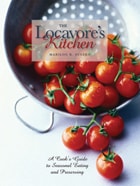
The Locavore’s Kitchen
A Cook’s Guide to Seasonal Eating and PreservingMarilou K. Suszko
Ohio University Press, 2011
More and more Americans are becoming dedicated locavores, people who prefer to eat locally grown or produced foods and who enjoy the distinctive flavors only a local harvest can deliver. The Locavore’s Kitchen invites readers to savor homegrown foods that come from the garden, the farm stand down the road, or local farmers’ markets through cooking and preserving the freshest ingredients.
In more than 150 recipes that highlight seasonal flavors, Marilou K. Suszko inspires cooks to keep local flavors in the kitchen year round. From asparagus in the spring to pumpkins in the fall, Suszko helps readers learn what to look for when buying seasonal homegrown or locally grown foods as well as how to store fresh foods, and which cooking methods bring out fresh flavors and colors. Suszko shares tips and techniques for extending seasonal flavors with detailed instructions on canning, freezing, and dehydrating and which methods work best for preserving texture and flavor.
The Locavore’s Kitchen is an invaluable reference for discovering the delicious world of fresh, local, and seasonal foods.
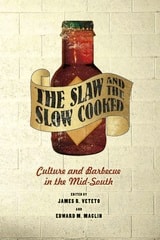
The Slaw and the Slow Cooked
Culture and Barbecue in the Mid-SouthJames R. Veteto
Vanderbilt University Press, 2011
In developing the book, Veteto and Maclin cast a wide net for divergent approaches. Food writer John Edge introduces us to Jones Bar-B-Q Diner in Marianna, Arkansas, a possibly century-old restaurant serving top-notch pork and simultaneously challenging race and class boundaries. Kristen Bradley-Shurtz explores the 150-plus-year tradition of the St. Patrick's Irish Picnic in McEwen, Tennessee. And no barbecue book would be complete without an insider's story, provided here by Jonathan Deutsch's "embedded" reporting inside a competitive barbecue team. Veteto and Maclin conclude with a glimpse into the future of barbecue culture: online, in the smoker, and fresh from the farm.
The Slaw and the Slow Cooked stands as a challenge to barbecue aficionados and a statement on the Mid-South's important place at the table. Intended for food lovers, anthropologists, and sociologists alike, The Slaw and the Slow Cooked demonstrates barbecue's status as a common language of the South.

The Steger Homestead Kitchen
Simple Recipes for an Abundant LifeWill Steger
University of Minnesota Press, 2021
Personal and simple, earthy and warm—recipes and stories from the Steger Wilderness Center in Minnesota’s north woods
The Steger Homestead Kitchen is an inspiring and down-to-earth collection of meals and memories gathered at the Homestead, the home of the Arctic explorer and environmental activist Will Steger, located in the north woods near Ely, Minnesota. Founded in 1988, the Steger Wilderness Center was established to model viable carbon-neutral solutions, teach ecological stewardship, and address climate change. In her role as the Homestead’s chef, Will’s niece Rita Mae creates delicious and hearty meals that become a cornerstone experience for visitors from all over the world, nourishing them as they learn and share their visions for a healthy and abundant future.
Now, with this new book, home chefs can make Rita Mae’s simple, hearty meals to share around their own homestead tables. Interwoven with dozens of mouth-watering recipes—for generous breakfasts (Almond Berry Griddlecakes), warming lunches (Northwoods Mushroom Wild Rice Soup), elegant dinners (Spatchcock Chicken with Blueberry Maple Glaze), desserts (Very Carrot Cake), and snacks (Steger Wilderness Bars)—are Will Steger’s exhilarating stories of epic adventures exploring the Earth’s most remote and endangered regions.
The Steger Homestead Kitchen opens up the Wilderness Center’s hospitality, its heart and hearth, providing the practical advice and inspiration to cook up a good life in harmony with nature.
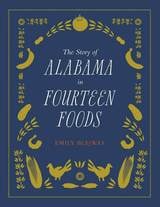
The Story of Alabama in Fourteen Foods
Emily Blejwas
University of Alabama Press, 2019
Alabama’s history and culture revealed through fourteen iconic foods, dishes, and beverages.
The Story of Alabama in Fourteen Foods explores well-known Alabama food traditions to reveal salient histories of the state in a new way. In this book that is part history, part travelogue, and part cookbook, Emily Blejwas pays homage to fourteen emblematic foods, dishes, and beverages, one per chapter, as a lens for exploring the diverse cultures and traditions of the state.
Throughout Alabama’s history, food traditions have been fundamental to its customs, cultures, regions, social and political movements, and events. Each featured food is deeply rooted in Alabama identity and has a story with both local and national resonance. Blejwas focuses on lesser-known food stories from around the state, illuminating the lives of a diverse populace: Poarch Creeks, Creoles of color, wild turkey hunters, civil rights activists, Alabama club women, frontier squatters, Mardi Gras revelers, sharecroppers, and Vietnamese American shrimpers, among others. A number of Alabama figures noted for their special contributions to the state’s foodways, such as George Washington Carver and Georgia Gilmore, are profiled as well. Alabama’s rich food history also unfolds through accounts of community events and a food-based economy. Highlights include Sumter County barbecue clubs, Mobile’s banana docks, Appalachian Decoration Days, cane syrup making, peanut boils, and eggnog parties.
Drawing on historical research and interviews with home cooks, chefs, and community members cooking at local gatherings and for holidays, Blejwas details the myths, legends, and truths underlying Alabama’s beloved foodways. With nearly fifty color illustrations and fifteen recipes, The Story of Alabama in Fourteen Foods will allow all Alabamians to more fully understand their shared cultural heritage.
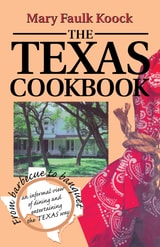
The Texas Cookbook
From Barbecue to Banquet-- an Informal View of Dining and Entertaining the Texas WayMary Faulk Koock
University of North Texas Press, 1965