Results by title
57 books match the query 'Corporations' and 16 start with t

Taking the Risk Out of Democracy
Corporate Propaganda versus Freedom and LibertyAlex Carey
University of Illinois Press, 1995

Tax Haven Ireland
Brian O’ Boyle
Pluto Press, 2021
Tax Haven Ireland uncovers the central players in this process and exposes the coverups employed by the Irish state, with the help of accountants, lawyers, and financial services companies. From the lucrative internet porn industry to corruption in the property market, this issue distorts the economy across the state and in the wider international system, and its history runs deep, going back the country’s origins as a British colonial outpost.
Today, in the wake of Brexit and in the shadow of yet another economic crash, what can be done to prevent such dangerous behaviour and reorganize our economies to invest in the people? Can Ireland – and all of us – build an alternative economy based on fairness and democratic values?
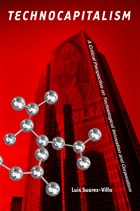
Technocapitalism
A Critical Perspective on Technological Innovation and CorporatismLuis Suarez-Villa
Temple University Press, 2012
In his provocative book Technocapitalism, Luis Suarez-Villa addresses this phenomenon from the perspective of radical political economy and social criticism. Grounded in the premise that relations of power influence how human creativity and technology are exploited by the new corporatism, the author argues that new forms of democratic participation and resistance are needed, if the social pathologies created by this new version of capitalism are to be checked.
Considering the new sectors affected by technocapitalism, such as biotechnology, nanotechnology, bioinformatics, and genomics, Suarez-Villa deciphers the common threads of power and organization that drive their corporatization. These new sectors, and the corporate apparatus set up to extract profit and power through them, are imposing standards, creating business models, molding social governance, and influencing social relations at all levels. The new reality they create is likely to affect most every aspect of human existence, including work, health, life, and nature itself.

The Best-Kept Secret
Women Corporate Lobbyists, Policy, and Power in the United StatesBenoit, Denise
Rutgers University Press, 2007
From lobbyists such as Jack Abramoff, to corporate executives, like Enron's Kenneth Lay and Jeffrey Skilling, recent scandals dealing with politics and government have focused only on men at the top. But do these high-profile men accurately represent the gendered make up of corporate-government in the United States?
In this first in-depth look at the changing face of corporate lobbying, Denise Benoit shows how women who have historically worked mostly in policy areas relating to "women's issues" such as welfare, family, and health have become increasingly influential as corporate lobbyists, specializing in what used to be considered "masculine" policy, such as taxes and defense. Benoit finds that this new crop of female lobbyists mobilize both masculinity and femininity in ways that create and maintain trusting, open, and strong relations with those in government, and at the same time help corporations to save and earn billions of dollars.
While the media focuses on the dubious behaviors of men at the top of business and government, this book shows that female corporate lobbyists are indeed one of the best kept secrets in Washington.
The Changing Roles of Debt and Equity in Financing U.S. Capital Formation
Edited by Benjamin M. Friedman
University of Chicago Press, 1982
This volume, consisting of papers presented at a conference held at Williamsburg, Va., 2-3 April 1981, is a progress report on the National Bureau of Economic Research project, The Changing Roles of Debt and Equity in Financing U.S. Capital Formation. The National Bureau has undertaken this project—including the conference, the research described in this volume, and the publication of the volume itself—with the support of the American Council of Life Insurance.

The Contradictions of Neoliberal Agri-Food
Corporations, Resistance, and Disasters in JapanKae Sekine
West Virginia University Press, 2016
Sekine and Bonanno stress the incompatibility of the requirements of neoliberalism with the structural and cultural conditions of Japanese agri-food. Local farmers’ and fishermen’s emphasis on community collective management of natural resources, they argue, clashes with neoliberalism’s focus on individualism and competitiveness. The authors conclude by pointing out the resulting fundamental contradiction: The lack of recognition of this incompatibility allows the continuous implementation of market solutions to problems that originate in these very market mechanisms.

The Conundrum of Russian Capitalism
The Post-Soviet Economy in the World SystemRuslan Dzarasov
Pluto Press, 2013
The Conundrum of Russian Capitalism looks at the nature of Russian capitalism following the fall of the Soviet Union, showing how the system originated in the degenerated Soviet bureaucracy and the pressures of global capital. Ruslan Dzarasov provides a detailed analysis of Russian corporate governance, labour practices and investment strategies.
By comparing the practices of Russian companies to the typical models of corporate governance and investment behaviour of big firms in the West, Dzarasov sheds light on the relationship between the core and periphery of the capitalist world-system.
This groundbreaking study shows that Russia's new capitalism is not a break with the country's Stalinist past, but in fact the continuation of that tradition.
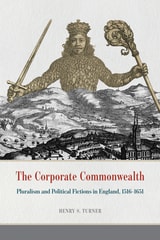
The Corporate Commonwealth
Pluralism and Political Fictions in England, 1516-1651Henry S. Turner
University of Chicago Press, 2016
Henry S. Turner uses the resources of economic and political history, literary analysis, and political philosophy to demonstrate how a number of English institutions with corporate associations—including universities, guilds, towns and cities, and religious groups—were gradually narrowed to the commercial, for-profit corporation we know today, and how the joint-stock corporation, in turn, became both a template for the modern state and a political force that the state could no longer contain. Through innovative readings of works by Thomas More, William Shakespeare, Francis Bacon, and Thomas Hobbes, among others, Turner tracks the corporation from the courts to the stage, from commonwealth to colony, and from the object of utopian fiction to the subject of tragic violence. A provocative look at the corporation’s peculiar character as both an institution and a person, The Corporate Commonwealth uses the past to suggest ways in which today’s corporations might be refashioned into a source of progressive and collective public action.
The Corporate Contract in Changing Times
Is the Law Keeping Up?Edited by Steven Davidoff Solomon and Randall Stuart Thomas
University of Chicago Press, 2019
With The Corporate Contract in Changing Times, Steven Davidoff Solomon and Randall Stuart Thomas bring together leading corporate law scholars, judges, and lawyers from top corporate law firms to explore what needs to change and what has prevented reform thus far. Among the topics addressed are how the law could be adapted to the reality that activist hedge funds pose a more serious threat to corporations than the hostile takeovers and how statutory laws, such as the rules governing appraisal rights, could be reviewed in the wake of appraisal arbitrage. Together, the contributors surface promising paths forward for future corporate law and public policy.
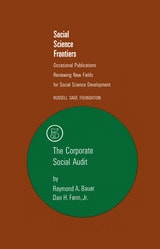
The Corporate Social Audit
Raymond A. Bauer
Russell Sage Foundation, 1972
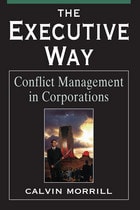
The Executive Way
Conflict Management in CorporationsCalvin Morrill
University of Chicago Press, 1995
Personal and corporate scandals, compensation battles, budget worries, interdepartmental rivalries, personal enmities, and general rancor are among everyday challenges faced by executives. Morrill shows what most influences the way managers handle routine conflicts are the cultures created by their company's organizational structure: whether there is a strong hierarchy, a weak hierarchy, or an absence of any strong central authority. The issues most likely to cause conflict within corporations Morrill identifies as managerial style, competition between departments, and performance evaluations, promotions, and compensation.
Among the people whose day-to-day lives we get to know are Jacobs, a divisional executive whose intuitive understanding of the corporate hierarchy enables him to topple his incompetent superior without direct confrontation; Fuller, who through a mix of brains, guile, and connections rises from staff executive secretary to corporate vice president in a large bank; Green, an old-fashioned accounting partner in a firm being taken over by management consultants; and the "Princess of Power," "Iron Man," and the "Terminator"—executives fighting their way to the top of a successful entertainment company.
Unprecedented in its direct access to top managers, this portrayal of daily life and conflict management among corporate elites will be of interest to professionals, scholars, and practitioners in organizational culture and behavior, managerial decision making, dispute, social control, law and society, and organizational ethnography.

The Fable of the Keiretsu
Urban Legends of the Japanese EconomyYoshiro Miwa and J. Mark Ramseyer
University of Chicago Press, 2006
In their insightful analysis, the authors show that the very idea of the keiretsu was created and propagated by Marxist scholars in post-war Japan. Western scholars merely repatriated the legend to show the culturally contingent nature of modern economic analysis. Laying waste to the notion of keiretsu, the authors debunk several related “facts” as well: that Japanese firms maintain special arrangements with a “main bank,” that firms are systematically poorly managed, and that the Japanese government guided post-war growth. In demolishing these long-held assumptions, they offer one of the few reliable chronicles of the realities of Japanese business.
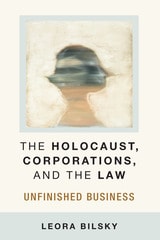
The Holocaust, Corporations, and the Law
Unfinished BusinessLeora Bilsky
University of Michigan Press, 2017
Leora Bilsky argues class action litigation and settlement offer a mode of accountability well suited to addressing the bureaucratic nature of business involvement in atrocities. Prior to these lawsuits, legal treatment of the Holocaust was dominated by criminal law and its individualistic assumptions, consistently failing to relate to the structural aspects of Nazi crimes. Engaging critically with contemporary debates about corporate responsibility for human rights violations and assumptions about “law,” she argues for the need to design processes that make multinational corporations accountable, and examines the implications for transitional justice, the relationship between law and history, and for community and representation in a post-national world. Her novel interpretation of the restitution lawsuits not only adds an important dimension to the study of Holocaust trials, but also makes an innovative contribution to broader and pressing contemporary legal and political debates. In an era when corporations are ever more powerful and international, Bilsky’s arguments will attract attention beyond those interested in the Holocaust and its long shadow.
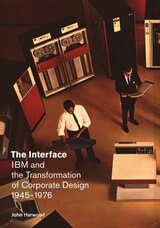
The Interface
IBM and the Transformation of Corporate Design, 1945–1976John Harwood
University of Minnesota Press, 2016
In February 1956 the president of IBM, Thomas Watson Jr., hired the industrial designer and architect Eliot F. Noyes, charging him with reinventing IBM’s corporate image, from stationery and curtains to products such as typewriters and computers and to laboratory and administration buildings. What followed—a story told in full for the first time in John Harwood’s The Interface—remade IBM in a way that would also transform the relationships between design, computer science, and corporate culture.
IBM’s program assembled a cast of leading figures in American design: Noyes, Charles Eames, Paul Rand, George Nelson, and Edgar Kaufmann Jr. The Interface offers a detailed account of the key role these designers played in shaping both the computer and the multinational corporation. Harwood describes a surprising inverse effect: the influence of computer and corporation on the theory and practice of design. Here we see how, in the period stretching from the “invention” of the computer during World War II to the appearance of the personal computer in the mid-1970s, disciplines once well outside the realm of architectural design—information and management theory, cybernetics, ergonomics, computer science—became integral aspects of design.
As the first critical history of the industrial design of the computer, of Eliot Noyes’s career, and of some of the most important work of the Office of Charles and Ray Eames, The Interface supplies a crucial chapter in the story of architecture and design in postwar America—and an invaluable perspective on the computer and corporate cultures of today.

The Power Structure of American Business
Beth A. Mintz and Michael Schwartz
University of Chicago Press, 1985
Thinker, Faker, Spinner, Spy
Corporate PR and the Assault on DemocracyEdited by David Miller and William Dinan
Pluto Press, 2007
Written by leading activists and writers, this book reveals the secrets of the PR trade including deception, the use of fake 'institutes', spying and dirty tricks. The impact can be devastating -- when the public is denied access to the truth, the results are rising inequality and environmental catastrophe.
Exposing the misdeeds of famous companies including Coca Cola, British Aerospace, Exxon and Monsanto, and revealing information about the covert funding of various apparently independent thinks tanks and institutes, the authors offer a guide to campaigns that can help us roll back corporate power and resist deceptive PR.