60 books match the query 'Corrupt practices' and 10 start with t
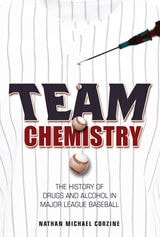
cover of Team Chemistry: The History of Drugs and Alcohol in Major League Baseball

Team Chemistry

The History of Drugs and Alcohol in Major League Baseball

Nathan Corzine

University of Illinois Press, 2016

In 2007, the Mitchell Report shocked traditionalists who were appalled that drugs had corrupted the "pure" game of baseball. Nathan Corzine rescues the story of baseball's relationship with drugs from the sepia-toned tyranny of such myths. In Team Chemistry , he reveals a game splashed with spilled whiskey and tobacco stains from the day the first pitch was thrown. Indeed, throughout the game's history, stars and scrubs alike partook of a pharmacopeia that helped them stay on the field and cope off of it:
  • In 1889, Pud Galvin tried a testosterone-derived "elixir" to help him pile up some of his 646 complete games.
  • Sandy Koufax needed Codeine and an anti-inflammatory used on horses to pitch through his late-career elbow woes.
  • Players returning from World War II mainstreamed the use of the amphetamines they had used as servicemen.
  • Vida Blue invited teammates to cocaine parties, Tim Raines used it to stay awake on the bench, and Will McEnaney snorted it between innings.
Corzine also ventures outside the lines to show how authorities handled--or failed to handle--drug and alcohol problems, and how those problems both shaped and scarred the game. The result is an eye-opening look at what baseball's relationship with substances legal and otherwise tells us about culture, society, and masculinity in America.
[more]
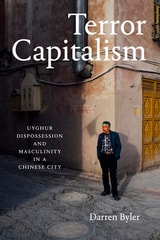
cover of Terror Capitalism: Uyghur Dispossession and Masculinity in a Chinese City

Terror Capitalism

Uyghur Dispossession and Masculinity in a Chinese City

Darren Byler

Duke University Press, 2021
In Terror Capitalism anthropologist Darren Byler theorizes the contemporary Chinese colonization of the Uyghur Muslim minority group in the northwest autonomous region of Xinjiang. He shows that the mass detention of over one million Uyghurs in “reeducation camps” is part of processes of resource extraction in Uyghur lands that have led to what he calls terror capitalism—a configuration of ethnoracialization, surveillance, and mass detention that in this case promotes settler colonialism. Drawing on ethnographic fieldwork in the regional capital Ürümchi, Byler shows how media infrastructures, the state’s enforcement of “Chinese” cultural values, and the influx of Han Chinese settlers contribute to Uyghur dispossession and their expulsion from the city. He particularly attends to the experiences of young Uyghur men—who are the primary target of state violence—and how they develop masculinities and homosocial friendships to protect themselves against gendered, ethnoracial, and economic violence. By tracing the political and economic stakes of Uyghur colonization, Byler demonstrates that state-directed capitalist dispossession is coconstructed with a colonial relation of domination.
[more]
cover of The Best Way to Rob a Bank is to Own One: How Corporate Executives and Politicians Looted the S&L Industry

The Best Way to Rob a Bank is to Own One

How Corporate Executives and Politicians Looted the S&L Industry

By William K. Black

University of Texas Press, 2013

In this expert insider’s account of the savings and loan debacle of the 1980s, William Black lays bare the strategies that corrupt CEOs and CFOs—in collusion with those who have regulatory oversight of their industries—use to defraud companies for their personal gain. Recounting the investigations he conducted as Director of Litigation for the Federal Home Loan Bank Board, Black fully reveals how Charles Keating and hundreds of other S&L owners took advantage of a weak regulatory environment to perpetrate accounting fraud on a massive scale. In the new afterword, he also authoritatively links the S&L crash to the business failures of 2008 and beyond, showing how CEOs then and now are using the same tactics to defeat regulatory restraints and commit the same types of destructive fraud.

Black uses the latest advances in criminology and economics to develop a theory of why “control fraud”—looting a company for personal profit—tends to occur in waves that make financial markets deeply inefficient. He also explains how to prevent such waves. Throughout the book, Black drives home the larger point that control fraud is a major, ongoing threat in business that requires active, independent regulators to contain it. His book is a wake-up call for everyone who believes that market forces alone will keep companies and their owners honest.
[more]
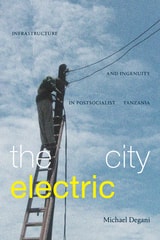
cover of The City Electric: Infrastructure and Ingenuity in Postsocialist Tanzania

The City Electric

Infrastructure and Ingenuity in Postsocialist Tanzania

Michael Degani

Duke University Press, 2022

Over the last twenty years of neoliberal reform, the power supply in Dar es Salaam, Tanzania’s metropolis, has become less reliable even as its importance has increased. Though mobile phones, televisions, and refrigerators have flooded the city, the electricity required to run these devices is still supplied by the socialist-era energy company Tanesco, which is characterized by increased fees, aging infrastructure, and a sluggish bureaucracy. While some residents contemplate off-grid solutions, others repair, extend, or tap into the state network with the assistance of freelance electricians or moonlighting utility employees. In The City Electric Michael Degani explores how electricity and its piracy has become a key site for urban Tanzanians to enact, experience, and debate their social contract with the state. Moving from the politics of generation contracts down to the street-level experience of blackouts and disconnection patrols, he reveals the logics of infrastructural modification and their effects on everyday life. As politicians, residents, electricians, and utility inspectors all redistribute flows of payment and power, they reframe the energy grid both as a technical system and as an ongoing experiment in collective interdependence.
[more]
cover of The Colfax County War: Violence and Corruption in Territorial New Mexico

The Colfax County War

Violence and Corruption in Territorial New Mexico

Corey Recko

University of North Texas Press, 2024
[more]
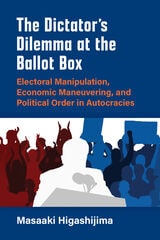
cover of The Dictator's Dilemma at the Ballot Box: Electoral Manipulation, Economic Maneuvering, and Political Order in Autocracies

The Dictator's Dilemma at the Ballot Box

Electoral Manipulation, Economic Maneuvering, and Political Order in Autocracies

Masaaki Higashijima

University of Michigan Press, 2022

Contrary to our stereotypical views, dictators often introduce elections in which they refrain from employing blatant electoral fraud. Why do electoral reforms happen in autocracies? Do these elections destabilize autocratic rule? The Dictator’s Dilemma at the Ballot Box argues that strong autocrats who can garner popular support become less dependent on coercive electioneering strategies. When autocrats fail to design elections properly, elections backfire in the form of coups, protests, and the opposition’s stunning election victories. The book’s theoretical implications are tested on a battery of cross-national analyses with newly collected data on autocratic elections and in-depth comparative case studies of the two Central Asian republics of Kazakhstan and Kyrgyzstan.
[more]
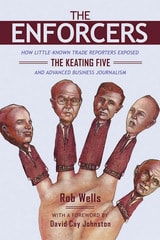
cover of The Enforcers: How Little-Known Trade Reporters Exposed the Keating Five and Advanced Business Journalism

The Enforcers

How Little-Known Trade Reporters Exposed the Keating Five and Advanced Business Journalism

Rob Wells with a foreword by David Cay Johnston

University of Illinois Press, 2019
In the 1980s, real estate developer and banker Charles H. Keating executed one of the largest savings and loans frauds in United States history. Keating had long used the courts to muzzle critical reporting of his business dealings, but aggressive reporting by a small trade paper called the National Thrift News helped bring down Keating and offered an inspiring example of business journalism that speaks truth to power. Rob Wells tells the story through the work of Stan Strachan, a veteran financial journalist who uncovered Keating's misdeeds and links to a group of US senators—the Keating Five—who bullied regulators on his behalf. Editorial decisions at the National Thrift News angered advertisers and readers, but the newsroom sold ownership on the idea of investigative reporting as a commercial opportunity. Examining the National Thrift News's approach, Wells calls for a new era of business reporting that can—and must—embrace its potential as a watchdog safeguarding the interests of the public.
[more]
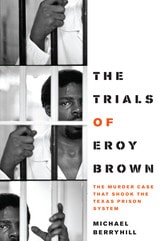
cover of The Trials of Eroy Brown: The Murder Case That Shook the Texas Prison System

The Trials of Eroy Brown

The Murder Case That Shook the Texas Prison System

By Michael Berryhill

University of Texas Press, 2011

In April 1981, two white Texas prison officials died at the hands of a black inmate at the Ellis prison farm near Huntsville. Warden Wallace Pack and farm manager Billy Moore were the highest-ranking Texas prison officials ever to die in the line of duty. The warden was drowned face down in a ditch. The farm manager was shot once in the head with the warden's gun. The man who admitted to killing them, a burglar and robber named Eroy Brown, surrendered meekly, claiming self-defense.

In any other era of Texas prison history, Brown's fate would have seemed certain: execution. But in 1980, federal judge William Wayne Justice had issued a sweeping civil rights ruling in which he found that prison officials had systematically and often brutally violated the rights of Texas inmates. In the light of that landmark prison civil rights case, Ruiz v. Estelle, Brown had a chance of being believed.

The Trials of Eroy Brown, the first book devoted to Brown's astonishing defense, is based on trial documents, exhibits, and journalistic accounts of Brown's three trials, which ended in his acquittal. Michael Berryhill presents Brown's story in his own words, set against the backdrop of the chilling plantation mentality of Texas prisons. Brown's attorneys—Craig Washington, Bill Habern, and Tim Sloan—undertook heroic strategies to defend him, even when the state refused to pay their fees. The Trials of Eroy Brown tells a landmark story of prison civil rights and the collapse of Jim Crow justice in Texas.
[more]
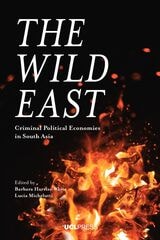
cover of The Wild East: Criminal Political Economies in South Asia

The Wild East

Criminal Political Economies in South Asia

Edited by Barbara Harriss-White and Lucia Michelutti

University College London, 2019
Through eleven case studies conducted across India, Pakistan, and Bangladesh, The Wild East examines a variety of economic sectors and business enterprises that regularly flout the law, such as coal, oil, real estate, and industrial labor. Bridging anthropology and political economy, the case studies explore how state regulative law is ignored or selectively manipulated and reveal the workings of regulated criminal economic systems in which politicians, police, judges, and bureaucrats are closely intertwined. Disrupting the existing literature on South Asia’s informal economy, The Wild East also suggests avenues for future research that will be of critical value to students and scholars of economics, anthropology, sociology, criminology, comparative politics, political science, and international relations.

 
[more]
cover of They Met at Wounded Knee: The Eastmans' Story

They Met at Wounded Knee

The Eastmans' Story

Gretchen Cassel Eick

University of Nevada Press, 2020

After ten years as a foreign and military policy lobbyist in Washington and four as director of an interfaith lobby, Gretchen Eick, moved to Kansas, earned a Ph.D. in American Studies from the University of Kansas and became Professor of History at Friends University. She was awarded two Fulbright Scholar awards, teaching in Latvia and Bosnia and Herzegovina (BiH), and a Fulbright Hays to South Africa. Her book on the civil rights movement—Dissent in Wichita: The Civil Right Movement in the Midwest, 1954-1972 (U of IL Press, 2001/2007) won three awards: The Richard Wentworth award from the University of Illinois as the best book in American history that press published over two years, the University of Kansas’ Hall Center Award for the best book by a Kansas author (the first time the award went to someone not teaching at K.U.), and the William Rockhill Nelson award for the best nonfiction book by a Kansas or Missouri author. The book resulted in two museum exhibits, a 2009 Telly Award-winning public television documentary about the first successful student-led sit-in, the 1958 Dockum Drug Store Sit-in in Wichita, and mention in the Smithsonian Museum of African American History and Culture.

 
[more]