Results by title
83 books match the query 'Country & Bluegrass' and 9 start with t
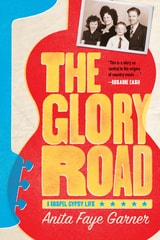
The Glory Road
A Gospel Gypsy LifeAnita Faye Garner
University of Alabama Press, 2021
“This is a story central to the origins of country music: the marriage of Saturday night and Sunday morning, and the literal marriage of two musicians, sometimes at odds with each other creatively and personally.” —Rosanne Cash
An essential memoir of music, memory, and the American South.
Anita Faye Garner grew up in the South—just about every corner of it. She and her musical family lived in Texarkana, Bossier City, Hot Springs, Jackson, Vicksburg, Hattiesburg, Pascagoula, Bogalusa, Biloxi, Gulfport, New Orleans, and points between, picking up sticks every time her father, a Pentecostal preacher known as “Brother Ray,” took over a new congregation.
In between jump-starting churches, Brother Ray took his wife and kids out on the gospel revival circuit as the Jones Family Singers. Ray could sing and play, and “Sister Fern” (Mama) was a celebrated singer and songwriter, possessed of both talent and beauty. Rounding out the band were the young Garner (known as Nita Faye then) and her big brother Leslie Ray. At all-day singings and tent revivals across the South, the Joneses made a joyful noise for the faithful and loaded into the car for the next stage of their tour.
But growing up gospel wasn’t always joyous. The kids practically raised and fended for themselves, bonding over a shared dislike of their rootless life and strict religious upbringing. Sister Fern dreamed of crossing over from gospel to popular music and recording a hit record. An unlikely combination of preacher’s wife and glamorous performer, she had the talent and presence to make a splash, and her remarkable voice brought Saturday night rock and roll to Sunday morning music. Always singing, performing, and recording at the margins of commercial success, Sister Fern shared a backing band with Elvis Presley and wrote songs recorded by Johnny Cash and many other artists.
In her touching memoir The Glory Road, Anita Faye Garner re-creates her remarkable upbringing. The story begins with Ray’s attempts to settle down and the family’s inevitable return to the gospel circuit and concludes with Sister Fern’s brushes with stardom and the family’s journey west to California where they finally landed—with some unexpected detours along the way. The Glory Road carries readers back to the 1950s South and the intersections of faith and family at the very roots of American popular music.
For more information about the book and Anita Garner, visit www.thegloryroad.com or www.anitagarner.com
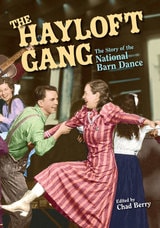
The Hayloft Gang
The Story of the National Barn DanceEdited by Chad Berry
University of Illinois Press, 2007
The Hayloft Gang draws on the colorful commentary of performers and former listeners to analyze the National Barn Dance, its audience, and its impact. Contributors trace the history of barn dance radio, explore the paradox of a foundational country music program broadcast from a major city, investigate notions of authenticity in the presentation of country music and entertainment, and delve into provocative issues raised by the barn dance phenomenon.
Contributors: Chad Berry, Michael T. Bertrand, Lisa Krissoff Boehm, Don Cusic, Wayne W. Daniel, Loyal Jones, Kristine M. McCusker, Stephen Parry, Susan Smulyan, Paul L. Tyler, and Michael Ann Williams.
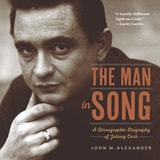
The Man in Song
A Discographic Biography of Johnny CashJohn M. Alexander
University of Arkansas Press, 2018
There have been many books written about Johnny Cash, but The Man in Song is the first to examine Cash’s incredible life through the lens of the songs he wrote and recorded. Music journalist and historian John Alexander has drawn on decades of studying Cash’s music and life, from his difficult depression-era Arkansas childhood through his death in 2003, to tell a life story through songs familiar and obscure. In discovering why Cash wrote a given song or chose to record it, Alexander introduces readers anew to a man whose primary consideration of any song was the difference music makes in people’s lives, and not whether the song would become a hit.
The hits came, of course. Johnny Cash sold more than fifty million albums in forty years, and he holds the distinction of being the only performer inducted into the Rock and Roll Hall of Fame, the Country Music Hall of Fame, the Songwriters Hall of Fame, and the Gospel Music Hall of Fame. The Man in Song connects treasured songs to an incredible life. It explores the intertwined experience and creativity of childhood trauma. It rifles through the discography of a life: Cash’s work with the Tennessee Two at Sam Phillips’s Sun Studios, the unique concept albums Cash recorded for Columbia Records, the spiritual songs, the albums recorded live at prisons, songs about the love of his life, June Carter Cash, songs about murder and death and addiction, songs about ramblers, and even silly songs.
Appropriate for both serious country and folk music enthusiasts and those just learning about this musical legend, The Man in Song will appeal to a fan base spanning generations. Here is a biography for those who first heard “I Walk the Line” in 1956, a younger generation who discovered Cash through songs like his cover of Trent Reznor’s “Hurt,” and everyone in between.
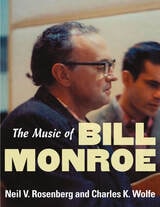
The Music of Bill Monroe
Neil V. Rosenberg and Charles K. Wolfe
University of Illinois Press, 2006
The second part of each chapter presents the discography. Information here includes the session’s place, date, time, and producer; master/matrix numbers, song/tune titles, composer credits, personnel, instruments, and vocals; and catalog/release numbers and reissue data.
The only complete bio-discography of this American musical icon, The Music of Bill Monroe is the starting point for any study of Monroe’s contributions as a composer, interpreter, and performer.
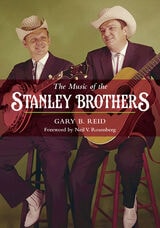
The Music of the Stanley Brothers
Gary B. Reid
University of Illinois Press, 2015
Monumental and indispensable, The Music of the Stanley Brothers provides fans and scholars alike with a guide for immersion in the long career and breathtaking repertoire of two legendary American musicians.

The Running Kind
Listening to Merle HaggardDavid Cantwell
University of Texas Press, 2022
2022 Belmont Award for the Best Book on Country Music, International Country Music Conference/Belmont University
New and expanded biography of one of country music’s most celebrated singer-songwriters.
Merle Haggard enjoyed numerous artistic and professional triumphs, including more than a hundred country hits (thirty-eight at number one), dozens of studio and live album releases, upwards of ten thousand concerts, induction into the Country Music Hall of Fame, and songs covered by artists as diverse as Lynryd Skynyrd, Elvis Costello, Tammy Wynette, Bobby "Blue" Bland, Willie Nelson, the Grateful Dead, and Bob Dylan.
In The Running Kind, a new edition that expands on his earlier analysis and covers Haggard's death and afterlife as an icon of both old-school and modern country music, David Cantwell takes us on a revelatory journey through Haggard’s music and the life and times out of which it came. Covering the breadth of his career, Cantwell focuses especially on the 1960s and 1970s, when Haggard created some of his best-known and most influential music: songs that helped invent the America we live in today. Listening closely to a masterpiece-crowded catalogue (including “Okie from Muskogee,” “Sing Me Back Home,” “Mama Tried,” and “Working Man Blues,” among many more), Cantwell explores the fascinating contradictions—most of all, the desire for freedom in the face of limits set by the world or self-imposed—that define not only Haggard’s music and public persona but the very heart of American culture.
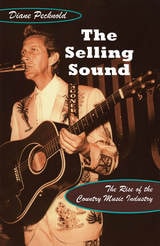
The Selling Sound
The Rise of the Country Music IndustryDiane Pecknold
Duke University Press, 2007
Pecknold draws on sources as diverse as radio advertising journals, fan magazines, Hollywood films, and interviews with industry insiders. Her sweeping social history encompasses the genre’s early days as an adjunct of radio advertising in the 1920s, the friction between Billboard and more genre-oriented trade papers over generating the rankings that shaped radio play lists, the establishment of the Country Music Association, and the influence of rock ‘n’ roll on the trend toward single-genre radio stations. Tracing the rise of a large and influential network of country fan clubs, Pecknold highlights the significant promotional responsibilities assumed by club organizers until the early 1970s, when many of their tasks were taken over by professional publicists.
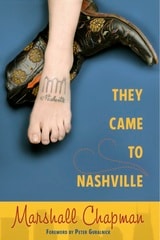
They Came to Nashville
Marshall Chapman
Vanderbilt University Press, 2010
In They Came to Nashville, Chapman records the personal stories of musicians shaping the modern history of music in Nashville, from the mouths of the musicians themselves. The trials, tribulations, and evolution of Music City are on display, as she sits down with influential figures like Kris Kristofferson, Emmylou Harris, and Miranda Lambert, and a dozen other top names, to record what brought each of them to Nashville and what inspired them to persevere. The book culminates in a hilarious and heroic attempt to find enough free time with Willie Nelson to get a proper interview. Instead, she's brought along on his raucous 2008 tour and winds up onstage in Beaumont, Texas singing "Good-Hearted Woman" with Willie.
They Came to Nashville reveals the daily struggle facing newcomers to the music business, and the promise awaiting those willing to fight for the dream.
Co-published with the Country Music Foundation Press
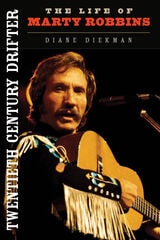
Twentieth Century Drifter
The Life of Marty RobbinsDiane Diekman
University of Illinois Press, 2012
Twentieth Century Drifter: The Life of Marty Robbins is the first biography of this legendary country music artist and NASCAR driver who scored sixteen number-one hits and two Grammy awards. Yet even with fame and fortune, Marty Robbins always yearned for more.
Drawing from personal interviews and in-depth research, biographer Diane Diekman explains how Robbins saw himself as a drifter, a man always searching for self-fulfillment and inner peace. Born Martin David Robinson to a hardworking mother and an abusive alcoholic father, he never fully escaped the insecurities burned into him by a poverty-stricken nomadic childhood in the Arizona desert. In 1947 he got his first gig as a singer and guitar player. Too nervous to talk, the shy young man walked onstage singing. Soon he changed his name to Marty Robbins, cultivated his magnetic stage presence, and established himself as an entertainer, songwriter, and successful NASCAR driver.
For fans of Robbins, NASCAR, and classic country music, Twentieth Century Drifter: The Life of Marty Robbins is a revealing portrait of this well-loved, restless entertainer, a private man who kept those who loved him at a distance.