Results by title
56 books match the query 'Criminals' and 21 start with t
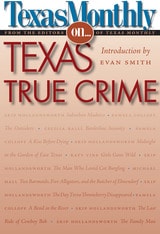
Texas Monthly On . . .
Texas True CrimeFrom the editors of Texas Monthly
University of Texas Press, 2007
Since 1973, one magazine has covered crime in Texas like no one else, delving deep into stories that may turn your stomach—but won't let you turn away. Texas Monthly On... Texas True Crime is a high-speed read around Texas, chasing criminals from the Panhandle to the Piney Woods, through gated mansions and trailer parks, from 1938 to the twenty-first century. The stories, which originally appeared as articles in the magazine, come from some of its most notable writers: Cecilia Ballí investigates the drug-fueled violence of the border; Pamela Colloff reports on Amarillo's lethal feud between jocks and punks; Michael Hall re-visits the legend of Joe Ball, a saloon owner who allegedly fed his waitresses to pet alligators; Skip Hollandsworth uncovers the computer nerd who became Dallas' most notorious jewel thief; and Katy Vine tracks a pair of teenage lesbians inspired by Thelma and Louise.
Texas Monthly On... Texas True Crime is the second in a series of books in which the editors of Texas Monthly offer the magazine's inimitable perspective on various aspects of Texas culture, including food, politics, travel, and music, among other topics. Texas Monthly On... Texas Women was released in 2006.
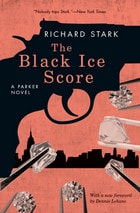
The Black Ice Score
A Parker NovelRichard Stark
University of Chicago Press, 2010
Richard Stark's Parker novels are the hardest of hard-boiled, classic crime novels where the heists are huge, the body counts are high, and the bad guys usually win.
The Parker novels have been a huge influence on countless writers and filmmakers, including Quentin Tarantino, Stephen King, George Pelecanos, Colson Whitehead, Lucy Sante, John Banville, and many more. Their stripped-down language and hard-as-nails amorality create an unforgettable world where the next score could be the big one, but your next mistake could also be your last. There's nothing else like them.
In The Black Ice Score, a corrupt African colonel has converted half his country’s wealth into diamonds and smuggled them to a Manhattan safe house. Four upstanding citizens plan to rescue their new nation by stealing the diamonds back—with the help of a “specialist”: Parker. Will Parker break his rule against working with amateurs and help them because his woman would be disappointed if he doesn’t? Or because three hired morons have threatened to kill him and his woman if he does? They thought they were buying an advantage, but what they get is a predated death certificate.

The Cornett-Whitley Gang
Violence Unleashed in TexasDavid Johnson
University of North Texas Press, 2019
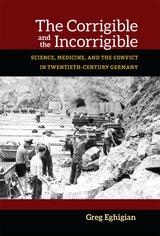
The Corrigible and the Incorrigible
Science, Medicine, and the Convict in Twentieth-Century GermanyGreg Eghigian
University of Michigan Press, 2015
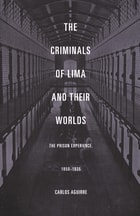
The Criminals of Lima and Their Worlds
The Prison Experience, 1850-1935Carlos Aguirre
Duke University Press, 2005
Drawing on a large collection of prison and administrative records archived at Peru’s Ministry of Justice, Aguirre offers a detailed account of the daily lives of men incarcerated in Lima’s jails. In showing the extent to which the prisoners actively sought to influence prison life, he reveals the dynamic between prisoners and guards as a process of negotiation, accommodation, and resistance. He describes how police and the Peruvian state defined criminality and how their efforts to base a prison system on the latest scientific theories—imported from Europe and the United States—foundered on the shoals of financial constraints, administrative incompetence, corruption, and widespread public indifference. Locating his findings within the political and social mores of Lima society, Aguirre reflects on the connections between punishment, modernization, and authoritarian traditions in Peru.
The Earps Invade Southern California
Bootlegging Los Angeles, Santa Monica, and the Old Soldiers' HomeDon Chaput
University of North Texas Press, 2020
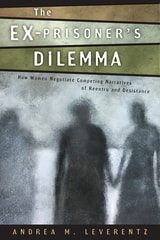
The Ex-Prisoner's Dilemma
How Women Negotiate Competing Narratives of Reentry and DesistanceLeverentz, Andrea M
Rutgers University Press, 2014
When a woman leaves prison, she enters a world of competing messages and conflicting advice. Staff from prison, friends, family members, workers at halfway houses and treatment programs all have something to say about who she is, who she should be, and what she should do. The Ex-Prisoner’s Dilemma offers an in-depth, firsthand look at how the former prisoner manages messages about returning to the community.
Over the course of a year, Andrea Leverentz conducted repeated interviews with forty-nine women as they adjusted to life outside of prison and worked to construct new ideas of themselves as former prisoners and as mothers, daughters, sisters, romantic partners, friends, students, and workers. Listening to these women, along with their family members, friends, and co-workers, Leverentz pieces together the narratives they have created to explain their past records and guide their future behavior. She traces where these narratives came from and how they were shaped by factors such as gender, race, maternal status, age, and experiences in prison, halfway houses, and twelve-step programs—factors that in turn shaped the women’s expectations for themselves, and others’ expectations of them. The women’s stories form a powerful picture of the complex, complicated human experience behind dry statistics and policy statements regarding prisoner reentry into society for women, how the experience is different for men and the influence society plays.
With its unique view of how society’s mixed messages play out in ex-prisoners’ lived realities, The Ex-Prisoner’s Dilemma shows the complexity of these women’s experiences within the broad context of the war on drugs and mass incarceration in America. It offers invaluable lessons for helping such women successfully rejoin society.
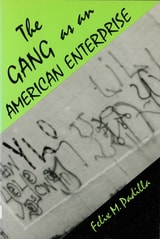
The Gang as an American Enterprise
Felix M Padilla
Rutgers University Press, 1992
Padilla shows us his decision to join the Diamonds. From early childhood, boys develop positive images of the gang. They realize that the dominant culture promises mobility, but that their paths to that mobility are blocked. By joining a gang they can creatively oppose the dominant culture. Padilla does not paint a romanticized picture of the Diamonds. Some members come to understand that when they sell drugs, they benefit the gang's leaders and suppliers more than themselves. Further, they recognize that the gang is also subject to problems of domination and inequality. Padilla shows that though the Diamonds are sometimes violent, they are not psychopaths. While we need not approve of what they do, he urges us to understand it as a rational response to the doors these young men see closed around them.
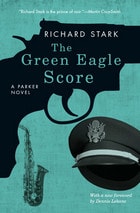
The Green Eagle Score
A Parker NovelRichard Stark
University of Chicago Press, 2010
Richard Stark's Parker novels are the hardest of hard-boiled, classic crime novels where the heists are huge, the body counts are high, and the bad guys usually win.
The Parker novels have been a huge influence on countless writers and filmmakers, including Quentin Tarantino, Stephen King, George Pelecanos, Colson Whitehead, Lucy Sante, John Banville, and many more. Their stripped-down language and hard-as-nails amorality create an unforgettable world where the next score could be the big one, but your next mistake could also be your last. There's nothing else like them.
In The Green Eagle Score, Parker cuts his vacation with Claire short with a new job: stealing the entire payroll of an Air Force base in upstate New York. With help from Marty Fusco, fresh out of the pen, and a smart aleck finance clerk named Devers, Parker tries to shorten the odds on the risky job. But the ice is thinner than Parker likes to think—and a wrench always gets thrown in the works.
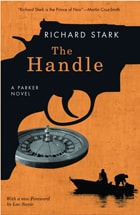
The Handle
A Parker NovelRichard Stark
University of Chicago Press, 2009
Parker takes down a whole illegal casino in this action-packed entry in the classic hard-boiled crime series
Richard Stark's Parker novels are the hardest of hard-boiled, classic crime novels where the heists are huge, the body counts are high, and the bad guys usually win.
The Parker novels have been a huge influence on countless writers and filmmakers, including Quentin Tarantino, Stephen King, George Pelecanos, Colson Whitehead, Lucy Sante, John Banville, and many more. Their stripped-down language and hard-as-nails amorality create an unforgettable world where the next score could be the big one, but your next mistake could also be your last. There's nothing else like them.
In The Handle, Parker is enlisted by the mob to knock off an island casino guarded by speedboats and heavies, forty miles from the Texas coast. Working with his trusted colleague Alan Grofield, but dealing with double-crosses and double-dealings by others from the word go, Parker knows the line between success and failure on this score would be exactly the length of the barrel of a .38.
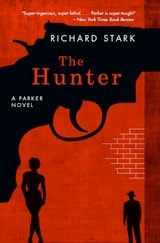
The Hunter
A Parker NovelRichard Stark
University of Chicago Press, 1962
Richard Stark's Parker novels are the hardest of hard-boiled, classic crime novels where the heists are huge, the body counts are high, and the bad guys usually win.
The Parker novels have been a huge influence on countless writers and filmmakers, including Quentin Tarantino, Stephen King, George Pelecanos, Colson Whitehead, Lucy Sante, John Banville, and many more. Their stripped-down language and hard-as-nails amorality create an unforgettable world where the next score could be the big one, but your next mistake could also be your last. There's nothing else like them.
The Hunter is where it all begin. It opens with Parker's woman shooting him just above the belt and leaving him for dead. She and his partner torch the house, with Parker in it, and take the money he had helped them steal. It all went down just the way they'd planned, except for one thing: Parker didn't die.
From there, our ruthless antihero roars into New York City, seeking revenge on the woman who betrayed him and on the man who took his money, stealing and scamming his way to redemption. The volume that kickstarted Parker's half-century career of larceny—and inspired the classic 1967 motion picture Point Blank, starring Lee Marvin—The Hunter is as thrilling today as it was when it was first published. Pick up your first Parker novel and you won't stop until you're read them all.
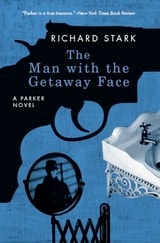
The Man with the Getaway Face
A Parker NovelRichard Stark
University of Chicago Press, 1963
Parker goes under the knife in The Man with the Getaway Face, changing his face to escape the mob and a contract on his life. Along the way he scores his biggest heist yet, but there’s a catch—a beautiful, dangerous catch who goes by the name Alma.
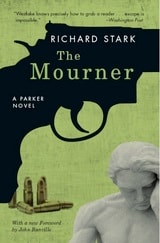
The Mourner
A Parker NovelRichard Stark
University of Chicago Press, 2009
Hard-boiled crime fiction doesn't get any better than this, an unforgettable entry in the classic series starring Parker, the deadliest heister around
Richard Stark's Parker novels are the hardest of hard-boiled, classic crime novels where the heists are huge, the body counts are high, and the bad guys usually win.
The Parker novels have been a huge influence on countless writers and filmmakers, including Quentin Tarantino, Stephen King, George Pelecanos, Colson Whitehead, Lucy Sante, John Banville, and many more. Their stripped-down language and hard-as-nails amorality create an unforgettable world where the next score could be the big one, but your next mistake could also be your last. There's nothing else like them.
The Mourner is a story of convergence—of cultures and of guys with guns. Hot on the trail of a statue stolen from a fifteenth-century French tomb, Parker enters a world of eccentric art collectors, greedy foreign officials, and shady KGB agents. Hired by a shifty dame who has something he needs, Parker will find out just who intends to bury whom—and who he needs to kill to finish the job.
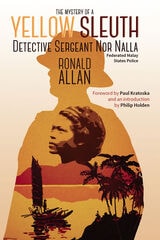
The Mystery of A Yellow Sleuth
Detective Sergeant Nor Nalla, Federated Malay States PoliceRonald Allan
National University of Singapore Press, 2018
Nor Nalla is an anagram for Ron Allan, who spent four years working on a rubber plantation in Malaya shortly before World War I. Like Kipling’s famous colonial spy, Kim, the “yellow sleuth” is a master of undercover operations, and this reissued work explores vast locales, from the forests of Malaya to the ports of Java, from London’s underbelly to the camps of Chinese laborers in WWI Flanders. Throughout, readers are left to differentiate between fiction and fact, and ponder questions of authorship, in this “impossible fantasy of hybridity,” as Phillip Holden calls it in his perceptive introduction.
Contemporary readers will not only savor the book’s tales of adventure and detection, they will also appreciate the ways that the author brings to life— and reveals the contradictions of—late colonial society.
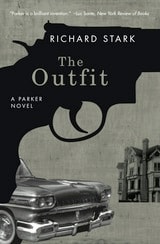
The Outfit
A Parker NovelRichard Stark
University of Chicago Press, 1963
In The Outfit, Parker goes toe-to-toe with the mob, hellbent on taking him down. The notorious lone wolf has some extra tricks up his sleeve, and the entire underworld will learn an unforgettable lesson: whatever Parker does, he does deadly. This third novel in the series, which was the basis for the classic 1973 film The Outfit, with Robert Duvall in the lead, is chock full of astonishing heists and violent battles of will.
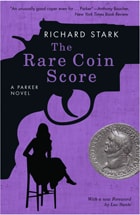
The Rare Coin Score
A Parker NovelRichard Stark
University of Chicago Press, 2009
Parker breaks nearly all his personal rules in this surprising, fast-paced entry in the classic hard-boiled series
Richard Stark's Parker novels are the hardest of hard-boiled, classic crime novels where the heists are huge, the body counts are high, and the bad guys usually win.
The Parker novels have been a huge influence on countless writers and filmmakers, including Quentin Tarantino, Stephen King, George Pelecanos, Colson Whitehead, Lucy Sante, John Banville, and many more. Their stripped-down language and hard-as-nails amorality create an unforgettable world where the next score could be the big one, but your next mistake could also be your last. There's nothing else like them.
When it comes to heists, Parker believes in some cardinal rules. On this job, he breaks two of them: never bring a dame along—especially not one you like—and never, ever, work with amateurs. Nevertheless, with the help of a creepy coin collector named Billy, and the lure of a classy widow, he agrees to set up a heist of a coin convention. But Billy’s a rookie with no idea how to pull off a score, and the lady soon becomes a major distraction. The Rare Coin Score marks the first appearance of Claire, who pulls off her own heist on Parker's heart—while together they steal two million dollars worth of coins.
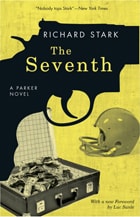
The Seventh
A Parker NovelRichard Stark
University of Chicago Press, 2009
An action-packed entry in the classic hard-boiled crime series starring Parker, the heister you don't want to cross!
Richard Stark's Parker novels are the hardest of hard-boiled, classic crime novels where the heists are huge, the body counts are high, and the bad guys usually win.
The Parker novels have been a huge influence on countless writers and filmmakers, including Quentin Tarantino, Stephen King, George Pelecanos, Colson Whitehead, Lucy Sante, John Banville, and many more. Their stripped-down language and hard-as-nails amorality create an unforgettable world where the next score could be the big one, but your next mistake could also be your last. There's nothing else like them.
The robbery was a piece of cake. The getaway was clean. The only thing left to do is split the cash—then it all goes wrong. In The Seventh, the heist of a college football game turns sour and the take is stolen from right under Parker’s nose. With the cops on his tail, Parker must figure out who crossed him—and how he can pay the culprit back.
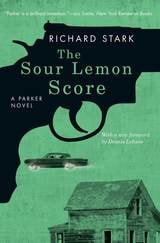
The Sour Lemon Score
A Parker NovelRichard Stark
University of Chicago Press, 2010
Richard Stark's Parker novels are the hardest of hard-boiled, classic crime novels where the heists are huge, the body counts are high, and the bad guys usually win.
The Parker novels have been a huge influence on countless writers and filmmakers, including Quentin Tarantino, Stephen King, George Pelecanos, Colson Whitehead, Lucy Sante, John Banville, and many more. Their stripped-down language and hard-as-nails amorality create an unforgettable world where the next score could be the big one, but your next mistake could also be your last. There's nothing else like them.
Bank robberies should run like clockwork, right? If your name’s Parker, you expect nothing less. The Sour Lemon Score finds Parker wrapping up a heist where everything has gone right. But then one of his partners gets too greedy for his own good. The four-way split following a job leaves too small a take for George Uhl, who begins to pick off his fellow heisters, one by one. The first mistake? That he doesn’t begin things by putting a bullet in Parker. That means he won’t get the chance to make a second. One of the darkest novels in the series, this caper proves the adage that no one crosses Parker and lives.
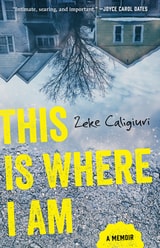
This Is Where I Am
A MemoirZeke Caligiuri
University of Minnesota Press, 2016
Prison is where Zeke Caligiuri is. Powderhorn Park in South Minneapolis, dubbed “Murderapolis” the year he turned eighteen, is where he comes from. It was the same neighborhood his father grew up in but had changed dramatically by the early 1990s. Yet in Zeke’s family, father and mother and grandmother kept things together while all around them the houses decayed and once-safe streets gave way to the crush of poverty and crime.
This Is Where I Am is Zeke Caligiuri’s clear-eyed account of how he got from there to here, how a boy who had every hope went from dreaming of freedom to losing it, along with nearly everything and everyone he loved. Tenderhearted in its reflections on his lost childhood, brutally candid in its description of a life of hanging and hustling, Zeke’s memoir recreates a world of tagging and goofing gone awry, of moving from smoking pot to unsuccessful attempts at dealing crack, of watching his father weep at the funeral of a seventeen-year-old boy, of going to jail: first strike. It is a place where, when asked what he's going to do with his life, a friend can only answer: “What the fuck are you talking about?”
This Is Where I Am is Zeke's own answer: he is going to tell his story, every sharp detail and sobering word, with the natural grace of a gifted writer and the hard-won wisdom of hindsight.
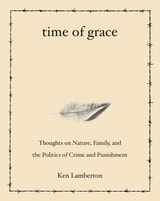
Time of Grace
Thoughts on Nature, Family, and the Politics of Crime and PunishmentKen Lamberton
University of Arizona Press, 2007
Time of Grace is a remarkable book, written with great eloquence by a former science teacher who was incarcerated for twelve years for his sexual liaison with a teenage student. Far more than a “prison memoir,” it is an intimate and revealing look at relationships—with fellow humans and with the surprising wildlife of the Sonoran Desert, both inside and beyond prison walls. Throughout, Ken Lamberton reflects on human relations as they mimic and defy those of the natural world, whose rhythms calibrate Lamberton’s days and years behind bars. He writes with candor about his life, while observing desert flora and fauna with the insight and enthusiasm of a professional naturalist.
While he studies a tarantula digging her way out of the packed earth and observes Mexican freetail bats sailing into the evening sky, Lamberton ruminates on his crime and on the wrenching effects it has had on his wife and three daughters. He writes of his connections with his fellow inmates—some of whom he teaches in prison classes—and with the guards who control them, sometimes with inexplicable cruelty. And he unflinchingly describes a prison system that has gone horribly wrong—a system entrapped in a self-created web of secrecy, fear, and lies.
This is the final book of Lamberton’s trilogy about the twelve years he spent in prison. Readers of his earlier books will savor this last volume. Those who are only now discovering Lamberton’s distinctive voice—part poet, part scientist, part teacher, and always deeply, achingly human—will feel as if they are making a new friend.
Gripping, sobering, and beautifully written, Lamberton’s memoir is an unforgettable exploration of crime, punishment, and the power of the human spirit.
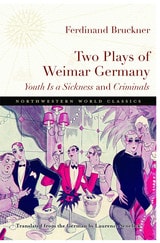
Two Plays of Weimar Germany
Youth Is a Sickness and CriminalsFerdinand Bruckner, Translated from the German by Laurence Senelick
Northwestern University Press, 2018
Though his fame was later eclipsed by peers such as Bertolt Brecht, Bruckner was the celebrity dramatist of his time, and a new generation of readers is discovering his groundbreaking plays known for their strong cultural critique and unflinching portrayals of social ills, outcasts, and misfits. Youth Is a Sickness (1924) explores the lives of Germany's "lost generation," those who grew up during and after the cataclysm of the First World War, devoid of hope and ideals, lost in a haze of sex and drugs. Criminals (1926) traces several court cases about a failed double suicide, theft, abortion, and homosexual blackmail, controversial topics for the audience of its time and even today. Its innovative staging and interwoven storylines illuminate the imposed social tensions and legal injustice faced by the characters.
In this expert translation, readers can see Bruckner as a public intellectual, a man committed to commenting on the fate of Germany; humane values; and the past, present, and future in his work. With an introduction by the translator, this volume will be the definitive version for readers, actors, playwrights, and scholars.