Results by title
143 books match the query 'Crisis' and 28 start with t
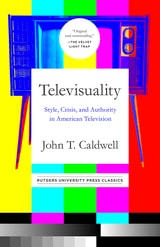
Televisuality
Style, Crisis, and Authority in American TelevisionJohn T Caldwell
Rutgers University Press, 2020

The Bachelors' Ball
The Crisis of Peasant Society in BéarnPierre Bourdieu
University of Chicago Press, 2008
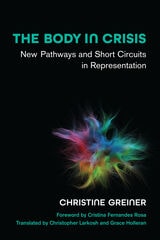
The Body in Crisis
New Pathways and Short Circuits in RepresentationChristine Greiner
University of Michigan Press, 2021

The Cancer Stage of Capitalism
From Crisis to CureJohn McMurtry
Pluto Press, 2013
The Cancer Stage of Capitalism is a modern classic of critical philosophy and political economy, renowned for its depth and comprehensive research. It provides a step by step diagnosis of the continuing economic collapse in the US and Europe and has had an enormous influence on new visions of economic alternatives.
John McMurtry argues that our world disorder of unending crises is the predictable result of a cancerous economic system multiplying out of all control and destroying ecological, social and organic life - a process he describes as 'global ecogenocide'. In this updated edition he explains the ‘social immune response’ required to fight the ‘macro cancer’, something which has already been shown in developments such as the Occupy movement and the democratic social transformation of Latin America.
In an official global culture increasingly destructive of life, this book shows the necessity and possibility of building a sustainable society based on a universal commitment to life and nature.
The City on the Hill From Below
The Crisis of Prophetic Black PoliticsAuthored by Stephen Marshall
Temple University Press, 2012
Within the discipline of American political science and the field of political theory, African American prophetic political critique as a form of political theorizing has been largely neglected. Stephen Marshall, in The City on the Hill from Below, interrogates the political thought of David Walker, Frederick Douglass, W. E. B. DuBois, James Baldwin, and Toni Morrison to reveal a vital tradition of American political theorizing and engagement with an American political imaginary forged by the City on the Hill.
Originally articulated to describe colonial settlement, state formation, and national consolidation, the image of the City on the Hill has been transformed into one richly suited to assessing and transforming American political evil. The City on the Hill from Below shows how African American political thinkers appropriated and revised languages of biblical prophecy and American republicanism.
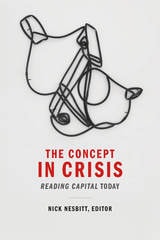
The Concept in Crisis
Reading Capital TodayNick Nesbitt, editor
Duke University Press, 2017
Contributors. Emily Apter, Alain Badiou, Étienne Balibar, Bruno Bosteels, Adrian Johnston, Warren Montag, Fernanda Navarro, Nick Nesbitt, Knox Peden, Nina Power, Robert J. C. Young

The Crisis of Action in Nineteenth-Century English Literature
Stefanie Markovits
The Ohio State University Press, 2006
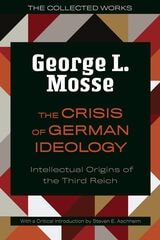
The Crisis of German Ideology
Intellectual Origins of the Third ReichGeorge L. Mosse
University of Wisconsin Press, 2021
George L. Mosse (1918–99) was a legendary scholar, teacher, and mentor. A refugee from Nazi Germany, in 1955 he joined the Department of History at the University of Wisconsin–Madison, where he was both influential and popular. Mosse was an early leader in the study of modern European cultural and intellectual history, fascism, and the history of sexuality and masculinity. Over his career he authored more than two dozen books.
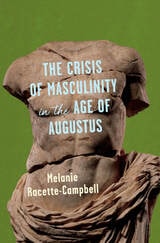
The Crisis of Masculinity in the Age of Augustus
Melanie Racette-Campbell
University of Wisconsin Press, 2023
Careful reading of contemporary texts reveals a decades-long process as tumultuous and unsteady as the political events they echoed, one in which multiple and competing strategies for reconceiving the nature of masculinity were tested, employed, discarded, and adopted in a complex public-private discourse. The eventual reconstitution of a definition of Roman manhood was not easily agreed upon. Masculinity in both the Republic and the Empire are well-studied subjects, but by shining a light on the precise moment of transition Racette-Campbell unveils the complexity, contours, and nuances of the Augustan crisis of masculinity.
The Crisis of Meaning and the Life-World
Husserl, Heidegger, Arendt, PatockaLubica Ucník
Ohio University Press, 2016
In The Crisis of Meaning and the Life-World, Ľubica Učník examines the existential conflict that formed the focus of Edmund Husserl’s final work, which she argues is very much with us today: how to reconcile scientific rationality with the meaning of human existence. To investigate this conundrum, she places Husserl in dialogue with three of his most important successors: Martin Heidegger, Hannah Arendt, and Jan Patočka.
For Husserl, 1930s Europe was characterized by a growing irrationalism that threatened to undermine its legacy of rational inquiry. Technological advancement in the sciences, Husserl argued, had led science to forget its own foundations in the primary “life-world”: the world of lived experience. Renewing Husserl’s concerns in today’s context, Učník first provides an original and compelling reading of his oeuvre through the lens of the formalization of the sciences, then traces the unfolding of this problem through the work of Heidegger, Arendt, and Patočka.
Although many scholars have written on Arendt, none until now has connected her philosophical thought with that of Czech phenomenologist Jan Patočka. Učník provides invaluable access to the work of the latter, who remains understudied in the English language. She shows that together, these four thinkers offer new challenges to the way we approach key issues confronting us today, providing us with ways to reconsider truth, freedom, and human responsibility in the face of the postmodern critique of metanarratives and a growing philosophical interest in new forms of materialism.

The Crisis of Meaning
In Culture and EducationDavid Trend
University of Minnesota Press, 1995
The Crisis of Meaning was first published in 1995. Minnesota Archive Editions uses digital technology to make long-unavailable books once again accessible, and are published unaltered from the original University of Minnesota Press editions.
Pick up any newspaper and it is clear that the United States is facing a democratic crisis. Recent culture wars and debates about political correctness and culture have illustrated how conventional definitions of citizenship and national identity have been thrown into question.
Investigating what he views as an inseparable link between culture and politics, David Trend analyzes how notions of patriotism, citizenship, community, and family are communicated within specific public and private institutions. He extends the meaning and purpose of pedagogy as a cultural practice outside the classroom, focusing on political activism in education, the mass media, and the art world.
The Crisis of Meaning supplies a crucial theoretical understanding of the ways in which the pedagogical and political intersect at a variety of cultural sites, as it points us toward a "democratic" process of national identity formation. It is indispensable reading for anyone interested in the connections between education and politics.
David Trend is executive director of the Center for Social Research and Education in San Francisco and also executive editor of the Socialist Review. He is the author of Cultural Pedagogy: Art/Education/Politics (1992).
The Crisis of School Violence
A New PerspectiveMarianna King
Michigan State University Press, 2020
The Crisis of Secularism in India
Anuradha Dingwaney Needham and Rajeswari Sunder Rajan, eds.
Duke University Press, 2007
Scholars of history, anthropology, religion, politics, law, philosophy, and media studies take on a broad range of concerns. Some consider the history of secularism in India; others explore theoretical issues such as the relationship between secularism and democracy or the shortcomings of the categories “majority” and “minority.” Contributors examine how the debates about secularism play out in schools, the media, and the popular cinema. And they address two of the most politically charged sites of crisis: personal law and the right to practice and encourage religious conversion. Together the essays inject insightful analysis into the fraught controversy about the shortcomings and uncertain future of secularism in the world today.
Contributors. Flavia Agnes, Upendra Baxi, Shyam Benegal, Akeel Bilgrami, Partha Chatterjee, V. Geetha, Sunil Khilnani, Nivedita Menon, Ashis Nandy, Anuradha Dingwaney Needham, Gyanendra Pandey, Gyan Prakash, Arvind Rajagopal, Paula Richman, Sumit Sarkar, Dwaipayan Sen, Rajeswari Sunder Rajan, Shabnum Tejani, Romila Thapar, Ravi S. Vasudevan, Gauri Viswanathan
The Crisis of Socialism in Europe
Christiane Lemke and Gary Marks, eds.
Duke University Press, 1991
The collection begins with an historical overview of socialism in Western Europe and moves toward the suggestion of a framework for a post-socialist discourse. Among the topics covered are: the birth and death of communism and a regime type in Eastern Europe; how different forms of national communism were smothered by Sovietization in the postwar period; the origins of revolutions in Eastern Europe; the potential for social democracy in Hungary; the role of the Left in a reunified German; and directions for the Left in general.
Contributors. Geoff Eley, Konrad Jarausch, Herbert Kitschelt, Christiane Lemke, Andrei Markovits, Gary Marks, Wolfgang Merkel, Norman Naimark, Iván and Szonja Szelénya, Sharon Wolchik
The Crisis of Western Education (The Works of Christopher Dawson)
Christopher Dawson
Catholic University of America Press, 2010

The Fevered Novel from Balzac to Bernanos
Frenetic Catholicism in Crisis, Delirium and RevolutionFrancesco Manzini
University of London Press, 2010
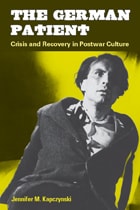
The German Patient
Crisis and Recovery in Postwar CultureJennifer M. Kapczynski
University of Michigan Press, 2010
The German Patient takes an original look at fascist constructions of health and illness, arguing that the idea of a healthy "national body"---propagated by the Nazis as justification for the brutal elimination of various unwanted populations---continued to shape post-1945 discussions about the state of national culture. Through an examination of literature, film, and popular media of the era, Jennifer M. Kapczynski demonstrates the ways in which postwar German thinkers inverted the illness metaphor, portraying fascism as a national malady and the nation as a body struggling to recover. Yet, in working to heal the German wounds of war and restore national vigor through the excising of "sick" elements, artists and writers often betrayed a troubling affinity for the very biopolitical rhetoric they were struggling against. Through its exploration of the discourse of collective illness, The German Patient tells a larger story about ideological continuities in pre- and post-1945 German culture.
Jennifer M. Kapczynski is Assistant Professor of Germanic Languages and Literatures at Washington University in St. Louis. She is the coeditor of the anthology A New History of German Cinema.
Cover art: From The Murderers Are Among Us (1946). Reprinted courtesy of the Deutsche Kinemathek.
"A highly evocative work of meticulous scholarship, Kapczynski's deftly argued German Patient advances the current revaluation of Germany's postwar reconstruction in wholly original and even exciting ways: its insights into discussions of collective sickness and health resonate well beyond postwar Germany."
---Jaimey Fischer, University of California, Davis
"The German Patient provides an important historical backdrop and a richly specific cultural context for thinking about German guilt and responsibility after Hitler. An eminently readable and engaging text."
---Johannes von Moltke, University of Michigan
"This is a polished, eloquently written, and highly informative study speaking to the most pressing debates in contemporary Germany. The German Patient will be essential reading for anyone interested in mass death, genocide, and memory."
---Paul Lerner, University of Southern California

The Great War Comes to Wisconsin
Sacrifice, Patriotism, and Free Speech in a Time of CrisisRichard L. Pifer
Wisconsin Historical Society Press, 2017
Instead of a comprehensive history of the battlefield, this book captures the homefront experience: the political debates over war policy, the worry over loved ones fighting overseas, the countless everyday sacrifices, and the impact of a wartime hysteria that drove dissent underground. It also includes the voices of soldiers from Wisconsin’s famed 32nd Division, through extensively quoted letters and newspaper accounts. Immerse yourself in the Wisconsin experience during World War I—a conflict that demonstrated America’s great capacity for sacrifice and generosity, but also for prejudice, intolerance, and injustice.
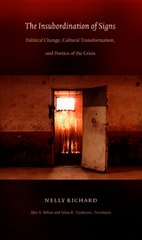
The Insubordination of Signs
Political Change, Cultural Transformation, and Poetics of the CrisisNelly Richard
Duke University Press, 2004
In The Insubordination of Signs Richard theorizes the cultural reactions—particularly within the realms of visual arts, literature, and the social sciences—to the oppression of the Chilean dictatorship. She reflects on the role of memory in the historical shadow of the military regime and on the strategies offered by marginal discourses for critiquing institutional systems of power. She considers the importance of Walter Benjamin for the theoretical self-understanding of the Latin American intellectual left, and she offers revisionary interpretations of the Chilean neo-avantgarde in terms of its relationships with the traditional left and postmodernism. Exploring the gap between Chile’s new left social sciences and its “new scene” aesthetic and critical practices, Richard discusses how, with the return of democracy, the energies that had set in motion the democratizing process seemed to exhaust themselves as cultural debate was attenuated in order to reduce any risk of a return to authoritarianism.
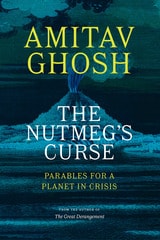
The Nutmeg's Curse
Parables for a Planet in CrisisAmitav Ghosh
University of Chicago Press, 2021
A powerful work of history, essay, testimony, and polemic, Amitav Ghosh’s new book traces our contemporary planetary crisis back to the discovery of the New World and the sea route to the Indian Ocean. The Nutmeg’s Curse argues that the dynamics of climate change today are rooted in a centuries-old geopolitical order constructed by Western colonialism. At the center of Ghosh’s narrative is the now-ubiquitous spice nutmeg. The history of the nutmeg is one of conquest and exploitation—of both human life and the natural environment. In Ghosh’s hands, the story of the nutmeg becomes a parable for our environmental crisis, revealing the ways human history has always been entangled with earthly materials such as spices, tea, sugarcane, opium, and fossil fuels. Our crisis, he shows, is ultimately the result of a mechanistic view of the earth, where nature exists only as a resource for humans to use for our own ends, rather than a force of its own, full of agency and meaning.
Writing against the backdrop of the global pandemic and the Black Lives Matter protests, Ghosh frames these historical stories in a way that connects our shared colonial histories with the deep inequality we see around us today. By interweaving discussions on everything from the global history of the oil trade to the migrant crisis and the animist spirituality of Indigenous communities around the world, The Nutmeg’s Curse offers a sharp critique of Western society and speaks to the profoundly remarkable ways in which human history is shaped by non-human forces.
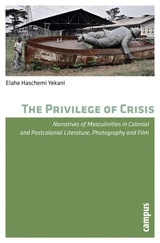
The Privilege of Crisis
Narratives of Masculinities in Colonial and Postcolonial Literature, Photography, and FilmElahe Haschemi Yekani
Campus Verlag, 2011
Despite the understanding of scholars that masculinity, far from being a natural or stable concept, is in reality a social construction, the culture at large continues to privilege an idealized, coherent male point of view. The Privilege of Crisis draws on the work of authors such as H. Rider Haggard, Rudyard Kipling, and Joseph Conrad—as well as contemporary postcolonial writers such as J. M. Coetzee, Hanif Kureishi and Zadie Smith—to show how recurrent references to a "crisis" of masculinity or the decline of masculinity serve largely to demonstrate and support positions of male privilege.
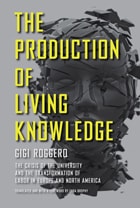
The Production of Living Knowledge
The Crisis of the University and the Transformation of Labor in Europe and North AmericaGigi Roggero
Temple University Press, 2011
Evaluating higher education institutions—particularly the rise of the “global university”—and their rapidly changing role in the global era, Gigi Roggero finds the system in crisis. In his groundbreaking book, The Production of Living Knowledge, Roggero examines the university system as a key site of conflict and transformation within “cognitive capitalism”—a regime in which knowledge has become increasingly central to the production process at large. Based on extensive fieldwork carried out through the activist method of conricerca, or “co-research,” wherein researchers are also subjects, Roggero’s book situates the crisis of the university and the changing composition of its labor force against the backdrop of the global economic crisis.
Combining a discussion of radical experiments in education, new student movements, and autonomist Marxian (or post-operaista) social theory, Roggero produces a distinctly transnational and methodologically innovative critique of the global university from the perspective of what he calls “living knowledge.”
In light of new student struggles in the United States and across the world, this first English-language edition is particularly timely.

The Tartar Moment
Crisis and the Globalization of Chinese Knowledge in Early Modern EuropeGianamar Giovannetti-Singh
University of Chicago Press, 0
How seventeenth-century Europeans, following Jesuit missionary Martino Martini, saw their continent as historically, environmentally, and culturally intertwined with China.
The Tartar Moment focuses on understanding how the Manchu conquest of the Ming Empire in 1644 transformed European science, technology, and politics for over a century. Gianamar Giovannetti-Singh argues that seventeenth-century European natural philosophers found the nomadic takeover of a seemingly eternal empire deeply relevant for their own concerns. They began to reevaluate how they thought about the roles of astronomy, history-writing, agriculture, and military technologies in ensuring the long-term survival of a state.
The book’s narrative center is the Jesuit missionary Martino Martini, who first grasped the global significance of the Tartar War and its aftermath. Giovannetti-Singh situates Martini as a broker bridging multiple worlds, each grappling with new forms of turbulence. Martini’s writings reinterpreted Chinese knowledge and culture for diverse European audiences urgently seeking order in an age of uncertainty. China ceased to be imagined as a timeless Other and instead appeared as a civilization that, like Europe, confronted recurring disorder and crafted philosophical solutions to maintain stability. During this period, Europeans selectively appropriated Chinese methods of reading the heavens, cultivating the earth, and governing the state.
By tracing how Martini recognized, theorized, and recounted crises in Ming, Manchu, and European contexts, The Tartar Moment shows that the 1640s and 1650s were not simply years of collapse but of intense creativity in interpreting and responding to disorder.
The Times Were Strange and Stirring
Methodist Preachers and the Crisis of EmancipationReginald F. Hildebrand
Duke University Press, 1995
Hildebrand explores the ideas and ideals of missionaries from several branches of Methodism—the African Methodist Episcopal Church, the Colored Methodist Episcopal Church, and the northern-based Methodist Episcopal Church—and the significant and highly charged battle waged between them over the challenge and meaning of freedom. He traces the various strategies and goals pursued by these competing visions and develops a typology of some of the ways in which emancipation was approached and understood.
Focusing on individual church leaders such as Lucius H. Holsey, Richard Harvey Cain, and Gilbert Haven, and with the benefit of extensive research in church archives and newspapers, Hildebrand tells the dramatic and sometimes moving story of how missionaries labored to organize their denominations in the black South, and of how they were overwhelmed at times by the struggles of freedom.
The Work of Disaster
Crisis and Care Along a Himalayan Fault LineAidan Seale-Feldman
University of Chicago Press, 2025
In a world marked by escalating disasters, the forms that care takes are increasingly fraught. In this powerful book, anthropologist Aidan Seale-Feldman focuses on Nepal, where in 2015 a 7.8-magnitude earthquake and equally powerful aftershock struck the country’s central region. The disaster claimed more than nine thousand lives and inspired a surge of humanitarian concern for the mental health of Nepali people. Based on extensive ethnographic fieldwork, The Work of Disaster examines the possibilities generated by disaster, as well as the vexed relationship between crisis and care.
Moving between NGO offices, mountain trails, therapeutic interventions, and affected villages, Seale-Feldman tells the story of an emergent “mental health crisis” and the forms of care that followed in the disaster’s wake. She also analyzes the changes emergency services bring about in the places they seek to assist, the challenges of psychiatric support provided by international organizations, and the place of mental health counseling in a modern biopolitical reality. The Work of Disaster reveals the simultaneous violence and gentleness of humanitarian encounters, engaging along the way with broader debates about world making and the ethics of care.
Theater and Crisis
Myth, Memory, and Racial Reckoning in America, 1964-2020Patrice D. Rankine
Lever Press, 2024
Rather than approaching the problem of racial reckoning through history, where periodization and progress are dominant narratives, Theater and Crisis argues that myth and memory allow for better theorization about recurring events from the past, their haunting, and what these apparent ghosts ask of us. Building on the study of myth as active, processual storytelling, Rankine acknowledges that it grounds and orients groups toward significant events. Theater and Crisis aligns narratives about Emmett Till, Trayvon Martin, and George Floyd, among others, with ancient, mythic figures such as Christ, Dionysus, Oedipus, and Moses. As living and verbal visitations, these stories performed on stage encode the past through their epiphanies in the present, urging audiences toward shared meaning.
Rankine traces the cyclical hauntings of race through the refiguring of mythic stories across the past 75 years in the plays of James Baldwin, Ntozake Shange, Antoinette Nwandu, and many more, and in response to flashpoints in US racial history, such as the 1955 lynching of Emmett Till, the upheavals of the 1960s and 1970s, the wars on drugs and crime, and the continued violence against and disenfranchisement of Black people into the twenty-first century. Theater and Crisis explores the appearance of myth on the American stage and showcases the ongoing response by the theatrical establishment to transform the stage into a space for racial reckoning. This timely book is essential reading for scholars of theater studies, classics, and American studies.
Theater, War, and Memory in Crisis
Vichy, Algeria, the AftermathJohn Ireland
University of Michigan Press, 2025

Two Counties in Crisis
Measuring Political Change in Reconstruction TexasRobert J. Dillard
University of North Texas Press, 2023