Results by title
476 books match the query 'Criticism' and 119 start with t
Team 10 East
Revisionist Architecture in Real Existing ModernismEdited by Lukasz Stanek
Museum of Modern Art in Warsaw, 2014

Television and Criticism
Edited by Solange Davin and Rhona Jackson
Intellect Books, 2008
Terror and Wonder
Architecture in a Tumultuous AgeBlair Kamin
University of Chicago Press, 2010
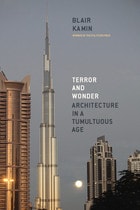
For more than twenty years now, Blair Kamin of the Chicago Tribune has explored how architecture captures our imagination and engages our deepest emotions. A winner of the Pulitzer Prize for criticism, Kamin treats his subjects not only as works of art but also as symbols of the cultural and political forces that inspire them. Terror and Wonder gathers the best of Kamin’s writings from the past decade along with new reflections on an era framed by the destruction of the World Trade Center and the opening of the world’s tallest skyscraper.
Assessing ordinary commercial structures as well as head-turning designs by some of the world’s leading architects, Kamin paints a sweeping but finely textured portrait of a tumultuous age torn between the conflicting mandates of architectural spectacle and sustainability. For Kamin, the story of our built environment over the past ten years is, in tangible ways, the story of the decade itself. Terror and Wonder considers how architecture has been central to the main events and crosscurrents in American life since 2001: the devastating and debilitating consequences of 9/11 and Hurricane Katrina; the real estate boom and bust; the use of over-the-top cultural designs as engines of civic renewal; new challenges in saving old buildings; the unlikely rise of energy-saving, green architecture; and growing concern over our nation’s crumbling infrastructure.
A prominent cast of players—including Santiago Calatrava, Frank Gehry, Helmut Jahn, Daniel Libeskind, Barack Obama, Renzo Piano, and Donald Trump—fills the pages of this eye-opening look at the astounding and extraordinary ways that architecture mirrors our values—and shapes our everyday lives.

Text
The Genealogy of an Antidisciplinary ObjectJohn Mowitt
Duke University Press, 1992
Beginning with the Tel Quel group in France in the sixties and seventies, Mowitt's study details how a certain interdisciplinary crisis prompted academics to rethink the conditions of cultural interpretation. Concentrating on three disciplinary projects—literary analysis, film studies, and musicology—Mowitt shows how textuality's emergence called into question not merely the relations among these disciplines, but also the cultural logic of disciplinary reason as such.
At once an effort to define "the text" and to explore and extend the theory of textuality, this book illustrates why the notion of interdisciplinary research has recently acquired such urgency. At the same time, by emphasizing the genealogical dimension of the textual object, Mowitt raises the issues of its "antidisciplinary" character, and by extension its immediate pertinence for the current debates over multiculturalism and Eurocentrism.
The Absolute Realist
Collected Writings of Albert Renger-Patzsch, 1923–1967Albert Renger-Patzsch
J. Paul Getty Trust, The, 2022
A towering figure in the history of photography, Albert Renger-Patzsch (1897–1966) has come to epitomize New Objectivity, the neorealist movement in modernist literature, film, and the visual arts recognized as the signature artistic style of Germany’s Weimar Republic. Today, his images are regularly exhibited and widely considered key influences on contemporary photographers. Whether they capture geometrically intricate cacti, flooded tidal landscapes, stacks of raw materials, or imposing blast furnace towers, Renger-Patzsch’s photographs embody what his peer Hugo Sieker termed “absolute realism,” an approach predicated upon the idea that photographers have one task: to exploit the camera’s unique capacity to document with uncompromising detail.
Not only a photographer, Renger-Patzsch was also an influential and lucid writer who advocated his unique brand of uncompromising realism in almost a half century’s worth of articles, essays, lectures, brochures, and unpublished manuscripts addressing photography, technology, and modernity. Drawing on his papers at the Getty Research Institute and other archives, The Absolute Realist unites in one volume this skillful photographer’s ideas about the defining visual medium of modernity.
The Aesthetics of Equity
Notes on Race, Space, Architecture, and MusicCraig L. Wilkins
University of Minnesota Press, 2007
Architecture is often thought to be a diary of a society, filled with symbolic representations of specific cultural moments. However, as Craig L. Wilkins observes, that diary includes far too few narratives of the diverse cultures in U.S. society. Wilkins states that the discipline of architecture has a resistance to African Americans at every level, from the startlingly small number of architecture students to the paltry number of registered architects in the United States today.
Working to understand how ideologies are formed, transmitted, and embedded in the built environment, Wilkins deconstructs how the marginalization of African Americans is authorized within the field of architecture. He then outlines how activist forms of expression shape and sustain communities, fashioning an architectural theory around the site of environmental conflict constructed by hip-hop culture.
Wilkins places his concerns in a historical context, and also offers practical solutions to address them. In doing so, he reveals new possibilities for an architecture that acknowledges its current shortcomings and replies to the needs of multicultural constituencies.
Craig L. Wilkins, a registered architect, teaches architecture and urban planning at the University of Michigan.
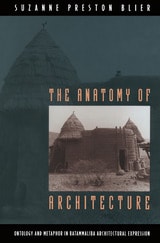
The Anatomy of Architecture
Ontology and Metaphor in Batammaliba Architectural ExpressionSuzanne Preston Blier
University of Chicago Press, 1994
"A splendid analysis of the centrality of architecture in the daily lives of the Batammaliba and its integral role in articulating social values....The story is beautifully told in the best of anthropological traditions."—Judith R. Blau, Contemporary Society
"A remarkable study....Blier's volume carries the study of African architecture to a qualitatively new level of scholarship. It introduces a new dimension whereby the architectural medium can be used to illuminate much of the entire belief system of any culture."—Labelle Prussin, African Arts
"In this excellent book Blier provides a richly detailed and searching account of what architecture means to the Batammaliba of northern Togo and Benin....The finest account I have yet read of the relations between systems of beliefs, ritual practices, and African aesthetics and plastic arts....The ethnography and basic insight should be the envy of any social anthropologist."—T.O. Beidelman, Man
The Architect's Dream
Form and Philosophy in Architectural ImaginationSean Pickersgill
Intellect Books, 2024
The Architect’s Dream demonstrates that the goal of creating meaningful architecture can take a variety of critical and philosophical paths. Sean Pickersgill draws on a broad range of subject areas, including film, philosophy, anthropology, mathematics, and economics, to show that the path to meaningful creative practice is always based on an understanding of the principal drivers for change in society. The Architect’s Dream is not a recipe book for others to reproduce; rather, it requires the engaged reader to use their own creative abilities to find the potential in each proposition, and it will encourage the scholastic architect to continue to mine the rich veins of intellectual culture to demonstrate the hidden purposiveness inherent in all meaningful architecture.
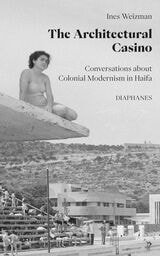
The Architectural Casino
Conversations about Modernism in HaifaInes Weizman
Diaphanes, 2026
After the First World War and under the British Mandate, Haifa grew from a small Ottoman port town into a regional metropolis and industrial center around a deep seaport. The city was part of an open space that extended from Cairo to Damascus through Beirut, in a region where Syria, Palestine, and Lebanon were part of the same fluid, interconnected space. During the Second World War, Haifa became a border town. Under French Vichy, the border between Lebanon and Syria ran sixty kilometers to the north and hardened only after the creation of Israel in 1948 and the wars with Lebanon. Haifa’s architectural modernism developed in relation to the city’s geopolitical environment. No building better manifests Haifa’s predicament than the modernist casino building, built in the city’s Bat Galim seafront district.
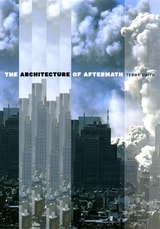
The Architecture of Aftermath
Terry Smith
University of Chicago Press, 2006
But after September 11, Smith asserts, late modern architecture suddenly seemed an indulgence. With close readings of key buildings—including Jørn Utzon’s Sydney Opera House, Minoru Yamasaki’s World Trade Center, Frank Gehry’s Guggenheim Museum Bilbao, and Richard Meier’s Getty Center—Smith traces the growth of the spectacular architecture of modernity and then charts its aftermath in the conditions of contemporaneity. Indeed, Smith focuses on the very culture of aftermath itself, exploring how global politics, clashing cultures, and symbolic warfare have changed the way we experience destination architecture.
Like other artists everywhere, architects are responding to the idea of aftermath by questioning the viability of their forms and the validity of their purposes. With his richly illustrated The Architecture of Aftermath, Smith has done so as well.
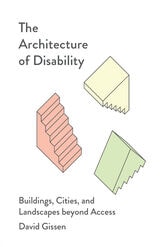
The Architecture of Disability
Buildings, Cities, and Landscapes beyond AccessDavid Gissen
University of Minnesota Press, 2022
A radical critique of architecture that places disability at the heart of the built environment
Disability critiques of architecture usually emphasize the need for modification and increased access, but The Architecture of Disability calls for a radical reorientation of this perspective by situating experiences of impairment as a new foundation for the built environment. With its provocative proposal for “the construction of disability,” this book fundamentally reconsiders how we conceive of and experience disability in our world.
Stressing the connection between architectural form and the capacities of the human body, David Gissen demonstrates how disability haunts the history and practice of architecture. Examining various historic sites, landscape designs, and urban spaces, he deconstructs the prevailing functionalist approach to accommodating disabled people in architecture and instead asserts that physical capacity is essential to the conception of all designed space.
By recontextualizing the history of architecture through the discourse of disability, The Architecture of Disability presents a unique challenge to current modes of architectural practice, theory, and education. Envisioning an architectural design that fully integrates disabled persons into its production, it advocates for looking beyond traditional notions of accessibility and shows how certain incapacities can offer us the means to positively reimagine the roots of architecture.
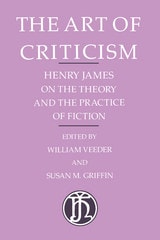
The Art of Criticism
Henry James on the Theory and the Practice of FictionHenry James
University of Chicago Press, 1986
The editors have provided what James himself emphasized in his literary criticism—the text's context. Each selection is framed by an editorial commentary and notes which give its biographical, bibliographical, and critical background and cite other references in James' work to the topic discussed. This framework, along with the editors' introduction, gives the reader a sense of the place of these pieces in the history of criticism.
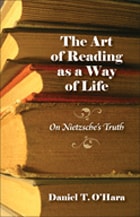
The Art of Reading as a Way of Life
On Nietzsche's TruthDaniel T. O'Hara
Northwestern University Press, 2009
The shape of this critical tracing begins, however, in the middle of his career with The Gay Science andmoves on to Thus Spoke Zarathustra, which Nietzsche believed was the central work of his life. It then revalues Ecce Homo, Nietzsche’s final autobiographical statement about his life and career, and concludes with a comparative analysis of two works from the beginning and end of that career: respectively, The Birth of Tragedy and The Anti-Christ. O’Hara’s highly original study, which uses Badiou’s theory of the truth-event as a guide, will surely provoke larger conversations across many disciplines.
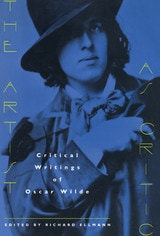
The Artist as Critic
Critical Writings of Oscar WildeOscar Wilde
University of Chicago Press, 1982
Included in Richard Ellmann's impressive collection of Wilde's criticism, The Artist as Critic, is a wide selection of Wilde's book reviews as well as such famous longer works as "The Portrait of Mr. W.H.," "The Soul Man under Socialism," and the four essays which make up Intentions. The Artist as Critic will satisfy any Wilde fan's yearning for an essential reading of his critical work.
"Wilde . . . emerges now as not only brilliant but also revolutionary, one of the great thinkers of dangerous thoughts."—Walter Allen, New York Times Book Review
"The best of Wilde's nonfictional prose can be found in The Artist as Critic."—Michael Dirda, Washington Post Book World
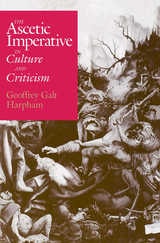
The Ascetic Imperative in Culture and Criticism
Geoffrey Galt Harpham
University of Chicago Press, 1988
The Attractions of the Moving Image
Essays on History, Theory, and the Avant-GardeTom Gunning
University of Chicago Press, 2025
Tom Gunning is the author of multiple books and nearly two hundred essays that have defined the field of cinema and media studies. His works have transformed our understanding of early cinema and the American avant-garde and reset the terms of many central debates in film and media history and theory. His 1986 essay “The Cinema of Attractions” is among the most cited essays on film ever published. Gunning’s writings articulate a distinctive and powerful model for thinking about cinema’s history and likely future, addressing the full range of moving-image media, from film to still photography to digital media. His discussions draw on stage melodrama and magic lantern shows, as well as criminology, world’s fairs, and Spiritualism, surveying the medium as a cultural phenomenon informed by the industrial and information ages, psychiatry, urban experience, discourses on art and aesthetics, and more.
This collection brings together twenty-six essays that showcase the depth and range of Gunning’s scholarship, including four that have never before been published. Together, they solidify Gunning’s place as a scholar who has transformed the way generations of scholars, archivists, critics, and artists think about cinema.
The BBC Talks of E.M. Forster, 1929-1960
A Selected EditionEdited by Mary Lago, Linda K. Hughes & Elizabeth MacLeod Walls
University of Missouri Press, 2008
Spanning three decades and a host of subjects, E. M. Forster’s radio broadcasts for the BBC were a major contribution to British cultural history, yet today they are rarely acknowledged by scholars of his life and work. But in their day they reached a larger audience than his fiction and established him as a household figure not only in Britain but also in the farthest reaches of its Empire.
As a frequent contributor to the BBC, Forster generally adhered to literary topics but did not shy away from social commentary. This book offers a new appreciation of his vitality and public importance through seventy annotated broadcasts that present him not only as a literary critic but also as a political activist, an advocate for India, and a wary yet cooperative ally of a colonialist government during World War II.
Gathering material either not in print or, if recast as essays, widely scattered, The BBC Talks of E. M. Forster reveals aspects of Forster’s intellect that have been given short shrift in previous studies. Nearly half the scripts date from 1941 to 1945 and provide an eyewitness account of war from a distinguished perspective. Forster comments on how the arts gallantly survived the blitz—even taking his listeners to the theater as bombing threats loom—and in other cases protests government interference in private life or the limits on free expression caused by the wartime paper shortage.
In these scripts, Forster casts a cosmopolitan eye on contemporary literature from James Joyce to John Steinbeck and provides early exposure for young writers and composers. He also enlarges the scope of European art by pairing Jane Austen or C. S. Lewis with Indian writers and offers pointed comments on contemporary literati such as Aldous Huxley and T. S. Eliot. Annotations to each piece identify Forster’s references and trace his revisions from script to broadcast, while the book’s introduction places his emergence as a distinctive radio voice within the historical, creative, and institutional contexts of broadcasting in his day.
This significant body of writing, too long overlooked, traces Forster’s evolution from novelist to adroit cultural critic and shows how a man who was never comfortable with machines played an important role in shaping a new medium. The BBC Talks of E. M. Forster situates Forster as one of the most poignant voices of the twentieth century as it offers new insight into a nation transfigured by war.
The Bad Child
A Maria Janion ReaderMaria Janion
University of Minnesota Press, 2025
Collected writings from a visionary thinker about the perilous edge between patriotism and fascism
How do nationalism and patriotism shape our understanding of identity, and when do they drift into dangerous territory? Marta Figlerowicz gathers a selection of writings from Maria Janion, one of Eastern Europe’s most profound and original intellectuals, to explore this fine line. Between her birth in Vilnius in 1926 and her death in Warsaw in 2020, Janion witnessed some of the most consequential events of the turbulent twentieth century: the rise of authoritarian nationalism in Poland, German occupation during World War II, Soviet control, and Poland’s uneasy integration into the West. As Western countries face their own nationalist resurgences, Janion’s writing holds tools to help move through this historical condition.
The Bad Child offers sharp insights into how societies develop and assert their identities and histories—often at the cost of the people. Janion’s reflections on fascism, popular culture, and national self-fashioning presciently name and critique regional dynamics that have most recently resulted in the war between Russia and Ukraine, and they broadly expose the illusions that cultures can promote and the dangerous slide from national pride to exclusionary right-wing politics. A queer woman and survivor of World War II, a leftist who resisted Soviet orthodoxy, Janion lends a uniquely disruptive voice to contemporary discussions of fascism, and her insights resonate far beyond her Eastern European roots.
Retail e-book files for this title are screen-reader friendly with images accompanied by short alt text and/or extended descriptions.
The Barthes Fantastic
Literature, Criticism, and the Practice of LanguageJohn Lurz
University of Chicago Press, 2025
In The Barthes Fantastic, John Lurz explores the intersection of literature and everyday life—and confronts some habits of literary study—through a reading of the work of Roland Barthes. An influential French theorist, Barthes wrote prolifically on the place of language and the play of signs in the ways we produce cultural and aesthetic meaning. Ranging across the entire sweep of Barthes’s varied career, Lurz shows how Barthes’s insights into signification and literature involve particular intellectual activities that impart significance to the world. Doing so allows him to develop an expanded understanding of the fantastic as a conceptual category—a way of thinking—in which the texts we read come to inform the texture of our real lives. Ultimately, The Barthes Fantastic enlarges our sense of what we learn as students of literature and gives us a new picture of a writer we thought we knew.
The Beauty of a Social Problem
Photography, Autonomy, EconomyWalter Benn Michaels
University of Chicago Press, 2015
Although he discusses well-known figures like Walker Evans and Jeff Wall, Michaels’s focus is on a group of younger artists, including Viktoria Binschtok, Phil Chang, Liz Deschenes, and Arthur Ou. All born after 1965, they have always lived in a world where, on the one hand, artistic ambition has been synonymous with the critique of autonomous form and intentional meaning, while, on the other, the struggle between capital and labor has essentially been won by capital. Contending that the aesthetic and political conditions are connected, Michaels argues that these artists’ new commitment to form and meaning is a way for them to depict the conditions that have taken US economic inequality from its lowest level, in 1968, to its highest level today. As Michaels demonstrates, these works of art, unimaginable without the postmodern critique of autonomy and intentionality, end up departing and dissenting from that critique in continually interesting and innovative ways.
The Birth of Theater from the Spirit of Philosophy
Nietzsche and the Modern DramaDavid Kornhaber
Northwestern University Press, 2016
The Book of Job and the Immanent Genesis of Transcendence
Davis Hankins
Northwestern University Press, 2014
Winner of the 2017 Manfred Lautenschlaeger Award for Theological Promise
Job is often understood to be a trite folktale about human limitation in the face of confounding and absolute transcendence. On the contrary, Hankins demonstrates that Job is a drama about the struggle to create a just and viable life in a material world that is ontologically incomplete and consequently open to radical, unpredictable transformation. Job’s abiding legacy for any future materialist theology becomes clear as Hankins analyzes Job’s dramatizations of a transcendence that is not externally opposed to but that emerges from an ontologically incomplete material world.
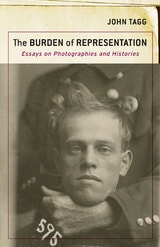
The Burden of Representation
Essays on Photographies and HistoriesJohn Tagg
University of Minnesota Press, 2021
A powerhouse in photographic theory—updated and with a new essay
Every day, photographic images are relied upon as documents, evidence, and records in courtrooms, hospitals, and police work. But how did such usages come to be established, and when? What agencies and institutions had the power to give them this status? And what are the consequences of photographic representation? Drawing on semiotics, cultural theory, and the work of Foucault and Althusser, John Tagg rejects the idea of photography as a record of reality and traces a history that has profound implications not only for the theory of photography but also for understanding the role of new means of representation in modern social regulation. Now with a new essay situating this volume in the changed horizon of cultural politics, The Burden of Representation argues for a rigorous analysis of the meaning, status, and effects of photographs, rooted in a historical grasp of the growth of the modern state.
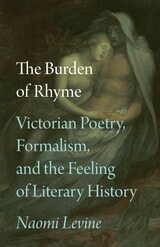
The Burden of Rhyme
Victorian Poetry, Formalism, and the Feeling of Literary HistoryNaomi Levine
University of Chicago Press, 2024
The Burden of Rhyme shows how the nineteenth-century search for the origin of rhyme shaped the theory and practice of poetry. For Victorians, rhyme was not (as it was for the New Critics, and as it still is for us) a mere technique or ahistorical form. Instead, it carried vivid historical fantasies derived from early studies of world literature. Naomi Levine argues that rhyme’s association with the advent of literary modernity and with a repertoire of medievalist, Italophilic, and orientalist myths about love, loss, and poetic longing made it a sensitive historiographic instrument. Victorian poets used rhyme to theorize both literary history and the most elusive effects of aesthetic form. This Victorian formalism, which insisted on the significance of origins, was a precursor to and a challenge for twentieth-century methods. In uncovering the rich relationship between Victorian poetic forms and a forgotten style of literary-historical thought, The Burden of Rhyme reveals the unacknowledged influence of Victorian poetics—and its repudiation—on the development of modern literary criticism.
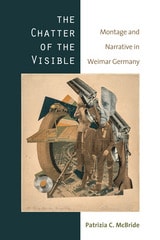
The Chatter of the Visible
Montage and Narrative in Weimar GermanyPatrizia C. McBride
University of Michigan Press, 2016
The Collected Essays and Criticism, Volume 1
Perceptions and Judgments, 1939-1944Clement Greenberg
University of Chicago Press, 1988
The Collected Essays and Criticism, Volume 2
Arrogant Purpose, 1945-1949Clement Greenberg
University of Chicago Press, 1988
The Collected Essays and Criticism, Volume 3
Affirmations and Refusals, 1950-1956Clement Greenberg
University of Chicago Press, 1995
With the inclusion of critical exchanges between Greenberg and F. R. Leavis, Fairfield Porter, Thomas B. Hess, Herbert Read, Max Kozloff, and Robert Goldwater, these volumes are essential sources in the ongoing debate over modern art. For each volume, John O'Brian has furnished an introduction, a selected bibliography, and a brief summary of events that places the criticism in its artistic and historical context.
The Collected Essays and Criticism, Volume 4
Modernism with a Vengeance, 1957-1969Clement Greenberg
University of Chicago Press, 1995
With the inclusion of critical exchanges between Greenberg and F. R. Leavis, Fairfield Porter, Thomas B. Hess, Herbert Read, Max Kozloff, and Robert Goldwater, these volumes are essential sources in the ongoing debate over modern art. For each volume, John O'Brian has furnished an introduction, a selected bibliography, and a brief summary of events that places the criticism in its artistic and historical context.
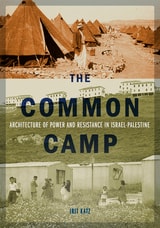
The Common Camp
Architecture of Power and Resistance in Israel–PalestineIrit Katz
University of Minnesota Press, 2022
Seeing the camp as a persistent political instrument in Israel–Palestine and beyond
The Common Camp underscores the role of the camp as a spatial instrument employed for reshaping, controlling, and struggling over specific territories and populations. Focusing on the geopolitical complexity of Israel–Palestine and the dramatic changes it has experienced during the past century, this book explores the region’s extensive networks of camps and their existence as both a tool of colonial power and a makeshift space of resistance.
Examining various forms of camps devised by and for Zionist settlers, Palestinian refugees, asylum seekers, and other groups, Irit Katz demonstrates how the camp serves as a common thread in shaping lands and lives of subjects from across the political spectrum. Analyzing the architectural and political evolution of the camp as a modern instrument engaged by colonial and national powers (as well as those opposing them), Katz offers a unique perspective on the dynamics of Israel–Palestine, highlighting how spatial transience has become permanent in the ongoing story of this contested territory.
The Common Camp presents a novel approach to the concept of the camp, detailing its varied history as an apparatus used for population containment and territorial expansion as well as a space of everyday life and subversive political action. Bringing together a broad range of historical and ethnographic materials within the context of this singular yet versatile entity, the book locates the camp at the core of modern societies and how they change and transform.
The Conflict of Interpretations
Paul Ricoeur
Northwestern University Press, 1974
The Conflict of Interpretations
Essays in HermeneuticsPaul Ricoeur
Northwestern University Press, 2007
The Covert Life of Hospital Architecture
Edited by Julie Zook and Kerstin Sailer
University College London, 2022
This book addresses hospital architecture as a set of interlocked, overlapping spatial and social conditions, identifying ways that hospital spaces work to produce desired outcomes such as greater patient safety, increased care provider communication, and more intelligible corridors.
The volume brings together emerging research on hospital environments. Opening with a description of hospital architecture that emphasizes everyday relations, the book examines the patient room and its intervisibility with adjacent spaces, care teams and on-ward support for their work, and the intelligibility of public circulation spaces for visitors. The final chapter moves outside the hospital to describe the current healthcare crisis of the global pandemic. Reflective essays by practicing designers follow each chapter, bringing perspectives from professional practice into the discussion.
This volume provides new insights into how to better design hospitals through principles that have been tested empirically. It will become a reference for healthcare planners, designers, architects, and administrators, as well as for readers from sociology, psychology, and other areas of the social sciences.
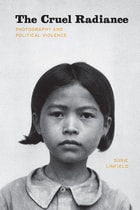
The Cruel Radiance
Photography and Political ViolenceSusie Linfield
University of Chicago Press, 2010
The Cure of Poetry in an Age of Prose
Moral Essays on the Poet's CallingMary Kinzie
University of Chicago Press, 1993
A distinguished poet and critic, Kinzie assesses poetry's situation during the past twenty-five years. Ours, she contends, is literally a prosaic age, not only in the popularity of prose genres but in the resultant compromises with truth and elegance in literature. In essays on "the rhapsodic fallacy," confessionalism, and the romance of perceptual response, Kinzie diagnoses some of the trends that diminish the poet's flexibility. Conversely, she also considers individual poets—Randall Jarrell, Elizabeth Bishop, Howard Nemerov, Seamus Heaney, and John Ashbery—who have found ingenious ways of averting the risks of prosaism and preserving the special character of poetry.
Focusing on poet Louise Bogan and novelist J. M. Coetzee, Kinzie identifies a crucial and curative overlap between the practices of great prose-writing and great poetry. In conclusion, she suggests a new approach for teaching writers of poetry and fiction. Forcefully argued, these essays will be widely read and debated among critics and poets alike.
The Dilemma of Style
Architectural Ideas from the Picturesque to the PostmodernJ. Mordaunt Crook
University of Chicago Press, 1987
This challenging book confronts one of the central problems of architectural theory: the nature—and necessity—of style.
The Disciplinary Frame
Photographic Truths and the Capture of MeaningJohn Tagg
University of Minnesota Press, 2009
The meaning and power of photographs, Tagg asserts, are discursive effects of the regimens that produce them as official record, documentary image, historical evidence, or art. Teasing out the historical processes involved, he examines a series of revealing case studies from nineteenth-century European and American photographs to Depression-era works by Walker Evans, Dorothea Lange, and Margaret Bourke-White to the conceptualist photography of John Baldessari.
Central to this transformative work are questions of cultural strategy, the growth of the state, and broad issues of power and representation: how the discipline of the frame holds both photographic image and viewer in place, without erasing the possibility for evading, and even resisting, capture. Photographs, Tagg ultimately finds, are at once too big and too small for the frames in which they are enclosed—always saying more than is wanted and less than is desired.
The Dispossessed
Karl Marx’s Debates on Wood Theft and the Right of the PoorDaniel Bensaïd
University of Minnesota Press, 2021
Excavating Marx’s early writings to rethink the rights of the poor and the idea of the commons in an era of unprecedented privatization
The politics of dispossession are everywhere. Troubling developments in intellectual property, genomics, and biotechnology are undermining established concepts of property, while land appropriation and ecological crises reconfigure basic institutions of ownership. In The Dispossessed, Daniel Bensaïd examines Karl Marx’s early writings to establish a new framework for addressing the rights of the poor, the idea of the commons, and private property as a social institution.
In his series of articles from 1842–43 about Rhineland parliamentary debates over the privatization of public lands and criminalization of poverty under the rubric of the “theft of wood,” Marx identified broader anxieties about customary law, property rights, and capitalist efforts to privatize the commons. Bensaïd studies these writings to interrogate how dispossession continues to function today as a key modality of power. Brilliantly tacking between past and present, The Dispossessed discloses continuity and rupture in our relationships to property and, through that, to one another.
In addition to Bensaïd’s prescient work of political philosophy, The Dispossessed includes new translations of Marx’s original “theft of wood” articles and an introductory essay by Robert Nichols that lucidly contextualizes the essays.
The Division of Literature
Or the University in DeconstructionPeggy Kamuf
University of Chicago Press, 1996
Kamuf begins by analyzing the complex history of literary study within the modern university, critically reading developments from the French Revolution through the nineteenth century and beyond in Europe. She then turns to one of the most troubling works in the American literary canon—Melville's The Confidence-Man—to show how academic literary history has avoided confronting the implications of works in which meaning is never solely confined within a past. By engaging a future readership to which it applies for credit, Kamuf argues, literature cannot serve as a stable object of study. It locates, rather, a site of "the university in deconstruction."
Ranging from disciplinary histories of literature to our current culture wars, Kamuf offers a fascinating critique of academic literary study.
The Empathic Lens
Art, Animism, and Ecology in Contemporary Southeast AsiaBrianne Cohen
University of Minnesota Press, 2026
How lens-based art from Southeast Asia offers alternative visions for ecological sustainability
A new paradigm of ecologically minded artistic practices is taking shape in Southeast Asia—one that at once tracks ecological destruction and works specifically to cultivate deeper feelings of empathy toward the environment. Examining a range of photography and video work, The Empathic Lens explores how these lens-based projects respond to increasingly urgent concerns related to climate disaster and capitalist acceleration.
In this analysis of work produced across Cambodia, Vietnam, and Singapore, Brianne Cohen highlights artists for whom rampant urban development, resource extraction, and environmental toxicity are close at hand. As each artist takes their lens to these realities, Cohen shows, they draw on Indigenous knowledge and local traditions that have long recognized the kinship of humans and nonhumans. Engaging often-censored discourses of Indigenous land relations and environmental justice in a region with a long history of colonial and neocolonial development, Cohen traces genealogies of empathy and animism to demonstrate how these works develop sustainable visions for the future coexistence of planetary life.
The first critical account of marginalized artworks that depict the centrality of the more-than-human in Southeast Asian Indigenous worldviews, The Empathic Lens makes a powerful case for the relevance of Southeast Asian lens-based art in contemporary media practice and the art of the Anthropocene.
Retail e-book files for this title are screen-reader friendly with images accompanied by short alt text and/or extended descriptions.
The Emperor Redressed
Critiquing Critical TheoryDwight Eddins
University of Alabama Press, 1995
The essays in this volume represent a collective questioning of the poststructuralist ascendancy, and of the assumptions involved therin, by a group of our most prominent scholars. These scholars were charged with examining the truth-value, methodology, practice, and humanistic status of poststructuralist theories and with speculating on what their conclusions portend for the future of theory. They provide cogent evidence that the poststructuralist heyday has passed.
The Errant Art of Moby-Dick
The Canon, the Cold War, and the Struggle for American StudiesWilliam V. Spanos
Duke University Press, 1995
Combining Heideggerian ontology with a sociopolitical perspective derived primarily from Foucault, the reading of Moby-Dick that forms the center of this book demonstrates that the traditional identification of Melville’s novel as a "romance" renders it complicitous in the discourse of the Cold War. At the same time, Spanos shows how New Americanist criticism overlooks the degree to which Moby-Dick anticipates not only America’s self-representation as the savior of the world against communism, but also the emergent postmodern and anti-imperial discourse deployed against such an image. Spanos’s critique reveals the extraordinary relevance of Melville’s novel as a post-Cold War text, foreshadowing not only the self-destructive end of the historical formation of the American cultural identity in the genocidal assault on Vietnam, but also the reactionary labeling of the current era as "the end of history."
This provocative and challenging study presents not only a new view of the development of literary history in the United States, but a devastating critique of the genealogy of ideology in the American cultural establishment.
The Essential Wayne Booth
Wayne C. Booth
University of Chicago Press, 2006
While Booth’s work was formative to the study of literature, his essential writings have never been collected in a single volume—until now. Selected by Walter Jost in collaboration with Booth himself, the texts anthologized here present a picture of this indispensable critic’s contributions to literary and rhetorical studies. The selections range from memorable readings of Macbeth, Jane Austen, George Eliot, and Henry James to engagements with Booth’s intellectual heroes, such as Richard McKeon and Mikhail Bakhtin. But rhetoric, Booth’s abiding concern as a critic and thinker, provides the organizing principle of the anthology. The Essential Wayne Booth illuminates the scope of Booth’s rhetorical inquiry: the entire range of resources that human beings share for producing effects on one another. Whether about metaphors for our friendship with books or the two cultures of science and religion, the texts collected here always return to the techniques and ethics of our ways of communicating with each other—that is, to rhetoric.
The Essential Wayne Booth is a capstone to Booth's long career and an eloquent reminder of the ways in which criticism can make us alive to the arts of writing, talking, and listening.
The Fate of the Self
German Writers and French TheoryStanley Corngold
Duke University Press, 1994
The French Joyce
Geert Lernout
University of Michigan Press, 1992
The Global Shelter Imaginary
Ikea Humanitarianism and Rightless ReliefAndrew Herscher
University of Minnesota Press, 2021
Examines how the humanitarian order advances a message of moral triumph and care while abandoning the dispossessed
Prompted by a growing number of refugees and other displaced people, intersections of design and humanitarianism are proliferating. From the IKEA Foundation’s Better Shelter to Airbnb’s Open Homes program, the consumer economy has engaged the global refugee crisis with seemingly new tactics that normalize an institutionally sanctioned politics of evasion. Exploring “the global shelter imaginary,” this book charts the ways shelter functions as a form of rightless relief that expels recognition of the rights of the displaced and advances political paradoxes of displacement itself.
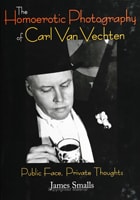
The Homoerotic Photography of Carl Van Vechten
Public Face, Private ThoughtsJames Smalls
Temple University Press, 2006
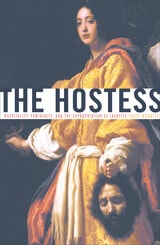
The Hostess
Hospitality, Femininity, and the Expropriation of IdentityTracy McNulty
University of Minnesota Press, 2006
The meaning of hospitality in Western thought—from the Bible to Derrida
The evolution of the idea of hospitality can be traced alongside the development of Western civilization. Etymologically, the host is the “master,” but this identity is established through expropriation and loss—the best host is the one who gives the most, ultimately relinquishing what defines him as master.
In The Hostess, Tracy McNulty asks, What are the implications for personhood of sharing a person—a wife or daughter—as an act of hospitality? In many traditions, the hostess is viewed not as a subject but as the master’s property. A foreign presence that both sustains and undercuts him, the hostess embodies the interplay of self and other within the host’s own identity.
Here McNulty combines critical readings of the Bible and Pierre Klossowski’s trilogy The Laws of Hospitality with analyses of exogamous marital exchange, theological works from the Talmud to Aquinas, the writings of Kant and Nietzsche, and the theory of femininity in the work of Freud and Lacan. Ultimately, she contends, hospitality involves the boundary between the proper and the improper, affecting the subject as well as interpersonal relations.
The Humanities in the Age of Technology
Ciriaco Morón Arroyo
Catholic University of America Press, 2002
The Imposter's Guide to Writing About Literature
Suzanne Manizza Roszak
Rutgers University Press, 0
A handbook for students of literature with particular attention to all those who have ever been made to feel like outsiders in our field, The Imposter’s Guide to Writing About Literature democratizes access to the knowledge necessary for successful professionalization—and especially publication—within literary studies.