Results by title
1882 books match the query 'Criticism and interpretation' and 348 start with t
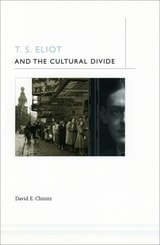
T. S. Eliot and the Cultural Divide
David E. Chinitz
University of Chicago Press, 2003
David Chinitz argues that Eliot was productively engaged with popular culture in some form at every stage of his career, and that his response to it, as expressed in his poetry, plays, and essays, was ambivalent rather than hostile. He shows that American jazz, for example, was a major influence on Eliot's poetry during its maturation. He discusses Eliot's surprisingly persistent interest in popular culture both in such famous works as The Waste Land and in such lesser-known pieces as Sweeney Agonistes. And he traces Eliot's long, quixotic struggle to close the widening gap between high art and popular culture through a new type of public art: contemporary popular verse drama.
What results is a work that will persuade adherents and detractors alike to return to Eliot and find in him a writer who liked a good show, a good thriller, and a good tune, as well as a "great" poem.
Taboo Pushkin
Topics, Texts, InterpretationsEdited by Alyssa Dinega Gillespie
University of Wisconsin Press, 2012
Since his death in 1837, Alexander Pushkin—often called the “father of Russian literature”—has become a timeless embodiment of Russian national identity, adopted for diverse ideological purposes and reinvented anew as a cultural icon in each historical era (tsarist, Soviet, and post-Soviet). His elevation to mythic status, however, has led to the celebration of some of his writings and the shunning of others. Throughout the history of Pushkin studies, certain topics, texts, and interpretations have remained officially off-limits in Russia—taboos as prevalent in today’s Russia as ever before.
The essays in this bold and authoritative volume use new approaches, overlooked archival materials, and fresh interpretations to investigate aspects of Pushkin’s biography and artistic legacy that have previously been suppressed or neglected. Taken together, the contributors strive to create a more fully realized Pushkin and demonstrate how potent a challenge the unofficial, taboo, alternative Pushkin has proven to be across the centuries for the Russian literary and political establishments.
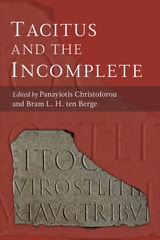
Tacitus and the Incomplete
Edited by Panayiotis Christoforou and Bram L. H. ten Berge
University of Michigan Press, 2026
Widely regarded as ancient Rome’s greatest historian, Tacitus has shaped much of early modern and modern thought on Rome and its emperors. Substantial portions of his major historical works Histories and Annals, however, have not survived, depriving us of his account of crucial episodes and developments in Rome's early imperial history. This first-of-its-kind volume seeks to fill those gaps, using a range of historical and linguistic approaches to reconstruct the missing portions of Tacitus’ work. The volume offers reconstructions of the fragmentary Tacitean emperors (Augustus, Caligula, Nero, Vespasian, Titus, and Domitian) and of important lost episodes such as the destruction of the Temple of Jerusalem and the eruption of Mt. Vesuvius.
By utilizing the concept of incompleteness as a narrative tool, Tacitus and the Incomplete provides novel insights into what Tacitus’ oeuvre might have been like if the lost books had survived, and also expands on recent work on counterfactual historiography, the influence of hindsight on historical writing, the use of prolepsis and other narrative techniques, and on the limitations of historiography in the imperial period.
Taking It to the Streets
The Social Protest Theater of Luis Valdez and Amiri BarakaHarry J. Elam, Jr.
University of Michigan Press, 2001

Talkin' With Your Mouth Full
Conversations with the Videos of Steve FaginSteve Fagin, ed.
Duke University Press, 1998
Combining elements of criticism with various modes of artistic expression, these responses take the form of reviews, letters, interviews, and in one case an imaginary TV programming schedule. Interspersed with—and sometimes literally interrupting—the video scripts, these contributions interact with one another on multiple levels and complement Fagin’s scripts. Historical, political, and theoretical issues dovetail, ricochet, and interplay in this book, revealing a multiplicity of voices, concerns, and cultural revelations.
Unique in its structure and intellectual approach, Talkin’ with Your Mouth Full will appeal equally to those who have seen Fagin’s videos and those who have not. Students of art history and cultural critique, and anyone interested in the ongoing dialogue between artists and theorists, will find particular value in this book.
Contributors. Gregg Bordowitz, Constance DeJong, Leslie Dick, Steve Fagin, Barry Gifford, Victoria Gill, Bill Horrigan, Bertha Jottar, Ivone Margulies, Patricia Mellencamp, Margaret Morse, Constance Penley, Vicente L. Rafael, Mark Rappaport, Andrew Ross, Vivian Sobchack, Trinh T. Minh-ha, John Welchman, Peter Wollen
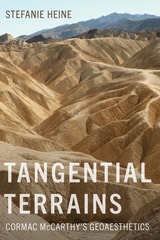
Tangential Terrains
Cormac McCarthy's GeoaestheticsStefanie Heine
University of Nevada Press, 2026
Blood Meridian’s emergent geoaesthetics reveals forces operating according to other-than-human principles, as literary desert terrains retain a passive resistance, or weak agency, which presents a radical disturbance of anthropocentrism, mirrored in the novel’s style. Though the mediated unstable deserts in Blood Meridian defy appropriation, they are neither untouched nor untouchable: the borderlands bear the wounds and “blood meridians” of a non-chronological history of violence, tangential to the massacres of Native American and Mexican peoples depicted in the novel.
Stefanie Heine’s reading of Blood Meridian offers a crucial contribution to and intervention in contemporary ecocriticism, Anthropocene criticism, and New Materialist theories, encouraging readers to critically rethink customary notions of entanglement, kinship, and agency.
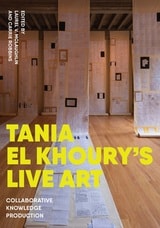
Tania El Khoury's Live Art
Collaborative Knowledge ProductionLaurel V. McLaughlin
Amherst College Press, 2023
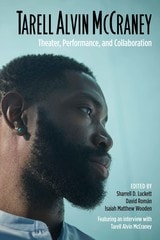
Tarell Alvin McCraney
Theater, Performance, and CollaborationEdited by Sharrell D. Luckett, David Román, and Isaiah Matthew Wooden
Northwestern University Press, 2020
Contributors consider McCraney’s innovations as a playwright, adapter, director, performer, teacher, and collaborator, bringing fresh and diverse perspectives to their observations and analyses. In so doing, they expand and enrich the conversations on his much-celebrated and deeply resonant body of work, which includes the plays Choir Boy, Head of Passes, Ms. Blakk for President, The Breach, Wig Out!, and the critically acclaimed trilogy The Brother/Sister Plays: In the Red and Brown Water, The Brothers Size, and Marcus; Or the Secret of Sweet, as well as the Oscar Award–winning film Moonlight, which was based on his play In Moonlight Black Boys Look Blue.
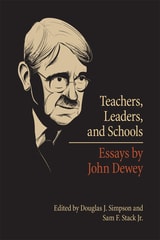
Teachers, Leaders, and Schools
Essays by John DeweyEdited by Douglas J. Simpson and Sam F. Stack Jr.
Southern Illinois University Press, 2010
John Dewey was one of the most prominent philosophers and educational thinkers of the twentieth century, and his influence on modern education continues today. In Teachers, Leaders, and Schools: Essays by John Dewey, educators Douglas J. Simpson and Sam F. Stack Jr. have gathered some of Dewey’s most user-friendly and insightful essays concerning education with the purpose of aiding potential and practicing teachers, administrators, and policy makers to prepare students for participation in democratic society.
Selected largely, but not exclusively, for their accessibility, relevance, and breadth of information, these articles are grouped into five parts—The Classroom Teacher, The School Curriculum, The Educational Leader, The Ideal School, and The Democratic Society. Each part includes an introductory essay that connects Dewey’s thoughts not only to each other but also to current educational concerns. The sections build on one another, revealing Dewey’s educational theories and interests and illustrating how his thoughts remain relevant today.
Techniques for Living
Fiction and Theory in the Work of Christine Brooke-RoseKaren R. Lawrence
The Ohio State University Press, 2010

Television, Tabloids, and Tears
Fassbinder and Popular CultureJane Shattuc
University of Minnesota Press, 1995
Television, Tabloids, and Tears was first published in 1995. Minnesota Archive Editions uses digital technology to make long-unavailable books once again accessible, and are published unaltered from the original University of Minnesota Press editions.
"I am Biberkopf," Rainer Werner Fassbinder declared, aligning himself with the protagonist of his widely seen television adaptation of Berlin Alexanderplatz. The statement provoked an unprecedented national debate about what constituted an acceptable German artist and who has the power to determine art. More than any recent German director, Fassbinder embodied this debate, and Jane Shattuc shows us how much this can tell us, not just about the man and his work, but also about the state of "culture" in Germany.
It is fascinating in itself that Fassbinder, a highly controversial public figure, was chosen to direct Berlin Alexanderplatz, Germany's longest, costliest, and most widely viewed television drama. Shattuc exposes the dichotomy of institutional support for this project versus the scandalous controversial reputation of Fassbinder as a gay man who flaunted his sexuality and involvement with drugs.
Fassbinder built his reputation on two separate images of the director-the faithful adapter and the underground star; with Berlin Alexanderplatz these two identities came together explosively. Tracing the two artistic paths that led Fassbinder to this moment, Shattuc offers us a look at cultural class divisions in Germany. Her account of Fassbinder's history as an Autor reveals both the triumph and the failure of bourgeois cultural domination in postwar West Germany.
Tellin' It Like It Is
Selected Works of Adrian C. LouisAdrian C. Louis
University of Nevada Press, 2026
Tellin’ It Like It Is offers a powerful introduction to Adrian C. Louis (1946–2018), one of the most unflinching Native American literary voices of the twentieth century. Drawing from a half-century of published writing—and including a few previously unpublished pieces—this collection captures the evolution of Louis’s voice, worldview, and craft.
Editor David Pichaske, a close friend of Louis in his later years, curates this volume with deep insight into both the public figure and the private man. Selections are arranged chronologically to trace Louis’s transformation from a Nevada reservation teenager to a California hippie, a sixties hitchhiker, a Boston academic, a South Dakota reservation journalist, and finally, a Midwestern college professor.
Louis’s work immerses readers in reservation life, yet its critique reaches the broadest dimensions of American and human experience. To enrich understanding, the book includes literary reviews, scholarly essays (including one by a noted Polish critic), an interview with Louis, and his own reflections on literature and identity. A foreword by poet Bojan Louis provides further context for this essential collection.
Temptation of the Word
The Novels of Mario Vargas LlosaEfrain Kristal
Vanderbilt University Press, 1998
Temptation of the Word offers an ambitious and careful reading of the creative process--the origin of themes and the development of literary techniques--that Mario Vargas Llosa has brought to each of his novels, published through 1996. To understand the novelist's intellectual environment, Efrain Kristal analyzes the entire corpus of Vargas Llosa's writings, his literary influences in several languages, his intellectual biography, and his political activism, all in the light of the evolving political turbulence of his times and his own changing concept of literature.
Terence Davies
Michael Koresky
University of Illinois Press, 2014
Film critic Michael Koresky explores the unique emotional tenor of Davies's work by focusing on four paradoxes within the director's oeuvre: films that are autobiographical yet fictional; melancholy yet elating; conservative in tone and theme yet radically constructed; and obsessed with the passing of time yet frozen in time and space. Through these contradictions, the films' intricate designs reveal a cumulative, deeply personal meditation on the self. Koresky also analyzes how Davies's ongoing negotiation of--and struggle with--questions of identity related to his past and his homosexuality imbue the details and jarring juxtapositions in his films with a queer sensibility, which is too often overlooked due to the complexity of Davies's work and his unfashionable ambivalence toward his own sexual orientation.
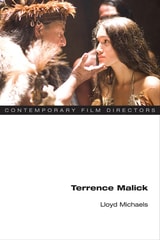
Terrence Malick
Lloyd Michaels
University of Illinois Press, 2008
For a director who has made a limited number of feature films over four-plus decades, Terrence Malick sustains an extraordinary reputation as one of America’s most original and independent directors. Lloyd Michaels analyzes Malick’s first four features in depth, emphasizing both repetitive formal techniques such as voiceover and long lens cinematography as well as recurrent themes drawn from the director’s academic training in modern philosophy. Like Heidegger, Malick seems to regard the human experience of nature as a mystery revealed primarily through moods rather than cognition. Like Wittgenstein, he is less concerned with apprehending the world than with simply acknowledging its beingness
Michaels's critical approach explores Malick’s synthesis of the romance of mythic American experience and the aesthetics of European art film. He pays particular attention to paradigmatic moments: the billboard sequence in Badlands, the opening credits for Days of Heaven, the philosophical colloquies between Witt and Welsh in The Thin Red Line, and the epilogue of The New World. Michaels also sheds light on the two dark decades separating Days of Heaven from The Thin Red Line, when the director mostly lived as an expatriate in Paris. Two 1975 interviews with the famously elusive Malick round out the volume.
Testimony after Catastrophe
Narrating the Traumas of Political ViolenceStevan Weine
Northwestern University Press, 2006
A deeply involving, compassionate, occasionally confrontational blend of practical hands-on experience and dialogic theory, emerging from the author's decade-long work in Europe and Chicago with survivors of the Balkan wars, this book is committed to the proposition that efforts to use testimony to address the consequences of political violence can be strengthened--though by no means guaranteed--if they are based on a fuller acknowledgment of the personal and ethical elements embodied in the narrative essence of testimony. These elements are what Testimony after Catastrophe seeks to reveal.
That Third Guy
A Comedy from the Stalinist 1930s with Essays on TheaterSigizmund Krzhizhanovsky, Translated and edited by Alisa Ballard Lin, Foreword by Caryl Emerson
University of Wisconsin Press, 2018
The volume also features selections from Krzhizhanovsky's compelling and idiosyncratic essays on Shakespeare, Pushkin, Shaw, and the philosophy of theater. Professionally, he worked with director Alexander Tairov at the Moscow Kamerny Theater, and his original philosophy of the stage bears comparison with the great theater theorists of the twentieth century. In these writings, he reflects on the space and time of the theater, the resonance of language onstage, the experience of the actor, and the relationship between the theater and the everyday. Commentary by Alisa Ballard Lin and Caryl Emerson contextualizes Krzhizhanovsky's writings.
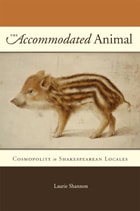
The Accommodated Animal
Cosmopolity in Shakespearean LocalesLaurie Shannon
University of Chicago Press, 2013

The Act and the Place of Poetry
Selected EssaysYves Bonnefoy
University of Chicago Press, 1989
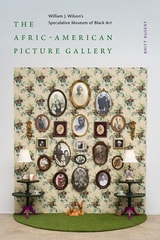
The Afric-American Picture Gallery
William J. Wilson's Speculative Museum of Black ArtBritt Rusert
Duke University Press, 2026
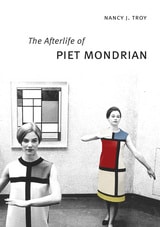
The Afterlife of Piet Mondrian
Nancy J. Troy
University of Chicago Press, 2014
The Age of Eclecticism
Literature and Culture in Britain, 1815–1885Christine Bolus-Reichert
The Ohio State University Press, 2009
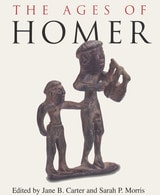
The Ages of Homer
A Tribute to Emily Townsend VermeuleEdited by Jane B. Carter and Sarah P. Morris
University of Texas Press, 1995
Homer’s Iliad and Odyssey have fascinated listeners and readers for over twenty-five centuries. In this volume of original essays, collected to honor the distinguished career of Emily T. Vermeule, thirty-four leading experts in Homeric studies and related fields provide up-to-date, multidisciplinary accounts of the most current issues in the study of Homer.
The book is divided into three sections. The first section treats the Bronze Age setting of the poems (around 1200 B.C.), using archaeological evidence to reveal how poetic memory preserves, distorts, and invents the past. The second section explores the early Iron Age, in which the poems were written (c. 800-500 B.C.), using the strategies of comparative philology and mythology, literary theory, historical linguistics, anthropology, and iconography to determine how the poems took shape. The final section traces the use of Homer for literary and artistic inspiration by classical Greece and Rome.
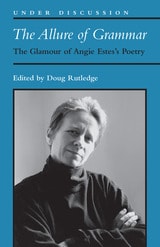
The Allure of Grammar
The Glamour of Angie Estes's PoetryDoug Rutledge, Editor
University of Michigan Press, 2019
In addition to presenting an overview of critical reactions to Estes’s oeuvre, reviews by Langdon Hammer, Julianne Buchsbaum, and Christopher Spaide also provide a helpful context for approaching a poet who claims to distrust narrative. Original essays consider the craft of Estes’s poetry and offer literary analysis. Ahren Warner uses line breaks to explore a postmodern analysis of Estes’s work. Mark Irwin looks at her poetic structure. Lee Upton employs a feminist perspective to explore Estes’s use of italics, and B. K. Fischer looks at the way she uses dance as a poetic image. Doug Rutledge considers her relationship to Dante and to the literary tradition through her use of ekphrasis. An interview with Estes herself, in which she speaks of a poem as an “arranged place . . . where experience happens,” adds her perspective to the mix, at turns resonating with and challenging her critics.
The Allure of Grammar will be useful for teachers and students of creative writing interested in the craft of non-narrative poetry. Readers of contemporary poetry who already admire Estes will find this collection insightful, while those not yet familiar with her work will come away from these essays eager to seek out her books.
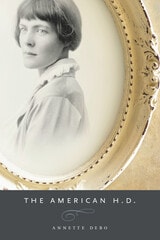
The American H.D.
Annette Debo
University of Iowa Press, 2012
In The American H.D., Annette Debo considers the significance of nation in the artistic vision and life of the modernist writer Hilda Doolittle. Her versatile career stretching from 1906 to 1961, H.D. was a major American writer who spent her adult life abroad; a poet and translator who also wrote experimental novels, short stories, essays, reviews, and a children’s book; a white writer with ties to the Harlem Renaissance; an intellectual who collaborated on avant-garde films and film criticism; and an upper-middle-class woman who refused to follow gender conventions. Her wide-ranging career thus embodies an expansive narrative about the relationship of modernism to the United States and the nuances of the American nation from the Gilded Age to the Cold War.
The American Stravinsky
The Style and Aesthetics of Copland's New American Music, the Early Works, 1921-1938Gayle Murchison
University of Michigan Press, 2013
One of the country's most enduringly successful composers, Aaron Copland created a distinctively American style and aesthetic in works for a diversity of genres and mediums, including ballet, opera, and film. Also active as a critic, mentor, advocate, and concert organizer, he played a decisive role in the growth of serious music in the Americas in the twentieth century.
In The American Stravinsky, Gayle Murchison closely analyzes selected works to discern the specific compositional techniques Copland used, and to understand the degree to which they derived from European models, particularly the influence of Igor Stravinsky. Murchison examines how Copland both Americanized these models and made them his own, thereby finding his own compositional voice. Murchison also discusses Copland's aesthetics of music and his ideas about its purpose and social function.
The Anonymous Marie de France
R. Howard Bloch
University of Chicago Press, 2003
Evidence about Marie de France's life is so meager that we know next to nothing about her-not where she was born and to what rank, who her parents were, whether she was married or single, where she lived and might have traveled, whether she dwelled in cloister or at court, nor whether in England or France. In the face of this great writer's near anonymity, scholars have assumed her to be a simple, naive, and modest Christian figure. Bloch's claim, in contrast, is that Marie is among the most self-conscious, sophisticated, complicated, and disturbing figures of her time-the Joyce of the twelfth century. At a moment of great historical turning, the so-called Renaissance of the twelfth century, Marie was both a disrupter of prevailing cultural values and a founder of new ones. Her works, Bloch argues, reveal an author obsessed by writing, by memory, and by translation, and acutely aware not only of her role in the preservation of cultural memory, but of the transforming psychological, social, and political effects of writing within an oral tradition.
Marie's intervention lies in her obsession with the performative capacities of literature and in her acute awareness of the role of the subject in interpreting his or her own world. According to Bloch, Marie develops a theology of language in the Lais, which emphasize the impossibility of living in the flesh along with a social vision of feudalism in decline. She elaborates an ethics of language in the Fables, which, within the context of the court of Henry II, frame and form the urban values and legal institutions of the Anglo-Norman world. And in her Espurgatoire, she produces a startling examination of the afterlife which Bloch links to the English conquest and occupation of medieval Ireland.
With a penetrating glimpse into works such as these, The Anonymous Marie de France recovers the central achievements of one of the most pivotal figures in French literature. It is a study that will be of enormous value to medievalists, literary scholars, historians of France, and anyone interested in the advent of female authorship.
The Anzaldúan Theory Handbook
AnaLouise Keating
Duke University Press, 2022
The Arbiters of Reality
Hawthorne, Melville, and the Rise of Mass Information CulturePeter West
The Ohio State University Press, 2008
Locating Hawthorne and Melville in vivid and overlooked contexts—the Salem Murder scandal of 1830, which transformed Hawthorne's quiet city into a media-manufactured spectacle, and Melville's New York City of 1846–47, where the American Telegraph was powerfully articulating a nation at war—West portrays the romance as a reactive, deeply rhetorical literary form and a rich historical artifact.
In the early twenty-first century, it has become a postmodern cliché to place the word “reality” in scare quotes. The Arbiters of Reality suggests that attending to the construction of the real in public life is more than simply a language of critique: it must also be understood as a specific kind of romantic self-invention.
The Arcadia of Jacopo Sannazaro
A New Translation with CommentaryNicholas R. Jones
University of Michigan Press, 2025
Sannazaro’s Arcadia is widely recognized as a foundational text of pastoral poetry, humanism, and Italian literature. But the book itself has been largely inaccessible to English-language students and readers. This new translation uses contemporary American English to convey Arcadia’s youthful vigor, narrative energy, and poetic inventiveness. The extensive introduction and commentaries place Arcadia in the context of late fifteenth-century humanist thought and writing, as well as the complicated crisis of Naples in the years just before 1500. This translation is designed to facilitate the re-entry of Arcadia into scholarly discourse and general readership while outlining its lasting cultural influence on poetry, drama, art and music.
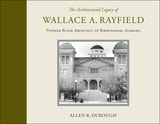
The Architectural Legacy of Wallace A. Rayfield
Pioneer Black Architect of Birmingham, AlabamaAllen R. Durough
University of Alabama Press, 2010
A priceless material legacy documenting Wallace Rayfield’s life and work on two continents.
In the early 1990s, while cleaning out the barn on his property in Bessemer, Alabama, Allen Durough discovered the remnants of the lifework of African American architect Wallace A. Rayfield, including several hundred of Rayfield’s drawings, floor plans, business advertisements, family portraits, and graphic art pieces. This book gathers that priceless material legacy into a cohesive whole, reproducing 159 illustrations that document Rayfield’s life and work on two continents.
Born in Macon, Georgia, in 1873, Rayfield apprenticed as a young man with the noted architectural firm A. B. Mullet and Company in Washington, DC, before attending Howard University, Pratt Polytechnic Institute, and ultimately graduating with a bachelor of architecture degree from Columbia University. He returned south to teach at the Tuskegee Institute and then to establish W. A. Rayfield & Co., Architects, in Birmingham, Alabama. From there he designed buildings for construction across the south (many by mail order) and even in Africa. Rayfield specialized in church architecture, and many of his designs were for black congregations within the state, most notably the Sixteenth Street Baptist Church in Birmingham. But he also designed schools, office buildings, and private homes. After falling into bankruptcy during the Great Depression, he died in obscurity.
Durough includes catalog-style descriptive entries and illustrations of Rayfield’s designs for six types of structures: residences, churches, schools, commercial buildings, fraternal buildings, and barns. These entries contain location, commissioning data, and brief structural notes, providing a useful resource for architectural historians and preservationists. A listing of the 359 known Rayfield structures detail their locations in 19 states, plan date, building type, and name. Also included is a biographical sketch of Rayfield, an overview of his publications, and a survey of his professional artwork and advertisements.
The Art Museums of Louis I. Kahn
Patricia C. Loud
Duke University Press, 1989
After a brief look at the development of a tradition in museum architecture, this study examines Kahn’s three art museums: the Yale University Art Gallery, the Kimbell Art Museum, and the Yale Center for British Art. It traces the development of each museum through museum through its various stages: the background of the institutions and the commissions, the programs for the buildings, their designs and evolutions, their constructions, and the evaluations of the completed buildings. Material on Kahn’s plans for a museum for the De Menil collection, begun shortly before his death, is also included.
Accompanying the text are illustrations of the buildings, including Kahn’s personal sketches, architectural plans and sections, and presentation perspective drawings. Photographs of the finished buildings present the transformed vision of the architect in tangible form, showing that the museums, while related, are individualized accomplishments. This is the first comprehensive study of Kahn’s museums.
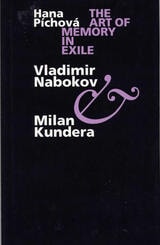
The Art of Memory in Exile
Vladimir Nabokov & Milan KunderaHana Pichova
Southern Illinois University Press, 2001
Pí chová closely analyzes two novels by each author: the first written in exile (Nabokov's Mary and Kundera's The Book of Laughter and Forgetting) and a later, pivotal novel in each writer's career (Nabokov's The Gift and Kundera's The Unbearable Lightness of Being). In all four texts, these authors explore how the kaleidoscope of personal and cultural memory confronts a fragmented and untenable present, contrasting the lives of fictional é migré s who fail to bridge the gap between past and present with those é migré s whose rich artistic vision allows them to transcend the trials of homelessness.
By juxtaposing these novels and their authors, Pí chová provides a unique perspective on each writer's vast appeal and success. She finds that in the work of Nabokov and Kundera, the most successful exiles express a vision that transcends both national and temporal boundaries.
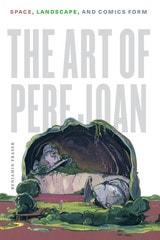
The Art of Pere Joan
Space, Landscape, and Comics FormBy Benjamin Fraser
University of Texas Press, 2019
Born in Mallorca, Pere Joan Riera (known professionally as Pere Joan) thrived in the underground comics world, beginning in the mid-1970s with the self-published collections Baladas Urbanas and MuŽrdago, both of which were released almost immediately after the death of the dictator Francisco Franco and Spain's transition to democracy. The first monograph in English on a comics artist from Spain, The Art of Pere Joan takes a topographical approach to reading comics, applying theories of cultural and urban geography to Pere Joan’s treatment of space and landscape in his singular body of work.
Balancing this goal with an exploration of specific works by Pere Joan, Benjamin Fraser demonstrates that looking at the thematic, structural, and aesthetic originality of the artist's landscape-driven work can help us begin to newly understand the representational properties of comics as a spatial medium. This in-depth examination reveals the resonance between the cultural landscapes of Mallorca and Pere Joan's metaphorical approach to both rural and urban environments in comics that weave emotional, ecological, and artistic strands in revolutionary ways.
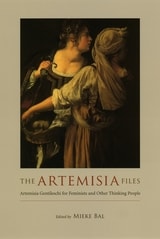
The Artemisia Files
Artemisia Gentileschi for Feminists and Other Thinking PeopleEdited by Mieke Bal
University of Chicago Press, 2005
In The Artemisia Files, Mieke Bal and her coauthors look squarely at this early icon of feminist art history and the question of her status as an artist. Considering the events that shaped her life and reputation—her relationship to her father and her role as the victim in a highly publicized rape case during which she was tortured into giving evidence—the authors make the case that Artemisia's importance is due to more than her role as a poster child in the feminist attack on traditional art history; here, Artemisia emerges more fully as a highly original artist whose work is greater than the sum of the events that have traditionally defined her.
The fresh, engaging discourse in The Artemisia Files will help to both renew the reputation of this artist on the merit of her work and establish her rightful place in the history of art.
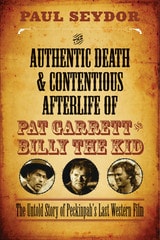
The Authentic Death and Contentious Afterlife of Pat Garrett and Billy the Kid
The Untold Story of Peckinpah's Last Western FilmPaul Seydor
Northwestern University Press, 2015
Long before Sam Peckinpah finished shooting his 1973 Western, Pat Garrett and Billy the Kid, there was open warfare between him and the studio. In this scrupulously researched new book Paul Seydor reconstructs the riveting history of a brilliant director fighting to preserve an artistic vision while wrestling with his own self‑destructive demons. Meticulously comparing the film five extant versions, Seydor documents why none is definitive, including the 2005 Special Edition, for which he served as consultant. Viewing Peckinpah’s last Western from a variety of fresh perspectives, Seydor establishes a nearly direct line from the book Garrett wrote after he killed Billy the Kid to Peckinpah’s film ninety-one years later and shows how, even with directors as singular as this one, filmmaking is a collaborative medium. Art, business, history, genius, and ego all collide in this story of a great director navigating the treacherous waters of collaboration, compromise, and commerce to create a flawed but enduringly powerful masterpiece.
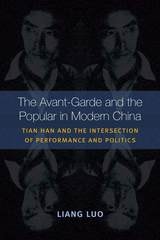
The Avant-Garde and the Popular in Modern China
Tian Han and the Intersection of Performance and PoliticsLiang Luo
University of Michigan Press, 2014
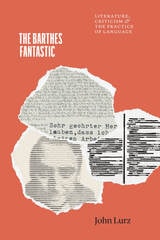
The Barthes Fantastic
Literature, Criticism, and the Practice of LanguageJohn Lurz
University of Chicago Press, 2025
In The Barthes Fantastic, John Lurz explores the intersection of literature and everyday life—and confronts some habits of literary study—through a reading of the work of Roland Barthes. An influential French theorist, Barthes wrote prolifically on the place of language and the play of signs in the ways we produce cultural and aesthetic meaning. Ranging across the entire sweep of Barthes’s varied career, Lurz shows how Barthes’s insights into signification and literature involve particular intellectual activities that impart significance to the world. Doing so allows him to develop an expanded understanding of the fantastic as a conceptual category—a way of thinking—in which the texts we read come to inform the texture of our real lives. Ultimately, The Barthes Fantastic enlarges our sense of what we learn as students of literature and gives us a new picture of a writer we thought we knew.
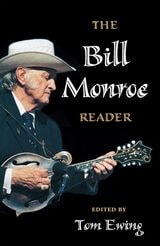
The Bill Monroe Reader
Edited by Tom Ewing
University of Illinois Press, 2000
"Tell 'em I'm a farmer with a mandolin and a high tenor voice," Bill Monroe said. Known as the Father of Bluegrass Music, Monroe pioneered a whole new category of music and inspired generations of musicians and fans. Yet from his founding of the original bluegrass band through six decades of performing, he remained an enigmatic figure, a compelling mixture of fierce intensity, homespun modesty, and musical integrity.
Determined to play the mandolin in a way it had never been played before, Monroe distinguished himself in the mid-1930s with the Monroe Brothers then began forming his own band, the Blue Grass Boys, in 1938. By the mid-1940s other bands were copying his sound, and a new style, bluegrass music, was born. While country music moved toward electrification, Monroe maintained his acoustic ensemble and developed his "high, lonesome sound," performing nearly up to his death in 1996.
In this eclectic, richly illustrated reader, former Blue Grass Boy Tom Ewing gathers the most significant and illuminating of the many articles that have been written about Monroe. Through the writings of nearly sixty observers, interviewers, admirers, folklorists, and other scholars, along with Ewing's astute commentary, The Bill Monroe Reader offers a multifaceted view of one of the most influential country musicians of the twentieth century.
Lively, heartfelt, and informative, The Bill Monroe Reader is a fitting tribute to the man and the musician who transformed the traditional music of western Kentucky into an international sensation.
The Black Aesthetic Unbound
Theorizing the Dilemma of Eighteenth-Century African American LiteratureApril C. E. Langley
The Ohio State University Press, 2007
Consequently, this book has three aims: to locate the eighteenth century as the genesis of the cultural and historical movements which mark twentieth-century black aestheticism—known as the Black Aesthetic; to analyze problematic associations of African identity as manifested in an essentialized Afro-America; and to study the relationship between specific West African modes of thought and expression and the emergence of a black aesthetic in eighteenth-century North America. By exploring how Senegalese, Igbo, and other West African traditions provide striking new lenses for reading poetry and prose by six significant writers, Langley offers a fresh perspective on this important era in our literary history. Ultimately, the author confronts the difficult dilemma of how to use diasporic, syncretic, and vernacular theories of Black culture to think through the massive cultural transformations wrought by the Middle Passage.
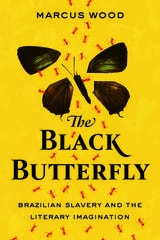
The Black Butterfly
Brazilian Slavery and the Literary ImaginationMarcus Wood
West Virginia University Press, 2019
The Black Butterfly focuses on the slavery writings of three of Brazil’s literary giants—Machado de Assis, Castro Alves, and Euclides da Cunha. These authors wrote in the late nineteenth and early twentieth centuries, as Brazil moved into and then through the 1888 abolition of slavery. Assis was Brazil’s most experimental novelist; Alves was a Romantic poet with passionate liberationist politics, popularly known as “the poet of the slaves”; and da Cunha is known for the masterpiece Os Sertões (The Backlands), a work of genius that remains strangely neglected in the scholarship of transatlantic slavery.
Wood finds that all three writers responded to the memory of slavery in ways that departed from their counterparts in Europe and North America, where emancipation has typically been depicted as a moment of closure. He ends by setting up a wider literary context for his core authors by introducing a comparative study of their great literary abolitionist predecessors Luís Gonzaga Pinto da Gama and Joaquim Nabuco. The Black Butterfly is a revolutionary text that insists Brazilian culture has always refused a clean break between slavery and its aftermath. Brazilian slavery thus emerges as a living legacy subject to continual renegotiation and reinvention.
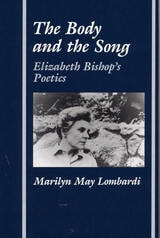
The Body and the Song
Elizabeth Bishop's PoeticsMarilyn May Lombardi
Southern Illinois University Press, 1995
In this original contribution to Elizabeth Bishop studies, Marilyn May Lombardi uses previously unpublished materials (letters, diaries, notebooks, and unfinished poems) to shed new light on the poet’s published work. She explores the ways Bishop’s lesbianism, alcoholism, allergic illnesses, and fear of mental instability affected her poetry—the ways she translated her bodily experiences into poetic form.
A cornerstone of The Body and the Song is the poet’s thirty-year correspondence with her physician, Dr. Anny Baumann, who was both friend and surrogate mother to Bishop. The letters reveal Bishop’s struggles to understand the relation between her physical and creative drives. "Dr. Anny" also helped Bishop unravel the connections in her life between psychosomatic illness and early maternal deprivation—her mother was declared incurably insane and institutionalized in 1916, when Bishop was five years old. Effectively an orphan, she spent the rest of her childhood with relatives.
In addition to these letters, Lombardi uses Bishop’s unpublished notebooks to demonstrate the poet’s resolve to "face the facts"—to confront her own emotional, intellectual, and physical frailties—and translate them into poetry that is clear-eyed and economical in its form.
Lombardi argues that in her subtle way, Bishop explores the same issues that preoccupy the current generation of women writers. A deeply private artist, Bishop never directly refers to her homosexuality in her published work, but the metaphors she draws from her carnal desires and aversions confront stifling cultural prescriptions for personal and erotic expression. In choosing restraint over confession, Bishop parted company with her friend Robert Lowell, but Lombardi shows that her reticence becomes a powerful artistic strategy resulting in poetry remarkable for its hermeneutic potential.
Informed by recent gender criticism, Lombardi’s lucid argument advances our understanding of the ways the material circumstances of life can be transformed into art.
The Bond of the Furthest Apart
Essays on Tolstoy, Dostoevsky, Bresson, and KafkaSharon Cameron
University of Chicago Press, 2017
Whether exploring Bresson’s efforts to reassess the limits of human reason and will, Dostoevsky’s subversions of Christian conventions, Tolstoy’s incompatible beliefs about death, or Kafka’s focus on creatures neither human nor animal, Cameron illuminates how the repeated juxtaposition of disparate, even antithetical, phenomena carves out new approaches to defining the essence of being, one where the very nature of fixed categories is brought into question. An innovative look at a classic French auteur and three giants of European literature, The Bond of the Furthest Apart will interest scholars of literature, film, ethics, aesthetics, and anyone drawn to an experimental venture in critical thought.
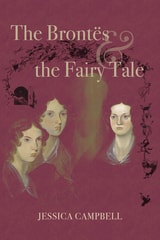
The Brontës and the Fairy Tale
Jessica Campbell
Ohio University Press, 2024
Scholars have long characterized the fairy tale as a form with tremendous power to influence cultures and individuals. The late twentieth century saw important critical work revealing the sinister aspects of that power, particularly its negative effects on female readers. But such an approach can inadvertently reduce the history of the fairy tale to a linear development from the “traditional” tale (pure, straight, patriarchal, and didactic) to the “postmodern” tale (playful, sophisticated, feminist, and radical). Campbell joins other contemporary scholars in arguing that the fairy tale has always been a remarkably elastic form, allowing writers and storytellers of all types to reshape it according to their purposes.
The Brontës are most famous today for Jane Eyre and Wuthering Heights, haunting novels that clearly repurpose fairy tales and folklore. Campbell’s book, however, reveals similar repurposing throughout the entire Brontë oeuvre. The Brontës and the Fairy Tale is recursive: in demonstrating the ubiquity and multiplicity of uses of fairy tales in the works of the Brontës, Campbell enhances not only our understanding of the Brontës’ works but also the status of fairy tales in the Victorian period.

The Brothers Grimm and Folktale
Edited by James M. McGlathery
University of Illinois Press, 1988
give an excellent overview of the scholarly research and current critical thought regarding
Jakob and Wilhelm Grimm and their hugely popular Grimm's Fairy Tales. . . . The
book is directed to the general educated public and is very readable." -- Choice
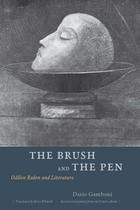
The Brush and the Pen
Odilon Redon and LiteratureDario Gamboni
University of Chicago Press, 2011
French symbolist artist Odilon Redon (1840–1916) seemed to thrive at the intersection of literature and art. Known as “the painter-writer,” he drew on the works of Poe, Baudelaire, Flaubert, and Mallarmé for his subject matter. And yet he concluded that visual art has nothing to do with literature. Examining this apparent contradiction, The Brush and the Pen transforms the way we understand Redon’s career and brings to life the interaction between writers and artists in fin-de-siècle Paris.
The Building of Castle Howard
Charles Saumarez Smith
University of Chicago Press, 1990
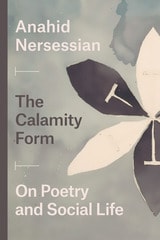
The Calamity Form
On Poetry and Social LifeAnahid Nersessian
University of Chicago Press, 2020
Anahid Nersessian explores works by Friedrich Hölderlin, William Wordsworth, John Keats, and others to argue that as the human and ecological costs of industry became clear, Romantic poetry adopted formal strategies—among them parataxis, the setting of elements side by side in a manner suggestive of postindustrial dissonance, and apostrophe, here an address to an absent or vanishing natural environment—as it tried and failed to narrate the calamities of capitalism. These tropes reflect how Romantic authors took their bewilderment and turned it into a poetics: a theory of writing, reading, and understanding poetry as an eminently critical act. Throughout, Nersessian pushes back against recent attempts to see literature as a source of information on par with historical or scientific data, arguing instead for an irreducibility of poetic knowledge. Revealing the ways in which these Romantic works are of their time but not about it, The Calamity Form ultimately exposes the nature of poetry’s relationship to capital—and capital’s ability to hide how it works.
The Chekhovian Intertext
Dialogue with a ClassicLyudmila Parts
The Ohio State University Press, 2008
In The Chekhovian Intertext Lyudmila Parts explores contemporary Russian writers’ intertextual engagement with Chekhov and his myth. She offers a new interpretative framework to explain the role Chekhov and other classics play in constructing and maintaining Russian national identity and the reasons for the surge in the number of intertextual engagements with the classical authors during the cultural crisis in post-perestroika Russia.
The book highlights the intersection of three distinct concepts: cultural memory, cultural myth, and intertextuality. It is precisely their interrelation that explains how intertextuality came to function as a defense mechanism of culture, a reaction of cultural memory to the threat of its disintegration.
In addition to offering close readings of some of the most significant short stories by contemporary Russian authors and by Chekhov, as a theoretical case study the book sheds light on important processes in contemporary literature: it explores the function of intertextuality in the development of Russian literature, especially post-Soviet literature; it singles out the main themes in contemporary literature, and explains their ties to national cultural myths and to cultural memory. The Chekhovian Intertext may serve as a theoretical model and impetus for examinations of other national literatures from the point of view of the relationship between intertextuality and cultural memory.
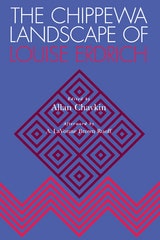
The Chippewa Landscape of Louise Erdrich
Allan Chavkin
University of Alabama Press, 1999
Louise Erdrich is arguably the most prolific and prominent contemporary writer of American Indian descent in North America today. Her novels and short stories have won great critical acclaim and are widely taught in American and world literature courses.
This collection of original ssays focuses on Erdrich's writings rooted in the Chippewa experience. Premier scholars of Native American literature investigate narrative structure, signs of ethnicity, the notions of luck and chance in Erdrich's narrative cosmology, her use of hunting metaphors, her efforts to counter stereotypes of American Indian women, her use of comedy in exploring American Indians' tragic past, her intentions underlying the process of revision in Love Medicine, and other subjects.
Including a variety of theoretical approaches, this book provides a comprehensive examination of Erdrich's work, making it more accessible to new readers and richer to those already familiar with her work.