Results by title
101 books match the query 'Data processing' and 12 start with t

Technology for Small and One-Person Libraries
A LITA GuideRene J. Erlandson
American Library Association, 2013
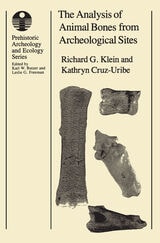
The Analysis of Animal Bones from Archeological Sites
Richard G. Klein and Kathryn Cruz-Uribe
University of Chicago Press, 1984
After setting forth the interpretive framework that governs their use of numbers in faunal analysis, Richard G. Klein and Kathryn Cruz-Uribe survey various measures of taxonomic abundance, review methods for estimating the sex and age composition of a fossil species sample, and then give examples to show how these measures and sex/age profiles can provide useful information about the past. In the second part of their book, the authors present the computer programs used to calculate and analyze each numerical measure or count discussed in the earlier chapters. These elegant and original programs, written in BASIC, can easily be used by anyone with a microcomputer or with access to large mainframe computers.
The Core and the Periphery
Data-Driven Perspectives on Syntax Inspired by Ivan A. SagEdited by Philip Hofmeister and Elisabeth Norcliffe
CSLI, 2013
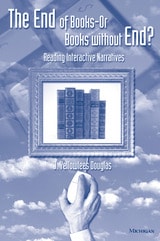
The End of Books--or Books Without End?
Reading Interactive NarrativesJ. Yellowlees Douglas
University of Michigan Press, 2001
The book examines criticism on interactive fiction from both proponents and skeptics and examines similarities and differences between print and hypertext fiction. It looks closely at critically acclaimed interactive works, including Stuart Moulthrop's Victory Garden and Michael Joyce's Afternoon: A Story that illuminate how these hypertext narratives "work." While she sees this as a still-evolving technology and medium, the author identifies possible developments for the future of storytelling from outstanding examples of Web-based fiction and CD-ROM narratives, possibilities that will enable narratives to both portray the world with greater realism an to transcend the boundaries of novels and films, character and plot alike.
Written to be accessible to a wide range of readers, this lively and accessibly-written volume will appeal to those interested in technology and cyberculture, as well as to readers familiar with literary criticism and modern fiction.
J. Yellowlees Douglas is the Director of the William and Grace Dial Center for Written and Oral Communication, University of Florida. She is the author of numerous articles and essays on the subject of hypertext and interactive literature.
The Iconic Page in Manuscript, Print, and Digital Culture
George Bornstein and Theresa Tinkle, Editors
University of Michigan Press, 1998
The material features of texts as physical artifacts--their "bibliographic codes" --have over the last decade excited increasing interest in a variety of disciplines. The Iconic Page in Manuscript, Print, and Digital Culture gathers essays by an extraordinarily distinguished group of scholars to offer the most comprehensive examination of these issues yet, drawing on examples from literature, history, the fine arts, and philosophy.
Fittingly, the volume contains over two dozen illustrations that display the iconic features of the works analyzed--from Alfred the Great's Boethius through medieval manuscripts to the philosophy of C. S. Peirce and the dustjackets on works by F. Scott Fitzgerald and William Styron.
The Iconic Page in Manuscript, Print, and Digital Culture will be groundbreaking reading for scholars in a wide range of fields.
George Bornstein is C. A. Patrides Professor of English, University of Michigan. Theresa Tinkle is Associate Professor of English, University of Michigan.
The Literary Text in the Digital Age
Richard J. Finneran, Editor
University of Michigan Press, 1996
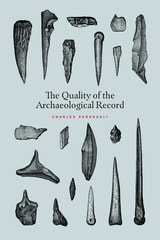
The Quality of the Archaeological Record
Charles Perreault
University of Chicago Press, 2019
In The Quality of the Archaeological Record, Charles Perreault shows that archaeology not only faces a parallel problem, but may also find a model in the rise of paleobiology for a shift in the science and theory of the field. To get there, he proposes a more macroscale approach to making sense of the archaeological record, an approach that reveals patterns and processes not visible within the span of a human lifetime, but rather across an observation window thousands of years long and thousands of kilometers wide. Just as with the fossil record, the archaeological record has the scope necessary to detect macroscale cultural phenomena because it can provide samples that are large enough to cancel out the noise generated by micro-scale events. By recalibrating their research to the quality of the archaeological record and developing a true macroarchaeology program, Perreault argues, archaeologists can finally unleash the full contributive value of their discipline.
The Seductions of Quantification
Measuring Human Rights, Gender Violence, and Sex TraffickingSally Engle Merry
University of Chicago Press, 2016
With The Seductions of Quantification, leading legal anthropologist Sally Engle Merry investigates the techniques by which information is gathered and analyzed in the production of global indicators on human rights, gender violence, and sex trafficking. Although such numbers convey an aura of objective truth and scientific validity, Merry argues persuasively that measurement systems constitute a form of power by incorporating theories about social change in their design but rarely explicitly acknowledging them. For instance, the US State Department’s Trafficking in Persons Report, which ranks countries in terms of their compliance with antitrafficking activities, assumes that prosecuting traffickers as criminals is an effective corrective strategy—overlooking cultures where women and children are frequently sold by their own families. As Merry shows, indicators are indeed seductive in their promise of providing concrete knowledge about how the world works, but they are implemented most successfully when paired with context-rich qualitative accounts grounded in local knowledge.
Theater as Data
Computational Journeys into Theater ResearchMiguel Escobar Varela
University of Michigan Press, 2021
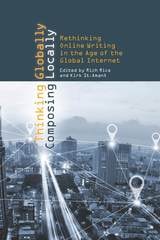
Thinking Globally, Composing Locally
Rethinking Online Writing in the Age of the Global InternetRich Rice
Utah State University Press, 2018
Thinking Globally, Composing Locally explores how writing and its pedagogy should adapt to the ever-expanding environment of international online communication. Communication to a global audience presents a number of new challenges; writers seeking to connect with individuals from many different cultures must rethink their concept of audience. They must also prepare to address friction that may arise from cross-cultural rhetorical situations, variation in available technology and in access between interlocutors, and disparate legal environments.
The volume offers a pedagogical framework that addresses three interconnected and overarching objectives: using online media to contact audiences from other cultures to share ideas; presenting ideas in a manner that invites audiences from other cultures to recognize, understand, and convey or act upon them; and composing ideas to connect with global audiences to engage in ongoing and meaningful exchanges via online media. Chapters explore a diverse range of pedagogical techniques, including digital notebooks designed to create a space for active dialogic and multicultural inquiry, experience mapping to identify communication disruption points in international customer service, and online forums used in global distance education.
Thinking Globally, Composing Locally will prove an invaluable resource for instructors seeking to address the many exigencies of online writing situations in global environments.
Contributors: Suzanne Blum Malley, Katherine Bridgman, Maury Elizabeth Brown, Kaitlin Clinnin, Cynthia Davidson, Susan Delagrange, Scott Lloyd Dewitt, Amber Engelson, Kay Halasek, Lavinia Hirsu, Daniel Hocutt, Vassiliki Kourbani, Tika Lamsal, Liz Lane, Ben Lauren, J. C. Lee, Ben McCorkle, Jen Michaels, Minh-Tam Nguyen, Beau S. Pihlaja, Mª Pilar Milagros, Cynthia L. Selfe, Heather Turner, Don Unger, Josephine Walwema
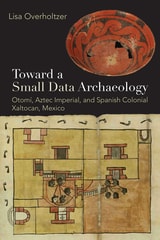
Toward a Small Data Archaeology
Otomí, Aztec Imperial, and Spanish Colonial Xaltocan, MexicoLisa Overholtzer
University Press of Colorado, 2025
Xaltocan served as the Otomí city-state capital before being conquered by the Tepanecs, subsequently incorporated into the Aztec Empire, and finally integrated into the vast Spanish colonial sphere. In reconstructing long-term household histories that bridge the pre-Hispanic and early Colonial periods, this book resists narratives that define Indigenous peoples solely through the lens of conquest and subordination. Instead, it presents richly detailed reconstructions of familial relationships and social networks, achieved through the rigorous analysis of artifacts, ecofacts, human remains, and ancient DNA. This meticulous and community-collaborative approach not only maximizes insights available from a limited archaeological record but also honors the ethical imperative to work with descendant communities.
Toward a Small Data Archaeology offers an innovative reexamination of the past by privileging the intricate, household-level narratives of Indigenous communities over the homogenizing tendencies of broad-scale "big data" approaches. By peopling the past, Overholtzer redefines methodological boundaries within archaeology, produces reconstructions and narratives that are more in line with Indigenous philosophies, and offers a compelling vision for a future in which historical narratives are reconstructed through a lens that is both deeply scientific and inherently humane.
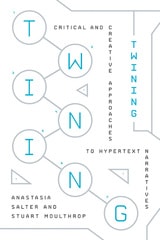
Twining
Critical and Creative Approaches to Hypertext NarrativesAnastasia Salter
Amherst College Press, 2021
"While there have certainly been attempts to study Twine historically and theoretically... no single publication has provided such a detailed account of it. And no publication has even attempted to situate Twine amongst its many different conversations and traditions, something this book does masterfully." —James Brown, Rutgers University, Camden