Results by title
345 books match the query 'Design' and 79 start with t

T-Squared
Theories and Tactics in Architecture and DesignEdited by Samantha Krukowski
Intellect Books, 2021
T-Squared has three primary aims. First, it illuminates the extensive and explicit relationship between the research that shapes art, architecture, and design practices and the studio prompts and assignments that are developed by faculty for students engaging the creative disciplines. Second, it demonstrates that pedagogical inquiry and invention can be a (radical) research endeavor that can also become an evolutionary agent for faculty, students, institutions, and communities. Third, it makes available to a larger audience a set of innovative ideas and exercises that have until now been known to limited numbers of students and faculty, hidden behind the walls of studio courses and institutions.
An interdisciplinary collection with its origins in the 2018 National Conference on the Beginning Design Student, this book will appeal to anyone interested in design thinking and process.
Teaching and Learning Design
Re:Research, Volume 1Edited by Gjoko Muratovski and Craig Vogel
Intellect Books, 2020
Opening a Design Education Pipeline from University to K-12 and Back
• Peter Scupelli, Doris Wells-Papanek, Judy Brooks, Arnold Wasserman
To prepare students to imagine desirable futures amidst current planetary-level challenges, design educators must think and act in new ways. In this paper, we describe a pilot study that illustrates how educators might teach K-12 students and university design students to situate their making within transitional times in a volatile and exponentially changing world. We describe how to best situate students to align design thinking and learning with future foresight. Here we present a pilot test and evaluate how a university-level Design Futures course content, approach, and scaffolded instructional materials – can be adapted for use in K-12 Design Learning Challenges. We describe the K-12 design-based learning challenges/experiences developed and implemented by the Design Learning Network (DLN). The Design Futures course we describe in this paper is a required course for third-year undergraduate students in the School of Design at Carnegie Mellon University. The “x” signifies a different type of design that aligns short-term action with long-term goals. The course integrates design thinking and learning with long-horizon future scenario foresight. Broadly speaking, we ask how might portions of a design course be taught and experienced by teachers and students of two different demographics: within the university (Design Undergraduates) and in K-12 (via DLN). This pilot study is descriptive in nature; in future work, we seek to assess learning outcomes across university and K-12 courses. We believe the approach described is relevant for lifelong learners (e.g., post-graduate-level, career development, transitional adult education).
Re-Clarifying Design Problems Through Questions for Secondary School Children: An Example Based on Design Problem Identification in Singapore Pre-Tertiary Design Education
• Wei Leong, Leon Loh, Hwee Mui, Grace Kwek, Wei Leong Lee
It is believed that secondary school students often define design problems in the design coursework superficially due to various reasons such as lack of exposure, inexperience and the lack of research skills. Questioning techniques have long been associated with the development of critical thinking. Based on this context and assumption, the current study aimed to explore the use of questioning techniques to enable pre-tertiary students to improve their understanding of design problems by using questions to critique their thinking and decision-making processes and in turn, generate more effective design solutions. A qualitative approach is adopted in this study to identify the trajectories of students during design problem identification and clarification process. Using student design journals as a form of record for action and thoughts, they are analyzed and supplemented by hearing survey with the teacher-in-charge. From the study, the following points can be concluded: (1) questions can be a useful tool to facilitate a better understanding of the design problem. (2) The process of identification and clarification of design problem is important in the development of critical thinking skills and social-emotional skills of the students. (3) It is important that students are given time and opportunity to find out the problems by themselves. (4) Teachers can be important role models as students may pick up questioning techniques from teacher–student discussions. (5) Departmental reviews and built-in professional development time for weekly reviews on teaching and learning strategies are necessary for the continual improvement D&T education.
Surveying Stakeholders: Research Informing Design Curriculum
• Andrea Quam
Fundamental to design education is the creation and structure of curriculum. Neither the creation of design curriculum, nor the revaluation of existing curriculum is well documented. With no clear documentation of precedent, best practices are left open to debate. This paper and presentation will discuss the use of a survey as a research tool to assess existing curriculum at Iowa State University in the United States. This tool allowed the needs and perspectives of the program’s diverse stakeholders to be better understood. Utilizing survey methods, research revealed the convergence and divergence of stakeholders’ philosophies, theories and needs in relation to design curriculum. Accreditation and professional licensing provide base level of guidelines for design curriculum in the United States. However, each program’s curricular structure beyond these guidelines is a complicated balance of resources, facilities, faculty and the type of institution in which it is housed. Once established, a program’s curriculum is rarely reassessed as a whole, but instead updated with the hasty addition of classes upon an existing curricular structure. Curriculum is infrequently re-addressed, and when it is, it is typically based on the experience and opinions of a select group of faculty. This paper presents how a survey was developed to collect data to inform curricular decision-making, enabling the reduction of faculty bias and speculation in the process. Lessons learned from the development of this research tool will be shared so it might be replicated at other institutions, and be efficiently repeated periodically to ensure currency of a program’s curriculum.
New Challenges when Teaching UX Students to Sketch and Prototype
• Joep Frens, Jodi Forlizzi, John Zimmerman
In this paper we report on new challenges when teaching User Experience (UX) students how to sketch and prototype their designs. We argue that UX students sketch and prototype differently than other design students, and we discuss how changes in the field necessitate a response in education. We describe sketching and prototyping as a continuum that students successfully traverse when they follow a process of “double loop learning.” We highlight three new challenges: (1) New computational design materials, (2) new maker tools and (3) changes within the tech industry. We explore these three challenges through examples from our students, and we outline strategies for sketching and prototyping in this new reality. We conclude that this is a starting point for further work on keeping education up to speed with practice.
How to Teach Industrial Design?: A Case Study of College Education for Design Beginners
• Joomyung Rhi
Industrial design education has existed for a long time as part of the university system, but the curriculum and contents of each subject vary considerably from school to school. In recent years, the introduction of new concepts that change the definition of design has blurred the boundaries of design, making the curriculum different. Establishing a standard curriculum to address these challenges is an important task, but it is necessary to fully understand how design education actually takes place and to share content with educators. This paper aims to contribute to the debate on industrial design education by fully disclosing the process and results of the first stage of industrial design education of a university by autobiographical method. The first course, Product Design Practice 1, is a studio class based on a task feedback iteration system. Students are required to submit assignments showing weekly progress. The instructor reviewed the assignments submitted before the class and gave written comments in class. In addition, details of the design process and method that are difficult to identify as novice students are learned through twelve case studies and applied to the project. This Task Feedback Repeating Class system gives students the opportunity to implement design ability while gaining detailed skills with a comprehensive view. Through this process, the researcher got a reflection on the class and implications for the improvement of the class.
Preliminary Study on the Learning Pressure of Undergraduate Industrial Design Students
- Wenzhi Chen
Learning pressure affects students’ learning process and performance. Industrial design education emphasizes that operations on real design problems that have heavy working loads may cause learning pressure. The purpose of this study is to explore the issues causing learning pressure and the pressure management strategies of undergraduate industrial design students. There were 297 students who participated in the questionnaire survey. The main findings are as follows: First, learning pressure includes academic pressure, peer pressure, self-expectations, time pressure, financial pressure, pressure from instructors, external pressure, future career, pressure from parents, resource pressure, achievement and situational pressure. In addition, the main learning pressure is caused by finance, time, resources, external issues and future career. Second, the pressure management strategies include problem solving, procrastination and escape, help seeking, leisure, emotional management and self-adjustment. The most useful strategy for managing pressure is leisure, and procrastination and escape is the least useful strategy. Third, all learning pressures are significantly correlated with procrastination and escape strategy, but the coefficients are low. The results can be a reference for industrial design education and related research.
Rewarding Risk: Exploring How to Encourage Learning that Comes from Taking Risks
• Dennis Cheatham
High-stakes testing that became the norm after the “No Child Left Behind Act” of 2001 helped condition students to strive for correct answers for clear problems, all on the first try. However, the iterative process inherent in designing requires risk-taking to conduct a trial-and-error process of defining problems and exploring possible solutions. This design research project was operated with Miami University Graphic Design students to test their willingness to take risks in their coursework to achieve their self-defined measures of success. Students identified that improving their skills was how they defined success. An interaction design assignment involving front-end coding was modified to test students’ comfort taking risks to grow their skills. Most students took risks in the assignment to grow their interaction design skills. The project revealed that closer attention to student motivation when developing learning experiences could help students make the transition to practicing design as an iterative process fraught with risk.
An Analysis of the Educational Value of PBL Design Workshops
• Ikjoon Chang, Suhong Hwang
The purpose of this study is to plan and operate design-workshops based on project-based learning (PBL), and examine their educational value for students. The PBL workshop encourages direct participation from students and produces educational value, and it is important to raise the interest level of workshops to elicit proactive participation. The workshop in this study was carried out over 2 weeks in January 2017 at Korea’s Yonsei University. The workshop was composed of eight teams of students from three countries, including Korea, China and Japan, and the course was primarily divided into two sessions. The workshop participants examined in this thesis were notably satisfied with the elements of the course meant to garner interest. In the questionnaire results, participants also indicated that they obtained ample educational value through the workshop. An important element of the workshop was to connect the participants with businesses, which is also an important component of design education. Despite this, participants expressed a relatively lower level of satisfaction compared to other elements of the workshop. The results and analysis of this study will hopefully become a meaningful resource for educators when designing workshops in the future.
Collaborative Design Education with Industry: Student Perspective by Reflection
- Nathan Kotlarewski, Louise Wallis, Michael Lee, Gregory Nolan, Megan Last
This study suggests that student reflection on academic and industry collaborative projects can enhance student’s understanding on the design process to solve live industry problems. It contributes to the body of design literature to support students learning of explicit and implicit knowledge. A 2017 learning by-making (LBM) unit in the School of Architecture and Design, at the University of Tasmania, Australia, developed a unit for students to collaborate with Neville Smith Forest Products Pty. Ltd (NSFP). NSFP is a local Tasmanian timber product manufacturer who currently stockpiles out-of-grade timber that has limited market applications. Undergraduate design students from second- and third-year Furniture, Interior and Architecture degrees collaborated with NSFP to value-add to their out-of-grade resource in the LBM unit. A series of design challenges, observations of industry practice and access to out-of-grade timber from NSFP exposed students to live industry problems and provided them the opportunity to build professional design skills. Students reflected on the collaborative LBM unit in a reflection journal, which was used to provide evidence of their learning experiences. The collaborative environment between academia and industry allowed students to acquire an understanding of timber product manufacturing that helped them develop empathy toward the industry problem and influence the development of new products. This study presents how student reflections influenced a change in their design process as they progressed through sequential design challenges to address an industry problem by adopting Valkenburg and Dorst reflective learning framework.
Interdisciplinary Trends in Design Education: The Analysis of Master Dissertation of College of Design and Innovation, Tongji University
• Lisha Ren, Yan Wang
This paper expounds the background of Chinese design education as well as the orientation of the design education of Tongji University in the new times, it also collects 458 Master Thesis of College of Design and Innovation during 2010–2016 as analyzed sample. Based on the coding of subject classification, quantitative analysis and content analysis are made in order to understand the interdisciplinary education status of College of Design and Innovation from the two perspectives: the overall cross-disciplinary performance and the relationship between different cross-disciplinary directions.
From ANT to Material Agency: A Design and Science Research Workshop
• Anne-Lyse Renon, A. De Montbron, Annie Gentes, Julien Bobroff
This paper studies a design workshop that investigates complex collaboration between fundamental physics and design. Our research focuses on how students create original artifacts that bridge the gap between disciplines that have very little in common. Our goal is to study the micro-evolutions of their projects. Elaborating first on Actor Network Theory we study how students’ projects evolved over time and through a diversity of inputs and media. Throughout this longitudinal study, we use then a semiotic and pragmatic approach to observe three “aesthetical formations”: translation, composition and stabilization. These formations suggest that the question of material agency developed in the field of archeology and cognitive science need to be considered in the design field to explain metamorphoses from the brief to the final realizations.
Telecommunications Network Modelling, Planning and Design
Sharon Evans
The Institution of Engineering and Technology, 2003

Tempest
Geometries of PlayJudd Ethan Ruggill and Ken S. McAllister
University of Michigan Press, 2015

Textile Orientalisms
Cashmere and Paisley Shawls in British Literature and CultureSuchitra Choudhury
Ohio University Press, 2023

The Ambitious Elementary School
Its Conception, Design, and Implications for Educational EqualityElizabeth McGhee Hassrick, Stephen W. Raudenbush, and Lisa Rosen
University of Chicago Press, 2017
Drawing on an in-depth study of real schools on the South Side of Chicago, Elizabeth McGhee Hassrick, Stephen W. Raudenbush, and Lisa Rosen argue that effectively meeting the challenge of educational inequality requires a complete reorganization of institutional structures as well as wholly new norms, values, and practices that are animated by a relentless commitment to student learning. They examine a model that pulls teachers out of their isolated classrooms and places them into collaborative environments where they can share their curricula, teaching methods, and assessments of student progress with a school-based network of peers, parents, and other professionals. Within this structure, teachers, school leaders, social workers, and parents collaborate to ensure that every child receives instruction tailored to his or her developing skills. Cooperating schools share new tools for assessment and instruction and become sites for the training of new teachers. Parents become respected partners, and expert practitioners work with researchers to evaluate their work and refine their models for educational organization and practice. The authors show not only what such a model looks like but the dramatic results it produces for student learning and achievement.
The result is a fresh, deeply informed, and remarkably clear portrait of school reform that directly addresses the real problems of educational inequality.
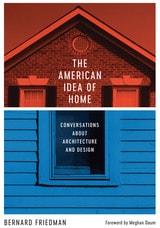
The American Idea of Home
Conversations about Architecture and DesignBy Bernard Friedman; foreword by Meghan Daum
University of Texas Press, 2017
“Home is an idea,” Meghan Daum writes in her foreword, “a story we tell ourselves about who we are and who and what we want closest in our midst.” In The American Idea of Home, documentary filmmaker Bernard Friedman interviews more than thirty leaders in the field of architecture about a constellation of ideas relating to housing and home. The interviewees include Pritzker Prize winners Thom Mayne, Richard Meier, and Robert Venturi; Pulitzer Prize winners Paul Goldberger and Tracy Kidder; American Institute of Architects head Robert Ivy; and legendary architects such as Denise Scott Brown, Charles Gwathmey, Kenneth Frampton, and Robert A. M. Stern.
The American idea of home and the many types of housing that embody it launch lively, wide-ranging conversations about some of the most vital and important issues in architecture today. The topics that Friedman and his interviewees discuss illuminate five overarching themes: the functions and meanings of home; history, tradition, and change in residential architecture; activism, sustainability, and the environment; cities, suburbs, and regions; and technology, innovation, and materials. Friedman frames the interviews with an extended introduction that highlights these themes and helps readers appreciate the common concerns that underlie projects as disparate as Katrina cottages and Frank Lloyd Wright Usonian houses. Readers will come away from these thought-provoking interviews with an enhanced awareness of the “under the hood” kinds of design decisions that fundamentally shape our ideas of home and the dwellings in which we live.

The Architecture of the Playing Field
Shaping Space in SportRichard L. Cleary
University of Texas Press, 2025
A novel exploration of playing fields as aesthetic and architectural spaces that frame athletes’ creativity and spectators’ evolving experiences of sport.
The playing field is a laboratory of invention, where athletes and coaches create new uses for the human body in response to the constraints and affordance of space. The Architecture of the Playing Field explores the aesthetic and physical experiences of the grounds on which we compete, from translucent squash courts to the NBA three-point line to the city streets adopted by skateboarders.
Richard Cleary digs into the perspectives of spectators, athletes, coaches, and umpires, which have changed along with the shifting configuration of the playing surface and the mediation of the action, from early sports coverage to today’s high-tech TV broadcasts. He shows how rules governing the size, shape, and divisions of the field reflect sports’ entwinement with societies at large, in particular the politics of race and gender. Mindful as well that some sports resist containment, he analyzes the disruptive use of space by snowboarders and parkour athletes. The Architecture of the Playing Field sensitizes us to the interplay of settings and bodies in motion fundamental to the power of sport.

The Arts and Design in Research Universities (pack of 12)
Gabriel Harp
A2RU Intervals, 2018
This arresting graphic provides a visual overview of the impacts of arts integration and interdisciplinarity in the university. It can be a tool for case-making, communication, and further inquiry.
This listing is for a pack of 12 maps.

The Arts and Design in Research Universities (pack of 5)
Gabriel Harp
A2RU Intervals, 2018
This arresting graphic provides a visual overview of the impacts of arts integration and interdisciplinarity in the university. It can be a tool for case-making, communication, and further inquiry.
This listing is for a pack of 5 maps.

The Arts and Design in Research Universities
Interdisciplinary Impacts and PracticesGabriel Harp
A2RU Intervals, 2018
This arresting graphic provides a visual overview of the impacts of arts integration and interdisciplinarity in the university. It can be a tool for case-making, communication, and further inquiry.

The Book of Looms
A History of the Handloom from Ancient Times to the PresentEric Broudy
University Press of New England, 1993
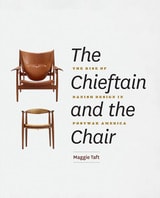
The Chieftain and the Chair
The Rise of Danish Design in Postwar AmericaMaggie Taft
University of Chicago Press, 2023
Today, Danish Modern design is synonymous with clean, midcentury cool. During the 1950s and ‘60s, it flourished as the furniture choice for Americans who hoped to signal they were current and chic. But how did this happen? How did Danish Modern become the design movement of the times? In The Chieftain and the Chair, Maggie Taft tells the tale of our love affair with Danish Modern design. Structured as a biography of two iconic chairs—Finn Juhl’s Chieftain Chair and Hans Wegner’s Round Chair, both designed and first fabricated in 1949—this book follows the chairs from conception and fabrication through marketing, distribution, and use.
Drawing on research in public and private archives, Taft considers how political, economic, and cultural forces in interwar Denmark laid the foundations for the postwar furniture industry, and she tracks the deliberate maneuvering on the part of Danish creatives and manufacturers to cater to an American market. Taft also reveals how American tastemakers and industrialists were eager to harness Danish design to serve American interests and how furniture manufacturers around the world were quick to capitalize on the fad by flooding the market with copies.
Sleek and minimalist, Danish Modern has experienced a resurgence of popularity in the last few decades and remains a sought-after design. This accessible and engaging history offers a unique look at its enduring rise among tastemakers.

The Comparative Guide to WordPress in Libraries
A LITA GuideAmanda L. American Library Association
American Library Association, 2014

The Design and Implementation of US Climate Policy
Edited by Don Fullerton and Catherine D. Wolfram
University of Chicago Press, 2012
The Design of Agreement
Evidence from ChamorroSandra Chung
University of Chicago Press, 1998
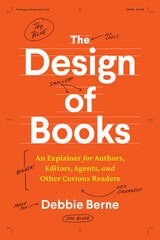
The Design of Books
An Explainer for Authors, Editors, Agents, and Other Curious ReadersDebbie Berne
University of Chicago Press, 2024
Design is central to the appeal, messaging, and usefulness of books, but to most readers, it’s mysterious or even invisible. Through interiors as well as covers, designers provide structure and information that shape the meaning and experience of books. In The Design of Books, Debbie Berne shines a light on the conventions and processes of her profession, revealing both the aesthetic and market-driven decisions designers consider to make books readable and beautiful. In clear, unstuffy language, Berne reveals how books are put together, with discussions of production considerations, typography and fonts, page layouts, use of images and color, special issues for ebooks, and the very face of each book: the cover.
The Design of Books speaks to readers and directly to books’ creators—authors, editors, and other publishing professionals—helping them to become more informed partners in the design of their projects. Berne lays out the practical steps at each stage of the design process, providing insight into who does what when and offering advice for authors on how to be effective advocates for their ideas while also letting go and trusting their manuscripts with teams of professionals. She includes guidance as well for self-publishing authors, including where to find a designer, what to expect from that relationship, and how to art direct your own book.
Throughout, Berne teaches how understanding the whats, hows, and whys of book design heightens our appreciation of these cherished objects and helps everyone involved in the process to create more functional, desirable, and wonderful books.
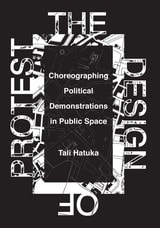
The Design of Protest
Choreographing Political Demonstrations in Public SpaceBy Tali Hatuka
University of Texas Press, 2018
Public protests are a vital tool for asserting grievances and creating temporary, yet tangible, communities as the world becomes more democratic and urban in the twenty-first century. While the political and social aspects of protest have been extensively studied, little attention has been paid to the physical spaces in which protests happen. Yet place is a crucial aspect of protests, influencing the dynamics and engagement patterns among participants. In The Design of Protest, Tali Hatuka offers the first extensive discussion of the act of protest as a design: that is, a planned event in a space whose physical geometry and symbolic meaning are used and appropriated by its organizers, who aim to challenge socio-spatial distance between political institutions and the people they should serve.
Presenting case studies from around the world, including Tiananmen Square in Beijing; the National Mall in Washington, DC; Rabin Square in Tel Aviv; and the Plaza de Mayo in Buenos Aires, Hatuka identifies three major dimensions of public protests: the process of planning the protest in a particular place; the choice of spatial choreography of the event, including the value and meaning of specific tactics; and the challenges of performing contemporary protests in public space in a fragmented, complex, and conflicted world. Numerous photographs, detailed diagrams, and plans complement the case studies, which draw upon interviews with city officials, urban planners, and protesters themselves.
The Designer
Half a Century of Change in Image, Training, and TechniqueRosemary Sassoon
Intellect Books, 2008
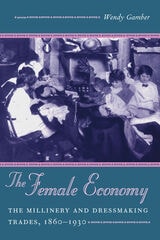
The Female Economy
The Millinery and Dressmaking Trades, 1860-1930Wendy Gamber
University of Illinois Press, 1997
The Female Economy explores that lost world of women's dominance, showing how independent, often ambitious businesswomen and the sometimes imperious consumers they served gradually vanished from the scene as custom production gave way to a largely unskilled modern garment industry controlled by men. Wendy Gamber helps overturn the portrait of wage-earning women as docile souls who would find fulfillment only in marriage and motherhood. She combines labor history, women's history, business history, and the history of technology while exploring topics as wide-ranging as the history of pattern-making and the relationship between entrepreneurship and marriage.
A volume in the series The Working Class in American History, edited by David Brody, Alice Kessler-Harris, David Montgomery, and Sean Wilentz, and in the series Women in American History, edited by Anne Firor Scott, Nancy A. Hewitt, and Stephanie Shaw
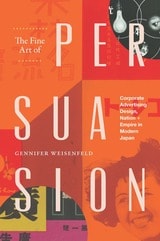
The Fine Art of Persuasion
Corporate Advertising Design, Nation, and Empire in Modern JapanGennifer Weisenfeld
Duke University Press, 2025

The Honor Dress of the Movement
A Cultural History of Hitler’s Brown Shirt Uniform, 1920–1933Torsten Homberger
University of Massachusetts Press, 2021
In The Honor Dress of the Movement, Torsten Homberger contends that the brown-shirted Stormtrooper uniform was central to Hitler's rise to power. By analyzing its design and marketing, he investigates how Nazi leaders used it to project a distinct political and military persona that was simultaneously violent and orderly, retrograde and modern—a dual image that proved popular with the German people and was key to the Nazis' political success. Based on a wealth of sources that includes literature, films, and newspapers of the era, Homberger exhibits how the Nazis shaped and used material culture to destroy democracy.

The Illustrated Letters of Richard Doyle to His Father, 1842–1843
Richard Doyle
Ohio University Press, 2015
Before he joined the staff of Punch and designed its iconic front cover, illustrator Richard “Dicky” Doyle was a young man whose father (political caricaturist John Doyle) charged him with sending a weekly letter, even though they lived under the same roof. This volume collects the fifty-three illustrated missives in their entirety for the first time and provides an uncommon peek into the intimate but expansive observations of a precocious social commentator and artist.
In a series of vivid manuscript canvases, Doyle observes Victorian customs and society. He visits operas, plays, and parades. He watches the queen visiting the House of Commons and witnesses the state funeral of the Duke of Sussex. He is caught up in the Chartist riots of August 1842 and is robbed during one of the melees. And he provides countless illustrations of ordinary people strolling in the streets and swarming the parks and picture galleries of the metropolis. The sketches offer a fresh perspective on major social and cultural events of London during the early 1840s by a keen observer not yet twenty years old.
Doyle’s epistles anticipate the modern comic strip and the graphic novel, especially in their experimentation with sequential narrative and their ingenious use of space. The letters are accompanied by a full biographical and critical introduction with new material about Doyle’s life.
The Intellect Handbook of Men’s Fashion
Edited by Ben Barry, Andy Reilly, and José Blanco F.
Intellect Books, 2026
Recent years have seen the study of men’s fashion grow from an emerging topic into a vibrant and expanding field, engaging with critical conversations on gender, race, sexuality, disability, colonialism, and globalization. Reflecting this shift, this volume moves beyond traditional narratives by highlighting three key approaches: decentralizing and decolonizing men’s fashion studies, embracing global perspectives, and focusing on multiple, overlapping social identities. Comprising thirty-four chapters by insightful scholars in fashion and dress studies, the collection offers a fresh and forward-looking examination of the field’s development.
Primarily designed for academic audiences, this handbook serves as an ideal textbook or core reading for undergraduate and graduate courses on gender and fashion. At the same time, it appeals to fashion practitioners, curators, cultural critics, and general readers interested in the history, culture, and meaning of men’s fashion and dress.
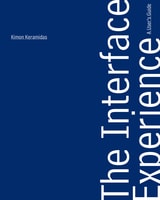
The Interface Experience
A User's GuideKimon Keramidas
Bard Graduate Center, 2015
The Interface Experience surveys some of the landmark devices in the history of personal computing—including the Commodore 64, Apple Macintosh Plus, Palm Pilot Professional, and Microsoft Kinect—and helps us to better understand the historical shifts that have occurred with the design and material experience of each machine. With its spiral-bound design reminiscent of early computer user manuals and thorough consideration of the cultural moment represented by each device, The Interface Experience is a one-of-a-kind tour of modern computing technology.
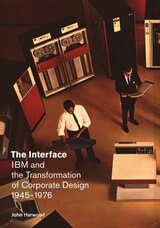
The Interface
IBM and the Transformation of Corporate Design, 1945–1976John Harwood
University of Minnesota Press, 2016
In February 1956 the president of IBM, Thomas Watson Jr., hired the industrial designer and architect Eliot F. Noyes, charging him with reinventing IBM’s corporate image, from stationery and curtains to products such as typewriters and computers and to laboratory and administration buildings. What followed—a story told in full for the first time in John Harwood’s The Interface—remade IBM in a way that would also transform the relationships between design, computer science, and corporate culture.
IBM’s program assembled a cast of leading figures in American design: Noyes, Charles Eames, Paul Rand, George Nelson, and Edgar Kaufmann Jr. The Interface offers a detailed account of the key role these designers played in shaping both the computer and the multinational corporation. Harwood describes a surprising inverse effect: the influence of computer and corporation on the theory and practice of design. Here we see how, in the period stretching from the “invention” of the computer during World War II to the appearance of the personal computer in the mid-1970s, disciplines once well outside the realm of architectural design—information and management theory, cybernetics, ergonomics, computer science—became integral aspects of design.
As the first critical history of the industrial design of the computer, of Eliot Noyes’s career, and of some of the most important work of the Office of Charles and Ray Eames, The Interface supplies a crucial chapter in the story of architecture and design in postwar America—and an invaluable perspective on the computer and corporate cultures of today.

The Life and Comics of Howard Cruse
Taking Risks in the Service of TruthAndrew J. Kunka
Rutgers University Press, 2022
The Life and Comics of Howard Cruse tells the remarkable story of how a self-described “preacher’s kid” from Birmingham, Alabama, became the so-called “Godfather of Gay Comics.” This study showcases a remarkable fifty-year career that included working in the 1970s underground comics scene, becoming founding editor of the groundbreaking anthology series Gay Comix, and publishing the graphic novel Stuck Rubber Baby, partially based on his own experience of coming of age in the Civil Rights era.
Through his exploration of Cruse’s life and work, Andrew J. Kunka also chronicles the dramatic ways that gay culture changed over the course of Cruse’s lifetime, from Cold War-era homophobia to the gay liberation movement to the AIDS crisis to the legalization of gay marriage. Highlighting Cruse’s skills as a trenchant satirist and social commentator, Kunka explores how he cast a queer look at American politics, mainstream comics culture, and the gay community’s own norms.
Lavishly illustrated with a broad selection of comics from Cruse’s career, this study serves as a perfect introduction to this pioneering cartoonist, as well as an insightful read for fans who already love how his work sketched a new vision of gay life.

The Mobile Image from Watteau to Boucher
David Pullins
J. Paul Getty Trust, The, 2024
This book provides a new way of thinking about eighteenth-century French art and visual culture by prioritizing production over reception. Abandoning the ideologically driven discourse that distinguished fine from decorative art between the 1690s and 1770s, The Mobile Image reveals how the two have been inextricably bound from the earliest stages of artistic instruction through the daily life of painters’ workshops. In this study, author David Pullins defines artisanal and artistic means of learning, seeing, and making through a system of “mobile images”: motifs that were effectively engineered for mobility and designed never to be definitive, always awaiting replication and circulation. He examines the careers of Antoine Watteau, Jean-Baptiste Oudry, and François Boucher, situating them against a much broader cast of actors—such as printmakers, publishers, anonymous studio assistants, and architects, among others—to place eighteenth-century painting within a wider context of media and making.

The Moxon Tennyson
A Landmark in Victorian IllustrationSimon Cooke
Ohio University Press, 2021

The Natural History of the Traditional Quilt
By John Forrest and Deborah Blincoe
University of Texas Press, 1995
Traditional quilts serve many purposes over the course of a useful life. Beginning as a beautiful bed covering, a quilt may later function as a ground cover at picnics until years of wear relegate it to someone's ragbag for scrap uses.
Observing this life cycle led authors John Forrest and Deborah Blincoe to the idea that quilts, like living things, have a natural history that can be studied scientifically. They explore that natural history through an examination of the taxonomy, morphology, behavior, and ecology of quilts in their native environment—the homes of humans who make, use, keep, and bestow them.
The taxonomy proposed by Forrest and Blincoe is rooted in the mechanics of replicating quilts so that it can be used to understand evolutionary and genetic relationships between quilt types. The morphology section anatomizes normal and abnormal physical features of quilts, while the section on conception and birth in the life cycle discusses how the underlying processes of replication intersect with environmental factors to produce tangible objects.
This methodology is applicable to many kinds of crafts and will be of wide interest to students of folklore, anthropology, and art history. Case studies of traditional quilts and their makers in the Catskills and Appalachia add a warm, human dimension to the book.

The Northwest Gardens of Lord and Schryver
Valencia Libby
Oregon State University Press, 2021
Published in Cooperation with the Lord & Schryver Conservancy
Lord & Schryver, the first landscape architecture firm founded and operated by women in the Pacific Northwest, designed more than two hundred gardens in Oregon and Washington, including residential, civic, and institutional landscapes. Elizabeth Lord and Edith Schryver met as young women and in 1929 established their highly successful firm in Salem; their work is acknowledged as one of the milestones in the history of garden design in the Northwest and beyond. Theirs is the only Oregon firm recognized in Pioneers of Landscape Architecture, compiled by the National Park Service. The Cultural Landscape Foundation describes them as “consummate professionals in the broadest sense, as they worked to raise the profile of landscape architects by involving an audience beyond their clients. Their work represented a transition from a formal symmetrical style of garden design to one which responded in a distinctive way to the unique features of Northwest climate, soil, topography, and plant material.”
Gaiety Hollow, their purpose-built Salem home, garden, and studio, is now owned by the Lord & Schryver Conservancy and is open to the public. The conservancy has lovingly restored the gardens at Gaiety Hollow according to Lord & Schryver’s original plans. They have also restored and now maintain the gardens at Deepwood, a former residence that is now a public park.
Students of landscape architecture, garden design, Pacific Northwest history, ornamental horticulture, and general readers who are interested in the contributions of women to once male-dominated professions will find inspiration in these pages.
Learn more about Elizabeth Lord and Edith Schryver at www.lordschryver.org

The Papers of the Bibliographical Society of America, volume 110 number 1 (March 2016)
The University of Chicago Press
University of Chicago Press Journals, 2016

The Papers of the Bibliographical Society of America, volume 115 number 4 (December 2021)
The University of Chicago Press
University of Chicago Press Journals, 2021

The Papers of the Bibliographical Society of America, volume 116 number 1 (March 2022)
The University of Chicago Press
University of Chicago Press Journals, 2022

The Papers of the Bibliographical Society of America, volume 116 number 2 (June 2022)
The University of Chicago Press
University of Chicago Press Journals, 2022

The Papers of the Bibliographical Society of America, volume 116 number 3 (September 2022)
The University of Chicago Press
University of Chicago Press Journals, 2022

The Papers of the Bibliographical Society of America, volume 116 number 4 (December 2022)
The University of Chicago Press
University of Chicago Press Journals, 2022

The Papers of the Bibliographical Society of America, volume 117 number 1 (March 2023)
The University of Chicago Press
University of Chicago Press Journals, 2023

The Papers of the Bibliographical Society of America, volume 117 number 3 (September 2023)
The University of Chicago Press
University of Chicago Press Journals, 2023

The Papers of the Bibliographical Society of America, volume 117 number 4 (December 2023)
The University of Chicago Press
University of Chicago Press Journals, 2023

The Papers of the Bibliographical Society of America, volume 118 number 1 (March 2024)
The University of Chicago Press
University of Chicago Press Journals, 2024

The Papers of the Bibliographical Society of America, volume 118 number 2 (June 2024)
The University of Chicago Press
University of Chicago Press Journals, 2024

The Papers of the Bibliographical Society of America, volume 118 number 3 (September 2024)
The University of Chicago Press
University of Chicago Press Journals, 2024

The Papers of the Bibliographical Society of America, volume 118 number 4 (December 2024)
The University of Chicago Press
University of Chicago Press Journals, 2024

The Papers of the Bibliographical Society of America, volume 119 number 1 (March 2025)
The University of Chicago Press
University of Chicago Press Journals, 2025

The Papers of the Bibliographical Society of America, volume 119 number 2 (June 2025)
The University of Chicago Press
University of Chicago Press Journals, 2025

The Papers of the Bibliographical Society of America, volume 119 number 3 (September 2025)
The University of Chicago Press
University of Chicago Press Journals, 2025

The Papers of the Bibliographical Society of America, volume 119 number 4 (December 2025)
The University of Chicago Press
University of Chicago Press Journals, 2025

The Papers of the Bibliographical Society of America, volume 120 number 1 (March 2026)
The University of Chicago Press
University of Chicago Press Journals, 2026

The Papers of the Bibliographical Society of America, volume 120 number 2 (June 2026)
The University of Chicago Press
University of Chicago Press Journals, 2026