Results by title
87 books match the query 'Developing & Emerging Countries' and 14 start with t

Testimony
Found Poems from the Special Court for Sierra LeoneShanee Stepakoff
Bucknell University Press, 2021
Sierra Leone’s devastating civil war barely caught the attention of Western media, but it raged on for over a decade, bringing misery to millions of people in West Africa from 1991 to 2002. The atrocities committed in this war and the accounts of its survivors were duly recorded by international organizations, but they run the risk of being consigned to dusty historical archives.
Derived from public testimonies at a UN-backed war crimes tribunal in Freetown, this remarkable poetry collection aims to breathe new life into the records of Sierra Leone’s civil war, delicately extracting heartbreaking human stories from the morass of legal jargon. By rendering selected trial transcripts in poetic form, Shanee Stepakoff finds a novel way to communicate not only the suffering of Sierra Leone’s people, but also their courage, dignity, and resilience. Her use of innovative literary techniques helps to ensure that the voices of survivors are not forgotten, but rather heard across the world.
This volume also includes an introduction that explores how the genre of “found poetry” can serve as a uniquely powerful means through which writers may bear witness to atrocity. This book’s unforgettable excavation and shaping of survivor testimonies opens new possibilities for speaking about the unspeakable.
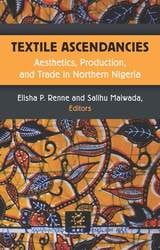
Textile Ascendancies
Aesthetics, Production, and Trade in Northern NigeriaElisha P. Renne and Salihu Maiwada, Editors
University of Michigan Press, 2020
Until this century, Northern Nigeria was a major center of textile production and trade. Textile Ascendancies: Aesthetics, Production, and Trade in Northern Nigeria examines this dramatic change in textile aesthetics, technologies, and social values in order to explain the extraordinary shift in textile demand, production, and trade.
Textile Ascendancies provides information for the study of the demise of textile manufacturing outside Nigeria. The book also suggests the conundrum considered by George Orwell concerning the benefits and disadvantages of “mechanical progress,” and digital progress, for human existence. While textile mill workers in northern Nigeria were proud to participate in the mechanization of weaving, the “tendency for the mechanization of the world” represented by more efficient looms and printing equipment in China has contributed to the closing of Nigerian mills and unemployment.
Textile Ascendancies will appeal toanthropologists for its analyses of social identity as well as how the ethnic identity of consumers influences continued handwoven textile production. The consideration of aesthetics and fashionable dress will appeal to specialists in textiles and clothing. It will be useful to economic historians for the comparative analysis of textile manufacturing decline in the 21st century. It will also be of interest to those thinking about global futures, about digitalization, and how new ways of making cloth and clothing may provide both employment and environmentally sound production practices.
The Anti-Black City
Police Terror and Black Urban Life in BrazilJaime Amparo Alves
University of Minnesota Press, 2018
An important new ethnographic study of São Paulo’s favelas revealing the widespread use of race-based police repression in Brazil
While Black Lives Matter still resonates in the United States, the movement has also become a potent rallying call worldwide, with harsh police tactics and repressive state policies often breaking racial lines. In The Anti-Black City, Jaime Amparo Alves delves into the dynamics of racial violence in Brazil, where poverty, unemployment, residential segregation, and a biased criminal justice system create urban conditions of racial precarity.
The Anti-Black City provocatively offers race as a vital new lens through which to view violence and marginalization in the supposedly “raceless” São Paulo. Ironically, in a context in which racial ambiguity makes it difficult to identify who is black and who is white, racialized access to opportunities and violent police tactics establish hard racial boundaries through subjugation and death. Drawing on two years of ethnographic research in prisons and neighborhoods on the periphery of this mega-city, Alves documents the brutality of police tactics and the complexity of responses deployed by black residents, including self-help initiatives, public campaigns against police violence, ruthless gangs, and self-policing of communities.
The Anti-Black City reveals the violent and racist ideologies that underlie state fantasies of order and urban peace in modern Brazil. Illustrating how “governing through death” has become the dominant means for managing and controlling ethnic populations in the neoliberal state, Alves shows that these tactics only lead to more marginalization, criminality, and violence. Ultimately, Alves’s work points to a need for a new approach to an intractable problem: how to govern populations and territories historically seen as “ungovernable.”
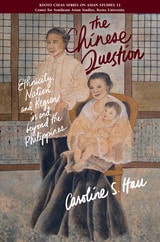
The Chinese Question
Ethnicity, Nation, and Region in and Beyond the PhilippinesCaroline S. Hau
National University of Singapore Press, 2014
With the revaluing of Chineseness has come a repositioning of “Chinese” racial and cultural identity. Philippine mestizos (people of mixed ancestry) form an important sub-group of the Filipino elite, but their Chineseness was occluded as they disappeared into the emergent Filipino nation. In the twentieth century, mestizos defined themselves and based claims to privilege on “white” ancestry, but mestizos are now actively reclaiming their “Chinese” heritage. At the same time, so-called “pure Chinese” are parlaying their connections into cultural, social, symbolic, or economic capital, and leaders of mainland Chinese state companies have entered into politico-business alliances with the Filipino national elite. As the meanings of “Chinese” and “Filipino” evolve, intractable contradictions are appearing in the concepts of citizenship and national belonging.
Through an examination of cinematic and literary works, The Chinese Question shows how race, class, ideology, nationality, territory, sovereignty, and mobility are shaping the discourses of national integration, regional identification, and global cosmopolitanism.

The Development Practitioners' Handbook
Allan Kaplan
Pluto Press, 1996
The Paradox of Agrarian Change
Food Security and the Politics of Social Protection in IndonesiaEdited by John McCarthy, Andrew McWilliam, and Gerben Nooteboom
National University of Singapore Press, 2023
Economic growth in the middle-income countries of Southeast Asia over the past few decades has been widely praised for reducing poverty in both absolute and relative terms. Indonesia is a prime example. But while poverty has declined in Indonesia, patterns of food poverty persist across Indonesia. What explains this troubling paradox? How does it relate to Indonesia’s enthusiastic embrace of the “entitlements revolution,” the use of direct cash transfers as a tool for reducing poverty and building social inclusion?
This book analyzes the nature and social consequences of economic development and agrarian change processes in rural Indonesia in relation to the scope and effectiveness of Indonesia’s social protection programs. The findings are based on a series of extensive ground-up case studies in Indonesian communities in a variety of eco-agrarian settings that seek to understand the drivers of food insecurity and vulnerability at a household level. The results show that while high-value farming, diversification, and migration may offer a means of economic progress for poor households, opportunities for accumulation are limited. This, the authors show, is due to the way class, gender, and power work in remote local contexts, and the fact that much surplus income is used for enhanced consumption and changing lifestyles. There are few signs of the classical structural transformation of the countryside which has historically been considered the most decisive pathway out of rural poverty. The authors conclude that social assistance is unlikely to counter the persistence of rural poverty, food insecurity, and precarity in the absence of other redistributive strategies that shift the structural drivers of inequality.
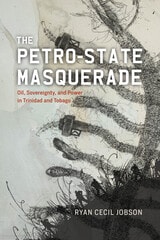
The Petro-state Masquerade
Oil, Sovereignty, and Power in Trinidad and TobagoRyan Cecil Jobson
University of Chicago Press, 2024
Examining the past, present, and future of Trinidad and Tobago’s oil and gas industries, anthropologist Ryan Cecil Jobson traces how a model of governance fashioned during prior oil booms is imperiled by declining fossil fuel production and a loss of state control. Despite the twin-island nation’s increasingly volatile and vulnerable financial condition, however, government officials continue to promote it as a land of inexhaustible resources and potentially limitless profits.
The result is what Jobson calls a “masquerade of permanence” whereby Trinbagonian state actors represent the nation as an interminable reserve of hydrocarbons primed for multinational investment. In The Petro-state Masquerade, Jobson examines the gulf between this narrative crafted by the postcolonial state and the vexed realities of its dwindling petroleum-fueled aspirations. After more than a century of commercial oil production, Trinidad and Tobago instructs us to regard the petro-state as less a permanent form than a fragile relation between fossil fuels and sovereign authority. Foregrounding the concurrent masquerades of oil workers, activists, and Carnival revelers, Jobson argues that the promise of decolonization lies in the disarticulation of natural resources, capital, and political power by ordinary people in the Caribbean.
The Political Economy of Development
The World Bank, Neoliberalism and Development ResearchEdited by Kate Bayliss, Ben Fine, and Elisa Van Waeyenberge
Pluto Press, 2011
Any student, academic or practitioner wanting to succeed in development studies, radical or mainstream, must understand the World Bank's role and the evolution of its thinking and activities. The Political Economy of Development provides tools for gaining this understanding and applies them across a range of topics.
The research, practice and scholarship of development are always set against the backdrop of the World Bank, whose formidable presence shapes both development practice and thinking. This book brings together academics that specialise in different subject areas of development and reviews their findings in the context of the World Bank as knowledge bank, policy-maker and financial institution. The volume offers a compelling contribution to our understanding of development studies and of development itself.
The Political Economy of Development is an invaluable critical resource for students, policy-makers and activists in development studies.
The Political Economy of NGOs
State Formation in Sri Lanka and BangladeshJude L. Fernando
Pluto Press, 2011
Jude L. Fernando explores the paradoxical relationship between NGOs and capitalism, showing that supposedly progressive organisations often promote essentially the same policies and ideas as existing governments.
The book examines how a diverse group of NGOs have shaped state formation in Bangladesh and Sri Lanka. It argues that, rather than influencing state formation for the better, NGOs have been integrated into the capitalist system and their language adopted to give traditional exploitative social relations a transformative appearance.
This enlightening study will give pause to those who see NGOs as drivers of true social change and will encourage students of development studies to make a deeper analysis of state formation.
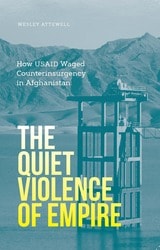
The Quiet Violence of Empire
How USAID Waged Counterinsurgency in AfghanistanWesley Attewell
University of Minnesota Press, 2023
How the U.S. empire-state transformed post-1945 Afghanistan into a key site for reimagining development
Established in 1961 by President Kennedy, the United States Agency for International Development (USAID) is often viewed as an extension of the security state, playing a constant role on the ground in Afghanistan since the early sixties. The Quiet Violence of Empire traces USAID’s long and bloody history of development work in the region, revealing an empirically rich account of the transnational entanglements of imperialism and racial capitalism.
Wesley Attewell carefully analyzes three chronological moments of development as counterinsurgency in action: the Helmand Valley Project, the Soviet–Afghan conflict, and the post-9/11 occupation in Afghanistan. These case studies expose how USAID’s very public commitment to bringing seemingly inclusionary forms of self-help, technical assistance, and market development to Afghanistan has been undergirded by longer-standing infrastructures of race war and racial management. Attewell exposes how one of the net effects of USAID’s development mission to Afghanistan has been to constrain the life chances of Afghan beneficiaries while simultaneously diverting development capital back to U.S. contractors, deftly underscoring the notion of development as a form of slow violence.
The Quiet Violence of Empire asks the critical question: how might we refuse the ruse of USAID and its endlessly deferred promise of development? Thinking relationally across the fields of human geography, global studies, and critical ethnic studies, it uncovers the explicitly racial underpinnings of international development theory and praxis.
The Rainy Season
Three Lives in the New South AfricaMaggie Messitt
University of Iowa Press, 2015
The Rainy Season tells the stories of three generations in the Rainbow Nation one decade after its first democratic elections. This multi-threaded narrative follows Regina, a tapestry weaver in her sixties, standing at the crossroads where her Catholic faith and the AIDS pandemic crash; Thoko, a middle-aged sangoma (traditional healer) taking steps to turn her shebeen into a fully licensed tavern; and Dankie, a young man taking his matriculation exams, coming of age as one of Mandela’s Children, the first academic class educated entirely under democratic governance.
Home to Shangaan, Sotho, and Mozambican Tsonga families, Rooiboklaagte sits in a village where an outdoor butchery occupies an old petrol station and a funeral parlor sits in the attached garage. It’s a place where an AIDS education center sits across the street from a West African doctor selling cures for the pandemic. It’s where BMWs park outside of crumbling cement homes, and the availability of water changes with the day of the week. As the land shifts from dusty winter blond to lush summer green and back again, the duration of northeastern South Africa’s rainy season, Regina, Thoko, and Dankie all face the challenges and possibilities of the new South Africa.
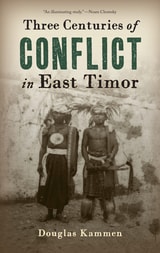
Three Centuries of Conflict in East Timor
Kammen, Douglas
Rutgers University Press, 2015
Download open access ebook here.
Tirana Modern
Biblio-Ethnography on the Margins of EuropeMatthew Rosen
Vanderbilt University Press, 2022
Drawing on material collected through fieldwork with a community of readers, writers, and translators attached to the independent Albanian publisher Pika pa sipërfaqe (Point without Surface), Tirana Modern provides a tightly focused ethnography of literary culture in Albania that brings into relief the more general dialectic between social imagination and social reality as mediated by reading and literature.
Transplanting the Great Society
Lyndon Johnson and Food for PeaceKristin L. Ahlberg
University of Missouri Press, 2008