59 books match the query 'Diary' and 15 start with t
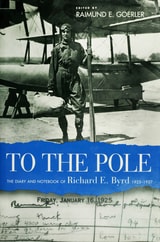
cover of TO THE POLE: The Diary and Notebook of Richard E. Byrd, 1925–1927

TO THE POLE

The Diary and Notebook of Richard E. Byrd, 1925–1927

Edited by Raimund E. Goerler

The Ohio State University Press, 1998

On May 9, 1926, Richard E. Byrd announced to the world that he and copilot Floyd Bennett were the first to fly an airplane over the North Pole. Documents published here for the first time provide new insights into this most controversial accomplishment of Byrd's career.

Some journalists at the time questioned whether Byrd's airplane, the Josephine Ford, could have reached the North Pole and returned in less than sixteen hours. More questions arose after Byrd's death in 1957. A Swedish meteorologist concluded that the Josephine Ford would have needed a beneficial wind to accomplish the feat, and his study of weather data indicated that there had been no such wind. In 1973 another author reported that Byrd's pilot had later confessed to Bernt Balchen, a Norwegian pilot who had assisted Byrd, that they had only circled on the horizon out of sight of reporters and landed when enough time had passed to claim the North Pole.

To the Pole presents transcriptions of Byrd's handwritten diary and notebook, which were discovered by Ohio State University archivist Raimund Goerler in 1996 when he was cataloging Byrd's papers for the university. In his diary Byrd recorded his preparations for the North Pole flight, and he used it as a message pad to communicate with his pilot when the deafening noise from the plane's engines rendered verbal communication impossible.

Byrd also wrote his navigational calculations on the leaves of his diary, and photographs of these crucial pages are presented in the book as well, along with a copy of Byrd's official report on the expedition to the National Geographic Society.
[more]
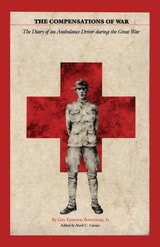
cover of The Compensations of War: The Diary of an Ambulance Driver during the Great War

The Compensations of War

The Diary of an Ambulance Driver during the Great War

By Guy Emerson Bowerman

University of Texas Press, 1983

In 1917, shortly after the United States’ declaration of war on Germany, Guy Emerson Bowerman, Jr., enlisted in the American army’s ambulance service. Like other young ambulance drivers—Hemingway, Dos Passos, Cummings, Cowley—Bowerman longed to “see the show.” He was glad to learn that the ambulance units were leaving for France right away.

For seventeen months, until the armistice of November 1918, Bowerman kept an almost daily diary of the war. To read his words today is to live the war with an immediacy and vividness of detail that is astonishing.

Only twenty when he enlisted, Bowerman was an idealistic, if snobbish, young man who exulted that his section was made up mostly of young “Yalies” like himself. But he expected the war to change him, and it did. In the end he writes that he and his compatriots scarcely remember a world at peace. "The old life was gone forever. . ."

Guy Bowerman’s unit was attached to a French infantry division stationed near Verdun. Sent to halt the German drive to Paris in 1918, the division participated in the decisive counterattack of July and tracked the routed Germans through Belgium. Then, “unwarned,” Bowerman and his comrades were “plunged into … a life of peace.” Into this life, he writes, they walked “bewildered,” like “men fearing ambush.”

This remarkable chronicle of one young man’s rite of passage is destined to become a classic in the literature of the Great War.
[more]
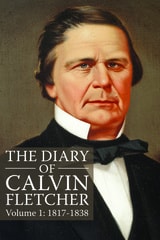
cover of The Diary of Calvin Fletcher, Volume 1: 1817-1838

The Diary of Calvin Fletcher, Volume 1

1817-1838

Gayle Thornbrough

Indiana Historical Society Press, 1972
Calvin Fletcher, born in Vermont in 1798, came to Indiana from Ohio in 1821, and in the next forty-five years made a fortune, raised eleven children, and was a pillar of the community. This pioneer Indianapolis lawyer, banker, and philanthropist kept a diary for most of his long life, and in it he recorded both the growth of his family and his community. Whether complaining, criticizing, observing shrewdly, or agonizing, Fletcher emerges as both a complex and unforgettable human being. Each of the set's nine volumes has a preface, chronology, and index. Volume nine includes a cumulative index.
[more]
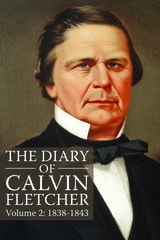
cover of The Diary of Calvin Fletcher, Volume 2: 1838-1843

The Diary of Calvin Fletcher, Volume 2

1838-1843

Gayle Thornbrough

Indiana Historical Society Press, 1973
Calvin Fletcher, born in Vermont in 1798, came to Indiana from Ohio in 1821, and in the next forty-five years made a fortune, raised eleven children, and was a pillar of the community. This pioneer Indianapolis lawyer, banker, and philanthropist kept a diary for most of his long life, and in it he recorded both the growth of his family and his community. Whether complaining, criticizing, observing shrewdly, or agonizing, Fletcher emerges as both a complex and unforgettable human being. Each of the set's nine volumes has a preface, chronology, and index. Volume nine includes a cumulative index.
[more]
cover of The Diary of Calvin Fletcher, Volume 3: 1844-1847

The Diary of Calvin Fletcher, Volume 3

1844-1847

Gayle Thornbrough

Indiana Historical Society Press, 1974
Calvin Fletcher, born in Vermont in 1798, came to Indiana from Ohio in 1821, and in the next forty-five years made a fortune, raised eleven children, and was a pillar of the community. This pioneer Indianapolis lawyer, banker, and philanthropist kept a diary for most of his long life, and in it he recorded both the growth of his family and his community. Whether complaining, criticizing, observing shrewdly, or agonizing, Fletcher emerges as both a complex and unforgettable human being. Each of the set's nine volumes has a preface, chronology, and index. Volume nine includes a cumulative index.
[more]
cover of The Diary of Calvin Fletcher, Volume 4: 1848-1852

The Diary of Calvin Fletcher, Volume 4

1848-1852

Gayle Thornbrough

Indiana Historical Society Press, 1975
Calvin Fletcher, born in Vermont in 1798, came to Indiana from Ohio in 1821, and in the next forty-five years made a fortune, raised eleven children, and was a pillar of the community. This pioneer Indianapolis lawyer, banker, and philanthropist kept a diary for most of his long life, and in it he recorded both the growth of his family and his community. Whether complaining, criticizing, observing shrewdly, or agonizing, Fletcher emerges as both a complex and unforgettable human being. Each of the set's nine volumes has a preface, chronology, and index. Volume nine includes a cumulative index.
[more]
cover of The Diary of Calvin Fletcher, Volume 5: 1853-1856

The Diary of Calvin Fletcher, Volume 5

1853-1856

Gayle Thornbrough

Indiana Historical Society Press, 1977
Calvin Fletcher, born in Vermont in 1798, came to Indiana from Ohio in 1821, and in the next forty-five years made a fortune, raised eleven children, and was a pillar of the community. This pioneer Indianapolis lawyer, banker, and philanthropist kept a diary for most of his long life, and in it he recorded both the growth of his family and his community. Whether complaining, criticizing, observing shrewdly, or agonizing, Fletcher emerges as both a complex and unforgettable human being. Each of the set's nine volumes has a preface, chronology, and index. Volume nine includes a cumulative index.
[more]
cover of The Diary of Calvin Fletcher, Volume 6: 1857-1860

The Diary of Calvin Fletcher, Volume 6

1857-1860

Gayle Thornbrough

Indiana Historical Society Press, 1978
Calvin Fletcher, born in Vermont in 1798, came to Indiana from Ohio in 1821, and in the next forty-five years made a fortune, raised eleven children, and was a pillar of the community. This pioneer Indianapolis lawyer, banker, and philanthropist kept a diary for most of his long life, and in it he recorded both the growth of his family and his community. Whether complaining, criticizing, observing shrewdly, or agonizing, Fletcher emerges as both a complex and unforgettable human being. Each of the set's nine volumes has a preface, chronology, and index. Volume nine includes a cumulative index.
[more]
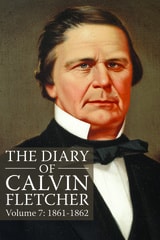
cover of The Diary of Calvin Fletcher, Volume 7: 1861-1862

The Diary of Calvin Fletcher, Volume 7

1861-1862

Gayle Thornbrough

Indiana Historical Society Press, 1980
Calvin Fletcher, born in Vermont in 1798, came to Indiana from Ohio in 1821, and in the next forty-five years made a fortune, raised eleven children, and was a pillar of the community. This pioneer Indianapolis lawyer, banker, and philanthropist kept a diary for most of his long life, and in it he recorded both the growth of his family and his community. Whether complaining, criticizing, observing shrewdly, or agonizing, Fletcher emerges as both a complex and unforgettable human being. Each of the set's nine volumes has a preface, chronology, and index. Volume nine includes a cumulative index.
[more]
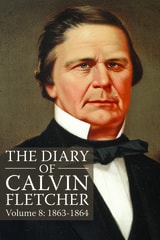
cover of The Diary of Calvin Fletcher, Volume 8: 1863-1864

The Diary of Calvin Fletcher, Volume 8

1863-1864

Gayle Thornbrough

Indiana Historical Society Press, 1981
Calvin Fletcher, born in Vermont in 1798, came to Indiana from Ohio in 1821, and in the next forty-five years made a fortune, raised eleven children, and was a pillar of the community. This pioneer Indianapolis lawyer, banker, and philanthropist kept a diary for most of his long life, and in it he recorded both the growth of his family and his community. Whether complaining, criticizing, observing shrewdly, or agonizing, Fletcher emerges as both a complex and unforgettable human being. Each of the set's nine volumes has a preface, chronology, and index. Volume nine includes a cumulative index.
[more]
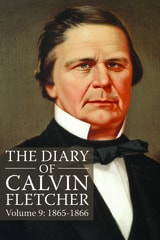
cover of The Diary of Calvin Fletcher, Volume 9: 1865-1866

The Diary of Calvin Fletcher, Volume 9

1865-1866

Gayle Thornbrough

Indiana Historical Society Press, 1983

Calvin Fletcher, born in Vermont in 1798, came to Indiana from Ohio in 1821, and in the next forty-five years made a fortune, raised eleven children, and was a pillar of the community. This pioneer Indianapolis lawyer, banker, and philanthropist kept a diary for most of his long life, and in it he recorded both the growth of his family and his community. Whether complaining, criticizing, observing shrewdly, or agonizing, Fletcher emerges as both a complex and unforgettable human being. Each of the set's nine volumes has a preface, chronology, and index. Volume nine includes a cumulative index.
[more]
cover of The Diary of Olga Romanov: Royal Witness to the Russian Revolution

The Diary of Olga Romanov

Royal Witness to the Russian Revolution

Helen Azar

Westholme Publishing, 2014

The First English Translation of the Wartime Diaries of the Eldest Daughter of Nicholas II, the Last Tsar of Russia, with Additional Documents of the Period
In August 1914, Russia entered World War I, and with it, the imperial family of Tsar Nicholas II was thrust into a conflict they would not survive. His eldest child, Olga Nikolaevna, great-granddaughter of Queen Victoria, had begun a diary in 1905 when she was ten years old and kept writing her thoughts and impressions of day-to-day life as a grand duchess until abruptly ending her entries when her father abdicated his throne in March 1917. Held at the State Archives of the Russian Federation in Moscow, Olga’s diaries during the wartime period have never been translated into English until this volume. At the outset of the war, Olga and her sister Tatiana worked as nurses in a military hospital along with their mother, Tsarina Alexandra. Olga’s younger sisters, Maria and Anastasia, visited the infirmaries to help raise the morale of the wounded and sick soldiers. The strain was indeed great, as Olga records her impressions of tending to the officers who had been injured and maimed in the fighting on the Russian front. Concerns about her sickly brother, Aleksei, abound, as well those for her father, who is seen attempting to manage the ongoing war. Gregori Rasputin appears in entries, too, in an affectionate manner as one would expect of a family friend. While the diaries reflect the interests of a young woman, her tone grows increasingly serious as the Russian army suffers setbacks, Rasputin is ultimately murdered, and a popular movement against her family begins to grow. At the point Olga ends her writing in 1917, the author continues the story by translating letters and impressions from family intimates, such as Anna Vyrubova, as well as the diary kept by Nicholas II himself. Finally, once the imperial family has been put under house arrest by the revolutionaries, we follow events through observations by Alexander Kerensky, head of the initial Provisional Government, these too in English translation for the first time. Olga would offer no further personal writings, as she and the rest of her family were crowded into the basement of a house in the Urals and shot to death in July 1918.
The Diary of Olga Romanov: Royal Witness to the Russian Revolution, translated and introduced by scientist and librarian Helen Azar, and supplemented with additional primary source material, is a remarkable document of a young woman who did not choose to be part of a royal family and never exploited her own position, but lost her life simply because of what her family represented.
[more]
cover of The Diary of Vaslav Nijinsky

The Diary of Vaslav Nijinsky

Vaslav Nijinsky

University of Illinois Press, 2006

A uniquely personal record of a great artist’s experience of mental illness

In his prime, Vaslav Nijinsky (1889-1950) was the most celebrated man in Western ballet--a virtuoso and a dramatic dancer such as European and American audiences had never seen before. After his triumphs in such works as The Specter of the Rose and Petrouchka, he set out to make ballets of his own, and with his Afternoon of a Faun and The Rite of Spring, created within a year of each other, he became ballet’s first modernist choreographer. 

For six weeks in early 1919, as his tie to reality was giving way, Nijinsky kept a diary--the only sustained daily record we have, by a major artist, of the experience of entering psychosis. In some entries he is filled with hope. He is God; he will save the world. In other entries, he falls into a black despair. He is dogged by sexual obsessions and grief over World War I. Furthermore, he is afraid that he is going insane.

The diary was first published in 1936, in a version heavily bowdlerized by Nijinsky’s wife. The new edition, translated by Kyril FitzLyon, is the first complete and accurate English rendering of this searing document. In her introduction, noted dance critic Joan Acocella tells Nijinsky’s story and places it in the context of early European modernism.
[more]
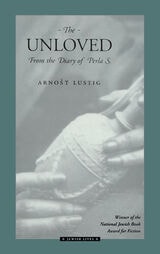
cover of The Unloved: From the Diary of Perla S.

The Unloved

From the Diary of Perla S.

Arnost Lustig

Northwestern University Press, 1996

Winner of the National Jewish Book Award for Fiction

Perla S. is a beautiful seventeen-year-old girl who, while interred in the Theresienstadt concentration camp, becomes a prostitute. Capturing Perla's voice through a series of diary entries, Arnost Lustig shows how she maintains her integrity, honesty, and hope amidst lies and horror. This first paperback edition has been extensively revised and expanded by the author.
[more]
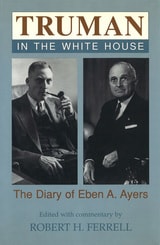
cover of Truman in the White House: The Diary of Eben A. Ayers

Truman in the White House

The Diary of Eben A. Ayers

Edited & Commentaries by Robert H. Ferrell

University of Missouri Press, 1991

As assistant press secretary to President Harry S. Truman, Eben A. Ayers brought with him twenty-six years of experience as a newspaperman.  He knew when he had a good story and knew how to record it.  His private diary, which he kept unbeknownst to his associates, tells the inside story of the Truman White House clearly, colorfully, and with an acute sense of history.

[more]