Results by title
808 books match the query 'Drama' and 218 start with t
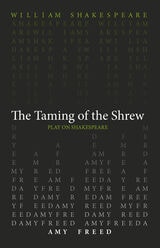
Taming of the Shrew
William Shakespeare
Arizona Center for Medieval and Renaissance Studies, 2022
While beloved for its sharp dialogue and witty banter, The Taming of the Shrew offers a problematic storyline that many have deemed misogynistic. The play contains insensitive gags and uneasy politics, making it difficult for modern audiences to connect with the text. Amy Freed’s new translation reactivates the original story, blowing away the dust and cobwebs. As Freed’s text reminds us, at its heart The Taming of the Shrew is a story about courage and authenticity.
This translation of The Taming of the Shrew was written as part of the Oregon Shakespeare Festival’s Play On! project, which commissioned new translations of thirty-nine Shakespeare plays. These translations present work from “The Bard” in language accessible to modern audiences while never losing the beauty of Shakespeare’s verse. Enlisting the talents of a diverse group of contemporary playwrights, screenwriters, and dramaturges from diverse backgrounds, this project reenvisions Shakespeare for the twenty-first century. These volumes make these works available for the first time in print—a new First Folio for a new era.

Teaching Shakespeare into the Twenty-First Century
Ronald E. Salomone
Ohio University Press, 1997
Shakespeare is a central shaping and defining figure in our culture. His plays are being taught, filmed, and performed every day in many places and in most of the world’s languages. At the same time, teachers and students from junior high through the early undergraduate years often struggle with the Bard in discomfort and negativity that can only be counter-productive.
Teaching Shakespeare into the Twenty-First Century is by teachers and for teachers. Specifically, it is a collection of essays in which teachers describe their best ideas and experiences as they confront the challenges of bringing Shakespeare alive for students who often feel intimidated and less than eager to participate.
It is on behalf of these students that this book has been prepared. Written by middle school, high school, and college teachers from around the country, the essays record successful efforts at bringing Shakespeare and the student together in fresh, exciting, and productive ways.
From today’s performance techniques, designed to make students active participants in the learning process, through a host of extra-textual resources such as festivals and films, to a look at applications of the computer and cyberspace, Teaching Shakespeare into the Twenty-First Century is a book of success stories.
Covering the most contemporary issues, critical theory, and classroom approach, it is designed to provide teachers with a useful, friendly, and forward-looking resource as they continue to make Shakespeare available into the future.
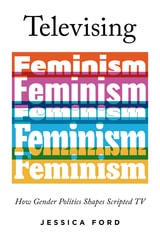
Televising Feminism
How Gender Politics Shapes Scripted TVJessica Ford
University of Illinois Press, 2026
Jessica Ford examines popular media’s tendency to apply the feminist label to all women-centric TV. Focusing on the post-Sex and the City era that began in 2005, Ford explores how women-centric scripted TV absorbed the feminisms of its past. It now televises these feminisms in divergent, diffuse, and distinct ways that find expression as a sensibility rather than a cogent politic, genre, or category. Ford’s analysis examines shows identified as feminist alongside programs that negotiate ideas, offer critiques, generate feelings and sentiments, and deploy aesthetics in both low-key and visible political ways.
Innovative and insightful, Televising Feminism looks at the construction and expression of the many feminisms at work on American scripted television.

Television Drama in Spain and Latin America
Genre and Format TranslationPaul Julian Smith
University of London Press, 2018
Teller Tales
HistoriesJo Carson
Ohio University Press, 2007
“All my work fits in my mouth,” Jo Carson says. “I write performance material no matter what else the pieces get called, and whether they are for my voice or other characters’ voices … they are first to be spoken aloud.” Following an oral tradition that has strong roots in her native Tennessee, the author of Teller Tales invites the reader to participate in events in a way that no conventional history book can.
Both stories in this book are set in East Tennessee in the mid-eighteenth century and share certain characters. The first narrative, “What Sweet Lips Can Do,” recounts the story of the Overmountain Men and the battle of King’s Mountain, a tide-turning battle in the American Revolution. “Men of Their Time” is an exploration of white-Cherokee relationships from early contact through the time of the Revolution.
Although not well known to the outside world, the stories recounted in Teller Tales are cornerstones in the heritage of the Appalachian region and of American history. In ways that will appeal to young and old alike, Jo Carson’s irreverent telling will broaden the audience and the understanding for the stories of native Americans, settlers, explorers, and revolutionaries of early America.

Temporary Stages II
Critically Oriented Drama EducationJo Beth Gonzalez
Intellect Books, 2013
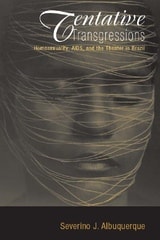
Tentative Transgressions
Homosexuality, AIDS, and the Theater in BrazilSeverino J. Albuquerque
University of Wisconsin Press, 2004
Starting at the beginning of the twentieth century, Albuquerque examines the way the Modernist movement both fueled and inhibited the use of gay imagery in Brazilian drama. This elegant and fluid study ultimately becomes an examination of a whole Latin society, and the ways in which Latin theatre has absorbed and reflected the culture's own changing sensibilities, that will intrigue anyone interested in Latin American culture, literature, or theater.
Winner, 2008 Elizabeth A. Steinberg Prize
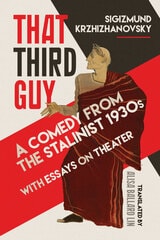
That Third Guy
A Comedy from the Stalinist 1930s with Essays on TheaterSigizmund Krzhizhanovsky, Translated and edited by Alisa Ballard Lin, Foreword by Caryl Emerson
University of Wisconsin Press, 2018
The volume also features selections from Krzhizhanovsky's compelling and idiosyncratic essays on Shakespeare, Pushkin, Shaw, and the philosophy of theater. Professionally, he worked with director Alexander Tairov at the Moscow Kamerny Theater, and his original philosophy of the stage bears comparison with the great theater theorists of the twentieth century. In these writings, he reflects on the space and time of the theater, the resonance of language onstage, the experience of the actor, and the relationship between the theater and the everyday. Commentary by Alisa Ballard Lin and Caryl Emerson contextualizes Krzhizhanovsky's writings.
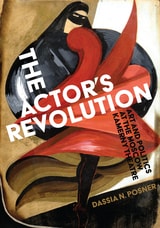
The Actor’s Revolution
Art and Politics at the Moscow Kamerny TheatreDassia N. Posner
Northwestern University Press, 2027
Reclaims the lost history of one of the twentieth century’s most innovative theaters
The Moscow Kamerny Theatre created stage worlds of movement, color, and light. Cofounded in 1914 by Alexander Tairov, a Jewish director from Ukraine, and Alisa Koonen, a Moscow-born actress from an immigrant family, the company celebrated the actor’s virtuosic inventiveness during an era when most theaters imitated daily life or prioritized the autocratic director’s vision. By the 1920s, it had become the most famous Soviet theater in the world, renowned for its actors’ acrobatic grace, its bold collaborations with avant-garde artists, and its revolutionary redefinition of what theater can be. But the accusations of Soviet disloyalty that were used to destroy the Kamerny during Stalin’s post–World War II antisemitic purge have rendered it little known outside Russia today and frequently misunderstood even there.
The Actor’s Revolution vividly reclaims this lost history by reconstructing the theater’s most illustrious premieres, analyzing them within the turbulent artistic and political context of the early Soviet era. Drawing on a decade of archival research, Dassia N. Posner restores Tairov’s legacy as one of history’s most significant directors and celebrates Koonen’s liberatory creative expressiveness as a vital alternative to Konstantin Stanislavsky’s better-known acting system. Building on rich archival sources, from unpublished memoirs to vibrant scenic and costume designs, this timely volume grapples with the entangled histories of art, politics, and erasure and celebrates the radical power of human creativity under—and in spite of—totalitarianism.
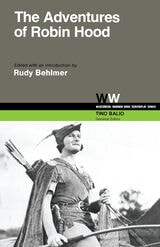
The Adventures of Robin Hood
Edited, with an introduction by Rudy Behlmer; Tino T. Balio, Series Editor
University of Wisconsin Press, 1979
For sheer screen entertainment, few motion pictures have ever matched the 1938 Warner Brothers production of The Adventures of Robin Hood. Even today, after more than four decades. Errol Flynn's dashing performance places this picture high in any list of all-time favorites.
It is one of the most studied of motion pictures, not only because of its popularity but also because of the extremely high level of talent brought to bear in its creation and the sharply honed production and editing techniques that allow an incredible amount of action and movement in the 102 minutes of the film.
Includes the complete screenplay.
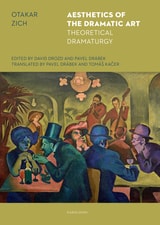
The Aesthetics of the Dramatic Art
Otakar Zich
Karolinum Press, 2024
Originally published in 1931, Otakar Zich’s Aesthetics of Dramatic Art laid the foundation for a systematic theory of modern theater and helped establish theater studies as an academic discipline. This volume is the first complete translation into any language and alongside Theatre Theory Reader: Prague School Writings provides thorough insight into Czech dramatic thought. Studying the theater from the audience’s perspective, Zich argues that the distinctive basis of dramatic art is human interaction rather than imitation, communication, fiction, or performed dialogue, as other theorists have argued. Covering spoken drama and opera, Zich’s Aesthetics of Dramatic Art is a foundational text of Czech theater practice that remains inspirational today for theater practitioners and theorists.
The Age and Stage of George L. Fox, 1825-1877
1825-1877Laurence Senelick
University of Iowa Press, 1999
The Agon in Classical Literature
Studies in Honour of Professor Chris CareyEdited by Michael Edwards, Athanasios Efstathiou, Ioanna Karamanou, and Eleni Volonaki
University of London Press, 2022
The papers collected in this volume are offered by colleagues and former students in honor of Chris Carey, emeritus professor of Greek at University College London. The multifaceted topic of the agon, or contest of word, and its varying representations in Greek literature aptly corresponds to the outstanding variety of Carey’s research interests, which include the works of Homer, lyric poetry, drama, law, rhetoric, and historiography. This volume sets out to reflect on facets of the agon across these literary genres and the pivotal role of competition in ancient Greek thought. It aims to explore the wide range of agonal dynamics, and their generic and cultural value, as well as stimulating fresh discussions under a broad spectrum of theoretical and methodological approaches.
The Arabian Nights
A PlayMary Zimmerman
Northwestern University Press, 2005
The Architecture of Story
A Technical Guide for the Dramatic WriterWill Dunne
University of Chicago Press, 2016
Through his workshops and book The Dramatic Writer’s Companion, Will Dunne has helped thousands of writers develop successful scripts. Now, in The Architecture of Story, he helps writers master the building blocks of dramatic storytelling by analyzing a trio of award-winning contemporary American plays: Doubt: A Parable by John Patrick Shanley, Topdog/Underdog by Suzan-Lori Parks, and The Clean House by Sarah Ruhl. Dismantling the stories and examining key components from a technical perspective enables writers to approach their own work with an informed understanding of dramatic architecture.
Each self-contained chapter focuses on one storytelling component, ranging from “Title” and “Main Event” to “Emotional Environment” and “Crisis Decision.” Dunne explores each component in detail, demonstrating how it has been successfully handled in each play and comparing and contrasting techniques. The chapters conclude with questions to help writers evaluate and improve their own scripts. The result is a nonlinear reference guide that lets writers work at their own pace and choose the topics that interest them as they develop new scripts. This flexible, interactive structure is designed to meet the needs of writers at all stages of writing and at all levels of experience.
The Audience Experience
A Critical Analysis of Audiences in the Performing ArtsEdited by Jennifer Radbourne, Hilary Glow, and Katya Johanson
Intellect Books, 2013
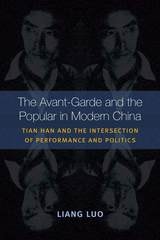
The Avant-Garde and the Popular in Modern China
Tian Han and the Intersection of Performance and PoliticsLiang Luo
University of Michigan Press, 2014
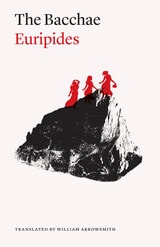
The Bacchae
Euripides
University of Chicago Press, 2013
A stand-alone edition of Euripides’s The Bacchae taken from Chicago’s renowned translations of the Greek tragedies.
Dionysus, son of Zeus, has journeyed to the land of his birth expecting to be received as a god. After being rejected by his kin, he turns to the women of Thebes, driving them into a delirious frenzy. Dressed in animal skins and crowned with leaves, they roam wild in the hills as the king tries to restore order—with horrifying results.
Written in the final years of Euripides’s life and first staged posthumously, The Bacchae is presented here in William Arrowsmith’s energetic translation, drawn from the authoritative third edition of the University of Chicago Press’s Complete Greek Tragedies series. An introduction by Mark Griffith and Glenn W. Most provides essential information about The Bacchae’s first production, plot, and reception in antiquity, and an appendix presents Arrowsmith’s hypothetical reconstruction of fifty lines missing from the denouement of the play.

The Bakkhai
Robert Euripides
University of Massachusetts Press, 1978
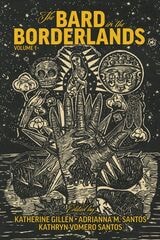
The Bard in the Borderlands
An Anthology of Shakespeare Appropriations en La Frontera, Volume 1Edited by Katherine Gillen, Adrianna M. Santos, and Kathryn Vomero Santos
Arizona Center for Medieval and Renaissance Studies, 2023
For several decades, Chicanx and Indigenous theatermakers have been repurposing Shakespeare’s plays to reflect the histories and lived realities of the US–Mexico Borderlands and to create space to tell stories of and for La Frontera. Celebrating this rich tradition, The Bard in the Borderlands: An Anthology of Shakespeare Appropriations en La Frontera brings a wide range of Borderlands Shakespeare plays together for the first time in a multi-volume open-access scholarly edition.
This anthology celebrates the dynamic, multilingual reworking of canon and place that defines Borderlands Shakespeare, and it situates these geographically and temporally diverse plays within the robust study of Shakespeare’s global afterlives. The editors offer a critical framework for understanding the artistic and political traditions that shape these plays and the place of Shakespeare within the multilayered colonial histories of the region. Borderlands Shakespeare plays, they contend, do not simply reproduce Shakespeare in new contexts but rather use his work in innovative ways to negotiate colonial power and to envision socially just futures.
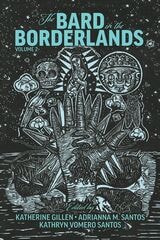
The Bard in the Borderlands
An Anthology of Shakespeare Appropriations en La Frontera, Volume 2Edited by Katherine Gillen, Adrianna M. Santos, and Kathryn Vomero Santos
Arizona Center for Medieval and Renaissance Studies, 2024
For decades, Chicanx and Indigenous theater-makers have worked to repurpose the plays of William Shakespeare to reflect the histories and lived realities of the United States–Mexico Borderlands, or La Frontera. Celebrating this rich tradition, The Bard in the Borderlands brings a wide range of Borderlands Shakespeare plays together for the first time in a multi-volume, open-access scholarly edition, creating space to tell stories of and for this complex and important region.
This second volume continues to celebrate the dynamic, multilingual reworking of canon and place that defines Borderlands Shakespeare, situating geographically and temporally diverse plays within the robust study of Shakespeare’s global afterlives.
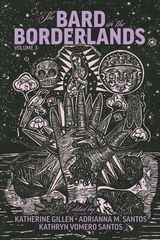
The Bard in the Borderlands
An Anthology of Shakespeare Appropriations en La Frontera, Volume 3Edited by Katherine Gillen, Adrianna M. Santos, and Kathryn Vomero Santos
Arizona Center for Medieval and Renaissance Studies, 2026
The third volume in the anthology, featuring a wide range of plays that reimagine Shakespeare works from Borderlands perspectives.
For several decades, Chicanx and Indigenous theatermakers have been repurposing Shakespeare’s plays to reflect the histories and lived realities of the US–Mexico Borderlands and to create space to tell stories of and for La Frontera. Celebrating this rich tradition, The Bard in the Borderlands: An Anthology of Shakespeare Appropriations en La Frontera brings a wide range of Borderlands Shakespeare plays together for the first time in a multi-volume open-access scholarly edition. This anthology celebrates the dynamic, multilingual reworking of canon and place that defines Borderlands Shakespeare, and it situates these geographically and temporally diverse plays within the robust study of Shakespeare’s global afterlives.
The plays featured in this volume diverge drastically from Shakespeare, bringing elements of Hamlet, Henry IV, Part 1, Macbeth, and The Tempest into a range of subcultures that challenge dominant structures of power. In so doing, they remix and revise intersecting histories and traditions to heal colonial wounds and to call forth new worlds for fronterizos.
The Birth of Theater from the Spirit of Philosophy
Nietzsche and the Modern DramaDavid Kornhaber
Northwestern University Press, 2016
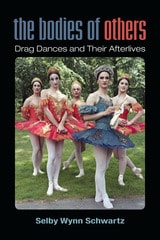
The Bodies of Others
Drag Dances and Their AfterlivesSelby Wynn Schwartz
University of Michigan Press, 2019
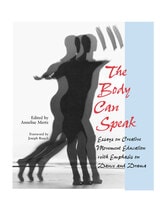
The Body Can Speak
Essays on Creative Movement Education with Emphasis on Dance and DramaEdited by Annelise Mertz. Foreword by Joseph Roach
Southern Illinois University Press, 2002
Movement is our first language, our universal language. Expression of body movement is the very basis of life as the nineteen contributors to The Body Can Speak: Essays on Creative Movement Education with Emphasis on Dance and Drama attest. Students use their bodies as an instrument of expression, and movement as medium; this means investigating space, energy, time, and motion in order to gain insight into these basic principles. At the same time they gain essential awareness of the self. Such work stimulates the senses and intellect, and develops a tangible new vision to satisfy the human need for aesthetic and artistic expression.
As editor of this collection, accomplished dancer and artistic director Annelise Mertz provides both an aesthetic appreciation for creative movement education as well as practical pedagogy for incorporating dance and drama into contemporary curriculum. Mertz has assembled here a definitive body of work from fellow artists and former students that speaks to the need to actively promote art as part of education.
The book gives voice to accomplished teachers, actors, dancers, directors, authors, and choreographers who share their experiences while they address creative movement education from preschool through college. Forty-eight photographs add an illuminating visual dimension to this wealth of stimulating ideas. The Body Can Speak provides a balanced and varied mosaic, with each essay offering evidence that creative movement education is vital for human development.
Contributors include Becky Engler-Hicks, Ruth Grauert, Anna Halprin, Joanna G. Harris, Margaret N. H’Doubler, Michael Hoeye, Murray Louis, Annelise Mertz, Jaime Nisenbaum, Carol North, Jeff Rehg, Shirley Ririe, G. Hoffman Soto, Emma D. Sheehy, Harold Taylor, Branislav Tomich, Dorothy M. Vislocky, and Joan J. Woodbury.
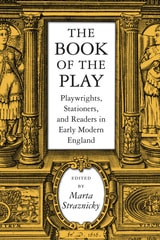
The Book of the Play
Playwrights, Stationers, and Readers in Early Modern EnglandMarta Straznicky
University of Massachusetts Press, 2006
The Book of the Play is a collection of essays that examines early modern drama in the context of book history. Focusing on the publication, marketing, and readership of plays opens fresh perspectives on the relationship between the cultures of print and performance and more broadly between drama and the public sphere. Marta Straznicky's introduction offers a survey of approaches to the history of play reading in this period, and the collection as a whole consolidates recent work in textual, bibliographic, and cultural studies of printed drama.
Individually, the essays advance our understanding of play reading as a practice with distinct material forms, discourses, social settings, and institutional affiliation. Part One, “Real and Imagined Communities,” includes four essays on play-reading communities and the terms in which they are distinguished from the reading public at large. Cyndia Clegg surveys the construction of readers in prefaces to published plays; Lucy Munro traces three separate readings of a single play, Edward Sharpham's The Fleer; Marta Straznicky studies women as readers of printed drama; and Elizabeth Sauer describes how play reading was mobilized for political purposes in the period of the Civil War.
In Part Two, “Play Reading and the Book Trade,” five essays consider the impact of play reading on the public sphere through the lens of publishing practices. Zachary Lesser offers a revisionist account of black-letter typeface and the extent to which it may be understood as an index of popular culture; Alan Farmer examines how the emerging news trade of the 1620s and 1630s affected the marketing of printed drama; Peter Berek traces the use of generic terms on title pages of plays to reveal their intersection with the broader culture of reading; Lauren Shohet demonstrates that the Stuart masque had a parallel existence in the culture of print; and Douglas Brooks traces the impact print had on eclipsing performance as the medium in which the dramatist could legitimately lay claim to having authored his text.
The individual essays focus on selected communities of readers, publication histories, and ideologies and practices of reading; the collection as a whole demonstrates the importance of textual production and reception to understanding the place of drama in the early modern public sphere.

The Bride of Quietness and Other Plays
Oscar Firkins
University of Minnesota Press, 1932
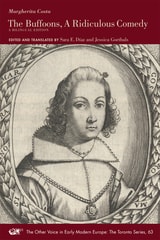
The Buffoons, A Ridiculous Comedy
A Bilingual EditionMargherita Costa
Iter Press, 2018
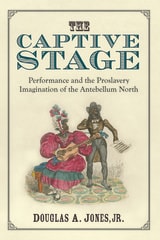
The Captive Stage
Performance and the Proslavery Imagination of the Antebellum NorthDouglas A. Jones, Jr.
University of Michigan Press, 2014
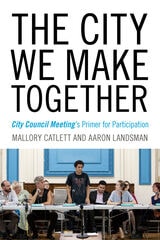
The City We Make Together
City Council Meeting's Primer for ParticipationMallory Catlett
University of Iowa Press, 2022
The City We Make Together looks at how we make art with communities, how we perform power and who gets to play which roles, and how we might use creativity and rigorous inquiry to look at our structures of democracy anew.
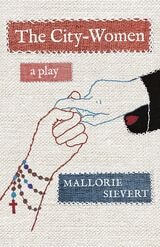
The City-Women
Mallorie Sievert
Carnegie Mellon University Press, 2026
This debut play from Mallorie Sievert follows what happens after two nuns fall in love.
When two young nuns in a seventeenth-century cloistered convent discover their feelings for each other, they must decide whether to conform to the life that was chosen for them or forge their own path and discover who God truly wants them to be. Set against the backdrop of Latin America during the Counter-Reformation, The City-Women explores love, spirituality, and sisterhood, and seeks to redefine what it means to be queer in the eyes of God.
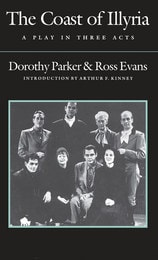
The Coast of Illyria
A Play in Three ActsDorothy Parker
University of Iowa Press, 1990
The Comedy of Errors
William Shakespeare
Arizona Center for Medieval and Renaissance Studies, 2022
One of Shakespeare’s earliest plays, The Comedy of Errors is a farcical tale of separated twins and mistaken identities. This slapstick play is a staple of the genre, including madcap bawdiness, love at first sight, reunions, and happily-ever-afters. Christina Anderson’s translation dives deep into the joy of the original text, reinterpreting the metaphor, antiquated slang, and double and triple entendre for a contemporary audience.
This translation of The Comedy of Errors was written as part of the Oregon Shakespeare Festival’s Play On! project, which commissioned new translations of thirty-nine Shakespeare plays. These translations present work from “The Bard” in language accessible to modern audiences while never losing the beauty of Shakespeare’s verse. Enlisting the talents of a diverse group of contemporary playwrights, screenwriters, and dramaturges from diverse backgrounds, this project reenvisions Shakespeare for the twenty-first century. These volumes make these works available for the first time in print—a new First Folio for a new era.
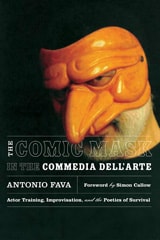
The Comic Mask in the Commedia dell'Arte
Actor Training, Improvisation, and the Poetics of SurvivalAntonio Fava
Northwestern University Press, 2007
Nobody says Shakespeare is dead, Antonio Fava tells us, but Commedia, they say, is dead. Why? Because clearly, he goes on, we have Shakespeare's texts, but nobody knows what to do with the improvisation that is the basis of the Commedia dell'Arte, despite massive documentation. This book by Fava, one of the few living master teachers of Commedia dell'Arte, is the first aesthetic and methodological study of the traditional Italian theater form--the first to describe, in a precise and practical way, what Commedia is and what it should be.
The mask--as object, symbol, character, theatrical practice, even spectacle itself--is the central metaphor around which Fava builds his discussion of structure, themes, characters, and methods. Drawing on twenty years of research conducted through his work as performer, director, mask maker, and scholar, he offers extensive practical, philosophical, and technical guidelines to performing the stock characters of Commedia, observing its structure, extracting its poetics, exploring its themes, and using the mask. A densely layered text combining historical fact, personal experience, philosophical speculation, and passionate opinion, and including copious illustrations--period drawings, prints, and color photographs of leather Commedia masks made by Fava himself--The Comic Mask in the Commedia dell'Arte is a rich work of singular insight into one of the world's most venerable forms of theater.

The Comic Spirit of Federico Garcia Lorca
By Virginia Higginbotham
University of Texas Press, 1976
During the years since his death, Federico García Lorca, Spain's best-known twentieth-century poet and playwright, has generally been considered a writer of tragedy. Three of his major plays are fatalistic stories of suffering and death, and his poetry is filled with dread. Yet most of Lorca's dramatic production consists of comedies and farces. Throughout his poetry and prose, as well as in his most somber plays, runs an undercurrent of humor—dark irony and satire—that is in no way contradictory to his tragic view of life. On the contrary, as Virginia Higginbotham demonstrates, through humor Lorca defines, intensifies, and tries to come to terms with what he sees as the essentially hopeless condition of humankind.
Although Lorca's comic moments and techniques have been discussed in isolated articles, the importance of humor has largely been ignored in the fundamental studies of his work. Higginbotham is concerned with Lorca's total output: lyric poetry, tragicomedies and farces, avant-garde prose and plays, puppet farces, and master plays. She describes Lorca's place in the mainstream of the Spanish theater and shows his relationship to some relevant non-Spanish dramatists. Furthermore, she discusses ways in which Lorca's work anticipates the modern theater of the absurd. The result is a comprehensive study of an important, but previously ignored, aspect of Lorca's work.
The Comic Spirit of Federico García Lorca includes a Lorca chronology and an extensive bibliography.

The Complete Greek Tragedies, Volume 1
AeschylusEdited by David Grene and Richmond Lattimore
University of Chicago Press, 1992
For the Centennial Edition two of the original translations have been replaced. In the original publication David Grene translated only one of the three Theban plays, Oedipus the King. Now he has added his own translations of the remaining two, Oedipus at Colonus and Antigone, thus bringing a new unity of tone and style to this group. Grene has also revised his earlier translation of Prometheus Bound and rendered some of the former prose sections in verse. These new translations replace the originals included in the paperback volumes Sophocles I (which contains all three Theban plays), Aeschylus II, Greek Tragedies, Volume I, and Greek Tragedies, Volume III, all of which are now being published in second editions.
All other volumes contain the translations of the tragedies of Aeschylus, Sophocles, and Euripides for the most part from the original versions first published in the 1940s and 1950s. These translations have been the choice of generations of teachers and students, selling in the past forty years over three million copies.
The Complete Greek Tragedies, Volume 2
SophoclesEdited by David Grene and Richmond Lattimore
University of Chicago Press, 1992
For the Centennial Edition two of the original translations have been replaced. In the original publication David Grene translated only one of the three Theban plays, Oedipus the King. Now he has added his own translations of the remaining two, Oedipus at Colonus and Antigone, thus bringing a new unity of tone and style to this group. Grene has also revised his earlier translation of Prometheus Bound and rendered some of the former prose sections in verse. These new translations replace the originals included in the paperback volumes Sophocles I (which contains all three Theban plays), Aeschylus II, Greek Tragedies, Volume I, and Greek Tragedies, Volume III, all of which are now being published in second editions.
All other volumes contain the translations of the tragedies of Aeschylus, Sophocles, and Euripides for the most part from the original versions first published in the 1940s and 1950s. These translations have been the choice of generations of teachers and students, selling in the past forty years over three million copies.
The Complete Greek Tragedies, Volume 3
EuripidesEdited by David Grene and Richmond Lattimore
University of Chicago Press, 1992
For the Centennial Edition two of the original translations have been replaced. In the original publication David Grene translated only one of the three Theban plays, Oedipus the King. Now he has added his own translations of the remaining two, Oedipus at Colonus and Antigone, thus bringing a new unity of tone and style to this group. Grene has also revised his earlier translation of Prometheus Bound and rendered some of the former prose sections in verse. These new translations replace the originals included in the paperback volumes Sophocles I (which contains all three Theban plays), Aeschylus II, Greek Tragedies, Volume I, and Greek Tragedies, Volume III, all of which are now being published in second editions.
All other volumes contain the translations of the tragedies of Aeschylus, Sophocles, and Euripides for the most part from the original versions first published in the 1940s and 1950s. These translations have been the choice of generations of teachers and students, selling in the past forty years over three million copies.
The Complete Greek Tragedies, Volume 4
EuripidesEdited by David Grene and Richmond Lattimore
University of Chicago Press, 1992
For the Centennial Edition two of the original translations have been replaced. In the original publication David Grene translated only one of the three Theban plays, Oedipus the King. Now he has added his own translations of the remaining two, Oedipus at Colonus and Antigone, thus bringing a new unity of tone and style to this group. Grene has also revised his earlier translation of Prometheus Bound and rendered some of the former prose sections in verse. These new translations replace the originals included in the paperback volumes Sophocles I (which contains all three Theban plays), Aeschylus II, Greek Tragedies, Volume I, and Greek Tragedies, Volume III, all of which are now being published in second editions.
All other volumes contain the translations of the tragedies of Aeschylus, Sophocles, and Euripides for the most part from the original versions first published in the 1940s and 1950s. These translations have been the choice of generations of teachers and students, selling in the past forty years over three million copies.
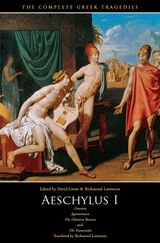
The Complete Greek Tragedies
Aeschylus IEdited by David Grene and Richmond Lattimore
University of Chicago Press, 1969
"This is it. No qualifications. Go out and buy it everybody."—Kenneth Rexroth, The Nation
"The translations deliberately avoid the highly wrought and affectedly poetic; their idiom is contemporary....They have life and speed and suppleness of phrase."—Times Education Supplement
"These translations belong to our time. A keen poetic sensibility repeatedly quickens them; and without this inner fire the most academically flawless rendering is dead."—Warren D. Anderson, American Oxonian
"The critical commentaries and the versions themselves...are fresh, unpretentious, above all, functional."—Commonweal
"Grene is one of the great translators."—Conor Cruise O'Brien, London Sunday Times
"Richmond Lattimore is that rara avis in our age, the classical scholar who is at the same time an accomplished poet."—Dudley Fitts, New York Times Book Review
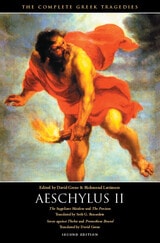
The Complete Greek Tragedies
Aeschylus IIEdited by David Grene and Richmond Lattimore
University of Chicago Press, 1991
For the Centennial Edition two of the original translations have been replaced. In the original publication David Grene translated only one of the three Theban plays, Oedipus the King. Now he has added his own translations of the remaining two, Oedipus at Colonus and Antigone, thus bringing a new unity of tone and style to this group. Grene has also revised his earlier translation of Prometheus Bound and rendered some of the former prose sections in verse. These new translations replace the originals included in the paperback volumes Sophocles I (which contains all three Theban plays), Aeschylus II, Greek Tragedies, Volume I, and Greek Tragedies, Volume III, all of which are now being published in second editions.
All other volumes contain the translations of the tragedies of Aeschylus, Sophocles, and Euripides for the most part from the original versions first published in the 1940s and 1950s. These translations have been the choice of generations of teachers and students, selling in the past forty years over three million copies.
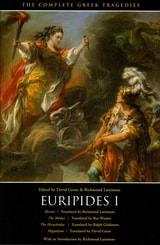
The Complete Greek Tragedies
Euripides IEdited by David Grene and Richmond Lattimore
University of Chicago Press, 1955

The Complete Greek Tragedies
Euripides IIEdited by David Grene and Richmond Lattimore
University of Chicago Press, 1956
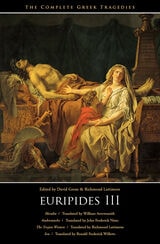
The Complete Greek Tragedies
Euripides IIIEdited by David Grene and Richmond Lattimore
University of Chicago Press, 1992
"These authoritative translations consign all other complete collections to the wastebasket."—Robert Brustein, The New Republic
"This is it. No qualifications. Go out and buy it everybody."—Kenneth Rexroth, The Nation
"The translations deliberately avoid the highly wrought and affectedly poetic; their idiom is contemporary....They have life and speed and suppleness of phrase."—Times Education Supplement
"These translations belong to our time. A keen poetic sensibility repeatedly quickens them; and without this inner fire the most academically flawless rendering is dead."—Warren D. Anderson, American Oxonian
"The critical commentaries and the versions themselves...are fresh, unpretentious, above all, functional."—Commonweal
"Grene is one of the great translators."—Conor Cruise O'Brien, London Sunday Times
"Richmond Lattimore is that rara avis in our age, the classical scholar who is at the same time an accomplished poet."—Dudley Fitts, New York Times Book Review
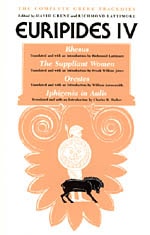
The Complete Greek Tragedies
Euripides IVEdited by David Grene and Richmond Lattimore
University of Chicago Press, 1968
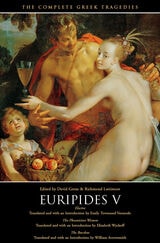
The Complete Greek Tragedies
Euripides VEdited by David Grene and Richmond Lattimore
University of Chicago Press, 1969
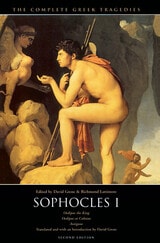
The Complete Greek Tragedies
Sophocles IEdited by David Grene
University of Chicago Press, 1991
"This is it. No qualifications. Go out and buy it everybody."—Kenneth Rexroth, The Nation
"The translations deliberately avoid the highly wrought and affectedly poetic; their idiom is contemporary....They have life and speed and suppleness of phrase."—Times Education Supplement
"These translations belong to our time. A keen poetic sensibility repeatedly quickens them; and without this inner fire the most academically flawless rendering is dead."—Warren D. Anderson, American Oxonian
"The critical commentaries and the versions themselves...are fresh, unpretentious, above all, functional."—Commonweal
"Grene is one of the great translators."—Conor Cruise O'Brien, London Sunday Times
"Richmond Lattimore is that rara avis in our age, the classical scholar who is at the same time an accomplished poet."—Dudley Fitts, New York Times Book Review
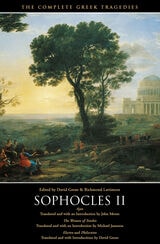
The Complete Greek Tragedies
Sophocles IIEdited by David Grene and Richmond Lattimore
University of Chicago Press, 1969
"This is it. No qualifications. Go out and buy it everybody."—Kenneth Rexroth, The Nation
"The translations deliberately avoid the highly wrought and affectedly poetic; their idiom is contemporary....They have life and speed and suppleness of phrase."—Times Education Supplement
"These translations belong to our time. A keen poetic sensibility repeatedly quickens them; and without this inner fire the most academically flawless rendering is dead."—Warren D. Anderson, American Oxonian
"The critical commentaries and the versions themselves...are fresh, unpretentious, above all, functional."—Commonweal
"Grene is one of the great translators."—Conor Cruise O'Brien, London Sunday Times
"Richmond Lattimore is that rara avis in our age, the classical scholar who is at the same time an accomplished poet."—Dudley Fitts, New York Times Book Review
The Complete Tragedies, Volume 1
Medea, The Phoenician Women, Phaedra, The Trojan Women, OctaviaLucius Annaeus Seneca
University of Chicago Press, 2017
Edited by world-renowned classicists Elizabeth Asmis, Shadi Bartsch, and Martha C. Nussbaum, the Complete Works of Lucius Annaeus Seneca series offers authoritative, modern English translations of the writings of the Stoic philosopher and playwright (4 BCE–65 CE). The two volumes of The Complete Tragedies present all of his dramas, expertly rendered by preeminent scholars and translators.
This first volume contains Medea, The Phoenician Women, Phaedra, The Trojan Women, and Octavia, the last of which was written in emulation of Senecan tragedies and serves as a unique example of political tragedy. High standards of accuracy, clarity, and style are maintained throughout the translations, which render Seneca into verse with as close a correspondence, line for line, to the original as possible, and with special attention paid to meter and overall flow. In addition, each tragedy is prefaced by an original translator’s introduction offering reflections on the work’s context and meaning. Notes are provided for the reader unfamiliar with the culture and history of classical antiquity. Accordingly, The Complete Tragedies will be of use to a general audience and professionals alike, from the Latinless student to scholars and instructors of comparative literature, classics, philosophy, drama, and more.
The Complete Tragedies, Volume 2
Oedipus, Hercules Mad, Hercules on Oeta, Thyestes, AgamemnonLucius Annaeus Seneca
University of Chicago Press, 2017
Edited by world-renowned classicists Elizabeth Asmis, Shadi Bartsch, and Martha C. Nussbaum, the Complete Works of Lucius Annaeus Seneca offers authoritative, modern English translations of the writings of the Stoic philosopher and playwright (4 BCE–65 CE). The two volumes of The Complete Tragedies presents all of his dramas, expertly rendered by preeminent scholars and translators.
The first volume contains Medea, The Phoenician Women, Phaedra, The Trojan Women, and Octavia, the last of which was written in emulation of Senecan tragedies and serves as a unique example of political tragedy. This second volume includes Oedipus, Hercules Mad, Hercules on Oeta, Thyestes, and Agamemnon. High standards of accuracy, clarity, and style are maintained throughout the translations, which render Seneca into verse with as close a correspondence, line for line, to the original as possible, and with special attention paid to meter and overall flow. In addition, each tragedy is prefaced by an original translator’s introduction offering reflections on the work’s context and meaning. Notes are provided for the reader unfamiliar with the culture and history of classical antiquity. Accordingly, The Complete Tragedies will be of use to a general audience and professionals alike, from the Latinless student to scholars and instructors of comparative literature, classics, philosophy, drama, and more.