Results by title
104 books match the query 'Earth' and 30 start with t
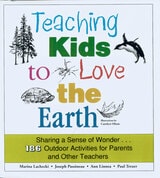
Teaching Kids To Love The Earth
Marina Lachecki
University of Minnesota Press, 2002
Teaching Kids to Love the Earth is a collection of 186 earth-caring activities designed for use with children of all ages to help them experience and appreciate the earth. This book leads you through the authors’ Sense of Wonder Circle: curiosity, exploration, discovery, sharing, and passion. Each chapter contains a story, instructions for a main activity, suggestions for related activities, and a lsit of additional resources. Teaching Kids to Love the Earth will enable you and the children you work with to experience a “sense of wonder” about the world we share.
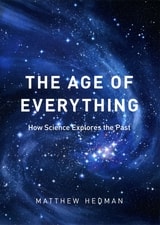
The Age of Everything
How Science Explores the PastMatthew Hedman
University of Chicago Press, 2007
Hedman details, for example, how interdisciplinary studies of the Great Pyramids of Egypt can determine exactly when and how these incredible structures were built. He shows how the remains of humble trees can illuminate how the surface of the sun has changed over the past ten millennia. And he also explores how the origins of the earth, solar system, and universe are being discerned with help from rocks that fall from the sky, the light from distant stars, and even the static seen on television sets.
Covering a wide range of time scales, from the Big Bang to human history, The Age of Everything is a provocative and far-ranging look at how science has determined the age of everything from modern mammals to the oldest stars, and will be indispensable for all armchair time travelers.
“We are used to being told confidently of an enormous, measurable past: that some collection of dusty bones is tens of thousands of years old, or that astronomical bodies have an age of some billions. But how exactly do scientists come to know these things? That is the subject of this quite fascinating book. . . . As told by Hedman, an astronomer, each story is a marvel of compressed exegesis that takes into account some of the most modern and intriguing hypotheses.”—Steven Poole, Guardian
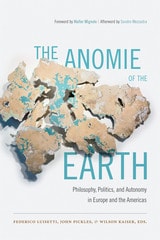
The Anomie of the Earth
Philosophy, Politics, and Autonomy in Europe and the AmericasFederico Luisetti, John Pickles, and Wilson Kaiser, eds.
Duke University Press, 2015
Contributors. Joost de Bloois, Jodi A. Byrd, Gustavo Esteva, Silvia Federici, Wilson Kaiser, Mara Kaufman, Frans-Willem Korsten, Federico Luisetti, Sandro Mezzadra, Walter D. Mignolo, Benjamin Noys, John Pickles, Alvaro Reyes, Catherine Walsh, Gareth Williams, Zac Zimmer
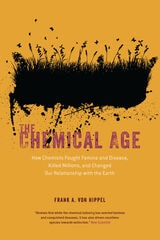
The Chemical Age
How Chemists Fought Famine and Disease, Killed Millions, and Changed Our Relationship with the EarthFrank A. von Hippel
University of Chicago Press, 2020
For thousands of years, we’ve found ways to scorch, scour, and sterilize our surroundings to make them safer. Sometimes these methods are wonderfully effective. Often, however, they come with catastrophic consequences—consequences that aren’t typically understood for generations.
The Chemical Age tells the captivating story of the scientists who waged war on famine and disease with chemistry. With depth and verve, Frank A. von Hippel explores humanity’s uneasy coexistence with pests, and how their existence, and the battles to exterminate them, have shaped our modern world. Beginning with the potato blight tragedy of the 1840s, which led scientists on an urgent mission to prevent famine using pesticides, von Hippel traces the history of pesticide use to the 1960s, when Rachel Carson’s Silent Spring revealed that those same chemicals were insidiously damaging our health and driving species toward extinction. Telling the story of these pesticides in vivid detail, von Hippel showcases the thrills and complex consequences of scientific discovery. He describes the invention of substances that could protect crops, the emergence of our understanding of the way diseases spread, the creation of chemicals used to kill pests and people, and, finally, how scientists turned those wartime chemicals on the landscape at a massive scale, prompting the vital environmental movement that continues today.
The Chemical Age is a dynamic, sweeping history that exposes how humankind’s affinity for pesticides made the modern world possible—while also threatening its essential fabric.
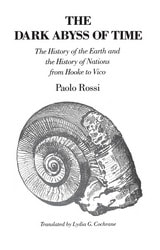
The Dark Abyss of Time
The History of the Earth and the History of Nations from Hooke to VicoPaolo Rossi
University of Chicago Press, 1984
"This book, by a distinguished Italian historian of philosophy, is a worthy successor to the author's important works on Francis Bacon and on technology and the arts. First published in Italian (in 1979), it now makes available to English readers some subtly wrought arguments about the ways in which geology and anthropology challenged biblical chronology and forced changes in the philosophy of history in the early modern era. . . . [Rossi] shows that the search for new answers about human origins spanned many disciplines and involved many fascinating intellects—Bacon, Bayle, Buffon, Burnet, Descartes, Hobbes, Holbach, Hooke, Hume, Hutton, Leibniz, de Maillet, Newton, Pufendorf, Spinoza, Toland, and, most especially, Vico, whose works are impressively and freshly reevaluated here."—Nina Gelbart, American Scientist
The Dialogue of Earth and Sky
Dreams, Souls, Curing, and the Modern Aztec UnderworldTimothy J. Knab
University of Arizona Press, 2004
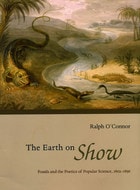
The Earth on Show
Fossils and the Poetics of Popular Science, 1802-1856Ralph O'Connor
University of Chicago Press, 2007
Shrewd science-writers, O’Connor shows, marketed spectacular visions of past worlds, piquing the public imagination with glimpses of man-eating mammoths, talking dinosaurs, and sea-dragons spawned by Satan himself. These authors—including men of science, women, clergymen, biblical literalists, hack writers, blackmailers, and prophets—borrowed freely from the Bible, modern poetry, and the urban entertainment industry, creating new forms of literature in order to transport their readers into a vanished and alien past.
In exploring the use of poetry and spectacle in the promotion of popular science, O’Connor proves that geology’s success owed much to the literary techniques of its authors. An innovative blend of the history of science, literary criticism, book history, and visual culture, The Earth on Show rethinks the relationship between science and literature in the nineteenth century.
The Earth
Natural Resources and Human InterventionFriedrich Schmidt-Bleek
Haus Publishing, 2009
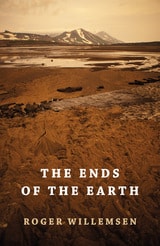
The Ends of the Earth
Roger Willemsen
Haus Publishing, 2010

The Fifty-Year Texas Road Trip
On Assignment from Earth to UncertainRandy Mallory
University of North Texas Press, 2025
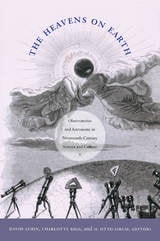
The Heavens on Earth
Observatories and Astronomy in Nineteenth-Century Science and CultureDavid Aubin, Charlotte Bigg, and H. Otto Sibum, eds.
Duke University Press, 2010
The contributors examine “observatory techniques” developed and used not only in connection with observatories but also by instrument makers in their workshops, navy officers on ships, civil engineers in the field, and many others. These techniques included the calibration and coordination of precision instruments for making observations and taking measurements; methods of data acquisition and tabulation; and the production of maps, drawings, and photographs, as well as numerical, textual, and visual representations of the heavens and the earth. They also encompassed the social management of personnel within observatories, the coordination of international scientific collaborations, and interactions with dignitaries and the public. The state observatory occupied a particularly privileged place in the life of the city. With their imposing architecture and ancient traditions, state observatories served representative purposes for their patrons, whether as symbols of a monarch’s enlightened power, a nation’s industrial and scientific excellence, or republican progressive values. Focusing on observatory techniques in settings from Berlin, London, Paris, and Rome to Australia, Russia, Thailand, and the United States, The Heavens on Earth is a major contribution to the history of science.
Contributors: David Aubin, Charlotte Bigg, Guy Boistel, Theresa Levitt, Massimo Mazzotti, Ole Molvig, Simon Schaffer, Martina Schiavon , H. Otto Sibum, Richard Staley, John Tresch, Simon Werrett, Sven Widmalm
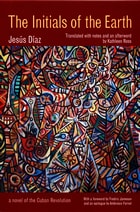
The Initials of the Earth
Jesús Díaz
Duke University Press, 2006
Originally written in the 1970s, then rewritten and published simultaneously in Havana and Madrid in 1987, The Initials of the Earth spans the tumultuous years from the 1950s until the 1970s, encompassing the Revolution and its immediate aftermath. The novel opens as the protagonist, Carlos Pérez Cifredo, sits down to fill out a questionnaire for readmission to the Cuban Communist Party. It closes with Carlos standing before a panel of Party members charged with assessing his merit as an “exemplary worker.” The chapters between relate Carlos’s experiences of the pre- and postrevolutionary era. His family is torn apart as some members reject the Revolution and flee the country while others, including Carlos, choose to stay. He witnesses key events including the Bay of Pigs invasion, the Cuban missile crisis, and the economically disastrous sugar harvest of 1970. Throughout the novel, Díaz vividly renders Cuban culture through humor, slogans, and slang; Afro-Cuban religion; and references to popular music, movies, and comics.
This edition of The Initials of the Earth includes a bibliography and filmography of Diaz’s works and a timeline of the major events of the Cuban revolutionary period. In his epilogue, the Cuban writer Ambrosio Fornet reflects on Díaz’s surprising 1992 renunciation of the Revolution, their decades-long friendship, and the novel’s reception, structure, and place within Cuban literary history.
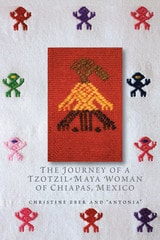
The Journey of a Tzotzil-Maya Woman of Chiapas, Mexico
Pass Well over the EarthBy Christine Eber and “Antonia”
University of Texas Press, 2011
Most recent books about Chiapas, Mexico, focus on political conflicts and the indigenous movement for human rights at the macro level. None has explored those conflicts and struggles in-depth through an individual woman's life story. The Journey of a Tzotzil-Maya Woman of Chiapas, Mexico now offers that perspective in one woman's own words. Anthropologist Christine Eber met "Antonia" in 1986 and has followed her life's journey ever since. In this book, they recount Antonia's life story and also reflect on challenges and rewards they have experienced in working together, offering insight into the role of friendship in anthropological research, as well as into the transnational movement of solidarity with the indigenous people of Chiapas that began with the Zapatista uprising.
Antonia was born in 1962 in San Pedro Chenalhó, a Tzotzil-Maya township in highland Chiapas. Her story begins with memories of childhood and progresses to young adulthood, when Antonia began working with women in her community to form weaving cooperatives while also becoming involved in the Word of God, the progressive Catholic movement known elsewhere as Liberation Theology. In 1994, as a wife and mother of six children, she joined a support base for the Zapatista Army of National Liberation. Recounting her experiences in these three interwoven movements, Antonia offers a vivid and nuanced picture of working for social justice while trying to remain true to her people's traditions.
The Keepers of Water and Earth
Mexican Rural Social Organization and IrrigationBy Kjell I. Enge and Scott Whiteford
University of Texas Press, 1989
Agrarian reforms transformed the Mexican countryside in the late twentieth century but without, in many cases, altering fundamental power relationships. This study of the Tehuacán Valley in the state of Puebla highlights different strategies to manipulate the local implementation of federal government programs. With their very differing successes in the struggle to regain and maintain control of land and water rights, these strategies raise important questions about the meaning of the phrase "locally controlled development."
Because Mexico is dependent on irrigation for 45 percent of its cash crop production, national policy has focused on developing vast government controlled and financed irrigation systems. In the Tehuacán Valley, however, the inhabitants have developed a complex irrigation system without government aid or supervision. Yet, in contrast to most parts of Mexico, water rights can be bought and sold as a commodity, leading to accumulation, stratification, and emergence of a regional elite whose power is based on ownership of land and water. The analysis provides an important contribution to the understanding of local control.
The findings of this study will be important to a wide audience involved in the study of irrigation, local agricultural systems, and the interplay between local power structures and the national government in developing countries. The book also presents unique material on gravity-fed, horizontal wells, known as qanat in the Middle East, which had been unknown in the literature on Latin America before this book.
The Last Quiet Place on Earth
Sonnets in the Time of CoronavirusRoger Armbrust
Parkhurst Brothers, Inc., 2022
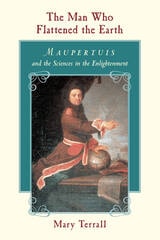
The Man Who Flattened the Earth
Maupertuis and the Sciences in the EnlightenmentMary Terrall
University of Chicago Press, 2002
Beginning his scientific career as a mathematician in Paris, Maupertuis entered the public eye with a much-discussed expedition to Lapland, which confirmed Newton's calculation that the earth was flattened at the poles. He also made significant, and often intentionally controversial, contributions to physics, life science, navigation, astronomy, and metaphysics. Called to Berlin by Frederick the Great, Maupertuis moved to Prussia to preside over the Academy of Sciences there. Equally at home in salons, cafés, scientific academies, and royal courts, Maupertuis used his social connections and his printed works to enhance a carefully constructed reputation as both a man of letters and a man of science. His social and institutional affiliations, in turn, affected how Maupertuis formulated his ideas, how he presented them to his contemporaries, and the reactions they provoked.
Terrall not only illuminates the life and work of a colorful and important Enlightenment figure, but also uses his story to delve into many wider issues, including the development of scientific institutions, the impact of print culture on science, and the interactions of science and government. Smart and highly readable, Maupertuis will appeal to anyone interested in eighteenth-century science and culture.
The Mantle of the Earth
Genealogies of a Geographical MetaphorVeronica della Dora
University of Chicago Press, 2021
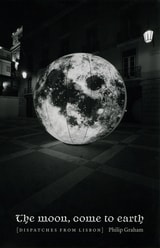
The Moon, Come to Earth
Dispatches from LisbonPhilip Graham
University of Chicago Press, 2009
A dispatch from a foreign land, when crafted by an attentive and skilled writer, can be magical, transmitting pleasure, drama, and seductive strangeness.
In The Moon, Come to Earth, Philip Graham offers an expanded edition of a popular series of dispatches originally published on McSweeney’s, an exuberant yet introspective account of a year’s sojourn in Lisbon with his wife and daughter. Casting his attentive gaze on scenes as broad as a citywide arts festival and as small as a single paving stone in a cobbled walk, Graham renders Lisbon from a perspective that varies between wide-eyed and knowing; though he’s unquestionably not a tourist, at the same time he knows he will never be a local. So his lyrical accounts reveal his struggles with (and love of) the Portuguese language, an awkward meeting with Nobel laureate José Saramago, being trapped in a budding soccer riot, and his daughter’s challenging transition to adolescence while attending a Portuguese school—but he also waxes loving about Portugal’s saudade-drenched music, its inventive cuisine, and its vibrant literary culture. And through his humorous, self-deprecating, and wistful explorations, we come to know Graham himself, and his wife and daughter, so that when an unexpected crisis hits his family, we can’t help but ache alongside them.
A thoughtful, finely wrought celebration of the moment-to-moment excitement of diving deep into another culture and confronting one’s secret selves, The Moon, Come to Earth is literary travel writing of a rare intimacy and immediacy.
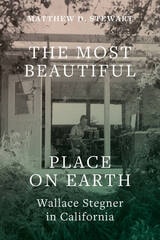
The Most Beautiful Place on Earth
Wallace Stegner in CaliforniaMatthew D. Stewart
University of Utah Press, 2021
This book tells the story of Stegner and his family as they made a home just outside of Palo Alto, California, during its transition from the Valley of Heart’s Delight (known for its rolling hills and orchards) to Silicon Valley. In this thoughtful study of the novels Stegner wrote in California—including his Pulitzer Prize–winning Angle of Repose—readers are invited to consider with Stegner what the practice of place requires in the American West. Specialists in the literature and history of the American West will find new analyses of Stegner and his influential work. Other readers will be guided through Stegner’s work in concrete and accessible prose, and anyone who has longed for home and a sense of place will encounter a powerful, beautiful, and at times tragic attempt to build and preserve it.
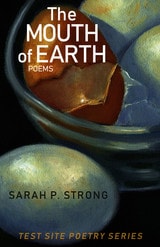
The Mouth of Earth
PoemsSarah P. Strong
University of Nevada Press, 2020
The Mouth of Earth serves as both a survival guide for those seeking connection with our planet and one another as well as a compassionate tribute to what we have lost or are losing—the human consequences of such destruction in a time of climate crisis and lost connectivity. Strong’s powerful poems offer us, if not consolation, at least a way toward comprehension in an age of loss, revealing both our ongoing denial of our planet’s fragility and the compelling urgency of our hunger for connection with all life.
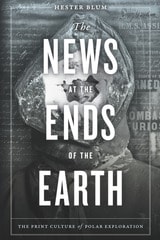
The News at the Ends of the Earth
The Print Culture of Polar ExplorationHester Blum
Duke University Press, 2019
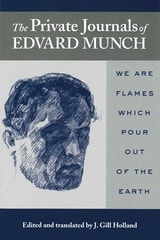
The Private Journals of Edvard Munch
We Are Flames Which Pour Out of the EarthEdvard Munch, edited and translated by J. Gill Holland
University of Wisconsin Press, 2005
This English translation of Edvard Munch's private diaries, the most extensive edition to appear in any language, captures the eloquent lyricism of the original Norwegian text. The journal entries in this volume span the period from the 1880s, when Munch was in his twenties, until the 1930s, reflecting the changes in his life and his work. The book is illustrated with fifteen of Munch's drawings, many of them rarely seen before. While these diaries have been excerpted before, no translation has captured the real passion and poetry of Munch's voice. This is a translation that lets Munch speak for himself and evokes the primal passion of his diaries. J. Gill Holland's exceptional work adds a whole new level to our understanding of the artist and the depth of his scream.
The Profit of the Earth
The Global Seeds of American AgricultureCourtney Fullilove
University of Chicago Press, 2017
Organized into three thematic parts, The Profit of the Earth is a narrative history of the collection, circulation, and preservation of seeds. Fullilove begins with the political economy of agricultural improvement, recovering the efforts of the US Patent Office and the nascent US Department of Agriculture to import seeds and cuttings for free distribution to American farmers. She then turns to immigrant agricultural knowledge, exploring how public and private institutions attempting to boost midwestern wheat yields drew on the resources of willing and unwilling settlers. Last, she explores the impact of these cereal monocultures on biocultural diversity, chronicling a fin-de-siècle Ohio pharmacist’s attempt to source Purple Coneflower from the diminishing prairie. Through these captivating narratives of improvisation, appropriation, and loss, Fullilove explores contradictions between ideologies of property rights and common use that persist in national and international development—ultimately challenging readers to rethink fantasies of global agriculture’s past and future.
The Pulse of the Earth
Political Geology in JavaAdam Bobbette
Duke University Press, 2023
The Spirits of the Earth
Catherine Colomb
Seagull Books, 2016
The Spirits of the Earth is at heart a family drama, set at the Fraidaigue château, along the shores of Lake Geneva, and in the Maison d’en Haut country mansion, located in the hills above the lake. In these luxe locales, readers encounter upper-class characters with faltering incomes, parvenues, and even ghosts. Throughout, Colomb builds a psychologically penetrating and bold story in which the living and the dead intermingle and in which time itself is a mystery.
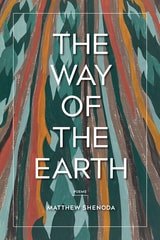
The Way of the Earth
PoemsMatthew Shenoda
Northwestern University Press, 2022
The Way of the Earth is the fourth collection from award-winning poet Matthew Shenoda. In this, his most personal collection to date, he explores the temporal and fleeting nature of human life and the earth we inhabit. Through ruminations on the intersections of culture and ecology, the death of loved ones, and the growing inequities in our midst, Shenoda explores what it means to be a person both grounded to the earth and with a yearning beyond it. Memories of landscapes and histories echo throughout the sensations of the present: the sight of egrets wading in the marshes, the smell of the ocean, a child’s hand nestled in a warm palm. “Time never goes back,” Shenoda writes, “but the imagination must.”
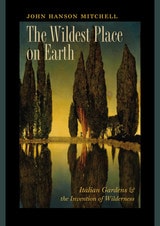
The Wildest Place on Earth
Italian Gardens and the Invention of WildernessJohn Hanson Mitchell
University Press of New England, 2015
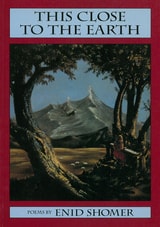
This Close to the Earth
PoemsSHOMER ENID
University of Arkansas Press, 1992
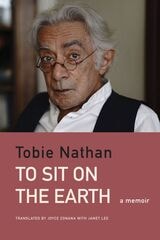
To Sit on the Earth
A MemoirTobie Nathan
Seagull Books, 2024
In To Sit on the Earth, pioneering ethno-psychiatrist Tobie Nathan charts his intellectual and emotional journey, from his youthful infatuation with Freud and Wilhelm Reich to his mature adoption of anthropologist Georges Devereux’s ethnographic approach to psychoanalysis.
Expelled from Egypt as a Jew in 1956 when he was just a boy, Nathan spent his formative years on the outskirts of Paris. Caught up in situationist and Marxist politics, he enthusiastically participated in the revolutionary Events of May 1968. He then settled into a distinguished career as a writer, professor, and founding director of a free ethno-psychiatry clinic serving migrant populations in the French capital. Along the way, Nathan’s field research and practice took him to Benin, Burundi, and Brazil, where he sought out sorcerers, shamans, and other indigenous healers. As he did so, he encountered telling echoes of his ancestors’ age-old practices in Judeo-Arab Cairo.
Combining case histories and theoretical reflections with personal and familial anecdotes, while engaging with contemporary thinkers—including Sartre, Lacan, Bourdieu, and Foucault—this multi-layered, genre-defying memoir invites us to reconsider the beliefs that connect us to others and ourselves. To Sit on the Earth lays out a subtle, compelling case for the theological and cultural diversity essential to a thriving modernity.
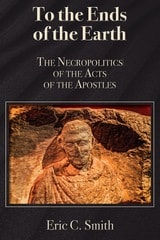
To the Ends of the Earth
The Necropolitics of the Acts of the ApostlesEric C. Smith
SBL Press, 2026