Results by title
679 books match the query 'Ecology' and 187 start with t
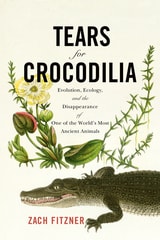
Tears for Crocodilia
Evolution, Ecology, and the Disappearance of One of the World's Most Ancient AnimalsZach Fitzner
Westholme Publishing, 2025
Seventy million years ago in what would become North America, a monstrous thirty-five-foot-long Cretaceous crocodile lurked on a marshy riverbank. Springing suddenly, its huge jaws trapped and crushed a juvenile hadrosaur. Today, the remains of that ancient crocodile are being painstakingly reconstructed in Colorado, where naturalist Zach Fitzner continues his life-long fascination with this amazing animal family.
In Tears for Crocodilia: Evolution, Ecology, and the Disappearance of One of the World’s Most Ancient Animals, Fitzner tracks the evolution of crocodilians from prehistoric predators to modern endangered wildlife, using his own experiences with these reptiles as a lens to understanding wildlife conservation and our relationship with the natural world. Traveling the world to interact with crocodiles, from observing alligators in a wildlife refuge in Texas and paddling a canoe in the Everglades searching for crocodiles to trekking the jungles in Nepal to find endangered gharials, the author expresses a wonder in exploring these diverse ecosystems, making a connection between crocodilians and the lands they live in. As the story follows crocodilians, it also illuminates their often complicated relationship with humans, from crocodile cults in ancient Egypt to American alligators living on golf courses. Fitzner also closely examines the dark side of this relationship, including habitat destruction and poaching as well as the mechanistic view of traditional conservation that turns these magnificent animals into agricultural products. Tears for Crocodilia delves deeply into issues of wildlife conservation, ethics, and how we can coexist with other creatures. It is also a tribute to a magnificent group of animals, survivors from the age of dinosaurs.

Tequila
A Natural and Cultural HistoryAna G. Valenzuela-Zapata and Gary Paul Nabhan
University of Arizona Press, 2004
The drink is tequila—more properly, mescal de tequila, the first mescal to be codified and recognized by its geographic origin and the only one known internationally by that name. In ¡Tequila! A Natural and Cultural History, Ana G. Valenzuela-Zapata, the leading agronomist in Mexico's tequila industry, and Gary Paul Nabhan, one of America's most respected ethnobotanists, plumb the myth of tequila as they introduce the natural history, economics, and cultural significance of the plants cultivated for its production.
Valenzuela-Zapata and Nabhan take you into the agave fields of Mexico to convey their passion for the century plant and its popular by-product. In the labor-intensive business of producing quality mescal, the cultivation of tequila azul is maintained through traditional techniques passed down over generations. They tell how jimadores seek out the mature agaves, strip the leaves, and remove the heavy heads from the field; then they reveal how the roasting and fermentation process brings out the flavors that cosmopolitan palates crave.
Today in Oaxaca it's not unusual to find small-scale mescal-makers vending their wares in the market plaza, while in Jalisco the scale of distillation facilities found near the town of Tequila would be unrecognizable to old José Cuervo. Valenzuela-Zapata and Nabhan trace tequila's progress from its modest beginnings to one of the world's favored spirits, tell how innovations from cross-cultural exchanges made fortunes for Cuervo and other distillers, and explain how the meteoric rise in tequila prices is due to an epidemic—one they predicted would occur—linked to the industry's cultivation of just one type of agave.
The tequila industry today markets more than four hundred distinct products through a variety of strategies that heighten the liquor's mystique, and this book will educate readers about the grades of tequila, from blanco to añejo, and marks of distinction for connoisseurs who pay up to two thousand dollars for a bottle. ¡Tequila! A Natural and Cultural History will feed anyone's passion for the gift of the blue agave as it heightens their appreciation for its rich heritage.
That Which Roots Us
Environmental Issues in the Pacific Northwest & BeyondMarion Dresner
University of Nevada Press, 2023
A work of natural and environmental history.
That Which Roots Us is a work of natural and environmental history that explores the origins of and resolutions to some of the United States’ environmental problems. Marion Dresner discusses the roots of Euro-American environmental exploitative action, starting with the environmental consequences of having treated Pacific Northwest forests as commodities. She shares her experiences visiting sites where animal-centered ice age culture changed to human-centered culture thousands of years ago with the advent of farming. The book explores the origins of the romantic philosophical movement, which arose out of the debilitating conditions of the industrial era. Those romantic attitudes toward nature inspired the twentieth-century preservation movement and America’s progressively modern conservation attitudes.
The book is centered around environmental issues in the Pacific Northwest, contrasting utilitarian views of nature with Native American practices of respect and reciprocity. The elements that make That Which Roots Us a truly unique and important contribution to environmental literature are the author’s personal recollections and interactions with the landscape. Ultimately, Dresner offers hope for a new stewardship of the land and a focus on science literacy and direct experience in the natural world as the most grounded way of knowing the planet.
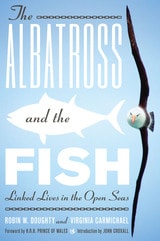
The Albatross and the Fish
Linked Lives in the Open SeasBy Robin W. Doughty and Virginia Carmichael
University of Texas Press, 2011
Breeding on remote ocean islands and spending much of its life foraging for food across vast stretches of seemingly empty seas, the albatross remains a legend for most people. And yet, humans are threatening the albatross family to such an extent that it is currently the most threatened bird group in the world. In this extensively researched, highly readable book, Robin W. Doughty and Virginia Carmichael tell the story of a potentially catastrophic extinction that has been interrupted by an unlikely alliance of governments, conservation groups, and fishermen.
Doughty and Carmichael authoritatively establish that the albatross's fate is linked to the fate of two of the highest-value table fish, Bluefin Tuna and Patagonian Toothfish, which are threatened by unregulated commercial harvesting. The authors tell us that commercial fishing techniques are annually killing tens of thousands of albatrosses. And the authors explain how the breeding biology of albatrosses makes them unable to replenish their numbers at the rate they are being depleted. Doughty and Carmichael set the albatross's fate in the larger context of threats facing the ocean commons, ranging from industrial overfishing to our habit of dumping chemicals, solid waste, and plastic trash into the open seas. They also highlight the efforts of dedicated individuals, environmental groups, fishery management bodies, and governments who are working for seabird and fish conservation and demonstrate that these efforts can lead to sustainable solutions for the iconic seabirds and the entire ocean ecosystem.
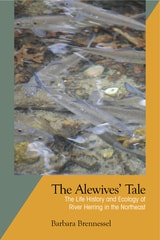
The Alewives' Tale
The Life History and Ecology of River Herring in the NortheastBarbara Brennessel
University of Massachusetts Press, 2014
The Alewives' Tale describes the plight of alewives and blueback herring, two fish species that have similar life histories and are difficult to distinguish by sight. Collectively referred to as river herring, they have been economically important since colonial times as food, fertilizer, and bait. In recent years they have attracted much attention from environmentalists, especially as attempts are being made, on and beyond Cape Cod, to restore the rivers, streams, ponds, lakes, and estuaries that are crucial for their reproduction and survival.
Brennessel provides an overview of the biology of the fish—from fertilized eggs to large schools of adults that migrate in the Atlantic Ocean—while describing the habitats at different stages of their life history. She explores the causes of the dramatic decline of river herring since the mid-twentieth century and the various efforts to restore these iconic fish to the historic populations that treated many onlookers to spectacular inland migrations each spring.
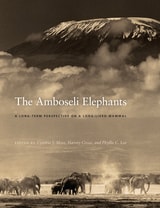
The Amboseli Elephants
A Long-Term Perspective on a Long-Lived MammalEdited by Cynthia J. Moss, Harvey Croze, and Phyllis C. Lee
University of Chicago Press, 2011
Elephants have fascinated humans for millennia. Aristotle wrote of them with awe; Hannibal used them in warfare; and John Donne called the elephant “Nature’s greatest masterpiece. . . . The only harmless great thing.” Their ivory has been sought after and treasured in most cultures, and they have delighted zoo and circus audiences worldwide for centuries. But it wasn’t until the second half of the twentieth century that people started to take an interest in elephants in the wild, and some of the most important studies of these intelligent giants have been conducted at Amboseli National Park in Kenya.
The Amboseli Elephants is the long-awaited summation of what’s been learned from the Amboseli Elephant Research Project (AERP)—the longest continuously running elephant research project in the world. Cynthia J. Moss and Harvey Croze, the founders of the AERP, and Phyllis C. Lee, who has been closely involved with the project since 1982, compile more than three decades of uninterrupted study of over 2,500 individual elephants, from newborn calves to adult bulls to old matriarchs in their 60s. Chapters explore such topics as elephant ecosystems, genetics, communication, social behavior, and reproduction, as well as exciting new developments from the study of elephant minds and cognition. The book closes with a view to the future, making important arguments for the ethical treatment of elephants and suggestions to aid in their conservation.
The most comprehensive account of elephants in their natural environment to date, The Amboseli Elephants will be an invaluable resource for scientists, conservationists, and anyone interested in the lives and loves of these extraordinary creatures.

The American Naturalist, volume 200 number 1 (July 2022)
The University of Chicago Press
University of Chicago Press Journals, 2022
The American Naturalist, volume 200 number 2 (August 2022)
The University of Chicago Press
University of Chicago Press Journals, 2022
The American Naturalist, volume 200 number 3 (September 2022)
The University of Chicago Press
University of Chicago Press Journals, 2022
The American Naturalist, volume 200 number 4 (October 2022)
The University of Chicago Press
University of Chicago Press Journals, 2022
The American Naturalist, volume 200 number 5 (November 2022)
The University of Chicago Press
University of Chicago Press Journals, 2022
The American Naturalist, volume 200 number 6 (December 2022)
The University of Chicago Press
University of Chicago Press Journals, 2022
The American Naturalist, volume 201 number 1 (January 2023)
The University of Chicago Press
University of Chicago Press Journals, 2023
The American Naturalist, volume 201 number 2 (February 2023)
The University of Chicago Press
University of Chicago Press Journals, 2023
The American Naturalist, volume 201 number 3 (March 2023)
The University of Chicago Press
University of Chicago Press Journals, 2023
The American Naturalist, volume 201 number 4 (April 2023)
The University of Chicago Press
University of Chicago Press Journals, 2023
The American Naturalist, volume 201 number 5 (May 2023)
The University of Chicago Press
University of Chicago Press Journals, 2023
The American Naturalist, volume 201 number 6 (June 2023)
The University of Chicago Press
University of Chicago Press Journals, 2023
The American Naturalist, volume 202 number 1 (July 2023)
The University of Chicago Press
University of Chicago Press Journals, 2023
The American Naturalist, volume 202 number 2 (August 2023)
The University of Chicago Press
University of Chicago Press Journals, 2023
The American Naturalist, volume 202 number 3 (September 2023)
The University of Chicago Press
University of Chicago Press Journals, 2023
The American Naturalist, volume 202 number 4 (October 2023)
The University of Chicago Press
University of Chicago Press Journals, 2023
The American Naturalist, volume 202 number 5 (November 2023)
The University of Chicago Press
University of Chicago Press Journals, 2023
The American Naturalist, volume 202 number 6 (December 2023)
The University of Chicago Press
University of Chicago Press Journals, 2023
The American Naturalist, volume 203 number 1 (January 2024)
The University of Chicago Press
University of Chicago Press Journals, 2024
The American Naturalist, volume 203 number 2 (February 2024)
The University of Chicago Press
University of Chicago Press Journals, 2024
The American Naturalist, volume 203 number 3 (March 2024)
The University of Chicago Press
University of Chicago Press Journals, 2024
The American Naturalist, volume 203 number 4 (April 2024)
The University of Chicago Press
University of Chicago Press Journals, 2024
The American Naturalist, volume 203 number 5 (May 2024)
The University of Chicago Press
University of Chicago Press Journals, 2024
The American Naturalist, volume 203 number 6 (June 2024)
The University of Chicago Press
University of Chicago Press Journals, 2024
The American Naturalist, volume 204 number 1 (July 2024)
The University of Chicago Press
University of Chicago Press Journals, 2024
The American Naturalist, volume 204 number 2 (August 2024)
The University of Chicago Press
University of Chicago Press Journals, 2024
The American Naturalist, volume 204 number 3 (September 2024)
The University of Chicago Press
University of Chicago Press Journals, 2024
The American Naturalist, volume 204 number 4 (October 2024)
The University of Chicago Press
University of Chicago Press Journals, 2024
The American Naturalist, volume 204 number 5 (November 2024)
The University of Chicago Press
University of Chicago Press Journals, 2024
The American Naturalist, volume 204 number 6 (December 2024)
The University of Chicago Press
University of Chicago Press Journals, 2024
The American Naturalist, volume 205 number 1 (January 2025)
The University of Chicago Press
University of Chicago Press Journals, 2025
The American Naturalist, volume 205 number 2 (February 2025)
The University of Chicago Press
University of Chicago Press Journals, 2025
The American Naturalist, volume 205 number 3 (March 2025)
The University of Chicago Press
University of Chicago Press Journals, 2025
The American Naturalist, volume 205 number 4 (April 2025)
The University of Chicago Press
University of Chicago Press Journals, 2025
The American Naturalist, volume 205 number 5 (May 2025)
The University of Chicago Press
University of Chicago Press Journals, 2025
The American Naturalist, volume 205 number 6 (June 2025)
The University of Chicago Press
University of Chicago Press Journals, 2025
The American Naturalist, volume 206 number 1 (July 2025)
The University of Chicago Press
University of Chicago Press Journals, 2025
The American Naturalist, volume 206 number 2 (August 2025)
The University of Chicago Press
University of Chicago Press Journals, 2025
The American Naturalist, volume 206 number 3 (September 2025)
The University of Chicago Press
University of Chicago Press Journals, 2025
The American Naturalist, volume 206 number 4 (October 2025)
The University of Chicago Press
University of Chicago Press Journals, 2025
The American Naturalist, volume 206 number 5 (November 2025)
The University of Chicago Press
University of Chicago Press Journals, 2025
The American Naturalist, volume 206 number 6 (December 2025)
The University of Chicago Press
University of Chicago Press Journals, 2025
The American Naturalist, volume 207 number 1 (January 2026)
The University of Chicago Press
University of Chicago Press Journals, 2026
The American Naturalist, volume 207 number 2 (February 2026)
The University of Chicago Press
University of Chicago Press Journals, 2026