Results by title
728 books match the query 'Economic aspects' and 164 start with t

Taxing Blackness
Free Afromexican Tribute in Bourbon New SpainNorah L. A. Gharala
University of Alabama Press, 2019
A definitive analysis of the most successful tribute system in the Americas as applied to Afromexicans
During the eighteenth century, hundreds of thousands of free descendants of Africans in Mexico faced a highly specific obligation to the Spanish crown, a tax based on their genealogy and status. This royal tribute symbolized imperial loyalties and social hierarchies. As the number of free people of color soared, this tax became a reliable source of revenue for the crown as well as a signal that colonial officials and ordinary people referenced to define and debate the nature of blackness.
Taxing Blackness: Free Afromexican Tribute in Bourbon New Spain examines the experiences of Afromexicans and this tribute to explore the meanings of race, political loyalty, and legal privileges within the Spanish colonial regime. Norah L. A. Gharala focuses on both the mechanisms officials used to define the status of free people of African descent and the responses of free Afromexicans to these categories and strategies. This study spans the eighteenth century and focuses on a single institution to offer readers a closer look at the place of Afromexican individuals in Bourbon New Spain, which was the most profitable and populous colony of the Spanish Atlantic.
As taxable subjects, many Afromexicans were deeply connected to the colonial regime and ongoing debates about how taxpayers should be defined, whether in terms of reputation or physical appearance. Gharala shows the profound ambivalence, and often hostility, that free people of African descent faced as they navigated a regime that simultaneously labeled them sources of tax revenue and dangerous vagabonds. Some free Afromexicans paid tribute to affirm their belonging and community ties. Others contested what they saw as a shameful imposition that could harm their families for generations. The microhistory includes numerous anecdotes from specific cases and people, bringing their history alive, resulting in a wealth of rural and urban, gender, and family insight.

Technocreep and the Politics of Things Not Seen
Neda Atanasoski and Nassim Parvin, editors
Duke University Press, 2025
Contributors. Neda Atanasoski, Katherine Bennett, Iván Chaar López, Sushmita Chatterjee, Hayri Dortdivanlioglu, Sanaz Haghani, Jacob Hagelberg, Jennifer Hamilton, Antonia Hernández, Marjan Khatibi, Tamara Kneese, Erin McElroy, Vernelle A. A. Noel, Jessica Olivares, Nassim Parvin, Beth Semel, Renee Shelby, Tanja Wiehn

Telling Young Lives
Portraits of Global Youthedited by Craig Jeffrey and Jane Dyson
Temple University Press, 2008
Telling Young Lives presents more than a dozen fascinating, ethnograph-ically informed portraits of young people facing rapid changes in society and politics from different parts of the world. From a young woman engaged in agricultural labor in the High Himalayas to a youth activist based in Tanzania, the distinctive voices from the U.K., India, Germany, Sierra Leone, South Africa and Bosnia Herzegovina, provide insights into the active and creative ways these youths are addressing social and political challenges such as war, hunger and homelessness.
Telling Young Lives has great appeal for classroom use in geography courses and makes a welcome contribution to the growing field of “young geographies,” as well as to politics and political geography. Its focus on individual portraits gives readers a fuller, more vivid picture of the ways in which global changes are reshaping the actual experiences and strategies of young people around the world.
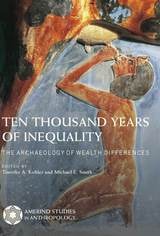
Ten Thousand Years of Inequality
The Archaeology of Wealth DifferencesEdited by Timothy A. Kohler and Michael E. Smith
University of Arizona Press, 2018
Ten Thousand Years of Inequality addresses these and other questions by presenting the first set of consistent quantitative measurements of ancient wealth inequality. The authors are archaeologists who have adapted the Gini index, a statistical measure of wealth distribution often used by economists to measure contemporary inequality, and applied it to house-size distributions over time and around the world. Clear descriptions of methods and assumptions serve as a model for other archaeologists and historians who want to document past patterns of wealth disparity.
The chapters cover a variety of ancient cases, including early hunter-gatherers, farmer villages, and agrarian states and empires. The final chapter synthesizes and compares the results. Among the new and notable outcomes, the authors report a systematic difference between higher levels of inequality in ancient Old World societies and lower levels in their New World counterparts.
For the first time, archaeology allows humanity’s deep past to provide an account of the early manifestations of wealth inequality around the world.
Contributors
Nicholas Ames
Alleen Betzenhauser
Amy Bogaard
Samuel Bowles
Meredith S. Chesson
Abhijit Dandekar
Timothy J. Dennehy
Robert D. Drennan
Laura J. Ellyson
Deniz Enverova
Ronald K. Faulseit
Gary M. Feinman
Mattia Fochesato
Thomas A. Foor
Vishwas D. Gogte
Timothy A. Kohler
Ian Kuijt
Chapurukha M. Kusimba
Mary-Margaret Murphy
Linda M. Nicholas
Rahul C. Oka
Matthew Pailes
Christian E. Peterson
Anna Marie Prentiss
Michael E. Smith
Elizabeth C. Stone
Amy Styring
Jade Whitlam
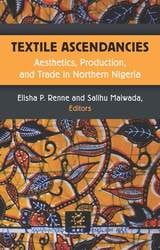
Textile Ascendancies
Aesthetics, Production, and Trade in Northern NigeriaElisha P. Renne and Salihu Maiwada, Editors
University of Michigan Press, 2020
Until this century, Northern Nigeria was a major center of textile production and trade. Textile Ascendancies: Aesthetics, Production, and Trade in Northern Nigeria examines this dramatic change in textile aesthetics, technologies, and social values in order to explain the extraordinary shift in textile demand, production, and trade.
Textile Ascendancies provides information for the study of the demise of textile manufacturing outside Nigeria. The book also suggests the conundrum considered by George Orwell concerning the benefits and disadvantages of “mechanical progress,” and digital progress, for human existence. While textile mill workers in northern Nigeria were proud to participate in the mechanization of weaving, the “tendency for the mechanization of the world” represented by more efficient looms and printing equipment in China has contributed to the closing of Nigerian mills and unemployment.
Textile Ascendancies will appeal toanthropologists for its analyses of social identity as well as how the ethnic identity of consumers influences continued handwoven textile production. The consideration of aesthetics and fashionable dress will appeal to specialists in textiles and clothing. It will be useful to economic historians for the comparative analysis of textile manufacturing decline in the 21st century. It will also be of interest to those thinking about global futures, about digitalization, and how new ways of making cloth and clothing may provide both employment and environmentally sound production practices.

The "Vanity of the Philosopher"
From Equality to Hierarchy in Post-Classical EconomicsSandra J. Peart and David M. Levy
University of Michigan Press, 2005
Here, Peart and Levy tackle the issues of racism, eugenics, hierarchy, and egalitarianism in classical economics and take a broad view of classical economics' doctrine of human equality. Responding to perennial accusations from the left and the right that the market economy has created either inequality or too much equality, the authors trace the role of the eugenics movement in pulling economics away from the classical economist's respect for the individual toward a more racist view at the turn of the century.
The "Vanity of the Philosopher" reveals the consequences of hierarchy in social science. It shows how the "vanity of the philosopher" has led to recommendations that range from the more benign but still objectionable "looking after" paternalism, to overriding preferences, and, in the extreme, to eliminating purportedly bad preferences. The authors suggest that an approach that abstracts from difference and presumes equal competence is morally compelling.
"People in the know on intellectual history and economics await the next book from Peart and Levy with much the same enthusiasm that greets a new Harry Potter book in the wider world. This book delivers the anticipated delights big time!"
-William Easterly, Professor of Economics and Africana Studies, NYU, and non-resident Senior Fellow, Center for Global Development
"In their customary idiosyncratic manner, Sandra Peart and David Levy reexamine the way in which the views of classical economists on equality and hierarchy were shifted by contact with scholars in other disciplines, and the impact this had on attitudes towards race, immigration, and eugenics. This is an imaginative and solid work of scholarship, with an important historical message and useful lessons for scholars today."
-Stanley Engerman, John Munro Professor of Economics and Professor of History, University of Rochester
Sandra J. Peart, Professor of Economics at Baldwin-Wallace College, has published articles on utilitarianism, the methodology of J. S. Mill, and the transition to neoclassicism. This is her fourth book. David M. Levy is Professor of Economics at George Mason University and Director of the Center for Study of Public Choice. This is his third book.

The African Roots of Marijuana
Chris S. Duvall
Duke University Press, 2019

The Agrarian Question Volume 1
Karl Kautsky
Pluto Press, 1988
Lenin described The Agrarian Question as the first systematic Marxist study of capitalism and agriculture and the most important event in economic literature since the third volume of Capital. This great work is regarded as Kautsky's main achievement and is a classic work of analysis.
Kautsky's pariah status in the eyes of revolutionary Marxists resulted in many years of neglect, but his role and work are now commanding great attention. The analysis of the transformation of peasant economies by capital in The Agrarian Question is now seen as particularly relevant to contemporary Third World peasant economies.
This remarkable translation, which brings out the humanity - and the humour - in Kautksy's writing, is more than a work of economic analysis: in a manner ahead of his time, Kautsky integrates questions of political strategy, ecology, sexuality and the family.
The illuminating reassessment of The Agrarian Question in the introduction by Professor Teodor Shanin and Hamza Alavi examines in detail the political context, Kautsky's own life, the development of Kautsky's ideas within the work, and its contribution to our understanding of the world today. This timely re-evaluation of Kautsky's significance is long overdue.
The Agrarian Question Volume 2
Karl Kautsky
Pluto Press, 1988
Lenin described The Agrarian Question as the first systematic Marxist study of capitalism and agriculture and the most important event in economic literature since the third volume of Capital. This great work is regarded as Kautsky's main achievement and is a classic work of analysis.
Kautsky's pariah status in the eyes of revolutionary Marxists resulted in many years of neglect, but his role and work are now commanding great attention. The analysis of the transformation of peasant economies by capital in The Agrarian Question is now seen as particularly relevant to contemporary Third World peasant economies.
This remarkable translation, which brings out the humanity - and the humour - in Kautksy's writing, is more than a work of economic analysis: in a manner ahead of his time, Kautsky integrates questions of political strategy, ecology, sexuality and the family.
The illuminating reassessment of The Agrarian Question in the introduction by Professor Teodor Shanin and Hamza Alavi examines in detail the political context, Kautsky's own life, the development of Kautsky's ideas within the work, and its contribution to our understanding of the world today. This timely re-evaluation of Kautsky's significance is long overdue.

The Anthropology of Slavery
The Womb of Iron and GoldClaude Meillassoux
University of Chicago Press, 1991
The Anti-Capitalist Chronicles
David Harvey
Pluto Press, 2020
Amidst waves of economic crises, health crises, class struggle and neo-fascist reaction, few possess the clarity and foresight of world-renowned theorist, David Harvey. Since the publication of his bestselling A Brief History of Neoliberalism, Harvey has been tracking the evolution of the capitalist system as well as tides of radical opposition rising against it. In The Anti-Capitalist Chronicles, Harvey introduces new ways of understanding the crisis of global capitalism and the struggles for a better world.
While accounting for violence and disaster, Harvey also chronicles hope and possibility. By way of conversations about neoliberalism, capitalism, globalization, the environment, technology, social movements and crises like COVID-19, he outlines, with characteristic brilliance, how socialist alternatives are being imagined under very difficult circumstances.
In understanding the economic, political and social dimensions of the crisis, Harvey’s analysis in The Anti-Capitalist Chronicles will be of strategic importance to anyone wanting to both understand and change the world.

The Beautiful Generation
Asian Americans and the Cultural Economy of FashionThuy Linh Nguyen Tu
Duke University Press, 2011

The Big Leagues Go to Washington
Congress and Sports Antitrust, 1951-1989David George Surdam
University of Illinois Press, 2015
In The Big Leagues Go to Washington, David Surdam chronicles the key issues that arose during the hearings and the ways opposing sides used economic data and theory to define what was right, what was feasible, and what was advantageous to one party or another. As Surdam shows, the hearings affected matters as fundamental to the modern game as broadcasting rights, player drafts and unions, league mergers, and the dominance of the New York Yankees. He also charts how lawmakers from the West and South pressed for the relocation of ailing franchises to their states and the ways savvy owners dodged congressional interference when they could and adapted to it when necessary.

The Birth of Energy
Fossil Fuels, Thermodynamics, and the Politics of WorkCara New Daggett
Duke University Press, 2019

The Black Tax
150 Years of Theft, Exploitation, and Dispossession in AmericaAndrew W. Kahrl
University of Chicago Press, 2024
American taxation is unfair, and it is most unfair to the very people who critically need its support. Not only do taxpayers with fewer resources—less wealth, power, and land—pay more than the well-off, but they are forced to fight for their rights within an unjust system that undermines any attempts to improve their position or economic standing. In The Black Tax, Andrew W. Kahrl reveals the shocking history and ruinous consequences of inequitable and predatory tax laws in this country—above all, widespread and devastating racial dispossession.
Throughout the twentieth century, African Americans acquired substantial amounts of property nationwide. But racist practices, obscure processes, and outright theft diminished their holdings and their power. Of these, Kahrl shows, few were more powerful, or more quietly destructive, than property taxes. He examines all the structural features and hidden traps within America’s tax system that have forced Black Americans to pay more for less and stripped them of their land and investments, and he reveals the staggering cost. The story of America’s now enormous concentration of wealth at the top—and the equally enormous absence of wealth among most Black households—has its roots here.
Kahrl exposes the painful history of these practices, from Reconstruction up to the present, and tells, for the first time, the story of Black Americans’ experiences as taxpayers and their fight for a more fair and equitable system for raising and spending the public’s money. This is a history that deepens our understanding of the disadvantages and persistent inequalities that African American households continue to face and reveals hidden engines of economic inequality in America. Detailing the hows and whys of America’s profoundly unequal tax system, The Black Tax equips readers with the knowledge needed to combat inequality and injustice today.
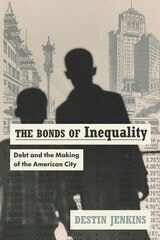
The Bonds of Inequality
Debt and the Making of the American CityDestin Jenkins
University of Chicago Press, 2021
In this passionate and deeply researched book, Destin Jenkins shows in vivid detail how, beyond the borrowing decisions of American cities and beneath their quotidian infrastructure, there lurks a world of politics and finance that is rarely seen, let alone understood. Focusing on San Francisco, The Bonds of Inequality offers a singular view of the postwar city, one where the dynamics that drove its creation encompassed not only local politicians but also banks, credit rating firms, insurance companies, and the national municipal bond market. Moving between the local and the national, The Bonds of Inequality uncovers how racial inequalities in San Francisco were intrinsically tied to municipal finance arrangements and how these arrangements were central in determining the distribution of resources in the city. By homing in on financing and its imperatives, Jenkins boldly rewrites the history of modern American cities, revealing the hidden strings that bind debt and power, race and inequity, democracy and capitalism.

The Border Within
The Economics of Immigration in an Age of FearTara Watson and Kalee Thompson
University of Chicago Press, 2021
For decades, immigration has been one of the most divisive, contentious topics in American politics. And for decades, urgent calls for its policy reform have gone mostly unanswered. As the discord surrounding the modern immigration debate has intensified, border enforcement has tightened. Crossing harsher, less porous borders makes unauthorized entry to the United States a permanent, costly undertaking. And the challenges don’t end on the other side.
At once enlightening and devastating, The Border Within examines the costs and ends of America’s interior enforcement—the policies and agencies, including ICE, aimed at removing immigrants already living in the country. Economist Tara Watson and journalist Kalee Thompson pair rigorous analysis with deeply personal stories from immigrants and their families to assess immigration’s effects on every aspect of American life, from the labor force to social welfare programs to tax revenue. What emerges is a critical, utterly complete examination of what non-native Americans bring to the country, including immigration’s tendency to elevate the wages and skills of those who are native-born.
News coverage has prompted many to question the humanity of American immigration policies; The Border Within opens a conversation of whether it is effective. The United States spends billions each year on detention and deportation, all without economic gain and at a great human cost. With depth and discipline, the authors dissect the shock-and-awe policies that make up a broken, often cruel system, while illuminating the lives caught in the chaos. It is an essential work with far-reaching implications for immigrants and non-immigrants alike.

The Borders of Inequality
Where Wealth and Poverty CollideÍñigo Moré
University of Arizona Press, 2011
In this fascinating book, originally published in Spain to much acclaim, researcher Íñigo Moré looks at the bigger picture. With a professionally trained eye, he examines the world’s “top twenty most unequal borders.” What he finds is that many of these border situations share similar characteristics. There is always illegal immigration from the poor country to the wealthy one. There is always trafficking in illegal substances. And the unequal neighbors usually regard each other with suspicion or even open hostility.
After surveying the “top twenty,” Moré explores in depth the cases of three borders: between Germany and Poland, Spain and Morocco, and the United States and Mexico. The core problem, he concludes, is not drugs or immigration or self-protection. Rather, the problem is inequality itself. Unequal borders result, he writes, from a skewed interaction among markets, people, and states. Using these findings, Moré builds a useful new framework for analyzing border dynamics from a quantitative view based on economic inequality.
The Borders of Inequality illustrates how longstanding “multidirectional misunderstandings” can exacerbate cross-border problems—and consequent public opinion. Perpetuating these misunderstandings can inflame and complicate the situation, but purposeful efforts to reduce inequality can produce promising results.

The Bottom Line
Observations and Arguments on the Sports BusinessAndrew Zimbalist
Temple University Press, 2006
The Business of Being a Writer
Jane Friedman
University of Chicago Press, 2018
The Business of Being a Writer offers the business education writers need but so rarely receive. It is meant for early-career writers looking to develop a realistic set of expectations about making money from their work or for working writers who want a better understanding of the industry. Writers will gain a comprehensive picture of how the publishing world works—from queries and agents to blogging and advertising—and will learn how they can best position themselves for success over the long term.
Jane Friedman has more than twenty years of experience in the publishing industry, with an emphasis on digital media strategy for authors and publishers. She is encouraging without sugarcoating, blending years of research with practical advice that will help writers market themselves and maximize their writing-related income. It will leave them empowered, confident, and ready to turn their craft into a career.
The Business of Being a Writer, Second Edition
Jane Friedman
University of Chicago Press, 2025
Writers talk about their work in many ways: as an art, as a calling, as a lifestyle. Too often missing from these conversations is the fact that writing is also a business, and those who want to make a living from their writing must understand the basic business principles underlying the industry. The Business of Being a Writer offers the business education writers need but so rarely receive.
Jane Friedman is one of today’s leading experts on the publishing industry. Through her website, social media presence, online courses, email newsletters, and other media, she helps writers understand how to navigate the industry with confidence and intentionality. This book advises writers on how to build a platform in a way that aligns with their values, how to spot critical mindset issues that might sabotage their efforts before they even begin, how to publish strategically, and what it means to diversify income streams beyond book sales. For this second edition, Friedman has updated every topic to reflect how the industry has evolved over the past half decade. New features include a section on business and legal issues commonly faced by writers, exercises at the end of each chapter, and a wealth of sample materials posted on a companion website.
Reaching beyond the mechanical aspects of publishing, The Business of Being a Writer will help both new and experienced writers approach their careers with the same creative spirit as their writing. Friedman is encouraging without sugarcoating reality, blending years of research with practical advice that will help writers market themselves and maximize their writing-related income. Her book will leave them empowered, confident, and ready to turn their craft into a sustainable career.
The Business of Newspapers
University of Nevada Press, 1992

The Business of Professional Sports
Edited by Paul D. Staudohar and James A. Mangan
University of Illinois Press, 1991
Beyond the highly publicized heroics and foibles of players and teams, when the grandstands are empty and the scoreboards dark, there is a world of sport about which little is known by even the most ardent fan. It is the business world of sport; it is characterized by a thirst for power and money, and its players are just as active as those on the professional teams they oversee. In this collection, some of the best scholars in the field use examples from baseball, football, basketball, and hockey to illuminate the significant economic, legal, social, and historic aspects of the business of professional sports.
Contributors: Dennis A. Ahlburg, Rob B. Beamish, Joan M. Chandler, James B. Dworkin, Lawrence M. Kahn, Charles P. Korr, John J. MacAloon, David Mills, Roger G. Noll, Steven A. Reiss, Gary R. Roberts, Stephen F. Ross, Peter D. Sherer, Leigh Steinberg, and David G. Voigt,

The Business of Racism
Labor and Environment in Brazil's Racial CapitalismIan Carrillo
Duke University Press, 2026

The Causes and Consequences of Antitrust
The Public-Choice PerspectiveEdited by Fred S. McChesney and William F. Shughart II
University of Chicago Press, 1995
The contributors are Peter Asch, George Bittlingmayer, Donald J. Boudreaux, Malcolm B. Coate, Louis De Alessi, Thomas J. DiLorenzo, B. Epsen Eckbo, Robert B. Ekelund, Jr., Roger L. Faith, Richard S. Higgins, William E. Kovacic, Donald R. Leavens, William F. Long, Fred S. McChesney, Mike McDonald, Stephen Parker, Richard A. Posner, Paul H. Rubin, Richard Schramm, Joseph J. Seneca, William F. Shughart II, Jon Silverman, George J. Stigler, Robert D. Tollison, Charlie M. Weir, Peggy Wier, and Bruce Yandle.

The Changing Hospital Industry
Comparing Not-for-Profit and For-Profit InstitutionsEdited by David M. Cutler
University of Chicago Press, 1999
This timely volume provides a factual basis for discussing for-profit versus not-for-profit ownership of hospitals and gives a first look at the evidence about new and important issues in the hospital industry. The Changing Hospital Industry: Comparing Not-for-Profit and For-Profit Institutions will have significant implications for public-policy reforms in this vital industry and will be of great interest to scholars in the fields of health economics, public finance, hospital organization, and management; and to health services researchers.
The Commercialization of News in the Nineteenth Century
Gerald J. Baldasty
University of Wisconsin Press, 1992
The Commercialization of News in the Nineteenth Century traces the major transformation of newspapers from a politically based press to a commercially based press in the nineteenth century. Gerald J. Baldasty argues that broad changes in American society, the national economy, and the newspaper industry brought about this dramatic shift.
Increasingly in the nineteenth century, news became a commodity valued more for its profitablility than for its role in informing or persuading the public on political issues. Newspapers started out as highly partisan adjuncts of political parties. As advertisers replaced political parties as the chief financial support of the press, they influenced newspapers in directing their content toward consumers, especially women. The results were recipes, fiction, contests, and features on everything from sports to fashion alongside more standard news about politics.
Baldasty makes use of nineteenth-century materials—newspapers from throughout the era, manuscript letters from journalists and politicians, journalism and advertising trade publications, government reports—to document the changing role of the press during the period. He identifies three important phases: the partisan newspapers of the Jacksonian era (1825-1835), the transition of the press in the middle of the century, and the influence of commercialization of the news in the last two decades of the century.

The Confederate Negro
Virginia's Craftsmen and Military Laborers, 1861-1865James H. Brewer
University of Alabama Press, 2007
A superb work in the social history of American industry
A Gettysburg College "Top 200 Civil War Books" selection
Mayflower Award Winner for 1970

The Contradictions of Neoliberal Agri-Food
Corporations, Resistance, and Disasters in JapanKae Sekine
West Virginia University Press, 2016
Sekine and Bonanno stress the incompatibility of the requirements of neoliberalism with the structural and cultural conditions of Japanese agri-food. Local farmers’ and fishermen’s emphasis on community collective management of natural resources, they argue, clashes with neoliberalism’s focus on individualism and competitiveness. The authors conclude by pointing out the resulting fundamental contradiction: The lack of recognition of this incompatibility allows the continuous implementation of market solutions to problems that originate in these very market mechanisms.
The Costs of the Gig Economy
Musical Entrepreneurs and the Cultural Politics of Inequality in Northeastern BrazilFalina Enriquez
University of Illinois Press, 2022
Drawing on years of fieldwork, Enriquez shows how forcing artists to adopt “neutral” market solutions reinforces, and generates, overlapping racial and class-based inequalities. Lacking the social and financial resources of their middle-class peers, working-class musicians find it difficult to uphold institutional goals of connecting the city’s cultural roots to global markets and consumers. Enriquez also links the artists’ situation to that of cultural and creative workers around the world. As she shows, musical sponsorship in Recife and the contemporary gig economy elsewhere employ processes that, far from being neutral, uphold governmental and corporate ideologies that produce social stratification.
Rich and vibrant, The Costs of the Gig Economy offers a rare English-language portrait of the changing musical culture in Recife.
The Credit Crunch
Housing Bubbles, Globalisation and the Worldwide Economic CrisisGraham Turner
Pluto Press, 2008
This book argues that the current financial turmoil signals a crisis in globalisation that will directly challenge the free market economic model.
Graham Turner shows that the housing bubbles in the West were deliberately created to mask the damage inflicted by companies shifting production abroad in an attempt to boost profits. As these bubbles burst, economic growth in many developed countries will inevitably tumble. The Japanese crisis of the 1990s shows that banks and governments may struggle to contain the fallout. The problem has not been limited to the US, UK and Europe: housing bubbles have become endemic across wide swathes of emerging market economies. As the West slides, these countries will see an implosion of their credit bubbles too, shaking their faith in the free market.
Turner is an experienced and successful economic forecaster, whose opinions are sought by large international banks and top financial journalists. Drawing from his first hand experience of the Japanese property crash of the 1990s, he presents his analysis in a clear and persuasive style, showing that the end of housing market growth spells disaster for neoliberal globalisation.

The Dallas Story
The North American Aviation Plant and Industrial Mobilization during World War IITerrance Furgerson
University of North Texas Press, 2023

The Design and Implementation of US Climate Policy
Edited by Don Fullerton and Catherine D. Wolfram
University of Chicago Press, 2012

The Digital Factory
The Human Labor of AutomationMoritz Altenried
University of Chicago Press, 2022
The workers of today’s digital factory include those in Amazon warehouses, delivery drivers, Chinese gaming workers, Filipino content moderators, and rural American search engine optimizers. Repetitive yet stressful, boring yet often emotionally demanding, these jobs require little formal qualification, but can demand a large degree of skills and knowledge. This work is often hidden behind the supposed magic of algorithms and thought to be automated, but it is in fact highly dependent on human labor.
The workers of today’s digital factory are not as far removed from a typical auto assembly line as we might think. Moritz Altenried takes us inside today’s digital factories, showing that they take very different forms, including gig economy platforms, video games, and Amazon warehouses. As Altenried shows, these digital factories often share surprising similarities with factories from the industrial age. As globalized capitalism and digital technology continue to transform labor around the world, Altenried offers a timely and poignant exploration of how these changes are restructuring the social division of labor and its geographies as well as the stratifications and lines of struggle.

The Double-Crested Cormorant
Symbol of Ecological ConflictDennis Wild
University of Michigan Press, 2012
This is the story of the survival, recovery, astonishing success, and controversial status of the double-crested cormorant. After surviving near extinction driven by DDT and other contaminants from the 1940s through the early 1970s, the cormorant has made an unprecedented comeback from mere dozens to a population in the millions, bringing the bird again into direct conflict with humans. Hated for its colonial nesting behavior; the changes it brings to landscapes; and especially its competition with commercial and sports fishers, fisheries, and fish farmers throughout the Great Lakes and Mississippi Delta regions, the cormorant continues to be persecuted by various means, including the shotgun.
In The Double-Crested Cormorant, Dennis Wild brings together the biological, social, legal, and international aspects of the cormorant's world to give a complete and balanced view of one of the Great Lakes' and perhaps North America's most misunderstood species. In addition to taking a detailed look at the complex natural history of the cormorant, the book explores the implications of congressional acts and international treaties, the workings and philosophies of state and federal wildlife agencies, the unrelenting efforts of aquaculture and fishing interests to "cull" cormorant numbers to "acceptable" levels, and the reactions and visions of conservation groups. Wild examines both popular preconceptions about cormorants (what kinds of fish they eat and how much) and the effectiveness of ongoing efforts to control the cormorant population. Finally, the book delves into the question of climate and terrain changes, their consequences for cormorants, the new territories to which the birds must adapt, and the conflicts this species is likely to face going forward.

The Earth
Natural Resources and Human InterventionFriedrich Schmidt-Bleek
Haus Publishing, 2009
The Economic Analysis of Substance Use and Abuse
An Integration of Econometric and Behavioral Economic ResearchEdited by Frank J. Chaloupka, Michael Grossman, Warren K. Bickel, and Henry Saffer
University of Chicago Press, 1999
The Economic Analysis of Substance Use and Abuse brings these distinctive fields of study together and presents for the first time an integrated assessment of their data and results. Unique and innovative, this multidisciplinary volume will serve as an important resource in the current debates concerning alcohol and drug use and abuse and the impacts of legalizing illicit drugs.
The Economic Consequences of Demographic Change in East Asia
Edited by Takatoshi Ito and Andrew K. Rose
University of Chicago Press, 2010
Recent studies show that almost all industrial countries have experienced dramatic decreases in both fertility and mortality rates. This situation has led to aging societies with economies that suffer from both a decline in the working population and a rise in fiscal deficits linked to increased government spending. East Asia exemplifies these trends, and this volume offers an in-depth look at how long-term demographic transitions have taken shape there and how they have affected the economy in the region.
The Economic Consequences of Demographic Change in East Asia assembles a group of experts to explore such topics as comparative demographic change, population aging, the rising cost of health care, and specific policy concerns in individual countries. The volume provides an overview of economic growth in East Asia as well as more specific studies on Japan, Korea, China, and Hong Kong. Offering important insights into the causes and consequences of this transition, this book will benefit students, researchers, and policy makers focused on East Asia as well as anyone concerned with similar trends elsewhere in the world.

The Economic Effects of Aging in the United States and Japan
Edited by Michael D. Hurd and Naohiro Yashiro
University of Chicago Press, 1997
The most obvious effects will be on social programs such as public pension systems and the provision for medical needs of the elderly. But, the contributors demonstrate, aging will also affect markets for labor, capital, housing, and health care services. It will affect firms through their participation in the demand side of the labor market and through their provisions for pensions. And aging will influence saving rates, the rate of return on assets, the balance of payments, and, most likely, economic growth.
This volume will interest scholars and policy makers concerned with the economics of aging.
The Economic History of American Inequality
New Evidence and PerspectivesEdited by Martha J. Bailey, Leah Platt Boustan, and William J. Collins
University of Chicago Press, 2025
A meticulous examination of the history and roots of economic inequality within the United States.
This volume refines and extends the economic history literature on economic inequality in the United States. Economic inequality manifests itself on various dimensions, including access to resources and economic security, as well as access to education and opportunities for migration, marriage, and other important life decisions. Measuring inequality and studying its variation over time and in response to economic shocks such as recessions and wars deepen our understanding of how the economy operates and can inform the design of public policies. The studies in this compendium present comprehensive evidence on income distribution during the nineteenth and early twentieth centuries, drawing on new data on wages and prices. They also consider disparities in economic well-being that are reflected in outcomes other than wage and salary income, such as homeownership and marriage. The volume also presents new evidence on the effects of income inequality on social outcomes. It concludes with an intellectual history of “human capital,” a core concept in the economic analysis of the underpinnings of labor market inequality.
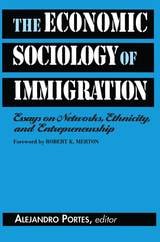
The Economic Sociology of Immigration
Essays on Networks, Ethnicity, and EntrepreneurshipAlejandro Portes
Russell Sage Foundation, 1995
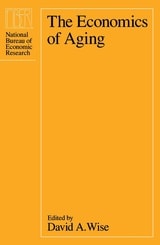
The Economics of Aging
Edited by David A. Wise
University of Chicago Press, 1988
The Economics of Aging presents results from an ongoing National Bureau of Economic Research project. Contributors consider the housing mobility and living arrangements of the elderly, their labor force participation and retirement, the economics of their health care, and their financial status. The goal of the research is to further our understanding both of the factors that determine the well-being of the elderly and of the consequences that follow from an increasingly older population with longer individual life spans. Each paper is accompanied by critical commentary.
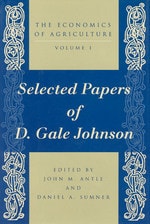
The Economics of Agriculture, Volume 1
Selected Papers of D. Gale JohnsonEdited by John M. Antle and Daniel A. Sumner
University of Chicago Press, 1995
Volume 1 collects for the first time in one source Johnson's most important work. These classic papers explore the consequences of government intervention in United States and world agriculture; the economics of agricultural supply and of rural labor and human capital issues; and the analysis of agricultural productivity in poor countries, including the centrally planned economies of China and Eastern Europe. Models of precise reasoning and powerful empirical research, the papers cover a wide range of topics—from U.S. commodity price policy to the economics of population control and farm policy reform in China. Volume 1 includes a definitive bibliography of Johnson's published writings.
Volume 2 presents twenty-two papers by Johnson's former students and colleagues. International in scope, these papers explore themes and topics inspired by Johnson's work, including agricultural policy and U.S. farm prices; European Common Agricultural Policy; and agricultural and rural development in the Third World. Contributors to Volume 2 are David G. Abler, John M. Antle, Richard R. Barichello, Andrew P. Barkley, Karen Brooks, David S. Bullock, Robert E. Evenson, B. Delworth Gardner, Bruce L. Gardner, Dale M. Hoover, Wallace E. Huffman, Paul R. Johnson, Yoav Kislev, Justin Yifu Lin, Yair Mundlak, John Nash, Keijuro Otsuka, Willis Peterson, Todd E. Petzel, Vernon W. Ruttan, Maurice Schiff, G. Edward Schuh, Theodore W. Schultz, James Snyder, Vasant Sukhatme, Daniel A. Sumner, Vinod Thomas, George Tolley, and Alberto Valdes.
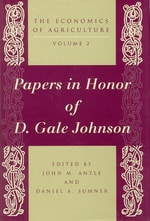
The Economics of Agriculture, Volume 2
Papers in Honor of D. Gale JohnsonEdited by John M. Antle and Daniel A. Sumner
University of Chicago Press, 1995
Volume 1 collects for the first time in one source Johnson's most important work. These classic papers explore the consequences of government intervention in United States and world agriculture; the economics of agricultural supply and of rural labor and human capital issues; and the analysis of agricultural productivity in poor countries, including the centrally planned economies of China and Eastern Europe. Models of precise reasoning and powerful empirical research, the papers cover a wide range of topics—from U.S. commodity price policy to the economics of population control and farm policy reform in China. Volume 1 includes a definitive bibliography of Johnson's published writings.
Volume 2 presents twenty-two papers by Johnson's former students and colleagues. International in scope, these papers explore themes and topics inspired by Johnson's work, including agricultural policy and U.S. farm prices; European Common Agricultural Policy; and agricultural and rural development in the Third World. Contributors to Volume 2 are David G. Abler, John M. Antle, Richard R. Barichello, Andrew P. Barkley, Karen Brooks, David S. Bullock, Robert E. Evenson, B. Delworth Gardner, Bruce L. Gardner, Dale M. Hoover, Wallace E. Huffman, Paul R. Johnson, Yoav Kislev, Justin Yifu Lin, Yair Mundlak, John Nash, Keijuro Otsuka, Willis Peterson, Todd E. Petzel, Vernon W. Ruttan, Maurice Schiff, G. Edward Schuh, Theodore W. Schultz, James Snyder, Vasant Sukhatme, Daniel A. Sumner, Vinod Thomas, George Tolley, and Alberto Valdes.
The Economics of Art Museums
Edited and with an Introduction by Martin Feldstein
University of Chicago Press, 1991
This volume brings together nontechnical essays on these issues by economists associated with the NBER and personal statements by leaders of America's major national art museums and related foundations. It can be read not only by economists but also by museum officials and trustees. Museum directors generally come to their responsibilities with a background in art history and curatorial work but without experience in thinking about the management and public policy aspects of museum administration. Trustees who serve on museum boards generally have a background in business or law but have not previously tried to apply their experience to the unusual economic problems of museums. The background papers, the panelists' remarks, and the summary of the discussion will help them to approach their responsibilities with a better understanding of the problems and possibilities of the museum.
The Economics of Artificial Intelligence
An AgendaEdited by Ajay Agrawal, Joshua Gans, and Avi Goldfarb
University of Chicago Press, 2019
Contributors:
Daron Acemoglu, Massachusetts Institute of Technology
Philippe Aghion, Collège de France
Ajay Agrawal, University of Toronto
Susan Athey, Stanford University
James Bessen, Boston University School of Law
Erik Brynjolfsson, MIT Sloan School of Management
Colin F. Camerer, California Institute of Technology
Judith Chevalier, Yale School of Management
Iain M. Cockburn, Boston University
Tyler Cowen, George Mason University
Jason Furman, Harvard Kennedy School
Patrick Francois, University of British Columbia
Alberto Galasso, University of Toronto
Joshua Gans, University of Toronto
Avi Goldfarb, University of Toronto
Austan Goolsbee, University of Chicago Booth School of Business
Rebecca Henderson, Harvard Business School
Ginger Zhe Jin, University of Maryland
Benjamin F. Jones, Northwestern University
Charles I. Jones, Stanford University
Daniel Kahneman, Princeton University
Anton Korinek, Johns Hopkins University
Mara Lederman, University of Toronto
Hong Luo, Harvard Business School
John McHale, National University of Ireland
Paul R. Milgrom, Stanford University
Matthew Mitchell, University of Toronto
Alexander Oettl, Georgia Institute of Technology
Andrea Prat, Columbia Business School
Manav Raj, New York University
Pascual Restrepo, Boston University
Daniel Rock, MIT Sloan School of Management
Jeffrey D. Sachs, Columbia University
Robert Seamans, New York University
Scott Stern, MIT Sloan School of Management
Betsey Stevenson, University of Michigan
Joseph E. Stiglitz. Columbia University
Chad Syverson, University of Chicago Booth School of Business
Matt Taddy, University of Chicago Booth School of Business
Steven Tadelis, University of California, Berkeley
Manuel Trajtenberg, Tel Aviv University
Daniel Trefler, University of Toronto
Catherine Tucker, MIT Sloan School of Management
Hal Varian, University of California, Berkeley
The Economics of Attention
Style and Substance in the Age of InformationRichard A. Lanham
University of Chicago Press, 2006
With all the verve and erudition that have established his earlier books as classics, Richard A. Lanham here traces our epochal move from an economy of things and objects to an economy of attention. According to Lanham, the central commodity in our new age of information is not stuff but style, for style is what competes for our attention amidst the din and deluge of new media. In such a world, intellectual property will become more central to the economy than real property, while the arts and letters will grow to be more crucial than engineering, the physical sciences, and indeed economics as conventionally practiced. For Lanham, the arts and letters are the disciplines that study how human attention is allocated and how cultural capital is created and traded. In an economy of attention, style and substance change places. The new attention economy, therefore, will anoint a new set of moguls in the business world—not the CEOs or fund managers of yesteryear, but new masters of attention with a grounding in the humanities and liberal arts.
Lanham’s The Electronic Word was one of the earliest and most influential books on new electronic culture. The Economics of Attention builds on the best insights of that seminal book to map the new frontier that information technologies have created.
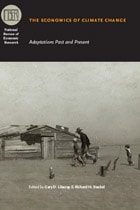
The Economics of Climate Change
Adaptations Past and PresentEdited by Gary D. Libecap and Richard H. Steckel
University of Chicago Press, 2011
While debates over the consequences of climate change are often pessimistic, historical data from the past two centuries indicate many viable opportunities for responding to potential changes. This volume takes a close look at the ways in which economies—particularly that of the United States—have adjusted to the challenges climate change poses, including institutional features that help insulate the economy from shocks, new crop varieties, irrigation, flood control, and ways of extending cultivation to new geographic areas. These innovations indicate that people and economies have considerable capacity to acclimate, especially when private gains complement public benefits. Options for adjusting to climate change abound, and with improved communication and the emergence of new information and technologies, the potential for adaptation will be even greater in the future.

The Economics of Crime
Lessons For and From Latin AmericaEdited by Rafael Di Tella, Sebastian Edwards, and Ernesto Schargrodsky
University of Chicago Press, 2010
The Economics of Food Price Volatility
Edited by Jean-Paul Chavas, David Hummels, and Brian D. Wright
University of Chicago Press, 2014
The researchers who contributed to The Economics of Food Price Volatility address these and other questions. They examine the forces driving both recent and historical patterns in food price volatility, as well as the effects of various public policies in affecting this volatility. The chapters include studies of the links between food and energy markets, the impact of biofuel policy on the level and variability of food prices, and the effects of weather-related disruptions in supply. The findings shed light on the way price volatility affects the welfare of farmers, traders, and consumers.