Results by title
110 books match the query 'Education (Higher)' and 20 start with t
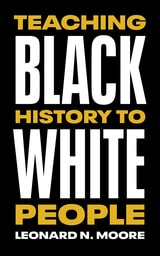
Teaching Black History to White People
By Leonard N. Moore
University of Texas Press, 2021
Leonard Moore has been teaching Black history for twenty-five years, mostly to white people. Drawing on decades of experience in the classroom and on college campuses throughout the South, as well as on his own personal history, Moore illustrates how an understanding of Black history is necessary for everyone.
With Teaching Black History to White People, which is “part memoir, part Black history, part pedagogy, and part how-to guide,” Moore delivers an accessible and engaging primer on the Black experience in America. He poses provocative questions, such as “Why is the teaching of Black history so controversial?” and “What came first: slavery or racism?” These questions don’t have easy answers, and Moore insists that embracing discomfort is necessary for engaging in open and honest conversations about race. Moore includes a syllabus and other tools for actionable steps that white people can take to move beyond performative justice and toward racial reparations, healing, and reconciliation.
Teaching Working Class
Sherry Lee Linkon
University of Massachusetts Press, 1999
Tell Me How It Reads
Tutoring Deaf and Hearing Students in the Writing CenterRebecca Day Babcock
Gallaudet University Press, 2012
Deaf students are attending mainstream postsecondary institutions in increasing numbers, raising the stakes for the complicated and multifaceted task of tutoring deaf students at these schools. Common tutoring practices used with hearing students do not necessarily work for deaf people. Rebecca Day Babcock researched and wrote Tell Me How It Reads: Tutoring Deaf and Hearing Students in the Writing Center to supply writing instructors an effective set of methods for teaching Deaf and other students how to be better writers.
Babcock’s book is based on the resulting study of tutoring writing in the college context with both deaf and hearing students and their tutors. She describes in detail sessions between deaf students, hearing tutors, and the interpreters that help them communicate, using a variety of English or contact signing rather than ASL in the tutorials. These experiences illustrate the key differences between deaf-hearing and hearing-hearing tutorials and suggest ways to modify tutoring and tutor-training practices accordingly. Although this study describes methods for tutoring deaf students, its focus on students who learn differently can apply to teaching writing to Learning Disabled students, ESL students, and other students with different learning styles. Ultimately, the well-grounded theory analysis within Tell Me How It Reads provides a complete paradigm for tutoring in all writing centers.
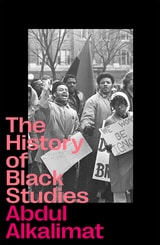
The History of Black Studies
Abdul Alkalimat
Pluto Press, 2021
A surge of African American enrolment and student activism brought Black Studies to many US campuses in the 1960s. Sixty years later, Black Studies programs are taught at more than 1,300 universities worldwide. This book is the first history of how that happened.
Black Studies founder and movement veteran Abdul Alkalimat offers a comprehensive history of the discipline that will become a key reference for generations to come. Structured in three broadly chronological sections - Black Studies as intellectual history; as social movement; and as academic profession - the book demonstrates how Black people themselves established the field long before its institutionalization in university programs.
At its heart, Black Studies is profoundly political. Black Power, the New Communist Movement, the Black women’s and students’ movements – each step in the journey for Black liberation influenced and was influenced by this revolutionary discipline.
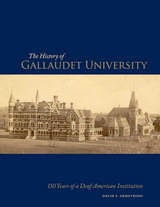
The History of Gallaudet University
150 Years of a Deaf American InstitutionDavid F. Armstrong
Gallaudet University Press, 2014
At first a tiny college of fewer than 200 students, Gallaudet’s growth paralleled the emergence of the American Deaf Community and the history of the nation in general. In the same way that the country’s land-grant universities brought higher education to more American students than ever before, Gallaudet offered the same opportunities to deaf students for the first time. Gallaudet mirrored other institutions in addressing major issues of the time, from legislated segregation to the Civil Rights movement that inspired the struggle by deaf people to gain control of the governance of their university. Most critically, this volume details poignantly the evolution of American Sign Language as a language of scholarship at Gallaudet during a time when its use in educational institutions was largely discouraged or prohibited. Through story and image, it traces the historic path that Gallaudet traveled to be recognized as the finest institution of higher education for deaf people in the world.
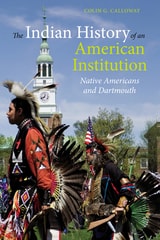
The Indian History of an American Institution
Native Americans and DartmouthColin G. Calloway
Dartmouth College Press, 2010
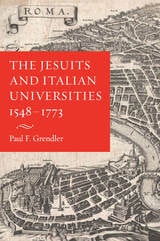
The Jesuits and Italian Universities, 1548-1773
Paul F. Grendler
Catholic University of America Press, 2017
The Jesuits were rejected. Italy already had fourteen universities famous for their research and teaching. They were ruled by princes and cities who refused to share their universities with a religious order led by Spaniards. Between 1548 and 1773 the Jesuits made sixteen attempts, from Turin in the north to Messina in Sicily, to found new universities or to become professors in existing universities. They had some successes, as they helped found four new universities and became professors of mathematics in three more universities. But they suffered nine total failures. The battles between universities, civil governments, and the Jesuits were memorable. Lay professors accused the Jesuits of teaching philosophy badly. The Jesuits charged that Italian professors delivered few lectures and skipped most of Aristotle. Behind the denunciations were profound differences about what universities should be.
Italian universities were dominated by law and the Jesuits emphasized the humanities and theology. Nevertheless, the Society of Jesus had an impact. They added cases of conscience to the training of clergymen. They made four years of study the norm for a degree in theology. They offered a student-centered alternative to Italian universities that focused on research and ignored student misbehavior.
Paul Grendler tells a new story based on years of research in a dozen archives. Anyone interested in the volatile mix of universities, religion, and politics will find this book fascinating and instructive, as will anyone who contemplates what it means to be a Catholic university.
The Journey Before Us
First-Generation Pathways from Middle School to CollegeLaura Nichols
Rutgers University Press, 2020
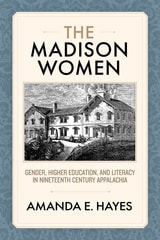
The Madison Women
Gender, Higher Education, and Literacy in Nineteenth-Century AppalachiaAmanda E Hayes
West Virginia University Press, 2024
Incorporating captivating mini-biographies of women who attended Madison College and who went on to change their communities in ways large and small, this book reveals how the lives of its students impart lessons about history, regional culture, and how we can shape the Appalachia's future.
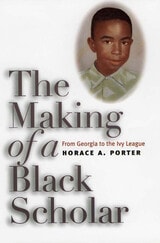
The Making of a Black Scholar
From Georgia to the Ivy LeagueHorace A. Porter
University of Iowa Press, 2003
The Making of a Black Scholar is structured around schools. Porter attends Georgia's segregated black schools until he enters the privileged world of Amherst College. He graduates (spending one semester at Morehouse College) and moves on to graduate study at Yale. He starts his teaching career at Detroit's Wayne State University and spends the 1980s at Dartmouth College and the 1990s at Stanford University.

The New Buffalo
The Struggle for Aboriginal Post-Secondary Education in CanadaBlair Stonechild
University of Manitoba Press, 2006

The Ocean in the School
Pacific Islander Students Transforming Their UniversityRick Bonus
Duke University Press, 2020
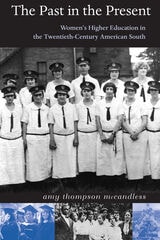
The Past in the Present
Women's Higher Education in the Twentieth-Century American SouthAmy T. McCandless
University of Alabama Press, 1999
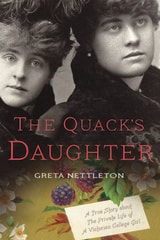
The Quack's Daughter
A True Story about the Private Life of a Victorian College Girl, Revised EditionGreta Nettleton
University of Iowa Press, 2014
This lively, stereotype-shattering story might have been lost, had Cora’s great-granddaughter, Greta Nettleton, not decided to go through some old family trunks instead of discarding most of the contents unexamined. Inside she discovered a rich cache of Cora’s college memorabilia—essential complements to her 1885 diary, which Nettleton had already begun to read. The Quack’s Daughter details Cora’s youthful travails and adventures during a time of great social and economic transformation. From her working-class childhood to her gilded youth and her later married life, Cora experienced triumphs and disappointments as a gifted concert pianist that the reader will recognize as tied to the limited opportunities open to women at the turn of the twentieth century, as well as to the dangerous consequences for those who challenged social norms.
Set in an era of surging wealth torn by political controversy over inequality and women’s rights and widespread panic about domestic terrorists, The Quack’s Daughter is illustrated with over a hundred original images and photographs that illuminate the life of a spirited and charming heroine who ultimately faced a stark life-and-death crisis that would force her to re-examine her doubts about her mother’s medical integrity.
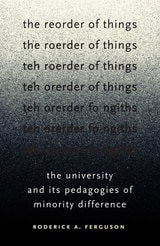
The Reorder of Things
The University and Its Pedagogies of Minority DifferenceRoderick A. Ferguson
University of Minnesota Press, 2012
In the 1960s and 1970s, minority and women students at colleges and universities across the United States organized protest movements to end racial and gender inequality on campus. African American, Chicano, Asia American, American Indian, women, and queer activists demanded the creation of departments that reflected their histories and experiences, resulting in the formation of interdisciplinary studies programs that hoped to transform both the university and the wider society beyond the campus.
In The Reorder of Things, however, Roderick A. Ferguson traces and assesses the ways in which the rise of interdisciplines—departments of race, gender, and ethnicity; fields such as queer studies—were not simply a challenge to contemporary power as manifest in academia, the state, and global capitalism but were, rather, constitutive of it. Ferguson delineates precisely how minority culture and difference as affirmed by legacies of the student movements were appropriated and institutionalized by established networks of power.
Critically examining liberationist social movements and the cultural products that have been informed by them, including works by Adrian Piper, Toni Cade Bambara, Jhumpa Lahiri, and Zadie Smith, The Reorder of Things argues for the need to recognize the vulnerabilities of cultural studies to co-option by state power and to develop modes of debate and analysis that may be in the institution but are, unequivocally, not of it.
This Fine Place So Far from Home
Voices of Academics from the Working Classedited by C. L. Barney Dews and Carolyn Leste Law
Temple University Press, 1995
These autobiographical and analytical essays by a diverse group of professors and graduate students from working-class families reveal an academic world in which "blue-collar work is invisible." Describing conflict and frustration, the contributors expose a divisive middle-class bias in the university setting. Many talk openly about how little they understood about the hierarchy and processes of higher education, while others explore how their experiences now affect their relationships with their own students. They all have in common the anguish of choosing to hide their working-class background, to keep the language of home out of the classroom and the ideas of school away from home. These startlingly personal stories highlight the fissure between a working-class upbringing and the more privileged values of the institution.
Threshold Conscripts
Rhetoric and Composition Teaching AssistantshipsWilliam J. Macauley
University Press of Colorado, 2023
Transforming the Academy
Faculty Perspectives on Diversity and PedagogyWillie-LeBreton, Sarah
Rutgers University Press, 2016
Transiciones
Pathways of Latinas and Latinos Writing in High School and CollegeTodd Ruecker
Utah State University Press, 2015
Transiciones is a thorough ethnography of seven Latino students in transition between high school and community college or university. Data gathered over two years of interviews with the students, their high school English teachers, and their writing teachers and administrators at postsecondary institutions reveal a rich picture of the conflicted experience of these students as they attempted to balance the demands of schooling with a variety of personal responsibilities.
Todd Ruecker explores the disconnect between students’ writing experiences in high school and higher education and examines the integral role that writing plays in college. Considering the almost universal requirement that students take a writing class in their critical first year of college, he contends that it is essential for composition researchers and teachers to gain a fuller understanding of the role they play in supporting and hindering Latina and Latino students’ transition to college.
Arguing for situating writing programs in larger discussions of high school/college alignment, student engagement, and retention, Transiciones raises the profile of what writing programs can do while calling composition teachers, administrators, and scholars to engage in more collaboration across the institution, across institutions, and across disciplines to make the transition from high school to college writing more successful for this important group of students.