Results by title
104 books match the query 'Employees' and 16 start with t
The Analysis of Firms and Employees
Quantitative and Qualitative ApproachesEdited by Stefan Bender, Julia Lane, Kathryn L. Shaw, Fredrik Andersson, and Till von Wachter
University of Chicago Press, 2008
The Company We Keep
Occupational Community in the High-Tech Network SocietyDaniel Marschall
Temple University Press, 2014
At the birth of the Internet Age, computer technologists in small, aggressive software development companies became part of a unique networked occupational community. They were creative, team-oriented, and enthusiastic workers who built "boundaryless careers," hopping from one employer to another.
In his absorbing ethnography The Company We Keep, sociologist Daniel Marschall immerses himself in IntenSivity, one such technological workplace. Chronicling the employees' experiences, Marschall examines how these workers characterize their occupational culture, share values and work practices, and help one another within their community. He sheds light on the nature of this industry marked by highly skilled jobs and rapid technological change.
The experiences at IntenSivity are now mirrored by employees at Facebook and thousands of other cutting-edge, high-tech start-up firms. The Company We Keep helps us understand the emergence of virtual work communities and the character of the contemporary labor market at the level of a small enterprise.
The Digital Factory
The Human Labor of AutomationMoritz Altenried
University of Chicago Press, 2022
The workers of today’s digital factory include those in Amazon warehouses, delivery drivers, Chinese gaming workers, Filipino content moderators, and rural American search engine optimizers. Repetitive yet stressful, boring yet often emotionally demanding, these jobs require little formal qualification, but can demand a large degree of skills and knowledge. This work is often hidden behind the supposed magic of algorithms and thought to be automated, but it is in fact highly dependent on human labor.
The workers of today’s digital factory are not as far removed from a typical auto assembly line as we might think. Moritz Altenried takes us inside today’s digital factories, showing that they take very different forms, including gig economy platforms, video games, and Amazon warehouses. As Altenried shows, these digital factories often share surprising similarities with factories from the industrial age. As globalized capitalism and digital technology continue to transform labor around the world, Altenried offers a timely and poignant exploration of how these changes are restructuring the social division of labor and its geographies as well as the stratifications and lines of struggle.

The Expert Library
Staffing, Sustaining, And Advancing TheScott Walter
Assoc of College & Research Libraries, 2011
The Forgotten Memoir of John Knox
A Year in the Life of a Supreme Court Clerk in FDR's WashingtonJohn Knox
University of Chicago Press, 2002
When John Frush Knox (1907-1997) wrote these words, he was in the middle of law school, and his attempt at surpassing Pepys—part scrapbook, part social commentary, and part recollection—had already reached 750 pages. His efforts as a chronicler might have landed in a family attic had he not secured an eminent position after graduation as law clerk to Justice James C. McReynolds—arguably one of the most disagreeable justices to sit on the Supreme Court—during the tumultuous year when President Franklin D. Roosevelt tried to "pack" the Court with justices who would approve his New Deal agenda. Knox's memoir instead emerges as a record of one of the most fascinating periods in American history.
The Forgotten Memoir of John Knox—edited by Dennis J. Hutchinson and David J. Garrow—offers a candid, at times naïve, insider's view of the showdown between Roosevelt and the Court that took place in 1937. At the same time, it marvelously portrays a Washington culture now long gone. Although the new Supreme Court building had been open for a year by the time Knox joined McReynolds' staff, most of the justices continued to work from their homes, each supported by a small staff. Knox, the epitome of the overzealous and officious young man, after landing what he believes to be a dream position, continually fears for his job under the notoriously rude (and nakedly racist) justice. But he soon develops close relationships with the justice's two black servants: Harry Parker, the messenger who does "everything but breathe" for the justice, and Mary Diggs, the maid and cook. Together, they plot and sidestep around their employer's idiosyncrasies to keep the household running while history is made in the Court.
A substantial foreword by Dennis Hutchinson and David Garrow sets the stage, and a gallery of period photos of Knox, McReynolds, and other figures of the time gives life to this engaging account, which like no other recaptures life in Washington, D.C., when it was still a genteel southern town.
The Pandemic Workplace
How We Learned to Be Citizens in the OfficeIlana Gershon
University of Chicago Press, 2024
In The Pandemic Workplace, anthropologist Ilana Gershon turns her attention to the US workplace and how it changed—and changed us—during the pandemic. She argues that the unprecedented organizational challenges of the pandemic forced us to radically reexamine our attitudes about work and to think more deeply about how values clash in the workplace. These changes also led us as workers to engage more with the contracts that bind us as we rethought when and how we allow others to tell us what to do.
Based on over two hundred interviews, Gershon’s book reveals how negotiating these tensions during the pandemic made the workplace into a laboratory for democratic living—the key place where Americans are learning how to develop effective political strategies and think about the common good. Exploring the explicit and unspoken ways we are governed (and govern others) at work, this accessible book shows how the workplace teaches us to be democratic citizens.
The Postdevelopmental State
Dilemmas of Economic Democratization in Contemporary South KoreaJamie Doucette
University of Michigan Press, 2024
Winner of the 2025 Association of Korean Studies in Europe Book Prize
Over the last 25 years, South Korea has witnessed growing inequality due to the proliferation of non-standard employment, ballooning household debt, deepening export-dependency, and the growth of super-conglomerates such as Samsung and Hyundai. Combined with declining rates of economic growth and turbulent political events, these processes mark a departure from Korea’s past recognition as a high growth “developmental state.”
The Postdevelopmental State radically reframes research into the South Korean economy by foregrounding the efforts of pro-democratic reformers and social movements in South Korea to create an alternative economic model—one that can address Korea’s legacy of authoritarian economic development during the Cold War and neoliberal restructuring since the Asian Financial Crisis of the late 1990s. Understanding these attempts offers insight into the types of economic reforms that have been enacted since the late 1990s as well as the continued legacy of dictatorship-era politics within the Korean political and legal system. By examining the dilemmas economic democracy has encountered over the past 25 years, from the IMF Crisis to the aftermath of the Candlelight Revolution, the book reveals the enormous and comprehensive challenges involved in addressing the legacy of authoritarian economic models and their neoliberal transformations.
The Proletarian Gamble
Korean Workers in Interwar JapanKen C. Kawashima
Duke University Press, 2009
Kawashima draws on previously unseen archival materials from interwar Japan as he describes how Korean migrants struggled against various recruitment practices, unfair and discriminatory wages, sudden firings, racist housing practices, and excessive bureaucratic red tape. Demonstrating that there was no single Korean “minority,” he reveals how Koreans exploited fellow Koreans and how the stratification of their communities worked to the advantage of state and capital. However, Kawashima also describes how, when migrant workers did organize—as when they became involved in Rōsō (the largest Korean communist labor union in Japan) and in Zenkyō (the Japanese communist labor union)—their diverse struggles were united toward a common goal. In The Proletarian Gamble, his analysis of the Korean migrant workers' experiences opens into a much broader rethinking of the fundamental nature of capitalist commodity economies and the analytical categories of the proletariat, surplus populations, commodification, and state power.
The Regulation of Sexuality
Experiences of Family Planning WorkersCarole Joffe
Temple University Press, 1987
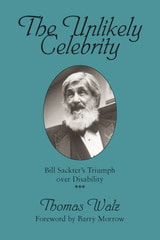
The Unlikely Celebrity
Bill Sackter's Triumph over DisabilityThomas Walz. Foreword by Barry Morrow
Southern Illinois University Press, 1998
Thomas Walz tells the story of Bill Sackter, a man who spent nearly half a century in a Minnesota mental institution and emerged to blossom into a most unlikely celebrity. Bill Sackter was committed to the Faribault State Hospital at the age of seven, there to remain until he was in his fifties. At the time of his commitment, Bill’s father had recently died; thus his sole contact with his family came through rare letters from his mother.
Some years after his discharge from Faribault as a result of the movement to deinstitutionalize the mentally ill in the 1960s, Bill enjoyed a serendipitous encounter with a young college student and part-time musician, Barry Morrow. Bill became part of the Morrow family and a regular in Morrow’s music group. When Morrow accepted a job at the School of Social Work at the University of Iowa, Bill followed him to Iowa City and was put in charge of a small coffee service.
Bill became an important part of the University of Iowa community, and Wild Bill’s Coffeeshop developed into an institution. A cheerful man of great good will who was a harmonica virtuoso, Bill began to inspire affectionate legends, and his life as a celebrity began in earnest. He was named Iowa’s Handicapped Person of the Year in 1977, and two television movies were made about his life—Bill, which earned Emmy awards for cowriter Barry Morrow and Mickey Rooney (as Bill) in 1981, and Bill on His Own in 1983. Years later, Morrow would earn an Oscar for his script of Rain Man.
Through vignettes ranging from hilarious to near tragic. Walz reveals a remarkable human being. An account of Bill's life in an institution is necessarily part of the story, but there is much more: Bill’s role in helping a young child recover from a coma, his menagerie of friends, his love for a pet parakeet, his late-life Bar Mitzvah, his failure as a woodworker, his success as Santa, and his dignified death at the age of seventy.
The Writers
A History of American Screenwriters and Their GuildBanks, Miranda J
Rutgers University Press, 2016
There Used to Be Order
Life on the Copperbelt after the Privatisation of the Zambia Consolidated Copper MinesPatience Mususa
University of Michigan Press, 2021
Threads
Gender, Labor, and Power in the Global Apparel IndustryJane L. Collins
University of Chicago Press, 2003
To dispel these misunderstandings, Jane L. Collins visited two very different apparel firms and their factories in the United States and Mexico. Moving from corporate headquarters to factory floors, her study traces the diverse ties that link First and Third World workers and managers, producers and consumers. Collins examines how the transnational economics of the apparel industry allow firms to relocate or subcontract their work anywhere in the world, making it much harder for garment workers in the United States or any other country to demand fair pay and humane working conditions.
Putting a human face on globalization, Threads shows not only how international trade affects local communities but also how workers can organize in this new environment to more effectively demand better treatment from their distant corporate employers.
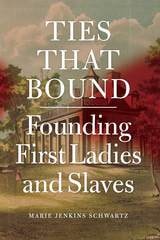
Ties That Bound
Founding First Ladies and SlavesMarie Jenkins Schwartz
University of Chicago Press, 2017
Unlike other histories that treat the stories of the First Ladies’ slaves as separate from the lives of their mistresses, Ties That Bound closely examines the relationships that developed between the First Ladies and their slaves. For elite women and their families, slaves were more than an agricultural workforce; slavery was an entire domestic way of life that reflected and reinforced their status. In many cases slaves were more constant companions to the white women of the household than were their husbands and sons, who often traveled or were at war. By looking closely at the complicated intimacy these women shared, Schwartz is able to reveal how they negotiated their roles, illuminating much about the lives of slaves themselves, as well as class, race, and gender in early America.
By detailing the prevalence and prominence of slaves in the daily lives of women who helped shape the country, Schwartz makes it clear that it is impossible to honestly tell the stories of these women while ignoring their slaves. She asks us to consider anew the embedded power of slavery in the very earliest conception of American politics, society, and everyday domestic routines.
Trollope in the Post Office
R. H. Super
University of Michigan Press, 1981
Trying to Make Law Matter
Legal Reform and Labor Law in the Soviet UnionKathryn Hendley
University of Michigan Press, 1996
Trying to Make Law Matter provides unique insight into the possibility of creating the rule of law. It is based on Kathryn Hendley's pathbreaking field research into the actual practices of Russian trial courts, lawyers, factory managers, and labor unions, contrasting the idealistic legal pronouncements of workers' rights during the Gorbachev era with tawdry reality of inadequate courts and dispirited workers.
Hendley frames her study of Russian law in action with a lively theoretical analysis of the fundamental prerequisites of the rule of law not only as a set of ideals but as a legal system that rests on the participation of rights-bearing citizens. This work will appeal to law, political science, and sociology scholars as well as area specialists and those who study transitions to market democracy.
Kathryn Hendley is Professor, Law and Political Science, University of Wisconsin, Madison.