Results by title
166 books match the query 'Enslavement' and 33 start with t
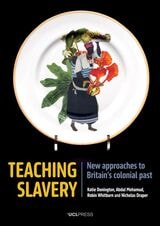
Teaching Slavery
New Approaches to Britain's Colonial PastKatie Donington, Abdul Mohamud, Robin Whitburn, and Nicholas Draper
University College London, 2023
This groundbreaking book combines the latest academic research on Britain’s involvement in colonial slavery with innovative thinking on teaching “difficult histories” in the classroom. It addresses three main shortcomings in how slavery is taught in British secondary schools: insufficient teacher training in both historical content and pedagogy; a shortage of high-quality, research-informed teaching resources; and a lack of published guidance to support ethical and effective classroom engagement. Offering educators both historical and pedagogical approaches to discussing slavery, it examines key themes of race, gender, resistance, and abolition through illuminating historical examples.
The Archaeology of Slavery
A Comparative Approach to Captivity and CoercionEdited by Lydia Wilson Marshall
Southern Illinois University Press, 2014
Plantation sites, especially those in the southeastern United States, have long dominated the archaeological study of slavery. These antebellum estates, however, are not representative of the range of geographic locations and time periods in which slavery has occurred. As archaeologists have begun to investigate slavery in more diverse settings, the need for a broader interpretive framework is now clear.
The Archaeology of Slavery: A Comparative Approach to Captivity and Coercion, edited by Lydia Wilson Marshall, develops an interregional and cross-temporal framework for the interpretation of slavery. Contributors consider how to define slavery, identify it in the archaeological record, and study it as a diachronic process from enslavement to emancipation and beyond.
Essays cover the potential material representations of slavery, slave owners’ strategies of coercion and enslaved people’s methods of resisting this coercion, and the legacies of slavery as confronted by formerly enslaved people and their descendants. Among the peoples, sites, and periods examined are a late nineteenth-century Chinese laborer population in Carlin, Nevada; a castle slave habitation at San Domingo and a more elite trading center at nearby Juffure in the Gambia; two eighteenth-century plantations in Dominica; Benin’s Hueda Kingdom in the seventeenth and eighteenth centuries; plantations in Zanzibar; and three fugitive slave sites on Mauritius—an underground lava tunnel, a mountain, and a karst cave.
This essay collection seeks to analyze slavery as a process organized by larger economic and social forces with effects that can be both durable and wide-ranging. It presents a comparative approach that significantly enriches our understanding of slavery.
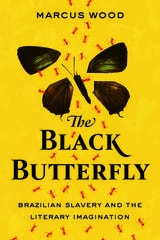
The Black Butterfly
Brazilian Slavery and the Literary ImaginationMarcus Wood
West Virginia University Press, 2019
The Black Butterfly focuses on the slavery writings of three of Brazil’s literary giants—Machado de Assis, Castro Alves, and Euclides da Cunha. These authors wrote in the late nineteenth and early twentieth centuries, as Brazil moved into and then through the 1888 abolition of slavery. Assis was Brazil’s most experimental novelist; Alves was a Romantic poet with passionate liberationist politics, popularly known as “the poet of the slaves”; and da Cunha is known for the masterpiece Os Sertões (The Backlands), a work of genius that remains strangely neglected in the scholarship of transatlantic slavery.
Wood finds that all three writers responded to the memory of slavery in ways that departed from their counterparts in Europe and North America, where emancipation has typically been depicted as a moment of closure. He ends by setting up a wider literary context for his core authors by introducing a comparative study of their great literary abolitionist predecessors Luís Gonzaga Pinto da Gama and Joaquim Nabuco. The Black Butterfly is a revolutionary text that insists Brazilian culture has always refused a clean break between slavery and its aftermath. Brazilian slavery thus emerges as a living legacy subject to continual renegotiation and reinvention.
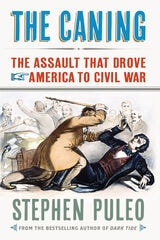
The Caning
The Assault That Drove America to Civil WarStephen Puleo
Westholme Publishing, 2012
Early in the afternoon of May 22, 1856, ardent pro-slavery Congressman Preston S. Brooks of South Carolina strode into the United States Senate Chamber in Washington, D.C., and began beating renowned anti-slavery Senator Charles Sumner with a gold-topped walking cane. Brooks struck again and again—more than thirty times across Sumner’s head, face, and shoulders—until his cane splintered into pieces and the helpless Massachusetts senator, having nearly wrenched his desk from its fixed base, lay unconscious and covered in blood. It was a retaliatory attack. Forty-eight hours earlier, Sumner had concluded a speech on the Senate floor that had spanned two days, during which he vilified Southern slaveowners for violence occurring in Kansas, called Stephen A. Douglas of Illinois a “noise-some, squat, and nameless animal,” and famously charged Brooks’s second cousin, South Carolina Senator Andrew Butler, as having “a mistress. . . who ugly to others, is always lovely to him. . . . I mean, the harlot, Slavery.” Brooks not only shattered his cane during the beating, but also destroyed any pretense of civility between North and South.
One of the most shocking and provocative events in American history, the caning convinced each side that the gulf between them was unbridgeable and that they could no longer discuss their vast differences of opinion regarding slavery on any reasonable level.The Caning: The Assault That Drove America to Civil War tells the incredible story of this transformative event. While Sumner eventually recovered after a lengthy convalescence, compromise had suffered a mortal blow. Moderate voices were drowned out completely; extremist views accelerated, became intractable, and locked both sides on a tragic collision course.
The caning had an enormous impact on the events that followed over the next four years: the meteoric rise of the Republican Party and Abraham Lincoln; the Dred Scott decision; the increasing militancy of abolitionists, notably John Brown’s actions; and the secession of the Southern states and the founding of the Confederacy. As a result of the caning, the country was pushed, inexorably and unstoppably, to war. Many factors conspired to cause the Civil War, but it was the caning that made conflict and disunion unavoidable five years later.

The Color Black
Enslavement and Erasure in IranBeeta Baghoolizadeh
Duke University Press, 2024
The Day They Hanged Old Brown
The Making of Celebrity and Martyrdom in the Civil War EraJohn R. Van Atta
University of Missouri Press, 2025
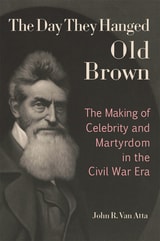
Brown’s lifespan covered most of the period between the Revolution and the Civil War, a time of the still-early beginnings of the United States. Only then had his kind of “celebrity” started to matter. From different economic and moral perspectives, politically aware Americans clashed over different visions for the future of the country. At that time, any disruptive figure might be taken as a barometer of the progress or the decline of the republic. A function of the widely varying newspapers and magazines of that day, celebrity offered Americans an angle of vision, happily or not, as to who they were or were becoming or believed themselves to be—as if by a mirror reflection.
In The Day They Hanged Old Brown, John Van Atta examines the creation of celebrity in John Brown’s time and how it differed from modern day perceptions. Yet, as applicable as the concept of celebrity is in this case, the story of Brown’s notoriety represents far more. To his admirers, Brown was not merely a celebrity; he was a hero and, after his sacrificial death, a martyr. Not all celebrities rise to such levels. This book traces the meaning of heroism and martyrdom—as well as the opposite side of that coin, villainy—and suggests that John Brown’s story and legacy helped to redefine these concepts for many Americans during the era of the Civil War, before modern historians began to deliberate him.
The Dred Scott Case
Historical and Contemporary Perspectives on Race and LawDavid Thomas Konig
Ohio University Press, 2010
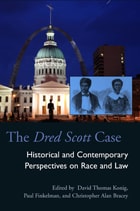
In 1846 two slaves, Dred and Harriet Scott, filed petitions for their freedom in the Old Courthouse in St. Louis, Missouri. As the first true civil rights case decided by the U.S. Supreme Court, Dred Scott v. Sandford raised issues that have not been fully resolved despite three amendments to the Constitution and more than a century and a half of litigation.
The Dred Scott Case: Historical and Contemporary Perspectives on Race and Law presents original research and the reflections of the nation’s leading scholars who gathered in St. Louis to mark the 150th anniversary of what was arguably the most infamous decision of the U.S. Supreme Court. The decision, which held that African Americans “had no rights” under the Constitution and that Congress had no authority to alter that, galvanized Americans and thrust the issue of race and law to the center of American politics. This collection of essays revisits the history of the case and its aftermath in American life and law. In a final section, the present-day justices of the Missouri Supreme Court offer their reflections on the process of judging and provide perspective on the misdeeds of their nineteenth-century predecessors who denied the Scotts their freedom.
Contributors: Austin Allen, Adam Arenson, John Baugh, Hon. Duane Benton, Christopher Alan Bracey, Alfred L. Brophy, Paul Finkelman, Louis Gerteis, Mark Graber, Daniel W. Hamilton, Cecil J. Hunt II, David Thomas Konig, Leland Ware, Hon. Michael A. Wolff

The Dutch Atlantic
Slavery, Abolition and EmancipationKwame Nimako and Glenn Willemsen
Pluto Press, 2011
The Dutch Atlantic interrogates the Dutch involvement in Atlantic slavery and assesses the historical consequences of this for contemporary European society.
Kwame Nimako and Glenn Willemsen show how the slave trade and slavery intertwined economic, social and cultural elements, including nation-state formation in the Netherlands and across Europe. They explore the mobilisation of European populations in the implementation of policies that facilitated Atlantic slavery and examine how European countries created and expanded laws that perpetuated colonisation.
Addressing key themes such as the incorporation of the formerly enslaved into post-slavery states and contemporary collective efforts to forget and/or remember slavery and its legacy in the Netherlands, this is an essential text for students of European history and postcolonial studies.
The Fugitive’s Gibraltar
Escaping Slaves and Abolitionism in New Bedford, MassachusettsKathryn Grover
University of Massachusetts Press, 2001
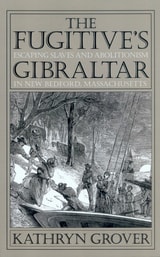
The Fugitive's Gibraltar is a richly researched work of social and cultural history that examines the city of New Bedford, Massachusetts as one of the most important and welcoming refuges for freedom-seeking enslaved people in antebellum America. The book's title derives from the phrase used by Frederick Douglass—himself among the most famous of New Bedford's many fugitive residents—to describe the city's reputation as a place of relative safety and freedom for Black Americans fleeing enslavement in the South.
Grover draws on an extraordinary breadth of primary sources to reconstruct the lives of fugitive slaves who came to New Bedford before the Civil War, as well as the city's larger African American community and the white and Black abolitionists who worked alongside them. The book explores how New Bedford's booming whaling economy—which depended heavily on Black labor and offered Black sailors wages equal to those of white sailors—created economic and social conditions unusually hospitable to free and freedom-seeking Black people. New Bedford's maritime character is thus deeply intertwined with its abolitionist identity.
The work examines the networks of people and organizations that sheltered, employed, and advocated for fugitives; traces individual stories of escape and resettlement; and situates New Bedford's experience within the broader national struggle over slavery, the Fugitive Slave Acts, and the abolitionist movement. Notable figures discussed include Frederick Douglass and Henry "Box" Brown. The book also sheds light on the daily lives, livelihoods, and community institutions of New Bedford's African American population—their churches, mutual aid societies, and social networks—providing a nuanced portrait of Black life in a northern city during this turbulent era.
The Glasgow Sugar Aristocracy
Scotland and Caribbean Slavery, 1775–1838Stephen Mullen
University of London Press, 2020
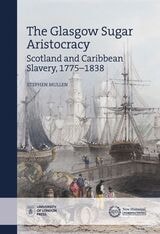
This important book assesses the size and nature of Caribbean slavery’s economic impact on British society. The Glasgow Sugar Aristocracy, a grouping of West India merchants and planters, became active before the emancipation of chattel slavery in the British West Indies in 1834. Many acquired nationally significant fortunes, and their investments percolated into the Scottish economy and wider society. At its core, the book traces the development of merchant capital and poses several interrelated questions during an era of rapid transformation, namely, what impact the private investments of West India merchants and colonial adventurers had on metropolitan society and the economy, as well as the wider effects of such commerce on industrial and agricultural development.
The book also examines the fortunes of temporary Scottish economic migrants who traveled to some of the wealthiest of the Caribbean islands, presenting the first large-scale survey of repatriated slavery fortunes via case studies of Scots in Jamaica, Grenada, and Trinidad before emancipation in 1834. It, therefore, takes a new approach to illuminate the world of individuals who acquired West Indian fortunes and ultimately explores, in an Atlantic frame, the interconnections between the colonies and metropole in the late eighteenth and early nineteenth centuries.
The Involuntary American
A Scottish Prisoner's Journey to the New WorldCarol R. Gardner
Westholme Publishing, 2024
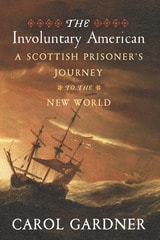
In the winter of 1650–51, one hundred fifty ragged and hungry Scottish prisoners of war arrived at Massachusetts Bay Colony, where they were sold as indentured laborers for 20 to 30 pounds each. Among them was Thomas Doughty, a common foot soldier who had survived the Battle of Dunbar, a forced marched of 100 miles without food or water, imprisonment in Durham Cathedral, and a difficult Atlantic crossing. An ordinary individual who experienced extraordinary events, Doughty was among some 420 Scottish soldiers who were captured during the War of the Three Kingdoms, transported to America, and sold between 1650 and 1651. Their experiences offer a fresh perspective on seventeenth-century life.
The Involuntary American: A Scottish Prisoner’s Journey to the New World by Carol Gardner describes Doughty’s life as a soldier, prisoner of war, exile, servant, lumberman, miller, and ultimately free landowner. It follows him and his peers through critical events: the apex of the Little Ice Age, the War of the Three Kingdoms, the colonization of New England, the burgeoning transatlantic trade in servants and slaves, King Philip’s and King William’s wars, and the Salem witch crisis. Firstperson accounts of individuals who lived through those events—Scottish, English, Puritan, Native American, wealthy, poor, working class, educated or not— provide rich period detail and a variety of perspectives.
The Involuntary American demonstrates how even individuals of humble circumstances were swept into the maelstrom of the First Global Age. It expands our understanding of immigration to the colonies, colonial servitude, the linkages and tensions between Europe, Massachusetts Bay, and America’s northeastern frontier, and of New England society in the early colonial period.
The Krio of West Africa
Islam, Culture, Creolization, and Colonialism in the Nineteenth CenturyGibril R. Cole
Ohio University Press, 2013
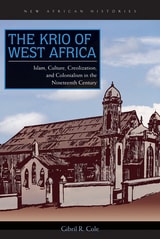
Sierra Leone’s unique history, especially in the development and consolidation of British colonialism in West Africa, has made it an important site of historical investigation since the 1950s. Much of the scholarship produced in subsequent decades has focused on the “Krio,” descendants of freed slaves from the West Indies, North America, England, and other areas of West Africa, who settled Freetown, beginning in the late eighteenth century. Two foundational and enduring assumptions have characterized this historiography: the concepts of “Creole” and “Krio” are virtually interchangeable; and the community to which these terms apply was and is largely self-contained, Christian, and English in worldview.
In a bold challenge to the long-standing historiography on Sierra Leone, Gibril Cole carefully disentangles “Krio” from “Creole,” revealing the diversity and permeability of a community that included many who, in fact, were not Christian. In Cole’s persuasive and engaging analysis, Muslim settlers take center stage as critical actors in the dynamic growth of Freetown’s Krio society.
The Krio of West Africa represents the results of some of the first sustained historical research to be undertaken since the end of Sierra Leone’s brutal civil war. It speaks clearly and powerfully not only to those with an interest in the specific history of Sierra Leone, but to histories of Islam in West Africa, the British empire, the Black Atlantic, the Yoruban diaspora, and the slave trade and its aftermath.
The Life and Death of Gus Reed
A Story of Race and Justice in Illinois during the Civil War and ReconstructionThomas Bahde
Ohio University Press, 2014
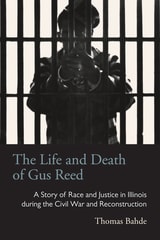
Gus Reed was a freed slave who traveled north as Sherman’s March was sweeping through Georgia in 1864. His journey ended in Springfield, Illinois, a city undergoing fundamental changes as its white citizens struggled to understand the political, legal, and cultural consequences of emancipation and black citizenship. Reed became known as a petty thief, appearing time and again in the records of the state’s courts and prisons. In late 1877, he burglarized the home of a well-known Springfield attorney—and brother of Abraham Lincoln’s former law partner—a crime for which he was convicted and sentenced to the Illinois State Penitentiary.
Reed died at the penitentiary in 1878, shackled to the door of his cell for days with a gag strapped in his mouth. An investigation established that two guards were responsible for the prisoner’s death, but neither they nor the prison warden suffered any penalty. The guards were dismissed, the investigation was closed, and Reed was forgotten.
Gus Reed’s story connects the political and legal cultures of white supremacy, black migration and black communities, the Midwest’s experience with the Civil War and Reconstruction, and the resurgence of nationwide opposition to African American civil rights in the late nineteenth century. These experiences shaped a nation with deep and unresolved misgivings about race, as well as distinctive and conflicting ideas about justice and how to achieve it.
The Man with the Branded Hand
The Life of Jonathan Walker, AbolitionistAlvin F. Oickle
Westholme Publishing, 2011
Captured While Attempting to Smuggle Slaves to Freedom in 1844, the Only Man Branded in a Courtroom by a United States Marshal
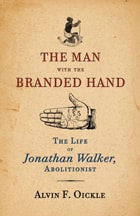
Sailing around the Florida Keys in 1844, forty-five-year-old Jonathan Walker had a price on his head. On board the small boat he had built that winter in Alabama were seven fugitives from slavery. The Cape Cod sailor and abolitionist was wanted in Pensacola, Florida, for his crime: stealing slaves. The slaves’ owners had posted $100 each as reward money for their property and $1,000 for Walker’s apprehension. Only a day’s sail from their goal of freedom in British-controlled Bahamas, Walker and the slaves were stopped and seized by bounty hunters and taken to a Key West court. Ordered back to Pensacola for trial, Walker ended up spending a year in jail. He was fined and sentenced to stand in the pillory; in addition, he was to suffer a unique punishment in American history: while a packed courtroom watched, a United States marshal was ordered to use a hot branding iron to burn the letters SS, for “slave stealer,” into Walker’s right hand.
Walker survived his ordeal, spending much of his incarceration in isolation. Once released, he remained active in the antislavery movement even while he and his devoted wife Jane raised their nine children. His attempt to help form a new colony in Mexico for runaway American slaves also led to punishing experiences for Walker and one of his sons. Living later with his family in Plymouth, Massachusetts, in the years before the Civil War, Walker made room in his crowded house to shelter runaway slaves along the Underground Railroad. He participated in abolitionist lecture tours across the North where he would be urged to reveal his branded hand—made famous by John Greenleaf Whittier’s poem “The Branded Hand”—to astonished audiences. Too old to enlist in the Civil War, Walker instead headed to Virginia in the war’s final year to help educate African Americans fleeing Confederate forces. In The Man With the Branded Hand: The Life of Jonathan Walker, Abolitionist, distinguished journalist Alvin F. Oickle relates this entire remarkable story of a life devoted to the supposition that “all men are created equal.”
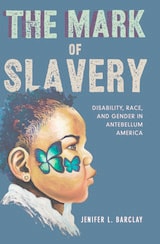
The Mark of Slavery
Disability, Race, and Gender in Antebellum AmericaJenifer L. Barclay
University of Illinois Press, 2021
Time and again, antebellum Americans justified slavery and white supremacy by linking blackness to disability, defectiveness, and dependency. Jenifer L. Barclay examines the ubiquitous narratives that depicted black people with disabilities as pitiable, monstrous, or comical, narratives used not only to defend slavery but argue against it. As she shows, this relationship between ableism and racism impacted racial identities during the antebellum period and played an overlooked role in shaping American history afterward. Barclay also illuminates the everyday lives of the ten percent of enslaved people who lived with disabilities. Devalued by slaveholders as unsound and therefore worthless, these individuals nonetheless carved out an unusual autonomy. Their roles as caregivers, healers, and keepers of memory made them esteemed within their own communities and celebrated figures in song and folklore.
Prescient in its analysis and rich in detail, The Mark of Slavery is a powerful addition to the intertwined histories of disability, slavery, and race.
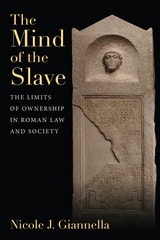
The Mind of the Slave
The Limits of Ownership in Roman Law and SocietyNicole J. Giannella
University of Michigan Press, 2026
In order to place Roman jurists in conversation with both technical and literary sources, Giannella grounds this study in philology and argues that conceptions of the mind of the slave were at the heart of legal and cultural debates about the nature of slavery and ownership. It also contributes to a wider debate about selfhood and autonomy, since philosophers often used the figure of the slave as a representation of humanity as its limits.
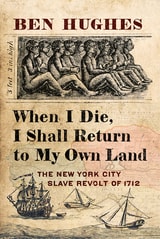
The New York City Slave Revolt of 1712
The First Enslaved Insurrection in British North AmericaBen Huges
Westholme Publishing, 2024
At 2 a.m. on April 7, 1712, a fire broke out in New York City’s North Ward. Unbeknown to the residents who roused themselves to combat the flames, the blaze had been started with murderous intent. A group of at least twenty-four enslaved West African men and women, mostly Akan from modern-day Ghana, had long plotted this moment. Armed with guns, daggers, swords, axes, and clubs, they fell upon their enslavers. In the next few frantic moments, eight Europeans were killed and seven were wounded. The perpetrators were rounded up, jailed, and put on public trial. Twenty enslaved men and one woman were executed or transported for carrying out the plot. As the first event of its kind to take place in the North American colonies, this revolt was the progenitor of those that followed—it inspired, the Stono Rebellion of 1739, the New York Conspiracy of 1741, and Nat Turner’s 1831 insurrection.
When I Die, I Shall Return to My Own Land: The 1712 New York City Slave Revolt is the first comprehensive investigation into this major event in the history of slavery in North America. Consulting court records, correspondence, and the minutes of the various colonial councils, as well as a wide range of sources related to eighteenth-century slavery, historian Ben Hughes vividly recreates early colonial New York, the lives of its enslaved inhabitants, the factionalism among the city’s Dutch and English elites, and their precarious hold on Manhattan Island in the face of French and Native American threats. Hughes traces the origins of the New York rebels, details how they came to be enslaved, and recreates the shadowy dealings that took place between African polities, European and American slavers, and New York merchants. The forerunners of a movement which continues to this day, the deeds of these original African American rebels have now been all but forgotten. Here, Hughes attempts to redress this imbalance by recovering their story.
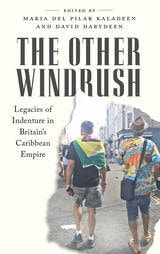
The Other Windrush
Legacies of Indenture in Britain's Caribbean EmpireMaria del Pilar Kaladeen
Pluto Press, 2021
The Other Windrush
Legacies of Indenture in Britain's Caribbean EmpireMaria del Pilar Kaladeen
Pluto Press, 2021
Between the arrival of the HMT Empire Windrush in 1948 and the passing of the 1971 Immigration Act, half a million people came to the UK from the Caribbean. In the aftermath of the 2018 Windrush Scandal, the story of the Windrush Generation is more widely known than ever. But is it the whole story?
Through a series of biographical essays, poems and articles, The Other Windrush shines a light on the hidden history of a 'minority within a minority': Caribbean migrants of Indian and Chinese descent - often the descendants of indentured labourers - who were the 'invisible passengers' of the Windrush generation.
Both highlighting the diversity of their lives and cultural backgrounds, and delving into the largely forgotten history of the system of indenture in the British Caribbean, The Other Windrush makes a unique addition to the literature on migration and the British Empire.
The Persistence of Slavery
An Economic History of Child Trafficking in NigeriaRobin Phylisia Chapdelaine
University of Massachusetts Press, 2021
Despite efforts to abolish slavery throughout Africa in the nineteenth century, the coercive labor systems that constitute “modern slavery” have continued to the present day. To understand why, Robin Phylisia Chapdelaine explores child trafficking, pawning, and marriages in Nigeria's Bight of Biafra, and the ways in which British colonial authorities and Igbo, Ibibio, Efik, and Ijaw populations mobilized children's labor during the early twentieth century. Drawing on a wealth of primary sources that include oral interviews, British and Nigerian archival materials, newspaper holdings, and missionary and anthropological accounts, Chapdelaine argues that slavery's endurance can only be understood when we fully examine “the social economy of a child”—the broader commercial, domestic, and reproductive contexts in which children are economic vehicles.
The Persistence of Slavery provides an invaluable investigation into the origins of modern slavery and early efforts to combat it, locating this practice in the political, social, and economic changes that occurred as a result of British colonialism and its lingering effects, which perpetuate child trafficking in Nigeria today.
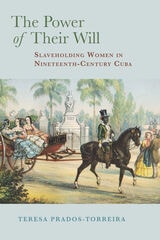
The Power of Their Will
Slaveholding Women in Nineteenth-Century CubaTeresa Prados-Torreira
University of Alabama Press, 2021
CHOICE OUTSTANDING ACADEMIC TITLE, 2022
“This fascinating book explores the unique circumstances of white slaveholding women in 19th-century Cuba and the enslaved peoples they controlled . . .This is a must read for scholars of the Caribbean and the African diaspora. Essential.” —CHOICE
In the early nineteenth century, while abolitionism was rising and the slave trade was declining in the Atlantic world, Spain used this opportunity to massively expand plantation slavery in Cuba. Between 1501 and 1866, more than 778,000 Africans were torn from their homelands and brought to work for the Cuban slaveholding class.
An understudied aspect of Cuban slaveholding society is the role of the white Cuban slave mistress (amas). The Power of Their Will: Slaveholding Women in Nineteenth-Century Cuba illuminates the interaction of female slaveholders and the enslaved during this time. Teresa Prados-Torreira shows, despite the lack of political power in a highly patriarchal society, Cuban women as property owners were instrumental in supporting the long duration of slavery, whether by enforcing the disciplining of the enslaved in the domestic sphere or helping to create the illusion of slavery as a humane institution. Thousands of Creole slaveholding women relied on slaves to lead a comfortable life. Even the subsistence of many poor women depended on the income derived from the hiring out of their enslaved.
In this accessible cultural history, culled from government documents, fiction, newspaper articles, traveler’s accounts, women’s wills, and archival research, Prados-Torreira coalesces a valuable narrative out of the often paradoxical and conflicting stories of the human bonds between the female owner and the enslaved. Narrative chapters, enlivened by vignettes, describe the daily life of slave mistresses in the main cities of Havana and Santiago and other towns, workings of sugar mills and coffee plantations, how slaveholding women coping with slave rebellions and wartime during the Ten Years’ War, and how personal relationships could occasionally affect the balance of power.
The Problem of Evil
Slavery, Freedom and the Ambiguities of American ReformSteven Mintz
University of Massachusetts Press, 2007
Divided into four parts, with introductions to each section by editors Steven Mintz and John Stauffer, the essays provide succinct guides to the evolution of American slavery, the origins of antislavery thought, the challenges of emancipation, and the post-emancipation legacy of slavery. They also offer fresh perspectives on key individuals, from Benjamin Franklin and Frederick Douglass to Harriet Jacobs and John Brown, and shed new light on the differences between female and male critiques of slavery, the defense of slavery by the South's intellectual elite, and Catholic attitudes toward slavery and abolition.
Above all, The Problem of Evil helps us understand the circumstances that allow social evils to happen, how intelligent and ostensibly moral people can participate in the most horrendous crimes, and how, at certain historical moments, some individuals are able to rise above their circumstances, address evil in fundamental ways, and expand our moral consciousness.
The Psychic Hold of Slavery
Legacies in American Expressive CultureSoyica Diggs Colbert, Robert J. Patterson, and Aida Levy-Hussen
Rutgers University Press, 2016
The Rescue of Joshua Glover
A Fugitive Slave, the Constitution, and the Coming of the Civil WarH. Robert Baker
Ohio University Press, 2006
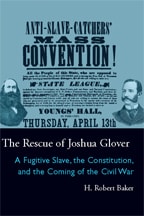
On March 11, 1854, the people of Wisconsin prevented agents of the federal government from carrying away the fugitive slave, Joshua Glover. Assembling in mass outside the Milwaukee courthouse, they demanded that the federal officers respect his civil liberties as they would those of any other citizen of the state. When the officers refused, the crowd took matters into its own hands and rescued Joshua Glover. The federal government brought his rescuers to trial, but the Wisconsin Supreme Court intervened and took the bold step of ruling the Fugitive Slave Act unconstitutional.
The Rescue of Joshua Glover delves into the courtroom trials, political battles, and cultural equivocation precipitated by Joshua Glover’s brief, but enormously important, appearance in Wisconsin on the eve of the Civil War.
H. Robert Baker articulates the many ways in which this case evoked powerful emotions in antebellum America, just as the stage adaptation of Uncle Tom’s Cabin was touring the country and stirring antislavery sentiments. Terribly conflicted about race, Americans struggled mightily with a revolutionary heritage that sanctified liberty but also brooked compromise with slavery. Nevertheless, as The Rescue of Joshua Glover demonstrates, they maintained the principle that the people themselves were the last defenders of constitutional liberty, even as Glover’s rescue raised troubling questions about citizenship and the place of free blacks in America.
The Slaves Who Defeated Napoléon
Toussaint Louverture and the Haitian War of Independence, 1801–1804Philippe R. Girard
University of Alabama Press, 2011
A deeply researched and definitive account of the climactic battle at the end of the Haitian Revolution
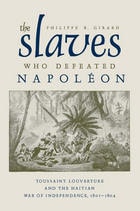
Among the many rebellions against European colonial empires, the Haitian Revolution against France is among the most dramatic and complex. Having begun in 1791 as France was in the throes of its own young revolution, the conflict reached its dramatic climax when Napoleon dispatched a heavily armed expeditionary force led by his brother-in-law Charles Leclerc to re-establish slavery and the sugar economy that had so enriched France. Philippe Girard’s Slaves Who Defeated Napoleon is a deeply researched and engrossing account of this invasion and its spectacular defeat.
For this ambitious account, Philippe Girard has studied not only primary records in Haiti itself but also rare documents from nineteen public and private archives and research libraries in French, U.S., British, and Spanish collections. His more inclusive approach provides a fuller, more accurate and detailed narrative. He reveals not only key military movements, but also less-known aspects like the activities of U.S. merchants, in-fighting within Napoleon’s government, and communication between both sides and other European powers. Girard fills the work with unforgettable stories of those who led or were caught up in the war, people like poorly armed Black soldiers who ambushed Bonaparte’s columns, French child drummers, Jewish bankers in Kingston, weapon smugglers from Quaker Philadelphia, Polish artillerists, and mixed-raced people struggling to preserve their freedom against both Black and white opponents.
Transcending pat ideological and racial categories, the book brings into focus an Atlantic society at the crossroads of African and European influences, where Haitian rebels fought France while embracing its ideals.
The Southern Debate over Slavery
Volume 2: Petitions to Southern County Courts, 1775-1867Edited by Loren Schweninger
University of Illinois Press, 2007
An incomparably rich source of period information, the second volume of The Southern Debate over Slavery offers a representative and extraordinary sampling of the thousands of petitions about issues of race and slavery that southerners submitted to county courts between the American Revolution and Civil War. These petitions, filed by slaveholders and nonslaveholders, slaves and free blacks, women and men, abolitionists and staunch defenders of slavery, constitute a uniquely important primary source. The collection records with great immediacy and minute detail the dynamics and legal restrictions that shaped southern society.
Till the Dark Angel Comes
Abolitionism and the Road to the Second American RevolutionWilliam S. King
Westholme Publishing, 2016
Establishing himself as a fresh and important voice in the history of African American emancipation,William S. King provides a critical introduction to the lead-up to the Civil War. A skilled and judicious chronicler, King seamlessly weaves multiple and seemingly disparate threads, including early nineteenth-century Revivalism, the emergence of the Republic of Texas, the fugitive slave laws—and even the explosion of a cannon aboard the U.S.S. Princeton in 1844—to explain how the opposition to slavery in America changed from producing speeches and pamphlets to embracing the reality that slavery could be eradicated only through armed conflict. By tracing this transformation through the life of John Brown, King provides an entirely new assessment of this enigmatic figure who was characterized as a “mad man” in the wake of his butchering of proslavery settlers in Kansas and the inept raid on Harpers Ferry, Virginia. King puts these actions in context to explain the paradox of Brown’s legacy. On one hand he was vilified as an unstable threat to American democracy or a fanatical sideshow to the history of the Civil War, while on the other he was an inspiration to the oppressed, a man who garnered the indomitable Harriet Tubman’s commitment to the righteousness of his endeavor.
Elegantly written with a command of period sources, Till the Dark Angel Comes: Abolitionism and the Road to the Second American Revolution is the story of interracial opposition to slavery, the important debates among free blacks as to their future in America, and the arguments and compromises at the highest levels of government. Here we encounter many personalities of the time, some well known, such as Frederick Douglass,William Lloyd Garrison, and John C. Calhoun, and others less so, but no less important—Martin Delany, Henry Highland Garnet, and Elijah Lovejoy.
To Be A Slave in Brazil
1550-1888Mattoso, Katia M de Queiros
Rutgers University Press, 1986
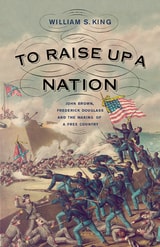
To Raise Up a Nation
John Brown, Frederick Douglass, and the Making of a Free CountryWilliam S. King
Westholme Publishing, 2013
Drawing on decades of research, and demonstrating remarkable command of a great range of primary sources, William S. King has written an important history of African Americans’ own contributions and points of crossracial cooperation to end slavery in America. Beginning with the civil war along the border of Kansas and Missouri, the author traces the life of John Brown and the personal support for his ideas from elite New England businessmen, intellectuals such as Emerson and Thoreau, and African Americans, including his confidant, Frederick Douglass, and Harriet Tubman. Throughout, King links events that contributed to the growing antipathy in the North toward slavery and the South’s concerns for its future, including Nat Turner’s insurrection, the Amistad affair, the Fugitive Slave law, the Kansas-Nebraska Act, and the Dred Scott decision. The author also effectively describes the debate within the African American community as to whether the U.S. Constitution was colorblind or if emigration was the right course for the future of blacks in America.
Following Brown’s execution after the failed raid on Harper’s Ferry in 1859, King shows how Brown’s vision that only a clash of arms would eradicate slavery was set into motion after the election of Abraham Lincoln. Once the Civil War erupted on the heels of Brown’s raid, the author relates how black leaders, white legislators, and military officers vigorously discussed the use of black manpower for the Union effort as well as plans for the liberation of the “veritable Africa” within the southern United States. Following the Emancipation Proclamation of January 1863, recruitment of black soldiers increased and by war’s end they made up nearly ten percent of the Union army, and contributed to many important victories.
To Raise Up a Nation: John Brown, Frederick Douglass, and the Making of a Free Country is a sweeping history that explains how the destruction of American slavery was not directed primarily from the counsels of local and national government and military men, but rather through the grassroots efforts of extraordinary men and women. As King notes, the Lincoln administration ultimately armed black Americans, as John Brown had attempted to do, and their role was a vital part in the defeat of slavery.
To the Fairest Cape
European Encounters in the Cape of Good HopeJack, Malcolm
Bucknell University Press, 2019
Published by Bucknell University Press. Distributed worldwide by Rutgers University Press.
Trafficking in Slavery’s Wake
Law and the Experience of Women and Children in AfricaBenjamin N. Lawrance
Ohio University Press, 2012
Women and children have been bartered, pawned, bought, and sold within and beyond Africa for longer than records have existed. This important collection examines the ways trafficking in women and children has changed from the aftermath of the “end of slavery” in Africa from the late nineteenth century to the present.
The formal abolition of the slave trade and slavery did not end the demand for servile women and children. Contemporary forms of human trafficking are deeply interwoven with their historical precursors, and scholars and activists need to be informed about the long history of trafficking in order to better assess and confront its contemporary forms. This book brings together the perspectives of leading scholars, activists, and other experts, creating a conversation that is essential for understanding the complexity of human trafficking in Africa.
Human trafficking is rapidly emerging as a core human rights issue for the twenty-first century. Trafficking in Slavery’s Wake is excellent reading for the researching, combating, and prosecuting of trafficking in women and children.
Contributors: Margaret Akullo, Jean Allain, Kevin Bales, Liza Stuart Buchbinder, Bernard K. Freamon, Susan Kreston, Benjamin N. Lawrance, Elisabeth McMahon, Carina Ray, Richard L. Roberts, Marie Rodet, Jody Sarich, and Jelmer Vos.
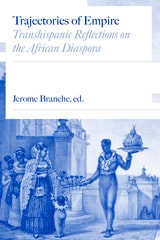
Trajectories of Empire
Transhispanic Reflections on the African DiasporaJerome C. Branche
Vanderbilt University Press, 2022
The book’s chapters explore what Blackness means in the so-called racial democracies of Brazil and Cuba today. Among the historical narratives and themes it covers are the role of medical science in the objectification and nullification of Black female personhood during slavery in nineteenth-century Brazil; the protocols of portraiture in the colonial period that, in including enslaved individuals, pictorially highlight and freeze their supposed inferiority vis-à-vis their owners; and those aspects of discourse that promote colonial capture and oppression in terms of evangelization and the saving of souls, or simply create the discursive template as early as the fifteenth century, for their continued alienation and marginalization across generations.
Trajectories of Empire’s contributions come from the fields of literary criticism, visual culture, history, anthropology, popular culture (rap), and cultural studies. As the product of an interdisciplinary collective, this book will be of interest to scholars in Iberian or Hispanic studies, Africana studies, postcolonial studies, and transatlantic studies, as well as the general public.
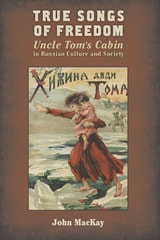
True Songs of Freedom
Uncle Tom’s Cabin in Russian Culture and SocietyJohn MacKay
University of Wisconsin Press, 2013