Results by title
118 books match the query 'Epistemology' and 23 start with t
The Abyss of Representation
Marxism and the Postmodern SublimeGeorge Hartley
Duke University Press, 2003
Hartley describes how modern theory from Kant through Lacan attempts to come to terms with the sublime limits of representation and how ideas developed with the Marxist tradition—such as Marx’s theory of value, Althusser’s theory of structural causality, or Zizek’s theory of ideological enjoyment—can be seen as variants of the sublime object. Representation, he argues, is ultimately a political problem. Whether that problem be a Marxist representation of global capitalism, a deconstructive representation of subaltern women, or a Chicano self-representation opposing Anglo-American images of Mexican Americans, it is only through this grappling with the negative, Hartley explains, that a Marxist theory of postmodernism can begin to address the challenges of global capitalism and resurgent imperialism.
The Architectonics of Meaning
Foundations of the New PluralismWalter Watson
University of Chicago Press, 1993
The Art of Conjecture
Nicholas of Cusa on KnowledgeClyde Lee Miller
Catholic University of America Press, 2021
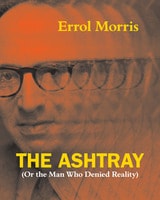
The Ashtray
(Or the Man Who Denied Reality)Errol Morris
University of Chicago Press, 2018
In 1972, philosopher of science Thomas Kuhn threw an ashtray at Errol Morris. This book is the result.
At the time, Morris was a graduate student. Now we know him as one of the most celebrated and restlessly probing filmmakers of our time, the creator of such classics of documentary investigation as The Thin Blue Line and The Fog of War. Kuhn, meanwhile, was—and, posthumously, remains—a star in his field, the author of The Structure of Scientific Revolutions, a landmark book that has sold well over a million copies and introduced the concept of “paradigm shifts” to the larger culture. And Morris thought the idea was bunk.
The Ashtray tells why—and in doing so, it makes a powerful case for Morris’s way of viewing the world, and the centrality to that view of a fundamental conception of the necessity of truth. “For me,” Morris writes, “truth is about the relationship between language and the world: a correspondence idea of truth.” He has no patience for philosophical systems that aim for internal coherence and disdain the world itself. Morris is after bigger game: he wants to establish as clearly as possible what we know and can say about the world, reality, history, our actions and interactions. It’s the fundamental desire that animates his filmmaking, whether he’s probing Robert McNamara about Vietnam or the oddball owner of a pet cemetery. Truth may be slippery, but that doesn’t mean we have to grease its path of escape through philosophical evasions. Rather, Morris argues powerfully, it is our duty to do everything we can to establish and support it.
In a time when truth feels ever more embattled, under siege from political lies and virtual lives alike, The Ashtray is a bracing reminder of its value, delivered by a figure who has, over decades, uniquely earned our trust through his commitment to truth. No Morris fan should miss it.
The Concept of Mind
Gilbert Ryle
University of Chicago Press, 2003
The Conflict of Interpretations
Paul Ricoeur
Northwestern University Press, 1974
The Epistemology of G. E. Moore
E. D. Klemke
Northwestern University Press, 1969
The Foundations of Knowing
Roderick M. Chisholm
University of Minnesota Press, 1982
The Foundations of Knowing was first published in 1982. Minnesota Archive Editions uses digital technology to make long-unavailable books once again accessible, and are published unaltered from the original University of Minnesota Press editions.
This collection of essays on the foundations of empirical knowledge brings together ten of Roderick M. Chisholm's most important papers in epistemology, three of them published for the first time, the others significantly revised and expanded for this edition. The essays in Part I constitute a thoroughgoing defense of foundationalism—the doctrine that our justification for believing always rests upon a self-evident basis. In Part II, Chisholm applies foundationalist principles to various areas within the theory of knowledge, and in part III he presents a history of twentieth-century American epistemology.
"Roderick M. Chisholm's work has been most influential both in the development of epistemology and in the widespread application of his analytic method. I am sure this publication featuring the unification of his views will be of great value to those working on the central issues of philosophy." Hector-Neri Castañeda, Indiana University
Roderick Chisholm is Andrew W. Mellon Professor of the Humanities in the department of philosophy at Brown University. Among his books are Perceiving: A Philosophical Study, Theory of Knowledge, Person and Object,and The First Person (Minnesota, 1981).
The Freedom of the Migrant
Objections to NationalismVilém Flusser. Translated to the German by Kenneth Kronenberg. Edited and with an Introduction by Anke K. Finger
University of Illinois Press, 2013
The Genealogical Science
The Search for Jewish Origins and the Politics of EpistemologyNadia Abu El-Haj
University of Chicago Press, 2012
The Genesis of Kant's Critique of Judgment
John H. Zammito
University of Chicago Press, 1992
The austerity and grandeur of Kant's philosophical writings sometimes make it hard to recognize them as the products of a historical individual situated in the particular constellation of his time and society. Here Kant emerges as a concrete historical figure struggling to preserve the achievements of cosmopolitan Aufkl-rung against challenges in natural science, religion, and politics in the late 1780s. More specifically Zammito suggests that Kant's Third Critique was animated throughout by a fierce personal rivalry with Herder and by a strong commitment to traditional Christian ideas of God and human moral freedom.
"A work of extraordinary erudition. Zammito's study is both comprehensive and novel, connecting Kant's work with the aesthetic and religious controversies of the late eighteenth century. He seems to have read everything. I know of no comparable historical study of Kant's Third Critique."-Arnulf Zweig, translator and editor of Kant's ;IPhilosophical Correspondence, 1759-1799;X
"An intricate, subtle, and exciting explanation of how Kant's thinking developed and adjusted to new challenges over the decade from the first edition of the Critique of Pure Reason to the appearance of the Critique of Judgment."—John W. Burbidge, Review of Metaphysics
"There has been for a long time a serious gap in English commentary on Kant's Critique of Judgment; Zammito's book finally fills it. All students and scholars of Kant will want to consult it."—Frederick Beiser, Times Literary Supplement
The Problem of the Essential Indexical and Other Essays, Expanded Edition
John Perry
CSLI, 2000
John Perry discusses how these kinds of words work, and why they express important philosophical thoughts. He shows that indexicals pose a challenge to traditional assumptions about language and thought. Over the years a number of these papers, now included in this book, have sparked lively debates and have been influential in philosophy, linguistics and other areas of cognitive science.
With seven new papers, including the previously unpublished ``What Are Indexicals?,'' the present volume expands on an earlier version of this book published in the early nineties. Also included are the well-known papers ``Frege on Demonstratives,'' ``Cognitive Significance and New Theories of Reference,'' ``Evading the Slingshot,'' ``The Prince and the Phone booth'' (coauthored with Mark Crimmins), ``Fodor on Psychological Explanations'' (coauthored with David Israel), and related papers on situation semantics, direct reference, and the structure of belief. This book also includes afterwords written by the author that discuss responses to his work by Gareth Evans, Robert Stalnaker, Barbara Partee, Howard Wettstein and others.
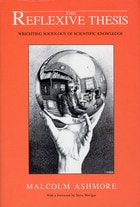
The Reflexive Thesis
Wrighting Sociology of Scientific KnowledgeMalcolm Ashmore
University of Chicago Press, 1989
The Remains of Reason
On Meaning after LacanDominik Finkelde
Northwestern University Press, 2025
Unpacking the central role of the unconscious in the relationship between mind and world
Over a series of careful readings and accessible discussions, prefaced by a foreword from Eric Santner, Dominik Finkelde analyzes the central role of the unconscious in the relationship between mind and world. Moving beyond Freud, Kant, and Hegel and toward the contemporary work of the Ljubljana School, he explores how humans relate to facts and the influence of the unconscious on questions regarding truth, perception, and meaning.
Aspects of recognition and unconscious processes of transference are at stake in these fundamental questions of perception and knowledge, though these have been widely ignored in epistemological and ontological debates in contemporary philosophy. Finkelde draws on both the continental and analytic traditions, ultimately building from the work of current-day interlocutors to interrogate questions concerning the influence of enigmatic signifiers, the role of sublime objects of ideology, the importance of fantasy cultivation and transgression, and the power of jouissance as an ontological factor.

The Social Theory of Practices
Tradition, Tacit Knowledge, and PresuppositionsStephen Turner
University of Chicago Press, 1994
Understood broadly as a tacit understanding "shared" by a group, the concept of a practice has a fatal difficulty, Turner argues: there is no plausible mechanism by which a "practice" is transmitted or reproduced. The historical uses of the concept, from Durkheim to Kripke's version of Wittgenstein, provide examples of the contortions that thinkers have been forced into by this problem, and show the ultimate implausibility of the idea.
Turner's conclusion sketches a picture of what happens when we do without the notion of a shared practice, and how this bears on social theory and philosophy. It explains why social theory cannot get beyond the stage of constructing fuzzy analogies, and why the standard constructions of the contemporary philosophical problem of relativism depend upon this defective notion. This first book-length critique of practice theory is sure to stir discussion and controversy in a wide range of fields, from philosophy and science studies to sociology, anthropology, literary studies, and political and legal theory.
The Tacit Dimension
Michael Polanyi
University of Chicago Press, 2009
A classic work in the philosophy of science that changed how we think about knowledge itself
“I shall reconsider human knowledge by starting from the fact that we can know more than we can tell,” writes Michael Polanyi, whose work paved the way for the likes of Thomas Kuhn and Karl Popper. The Tacit Dimension argues that tacit knowledge—tradition, inherited practices, implied values, and prejudgments—is a crucial part of scientific knowledge. As relevant today as it was when it was first published, this volume challenges the assumption that skepticism, rather than established belief, lies at the heart of scientific discovery.
"The reissuing of this remarkable book give us a new opportunity to see how far-reaching—and foundational—Michael Polanyi's ideas are, on some of the age-old questions in philosophy."—Amartya Sen, from the Foreword
The Things That Really Matter
Philosophical Conversations on the Cornerstones of LifeMichael Hauskeller
University College London, 2022
While rooted in academic discourse, The Things That Really Matter comprehensively explores the most fundamental aspects of human life in approachable, non-technical language, adding fresh perspectives and new arguments and considerations that are designed to stimulate further debate. It features a series of conversations about the things in our life that we all, in one way or another, wrestle with if we are at all concerned about what kind of world we live in and what our role in it is: things like birth, age, and death, good and evil, the meaning of life, the nature of the self and the role the body plays for our identity, our gendered existence, love and faith, free will, beauty, and our experience of the sacred.
Situating abstract ideas in concrete experience, The Things That Really Matter encourages the reader to participate in an open-ended dialogue involving a variety of thinkers with different backgrounds and orientations. Lively and accessible, it shows thinking as a process and a collaborative endeavor that benefits from our talking to each other rather than against each other, featuring real conversations, where ideas are explored, tested, changed, and occasionally dropped. It is thinking in motion, personal yet universal.

Theatre, Globalization and the Heteroglobal Method
Glenn Odom
Intellect Books, 2026
Theatre, Globalization and the Heteroglobal Method offers a groundbreaking framework for rethinking global theatre studies. Drawing on philosophy and scholarship from major theatre traditions—South Africa, the United States, the United Kingdom, China, Japan, and Nigeria—the volume reimagines how performance circulates and transforms in a global context.
Challenging the dominance of Eurocentric models in postcolonial studies, comparative literature, and world theatre, the book introduces the “heteroglobal” method: an adaptable, equitable approach that begins with local theoretical and philosophical frameworks before bringing them into dialogue. These imagined centers, each with its own rich discursive heritage, become sites of knowledge exchange where fresh understandings of art and globalization emerge.
Through a theoretically pluralistic matrix of comparison and interculturalism, Theatre, Globalization and the Heteroglobal Method documents contemporary scholarly and artistic practices across diverse cultural landscapes, offering a new model for teaching, research, and performance in an interconnected world.
Theory and Reality
An Introduction to the Philosophy of Science, Second EditionPeter Godfrey-Smith
University of Chicago Press, 2021
Like no other text in this field, Theory and Reality combines a survey of recent history of the philosophy of science with current key debates that any beginning scholar or critical reader can follow. The second edition is thoroughly updated and expanded by the author with a new chapter on truth, simplicity, and models in science.
Thought under Threat
On Superstition, Spite, and StupidityMiguel de Beistegui
University of Chicago Press, 2022
Thought under Threat is an attempt to understand the tendencies that threaten thinking from within. These tendencies have always existed. But today they are on the rise and frequently encouraged, even in our democracies. People “disagree” with science and distrust experts. Political leaders appeal to the hearts and guts of “the people,” rather than their critical faculties. Stupidity has become a right, if not a badge of honor; superstition is on the rise; and spite is a major political force. Thinking is considered “elitist.”
To see those obstacles as vices of thought, Miguel de Beistegui argues, we need to understand stupidity not as a lack of intelligence or judgment, but as the tendency to raise false problems and trivial questions. Similarly, we need to see spite not as a moral vice, but as a poison that blurs and distorts our critical faculties. Finally, superstition is best described not as a set of false beliefs, but as a system that neutralizes one’s ability to think for oneself.
For de Beistegui, thinking is intrinsically democratic and a necessary condition for the exercise of freedom. Thought under Threat shows how a training of thought itself can be used to ward off those vices, lead to productive deliberation, and, ultimately, create a thinking community.
To Save the Phenomena
An Essay on the Idea of Physical Theory from Plato to GalileoPierre Duhem
University of Chicago Press, 1969
Duhem's 1908 essay questions the relation between physical theory and metaphysics and, more specifically, between astronomy and physics–an issue still of importance today. He critiques the answers given by Greek thought, Arabic science, medieval Christian scholasticism, and, finally, the astronomers of the Renaissance.
Truth and Existence
Jean-Paul Sartre
University of Chicago Press, 1992
Truth and Existence is introduced by an extended biographical, historical, and analytical essay by Ronald Aronson.
"Truth and Existence is another important element in the recently published links between Sartre's existentialist ontology and his later ethical, political, and literary concerns. . . . The excellent introduction by Aronson will help readers not experienced in reading Sartre."—Choice
"Accompanied by an excellent introduction, this dense, lucidly translated treatise reveals Sartre as a characteristically 20th-century figure."—Publishers Weekly
Jean-Paul Sartre (1906-1980) was offered, but declined, the Nobel Prize for literature in 1964. His many works of fiction, drama, and philosophy include the monumental study of Flaubert, The Family Idiot, and The Freud Scenario, both published in translation by the University of Chicago Press.
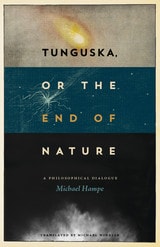
Tunguska, or the End of Nature
A Philosophical DialogueMichael Hampe
University of Chicago Press, 2015
Tunguska, Or the End of Nature uses its four-man setup to tackle some of today’s burning issues—such as climate change, environmental destruction, and resource management—from a diverse range of perspectives. With a kind of foreboding, it asks what the world was like, and will be like, without us, whether we are negligible and the universe random, whether nature can truly be explained, whether it is good or evil, or whether nature is simply a thought we think. This is a profoundly unique work, a thrillingly interdisciplinary piece of scholarly literature that probes the mysteries of nature and humans alike.