Results by title
57 books match the query 'Essays & Narratives' and 11 start with t
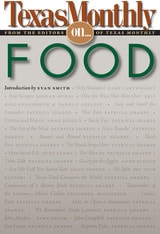
Texas Monthly On . . .
FoodFrom the editors of <em>Texas Monthly</em>
University of Texas Press, 2008
From reviews of the newest, hippest restaurants in cities across Texas to stories about the comfort foods we all love, Texans have long relied on Texas Monthly to dish up some of the best writing about food in the Lone Star state. This anthology brings together twenty-eight classic articles about food in Texas and the culture that surrounds it—markets that purvey exotic and traditional foods, well-known chefs, tributes to the cooks and cookbooks of days gone by, and even a feature on how to open a restaurant. Many of the articles are by Patricia Sharpe, Texas Monthly's longtime restaurant critic and winner of the James Beard Journalism Award for Magazine Feature Writing without Recipes. Joining her are Texas Monthly editor Evan Smith and contributors Gary Cartwright, Jordan MacKay, Skip Hollandsworth, Pamela Colloff, Anne Dingus, Suzy Banks, Joe Nick Patoski, and Prudence Mackintosh.
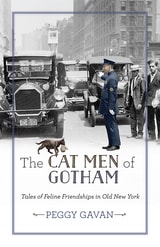
The Cat Men of Gotham
Tales of Feline Friendships in Old New YorkPeggy Gavan
Rutgers University Press, 2019
The nineteenth century was a rough time to be a stray cat in New York City. The city’s human residents dealt with feline overpopulation by gassing unwanted cats or tossing them in rivers. But a few lucky strays were found by a diverse array of men—including firemen, cops, athletes, and politicians—who rescued them from the streets and welcomed them into their homes and hearts.
This book tells the stories of these heroic cat men of Gotham and their beloved feline companions. Not only does it introduce us to some remarkable men, but we get to meet many extraordinary cats as well, from Chinese stowaways prowling the Chelsea Piers to the sole feline survivor of the USS Maine explosion. Among the forty-two profiles, we find many feline Cinderella stories, as humble alley cats achieved renown as sports team mascots, artists’ muses, and even presidential pets.
Sure to appeal to cat fanciers and history fans alike, The Cat Men of Gotham will give you a new appreciation for Old New York and the people and animals who made it their home. As it takes you on a journey through the streets of Manhattan and Brooklyn, it will amuse and astound you with tales of powerful men and their pussycats.
The Difficulty of Being a Dog
Roger Grenier
University of Chicago Press, 2000
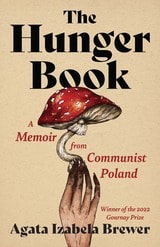
The Hunger Book
A Memoir from Communist PolandAgata Izabela Brewer
The Ohio State University Press, 2023
“A searing memoir about growing up behind the Iron Curtain, motherhood, addiction, and finding sustenance in the natural world.” —Kirkus
In The Hunger Book, Agata Izabela Brewer evokes her Polish childhood under Communism, where the warmth of her grandparents’ love and the scent of mushrooms drying in a tiny apartment are as potent as the deprivations and traumas of life with a terrifyingly unstable, alcoholic single mother. Brewer indelibly renders stories of foraging for food, homemade potato vodka (one of the Eastern Bloc’s more viable currencies), blood sausage, sparrows plucked and fried with linseed oil, and the respite of a country garden plot, all amid Stalinist-era apartment buildings, food shortages, martial law, and nuclear disaster in nearby Ukraine.
Brewer reflects on all of this from her immigrant’s vantage point, as she wryly tries to convince her children to enjoy the mushrooms she gathers from a roadside and grieves when they choose to go by Americanized versions of their Polish names. Hunting mushrooms, like her childhood, carried both reward and mortal peril. The Hunger Book, which includes recipes, is an unforgettable meditation on motherhood and addiction, resilience and love.

The Little Bulbs
A Tale of Two GardensElizabeth A. Lawrence
Duke University Press, 1986
“A few garden writers offer prose that goes beyond how to spade and spray to convey the experience and pleasures of gardening. The late Elizabeth Lawrence was such a writer.”—Southern Living
“First published in 1957 and out-of-print for many years, this is a delightfully written and enormously informative introduction to the fascinating variety of little bulbs available to the gardener. The author discusses a wide variety of plants, both familiar and little-known, including crocuses, species daffodils, hardy cyclamen and lily-family members such as Brodiaea, Bessera, and Calochortus.”—American Horticulturist
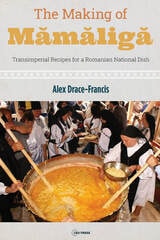
The Making of Mamaliga
Transimperial Recipes for a Romanian National DishAlex Drace-Francis
Central European University Press, 2022
Mămăligă, maize porridge or polenta, is a universally consumed dish in Romania and a prominent national symbol. But its unusual history has rarely been told. Alex Drace-Francis surveys the arrival and spread of maize cultivation in Romanian lands from Ottoman times to the eve of the First World War, and also the image of mămăligă in art and popular culture. Drawing on a rich array of sources and with many new findings, Drace-Francis shows how the making of mămăligă has been shaped by global economic forces and overlapping imperial systems of war and trade.
The story of maize and mămăligă provides an accessible way to revisit many key questions of Romanian and broader regional history. More generally, the book links the history of production, consumption, and representation. Analyses of recipes, literary and popular depictions, and key vocabulary complete the work.
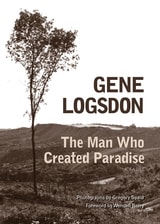
The Man Who Created Paradise
A FableGene Logsdon
Ohio University Press, 2001
Gene Logsdon’s The Man Who Created Paradise is a message of hope at a time when the very concept of earth stewardship is under attack. The fable, inspired by a true story, tells how Wally Spero looked at one of the bleakest places in America—a raw and barren strip-mined landscape—and saw in it his escape from the drudgery of his factory job. He bought an old bulldozer and used the machine to carve patiently, acre by acre, a beautiful little farm out of a seemingly worthless wasteland.
Wally’s story is a charming distillation of the themes that the late, beloved Gene Logsdon returned to again and again in his many books and hundreds of articles. Environmental restoration is the task of our time. The work of healing our land begins in our own backyards and farms, in our neighborhoods and our regions. Humans can turn the earth into a veritable paradise—if they really want to.
Noted photographer Gregory Spaid retraced the trail that Logsdon traveled when he was inspired to write The Man Who Created Paradise. His photographs evoke the same yearning for wholeness, for ties to land and community, that infuses the fable’s poetic prose.
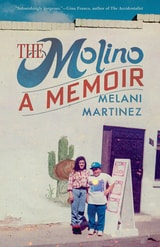
The Molino
A MemoirMelani Martinez
University of Arizona Press, 2024
Set in one of Tucson’s first tamal and tortilla factories, The Molino is a hybrid memoir that reckons with one family’s loss of home, food, and faith.
Weaving together history, culture, and Mexican food traditions, Melani Martinez shares the story of her family’s life and work in the heart of their downtown eatery, El Rapido. Opened by Martinez’s great-grandfather, Aurelio Perez, in 1933, El Rapido served tamales and burritos to residents and visitors to Tucson’s historic Barrio Presidio for nearly seventy years. For the family, the factory that bound them together was known for the giant corn grinder churning behind the scenes—the molino. With clear eyes and warm humor, Martinez documents the work required to prepare food for others, and explores the heartbreaking aftermath of gentrification that forces the multigenerational family business to close its doors.
The Molino is also Martinez’s personal story—that of a young Tucsonense coming of age in the 1980s and ’90s. As a young woman she rejects the work in her father’s popular kitchen, but when the business closes, her world shifts and the family disbands. When she finds her way back home, the tortillería’s iconic mural provides a gateway into history and ruin, ancestry and sacrifice, industrial myth and artistic incarnation—revealing a sacred presence still alive in Tucson.
A must-read for foodies, history lovers, and anyone searching for spiritual truth in the desert, this is a story of belonging and transformation in the borderlands.
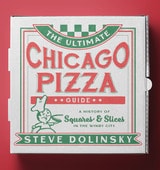
The Ultimate Chicago Pizza Guide
A History of Squares & Slices in the Windy CitySteve Dolinsky
Northwestern University Press, 2021
Enter renowned food journalist Steve Dolinsky. He embarked on a memorable quest for his first book, Pizza City, USA: 101 Reasons Why Chicago Is America’s Greatest Pizza Town, tasting more than 185 pizzas all over the region. For his follow-up, Dolinsky focuses on the city’s pizzerias, while still honoring a few suburban stalwarts.
This user-friendly guide is organized by pizza style—including thin, tavern, artisan, Neapolitan, deep-dish, stuffed, by-the-slice, Roman, and Detroit—so you can find the right recommendation for every family member, visitor, and occasion. Dolinsky highlights his favorites, offers a pizza lover’s glossary so you can order like a pro, and shows you every pie he ate, so you can compare notes and cook up your next pizza night. With recipes, local beer pairings, gluten-free options, and more, The Ultimate Chicago Pizza Guide is an essential resource both for locals and for visitors in search of a serious pizza getaway.
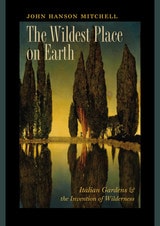
The Wildest Place on Earth
Italian Gardens and the Invention of WildernessJohn Hanson Mitchell
University Press of New England, 2015
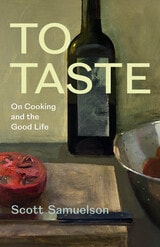
To Taste
On Cooking and the Good LifeScott Samuelson
University of Chicago Press, 2026
A philosopher-chef’s moving meditation on the pleasures of our shared humanity and how it can be most fully experienced in making and sharing food.
Our daily rhythms and most meaningful relationships center on the dining table, and so nothing is more essential to a good life than satisfying meals with friends and family. In To Taste, philosopher and sous-chef Scott Samuelson invites us into his kitchen, where he blends moving personal stories with insights from some of the world’s greatest thinkers into a rich but simple argument: our daily labor, in making food or otherwise, should connect us with other people.
For Samuelson, the pleasures of excellent cooking illuminate this value in particularly compelling ways. When we embrace the work required to prepare and share a good meal, we learn to honor tradition, practice hospitality, respect nature, cherish festivity, and nurture skill—all ethics that resist our increasingly dehumanized world. Ultimately, Samuelson argues that cooking, especially the elusive decision to season a dish “to taste,” contains the full mystery of human life.
Whether you’re a professional chef or your best culinary feat involves a can opener, To Taste can help you cook up a life that elicits a glorious mmm.