Results by title
57 books match the query 'Europe (General)' and 21 start with t
The Apology and the Last Days
A NovelBorislav Pekic
Northwestern University Press, 2012
Originally published in 1975, The Apology and the Last Days is the final volume in a trilogy of novels—also including The Rise and Fall of Icarus Gubelkian and How to Quiet a Vampire—about the aftermath of World War II, by Borislav Pekić, one of the former Yugoslavia’s most important postwar writers. The narrator tells his story from prison, where he is serving time for the murder of a former Nazi official. As the novel unfolds, we learn that the victim was the same person whom the narrator, while a lifeguard during the war, saved from drowning, thus making him vulnerable to charges of collaboration. In this tragicomic tale, Pekić explores eternal questions of fate and individual responsibility.
The Bombardment of Åbo
A Novella Based on a Historical Event in Modern TimesCarl Spitteler
Central European University Press, 2022
This farcical tale tells how the British bombing of a Finnish port city changes the life of the Russian governor, his wife, their cook, and the cook's Finnish fiancé. The story takes place during a Nordic offshoot of the Crimean conflict, known as the Åland War, in which a British-French naval force attacked military and civilian facilities on the coast of the Grand Duchy of Finland in 1854–1856. The location of the novella is Åbo, today’s Turku, where soldiers in the Russian garrison enjoy life, Cossacks dance and drink, and the governor’s wife is preoccupied about her cook’s marriage to a local lad, against which the governor and the English admiral devise a plot.
After studies in Swiss and German universities, Carl Spitteler worked in Russia between 1871 and 1879 as the private tutor in the family of a Finnish general. In the process he came to know Finnish and Baltic noble families in Saint Petersburg and Finland. He published this story in 1889, and went on to become, in 1919, the first Swiss winner of the Nobel Prize for literature. The Bombardment of Åbo is an ironic Western gaze on life and culture in the Tsarist Empire. Spitteler’s deeply held pacifism breaks through his otherwise sarcastic description of the characters and episodes in the novella.
The Bridge on the Drina
Ivo Andric
University of Chicago Press, 1977
Internationally acclaimed since its original publication just after World War II, The Bridge on the Drina is a vivid historical novel that uses the Mehmed Paša Sokolović Bridge as the centerpiece of the story of Bosnia and its people from the late sixteenth century to the beginning of World War I. As we seek to make sense of the current nightmare in this region, this remarkable, timely book serves as a reliable guide to its people and history. Through powerful stories of the people who make history—and the people suffer under those who do—Ivo Andric traces the story of the Bosnian people from the Ottoman Empire through the domination of Austria-Hungary and into the rising tide of competing nationalist ideologies that set the stage for the tragedy of World War I.
Written while Andric was under house arrest during the Nazi occupation, The Bridge on the Drina is as gripping as a soap opera, bringing history down to the level of compelling individual lives and experiences. It is one of the landmark works of twentieth-century literature, as powerful today as it ever was.
The Fortress
A NovelMesa Selimovic, translated from the Serbian by Edward Dennis Goy and Jasna Levinger-Goy
Northwestern University Press, 1999
Set in Bosnia in the late 1700s, the novel sometimes functions as an artful metaphor for the communist Yugoslavia of Selimovic's day. At other times, the author explores the nuances of Ottoman rule in the Balkans. Muslim Ahmet's sustaining marriage to a young Christian woman provides a multicultural tension that strongly resonates with contemporary readers and sensibilities.
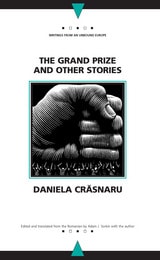
The Grand Prize and Other Stories
Daniela Crasnaru
Northwestern University Press, 2005
Crasnaru portrays the lives of people so used to hardship that it never occurs to them to surrender. An unhappily married woman waits in vain for a call from a potential lover. A foul-mouthed mother of seven accuses a war hero of conning her out of her life savings. A lawyer is lured to a forest by a dead coworker's stories of a beautiful woman. Those with drab lives use fantasy to endure and those who believe themselves happy are forced to face grim realities. Crasnaru mixes elements of the ridiculous, the fanciful, and the grotesque with vivid realism and her remarkable stories, while taking place in a dark era in her nation's history, are about the human as well as the Romanian condition.
The Last Journey of Ago Ymeri
Bashkim Shehu
Northwestern University Press, 2007
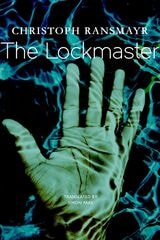
The Lockmaster
Christoph Ransmayr
Seagull Books, 2024
A longboat plummets over the Great Falls, drowning the five passengers on board. The Lockmaster, the heir to an ancient title and responsible for guiding river traffic safely around this natural barrier on the White River, ought to have prevented this tragedy. His son is convinced that it was not an accident. Is his irascible father a murderer? A hydraulic engineer all too familiar with the brute force of rivers, he sets out to discover the truth and find his missing father.
The Lockmaster is a dramatic tale set in a world where water has become a precious commodity and Europe has fractured into warring ethno-nationalist entities desperate to uphold the traditions and insignia of a so-called glorious bygone era. Christoph Ransmayr recounts this story in his trademark style, its epic force shot through with visions of future technology and reactionary politics amid a climate breakdown. At heart, though, this novel is the story of a father–son relationship straddling the fault lines between past and present, and an exploration of timeless questions of guilt and forgiveness.
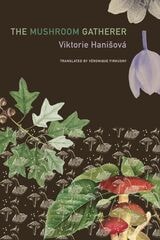
The Mushroom Gatherer
Viktorie Hanišová
Seagull Books, 2025
Nestled deep in the Bohemian Forest, Sára’s world is quiet and bound to the rhythms of nature. She has wandered the same wooded trails for seven years, filling her basket with mushrooms, her pockets with memories, and her thoughts with the past she cannot quite escape. The solitude suits her—until the death of her mother forces her to confront the tangled roots of family and the wounds that never fully healed. As Sára meticulously sorts through chanterelles and boletes, she also sorts through childhood recollections and the uneasy inheritance of trauma. The forest offers refuge, but it also holds secrets, and as the seasons shift, so does Sára’s understanding of herself and the complicated bonds that tether her to the world.
With melodic prose and an acute sensitivity to how landscapes shape lives, Viktorie Hanišová crafts a novel of quiet intensity and deep introspection. The Mushroom Gatherer is a haunting meditation on loss and the delicate balance between isolation and connection, perfect for readers drawn to atmospheric fiction.
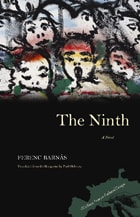
The Ninth
A NovelFerenc Barnas
Northwestern University Press, 2009
Set in a sleepy village north of Budapest in 1968, this touching, unsettling novel paints a richly wrought portrait of mid-twentieth-century Hungary. The narrator is the ninth child of a family distinguished by its size, poverty, faith, and abundance of physical and psychological disabilities. His confusion is exacerbated by the strict, secretive Catholic household his parents keep in the face of a Communist system. These dual oppressions propel him toward an inevitable realization of his guilt and desire that speaks to his struggle with a fateful, seamless beauty.
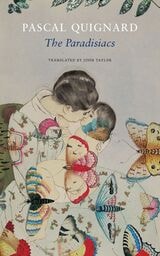
The Paradisiacs
Last Kingdom IVPascal Quignard
Seagull Books, 2025
What if paradise was not a place we lost, but one we never truly knew? In Paradisiacs, the fourth volume of the Last Kingdom series, Pascal Quignard meditates on the nature of paradise—not as an Eden to which we might return, but as a place of origin that lingers in myth. Through his signature blend of ancient texts, Paleolithic art, psychoanalysis, and personal reflection, Quignard explores our primal longing for recognition. He traces this yearning back to the erstwhile, a prenatal paradise from which we are expelled at birth, and examines how resemblance and recognition shape our identities.
At once poetic and philosophical, Paradisiacs invites readers into Quignard’s singular world, where language and history coalesce into a profound rumination on the origins of selfhood. With John Taylor’s masterly translation, this latest installment of Last Kingdom is a hypnotic and revelatory reading experience for those drawn to the intersections of philosophy and the ineffable.
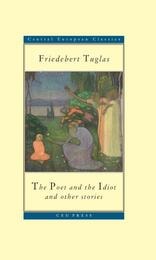
The Poet and the Idiot
Friedebert Tuglas
Central European University Press, 2007
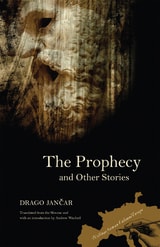
The Prophecy and Other Stories
Drago Jancar
Northwestern University Press, 2009
These newly collected short stories reveal a master at the top of his game. Drago Jancar possesses an acute understanding of the human psyche, enabling his stories to resonate beyond their particular milieu. This collection features seven pieces, drawn from four different collections, that together present the struggle of individuals against powerful forces. The characters try to make sense of a world of shifting borders and changing names that make the idea of a "homeland"—either literal or figurative—a dream rather than a reality.
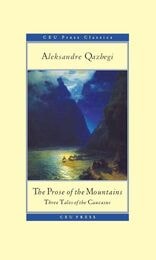
The Prose of the Mountains
Three Tales of the CaucasusAleksandre Qazbegi
Central European University Press, 2015
The Prose of the Mountains contains three tales of the Caucasus by Aleksandre Qazbegi, one of the most prescient and gifted chroniclers of the Georgian encounter with colonial modernity. His stories offer an invaluable counterpoint to the predominantly Russian narratives that have hitherto shaped scholarly accounts of the nineteenth-century Caucasus. “Memoirs of a Shepherd” poignantly chronicles the young author’s decision to pass seven years of his life as a shepherd with Georgian mountaineers. “Eliso” (the name of a Chechen girl) offers one of the most searing accounts on record of the forced migration of this people from their homeland to Ottoman lands. Set in the sixteenth century, “Khevis Beri Gocha” (the name of a Georgian village chief) classically chronicles a tragic misunderstanding between a severe father and his loving son.
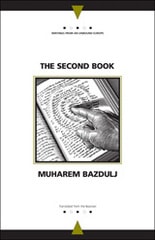
The Second Book
Muharem Bazdulj
Northwestern University Press, 2005
Muharem Bazdulj has broken from the pack of new Eastern European writers influenced by innovators such as Danilo Kiš, Milan Kundera, and Jorge Luis Borges. Employing a light touch, a daring anti-nationalist tone, and the kind of ambition that inspires nothing less than a rewriting of Bosnian and Yugoslavian history, Bazdulj weaves the imagined realities of history into fiction and fiction into history. To quote one critic, for Bazdulj history "is the sum of interpretations while imagination is the sum of facts."
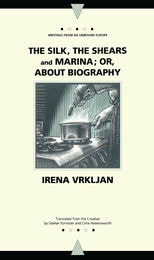
The Silk, the Shears and Marina; or, About Biography
Irena Vrkljan
Northwestern University Press, 1999
These are the first two volumes of the Croatian poet and novelist Irena Vrkljan's lyrical autobiography. Although each novel illuminates the other, they also stand alone as original and independent works of art. In The Silk, the Shears, Vrkljan traces the symbolic and moral significance of her life, and her vision of the fate of women in her mother's time and in her own. Marina continues the intense analysis of the poetic self, using the life of Marina Tsvetaeva to meditate on the processes behind biography.

The Sorrowful Eyes Of Hannah Karajich
Ivan Olbracht
Central European University Press, 1999
The Sorrowful Eyes of Hannah Karajich is a lyrical, deeply moving story of love and the pain of emancipation, set in the now vanished world of rural East European Jewish village life. Hanna is the most beautiful girl in all Polona, a Hasidic community in the remote province of Sub-Carpathian Ruthenia. Involvement in the exciting new movement of Zionism takes her away to a commune in a nearby town. But there she meets and falls in love with the strangely named Ivo Karajich: a Jew, yet not a Jew. The agonizing drama that follows, plants into her beautiful almond-shaped eyes the hard grain of sorrow that her children, too, will inherit.
Olbracht's novella is both a great love story and a marvellous portrait of a world that modernity threatened and Hitler destroyed.
The Third Shore
Women's Fiction from East Central EuropeAgatha Schwartz
Northwestern University Press, 2006
A rich compendium of fiction by twenty-five women from eighteen different nations ranging from Lithuania to Ukraine to Poland, the Czech Republic, Romania, Albania, and Slovenia, The Third Shore brings to light a whole spectrum of women's literary accomplishment and experience virtually unknown in the West. Gracefully translated, and with an introduction that establishes their political, historical, and literary context, these stories written in the decade after the fall of the Iron Curtain are tales of the familiar-of illness and death, love and desire, motherhood and war, feminism, and patriarchy-reconceived and turned into something altogether new by the distinctive experience they reflect.
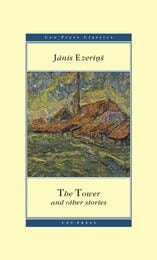
The Tower
and other storiesJanis Ezerins
Central European University Press, 2012
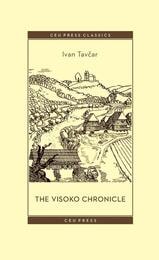
The Visoko Chronicle
Ivan Tavcar
Central European University Press, 2022
This historical novel—Visoška kronika in the Slovene original—is about two generations of the owners of the Visoko estate in the Duchy of Carniola, a predominantly Slovene province of the Habsburg Empire, in the seventeenth century. The events of the estate and the fate of its owners are affected by witchcraft persecutions, the mistreatment of Protestants, and the Thirty Years’ War. These themes are key to the construction of a Slovene national identity, which was going through a decisive phase as Tavčar was writing. By the time the novel was released in 1919, his nation had left the Habsburg Crown for the new Kingdom of Serbs, Croats, and Slovenes.
The work is both romantic and realistic. The deeply romantic motive of crime, repentance, and punishment intertwines the lives of father and son. The very acquisition of the estate is connected to a murder, which casts a long shadow over the next generation. Tavčar insists on the principle of man’s full responsibility for his acts, which can be repaired with action and determination. The author’s bleak realistic description of the farm life at Visoko reflects his polemical view of the Slovene farmer of his time.
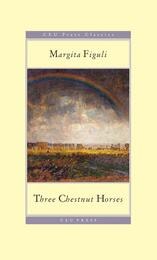
Three Chestnut Horses
Margita Figuli
Central European University Press, 2014
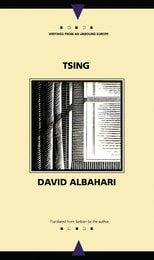
Tsing
David Albahari
Northwestern University Press, 1997