421 books match the query 'Evolution' and 138 start with t
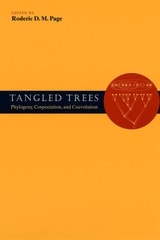
cover of Tangled Trees: Phylogeny, Cospeciation, and Coevolution

Tangled Trees

Phylogeny, Cospeciation, and Coevolution

Edited by Roderic D. M. Page

University of Chicago Press, 2002

In recent years, the use of molecular data to build phylogenetic trees and sophisticated computer-aided techniques to analyze them have led to a revolution in the study of cospeciation. Tangled Trees provides an up-to-date review and synthesis of current knowledge about phylogeny, cospeciation, and coevolution. The opening chapters present various methodological and theoretical approaches, ranging from the well-known parsimony approach to "jungles" and Bayesian statistical models. Then a series of empirical chapters discusses detailed studies of cospeciation involving vertebrate hosts and their parasites, including nematodes, viruses, and lice. Tangled Trees will be welcomed by researchers in a wide variety of fields, from parasitology and ecology to systematics and evolutionary biology.

Contributors:
Sarah Al-Tamimi, Michael A. Charleston, Dale H. Clayton, James W. Demastes, Russell D. Gray, Mark S. Hafner, John P. Huelsenbeck, J.-P. Hugot, Kevin P. Johnson, Peter Kabat, Bret Larget, Joanne Martin, Yannis Michalakis, Roderic D. M. Page, Ricardo L. Palma, Adrian M. Paterson, Susan L. Perkins, Andy Purvis, Bruce Rannala, David L. Reed, Fredrik Ronquist, Theresa A. Spradling, Jason Taylor, Michael Tristem

[more]
cover of Tarsiers: Past, Present, and Future

Tarsiers

Past, Present, and Future

Wright, Patricia C.

Rutgers University Press, 2003

Tarsiiformes, or tarsiers for short, are a group of living species of special interest to primatologists because their combination of derived and ancient characters make them pivotal to understanding the roots of primate evolution. These small-bodied, nocturnal, solitary creatures resemble lower primates in their behavior but genetically, DNA evidence aligns them more closely with higher primates, such as monkeys, apes, and humans. These astounding creatures exhibit an ability found in no other living mammal¾they can turn their heads 180 degrees in either direction to see both prey and predators. The world’s only exclusive carnivorous primate, they eat live food (primarily insects, but the occasional vertebrate, such as lizards, snakes, or frogs will also do). This unique combination of behavior and anatomy makes the tarsier an especially interesting and controversial animal for study among primate behaviorists, evolutionists, and taxonomists, who view the tarsiers as “living fossils” that link past and present, lower and higher, primates in the long chain of evolutionary history.

This new volume presents alternative and contrasting perspectives on the most debated questions that have arisen in tarsier studies. Top researchers bring together perspectives from anatomical, behavioral, genetic, and conservation studies in this new and exciting addition to the understanding of primate evolution.

This book is a volume in the Rutgers Series on Human Evolution, edited by Robert Trivers, Lee Cronk, Helen Fischer, and Lionel Tiger.
[more]
cover of Teaching Evolution in a Creation Nation

Teaching Evolution in a Creation Nation

Adam Laats and Harvey Siegel

University of Chicago Press, 2016

No fight over what gets taught in American classrooms is more heated than the battle over humanity’s origins. For more than a century we have argued about evolutionary theory and creationism (and its successor theory, intelligent design), yet we seem no closer to a resolution than we were in Darwin’s day. In this thoughtful examination of how we teach origins, historian Adam Laats and philosopher Harvey Siegel offer crucial new ways to think not just about the evolution debate but how science and religion can make peace in the classroom.
           
Laats and Siegel agree with most scientists: creationism is flawed, as science. But, they argue, students who believe it nevertheless need to be accommodated in public school science classes. Scientific or not, creationism maintains an important role in American history and culture as a point of religious dissent, a sustained form of protest that has weathered a century of broad—and often dramatic—social changes. At the same time, evolutionary theory has become a critical building block of modern knowledge. The key to accommodating both viewpoints, they show, is to disentangle belief from knowledge. A student does not need to believe in evolution in order to understand its tenets and evidence, and in this way can be fully literate in modern scientific thought and still maintain contrary religious or cultural views. Altogether, Laats and Siegel offer the kind of level-headed analysis that is crucial to finding a way out of our culture-war deadlock.      
[more]
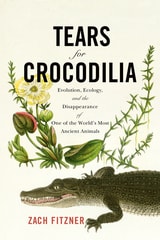
cover of Tears for Crocodilia: Evolution, Ecology, and the Disappearance of One of the World's Most Ancient Animals

Tears for Crocodilia

Evolution, Ecology, and the Disappearance of One of the World's Most Ancient Animals

Zach Fitzner

Westholme Publishing, 2025

Seventy million years ago in what would become North America, a monstrous thirty-five-foot-long Cretaceous crocodile lurked on a marshy riverbank. Springing suddenly, its huge jaws trapped and crushed a juvenile hadrosaur. Today, the remains of that ancient crocodile are being painstakingly reconstructed in Colorado, where naturalist Zach Fitzner continues his life-long fascination with this amazing animal family. 

In Tears for Crocodilia: Evolution, Ecology, and the Disappearance of One of the World’s Most Ancient Animals, Fitzner tracks the evolution of crocodilians from prehistoric predators to modern endangered wildlife, using his own experiences with these reptiles as a lens to understanding wildlife conservation and our relationship with the natural world. Traveling the world to interact with crocodiles, from observing alligators in a wildlife refuge in Texas and paddling a canoe in the Everglades searching for crocodiles to trekking the jungles in Nepal to find endangered gharials, the author expresses a wonder in exploring these diverse ecosystems, making a connection between crocodilians and the lands they live in. As the story follows crocodilians, it also illuminates their often complicated relationship with humans, from crocodile cults in ancient Egypt to American alligators living on golf courses. Fitzner also closely examines the dark side of this relationship, including habitat destruction and poaching as well as the mechanistic view of traditional conservation that turns these magnificent animals into agricultural products. Tears for Crocodilia delves deeply into issues of wildlife conservation, ethics, and how we can coexist with other creatures. It is also a tribute to a magnificent group of animals, survivors from the age of dinosaurs. 
[more]
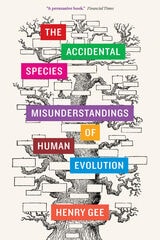
cover of The Accidental Species: Misunderstandings of Human Evolution

The Accidental Species

Misunderstandings of Human Evolution

Henry Gee

University of Chicago Press, 2013

The idea of a missing link between humanity and our animal ancestors predates evolution and popular science and actually has religious roots in the deist concept of the Great Chain of Being. Yet, the metaphor has lodged itself in the contemporary imagination, and new fossil discoveries are often hailed in headlines as revealing the elusive transitional step, the moment when we stopped being “animal” and started being “human.” In The Accidental Species, Henry Gee, longtime paleontology editor at Nature, takes aim at this misleading notion, arguing that it reflects a profound misunderstanding of how evolution works and, when applied to the evolution of our own species, supports mistaken ideas about our own place in the universe.
 
Gee presents a robust and stark challenge to our tendency to see ourselves as the acme of creation. Far from being a quirk of religious fundamentalism, human exceptionalism, Gee argues, is an error that also infects scientific thought. Touring the many features of human beings that have recurrently been used to distinguish us from the rest of the animal world, Gee shows that our evolutionary outcome is one possibility among many, one that owes more to chance than to an organized progression to supremacy. He starts with bipedality, which he shows could have arisen entirely by accident, as a by-product of sexual selection, moves on to technology, large brain size, intelligence, language, and, finally, sentience. He reveals each of these attributes to be alive and well throughout the animal world—they are not, indeed, unique to our species.

The Accidental Species combines Gee’s firsthand experience on the editorial side of many incredible paleontological findings with healthy skepticism and humor to create a book that aims to overturn popular thinking on human evolution—the key is not what’s missing, but how we’re linked.

[more]
cover of The American Naturalist, volume 200 number 1 (July 2022)

The American Naturalist, volume 200 number 1 (July 2022)

The University of Chicago Press

University of Chicago Press Journals, 2022

[more]
cover of The American Naturalist, volume 200 number 2 (August 2022)

The American Naturalist, volume 200 number 2 (August 2022)

The University of Chicago Press

University of Chicago Press Journals, 2022

[more]
cover of The American Naturalist, volume 200 number 3 (September 2022)

The American Naturalist, volume 200 number 3 (September 2022)

The University of Chicago Press

University of Chicago Press Journals, 2022

[more]
cover of The American Naturalist, volume 200 number 4 (October 2022)

The American Naturalist, volume 200 number 4 (October 2022)

The University of Chicago Press

University of Chicago Press Journals, 2022
[more]
cover of The American Naturalist, volume 200 number 5 (November 2022)

The American Naturalist, volume 200 number 5 (November 2022)

The University of Chicago Press

University of Chicago Press Journals, 2022
This is volume 200 issue 5 of The American Naturalist. Since its inception in 1867, The American Naturalist has maintained its position as one of the world’s premier peer-reviewed publications in ecology, evolution, and behavior research. Its goals are to publish articles that are of broad interest to the readership, pose new and significant problems, introduce novel subjects, develop conceptual unification, and change the way people think. The American Naturalist emphasizes sophisticated methodologies and innovative theoretical syntheses — all in an effort to advance the knowledge of organic evolution and other broad biological principles.
[more]
cover of The American Naturalist, volume 200 number 6 (December 2022)

The American Naturalist, volume 200 number 6 (December 2022)

The University of Chicago Press

University of Chicago Press Journals, 2022
This is volume 200 issue 6 of The American Naturalist. Since its inception in 1867, The American Naturalist has maintained its position as one of the world’s premier peer-reviewed publications in ecology, evolution, and behavior research. Its goals are to publish articles that are of broad interest to the readership, pose new and significant problems, introduce novel subjects, develop conceptual unification, and change the way people think. The American Naturalist emphasizes sophisticated methodologies and innovative theoretical syntheses — all in an effort to advance the knowledge of organic evolution and other broad biological principles.
[more]
cover of The American Naturalist, volume 201 number 1 (January 2023)

The American Naturalist, volume 201 number 1 (January 2023)

The University of Chicago Press

University of Chicago Press Journals, 2023
This is volume 201 issue 1 of The American Naturalist. Since its inception in 1867, The American Naturalist has maintained its position as one of the world’s premier peer-reviewed publications in ecology, evolution, and behavior research. Its goals are to publish articles that are of broad interest to the readership, pose new and significant problems, introduce novel subjects, develop conceptual unification, and change the way people think. The American Naturalist emphasizes sophisticated methodologies and innovative theoretical syntheses — all in an effort to advance the knowledge of organic evolution and other broad biological principles.
[more]
cover of The American Naturalist, volume 201 number 2 (February 2023)

The American Naturalist, volume 201 number 2 (February 2023)

The University of Chicago Press

University of Chicago Press Journals, 2023
This is volume 201 issue 2 of The American Naturalist. Since its inception in 1867, The American Naturalist has maintained its position as one of the world’s premier peer-reviewed publications in ecology, evolution, and behavior research. Its goals are to publish articles that are of broad interest to the readership, pose new and significant problems, introduce novel subjects, develop conceptual unification, and change the way people think. The American Naturalist emphasizes sophisticated methodologies and innovative theoretical syntheses — all in an effort to advance the knowledge of organic evolution and other broad biological principles.
[more]
cover of The American Naturalist, volume 201 number 3 (March 2023)

The American Naturalist, volume 201 number 3 (March 2023)

The University of Chicago Press

University of Chicago Press Journals, 2023
This is volume 201 issue 3 of The American Naturalist. Since its inception in 1867, The American Naturalist has maintained its position as one of the world’s premier peer-reviewed publications in ecology, evolution, and behavior research. Its goals are to publish articles that are of broad interest to the readership, pose new and significant problems, introduce novel subjects, develop conceptual unification, and change the way people think. The American Naturalist emphasizes sophisticated methodologies and innovative theoretical syntheses — all in an effort to advance the knowledge of organic evolution and other broad biological principles.
[more]
cover of The American Naturalist, volume 201 number 4 (April 2023)

The American Naturalist, volume 201 number 4 (April 2023)

The University of Chicago Press

University of Chicago Press Journals, 2023
This is volume 201 issue 4 of The American Naturalist. Since its inception in 1867, The American Naturalist has maintained its position as one of the world’s premier peer-reviewed publications in ecology, evolution, and behavior research. Its goals are to publish articles that are of broad interest to the readership, pose new and significant problems, introduce novel subjects, develop conceptual unification, and change the way people think. The American Naturalist emphasizes sophisticated methodologies and innovative theoretical syntheses — all in an effort to advance the knowledge of organic evolution and other broad biological principles.
[more]
cover of The American Naturalist, volume 201 number 5 (May 2023)

The American Naturalist, volume 201 number 5 (May 2023)

The University of Chicago Press

University of Chicago Press Journals, 2023
This is volume 201 issue 5 of The American Naturalist. Since its inception in 1867, The American Naturalist has maintained its position as one of the world’s premier peer-reviewed publications in ecology, evolution, and behavior research. Its goals are to publish articles that are of broad interest to the readership, pose new and significant problems, introduce novel subjects, develop conceptual unification, and change the way people think. The American Naturalist emphasizes sophisticated methodologies and innovative theoretical syntheses — all in an effort to advance the knowledge of organic evolution and other broad biological principles.
[more]
cover of The American Naturalist, volume 201 number 6 (June 2023)

The American Naturalist, volume 201 number 6 (June 2023)

The University of Chicago Press

University of Chicago Press Journals, 2023
This is volume 201 issue 6 of The American Naturalist. Since its inception in 1867, The American Naturalist has maintained its position as one of the world’s premier peer-reviewed publications in ecology, evolution, and behavior research. Its goals are to publish articles that are of broad interest to the readership, pose new and significant problems, introduce novel subjects, develop conceptual unification, and change the way people think. The American Naturalist emphasizes sophisticated methodologies and innovative theoretical syntheses — all in an effort to advance the knowledge of organic evolution and other broad biological principles.
[more]
cover of The American Naturalist, volume 202 number 1 (July 2023)

The American Naturalist, volume 202 number 1 (July 2023)

The University of Chicago Press

University of Chicago Press Journals, 2023
This is volume 202 issue 1 of The American Naturalist. Since its inception in 1867, The American Naturalist has maintained its position as one of the world’s premier peer-reviewed publications in ecology, evolution, and behavior research. Its goals are to publish articles that are of broad interest to the readership, pose new and significant problems, introduce novel subjects, develop conceptual unification, and change the way people think. The American Naturalist emphasizes sophisticated methodologies and innovative theoretical syntheses — all in an effort to advance the knowledge of organic evolution and other broad biological principles.
[more]
cover of The American Naturalist, volume 202 number 2 (August 2023)

The American Naturalist, volume 202 number 2 (August 2023)

The University of Chicago Press

University of Chicago Press Journals, 2023
This is volume 202 issue 2 of The American Naturalist. Since its inception in 1867, The American Naturalist has maintained its position as one of the world’s premier peer-reviewed publications in ecology, evolution, and behavior research. Its goals are to publish articles that are of broad interest to the readership, pose new and significant problems, introduce novel subjects, develop conceptual unification, and change the way people think. The American Naturalist emphasizes sophisticated methodologies and innovative theoretical syntheses — all in an effort to advance the knowledge of organic evolution and other broad biological principles.
[more]
cover of The American Naturalist, volume 202 number 3 (September 2023)

The American Naturalist, volume 202 number 3 (September 2023)

The University of Chicago Press

University of Chicago Press Journals, 2023
This is volume 202 issue 3 of The American Naturalist. Since its inception in 1867, The American Naturalist has maintained its position as one of the world’s premier peer-reviewed publications in ecology, evolution, and behavior research. Its goals are to publish articles that are of broad interest to the readership, pose new and significant problems, introduce novel subjects, develop conceptual unification, and change the way people think. The American Naturalist emphasizes sophisticated methodologies and innovative theoretical syntheses — all in an effort to advance the knowledge of organic evolution and other broad biological principles.
[more]
cover of The American Naturalist, volume 202 number 4 (October 2023)

The American Naturalist, volume 202 number 4 (October 2023)

The University of Chicago Press

University of Chicago Press Journals, 2023
This is volume 202 issue 4 of The American Naturalist. Since its inception in 1867, The American Naturalist has maintained its position as one of the world’s premier peer-reviewed publications in ecology, evolution, and behavior research. Its goals are to publish articles that are of broad interest to the readership, pose new and significant problems, introduce novel subjects, develop conceptual unification, and change the way people think. The American Naturalist emphasizes sophisticated methodologies and innovative theoretical syntheses — all in an effort to advance the knowledge of organic evolution and other broad biological principles.
[more]
cover of The American Naturalist, volume 202 number 5 (November 2023)

The American Naturalist, volume 202 number 5 (November 2023)

The University of Chicago Press

University of Chicago Press Journals, 2023
This is volume 202 issue 5 of The American Naturalist. Since its inception in 1867, The American Naturalist has maintained its position as one of the world’s premier peer-reviewed publications in ecology, evolution, and behavior research. Its goals are to publish articles that are of broad interest to the readership, pose new and significant problems, introduce novel subjects, develop conceptual unification, and change the way people think. The American Naturalist emphasizes sophisticated methodologies and innovative theoretical syntheses — all in an effort to advance the knowledge of organic evolution and other broad biological principles.
[more]
cover of The American Naturalist, volume 202 number 6 (December 2023)

The American Naturalist, volume 202 number 6 (December 2023)

The University of Chicago Press

University of Chicago Press Journals, 2023
This is volume 202 issue 6 of The American Naturalist. Since its inception in 1867, The American Naturalist has maintained its position as one of the world’s premier peer-reviewed publications in ecology, evolution, and behavior research. Its goals are to publish articles that are of broad interest to the readership, pose new and significant problems, introduce novel subjects, develop conceptual unification, and change the way people think. The American Naturalist emphasizes sophisticated methodologies and innovative theoretical syntheses — all in an effort to advance the knowledge of organic evolution and other broad biological principles.
[more]
cover of The American Naturalist, volume 203 number 1 (January 2024)

The American Naturalist, volume 203 number 1 (January 2024)

The University of Chicago Press

University of Chicago Press Journals, 2024
This is volume 203 issue 1 of The American Naturalist. Since its inception in 1867, The American Naturalist has maintained its position as one of the world’s premier peer-reviewed publications in ecology, evolution, and behavior research. Its goals are to publish articles that are of broad interest to the readership, pose new and significant problems, introduce novel subjects, develop conceptual unification, and change the way people think. The American Naturalist emphasizes sophisticated methodologies and innovative theoretical syntheses — all in an effort to advance the knowledge of organic evolution and other broad biological principles.
[more]
cover of The American Naturalist, volume 203 number 2 (February 2024)

The American Naturalist, volume 203 number 2 (February 2024)

The University of Chicago Press

University of Chicago Press Journals, 2024
This is volume 203 issue 2 of The American Naturalist. Since its inception in 1867, The American Naturalist has maintained its position as one of the world’s premier peer-reviewed publications in ecology, evolution, and behavior research. Its goals are to publish articles that are of broad interest to the readership, pose new and significant problems, introduce novel subjects, develop conceptual unification, and change the way people think. The American Naturalist emphasizes sophisticated methodologies and innovative theoretical syntheses — all in an effort to advance the knowledge of organic evolution and other broad biological principles.
[more]
cover of The American Naturalist, volume 203 number 3 (March 2024)

The American Naturalist, volume 203 number 3 (March 2024)

The University of Chicago Press

University of Chicago Press Journals, 2024
This is volume 203 issue 3 of The American Naturalist. Since its inception in 1867, The American Naturalist has maintained its position as one of the world’s premier peer-reviewed publications in ecology, evolution, and behavior research. Its goals are to publish articles that are of broad interest to the readership, pose new and significant problems, introduce novel subjects, develop conceptual unification, and change the way people think. The American Naturalist emphasizes sophisticated methodologies and innovative theoretical syntheses — all in an effort to advance the knowledge of organic evolution and other broad biological principles.
[more]
cover of The American Naturalist, volume 203 number 4 (April 2024)

The American Naturalist, volume 203 number 4 (April 2024)

The University of Chicago Press

University of Chicago Press Journals, 2024
This is volume 203 issue 4 of The American Naturalist. Since its inception in 1867, The American Naturalist has maintained its position as one of the world’s premier peer-reviewed publications in ecology, evolution, and behavior research. Its goals are to publish articles that are of broad interest to the readership, pose new and significant problems, introduce novel subjects, develop conceptual unification, and change the way people think. The American Naturalist emphasizes sophisticated methodologies and innovative theoretical syntheses — all in an effort to advance the knowledge of organic evolution and other broad biological principles.
[more]
cover of The American Naturalist, volume 203 number 5 (May 2024)

The American Naturalist, volume 203 number 5 (May 2024)

The University of Chicago Press

University of Chicago Press Journals, 2024
This is volume 203 issue 5 of The American Naturalist. Since its inception in 1867, The American Naturalist has maintained its position as one of the world’s premier peer-reviewed publications in ecology, evolution, and behavior research. Its goals are to publish articles that are of broad interest to the readership, pose new and significant problems, introduce novel subjects, develop conceptual unification, and change the way people think. The American Naturalist emphasizes sophisticated methodologies and innovative theoretical syntheses — all in an effort to advance the knowledge of organic evolution and other broad biological principles.
[more]
cover of The American Naturalist, volume 203 number 6 (June 2024)

The American Naturalist, volume 203 number 6 (June 2024)

The University of Chicago Press

University of Chicago Press Journals, 2024
This is volume 203 issue 6 of The American Naturalist. Since its inception in 1867, The American Naturalist has maintained its position as one of the world’s premier peer-reviewed publications in ecology, evolution, and behavior research. Its goals are to publish articles that are of broad interest to the readership, pose new and significant problems, introduce novel subjects, develop conceptual unification, and change the way people think. The American Naturalist emphasizes sophisticated methodologies and innovative theoretical syntheses — all in an effort to advance the knowledge of organic evolution and other broad biological principles.
[more]
cover of The American Naturalist, volume 204 number 1 (July 2024)

The American Naturalist, volume 204 number 1 (July 2024)

The University of Chicago Press

University of Chicago Press Journals, 2024
This is volume 204 issue 1 of The American Naturalist. Since its inception in 1867, The American Naturalist has maintained its position as one of the world’s premier peer-reviewed publications in ecology, evolution, and behavior research. Its goals are to publish articles that are of broad interest to the readership, pose new and significant problems, introduce novel subjects, develop conceptual unification, and change the way people think. The American Naturalist emphasizes sophisticated methodologies and innovative theoretical syntheses — all in an effort to advance the knowledge of organic evolution and other broad biological principles.
[more]
cover of The American Naturalist, volume 204 number 2 (August 2024)

The American Naturalist, volume 204 number 2 (August 2024)

The University of Chicago Press

University of Chicago Press Journals, 2024
This is volume 204 issue 2 of The American Naturalist. Since its inception in 1867, The American Naturalist has maintained its position as one of the world’s premier peer-reviewed publications in ecology, evolution, and behavior research. Its goals are to publish articles that are of broad interest to the readership, pose new and significant problems, introduce novel subjects, develop conceptual unification, and change the way people think. The American Naturalist emphasizes sophisticated methodologies and innovative theoretical syntheses — all in an effort to advance the knowledge of organic evolution and other broad biological principles.
[more]
cover of The American Naturalist, volume 204 number 3 (September 2024)

The American Naturalist, volume 204 number 3 (September 2024)

The University of Chicago Press

University of Chicago Press Journals, 2024
This is volume 204 issue 3 of The American Naturalist. Since its inception in 1867, The American Naturalist has maintained its position as one of the world’s premier peer-reviewed publications in ecology, evolution, and behavior research. Its goals are to publish articles that are of broad interest to the readership, pose new and significant problems, introduce novel subjects, develop conceptual unification, and change the way people think. The American Naturalist emphasizes sophisticated methodologies and innovative theoretical syntheses — all in an effort to advance the knowledge of organic evolution and other broad biological principles.
[more]
cover of The American Naturalist, volume 204 number 4 (October 2024)

The American Naturalist, volume 204 number 4 (October 2024)

The University of Chicago Press

University of Chicago Press Journals, 2024
This is volume 204 issue 4 of The American Naturalist. Since its inception in 1867, The American Naturalist has maintained its position as one of the world’s premier peer-reviewed publications in ecology, evolution, and behavior research. Its goals are to publish articles that are of broad interest to the readership, pose new and significant problems, introduce novel subjects, develop conceptual unification, and change the way people think. The American Naturalist emphasizes sophisticated methodologies and innovative theoretical syntheses — all in an effort to advance the knowledge of organic evolution and other broad biological principles.
[more]
cover of The American Naturalist, volume 204 number 5 (November 2024)

The American Naturalist, volume 204 number 5 (November 2024)

The University of Chicago Press

University of Chicago Press Journals, 2024
This is volume 204 issue 5 of The American Naturalist. Since its inception in 1867, The American Naturalist has maintained its position as one of the world’s premier peer-reviewed publications in ecology, evolution, and behavior research. Its goals are to publish articles that are of broad interest to the readership, pose new and significant problems, introduce novel subjects, develop conceptual unification, and change the way people think. The American Naturalist emphasizes sophisticated methodologies and innovative theoretical syntheses — all in an effort to advance the knowledge of organic evolution and other broad biological principles.
[more]
cover of The American Naturalist, volume 204 number 6 (December 2024)

The American Naturalist, volume 204 number 6 (December 2024)

The University of Chicago Press

University of Chicago Press Journals, 2024
This is volume 204 issue 6 of The American Naturalist. Since its inception in 1867, The American Naturalist has maintained its position as one of the world’s premier peer-reviewed publications in ecology, evolution, and behavior research. Its goals are to publish articles that are of broad interest to the readership, pose new and significant problems, introduce novel subjects, develop conceptual unification, and change the way people think. The American Naturalist emphasizes sophisticated methodologies and innovative theoretical syntheses — all in an effort to advance the knowledge of organic evolution and other broad biological principles.
[more]
cover of The American Naturalist, volume 205 number 1 (January 2025)

The American Naturalist, volume 205 number 1 (January 2025)

The University of Chicago Press

University of Chicago Press Journals, 2025
This is volume 205 issue 1 of The American Naturalist. Since its inception in 1867, The American Naturalist has maintained its position as one of the world’s premier peer-reviewed publications in ecology, evolution, and behavior research. Its goals are to publish articles that are of broad interest to the readership, pose new and significant problems, introduce novel subjects, develop conceptual unification, and change the way people think. The American Naturalist emphasizes sophisticated methodologies and innovative theoretical syntheses — all in an effort to advance the knowledge of organic evolution and other broad biological principles.
[more]
cover of The American Naturalist, volume 205 number 2 (February 2025)

The American Naturalist, volume 205 number 2 (February 2025)

The University of Chicago Press

University of Chicago Press Journals, 2025
This is volume 205 issue 2 of The American Naturalist. Since its inception in 1867, The American Naturalist has maintained its position as one of the world’s premier peer-reviewed publications in ecology, evolution, and behavior research. Its goals are to publish articles that are of broad interest to the readership, pose new and significant problems, introduce novel subjects, develop conceptual unification, and change the way people think. The American Naturalist emphasizes sophisticated methodologies and innovative theoretical syntheses — all in an effort to advance the knowledge of organic evolution and other broad biological principles.
[more]
cover of The American Naturalist, volume 205 number 3 (March 2025)

The American Naturalist, volume 205 number 3 (March 2025)

The University of Chicago Press

University of Chicago Press Journals, 2025
This is volume 205 issue 3 of The American Naturalist. Since its inception in 1867, The American Naturalist has maintained its position as one of the world’s premier peer-reviewed publications in ecology, evolution, and behavior research. Its goals are to publish articles that are of broad interest to the readership, pose new and significant problems, introduce novel subjects, develop conceptual unification, and change the way people think. The American Naturalist emphasizes sophisticated methodologies and innovative theoretical syntheses — all in an effort to advance the knowledge of organic evolution and other broad biological principles.
[more]
cover of The American Naturalist, volume 205 number 4 (April 2025)

The American Naturalist, volume 205 number 4 (April 2025)

The University of Chicago Press

University of Chicago Press Journals, 2025
This is volume 205 issue 4 of The American Naturalist. Since its inception in 1867, The American Naturalist has maintained its position as one of the world’s premier peer-reviewed publications in ecology, evolution, and behavior research. Its goals are to publish articles that are of broad interest to the readership, pose new and significant problems, introduce novel subjects, develop conceptual unification, and change the way people think. The American Naturalist emphasizes sophisticated methodologies and innovative theoretical syntheses — all in an effort to advance the knowledge of organic evolution and other broad biological principles.
[more]
cover of The American Naturalist, volume 205 number 5 (May 2025)

The American Naturalist, volume 205 number 5 (May 2025)

The University of Chicago Press

University of Chicago Press Journals, 2025
This is volume 205 issue 5 of The American Naturalist. Since its inception in 1867, The American Naturalist has maintained its position as one of the world’s premier peer-reviewed publications in ecology, evolution, and behavior research. Its goals are to publish articles that are of broad interest to the readership, pose new and significant problems, introduce novel subjects, develop conceptual unification, and change the way people think. The American Naturalist emphasizes sophisticated methodologies and innovative theoretical syntheses — all in an effort to advance the knowledge of organic evolution and other broad biological principles.
[more]
cover of The American Naturalist, volume 205 number 6 (June 2025)

The American Naturalist, volume 205 number 6 (June 2025)

The University of Chicago Press

University of Chicago Press Journals, 2025
This is volume 205 issue 6 of The American Naturalist. Since its inception in 1867, The American Naturalist has maintained its position as one of the world’s premier peer-reviewed publications in ecology, evolution, and behavior research. Its goals are to publish articles that are of broad interest to the readership, pose new and significant problems, introduce novel subjects, develop conceptual unification, and change the way people think. The American Naturalist emphasizes sophisticated methodologies and innovative theoretical syntheses — all in an effort to advance the knowledge of organic evolution and other broad biological principles.
[more]
cover of The American Naturalist, volume 206 number 1 (July 2025)

The American Naturalist, volume 206 number 1 (July 2025)

The University of Chicago Press

University of Chicago Press Journals, 2025
This is volume 206 issue 1 of The American Naturalist. Since its inception in 1867, The American Naturalist has maintained its position as one of the world’s premier peer-reviewed publications in ecology, evolution, and behavior research. Its goals are to publish articles that are of broad interest to the readership, pose new and significant problems, introduce novel subjects, develop conceptual unification, and change the way people think. The American Naturalist emphasizes sophisticated methodologies and innovative theoretical syntheses — all in an effort to advance the knowledge of organic evolution and other broad biological principles.
[more]
cover of The American Naturalist, volume 206 number 2 (August 2025)

The American Naturalist, volume 206 number 2 (August 2025)

The University of Chicago Press

University of Chicago Press Journals, 2025
This is volume 206 issue 2 of The American Naturalist. Since its inception in 1867, The American Naturalist has maintained its position as one of the world’s premier peer-reviewed publications in ecology, evolution, and behavior research. Its goals are to publish articles that are of broad interest to the readership, pose new and significant problems, introduce novel subjects, develop conceptual unification, and change the way people think. The American Naturalist emphasizes sophisticated methodologies and innovative theoretical syntheses — all in an effort to advance the knowledge of organic evolution and other broad biological principles.
[more]
cover of The American Naturalist, volume 206 number 3 (September 2025)

The American Naturalist, volume 206 number 3 (September 2025)

The University of Chicago Press

University of Chicago Press Journals, 2025
This is volume 206 issue 3 of The American Naturalist. Since its inception in 1867, The American Naturalist has maintained its position as one of the world’s premier peer-reviewed publications in ecology, evolution, and behavior research. Its goals are to publish articles that are of broad interest to the readership, pose new and significant problems, introduce novel subjects, develop conceptual unification, and change the way people think. The American Naturalist emphasizes sophisticated methodologies and innovative theoretical syntheses — all in an effort to advance the knowledge of organic evolution and other broad biological principles.
[more]
cover of The American Naturalist, volume 206 number 4 (October 2025)

The American Naturalist, volume 206 number 4 (October 2025)

The University of Chicago Press

University of Chicago Press Journals, 2025
This is volume 206 issue 4 of The American Naturalist. Since its inception in 1867, The American Naturalist has maintained its position as one of the world’s premier peer-reviewed publications in ecology, evolution, and behavior research. Its goals are to publish articles that are of broad interest to the readership, pose new and significant problems, introduce novel subjects, develop conceptual unification, and change the way people think. The American Naturalist emphasizes sophisticated methodologies and innovative theoretical syntheses — all in an effort to advance the knowledge of organic evolution and other broad biological principles.
[more]
cover of The American Naturalist, volume 206 number 5 (November 2025)

The American Naturalist, volume 206 number 5 (November 2025)

The University of Chicago Press

University of Chicago Press Journals, 2025
This is volume 206 issue 5 of The American Naturalist. Since its inception in 1867, The American Naturalist has maintained its position as one of the world’s premier peer-reviewed publications in ecology, evolution, and behavior research. Its goals are to publish articles that are of broad interest to the readership, pose new and significant problems, introduce novel subjects, develop conceptual unification, and change the way people think. The American Naturalist emphasizes sophisticated methodologies and innovative theoretical syntheses — all in an effort to advance the knowledge of organic evolution and other broad biological principles.
[more]
cover of The American Naturalist, volume 206 number 6 (December 2025)

The American Naturalist, volume 206 number 6 (December 2025)

The University of Chicago Press

University of Chicago Press Journals, 2025
This is volume 206 issue 6 of The American Naturalist. Since its inception in 1867, The American Naturalist has maintained its position as one of the world’s premier peer-reviewed publications in ecology, evolution, and behavior research. Its goals are to publish articles that are of broad interest to the readership, pose new and significant problems, introduce novel subjects, develop conceptual unification, and change the way people think. The American Naturalist emphasizes sophisticated methodologies and innovative theoretical syntheses — all in an effort to advance the knowledge of organic evolution and other broad biological principles.
[more]
cover of The American Naturalist, volume 207 number 1 (January 2026)

The American Naturalist, volume 207 number 1 (January 2026)

The University of Chicago Press

University of Chicago Press Journals, 2026
This is volume 207 issue 1 of The American Naturalist. Since its inception in 1867, The American Naturalist has maintained its position as one of the world’s premier peer-reviewed publications in ecology, evolution, and behavior research. Its goals are to publish articles that are of broad interest to the readership, pose new and significant problems, introduce novel subjects, develop conceptual unification, and change the way people think. The American Naturalist emphasizes sophisticated methodologies and innovative theoretical syntheses — all in an effort to advance the knowledge of organic evolution and other broad biological principles.
[more]
cover of The American Naturalist, volume 207 number 2 (February 2026)

The American Naturalist, volume 207 number 2 (February 2026)

The University of Chicago Press

University of Chicago Press Journals, 2026
This is volume 207 issue 2 of The American Naturalist. Since its inception in 1867, The American Naturalist has maintained its position as one of the world’s premier peer-reviewed publications in ecology, evolution, and behavior research. Its goals are to publish articles that are of broad interest to the readership, pose new and significant problems, introduce novel subjects, develop conceptual unification, and change the way people think. The American Naturalist emphasizes sophisticated methodologies and innovative theoretical syntheses — all in an effort to advance the knowledge of organic evolution and other broad biological principles.
[more]
cover of The American Naturalist, volume 207 number 3 (March 2026)

The American Naturalist, volume 207 number 3 (March 2026)

The University of Chicago Press

University of Chicago Press Journals, 2026

This is volume 207 issue 3 of The American Naturalist. Since its inception in 1867, The American Naturalist has maintained its position as one of the world’s premier peer-reviewed publications in ecology, evolution, and behavior research. Its goals are to publish articles that are of broad interest to the readership, pose new and significant problems, introduce novel subjects, develop conceptual unification, and change the way people think. The American Naturalist emphasizes sophisticated methodologies and innovative theoretical syntheses — all in an effort to advance the knowledge of organic evolution and other broad biological principles.
[more]