Results by title
366 books match the query 'Family & Relationships' and 69 start with t
Talk of Love
How Culture MattersAnn Swidler
University of Chicago Press, 2001
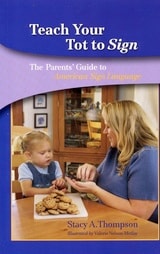
Teach Your Tot to Sign
The Parents' Guide to American Sign LanguageStacy A. Thompson
Gallaudet University Press, 2005
Research has shown that very young children can learn sign language before they learn to speak. Teach Your Tot to Sign: The Parents’ Guide to American Sign Language provides parents and teachers the opportunity to teach more than 500 basic American Sign Language (ASL) signs to their infants, toddlers, and young children. Hearing children, deaf children, and children with special needs can benefit from learning the elementary signs chosen for this handy pocket-size book. Young children who can communicate using simple signs become less frustrated and also bond in a special way with their parents. In teaching ASL to parents of toddlers and preschool teachers, author Stacy A. Thompson recognized the need for a book that could be used at home and in the classroom. Her book features fundamental signs of great appeal to young children and concise instructions on how to sign, including the critical importance of facial expression.
Teach Your Tot to Sign anticipates all of the common desires and interests of young children — food, pets, planes, trains, cars, and boats, games, holidays, vegetables, family — in short, nearly everything. Reflecting children’s endless curiosity, the vocabulary chosen ranges from signs for “baby,” “broken,” “clown,” “dinosaur,” “firefighter,” “gentle,” “hot,” “hurt,” “ketchup,” “pacifier,” “rooster,” “sad,” “spaghetti,” “wagon,” “water,” “wet,” to “you’re welcome,” and even “McDonalds.” This lively assortment of signs will help every child convey earlier in their development their thoughts, feelings, and desires to their parents and teachers.

Tender Grammars
Serena Alagappan
Duke University Press, 2027
The Accidental Teacher
Life Lessons from My Silent SonAnnie Lubliner Lehmann
University of Michigan Press, 2009
"Jonah Lehmann is an accidental teacher of others, including his family and friends. This personal and touching account of Jonah's life is enlightening, especially to those coming to terms with similar challenges with autism and other cognitive disabilities. It was written with love to support research on autism, and I recommend it to anyone and everyone touched by those of us who are different."
---Patricia E. Kefalas Dudek, Legal Advocate for People with Disabilities
"I have never read a book about a disabled person that caught me from page one. I could not put this one down. Lehmann offers a profound perspective on living with the reality of a severely disabled child. This book will be required reading for students who take my class in Special Education Administration."
---Frances LaPlante-Sosnowsky, Associate Professor of Education at Wayne State University
"A story of the astonishing power of human love and family triumph over hardship. Lehmann's story, engaging and at times both heartbreaking and joyful, offers an intimate view of one mother's journey as she works with professionals and a blur of caregivers to assist the ever-changing needs of her son. I highly recommend it to seasoned professionals in the field of autism and students preparing for careers in special education."
---Janet E. Graetz, Assistant Professor of Human Development and Child Studies at Oakland University
A child teaches without intending to . . .
Having severe autism does not stop Annie Lehmann's son Jonah from teaching her some of life's most valuable lessons. The Accidental Teacher, a heartfelt memoir about self-discovery rather than illness, uses insight and humor to weave a tale rich with kitchen-table wisdom. It explains the realities of life with a largely nonverbal son and explores the frustrations and triumphs of the Lehmann family as Jonah grew into a young adult. This book is a must-read for anyone who has been personally touched by a major life challenge.
Annie Lubliner Lehmann, a freelance writer for more than twenty-five years, has published articles in many newspapers and magazines, including the New York Times and Detroit Free Press. She resides in Michigan with her husband and two of her three children. Her eldest son, who inspired this memoir, is now a young adult with autism who lives in a supervised home.
The Battered Child
Edited by Mary Edna Helfer, Ruth S. Kempe, and Richard D. Krugman
University of Chicago Press, 1999
The new edition of this classic text continues the legacy. While updating and significantly adding to previous editions, the fifth edition retains the multidisciplinary and comprehensive approach that initially set the work apart. This new edition contains chapters from professionals in such diverse fields as pediatrics, psychiatry, legal studies, and social work that reflect the past decade's extraordinary advances in research and techniques. Twenty of the book's 30 chapters are entirely new, while the remaining material has been extensively revised.
Part I provides a historical overview of child abuse and neglect as well as background material on the cultural, psychiatric, social, economic, and legal contexts of child maltreatment. Part II discusses the processes of assessing cases of physical, emotional, and sexual abuse and neglect from the unique perspectives of all the professionals involved, including teachers, pediatricians, and social workers. Part III describes intervention and treatment, focusing on legal issues, investigative procedures, and therapeutic processes, while Part IV addresses prevention and policy issues.
Previous editions of The Battered Child have earned the labels of "a classic" and a "Bible." With its up-to-date information, unequaled scope, and contributions from experts on every aspect of child abuse, the fifth edition of this cornerstone text is even more essential to the field than its predecessors.
"Comprehensive and up-to-date."—David Cottrell, British Journal of Psychiatry
"A valuable contribution to the field of abuse and neglect"—Prasanna Nair, Journal of the American Medical Association
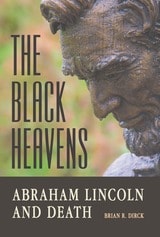
The Black Heavens
Abraham Lincoln and DeathBrian R. Dirck
Southern Illinois University Press, 2019
From multiple personal tragedies to the terrible carnage of the Civil War, death might be alongside emancipation of the slaves and restoration of the Union as one of the great central truths of Abraham Lincoln’s life. Yet what little has been written specifically about Lincoln and death is insufficient, sentimentalized, or devoid of the rich historical literature about death and mourning during the nineteenth century. The Black Heavens: Abraham Lincoln and Death is the first in-depth account of how the sixteenth president responded to the riddles of mortality, undertook personal mourning, and coped with the extraordinary burden of sending hundreds of thousands of soldiers to be killed on battlefields.
Going beyond the characterization of Lincoln as a melancholy, tragic figure, Brian R. Dirck investigates Lincoln’s frequent encounters with bereavement and sets his response to death and mourning within the social, cultural, and political context of his times. At a young age Lincoln saw the grim reality of lives cut short when he lost his mother and sister. Later, he was deeply affected by the deaths of two of his sons, three-year-old Eddy in 1850 and eleven-year-old Willie in 1862, as well as the combat deaths of close friends early in the war. Despite his own losses, Lincoln learned how to approach death in an emotionally detached manner, a survival skill he needed to cope with the reality of his presidency.
Dirck shows how Lincoln gradually turned to his particular understanding of God’s will in his attempts to articulate the meaning of the atrocities of war to the American public, as showcased in his allusions to religious ideas in the Gettysburg Address and the Second Inaugural. Lincoln formed a unique approach to death: both intellectual and emotional, typical and yet atypical of his times. In showing how Lincoln understood and responded to death, both privately and publicly, Dirck paints a compelling portrait of a commander in chief who buried two sons and gave the orders that sent an unprecedented number of Americans to their deaths.
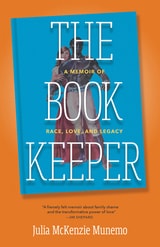
The Book Keeper
A Memoir of Race, Love, and LegacyJulia McKenzie Munemo
Ohio University Press, 2020
“A fiercely felt memoir about family shame and the transformative power of love even as it’s also an ongoing meditation on privilege and race in twenty-first-century America. This is a debut striking in its empathetic imagination, observational acuity, and emotional intelligence.” — Jim Shepard, author of Like You’d Understand, Anyway.
In a memoir that’s equal parts love story, investigation, and racial reckoning, Munemo unravels and interrogates her whiteness, a shocking secret, and her family’s history.
When interracial romance novels written by her long-dead father landed on Julia McKenzie Munemo’s kitchen table, she—a white woman—had been married to a black man for six years and their first son was a toddler. Out of shame about her father’s secret career as a writer of “slavery porn,” she hid the books from herself, and from her growing mixed-race family, for more than a decade. But then, with police shootings of African American men more and more in the public eye, she realized that understanding her own legacy was the only way to begin to understand her country.
The Changing Borders of Juvenile Justice
Transfer of Adolescents to the Criminal CourtEdited by Jeffrey Fagan and Franklin E. Zimring
University of Chicago Press, 2000
Research in this area has not kept pace with these legislative developments. There has never been a detailed, sociolegal analytic book devoted to this topic. In this important collection, researchers discuss policy, substantive procedural and empirical dimensions of waivers, and where the boundaries of the courts lie. Part 1 provides an overview of the origins and development of law and contemporary policy on the jurisdiction of adolescents. Part 2 examines the effects of jurisdictional shifts. Part 3 offers valuable insight into the developmental and psychological aspects of current and future reforms.
Contributors: Donna Bishop, Richard Bonnie, M. A. Bortner, Elizabeth Cauffman, Linda Frost Clausel, Robert O. Dawson, Jeffrey Fagan, Barry Feld, Charles Frazier, Thomas Grisso, Darnell Hawkins, James C. Howell, Akiva Liberman, Richard Redding, Simon Singer, Laurence Steinberg, David Tanenhaus, Marjorie Zatz, and Franklin E. Zimring
The Changing Face of Home
The Transnational Lives of the Second GenerationPeggy Levitt
Russell Sage Foundation, 2002
The Changing Rhythms of American Family Life
Suzanne M. Bianchi
Russell Sage Foundation, 2006
The Child
An Encyclopedic CompanionRichard A. Shweder, Editor in Chief
University of Chicago Press, 2009
The Child: An Encyclopedic Companion offers both parents and professionals access to the best scholarship from all areas of child studies in a remarkable one-volume reference.
Bringing together contemporary research on children and childhood from pediatrics, child psychology, childhood studies, education, sociology, history, law, anthropology, and other related areas, The Child contains more than 500 articles—all written by experts in their fields and overseen by a panel of distinguished editors led by anthropologist Richard A. Shweder. Each entry provides a concise and accessible synopsis of the topic at hand. For example, the entry “Adoption” begins with a general definition, followed by a detailed look at adoption in different cultures and at different times, a summary of the associated mental and developmental issues that can arise, and an overview of applicable legal and public policy.
While presenting certain universal facts about children’s development from birth through adolescence, the entries also address the many worlds of childhood both within the United States and around the globe. They consider the ways that in which race, ethnicity, gender, socioeconomic status, and cultural traditions of child rearing can affect children’s experiences of physical and mental health, education, and family. Alongside the topical entries, The Child includes more than forty “Imagining Each Other” essays, which focus on the particular experiences of children in different cultures. In “Work before Play for Yucatec Maya Children,” for example, readers learn of the work responsibilities of some modern-day Mexican children, while in “A Hindu Brahman Boy Is Born Again,” they witness a coming-of-age ritual in contemporary India.
Compiled by some of the most distinguished child development researchers in the world, The Child will broaden the current scope of knowledge on children and childhood. It is an unparalleled resource for parents, social workers, researchers, educators, and others who work with children.
The Company We Keep
Interracial Friendships and Romantic Relationships from Adolescence to AdulthoodGrace Kao
Russell Sage Foundation, 2019
While research on interracial social ties has often focused on whites and blacks, Hispanics are the largest minority group and Asian Americans are the fastest growing racial group in the United States. The Company We Keep examines friendships and romantic relationships among blacks, whites, Hispanics, and Asian Americans to better understand the full spectrum of contemporary race relations. Using data from the National Longitudinal Study of Adolescent to Adult Health, the authors explore the social ties of more than 15,000 individuals from their first survey responses as middle and high school students in the mid-1990s through young adulthood nearly fifteen years later. They find that while approval for interracial marriages has increased and is nearly universal among young people, interracial friendships and romantic relationships remain relatively rare, especially for whites and blacks. Black women are particularly disadvantaged in forming interracial romantic relationships, while Asian men are disadvantaged in the formation of any romantic relationships, both as adolescents and as young adults. They also find that people in same-sex romantic relationships are more likely to have partners from a different racial group than are people in different-sex relationships. The authors pay close attention to how the formation of interracial friendships and romantic relationships depends on opportunities for interracial contact. They find that the number of students choosing different-race friends and romantic partners is greater in schools that are more racially diverse, indicating that school segregation has a profound impact on young people’s social ties.
Kao, Joyner, and Balistreri analyze the ways school diversity and adolescent interracial contact intersect to lay the groundwork for interracial relationships in young adulthood. The Company We Keep provides compelling insights and hope for the future of living and loving across racial divides.
The Crisis of School Violence
A New PerspectiveMarianna King
Michigan State University Press, 2020
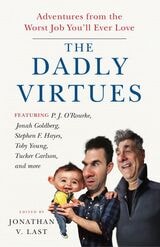
The Dadly Virtues
Adventures from the Worst Job You'll Ever LoveJonathan V. Last
Templeton Press, 2015
The Dadly Virtues is a tongue-in-cheek collection of encouragement and guidance for any stage of fatherhood, from pacifying babies to prepping for senior prom, from cutting the cord to getting the first, “Best Grandpa” t-shirt. P.J. O’Rourke sets the stage with the chapter, “What Do Men Get from Fatherhood? Besides What They Put In …” and then is followed by:
•Matthew Continetti’s, “Newborn Terror: The Moment You Realize that ‘Bundle of Joy’ Is a Euphemism for Something Very Different.”
•Stephen F. Hayes’ “Siblings: The Best Gift You’ll Ever Give Your Kids.”
•Jonah Goldberg’s “Get Your Kid a Dog: The Moral Case for Pets.”
•Tucker Carlson’s “In Praise of Adventure: How to Fill a Child’s Life with Excitement and Danger (without Getting Them Killed).”
•Michael Graham’s, “Dating: Enjoy the Movie and Please Keep the Impregnation to a Minimum.”
•Christopher Caldwell’s “College: It’s Not as Bad as You Think; It’s Worse.”
•Andrew Ferguson’s “Emerging Adults and Empty Nesters: Just When You Had Fatherhood All Figured Out.”
•Toby Young’s “The Dark Side: Bad Parenting and the Things We Think, but Do Not Say.”
•Joseph Epstein’s “Thanks, Grandpa: Grandfatherhood and the Spirit of the Age.”
•And more.
Father-to-be, two-time-dad, or granddad, each essay will make you laugh and, at the same time, reinforce your commitment to the virtuous—the dadly—life.
The Emergence of Morality in Young Children
Edited by Jerome Kagan and Sharon Lamb
University of Chicago Press, 1987
"This is a welcome and immensely provocative book. For those of us who favor ethical theorizing done in close proximity to psychology and anthropology, it provides new and illuminating theory and research relevant to perennial debates about the origins of moral sense, its psychological organization, and the objectivity and unity of the moral."—Owen Flanagan, Ethics
The contributors are Augusto Blasi, Lawrence Blum, Judy Dunn, M. Ann Easterbrooks, Carolyn Pope Edwards, Robert Emde, Carol Gilligan, Charles C. Helwig, William F. Johnson, Jerome Kagan, Melanie Killen, Sharon Lamb, Manamohan Mahapatra, Joan G. Miller, Edward Mueller, Richard A. Shweder, Catherine Snow, Elliot Turiel, and Grant Wiggins.
The Emotional Journey of the Alzheimer's Family
Robert B. Santulli and Kesstan Blandin
Dartmouth College Press, 2015

The End of International Adoption?
An Unraveling Reproductive Market and the Politics of Healthy BabiesEstye Fenton
Rutgers University Press, 2019
The Essential Eldercare Handbook for Nevada
Kim Boyer
University of Nevada Press, 2014
Boyer and Shapiro provide Nevada-specific information\--medical, legal, and financial\--on the wide range of problems that arise during the elder years. Case studies show how a typical family copes with troubles such as failing health or financial cares and what options they have. This guide will help any Nevada resident plan for their own senior years and take care of aging parents, spouses, and other loved ones.
The Eternal Son
Cristovão Tezza
Tagus Press, 2013

The Family Today
A Guide for Leaders in Family Life EducationDorothy T. Dyer
University of Minnesota Press, 1950
The Family Today was first published in 1950. Minnesota Archive Editions uses digital technology to make long-unavailable books once again accessible, and are published unaltered from the original University of Minnesota Press editions.
The problems and relationships of the modern family are becoming of increasing concern to educators, clinicians, social workers, ministers, and all other thoughtful citizens. To assist such school and community leaders, who can sponsor or direct programs in marriage and family life education, is the primary purpose of these twenty-two teaching and counseling projects. Although each project is designed to fit a specific group or situation, the materials and techniques suggested can be readily adapted to other groups. Especially helpful will be the extensive lists of pertinent reading materials and films.
The projects were worked out cooperatively by the students in Professor Dyer's course in family life education at the University of Minnesota in the summer of 1949. The fifteen members of the class were all professional counselors working in a variety of fields in widely separated sections of the country, and the usefulness of the book is greatly enhanced by this diversity.
The Family as Basic Social Unit
Living Out Catholic Social TeachingKevin Schemenauer
Catholic University of America Press, 2024
The Farm on Badger Creek
Memories of a Midwest GirlhoodPeggy Prilaman Marxen
Wisconsin Historical Society Press, 2021
The Five Life Decisions
How Economic Principles and 18 Million Millennials Can Guide Your ThinkingRobert T. Michael
University of Chicago Press, 2016
Economist Robert T. Michael won’t tell you what to choose. Instead, he’ll show you how to make smarter choices. Michael focuses on five critical decisions we all face about college, career, partners, health, and parenting. He uses these to demonstrate how the science of scarcity and choice—concepts used to guide major business decisions and shape national legislation—can offer a solid foundation for our own lives. Employing comparative advantage can have a big payoff when picking a job. Knowing how to work the marketplace can minimize uncertainty when choosing a partner. And understanding externalities—the ripple of results from our actions—can clarify the if and when of having children.
Michael also brings in data from the National Longitudinal Survey of Youth, a scientific sample of 18 million millennials in the United States that tracks more than a decade of young adult choices and consequences. As the survey’s longtime principal investigator and project director, Michael shows that the aggregate decisions can help us understand what might lie ahead along many possible paths—offering readers insights about how their own choices may turn out.
There’s no singular formula for always making the right choice. But the adaptable framework and rich data at the heart of The Five Life Decisions will help you feel confident in whatever you decide.
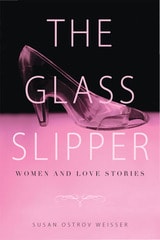
The Glass Slipper
Women and Love StoriesSusan Ostrov Weisser
Rutgers University Press, 2013
Why is the story of romance in books, magazines, and films still aimed at women rather than at men? Even after decades of feminism, traditional ideas and messages about romantic love still hold sway and, in our “postfeminist” age, are more popular than ever. Increasingly, we have become a culture of romance: stories of all kinds shape the terms of love. Women, in particular, love a love story.
The Glass Slipper is about the persistence of a familiar Anglo-American love story into the digital age. Comparing influential classics to their current counterparts, Susan Ostrov Weisser relates in highly amusing prose how these stories are shaped and defined by and for women, the main consumers of romantic texts. Following a trajectory that begins with Jane Austen and concludes with Internet dating sites, Weisser shows the many ways in which nineteenth-century views of women’s nature and the Victorian idea of romance have survived the feminist critique of the 1970s and continue in new and more ambiguous forms in today’s media, with profound implications for women.
More than a book about romance in fiction and media, The Glass Slipper illustrates how traditional stories about women’s sexuality, femininity, and romantic love have survived as seemingly protective elements in a more modern, feminist, sexually open society, confusing the picture for women themselves. Weisser compares diverse narratives—historical and contemporary from high literature and “low” genres—discussing novels by Jane Austen and Charlotte Brontë, Victorian women’s magazines, and D. H. Lawrence’s Lady Chatterley’s Lover; Disney movies; popular Harlequin romance novels; masochistic love in films; pornography and its relationship to romance; and reality TV and Internet ads as romantic stories.
Ultimately, Weisser shows that the narrative versions of the Glass Slipper should be taken as seriously as the Glass Ceiling as we see how these representations of romantic love are meant to inform women’s beliefs and goals. In this book, Weisser’s goal is not to shatter the Glass Slipper, but to see through it.
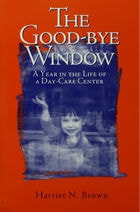
The Good-bye Window
A Year in the Life of a Day-Care CenterHarriet Brown
University of Wisconsin Press, 1998
Have you ever wondered what really goes on at your child’s day-care center after you say good-bye? Harriet Brown did. To satisfy her curiosity, she spent an entire year observing Red Caboose, a center in Madison, Wisconsin. This engaging and thought-provoking book is the story of that year.
In her beautifully written personal account, journalist and mother Brown takes us behind the scenes at a day-care center that works. At Red Caboose, one of the oldest independent centers in the country, we meet teachers who have worked with young children for more than twenty years. We watch the child-care union and parents struggle to negotiate a contract without ripping apart the fabric of trust and love that holds the Red Caboose community together.
We look at the center’s finances, to see what keeps Red Caboose going at a time when other good centers are disappearing. Best of all, we get to know the children, families, and teachers of Red Caboose—their struggles, their sorrows, their triumphs.
Started twenty-five years ago by a group of idealistic parents, the center has not only survived but thrived through some pretty tough times. In the world of day care, Red Caboose is a special place, a model for what child care in this country could and should be: not just babysitting, not just a service to working parents, but a benefit for children, families, teachers, and the community at large.
Brown sets her rich and engaging stories in the greater political and social context of our time. Why is so much child care bad? Why should working Americans worry about the link between welfare reform and child care? What can we learn from the history of child care?
This book is a must-read for parents, educators, and anyone who enjoys first-rate writing and dead-on insight into the lives of our youngest children and those who care for them.
“[Brown’s] writing is beautiful and her scholarship sound. Students considering day-care careers, day-care professionals, and concerned parents will gain insight by reading this provocative book, as will anyone who cares about the future of young children in this country.”—Choice
“I admire enormously the ambition of this book—its eagle-eyed witness and engrossing detail, plus the social importance of the project. I wish there were in the world more books like it.”—Lorrie Moore, author of Who Will Run the Frog Hospital?
“The Good-bye Window is a fascinating peek into the secret world of children. With the poignancy of Anne LaMott, and the reportorial grace of Tracy Kidder, Harriet Brown has written a terrific and worthwhile book.”—Meg Wolitzer, author of This Is Your Life
“Harriet Brown’s well-told story of the Red Caboose child-care center should be read by teachers and parents, but also by every legislator and politician in the land. Only a writer as good as Ms. Brown could display the dramatic complexities of a school community in which the youngest members enter crawling and emerge a few years later as articulate, empathetic, and well-socialized individuals, ready for the ‘real world.’”—Vivian Gussin Paley, author of The Boy Who Would Be a Helicopter
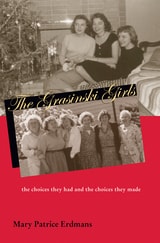
The Grasinski Girls
The Choices They Had and the Choices They MadeMary Patrice Erdmans
Ohio University Press, 2004
The Grasinski Girls were working-class Americans of Polish descent, born in the 1920s and 1930s, who created lives typical of women in their day. They went to high school, married, and had children. For the most part, they stayed home to raise their children. And they were happy doing that. They took care of their appearance and their husbands, who took care of them. Like most women of their generation, they did not join the women’s movement, and today they either reject or shy away from feminism.
Basing her account on interviews with her mother and aunts, Mary Erdmans explores the private lives of these white, Christian women in the post-World War II generation. She compares them, at times, to her own postfeminist generation. Situating these women within the religious routines that shaped their lives, Professor Erdmans explores how gender, class, ethnicity, and religion shaped the choices the Grasinski sisters were given as well as the choices they made. These women are both acted upon and actors; they are privileged and disadvantaged; they resist and surrender; they petition the Lord and accept His will.
The Grasinski Girls examines the complexity of ordinary lives, exposing privileges taken for granted as well as nuances of oppression often overlooked. Erdmans brings rigorous scholarship and familial insight to bear on the realities of twentieth-century working-class white women in America.
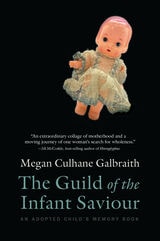
The Guild of the Infant Saviour
An Adopted Child's Memory BookMegan Culhane Galbraith
The Ohio State University Press, 2021
Shortly before Roe v. Wade legalized abortion, adoptee Megan Culhane Galbraith was born in a Catholic charity hospital in New York City to a teenaged resident of the Guild of the Infant Saviour, a home for unwed mothers. Decades later, on the eve of becoming a mother herself, she would travel to the former guild site; to her birth mother’s home in Scotland; and to Cornell University, where she discovered the startling history of its Domestic Economics program. There, from 1919 to 1969, coeds applied scientific principles to domesticity as they collectively mothered a rotating cast of babies awaiting adoption. The babies shared the last name Domecon and provided the inspiration for Galbraith’s art project, The Dollhouse.
The Guild of the Infant Saviour is a dizzyingly inventive hybrid memoir of one adoptee’s quest for her past. Galbraith pairs narrative with images from The Dollhouse as she weaves a personal and cultural history of adoption as it relates to guilt, shame, grief, identity, and memory itself. Ultimately, she connects her experiences to those of generations of adoptees, to the larger stories America tells about sex and motherhood, and to the shadows those stories cast on us all.
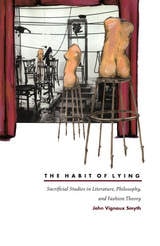
The Habit of Lying
Sacrificial Studies in Literature, Philosophy, and Fashion TheoryJohn Vignaux Smyth
Duke University Press, 2002
With recourse to Rene Girard, Paul de Man, Theodor Adorno, Leo Strauss, and other theoreticians not usually considered together, Smyth arrives at some surprising conclusions about the connections between lying, mimesis, sacrifice, sadomasochism, and the sacred, among other central subjects. Arguing that the relation between lying and truthtelling has been characterized in the West by sharply sacrificial features, he begins with a critique of the philosophies of lying espoused by Kant and Sissela Bok, then concludes that the problem of truth and lies leads to the further problem of the relation between law and arbitrariness as well as to the relation between rationality and unanimity. Constructively criticizing the work of such philosophers as Bertrand Russell, Ludwig Wittgenstein, Richard Rorty, and Nelson Goodman, Smyth shows how these problems occur comparably in fiction theory and how Paul de Man’s definition of fiction as arbitrariness finds confirmation in analytic philosophy. Through the novels of Defoe, Stendhal, and Beckett—with topics ranging from Defoe’s treatment of lies, fiction, and obscenity to Beckett’s treatment of the anus and the sacred—Smyth demonstrates how these texts generalize the issues of mendacity, concealment, and sacrificial arbitrariness in Girard’s sense to almost every aspect of experience, fiction theory, and cultural life. The final section of the book, taking its cue from Shakespeare, elaborates a sacrificial view of the history of fashion and dress concealment.
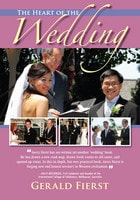
The Heart of the Wedding
Gerald Fierst
Parkhurst Brothers, Inc., 2011
“The Heart of Wedding reconnects the marriage ritual to our twenty-first century lives. Gerald Fierst, celebrant, poet, and storyteller, fills chapter after chapter with examples of ceremonies showing that weddings need not be Victorian relics, but can be filled with a sense of fun and adventure, as well as common sense. Acknowledging our multi-cultural nation where people of every race, Faith, and heritage meet and marry, this book celebrates the new America, respecting tradition while finding a contemporary voice to say ‘I do.’ Gerry brings to this book the same care, precision and artistry I have seen him bring to all of his projects. By connecting life’s passages with a larger vision of humanity – past, present and future – Gerry shows us a way to celebrate our families and ourselves.” --Susan O’Halloran, Director, RaceBridges, Chicago Illinois
The Imprint of Another Life
Adoption Narratives and Human PossibilityMargaret Homans
University of Michigan Press, 2015
The Imprint of Another Life: Adoption Narratives and Human Possibilityaddresses a series of questions about common beliefs about adoption. Underlying these beliefs is the assumption that human qualities are innate and intrinsic, an assumption often held by adoptees and their families, sometimes at great emotional cost. This book explores representations of adoption—transracial, transnational, and domestic same-race adoption—that reimagine human possibility by questioning this assumption and conceiving of alternatives.
Literary scholar Margaret Homans examines fiction making’s special relationship to themes of adoption, an “as if” form of family making, fabricated or fictional instead of biological or “real.” Adoption has tended to generate stories rather than uncover bedrock truths. Adoptive families are made, not born; in the words of novelist Jeanette Winterson, “adopted children are self-invented because we have to be.” In attempting to recover their lost histories and identities, adoptees create new stories about themselves. While some believe that adoptees cannot be whole unless they reconnect with their origins, others believe that privileging biology reaffirms hierarchies (such as those of race) that harm societies and individuals. Adoption is lived and represented through an irresolvable tension between belief in the innate nature of human traits and belief in their constructedness, contingency, and changeability. The book shows some of the ways in which literary creation, and a concept of adoption as a form of creativity, manages this tension.
The texts examined include fiction (e.g., classic novels such as Silas Marner, What Maisie Knew, and Beloved); memoirs by adoptees, adoptive parents, and birthmothers; drama, documentary films, advice manuals, social science writing; and published interviews with adoptees, parents, and birth parents. Along the way the book tracks the quests of adoptees who, whether or not they meet their original families, must construct their own stories rather than finding them; follows transnational adoptees as they return, hopes held high, to Korea and China; looks over the shoulders of a generation of girls adopted from China as they watch Disney’s iconic Mulan, with its alluring story of destiny written on the skin; and listens to birthmothers as they struggle to tell painful secrets held for decades.
This book engages in debates within adoption studies, women’s and gender studies, transnational studies, and ethnic studies; it will appeal to literary scholars and critics, including specialists in memoir or narrative theory, and to general readers interested in adoption and in race.
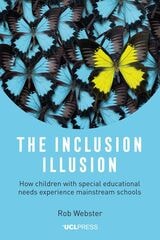
The Inclusion Illusion
How Children with Special Educational Needs Experience Mainstream SchoolsRob Webster
University College London, 2022
Inclusion conjures images of children with special educational needs and disabilities (SEND) learning in classes alongside peers in a mainstream school. For pupils in the UK with high-level SEND, who have an Education, Health and Care Plan (formerly a Statement), this implies an everyday educational experience similar to that of their typically developing classmates. Yet in vital respects, they are worlds apart.
Based on the UK’s largest observation study of pupils with high-level SEND, this book exposes how attendance at a mainstream school is no guarantee of receiving a mainstream education. Observations of nearly 1,500 lessons in English schools show that these students’ everyday experience of school is characterized by separation and segregation. Furthermore, interviews with nearly five hundred pupils, parents, and school staff reveal the effect of this marginalization on the quality of their education. The book argues that inclusion is an illusion. The way schools are organized and how classrooms are composed creates a form of structural exclusion that preserves mainstream education for typically developing pupils and justifies offering a diluted pedagogy for pupils with high-level SEND. Ultimately, the book suggests why a more authentic form of inclusion is needed, and how it might be achieved.
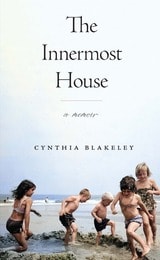
The Innermost House
A MemoirCynthia Blakeley
University of Massachusetts Press, 2024
Finalist, 2025 Georgia Author of the Year Award in Memoir
A stunning account of year-round life on the windswept shores of Cape Cod, threaded with meditations on memory, forgetting, and identity
Raised in a nineteenth-century saltbox house in Wellfleet, Massachusetts, Cynthia Blakeley was both surrounded by generations of immediate and extended family and isolated by the mysteries locked inside her affectionate yet elusive mother and short-fused father. While she and her sisters and cousins roamed the Outer Cape—drinking in the dunes, swimming in kettle ponds, and dancing in Provincetown—Blakeley also turned to the inner world of her journals as she contended with her own secrets and memories.
Over-identifying with her unconventional and artistic mother, Blakeley felt certain that the key to understanding her mother’s drinking and distractions, her generosity and easy forgiveness, was the unexplained absence of two of Blakeley’s half-siblings and their connection to her mother’s unhappy first marriage. Blakeley kept her distance, however, from her disciplinarian father. Though he took his daughters sailing and clamming and beachcombing, he was the chill to their mother’s warmth, the maker, not the breaker, of rules. Slipping through these dynamics in that small house and evocative landscape, Blakeley eventually crossed the bridge and left home, only to return later in search of the family stories that would help her decode her present.
Blakeley’s captivating memoir moves fluidly through time, grappling with the question of who owns a memory or secret and how our narrative choices not only describe but also shape and change us. In this insightful and poignant account of tenacious year-rounders on Cape Cod, Blakeley contends that making sense of ourselves is a collaborative affair, one that begins with understanding those we came from.
The Innermost House
A MemoirCynthia Blakeley
University of Massachusetts Press, 2024
Finalist, 2025 Georgia Author of the Year Award in Memoir
A stunning account of year-round life on the windswept shores of Cape Cod, threaded with meditations on memory, forgetting, and identity
Raised in a nineteenth-century saltbox house in Wellfleet, Massachusetts, Cynthia Blakeley was both surrounded by generations of immediate and extended family and isolated by the mysteries locked inside her affectionate yet elusive mother and short-fused father. While she and her sisters and cousins roamed the Outer Cape—drinking in the dunes, swimming in kettle ponds, and dancing in Provincetown—Blakeley also turned to the inner world of her journals as she contended with her own secrets and memories.
Over-identifying with her unconventional and artistic mother, Blakeley felt certain that the key to understanding her mother’s drinking and distractions, her generosity and easy forgiveness, was the unexplained absence of two of Blakeley’s half-siblings and their connection to her mother’s unhappy first marriage. Blakeley kept her distance, however, from her disciplinarian father. Though he took his daughters sailing and clamming and beachcombing, he was the chill to their mother’s warmth, the maker, not the breaker, of rules. Slipping through these dynamics in that small house and evocative landscape, Blakeley eventually crossed the bridge and left home, only to return later in search of the family stories that would help her decode her present.
Blakeley’s captivating memoir moves fluidly through time, grappling with the question of who owns a memory or secret and how our narrative choices not only describe but also shape and change us. In this insightful and poignant account of tenacious year-rounders on Cape Cod, Blakeley contends that making sense of ourselves is a collaborative affair, one that begins with understanding those we came from.
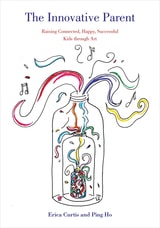
The Innovative Parent
Raising Connected, Happy, Successful Kids through ArtErica Curtis
Ohio University Press, 2019
2019 National Parenting Products Award Winner
Even the best talk-based practices in parenting can be limiting. How can art help parents temper storms of emotion, defuse sibling conflicts, get teeth brushed, and raise happy, successful kids? In The Innovative Parent, Erica Curtis and Ping Ho integrate cutting-edge research, years of clinical expertise, and their own parenting experience into a revolutionary yet practical guide to creative parenting. Plentiful illustrations and anecdotes bring concepts to life and show art in action with kids and parents.
Together, Curtis and Ho let parents in on art therapy trade secrets to help children make sense of emotions, build connections with others, develop problem-solving skills, resolve day-to-day conflicts, process and retain information, confront fears and anxiety, and much more. These are complex tasks for something as seemingly simple as making art, yet therein lies the beauty of The Innovative Parent: its down-to-earth approach is simple, doable, and fun.
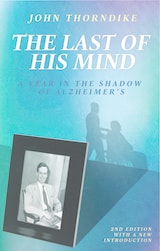
The Last of His Mind, Second Edition
A Year in the Shadow of Alzheimer’sJohn Thorndike
Ohio University Press, 2021
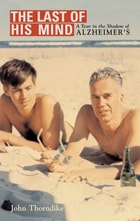
The Last of His Mind
A Year in the Shadow of Alzheimer’sJohn Thorndike
Ohio University Press, 2011
The Meanings of Age
Selected PapersBernice L. Neugarten
University of Chicago Press, 1996
Carefully edited by Dail Neugarten, each chapter presents the reader with Bernice Neugarten's original formulations on topics such as age norms and age constraints, the changing meanings of age, and age neutral social policy. Including four previously unpublished papers, The Meanings of Age will be of interest to scholars, students, and practitioners of psychology, education, law, medicine, social policy, and gerontology.
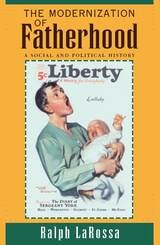
The Modernization of Fatherhood
A Social and Political HistoryRalph LaRossa
University of Chicago Press, 1997
LaRossa explains that during the interwar period the image of the father as economic provider, pal, and male role model, all in one, became institutionalized. Using personal letters and popular magazine and newspaper sources, he explores how the social and economic conditions of the Roaring Twenties and the Great Depression—a period of technical innovation as well as economic hardship—fused these expectations into a cultural ideal. With chapters on the U.S. Children's Bureau, the fathercraft movement, the magazine industry and the development of Parent's Magazine, and the creation of Father's Day, this book is a major addition to the growing literature on masculinity and fatherhood.
The Mother Knot
Jane Lazarre
Duke University Press, 1997
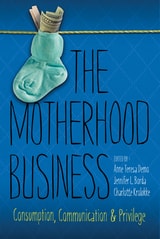
The Motherhood Business
Consumption, Communication, and PrivilegeEdited by Anne Teresa Demo, Jennifer L. Borda, and Charlotte Kroløkke
University of Alabama Press, 2015
Examining how motherhood, consumption, and privilege shape identities in contemporary culture.
The Motherhood Business is a piercing collection of ten original essays that reveal the rhetoric of the motherhood industry. Focusing on the consumer life of mothers and the emerging entrepreneurship associated with motherhood, the collection considers how different forms of privilege (class, race, and nationality) inform discourses about mothering, consumption, mobility, and leisure.
The Motherhood Business follows the harried mother’s path into the anxious maelstrom of intelligent toys, healthy foods and meals, and educational choices. It also traces how some enterprising mothers leverage cultural capital and rhetorical vision to create thriving baby- and child-based businesses of their own, as evidenced by the rise of mommy bloggers and “mompreneurs”over the last decade.
Starting with the rapidly expanding global fertility market, The Motherhood Business explores the intersection of motherhood, consumption, and privilege in the context of fertility tourism, international adoption, and transnational surrogacy. The synergy between motherhood and the marketplace demonstrated across the essays affirms the stronghold of “intensive mothering ideology” in decisions over what mothers buy and how they brand their businesses even as that ideology evolves. Across diverse contexts, the volume also identifies how different forms or privilege shape how mothers construct their identities through their consumption and entrepreneurship.
Although social observers have long commented on the link between motherhood and consumerism, little has been written within the field of rhetoric. Penetrating and interdisciplinary, The Motherhood Business illuminates how consumer culture not only shapes contemporary motherhood but also changes in response to mothers who constitute a driving force of the economy.
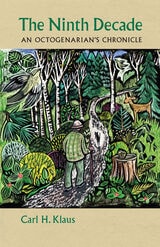
The Ninth Decade
An Octogenarian’s ChronicleKlaus, Carl H.
University of Iowa Press, 2021
The multi-year scope of his chronicle reveals the numerous physical and mental problems that arise during octogenarian life and how eighty-year-olds have dealt with those challenges. The Ninth Decade is a unique, first-hand source of information for anyone in their sixties, seventies, or eighties, as well as for persons devoted to care of the aged. Though the challenges of octogenarian life often require specialized care, The Ninth Decade also shows the pleasures of it to be so special as to have inspired Lillian Hellman’s paradoxical description of “longer life” as “the happy problem of our time.”
The Parental Experience in Midlife
Edited by Carol D. Ryff and Marsha Mailick Seltzer
University of Chicago Press, 1996
With a strong emphasis on the diversity of midlife parenting, including sociodemographic variations and specific parent or child characteristics such as single parenting or raising a child with a disability, this volume presents for the first time the complex factors that influence the quality of the midlife parenting experience.
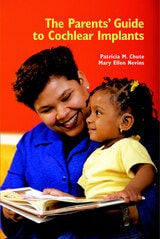
The Parents' Guide to Cochlear Implants
Patricia M. Chute
Gallaudet University Press, 2002
Most importantly, parents will learn their roles in helping their child adjust to and successfully use the cochlear implant. The Parents’ Guide to Cochlear Implants emphasizes such critical subjects as learning to listen through home activities, implants as tools for language development, and critical issues regarding school placement. This encouraging book considers the implications for performance in light of the whole child, including issues related to Deaf culture and cochlear implants. The authors also include brief stories by parents whose children have had implants that provide reassuring actual experiences to parents considering the procedure for their own child. With a last word on parenting perspectives and a rich source of resources in the appendices, this one-of-a-kind guide will arm parents of deaf children with complete confidence to make informed decisions about cochlear implantation.
The Parents’ Guide to Baby Signs
Early Communication with Your InfantLeann Sebrey
Gallaudet University Press, 2009
Experienced ASL instructor Leann Sebrey champions two-way sign communication between parents and their infants who are just months old as a way to bond more closely and reduce frustration, while also maximizing the children’s intelligence and emotional quotients.
Sebrey’s book The Parents’ Guide to Baby Signs: Early Communication with Your Infant lays out an easy, step-by-step process that will instill confidence in parents who have never signed before. She begins by explaining why ASL is best for all children, both deaf and hearing. Sebrey also recognizes the different ways young children learn, encouraging parents and caregivers to sign with infants at all times as a natural part of their interaction. She reveals the first indications of when a baby is ready to communicate, and includes a list of signs to provide parents with a good starting point. Sebrey discusses the moments when infants are most receptive to learn signs and outlines numerous practical techniques with plenty of helpful hints to speed the process. She describes the pleasure of seeing a baby’s first sign, and tells parents how to interpret baby signs, including what to do when a baby uses the wrong signs. Full of easy-to-grasp illustrations of child and family-oriented signs, The Parents’ Guide to Baby Signs is the best how-to book for parents, caregivers, and educators to teach early communication to infants.
The Politics of Reproduction
Adoption, Abortion, and Surrogacy in the Age of NeoliberalismEdited by Modhumita Roy and Mary Thompson
The Ohio State University Press, 2019
The Powwow Coloring and Activity Book
Ojibwe Traditions Coloring Book SeriesCassie Brown
Wisconsin Historical Society Press, 2018
The Price of Independence
The Economics of Early AdulthoodSheldon Danziger
Russell Sage Foundation, 2007
The Price of Safety
Hidden Costs and Unintended Consequences for Women in the Domestic Violence Service SystemSara Shoener
Vanderbilt University Press, 2017
Through detailed observations of services such as court procedures, public benefits processes, and community-based IPV programs as well as in-depth interviews with dozens of IPV survivors and practitioners, Shoener describes how our current institutional response to IPV is often not useful--and sometimes quite harmful--for IPV survivors with the least material, social, and cultural capital to spare. For these women, as the interviews vividly record, IPV has long-term economic and social consequences, disrupting career paths and creating social isolation.
The Queerness of Home
Gender, Sexuality, and the Politics of Domesticity after World War IIStephen Vider
University of Chicago Press, 2021
From the Stonewall riots to the protests of ACT UP, histories of queer and trans politics have almost exclusively centered on public activism. In The Queerness of Home, Stephen Vider turns the focus inward, showing that the intimacy of domestic space has been equally crucial to the history of postwar LGBTQ life.
Beginning in the 1940s, LGBTQ activists looked increasingly to the home as a site of connection, care, and cultural inclusion. They struggled against the conventions of marriage, challenged the gendered codes of everyday labor, reimagined domestic architecture, and contested the racial and class boundaries of kinship and belonging. Retelling LGBTQ history from the inside out, Vider reveals the surprising ways that the home became, and remains, a charged space in battles for social and economic justice, making it clear that LGBTQ people not only realized new forms of community and culture for themselves—they remade the possibilities of home life for everyone.
The Silent Garden
A Parent's Guide to Raising a Deaf ChildPaul W. Ogden
Gallaudet University Press, 2017
Authors Paul W. Ogden and David H. Smith, who are both deaf, present examples and research that guide parents through often unfamiliar territory. From coping mechanisms for parents to advice on creating healthy home environments, the authors cover a range of topics that impact day-to-day actions and decision-making. The topic of communication is discussed extensively as communication access and language development are crucial not only for intellectual growth, but also for positive family and social relationships. The authors look at American Sign Language, listening and spoken language, written English, and various other modes of communication available to deaf children. Different educational options are presented, and technology—including the debate about cochlear implants—is reviewed. Deaf children with special needs are considered here as well. Each topic is accompanied by real-life stories that offer further insight.
Always encouraging, The Silent Garden empowers parents to be the best advocates for their deaf children. Throughout, the authors emphasize that each choice is highly personal, and they stress that all deaf children have the potential to lead rich, productive, and exciting lives.
Also available in Spanish - El Jardín Silencioso: Una guía para los padres para criar a un niño sordo is a condensed Spanish edition that features the first five chapters of The Silent Garden. Topics covered include coping mechanisms for parents, creating healthy family environments, fostering independence, and understanding the perspectives of siblings.