Results by title
81 books match the query 'Farm life' and 14 start with t

Tamarack River Ghost
A NovelJerry Apps
University of Wisconsin Press, 2012
Josh’s big story is that a corporation that plans to establish an enormous hog farm has bought a lot of land along the Tamarack River in bucolic Ames County. Some of the local residents and officials are excited about the jobs and tax revenues that the big farm will bring, while others worry about truck traffic, porcine aromas, and manure runoff polluting the river. And how would the arrival of a large agribusiness affect life and traditions in this tightly knit rural community of family farmers? Josh strives to provide impartial agricultural reporting, even as his newspaper is replaced by a new Internet-only version owned by a former New York investment banker. And it seems that there may be another force in play: the vengeful ghost of a drowned logger who locals say haunts the valley of the Tamarack River.
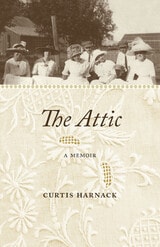
The Attic
A MemoirHarnack, Curtis
University of Iowa Press, 2011
In The Attic, his sequel to the classic We Have All Gone Away, Curtis Harnack returns to his rural Iowa homeplace to sift through an attic full of the trash and treasures left behind by the thirteen children in two generations who grew up in the big farmhouse.

The Bottom Rung
African American Family Life on Southern FarmsStewart E. Tolnay
University of Illinois Press, 1999
Tracing patterns of marriage and childbearing among both whites and blacks during the first decades of this century, Stewart Tolnay pursues questions about how black southern farm families were formed and dissolved, how they educated their children or put them to work in the fields, and how they migrated in search of opportunity. Further, he considers the possible legacy of these experiences for family life in contemporary urban environments.
Making revealing and innovative use of public records from the early part of the twentieth century, Tolnay challenges the widely held idea that southern migrants to northern cities carried with them a dysfunctional family culture. He demonstrates the powerful impact of economic conditions on family life and views patterns of marriage and childbearing as responsive to prevailing social, economic, and political conditions. In a provocative extension of this perspective, Tolnay argues that current high levels of single-parenthood among urban African American families likewise reflect rational responses to the socio-economic environment and government policies.
By placing post-World War II demographic developments in a wider historical perspective, The Bottom Rung sheds new light on recent discussions of the difficulties faced by the modern black urban family. The text is enhanced by Dorothea Lange's and Russell Lee's poignant photographs.
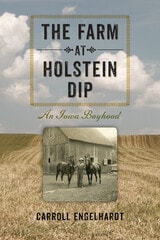
The Farm at Holstein Dip
An Iowa BoyhoodCarroll Engelhardt
University of Iowa Press, 2012
Engelhardt brings us into the world of his fourth-generation farm family, who lived by the family- and faith-based work ethic and concern for respectability they had inherited from their German and Norwegian ancestors. His writing has a particularly Iowa flavor, a style that needs no definition to those who live in the state. Readers will discover the appeal of his wry, humorous, and kind observations and appreciate his well-informed perspective on these transformative American decades.
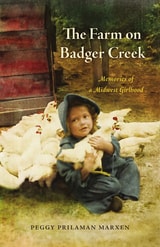
The Farm on Badger Creek
Memories of a Midwest GirlhoodPeggy Prilaman Marxen
Wisconsin Historical Society Press, 2021

The Follinglo Dog Book
A Norwegian Pioneer Story from IowaPeder Gustav Tjernagel
University of Iowa Press, 1999
The Follinglo Dog Book both is and is not about dogs. The dogs are certainly here: from Milla to Chip the Third, we encounter a procession of heroic if often unfortunate creatures who, along with their immigrant masters, led a hard life on the nineteenth-century American frontier. However, if you pick up this book thinking it will offer a heartwarming read about canine experiences, you will find yourself reinformed by the way it unfolds.
Instead, these are the stories of a Norwegian pioneer family that came in 1860 to settle the Iowa prairie on a homestead called Follinglo Farm in Story County, Iowa. In the Tjernagels' experience one may read a chronicle of the state, the region, and the nation. Arriving in Iowa in what was still the age of wooden equipment and animal power, the Tjernagels witnessed each successive revolution on the land. They built homes and barns, cultivated the land, and encountered every manner of natural disaster from prairie fires to blizzards. Through all the struggles and setbacks, Peder Gustav Tjernagel's stories sparkle with boyhood pranks and adventures, in which the family dogs frequently play a role.
Readers will discover a wonderful cast of Norwegian relatives and neighbors, including a Herculean uncle, Store Per (Big Pete), who could lift a cow by its horns; a mysterious aunt, Stora Fastero (Big Sister), whose arrival signaled that a baby was soon to be born; and Elling Eilson, the walking Lutheran apostle. And, of course, there are the dogs who shepherd, protect, and even baby-sit the residents of Follinglo Farm.
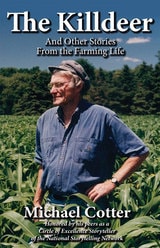
The Killdeer
And Other Stories From the Farming LifeMichael Cotter
Parkhurst Brothers, Inc., 2014
--Rex Ellis, Director of Museum programs, Smithsonian Institution, Washington, D.C.
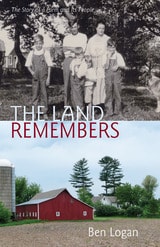
The Land Remembers
The Story of a Farm and Its PeopleBen Logan, with an introduction by Curt Meine
University of Wisconsin Press, 2017
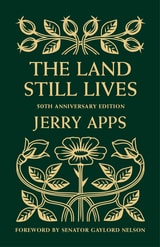
The Land Still Lives
Jerry Apps
Wisconsin Historical Society Press, 2019
Originally published in 1970, The Land Still Lives is the first book by Wisconsin’s greatest rural philosopher, Jerry Apps. Written when he was still a young agriculture professor at the University of Wisconsin, The Land Still Lives was readers’ first introduction to Jerry’s farm in central Wisconsin, called Roshara, and the surrounding community of Skunk’s Hollow. This special 50th-anniversary edition features a new epilogue, in which Jerry revisits his philosophy of caring for the land so it in turn will care for us. This is vintage Apps, essential reading for Jerry’s legions of fans—and for all who, like Jerry, wish “to develop a relationship with nature and all its mystery and wonder.”
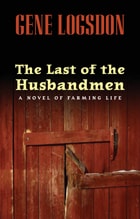
The Last of the Husbandmen
A Novel of Farming LifeGene Logsdon
Ohio University Press, 2008
“Nan turned to see Ben’s face turn as hard and white as a sauerkraut crock. When he did not respond, Nan figured that he was just going to back off as he usually did, the shy and retiring husbandman. She did not know her history. She did not know that shy and retiring husbandmen have been known to revolt against oppression with pitchforks drawn.”
—The Last of the Husbandmen
In The Last of the Husbandmen, Gene Logsdon looks to his own roots in Ohio farming life to depict the personal triumphs and tragedies, clashes and compromises, and abiding human character of American farming families and communities. From the Great Depression, when farmers tilled the fields with plow horses, to the corporate farms and government subsidy programs of the present, this novel presents the complex transformation of a livelihood and of a way of life.
Two friends, one rich by local standards, and the other of more modest means, grow to manhood in a lifelong contest of will and character. In response to many of the same circumstances—war, love, moonshining, the Klan, weather, the economy—their different approaches and solutions to dealing with their situations put them at odds with each other, but we are left with a deeper understanding of the world that they have inherited and have chosen.
Part morality play and part personal recollection, The Last of the Husbandmen is both a lighthearted look at the past and a profound statement about the present state of farming life. It is also a novel that captures the spirit of those who have chosen to work the land they love.
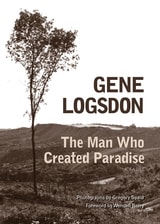
The Man Who Created Paradise
A FableGene Logsdon
Ohio University Press, 2001
Gene Logsdon’s The Man Who Created Paradise is a message of hope at a time when the very concept of earth stewardship is under attack. The fable, inspired by a true story, tells how Wally Spero looked at one of the bleakest places in America—a raw and barren strip-mined landscape—and saw in it his escape from the drudgery of his factory job. He bought an old bulldozer and used the machine to carve patiently, acre by acre, a beautiful little farm out of a seemingly worthless wasteland.
Wally’s story is a charming distillation of the themes that the late, beloved Gene Logsdon returned to again and again in his many books and hundreds of articles. Environmental restoration is the task of our time. The work of healing our land begins in our own backyards and farms, in our neighborhoods and our regions. Humans can turn the earth into a veritable paradise—if they really want to.
Noted photographer Gregory Spaid retraced the trail that Logsdon traveled when he was inspired to write The Man Who Created Paradise. His photographs evoke the same yearning for wholeness, for ties to land and community, that infuses the fable’s poetic prose.
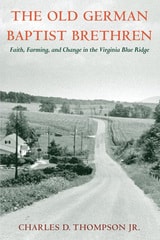
The Old German Baptist Brethren
Faith, Farming, and Change in the Virginia Blue RidgeCharles D. Thompson Jr.
University of Illinois Press, 2006
Charles D. Thompson Jr.'s The Old German Baptist Brethren combines oral history with ethnography and archival research--as well as his own family ties to the Franklin County community--to tell the story of the Brethren's faith on the cusp of impending change. The book traces the transformation of their operations from frontier subsistence farms to cash-based enterprises, connecting this with the wider confluence of agriculture and faith in colonial America. Using extensive interviews, Thompson looks behind the scenes at how individuals interpret their own futures in farming, their hope for their faith, and how the failure of religiously motivated agriculture figures in the larger story of the American farmer.
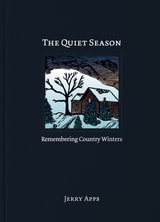
The Quiet Season
Remembering Country WintersJerry Apps
Wisconsin Historical Society Press, 2025
“As I think back to the days of my childhood, the frost-covered windows in my bedroom, the frigid walks to the country school, the excitement of a blizzard, and a hundred other memories, I realize that these experiences left an indelible mark on me and made me who I am today.”—From the Introduction
Jerry Apps recalls winters growing up on a farm in central Wisconsin during the latter years of the Depression and through World War II. Before electricity came to this part of Waushara County, farmers milked cows by hand with the light of a kerosene lantern, woodstoves heated the drafty farm homes, and “making wood” was a major part of every winter’s work. The children in Jerry’s rural community walked to a country school that was heated with a woodstove and had no indoor plumbing. Wisconsin winters then were a time of reflection, of planning for next year, and of families drawing together. Jerry describes how winter influenced farm families and suggests that those of us who grow up with harsh northern winters are profoundly affected in ways we often are not aware.
This State of Wonders
The Letters of an Iowa Frontier Family, 1858-1861John Kent Folmar
University of Iowa Press, 1991
When the John Hugh Williams family immigrated to Homer, Iowa, in the 1850s, they had six children, ranging in age from five to twenty. Suddenly land poor, in debt, and caught in the Panic of '57, they sent their eldest son, James, to Georgia to work and add to the family income.
The seventy-five letters collected here represent the family's correspondence to their absent son and brother. From 1858 to 1861, James' sisters, brothers, mother, and father wrote to him frequently, each with distinct views on their daily life and struggles. While Mr. Williams wrote most often about money, farming, and moral advice (he was minister in the Church of New Jerusalem, as well as a merchant and farmer), Mrs. Williams commented on her daily chores, the family's health, the ever-important weather, and her leisure activities, including the contemporary journals and books she read, such as David Copperfield and Jane Eyre. James' sisters and brothers wrote about many concerns, from schoolwork and housework to games and family celebrations in nearby Webster City.
As the letters continue, the affection for the absent James becomes more pronounced. And, as the years go by, the letters touch on more current national trends, including the Pikes Peak Gold Rush and the growing North/South crisis, on which James and his family strongly disagree. James was never to return to Iowa but married and remained in the South, becoming a lieutenant colonel in the Confederate army.
Complete with voices both young and old, male and female, This State of Wonders offers a wealth of information about the daily life of an ordinary family on the Iowa prairie. It is a book to be treasured by all Iowans interested in the early life of their state and by all historians looking for a complete portrait of family life on the midwestern frontier.