Results by title
64 books match the query 'Farmers' and 10 start with t
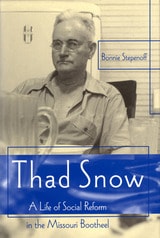
Thad Snow
A Life of Social Reform in the Missouri BootheelBonnie Stepenoff
University of Missouri Press, 2003
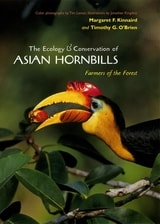
The Ecology and Conservation of Asian Hornbills
Farmers of the ForestMargaret F. Kinnaird and Timothy G. O'Brien
University of Chicago Press, 2008
Building on fourteen years of research, Margaret F. Kinnaird and Timothy G. O’Brien offer in Ecology and Conservation of Asian Hornbills the most up-to-date information on the evolution, reproduction, feeding ecology, and movement patterns of thirty-one species of Asian hornbills. The authors address questions of ecological functionality, ecosystem services, and keystone relationships, as well as the disturbing influence of forest loss and fragmentation on hornbills. Complemented by superb full-color images by renowned photographer Tim Laman that provide rare glimpses of hornbills in their native habitat and black-and-white illustrations by Jonathan Kingdon that highlight the intriguing aspects of hornbill behavior, Ecology and Conservation of Asian Hornbills will stand tall in the pantheon of natural history studies for years to come.
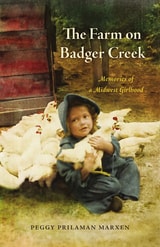
The Farm on Badger Creek
Memories of a Midwest GirlhoodPeggy Prilaman Marxen
Wisconsin Historical Society Press, 2021

The Heritage
A Daughter's Memoir Of Louis BromfieldEllen Bromfield Geld
Ohio University Press, 1999
This lively, outspoken, and affectionate memoir preserves all things Louis Bromfield fought for or against in a life marked by surging vitality and gusto. He came from an Ohio family whose roots were in the land before the land was lost. He had his father's love of the land, and from his willful mother a hunger to know the world. From the New York City of theaters, concerts, parties, and novels, and a life in France that his success allowed, he finally returned to Ohio and established a new order for his family and friends, and for his followers, a new orbit into which they were drawn.
Ellen Bromfield Geld wrote a memoir of the man who was Louis Bromfield, father and friend, tyrant and “Boss,” alive always to whatever was worth responding to in people and in places, yet complex and lonely as a writer must essentially be to work at his craft. Now revived in paperback thirty-five years after its first publication, The Heritage remains a moving tribute and the recreation of a remarkable human being.
The Last of the Husbandmen
A Novel of Farming LifeGene Logsdon
Ohio University Press, 2008
“Nan turned to see Ben’s face turn as hard and white as a sauerkraut crock. When he did not respond, Nan figured that he was just going to back off as he usually did, the shy and retiring husbandman. She did not know her history. She did not know that shy and retiring husbandmen have been known to revolt against oppression with pitchforks drawn.”
—The Last of the Husbandmen
In The Last of the Husbandmen, Gene Logsdon looks to his own roots in Ohio farming life to depict the personal triumphs and tragedies, clashes and compromises, and abiding human character of American farming families and communities. From the Great Depression, when farmers tilled the fields with plow horses, to the corporate farms and government subsidy programs of the present, this novel presents the complex transformation of a livelihood and of a way of life.
Two friends, one rich by local standards, and the other of more modest means, grow to manhood in a lifelong contest of will and character. In response to many of the same circumstances—war, love, moonshining, the Klan, weather, the economy—their different approaches and solutions to dealing with their situations put them at odds with each other, but we are left with a deeper understanding of the world that they have inherited and have chosen.
Part morality play and part personal recollection, The Last of the Husbandmen is both a lighthearted look at the past and a profound statement about the present state of farming life. It is also a novel that captures the spirit of those who have chosen to work the land they love.
The Man Who Created Paradise
A FableGene Logsdon
Ohio University Press, 2001
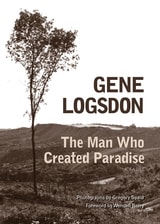
Gene Logsdon’s The Man Who Created Paradise is a message of hope at a time when the very concept of earth stewardship is under attack. The fable, inspired by a true story, tells how Wally Spero looked at one of the bleakest places in America—a raw and barren strip-mined landscape—and saw in it his escape from the drudgery of his factory job. He bought an old bulldozer and used the machine to carve patiently, acre by acre, a beautiful little farm out of a seemingly worthless wasteland.
Wally’s story is a charming distillation of the themes that the late, beloved Gene Logsdon returned to again and again in his many books and hundreds of articles. Environmental restoration is the task of our time. The work of healing our land begins in our own backyards and farms, in our neighborhoods and our regions. Humans can turn the earth into a veritable paradise—if they really want to.
Noted photographer Gregory Spaid retraced the trail that Logsdon traveled when he was inspired to write The Man Who Created Paradise. His photographs evoke the same yearning for wholeness, for ties to land and community, that infuses the fable’s poetic prose.
The Object of Labor
Commodification in Socialist HungaryMartha Lampland
University of Chicago Press, 1995
Exploring the effects of social change thrust upon communities against their will, Lampland examines the history of agrarian labor in Hungary from World War I to the early 1980s. She shows that rural workers had long been subject to strict state policies similar to those imposed by collectivization. Since the values of privatization and individualism associated with capitalism characterized rural Hungarian life both prior to and throughout the socialist period, capitalist ideologies of work and morality survived unscathed in the private economic practices of rural society. Lampland also shows how labor practices under socialism prepared the workforce for capitalism. By drawing villagers into factories and collective farms, for example, the socialist state forced farmers to work within tightly controlled time limits and to calculate their efforts in monetary terms. Indeed, this control and commodification of rural labor under socialism was essential to the transformation to capitalism.

The Road to Rebellion
Class Formation and Kansas Populism, 1865-1900Scott G. McNall
University of Chicago Press, 1988
McNall rejects the traditional view that blames the failure of the Alliance on a turn to mass-based electoral politics, but rather sees the move into national politics by the Farmer's Alliance as part of a rational strategy to better wage their fight for economic justice. The Kansas populists failed, he argues, because of their inability to embrace a broad, working-class base, to provide an effective alternative vision, and ultimately to create a distinct class organization. Debates about how classes come into being, or how democracy is to be realized, cannot be settled in the abstract. McNall's recreation of this heroic struggle is a model in the analysis of class formation. At the same time, The Road to Rebellion is dynamic social history, which holds vital lessons for structuring and realizing alternative political agendas today.
This State of Wonders
The Letters of an Iowa Frontier Family, 1858-1861John Kent Folmar
University of Iowa Press, 1991
When the John Hugh Williams family immigrated to Homer, Iowa, in the 1850s, they had six children, ranging in age from five to twenty. Suddenly land poor, in debt, and caught in the Panic of '57, they sent their eldest son, James, to Georgia to work and add to the family income.
The seventy-five letters collected here represent the family's correspondence to their absent son and brother. From 1858 to 1861, James' sisters, brothers, mother, and father wrote to him frequently, each with distinct views on their daily life and struggles. While Mr. Williams wrote most often about money, farming, and moral advice (he was minister in the Church of New Jerusalem, as well as a merchant and farmer), Mrs. Williams commented on her daily chores, the family's health, the ever-important weather, and her leisure activities, including the contemporary journals and books she read, such as David Copperfield and Jane Eyre. James' sisters and brothers wrote about many concerns, from schoolwork and housework to games and family celebrations in nearby Webster City.
As the letters continue, the affection for the absent James becomes more pronounced. And, as the years go by, the letters touch on more current national trends, including the Pikes Peak Gold Rush and the growing North/South crisis, on which James and his family strongly disagree. James was never to return to Iowa but married and remained in the South, becoming a lieutenant colonel in the Confederate army.
Complete with voices both young and old, male and female, This State of Wonders offers a wealth of information about the daily life of an ordinary family on the Iowa prairie. It is a book to be treasured by all Iowans interested in the early life of their state and by all historians looking for a complete portrait of family life on the midwestern frontier.
Toward a Cooperative Commonwealth
The Transplanted Roots of Farmer-Labor Radicalism in TexasThomas Alter II
University of Illinois Press, 2022
A rare look at the German roots of radicalism in Texas, Toward a Cooperative Commonwealth illuminates the labor movements and populist ideas that changed the nation’s course at a pivotal time in its history.