Results by title
55 books match the query 'Fascism' and 11 start with t
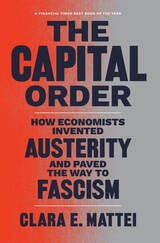
The Capital Order
How Economists Invented Austerity and Paved the Way to FascismClara E. Mattei
University of Chicago Press, 2022
"A must-read, with key lessons for the future."—Thomas Piketty
A groundbreaking examination of austerity’s dark intellectual origins.
For more than a century, governments facing financial crisis have resorted to the economic policies of austerity—cuts to wages, fiscal spending, and public benefits—as a path to solvency. While these policies have been successful in appeasing creditors, they’ve had devastating effects on social and economic welfare in countries all over the world. Today, as austerity remains a favored policy among troubled states, an important question remains: What if solvency was never really the goal?
In The Capital Order, political economist Clara E. Mattei explores the intellectual origins of austerity to uncover its originating motives: the protection of capital—and indeed capitalism—in times of social upheaval from below.
Mattei traces modern austerity to its origins in interwar Britain and Italy, revealing how the threat of working-class power in the years after World War I animated a set of top-down economic policies that elevated owners, smothered workers, and imposed a rigid economic hierarchy across their societies. Where these policies “succeeded,” relatively speaking, was in their enrichment of certain parties, including employers and foreign trade interests, who accumulated power and capital at the expense of labor. Here, Mattei argues, is where the true value of austerity can be observed: its insulation of entrenched privilege and its elimination of all alternatives to capitalism.
Drawing on newly uncovered archival material from Britain and Italy, much of it translated for the first time, The Capital Order offers a damning and essential new account of the rise of austerity—and of modern economics—at the levers of contemporary political power.

The Collaborator
The Trial and Execution of Robert BrasillachAlice Kaplan
University of Chicago Press, 2000
Was Brasillach in fact guilty of treason? Was he condemned for his denunciations of the resistance, or singled out as a suspected homosexual? Was it right that he was executed when others, who were directly responsible for the murder of thousands, were set free? Kaplan's meticulous reconstruction of Brasillach's life and trial skirts none of these ethical subtleties: a detective story, a cautionary tale, and a meditation on the disturbing workings of justice and memory, The Collaborator will stand as the definitive account of Brasillach's crime and punishment.
A National Book Award Finalist
A National Book Critics Circle Award Finalist
"A well-researched and vivid account."—John Weightman, New York Review of Books
"A gripping reconstruction of [Brasillach's] trial."—The New Yorker
"Readers of this disturbing book will want to find moral touchstones of their own. They're going to need them. This is one of the few works on Nazism that forces us to experience how complex the situation really was, and answers won't come easily."—Daniel Blue, San Francisco Chronicle Book Review
"The Collaborator is one of the best-written, most absorbing pieces of literary history in years."—David A. Bell, New York Times Book Review
"Alice Kaplan's clear-headed study of the case of Robert Brasillach in France has a good deal of current-day relevance. . . . Kaplan's fine book . . . shows that the passage of time illuminates different understandings, and she leaves it to us to reflect on which understanding is better."—Richard Bernstein, The New York Times

The Enemy of the New Man
Homosexuality in Fascist ItalyLorenzo Benadusi
University of Wisconsin Press, 2012
In this first in-depth historical study of homosexuality in Fascist Italy, Lorenzo Benadusi brings to light immensely important archival documents regarding the sexual politics of the Italian Fascist regime; he adds new insights to the study of the complex relationships of masculinity, sexuality, and Fascism; he explores the connections between new Fascist values and preexisting Italian traditional and Roman Catholic views on morality; he documents both the Fascist regime’s denial of the existence of homosexuality in Italy and its clandestine strategies and motivations for repressing and imprisoning homosexuals; he uncovers the ways that accusations of homosexuality (whether true or false) were used against political and personal enemies; and above all, he shows how homosexuality was deemed the enemy of the Fascist “New Man,” an ideal of a virile warrior and dominating husband vigorously devoted to the “political” function of producing children for the Fascist state.
Benadusi investigates the regulation and regimentation of gender in Fascist Italy, and the extent to which, in uneasy concert with the Catholic Church, the regime engaged in the cultural and legal engineering of masculinity and femininity. He cites a wealth of unpublished documents, official speeches, letters, coerced confessions, private letters and diaries, legal documents, and government memos to reveal and analyze how the orders issued by the regime attempted to protect the “integrity of the Italian race.” For the first time, documents from the Vatican archives illuminate how the Catholic Church dealt with issues related to homosexuality during the Fascist period in Italy.
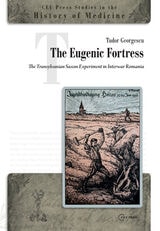
The Eugenic Fortress
The Transylvanian Saxon Experiment in Interwar RomaniaTudor Georgescu
Central European University Press, 2016
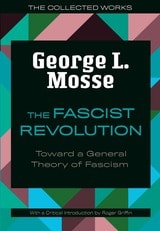
The Fascist Revolution
Toward a General Theory of FascismGeorge L. Mosse, with a critical introduction by Roger Griffin
University of Wisconsin Press, 2021

The Mystery of Fascism
David Ramsay Steele's Greatest HitsDavid Ramsay Steele
St. Augustine's Press, 2019
David Ramsay Steele, PhD, is a libertarian writer with a powerful underground reputation for producing caustic, entertaining, knowledgeable, and surprising arguments, often violently at odds with conventional thinking. For the first time, some of Dr. Steele’s “greatest hits” have been brought together in an anthology of provocative essays on a wide range of topics. The essays are divided into two parts, “More Popular than Scholarly” and “More Scholarly than Popular.”
“Scott Adams and the Pinocchio Fallacy,” Steele’s 2018 refutation of the popular claim that we might be living in a “simulated reality,” has been hailed as a totally irresistible debunking of that fallacy as promoted by The Matrix movie and by Scott Adams (among many pundits).
“What Follows from the Non-Existence of Mental Illness?” (2017) preserves the crucial insights of “psychiatric abolitionist” Thomas Szasz, while exposing Szasz’s major misconceptions.
In “The Bigotry of the New Atheism” (2014), Steele, himself an atheist, brings out the intolerant quality of the “New Atheists.” Steele powerfully argues that while “enthusiastic belief systems” may give rise to enormous atrocities, the historical evidence goes against the theory (promoted by Harris, Dawkins, and Hitchens) that these appalling outcomes are more likely when those belief systems include belief in God.
“Taking the JFK Assassination Conspiracy Seriously” (2003) has been reprinted many times, continues to be viewed online many thousands of times, and like many of Steele’s writings, keeps making converts. It is acknowledged to be the most persuasive brief popular statement of the Lone Nut theory.
“The Mystery of Fascism” (2001), which gives this collection its title, is still continually viewed and cited, for its demonstration that fascism arose directly out of far-left revolutionary Marxism and revolutionary syndicalism. Conventional ideologues of both right and left have been provoked by this highly readable piece to start thinking outside the box.
The earliest piece in this collection, “Alice in Wonderland” (1987) is a devastating critique of the Ayn Rand belief system and the Ayn Rand cult.
“Gambling Is Productive and Rational” (1997), mercilessly strips away the loose thinking which favors intolerance and prohibition of gambling. Steele argues that gambling adds to human well-being and ought to be completely legalized everywhere.
Other topics include the recovered memory witch hunt of the 1990s, the benefits of replacing democratic voting with selection of political positions by lottery, the unexpected results of research into the causes of human happiness, the reasons why Dexter (a TV show sympathetic to a psychotic serial killer) was politically “safe,” why economic growth can go on for ever, why the most popular moral argument against eating meat just doesn’t work, how Hillary Clinton could have won the presidency in 2016, why Friedrich Hayek is wrong about social evolution, the inevitable disappearance of market socialism, Robert Nozick’s muddled thinking about economics, and the proper way to view anti-consensus theories such as the Atkins Diet.
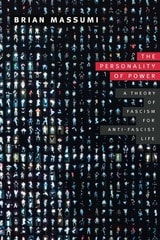
The Personality of Power
A Theory of Fascism for Anti-fascist LifeBrian Massumi
Duke University Press, 2025
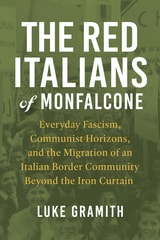
The Red Italians of Monfalcone
Everyday Fascism, Communist Horizons, and the Migration of an Italian Border Community Beyond the Iron CurtainLuke Gramith
University of Wisconsin Press, 2026
Between 1946 and 1948, roughly five thousand ethnic Italians from the northern Adriatic shipbuilding town of Monfalcone relocated to the newly communist Yugoslavia. This rare case of eastward Cold War migration demonstrates how ordinary people conceived of liberation during the transitional years between World War II and the early Cold War—a time when Monfalcone was both the object of competing Italian and Yugoslav territorial claims and the subject of Anglo-American military occupation.
In The Red Italians of Monfalcone, Luke Gramith undertakes a deep and detailed analysis—based on archival sources in Italy, Slovenia, and the United States—of how the Monfalconesi came to understand Fascism and communism through everyday experience and how those emergent ideologies affected and were affected by their migration. In the course of his analysis, Gramith also examines the failure of “defascistization” and how it fueled strong (but ultimately unsuccessful) pro-Yugoslav and communist movements.
The Rhetoric of Fascism
Edited by Nathan Crick
University of Alabama Press, 2022
Decoding the discourse: Rhetorical foundations of authoritarian power.
Fascism has resurfaced as one of the most pressing problems of our time. The rise of extremist parties and candidates in Europe, the United States, and around the globe has led even mainstream political commentators to begin using the term “fascism” to describe dangerous movements that have revived and repackaged many of the strategies long thought to have been relegated to the margins of political rhetoric. No longer just confined to the state regimes of the past, fascism thrives today as a globally self-augmenting, self-propagating rhetorical phenomenon with a variety of faces and expressions.
The Rhetoric of Fascism defines and interprets the common persuasive devices that characterize fascist discourse to understand the nature of its enduring appeal. By approaching fascism from a rhetorical perspective, this volume complements established political and sociological understandings of fascism as a movement or regime. A rhetorical approach studies fascism less as a party one joins than as a set of persuasive strategies one adopts. Fascism spreads precisely because it is not a coherent entity. Instead, it exists as a loosely bound and often contradictory collection of persuasive trajectories that have attained enough coherence to mobilize and channel the passions of a self-constituted mass of individuals.
Introductory chapters focus on general theories of fascism drawn from twentieth-century history and theory. Contributors investigate specific historical figures and their relationship to contemporary rhetorics, focusing on a specific rhetorical device that is characteristic of fascist rhetoric. A common thread throughout every chapter is that fascist devices are appealing because they speak to us in the familiar language of our culture. As we are seduced by one device at a time, we soon find ourselves part of a movement, a group, or a campaign that makes us act in ways we might never have imagined. This volume reveals that fascism may be closer to home than we think.
CONTRIBUTORS
Patrick D. Anderson / Rya Butterfield / Nathan Crick / Elizabeth R. Earle / Zac Gershberg / Stephen J. Hartnett / Marie-Odile N. Hobeika / Sean Illing / Jacob A. Miller / Fernando Ismael Quiñones Valdivia / Patricia Roberts-Miller / Raquel M. Robvais / Bradley A. Serber / Ryan Skinnell

Thunder Cross
Fascist Antisemitism in Twentieth-Century LatviaPaula A. Oppermann
University of Wisconsin Press, 2025
Thunder Cross is the most comprehensive study of Latvia’s fascist movement in English to date, and the only work that investigates the often neglected continuities of fascist antisemitism after World War II. Formulated as an empirical case study, this book draws on international and interdisciplinary secondary literature and sources in seven languages to broaden our understanding of fascism, antisemitism, and mass violence from Germany and Italy to the larger European context.

Transatlantic Fascism
Ideology, Violence, and the Sacred in Argentina and Italy, 1919-1945Federico Finchelstein
Duke University Press, 2010
As Finchelstein explains, nacionalismo, the right-wing ideology that developed in Argentina, was not the wholesale imitation of Italian fascism that Mussolini wished it to be. Argentine nacionalistas conflated Catholicism and fascism, making the bold claim that their movement had a central place in God’s designs for their country. Finchelstein explores the fraught efforts of nationalistas to develop a “sacred” ideological doctrine and political program, and he scrutinizes their debates about Nazism, the Spanish Civil War, imperialism, anti-Semitism, and anticommunism. Transatlantic Fascism shows how right-wing groups constructed a distinctive Argentine fascism by appropriating some elements of the Italian model and rejecting others. It reveals the specifically local ways that a global ideology such as fascism crossed national borders.