Results by title
100 books match the query 'Flowers' and 16 start with t

Texas Wildflowers
A Field GuideBy Campbell and Lynn Loughmiller; updated by Joe Marcus; foreword to the first edition by Lady Bird Johnson
University of Texas Press, 2018
With more than 175,000 copies sold, Texas Wildflowers has established itself as the go-to guide for identifying the state’s roadside flowers. This new edition has been completely reorganized by flower colors (and within each color section, by flowering season) to make it even easier to identify the flowers you see as you travel through Texas. Every wildflower is illustrated with a beautiful full-color photograph—over 250 of which are new to this edition. All of the descriptive identifying information is presented in a consistent format—common and botanical names, plant and leaves, flowers and fruit, flowering season, habitat and range, and notes.
What hasn’t changed is the book’s sturdy binding, which will hold up through years of active use, and its wealth of information, which has been thoroughly updated by the expert staff of the Lady Bird Johnson Wildflower Center:
- 300 species descriptions, including engaging comments about the plants’ natural histories, landscape uses, edible or medicinal properties, and folklore
- A map of Texas’s vegetational areas
- Glossaries that define and illustrate botanical terms
- A bibliography of books for learning more about wildflowers
- Indexes to common and botanical plant names, as well as plant families, that distinguish between native and non-native species
As Lady Bird Johnson observed in the foreword, Texas Wildflowers “makes me want to reach for my sunhat, put on my walking shoes, take this knowledge-filled book, and fare forth to seek and discover!”
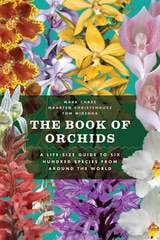
The Book of Orchids
A Life-Size Guide to Six Hundred Species from around the WorldMark W. Chase, Maarten J. M. Christenhusz, and Tom Mirenda
University of Chicago Press, 2017
The Book of Orchids revels in the diversity and oddity of these beguiling plants. Six hundred of the world’s most intriguing orchids are displayed, along with life-size photographs that capture botanical detail, as well as information about distribution, peak flowering period, and each species’ unique attributes, both natural and cultural. With over 28,000 known species—and more being discovered each year—the orchid family is arguably the largest and most geographically widespread of the flowering plant families. Including the most up-to-date science and accessibly written by botanists Mark Chase, Maarten Christenhusz, and Tom Mirenda, each entry in The Book of Orchids will entice researchers and orchid enthusiasts alike.
With stunning full-color images, The Book of Orchids is sure to become the go-to reference for these complex, alluring, and extraordinarily adaptable plants.
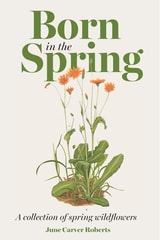
The Born in the Spring
A Collection of Spring WildflowersJune Carver Roberts
Ohio University Press, 2024
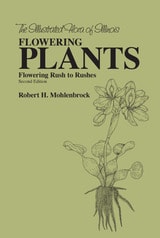
The Flowering Plants
Flowering Rush to RushesRobert H. Mohlenbrock
Southern Illinois University Press, 2006
The second edition of Flowering Plants: Flowering Rush to Rushes offers new material, including a preface, seventeen new illustrations of the additional species now known from Illinois, a revised list of illustrations, and an appendix of the additions and changes since 1970 in the identification, classification, and location of the plants included in the first edition. This new edition of the first volume in the multi-volume series of The Illustrated Flora of Illinois—which provides a working reference for the identification and classification of these plant forms in the state—includes flowering rushes, arrowheads, pondweeds, naiads, duckweeds, cattails, bur reeds, spiderworts, and rushes.
In his introduction, Robert H. Mohlenbrock defines terms and procedures used in the identification and classification of this group of flowering plants referred to as monocotyledons—plants that produce upon germination a single cotyledon or seed-leaf and are often identified by their tall, slender, grass-like leaves. He outlines the life histories and morphologies of the representative monocots and illustrates the plants’ habits and frequencies in Illinois.
Geared to the amateur as well as the professional botanist, the volume includes a glossary of definitions and identification keys to classify the plants according to order, family, genus, and species. The identifying characteristics of each descending class are also given in detail. The morphology of each species is outlined along with data on frequency of occurrence, related soil and climate conditions, and history of past collections. Among the 125 illustrations are detailed sketches of the important features of each species and maps indicating the geographical locations of each species in Illinois.
The Flowers of Tarbes
or, Terror in LiteratureJean Paulhan
University of Illinois Press, 2005
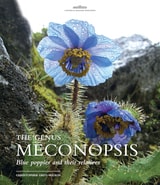
The Genus Meconopsis
Blue poppies and their relativesChristopher Grey-Wilson
Royal Botanic Gardens, Kew, 2015
The Genus Meconopsis is the first major revision of the genus since 1934 and the only monograph on the genus in existence. This fully revised text incorporates the discovery of nearly thirty new species with decades of new scholarship. The book is extensively illustrated with striking color photographs and botanical paintings. Species descriptions that include habitat and variation within the genus, as well as detailed distribution maps, make this ideal for botanists, horticulturalists, and gardeners alike.
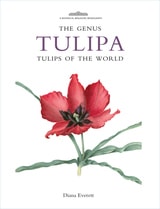
The Genus Tulipa
Tulips of the WorldDiana Everett
Royal Botanic Gardens, Kew, 2013
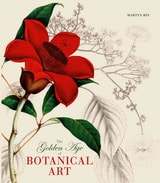
The Golden Age of Botanical Art
Martyn Rix
University of Chicago Press, 2012
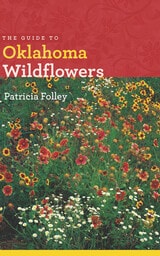
The Guide to Oklahoma Wildflowers
Patricia Folley
University of Iowa Press, 2012
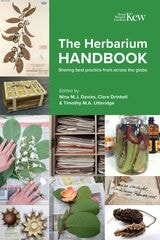
The Herbarium Handbook
Edited by Nina M. J. Davies, Clare Drinkell, and Timothy M. A. Utteridge
Royal Botanic Gardens, Kew, 2023
The Herbarium Handbook has been an important reference for herbarium collections care and management since it was first published in 1989. Based on standard herbarium practices and personal experience from experts at the Royal Botanic Gardens, Kew, the book also draws on examples from partners and collaborators around the world, making it accessible and adaptable for all herbarium practitioners. The book covers everything from creating herbarium collections to preparing and caring for specimens, managing a herbarium building, and public engagement and outreach. It is the essential reference for anyone working in this field.
The Life of Plants
E. J. H. Corner
University of Chicago Press, 2003

The Little Bulbs
A Tale of Two GardensElizabeth A. Lawrence
Duke University Press, 1986
“A few garden writers offer prose that goes beyond how to spade and spray to convey the experience and pleasures of gardening. The late Elizabeth Lawrence was such a writer.”—Southern Living
“First published in 1957 and out-of-print for many years, this is a delightfully written and enormously informative introduction to the fascinating variety of little bulbs available to the gardener. The author discusses a wide variety of plants, both familiar and little-known, including crocuses, species daffodils, hardy cyclamen and lily-family members such as Brodiaea, Bessera, and Calochortus.”—American Horticulturist
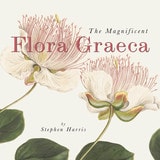
The Magnificent Flora Graeca
How the Mediterranean Came to the English GardenStephen Harris
Bodleian Library Publishing, 2007
The publishing of the Flora Graeca was a landmark event in 1830. Only 25 copies were published, due to the book’s size of 10 double folio volumes and its numerous illustrations, and it cost over £620, a colossal sum at the time. The Flora Graeca brought together beautiful renderings of the fruits of the travels of British scientist John Sibthorp, who made multiple trips to the eastern Mediterranean in the early nineteenth century to collect a rich array of exotic floral specimens. Now The Magnificent Flora Graeca chronicles Sibthorp’s immense undertaking, including brilliant selections from his groundbreaking volume.
The story of the expeditions of Sibthorp and his renowned illustrator Ferdinand Bauer is a tale replete with larger-than-life characters and adventures on land and sea. Harris profiles the lives of Sibthorp, Bauer, and other leading characters, and explores the Flora Graeca’s rich cultural and scientific legacy. Sibthorp’s pioneering adventures unearthed floral specimens previously unknown to science, as he collected the originals of such popular garden flowers as the Crocus flavus ssp. flavus, the parent of the Golden Yellow; and Cyprus’s Cyclamen persicum, the parent of the widely grown garden cyclamens species.
This new volume, drawn from photographs of Sibthorp’s remarkably well-preserved specimens and luminous reproductions of the original watercolors and engravings by Bauer, features more images from the Flora Graeca than have ever been published since its first printing.
A fascinating treasure of floral wonders, The Magnificent Flora Graeca is an essential addition to the bookshelf for the plant lover or anyone curious about the natural history behind their beloved garden retreats.
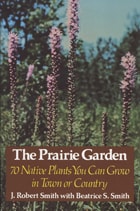
The Prairie Garden
Seventy Native Plants You Can Grow in Town or CountryJ. Robert Smith with Beatrice S. Smith
University of Wisconsin Press, 1980
Prairie plants are among the toughest of all ornamentals. While they fascinate gardeners with their beauty and versatility, they require little maintenance. They are highly resistant to insect and disease damage, and they need not be replanted every year.
In recent years, the idea of growing prairie plants has gained increasing appeal among gardeners. Bob and Beatrice Smith have prepared this practical growing guide—based on their more than fourteen years of experience and experimentation—for all people who wish to grow prairie plants. The Smiths, who have grown all the plants they discuss here, share their wealth of experience with the reader. They recommend the best sites, tell how to plan and prepare the site and how to treat and plant seeds, and share important tips on propagation, transplanting, and managing the prairie garden or landscape. To aid in both planning and identification, the book includes full-color illustrations of all seventy plants.
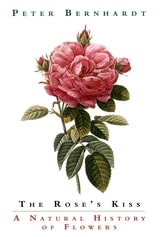
The Rose's Kiss
A Natural History of FlowersPeter Bernhardt
University of Chicago Press, 2002
In The Rose's Kiss, Peter Bernhardt presents a fascinating and wide-ranging look at the natural history of flowers—how they look, what they do, and their often hidden interactions with the surrounding environment and other living organisms upon which they depend for their survival. You'll discover why flowers are so colorful, how they evolved, and how insects exploit them for their nectar. This is a book for all flower lovers, from naturalists and gardeners to poets and botanists.
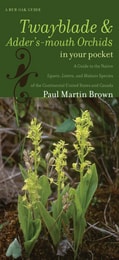
Twayblades and Adder's-mouth Orchids in Your Pocket
A Guide to the Native Liparis, Listera, and Malaxis Species of the Continental United States and CanPaul Martin Brown
University of Iowa Press, 2008
Brown provides general distributional information, time of flowering, and habitat requirements for each species as well as a complete list of hybrids and the many different growth and color forms that can make identifying orchids so intriguing. For the twayblades and adder’s-mouths he includes information on 21 species, 1 additional variety, and 2 hybrids.
Most twayblades and adder’s-mouths are relatively small plants with tiny green flowers, but a few have richly colored blooms or particularly interesting habits that attract the native orchid enthusiast. Most of these species are easy to identify based upon their general appearance, range, and time of flowering. Answering three simple questions—when, where, and how does it grow?—and comparing the living plant with the striking photos in the backpack-friendly laminated guide should enable both professional and amateur naturalists to achieve the satisfaction of identifying a specific orchid.