Results by title
96 books match the query 'Games & Activities' and 18 start with t
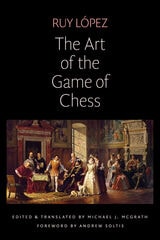
The Art of the Game of Chess
Ruy López
Catholic University of America Press, 2020

The Beginner’s Guide to Tabletop Roleplaying Games for Neurodivergent Players
Tips and TalesMaxwell, Lucas
University of Iowa Press, 2027
From Dimension 20 fandom to homebrewed campaigns, the game of Dungeons & Dragons offers neurodivergent players a space to create and celebrate new systems of thinking, connect with others, and have fun. The Beginner’s Guide to Tabletop Role playing Games for Neurodivergent Players is for anyone—neurodivergent or neurotypical—who has ever wanted to give D&D a try but felt overwhelmed by its scope. Combining research, resources, testimonials, and interviews with experts, Lucas Maxwell illuminates the bridge between Dungeons & Dragons and those who seek to play it. Maxwell even provides two one-shot adventures and everything you need to play them, whether in the classroom, a club, or at home.
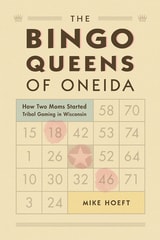
The Bingo Queens of Oneida
How Two Moms Started Tribal Gaming in WisconsinMike Hoeft
Wisconsin Historical Society Press, 2014
While militant Indian activists often dominated national headlines in the 1970s, these church-going Oneida women were the unsung catalysts behind bingo’s rising prominence as a sovereignty issue in the Oneida Nation. The bingo moms were just trying to take care of the kids in the community.
The Bingo Queens of Oneida: How Two Moms Started Tribal Gaming tells the story through the eyes of Sandra Ninham and Alma Webster, the Oneida women who had the idea for a bingo operation run by the tribe to benefit the entire tribe. Bingo became the tribe’s first moneymaker on a reservation where about half the population was living in poverty.
Author Mike Hoeft traces the historical struggles of the Oneida—one of six nations of the Iroquois, or Haudenosaunee, confederacy—from their alliance with America during the Revolutionary War to their journey to Wisconsin. He also details the lives of inspirational tribal members who worked alongside Ninham and Webster, and also those who were positively affected by their efforts.
The women-run bingo hall helped revitalize an indigenous culture on the brink of being lost. The Bingo Queens of Oneida is the story of not only how one game helped revive the Oneida economy but also how one game strengthened the Oneida community.
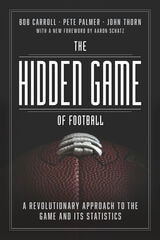
The Hidden Game of Football
A Revolutionary Approach to the Game and Its StatisticsBob Carroll, Pete Palmer, and John Thorn
University of Chicago Press, 2023
Data analytics have revolutionized football. With play sheets informed by advanced statistical analysis, today’s coaches pass more, kick less, and go for more two-point or fourth-down conversions than ever before. In 1988, sportswriters Bob Carroll, Pete Palmer, and John Thorn proposed just this style of play in The Hidden Game of Football, but at the time baffled readers scoffed at such a heartless approach to the game. Football was the ultimate team sport and unlike baseball could not be reduced to pure probabilities. Nevertheless, the book developed a cult following among analysts who, inspired by its unorthodox methods, went on to develop the core metrics of football analytics used today: win probability, expected points, QBR, and more. With a new preface by Thorn and Palmer and a new foreword by Football Outsiders’s Aaron Schatz, The Hidden Game of Football remains an essential resource for armchair coaches, fantasy managers, and fans of all stripes.
The Last Resort
Success And Failure In Campaigns For CasinosJohn Dombrink
University of Nevada Press, 1990
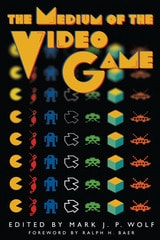
The Medium of the Video Game
Edited by Mark J. P. Wolf
University of Texas Press, 2002
Over a mere three decades, the video game became the entertainment medium of choice for millions of people, who now spend more time in the interactive virtual world of games than they do in watching movies or even television. The release of new games or game-playing equipment, such as the PlayStation 2, generates great excitement and even buying frenzies. Yet, until now, this giant on the popular culture landscape has received little in-depth study or analysis.
In this book, Mark J. P. Wolf and four other scholars conduct the first thorough investigation of the video game as an artistic medium. The book begins with an attempt to define what is meant by the term "video game" and the variety of modes of production within the medium. It moves on to a brief history of the video game, then applies the tools of film studies to look at the medium in terms of the formal aspects of space, time, narrative, and genre. The book also considers the video game as a cultural entity, object of museum curation, and repository of psychological archetypes. It closes with a list of video game research resources for further study.
The New Politics of Indian Gaming
The Rise of Reservation Interest GroupsKenneth N. Hansen
University of Nevada Press, 2015
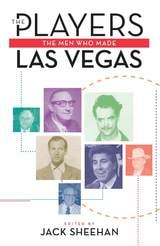
The Players
The Men Who Made Las VegasJack Sheehan
University of Nevada Press, 1997
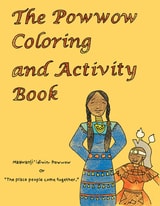
The Powwow Coloring and Activity Book
Ojibwe Traditions Coloring Book SeriesCassie Brown
Wisconsin Historical Society Press, 2018
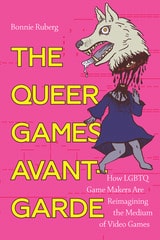
The Queer Games Avant-Garde
How LGBTQ Game Makers Are Reimagining the Medium of Video GamesBonnie Ruberg
Duke University Press, 2020
Interviewees:
Ryan Rose Aceae, Avery Alder, Jimmy Andrews, Santo Aveiro-Ojeda, Aevee Bee, Tonia B******, Mattie Brice, Nicky Case, Naomi Clark, Mo Cohen, Heather Flowers, Nina Freeman, Jerome Hagen, Kat Jones, Jess Marcotte, Andi McClure, Llaura McGee, Seanna Musgrave, Liz Ryerson, Elizabeth Sampat, Loren Schmidt, Sarah Schoemann, Dietrich Squinkifer, Kara Stone, Emilia Yang, Robert Yang
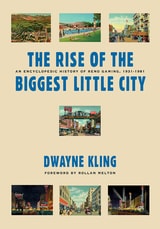
The Rise Of The Biggest Little City
An Encyclopedic History Of Reno Gaming, 1931-1981Dwayne Kling
University of Nevada Press, 2010
The history of Reno during the first half century is to a great degree the history of Reno’s gaming industry. Between 1931 and 1981, the economy, skyline, and lifestyle of “the Biggest Little City in the World” were strongly influenced by the city’s casinos and the people who created and operated them. In The Rise of the Biggest Little City, longtime Reno gaming executive Dwayne Kling records the fruits of his fourteen years of research into the history of Reno’s casinos, from the backroom (and often illegal) dives of the industry’s beginnings to the elegant casino-hotels of today. Arranged in encyclopedic form with historic photographs (many never before published), the book offers the stories of such famous establishments as Harolds Club, the Cal-Neva, the Sands, and Harrah’s, as well as defunct clubs like the Cedars, the Silver Spur, and the Bank Club. We also find the stories of the men and women who created Reno’s gaming industry—such as James McKay and Bill Graham, who came from the rough-and-tumble saloons of boom-town Tonopah and developed a chain of illegal gambling clubs and brothels into Reno’s first major casino, the Bank Club; the Smith family—Raymond I. “Pappy,” Harold Sr., Raymond A., and Harold Jr.—whose Harolds Club was a prime downtown attraction for over fifty years and brought Reno national fame as a destination for fun and gambling; Bill Bailey, an African-American whose Harlem Club—one of the first integrated casinos in Reno—attracted such show-business luminaries as Louis Armstrong and Pearl Bailey (his cousin) for late-night jam sessions; William Harrah, who parleyed a string of small bingo parlors into a major gaming empire; and Jack Douglass, a slot-route operator in the early days of legal gaming who became a major figure in Reno’s modern casino industry. There are more. Kling records the stories of hundreds of gaming establishments, most of them long forgotten, stretching geographically from the Mount Rose Highway to the north end of town, from Verdi to Sparks; and of dozens of men and women who shaped the industry, for better and for worse. We learn from that Reno was the true pioneer of the gambling industry. It was here that big-name entertainment was first offered in a casino setting; that elegant hotel rooms and fine dining were first offered as amenities of the casino experience; that a casino corporation first traded its stock on the New York Stock Exchange; that ethnic minorities first owned and operated casinos, and first integrated them. The Rise of the Biggest Little City will engage readers with its authoritative account of the rise of modern Reno and of the colorful history that lies beneath today’s neon and glitz.
The Storytelling Coloring Book
Ojibwe Traditions Coloring Book SeriesCassie Brown
Wisconsin Historical Society Press, 2018
The Sugarbush Coloring Book
Ojibwe Traditions Coloring Book SeriesCassie Brown
Wisconsin Historical Society Press, 2018
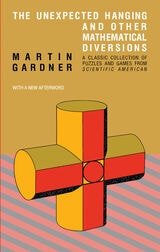
The Unexpected Hanging and Other Mathematical Diversions
Martin Gardner
University of Chicago Press, 1991
"Gardner conjures problems that are both profound and silly; exquisite truths and outrageous absurdities; paradoxes, anagrams, palindromes and party tricks. . . . He knows, better than most, how many amazing true things there are in the world."—Newsweek
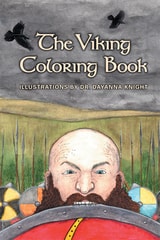
The Viking Coloring Book
Dayanna Knight
Arizona Center for Medieval and Renaissance Studies, 2017
What do you think of when you think of the Vikings? Fierce warriors? Sailors of magnificent dragon-prowed ships who terrorized North-Western Europe? Do you think of darkened halls thick with smoke and song?
Like all people those researchers now consider to be Viking were much more complex than the modern world sees them as. This coloring book is meant to show that. It is designed to provide scenes of the beauty of the early medieval world the Vikings inhabited. It is in this context that Viking cultures developed. You will find artifacts and animals, plants and landscapes within these pages to explore. Species that held some use to the Vikings, such as those that provided fur in particular have been focused on. Reconstructed scenes are inspired by the diverse world experienced in the north. There are no horned helmets here. The real Vikings were much more practical than that.
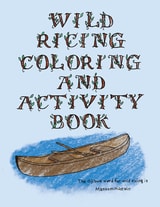
The Wild Ricing Coloring and Activity Book
Ojibwe Traditions Coloring Book SeriesCassie Brown
Wisconsin Historical Society Press, 2018
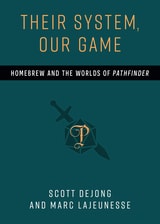
Their System, Our Game
Homebrew and the Worlds of PathfinderScott DeJong and Marc Lajeunesse
University of Michigan Press, 2026
Our favorite tabletop role-playing games (TTRPGs) provide a chance to act out a fantasy. It might be the desire to wipe out foes with a single strike, the ability to charm even the most curmudgeonly townsfolk, or maybe even just the aspiration to adventure as a potted plant. Since game systems don’t always let players craft the kinds of games they want to experience, this is when they turn to the “homebrew” process to create personal rules and worlds. While Pathfinder has a history of being an underdog to the longtime industry leader Dungeons & Dragons, it has an ethos of open game design that inspires players, indie makers, and third-party content creators to brew up new rules, characters, classes, and game settings.
Their System, Our Game looks at the history of Pathfinder and how it encourages aspiring makers to break into the game design space. Through interviews with player-creators and third party makers, the authors use a range of perspectives to define homebrew for TTRPGs. Taking a closer look at homebrew design, they create two homebrew campaigns (available as free downloads) collaboratively with two different groups of players. Player accounts of gameplay and designer reflections of how their homebrew actually played out at the game table outline some of the challenges and perks of designing on the fly, creating customized settings, and bending or breaking rules. The book concludes by going through the research, interviews, design, and play analysis to show what homebrew and Pathfinder mean together. Ultimately Their System, Our Game is a celebration of how players use homebrew to explore creation and expression in their own TTRPGs.
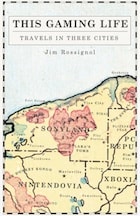
This Gaming Life
Travels in Three CitiesJim Rossignol
University of Michigan Press, 2009
"In May 2000 I was fired from my job as a reporter on a finance newsletter because of an obsession with a video game.
It was the best thing that ever happened to me.”
So begins this story of personal redemption through the unlikely medium of electronic games. Quake, World of Warcraft, Eve Online, and other online games not only offered author Jim Rossignol an excellent escape from the tedium of office life. They also provided him with a diverse global community and a job—as a games journalist.
Part personal history, part travel narrative, part philosophical reflection on the meaning of play, This Gaming Life describes Rossignol’s encounters in three cities: London, Seoul, and Reykjavik. From his days as a Quake genius in London’s increasingly corporate gaming culture; to Korea, where gaming is a high-stakes televised national sport; to Iceland, the home of his ultimate obsession, the idiosyncratic and beguiling Eve Online, Rossignol introduces us to a vivid and largely undocumented world of gaming lives.
Torn between unabashed optimism about the future of games and lingering doubts about whether they are just a waste of time, This Gaming Life also raises important questions about this new and vital cultural form. Should we celebrate the “serious” educational, social, and cultural value of games, as academics and journalists are beginning to do? Or do these high-minded justifications simply perpetuate the stereotype of games as a lesser form of fun? In this beautifully written, richly detailed, and inspiring book, Rossignol brings these abstract questions to life, immersing us in a vibrant landscape of gaming experiences.
“We need more writers like Jim Rossignol, writers who are intimately familiar with gaming, conversant in the latest research surrounding games, and able to write cogently and interestingly about the experience of playing as well as the deeper significance of games.”
—Chris Baker, Wired
“This Gaming Life is a fascinating and eye-opening look into the real human impact of gaming culture. Traveling the globe and drawing anecdotes from many walks of life, Rossignol takes us beyond the media hype and into the lives of real people whose lives have been changed by gaming. The results may surprise you.”
—Raph Koster, game designer and author of A Theory of Fun for Game Design
—Joshua Davis, author of The Underdog
“This is a wonderfully literate look at gaming cultures, which you don't have to be a gamer to enjoy. The Korea section blew my mind.”
—John Seabrook, New Yorker staff writer and author of Flash of Genius and Other True Stories of Invention
digitalculturebooks is an imprint of the University of Michigan Press and the Scholarly Publishing Office of the University of Michigan Library dedicated to publishing innovative and accessible work exploring new media and their impact on society, culture, and scholarly communication. Visit the website at www.digitalculture.org.