Results by title
167 books match the query 'Gardening' and 30 start with t

Texas Gardening the Natural Way
The Complete HandbookBy Howard Garrett
University of Texas Press, 2004
Compost your old "complete" gardening guide. There's a new way of gardening in Texas that's healthier for people and the environment, more effective at growing vigorous plants and reducing pests, cheaper to maintain, and just more fun. It's Howard Garrett's "The Natural Way" organic gardening program, and it's all here in Texas Gardening the Natural Way.
This book is the first complete, state-of-the-art organic gardening handbook for Texas. Using Howard Garrett's new mainstream gardening techniques, Texas Gardening the Natural Way presents a total gardening program:
- How to plan, plant, and maintain beautiful landscapes without using chemical fertilizers and toxic pesticides.
- Gardening fundamentals: soils, landscape design, planting techniques, and maintenance practices.
- Includes more native and adaptable varieties of garden and landscape plants than any other guide on the market.
- Trees: 134 species of evergreens, berry- and fruit-bearing, flowering, yellow fall color, orange fall color, and red fall color.
- Shrubs and specialty plants: 85 species for sun, shade, spring flowering, summer flowering, and treeform shrubs.
- Ground covers and vines: 51 species for sun and shade.
- Annuals and perennials: 136 species for fall color, winter color, summer color in shade and sun, and spring color. Also seeding rates for wildflowers.
- Lawn grasses: 10 species for sun and shade, with additional information on 16 native grasses, seeding rates for 32 grasses, and suggested mowing heights.
- Fruits, nuts, and vegetables: 58 species, with a vegetable planting chart and information on organic pecan and fruit tree growing, fruit varieties for Texas, grape and pecan varieties, and gardening by the moon.
- Common green manure crops: 29 crops that help enrich the soil.
- Herbs: 66 species for culinary and medicinal uses.
- Bugs: 73 types of helpful and harmful bugs, with organic remedies for pests, lists of beneficial bugs and plants that attract them, a beneficial bug release schedule, and sources for beneficial bugs.
- Plant diseases: organic treatments for 55 common problems.
- Organic methods for repelling mice, rabbits, armadillos, beavers, cats, squirrels, and deer.
- Organic management practices: watering, fertilizing, controlling weeds, releasing beneficial insects, biological controls (including bats and purple martins), and recipes for Garrett Juice, fire ant control drench, vinegar herbicide, Sick Tree Treatment, and Tree Trunk Goop.
- Average first and last freeze dates for locations around the state.
- Organic fertilizers and soil amendments: 61 varieties, including full instructions for making compost.
- Organic pest control products: 30 varieties.
- Common house plants and poisonous plants.
- Instructions for climbing vegetable structures and bat houses.
- 833 gorgeous full-color photographs.
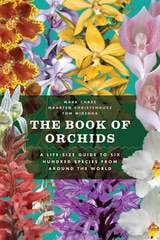
The Book of Orchids
A Life-Size Guide to Six Hundred Species from around the WorldMark W. Chase, Maarten J. M. Christenhusz, and Tom Mirenda
University of Chicago Press, 2017
The Book of Orchids revels in the diversity and oddity of these beguiling plants. Six hundred of the world’s most intriguing orchids are displayed, along with life-size photographs that capture botanical detail, as well as information about distribution, peak flowering period, and each species’ unique attributes, both natural and cultural. With over 28,000 known species—and more being discovered each year—the orchid family is arguably the largest and most geographically widespread of the flowering plant families. Including the most up-to-date science and accessibly written by botanists Mark Chase, Maarten Christenhusz, and Tom Mirenda, each entry in The Book of Orchids will entice researchers and orchid enthusiasts alike.
With stunning full-color images, The Book of Orchids is sure to become the go-to reference for these complex, alluring, and extraordinarily adaptable plants.
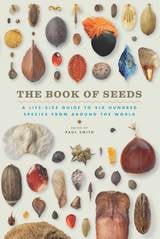
The Book of Seeds
A Life-Size Guide to Six Hundred Species from around the WorldEdited by Paul Smith
University of Chicago Press, 2018
The Book of Seeds takes readers through six hundred of the world’s seed species, revealing their extraordinary beauty and rich diversity. Each page pairs a beautifully composed photo of a seed—life-size, and, in some cases, enlarged to display fine detail—with a short description, a map showing distribution, and information on conservation status. The whole spectrum of seeds is covered here. There are prolific species like corn and less widely distributed species, like the brilliant blue seeds of the traveler’s palm or the bird of paradise flower, aptly named for its distinctive orange coiffure. There are tiny seeds and seeds weighing up to forty pounds. And while seeds in all their shapes, sizes, and colors grant us sustenance, there are even some we would be wise to treat with caution, such as the rosary pea, whose seeds are considered more toxic than ricin.
The essential guide to these complex plant creations, The Book of Seeds offers readers a rare, up-close look that will inspire scientists and nature lovers alike.
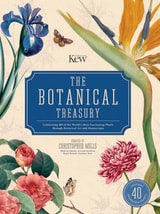
The Botanical Treasury
Celebrating 40 of the World’s Most Fascinating Plants through Historical Art and ManuscriptsEdited by Christopher Mills
University of Chicago Press, 2016
This treasury features a full-color exploration of our most important and interesting plants; facsimiles of rarely seen letters, maps, and journals from the Royal Botanic Gardens, Kew; and forty beautifully reproduced, frameable prints. Together they offer a fascinating look at the world of plant hunting and the cultivation of our knowledge about the plant world.
Every one of the featured plants is extraordinary in some way, be it for its appearance, biology, medicinal properties, or importance to economics, politics, or the arts. Equally extraordinary are the stories associated with the discovery of these plants, revealing the lengths to which collectors and growers would go to find them. The entries build a history of botany and paint a larger picture of the age of exploration.
The Botanical Treasury is a rare treat. Looking through its pages and relishing its prints allows us to fully understand why we are so driven to learn all we can about the natural world. It is an exceptional gift that will wow gardeners, and anyone else fascinated by the greenery that sustains and inspires us.
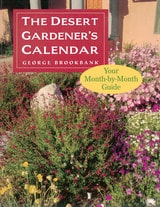
The Desert Gardener's Calendar
Your Month-by-Month GuideGeorge Brookbank
University of Arizona Press, 1999
Whether you're raising vegetables, nursing citrus trees, or just trying to keep your front yard looking its best, you'll find that this handy book gives you a valuable month-by-month perspective on the year. It helps you to focus on necessary activities and reminds you of simple tasks you might overlook.It's especially valuable for people who've moved to the desert regions from other parts of the country and follow old gardening dates that seldom apply to their new home.
The Desert Gardener's Calendar is a guide to the maintenance you need to do to keep your garden flourishing and your landscape attractive throughout the year. It combines the month-by-month gardening and landscaping activities from two separate books by George Brookbank—Desert Gardening, Fruits and Vegetables and Desert Landscaping—and was created in response to readers who have found the calendar sections of those books especially invaluable.
And because not all deserts are the same, Brookbank is careful to point out differences in scheduling encountered by gardeners in low- and middle-elevation regions in California and the Southwest. "I believe," says the author, "that if you use this calendar and let your judgment become more accurate with experience, you'll soon be doing everything right." Although that might suggest a day when you don't need this book, chances are good that, if you're a desert gardener, right now you do.
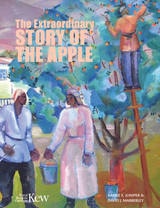
The Extraordinary Story of the Apple
David Mabberley and Barry Juniper
Royal Botanic Gardens, Kew, 2018
Using DNA evidence, Juniper and Mabberley trace the fruit’s geographical journey through time and across countries. They show how the apple has long been one of the most important fruits in the temperate regions of the world, and that it has been beloved since the times of the Persians, Greeks, and Romans. Its reach grew thanks to its reputation as a highly nutritional food source as well as one that is remarkably convenient, as the apple can be stored throughout a harsh winter or easily transported over long distances. The authors also examine the apple’s global influence on human culture. After all, it’s the fruit that played a key role in the fall of Adam and Eve, the inspiration for Newton’s Law of Gravity, and the rise of a tech behemoth.
With a nod to this book’s roots with the Royal Botanic Gardens, Kew, chapters also cover types of apple and apple crops, grafting techniques over time, archaeological discoveries, use as a food and in cider making, as well as the latest research in apple biology. This fascinating book is illustrated throughout with color illustrations, paintings, photographs, and line drawings, and will make the ideal read for gardeners, growers, botanists, historians, archaeologists and zoologists alike. The next time you pluck an apple from a supermarket bushel, you’ll understand the millennia of human—and Ursidae—influences on that humble fruit.
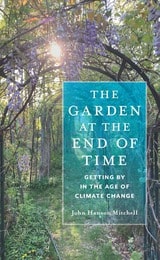
The Garden at the End of Time
Getting By in the Age of Climate ChangeJohn Hanson Mitchell
University of Massachusetts Press, 2025
John Hanson Mitchell has long written about his garden outside of Boston, and about the plants and animals with whom he shares this land. In 2022, the United Nations and others started reporting the true severity of the climate crisis as the Earth passed a point of no return. All across the globe it was the worst year on record for climate-related disasters, including extinctions, deadly floods, massive fires, and dramatic droughts, all of which have worsened since that year. Mitchell, like so many, felt overwhelmed. He looked to the story of Voltaire’s Candide, and settled on the famous aphorism from that book: “We must cultivate our garden.”
The Garden at the End of Time features Mitchell’s trademark blend of science, literature, and anecdote as he processes both the information he is reading from various sources and what it prompts him to do in his own small corner of the world. The story that unfolds is one of Mitchell diversifying his plantings; fighting what he sees as unnecessary local development; walking through and observing changes in the wild lands nearby; continuing to read the news from around the world; and meditating on other moments, real and imagined, when people sought refuge even as they did their part to improve a personally and collectively stressful situation.
Readers discover the impossibility of separating gardening from global warming, while also seeing the solace that exposure to plants can offer, in addition to their contribution to carbon consumption. With gravitas, kindness, and wit, Mitchell offers a model for maintaining a connection to nature even as it reels from manmade threats.
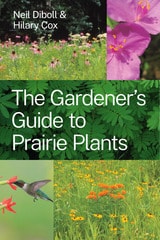
The Gardener's Guide to Prairie Plants
Neil Diboll and Hilary Cox
University of Chicago Press, 2023
The Gardener’s Guide to Prairie Plants is the one-stop compendium for all gardeners aspiring to use native prairie plants in their gardens. Neil Diboll and Hilary Cox—two renowned prairie gardeners—compile more than four decades’ worth of research to offer a wide-ranging and definitive reference for starting and maintaining prairie and meadow gardens and restorations. Alongside detailed synopses of plant life cycles, meticulous range maps, and sweeping overviews of natural history, Diboll and Cox also include photographs of 148 prairie plants in every stage of development, from seedling to seedhead. North America’s grasslands once stretched from the Blue Ridge to the Rocky Mountains, and from Texas to Manitoba, blanketing the mid-continent with ecologically important, garden-worthy, native species. This book provides all the inspiration and information necessary for eager native planters from across the country to welcome these plants back to their landscapes. The Gardener’s Guide to Prairie Plants is a must-have reference for gardeners, restorationists, and every flora fan with a passion for native plants, prairies and meadows.
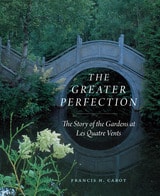
The Greater Perfection
The Story of the Gardens at Les Quatre VentsFrancis H. Cabot
University of Chicago Press, 2023
Featured in the 2018 film The Gardener, Les Quatre Vents in Charlevoix County, Quebec, has been acclaimed as the most aesthetically satisfying and horticulturally exciting landscape experience in North America. This twenty-acre garden seamlessly combines traditional and novel elements into a splendid composition, adorned with unexpected touches and perfectly compatible with its natural surroundings.
The Greater Perfection, first published in 2001, illustrates the delights, diversions, and surprises that await the garden’s visitors. Francis H. Cabot’s account of the challenges he faced in developing Les Quatre Vents reveals the fascinating process behind the creation of a world-class garden that has become a mecca for horticultural enthusiasts around the globe. Winner of the 2003 Annual Literature Award of the Council on Botanical and Horticultural Libraries and featuring stunning full-color images by five leading garden photographers, The Greater Perfection is one of the most beautiful books on gardens to appear in years. This new printing includes a foreword by Marianne Cabot Welch, Cabot’s daughter, that further contextualizes the gardens and explores how a place rooted in the past can confront the future.
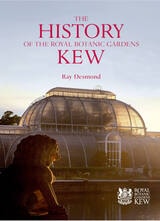
The History of the Royal Botanic Gardens Kew
Ray Desmond
Royal Botanic Gardens, Kew, 2007
Kew's heritage - the herbarium, art and architecture, from Kew Palace and Burton's great Palm House to the Princess of Wales Conservatory, state of the art laboratories and new Davies Alpine House - is illustrated and described, together with the events leading to its UNESCO World Heritage Site status in 2003. Lastly, it is a social history of the Gardens, and of the scientists, architects, designers and gardeners who have made Kew.
Detailed appendices and bibliography have been updated, and two new chapters added, bringing the book up to date as the authoritative reference work on Kew, its history and function.

The Indoor Gardener
Daisy T. Abbott
University of Minnesota Press, 1939
The Indoor Gardener was first published in 1939. Minnesota Archive Editions uses digital technology to make long-unavailable books once again accessible, and are published unaltered from the original University of Minnesota Press editions.
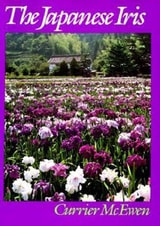
The Japanese Iris
Currier McEwen
Brandeis University Press, 1990
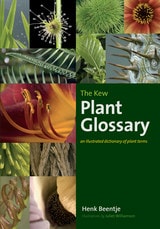
The Kew Plant Glossary
An Illustrated Dictionary of Plant TermsHenk Beentje
Royal Botanic Gardens, Kew, 2010
This accessible, comprehensive glossary covers all the descriptive terms for plants that one is likely to encounter in botanical writing, including everything from magazine articles to plant field guides, scientific papers, and monographs. An essential companion, it presents 3,600 botanical terms, accompanied by full definitions and detailed illustrations to aid in identification, all laid out in a clear, easy-to-use fashion. It will be indispensable for plant scientists, conservationists, horticulturists, gardeners, writers, and anyone working with plant descriptions, plant identification keys, floras, or field guides.
The Life of Plants
E. J. H. Corner
University of Chicago Press, 2003

The Little Bulbs
A Tale of Two GardensElizabeth A. Lawrence
Duke University Press, 1986
“A few garden writers offer prose that goes beyond how to spade and spray to convey the experience and pleasures of gardening. The late Elizabeth Lawrence was such a writer.”—Southern Living
“First published in 1957 and out-of-print for many years, this is a delightfully written and enormously informative introduction to the fascinating variety of little bulbs available to the gardener. The author discusses a wide variety of plants, both familiar and little-known, including crocuses, species daffodils, hardy cyclamen and lily-family members such as Brodiaea, Bessera, and Calochortus.”—American Horticulturist
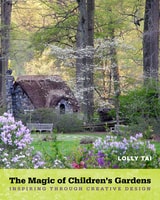
The Magic of Children's Gardens
Inspiring Through Creative DesignLolly Tai
Temple University Press, 2017
Children’s gardens are magical places where kids can interact with plants, see where food and fibers grow, and experience the role of birds, butterflies, and bees in nature. These gardens do more than just expose youngsters to outdoor environments, they also provide marvelous teaching opportunities for them to visit a small plot, care for vegetables and flowers, and interact in creative spaces designed to stimulate all five senses.
In The Magic of Children’s Gardens, landscape architect Lolly Tai provides the primary goals, concepts and key considerations for designing outdoor spaces that are attractive to and suitable for children especially in urban environments. Tai presents inspiring ideas for creating children’s green spaces by examining nearly twentycase studies, including the Chicago Botanic Gardens and Longwood Gardens in Kennett Square, PA.
The Magic of Children’s Gardens features hundreds of comprehensive drawings and gorgeous photographs of successful children’s outdoor environments, detailed explanations of the design process, and the criteria needed to create attractive and pleasing gardens for children to augment their physical, mental, and emotional development.
Exposing youth to well-planned outdoor environments promotes our next generation of environmental stewards. The Magic of Children's Gardens offers practitioners a guide to designing these valued spaces.
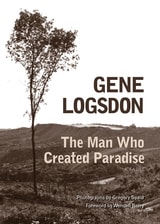
The Man Who Created Paradise
A FableGene Logsdon
Ohio University Press, 2001
Gene Logsdon’s The Man Who Created Paradise is a message of hope at a time when the very concept of earth stewardship is under attack. The fable, inspired by a true story, tells how Wally Spero looked at one of the bleakest places in America—a raw and barren strip-mined landscape—and saw in it his escape from the drudgery of his factory job. He bought an old bulldozer and used the machine to carve patiently, acre by acre, a beautiful little farm out of a seemingly worthless wasteland.
Wally’s story is a charming distillation of the themes that the late, beloved Gene Logsdon returned to again and again in his many books and hundreds of articles. Environmental restoration is the task of our time. The work of healing our land begins in our own backyards and farms, in our neighborhoods and our regions. Humans can turn the earth into a veritable paradise—if they really want to.
Noted photographer Gregory Spaid retraced the trail that Logsdon traveled when he was inspired to write The Man Who Created Paradise. His photographs evoke the same yearning for wholeness, for ties to land and community, that infuses the fable’s poetic prose.
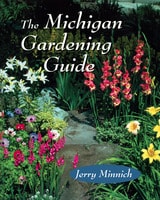
The Michigan Gardening Guide
Jerry Minnich
University of Michigan Press, 1998
It's all here---step-by-step guidance for gardening success in Michigan's varying soil types and often difficult climate. Veteran garden writer Jerry Minnich presents detailed directions and practical tips for growing vegetables, herbs, flowers, landscaping plants, and house plants, as well as dependable advice on hundreds of garden operations.
Minnich begins where gardening begins---in the soil---as he tells how to build a healthy and productive soil, and how to solve soil problems. In subsequent chapters he reveals composting and mulching techniques, and what to do when the weather is less than congenial for gardens. Minnich describes more than sixty Michigan vegetables, tells how to grow them, and lists recommended varieties for each. There are also chapters on growing fruits, berries, and nuts, and on food storage. Minnich devotes a chapter to growing annuals and perennials, another on lawns, trees, and ornamental woody plants. He tells how to deal with insect and animal pests without using harmful chemicals, and he includes a major section on houseplants.
Throughout, Minnich approaches the subject with experience, wit, and style. Readers will learn how to deal with weeds in the lawn, how to surf the landscape for com-posting materials, and how to grow mulch at home. He explains intercropping, companion planting, seed saving, cover cropping, strip composting and other techniques. He tells how to raise unusual crops such as tomatillos and radicchio, as well as the standard favorites. He explains how the science of phenology can help the gardener, how to take a soil test, how to use earthworms to turn household wastes in to compost, and how to attract birds and toads to the garden. And he lists more than a thousand varieties of vegetables, herbs, fruits, and ornamentals that can be trusted to grow in the Michigan climate.
The Michigan Gardening Guide is the one backyard guide that Michigan gardeners can trust. It is a tool as indispensable as the hoe and the shovel.
Jerry Minnich has written about gardening for more than twenty years and has been commended with a Certificate of Merit by the Garden Writers Association of America. His interest in gardening began when he joined the staff of Organic Gardening in the 1950s.
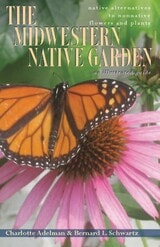
The Midwestern Native Garden
Native Alternatives to Nonnative Flowers and PlantsCharlotte Adelman, Bernard L. Schwartz
Ohio University Press, 2011
The Northern Garden
Daisy T. Abbott
University of Minnesota Press, 1938
The Northern Garden was first published in 1938. Minnesota Archive Editions uses digital technology to make long-unavailable books once again accessible, and are published unaltered from the original University of Minnesota Press editions.
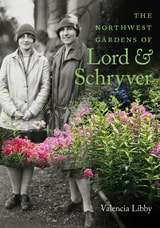
The Northwest Gardens of Lord and Schryver
Valencia Libby
Oregon State University Press, 2021
Published in Cooperation with the Lord & Schryver Conservancy
Lord & Schryver, the first landscape architecture firm founded and operated by women in the Pacific Northwest, designed more than two hundred gardens in Oregon and Washington, including residential, civic, and institutional landscapes. Elizabeth Lord and Edith Schryver met as young women and in 1929 established their highly successful firm in Salem; their work is acknowledged as one of the milestones in the history of garden design in the Northwest and beyond. Theirs is the only Oregon firm recognized in Pioneers of Landscape Architecture, compiled by the National Park Service. The Cultural Landscape Foundation describes them as “consummate professionals in the broadest sense, as they worked to raise the profile of landscape architects by involving an audience beyond their clients. Their work represented a transition from a formal symmetrical style of garden design to one which responded in a distinctive way to the unique features of Northwest climate, soil, topography, and plant material.”
Gaiety Hollow, their purpose-built Salem home, garden, and studio, is now owned by the Lord & Schryver Conservancy and is open to the public. The conservancy has lovingly restored the gardens at Gaiety Hollow according to Lord & Schryver’s original plans. They have also restored and now maintain the gardens at Deepwood, a former residence that is now a public park.
Students of landscape architecture, garden design, Pacific Northwest history, ornamental horticulture, and general readers who are interested in the contributions of women to once male-dominated professions will find inspiration in these pages.
Learn more about Elizabeth Lord and Edith Schryver at www.lordschryver.org
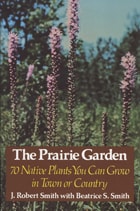
The Prairie Garden
Seventy Native Plants You Can Grow in Town or CountryJ. Robert Smith with Beatrice S. Smith
University of Wisconsin Press, 1980
Prairie plants are among the toughest of all ornamentals. While they fascinate gardeners with their beauty and versatility, they require little maintenance. They are highly resistant to insect and disease damage, and they need not be replanted every year.
In recent years, the idea of growing prairie plants has gained increasing appeal among gardeners. Bob and Beatrice Smith have prepared this practical growing guide—based on their more than fourteen years of experience and experimentation—for all people who wish to grow prairie plants. The Smiths, who have grown all the plants they discuss here, share their wealth of experience with the reader. They recommend the best sites, tell how to plan and prepare the site and how to treat and plant seeds, and share important tips on propagation, transplanting, and managing the prairie garden or landscape. To aid in both planning and identification, the book includes full-color illustrations of all seventy plants.
The Rain Garden
Anjali Thakker
Michigan Publishing Services, 2023
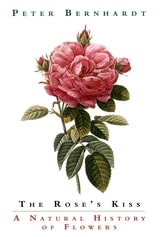
The Rose's Kiss
A Natural History of FlowersPeter Bernhardt
University of Chicago Press, 2002
In The Rose's Kiss, Peter Bernhardt presents a fascinating and wide-ranging look at the natural history of flowers—how they look, what they do, and their often hidden interactions with the surrounding environment and other living organisms upon which they depend for their survival. You'll discover why flowers are so colorful, how they evolved, and how insects exploit them for their nectar. This is a book for all flower lovers, from naturalists and gardeners to poets and botanists.

The Texas Way
Money, Power, Politics, and Ambition at The UniversityBy William H. Cunningham
University of Texas Press, 2013
This engaging memoir details Bill Cunningham’s seven years as president of the University of Texas at Austin and his eight years as chancellor of the UT System. Along the way, he relates accounts of the important issues UT faced during that time, including fraternity hazing, affirmative action, the demise of the Southwest Conference and the creation of the Big 12, apartheid and divestment protests, the future of higher education in Texas, and many other issues.
The Texas Way outlines how money, power, politics, and ambition all play roles in the business of running the state’s premier university system, particularly in its relations with the state government. As president and then as chancellor, Cunningham dealt with conflict from all sides of the political spectrum, always striving to protect the university’s interests.
Bill Cunningham was at the center of many important issues during the fifteen years he served as president and chancellor. The Dolph Briscoe Center for American History at the University of Texas at Austin is pleased to publish Cunningham’s detailed and insightful memoir, which serves as a reminder of how these issues continue to resonate and affect higher education in Texas.
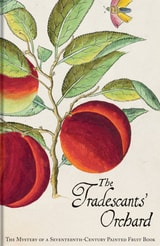
The Tradescants' Orchard
The Mystery of a Seventeenth-Century Painted Fruit BookBarrie Juniper and Hanneke Grootenboer
Bodleian Library Publishing, 2013
The Tradescants’ Orchard reproduces for the first time the entire manuscript, traditionally associated with the renowned father-and-son nurserymen the John Tradescants. The paintings pose many questions: Who painted them and why? What is the significance of the wildlife—birds, butterflies, frogs, and snails—that appear throughout? Why is there only one depiction of an apple tree despite its popularity? Were there others that have since gone missing?
A visual feast that will appeal to botany and gardening enthusiasts, the book also includes an introduction that maps out the mystery of how and why these enigmatic watercolors were made.
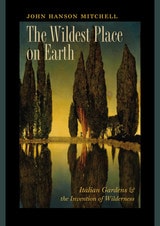
The Wildest Place on Earth
Italian Gardens and the Invention of WildernessJohn Hanson Mitchell
University Press of New England, 2015

The Wildlife of New England
A Viewer's GuideJohn S. Burk
University of New Hampshire Press, 2011
With practical guidance, helpful tips, and informative overviews of each location, The Wildlife of New England invites you to discover more than 80 wildlife-viewing areas around New England.
• Where are you most likely to spot a moose, black bear, or otter in the wild?
• On what hilltop can you see thousands of migrating hawks in a single day?
• Where might you see a basking shark, seal, or sea star?
Experienced nature writer and photographer John S. Burk answers these questions and more in this unique guidebook. Organized by state, each viewing location is discussed in detail, including its natural habitats and their unique features, characteristic species to watch for and when to see them, and recommended trails, auto roads, and driving directions. The Wildlife of New England also offers informative introductions to 60 of the region's iconic animals organized by their natural habitats and shown in stunning photographs, many in color.
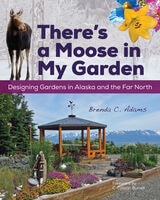
There's a Moose in My Garden
Designing Gardens in Alaska and the Far NorthBrenda C. Adams
University of Alaska Press, 2013
Adams provides helpful tips for Far Northern gardeners on how to design and implement successful landscape environments. The book outlines the entire planning and planting process, covering such aspects as handling low-angled sun, soft light, expansive vistas, and a cool climate.
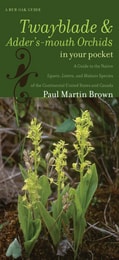
Twayblades and Adder's-mouth Orchids in Your Pocket
A Guide to the Native Liparis, Listera, and Malaxis Species of the Continental United States and CanPaul Martin Brown
University of Iowa Press, 2008
Brown provides general distributional information, time of flowering, and habitat requirements for each species as well as a complete list of hybrids and the many different growth and color forms that can make identifying orchids so intriguing. For the twayblades and adder’s-mouths he includes information on 21 species, 1 additional variety, and 2 hybrids.
Most twayblades and adder’s-mouths are relatively small plants with tiny green flowers, but a few have richly colored blooms or particularly interesting habits that attract the native orchid enthusiast. Most of these species are easy to identify based upon their general appearance, range, and time of flowering. Answering three simple questions—when, where, and how does it grow?—and comparing the living plant with the striking photos in the backpack-friendly laminated guide should enable both professional and amateur naturalists to achieve the satisfaction of identifying a specific orchid.