60 books match the query 'Ghana' and 12 start with t
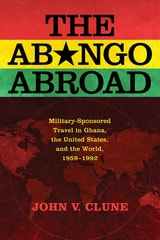
cover of The Abongo Abroad: Military-Sponsored Travel in Ghana, the United States, and the World, 1959-1992

The Abongo Abroad

Military-Sponsored Travel in Ghana, the United States, and the World, 1959-1992

John V. Clune

Vanderbilt University Press, 2017

Blending African social history with US foreign relations, John V. Clune documents how ordinary people experienced a major aspect of Cold War diplomacy. The book describes how military-sponsored international travel, especially military training abroad and United Nations peacekeeping deployments in the Sinai and Lebanon, altered Ghanaian service members and their families during the three decades after independence in 1957. Military assistance to Ghana included sponsoring training and education in the United States, and American policymakers imagined that national modernization would result from the personal relationships Ghanaian service members and their families would forge. As an act of faith, American military assistance policy with Ghana remained remarkably consistent despite little evidence that military education and training in the United States produced any measurable results.

Merging newly discovered documents from Ghana's armed forces and declassified sources on American military assistance to Africa, this work argues that military-sponsored travel made individual Ghanaians' outlooks on the world more international, just as military assistance planners hoped they would, but the Ghanaian state struggled to turn that new identity into political or economic progress.
[more]
cover of The Cloth of Many Colored Silks: Papers on History and Society Ghanaian and Islamic in Honor of Ivor Wilks

The Cloth of Many Colored Silks

Papers on History and Society Ghanaian and Islamic in Honor of Ivor Wilks

John Hunwick and Nancy Lawler

Northwestern University Press, 1997
The Cloth of Many Colored Silks collects a wide variety of scholarship dealing with Ghanaian history and society, including papers by Basil Davidson, Jean Allman, Esther Goody and Jack Goody, Sandra E. Greene, Polly Hill, Ray A. Kea, Peter Shinnie, Victoria B. Tashjian, Larry W. Yarak, Ralph A. Austen, Paulo Fernando de Moraes Farias, Robert S. Kramer, Robert Launay, Donna J.E. Maier, R.S. O'Fahey, David Owusu-Ansah, and Enid Schildkrout.
[more]
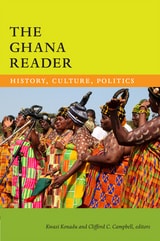
cover of The Ghana Reader: History, Culture, Politics

The Ghana Reader

History, Culture, Politics

Kwasi Konadu and Clifford C. Campbell, editors

Duke University Press, 2016

Covering 500 years of Ghana's history, The Ghana Reader provides a multitude of historical, political, and cultural perspectives on this iconic African nation. Whether discussing the Asante kingdom and the Gold Coast's importance to European commerce and transatlantic slaving, Ghana's brief period under British colonial rule, or the emergence of its modern democracy, the volume's eighty selections emphasize Ghana's enormous symbolic and pragmatic value to global relations. They also demonstrate that the path to fully understanding Ghana requires acknowledging its ethnic and cultural diversity and listening to its population's varied voices. Readers will encounter selections written by everyone from farmers, traders, and the clergy to intellectuals, politicians, musicians, and foreign travelers. With sources including historical documents, poems, treaties, articles, and fiction, The Ghana Reader conveys the multiple and intersecting histories of Ghana's development as a nation, its key contribution to the formation of the African diaspora, and its increasingly important role in the economy and politics of the twenty-first century.
 
 
[more]
cover of The Krobo People of Ghana to 1892: A Political and Social History

The Krobo People of Ghana to 1892

A Political and Social History

Louis E. Wilson

Ohio University Press, 1991

This book presents a broad analytical framework for the history of southeastern Ghana within the context of a representative study of one of the country’s most important political and economic forces. The 150,000 Krobo are the most numerous of the Adangme-speaking peoples. They are located in the mountains just inland from the coast and are the fourth largest ethnic group in the country. During the nineteenth century they were one of the small states of the Gold Coast in the formative stages of political and cultural development. After the middle of the nineteenth century they became economically and politically one of the most important groups in the country because of their dominant role in commercial production of export crops. Historical research on Ghana has produced mostly case studies of the large, centralized Akan states. Wilson’s study is an account of one of the smaller societies without which a history of Ghana would be incomplete.
[more]
cover of The Media-Democracy Paradox in Ghana: Rethinking Political Communication in an African Context

The Media-Democracy Paradox in Ghana

Rethinking Political Communication in an African Context

Wilberforce Sefakor Dzihah

Intellect Books, 2020

This volume focuses on the matrix offered by the media-democracy paradox in Ghana, Africa, and the Global South. As the first black African country south of the Sahara to attain political independence from Great Britain, Ghana is widely acknowledged by the international community as a model of democracy. This book examines the praxis of this democracy and its media, delving into Ghana’s evolvement, media practices, leadership aspirations, pressure group politics, and ideological cleavages. 

A rich data source for students, scholars, researchers, and political actors on both the African continent and the diaspora, The Media-Democracy Paradox in Ghana challenges the dominant Western theories of media and democracy, examines the growing influence of social media in political discourse, and provides insightful analysis of debates surrounding political communication and its implications for strengthening democratic culture.
[more]
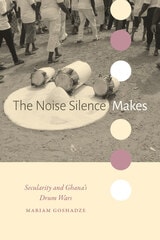
cover of The Noise Silence Makes: Secularity and Ghana's Drum Wars

The Noise Silence Makes

Secularity and Ghana's Drum Wars

Mariam Goshadze

Duke University Press, 2025
For generations, the Ga community in Accra, Ghana, has enforced an annual citywide ban on noisemaking during an important religious festival. In the 1990s and 2000s, this “ban on drumming” became a point of conflict between the Ga people and the newly popular Pentecostal/Charismatic churches, which refused to subdue their loud worship during the ban. Although the Ghanaian state constitutionally and institutionally grants superior status to Christianity and Islam, it ruled in favor of the Ga community, which emphasized its “cultural” rather than religious rights. In The Noise Silence Makes, Mariam Goshadze traces the history of noise regulation in Accra, showing how the Ga people have adopted colonial mechanisms of noise control to counter Pentecostal/Charismatic dominance over Accra’s soundscape. Goshadze shows how the drumming ban represents a reversal of the top-down model of noise regulation and illuminates the reality of Ghanaian secularity, in which the state unofficially collaborates with indigenous religious authorities to control sound. In so doing, Goshadze counters the tendency to push African “traditional religions” to the margins, demonstrating that they are instrumental players in contemporary African urbanity.
[more]
cover of The Occupations of Migrants in Ghana

The Occupations of Migrants in Ghana

Polly Hill

University of Michigan Press, 1970
In this study, which is statistically based on the 1960 Ghana population census, author Polly Hill attempts to show that economically motivated migration takes a much greater variety of occupational forms than is conventionally supposed. Hill reports on the occupations, geographical distribution, and urbanization of Ghana’s migrant population, and supplies notes on 34 migratory ethic groups.
[more]
cover of The Predicament of Blackness: Postcolonial Ghana and the Politics of Race

The Predicament of Blackness

Postcolonial Ghana and the Politics of Race

Jemima Pierre

University of Chicago Press, 2012
What is the meaning of blackness in Africa? While much has been written on Africa’s complex ethnic and tribal relationships, Jemima Pierre’s groundbreaking The Predicament of Blackness is the first book to tackle the question of race in West Africa through its postcolonial manifestations. Challenging the view of the African continent as a nonracialized space—as a fixed historic source for the African diaspora—she envisions Africa, and in particular the nation of Ghana, as a place whose local relationships are deeply informed by global structures of race, economics, and politics.
 
Against the backdrop of Ghana’s history as a major port in the transatlantic slave trade and the subsequent and disruptive forces of colonialism and postcolonialism, Pierre examines key facets of contemporary Ghanaian society, from the pervasive significance of “whiteness” to the practice of chemical skin-bleaching to the government’s active promotion of Pan-African “heritage tourism.” Drawing these and other examples together, she shows that race and racism have not only persisted in Ghana after colonialism, but also that the beliefs and practices of this modern society all occur within a global racial hierarchy. In doing so, she provides a powerful articulation of race on the continent and a new way of understanding contemporary Africa—and the modern African diaspora.
[more]
cover of The Quills of the Porcupine: Asante Nationalism in an Emergent Ghana

The Quills of the Porcupine

Asante Nationalism in an Emergent Ghana

Jean Marie Allman

University of Wisconsin Press, 1993

Bearing the historic symbol of the Asante nation, the porcupine, the National Liberation Movement (NLM) stormed onto the Gold Coast’s political stage in 1954, mounting one of the first and most significant campaigns to decentralize political power in decolonizing Africa. 
    Ghana (formerly the Gold Coast) was the first colony in sub-Saharan Africa to secure political independence from Britain.  The struggle for full self-government was led by Kwame Nkrumah, the leading advocate of African nationalism and Pan-African unity in the post-World War II era.  The NLM threatened the stability of Nkrumah’s preindependence government and destroyed prospects for a smooth transition to full self-rule.  Though NLM demands for Asante autonomy mobilized thousands of members, marchers, and voters, the NLM was unable to forestall plans for a unitary government in a new nation.  Under Nkrumah, Ghana became independent in 1957.
    Marginalized politically by 1958, the NLM has at times been marginalized by scholars as well.  Cast into the shadows of academic inquiry where history’s losers often dwell, the NLM came to be characterized as a tribalist ghost of the past whose foreordained defeat was worthy of some attention, but whose spectacular rise was not.
    Today, when it is far harder to dismiss decentralizing movements and alternative nationalisms as things of the past, Jean Marie Allman’s brilliant The Quills of the Porcupine recovers the history of the NLM as a popular movement whose achievements and defeats were rooted in Asante’s history and in the social conflicts of the period.  Allman draws skillfully on her extensive interviews with NLM activists, on a variety of published and archival sources in Ghana, and on British colonial records—many of them recently declassified—to provide rich narrative detail.
    Sophisticated in its analysis of the NLM’s ideology and of the appeals of the movement to various strata within Asante society, The Quills of the Porcupine is a pioneering case study in the social history of African politics.  An exciting story firmly situated within the context of the large theoretical and historical literature on class, ethnicity, and nationalism, its significance reaches far past the borders of Asante, and of Ghana.

[more]
cover of The Scattered Family: Parenting, African Migrants, and Global Inequality

The Scattered Family

Parenting, African Migrants, and Global Inequality

Cati Coe

University of Chicago Press, 2013
Today’s unprecedented migration of people around the globe in search of work has had a widespread and troubling result: the separation of families. In The Scattered Family, Cati Coe offers a sophisticated examination of this phenomenon among Ghanaians living in Ghana and abroad. Challenging oversimplified concepts of globalization as a wholly unchecked force, she details the diverse and creative ways Ghanaian families have adapted long-standing familial practices to a contemporary, global setting.

Drawing on ethnographic and archival research, Coe uncovers a rich and dynamic set of familial concepts, habits, relationships, and expectations—what she calls repertoires—that have developed over time, through previous encounters with global capitalism. Separated immigrant families, she demonstrates, use these repertoires to help themselves navigate immigration law, the lack of child care, and a host of other problems, as well as to help raise children and maintain relationships the best way they know how. Examining this complex interplay between the local and global, Coe ultimately argues for a rethinking of what family itself means. 
[more]
cover of The Transsion Approach: Translating Chinese Mobile Technology in Africa

The Transsion Approach

Translating Chinese Mobile Technology in Africa

Miao Lu

University of Illinois Press, 2025

How do we explain China’s tech rise in Africa? As Africa’s top phone seller, the Shenzhen-based company Transsion has profoundly shaped the continent’s digital transformation by providing affordable yet feature-rich mobile phones for the economically disadvantaged. Miao Lu draws on rich fieldwork in China and Ghana to delve into the company’s operations and growing influence. Critiquing technology transfer, Lu focuses on design, marketing, and repair to illustrate the multi-layered technology translations between China and Ghana. Borrowing the metaphor of deep ploughing, Lu examines the rural-centric and lower-class–oriented approach of translating mobile technology. Transsion challenges the cultural imagination of big tech. But the company is also evolving into a regional power that’s adept at marginalizing small players and increasing local dependence. Lu’s analysis explores the complexity that Shenzhen can act as Silicon Valley’s “South” and Africa’s “North” simultaneously. The middle space created by Transsion bridges globalization from above and below, which opens the door to new possibilities and inequalities.
[more]
cover of This Side Jordan: A Novel

This Side Jordan

A Novel

Margaret Laurence

University of Chicago Press, 2011

Best known for her novels about the Canadian prairie, Margaret Laurence began her career writing about West Africa. Based on her experience living with her husband on the Gold Coast (now Ghana) in the years just before independence, This Side Jordan confronts issues of race relations, sexism, and colonial exploitation.

This lyrical, vivid novel addresses all of the tensions of the time: the excitement, anticipation, and dread felt by both the Africans and the English as they confronted a new order. The book’s hero, a school teacher torn between duty to his tribe and aspirations for his country’s future in the modern world, names his son “Joshua” as a sign of hope that he will claim and enjoy his homeland. This Side Jordan anticipates many of the political and racial issues that were to plague Ghana over the next fifty years. Evocative and poignant, it is a subtle study of the effects of colonialism, culture clash, and the resilience of hope in new political identity.
 
“Highly recommended as a good and timely read.”—Library Journal
[more]