Results by title
67 books match the query 'Global Warming & Climate Change' and 9 start with t
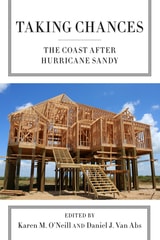
Taking Chances
The Coast after Hurricane SandyO'Neill, Karen M.
Rutgers University Press, 2016
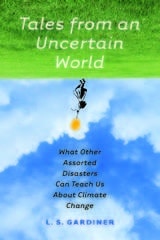
Tales from an Uncertain World
What Other Assorted Disasters Can Teach Us About Climate ChangeL. S. Gardiner
University of Iowa Press, 2018
So far, humanity hasn’t done very well in addressing the ongoing climate catastrophe. Veteran science educator L. S. Gardiner believes we can learn to do better by understanding how we’ve dealt with other types of environmental risks in the past and why we are dragging our feet in addressing this most urgent emergency. Weaving scientific facts and research together with humor and emotion, Gardiner explores human responses to erosion, earthquakes, fires, invasive species, marine degradation, volcanic eruptions, and floods in order to illuminate why we find it so challenging to deal with climate change. Insight emerges from unexpected places—a mermaid exhibit, a Magic 8 Ball, and midcentury cartoons about a future that never came to be.
Instead of focusing on the economics and geopolitics of the debate over climate change, this book brings large-scale disaster to a human scale, emphasizing the role of the individual. We humans do have the capacity to deal with disasters. When we face threatening changes, we don’t just stand there pretending it isn’t so, we do something. But because we’re human, our responses aren’t always the right ones the first time—yet we can learn to do better. This book is essential reading for all who want to know how we can draw on our strengths to survive the climate catastrophe and forge a new relationship with nature.
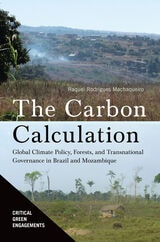
The Carbon Calculation
Global Climate Policy, Forests, and Transnational Governance in Brazil and MozambiqueRaquel Rodrigues Machaqueiro
University of Arizona Press, 2023
Focusing on REDD+ (Reducing Emissions from Deforestation and Forest Degradation), the book demonstrates how industrialized countries are able to maintain their socioeconomic models largely unaltered while claiming to address global warming using forests in the Global South to offset their pollution. By examining the creation and implementation of REDD+ historically and ethnographically, the book traces the social life of this mechanism as it travels across a complex network spanning several interacting levels: international, national, and local. Through cases in the Brazilian state of Acre and the Zambézia province in Mozambique, the author demonstrates how global climate policy has created new opportunities and rationales for unprecedented levels of intervention in the Global South—all under the guise of saving the planet.
The Carbon Calculation critically highlights the ways in which politics has reinforced a scientific focus on one possible solution to the problem of climate change—namely those that largely absolve the industrialized world from undertaking politically painful transformations in its own economic model.
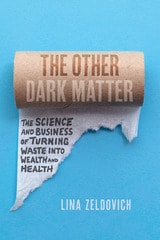
The Other Dark Matter
The Science and Business of Turning Waste into Wealth and HealthLina Zeldovich
University of Chicago Press, 2021
The average person produces about four hundred pounds of excrement a year. More than seven billion people live on this planet. Holy crap!
Because of the diseases it spreads, we have learned to distance ourselves from our waste, but the long line of engineering marvels we’ve created to do so—from Roman sewage systems and medieval latrines to the immense, computerized treatment plants we use today—has also done considerable damage to the earth’s ecology. Now scientists tell us: we’ve been wasting our waste. When recycled correctly, this resource, cheap and widely available, can be converted into a sustainable energy source, act as an organic fertilizer, provide effective medicinal therapy for antibiotic-resistant bacterial infection, and much more.
In clear and engaging prose that draws on her extensive research and interviews, Lina Zeldovich documents the massive redistribution of nutrients and sanitation inequities across the globe. She profiles the pioneers of poop upcycling, from startups in African villages to innovators in American cities that convert sewage into fertilizer, biogas, crude oil, and even life-saving medicine. She breaks taboos surrounding sewage disposal and shows how hygienic waste repurposing can help battle climate change, reduce acid rain, and eliminate toxic algal blooms. Ultimately, she implores us to use our innate organic power for the greater good. Don’t just sit there and let it go to waste.
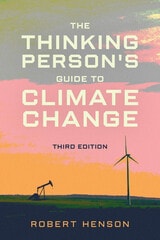
The Thinking Person's Guide to Climate Change, Third Edition
Robert Henson
University of Chicago Press, 2027
Updated throughout, the definitive guide for students, practitioners, and anyone interested in where climate science, politics, and policy stand today.
The physics and chemistry that drive human-caused climate change are surprisingly clear-cut. How we think about, talk about, and respond to the situation is dizzyingly complex. Meteorologist and journalist Robert Henson has spent years making climate science approachable and engaging. His internationally recognized book, The Thinking Person’s Guide to Climate Change, provides both specialists and newcomers with the background, insights, and confidence to engage with the paramount environmental issues of our lives (and beyond).
Drawing on a wealth of studies and assessments, this comprehensive yet lively guide brings a fresh eye to topics often buried in rhetoric. Introductory sections bring to life more than a century of painstaking research that tells us what we know and don’t know about human effects on climate. Henson discusses how and where fossil fuel use has been linked to heat waves, melting ice, wildfires, and other extremes. The guide also explores the high-stakes debates that swirl around climate change—including efforts to deny, downplay, or distract from the crisis—and how political, diplomatic, and legal systems are grappling with it. Color illustrations help explain everything from how the greenhouse effect traps heat to which everyday activities emit the most carbon. Special-feature boxes take readers to locations across the globe: small Pacific islands confronting sea level rise, Africa and its major rainfall shifts, California and year-round wildfire threats, and Florida with hurricanes intensifying ever more rapidly.
Thoroughly updated, this third edition has new coverage of the survivability of extreme heat, the use of global temperature thresholds, the challenge of carbon pricing, and other timely topics. It spotlights the Intergovernmental Panel on Climate Change’s Sixth Assessment Report as well as evolving geopolitics. This book acknowledges controversy, underscores points of agreement, and favors action over apathy and doomism.
The Thinking Person's Guide to Climate Change
Second EditionRobert Henson
American Meteorological Society, 2019
Using global research and written with nonscientists in mind, the Guide breaks down the issues into straightforward categories: “Symptoms” covers signs such as melting ice and extreme weather, while “Science” lays out what we know and how we figured it out. “Debates” tackles the controversy and politics, while “Solutions” and “Actions” discuss what we can do as individuals and communities to create the best possible future. Full-color illustrations offer explanations of everything from how the greenhouse effect traps heat to which activities in everyday life emit the most carbon. Special-feature boxes zoom in on locations across the globe already experiencing the effects of a shifting climate.
The new edition of The Thinking Person's Guide to Climate Change has been thoroughly updated, including content on new global record highs, new research across the spectrum, and the Paris Agreement to cut greenhouse gases. This reference provides the most comprehensive, yet accessible, overview of where climate science stands today, acknowledging controversies but standing strong in its stance that the climate is changing—and something needs to be done.
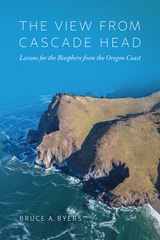
The View From Cascade Head
Lessons for the Biosphere from the Oregon CoastBruce A. Byers
Oregon State University Press, 2020
Cascade Head is Oregon’s only biosphere reserve, part of the international network of biosphere reserves coordinated by UNESCO. Biosphere reserves around the world are laboratories for understanding how humans affect ecosystems and models for how we can heal the human-nature relationship.
The View from Cascade Head illustrates three main lessons: the actions and efforts of committed individuals can make a difference; ecological mysteries still abound despite decades of scientific research; and our worldviews—how we think about our place in nature—shape our individual and collective effect on the ecosystems we inhabit. Byers helps us understand how these lessons apply everywhere and can lead us toward a more sustainable relationship with our home planet.
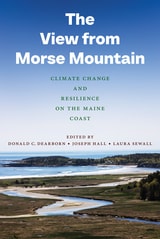
The View from Morse Mountain
Climate Change and Resilience on the Maine CoastEdited by Donald C. Dearborn, Joseph Hall, and Laura Sewall
University of Massachusetts Press, 2027
Arguing that resilient coasts emerge from collaborative, cross-disciplinary understanding rather than single-issue solutions
At the Bates-Morse Mountain Conservation Area, climate change impacts are visible to the attentive observer. High tides increasingly flood the causeway across the Sprague River Salt Marsh, large winter storms are reshaping the sand dunes at Seawall Beach, and the offshore waters of the Gulf of Maine are among the fastest-warming on the planet. Environmental change is not new there, nor is the impact of human activity, but different parts of this coastal system are changing at different rates, in different ways. Some components are potentially self-renewing, such as the barrier dune beach, while others, such as Piping Plover populations or the salt marshes, might be restored only with assistance. Unfortunately, other components may already be beyond help: the forest of pitch pines between the dunes and the marsh faces the dual threat of saltwater intrusion below ground and potential burial by migrating sands above.
In The View from Morse Mountain, contributors invite readers into this system through an array of complementary inquiries into bedrock geology, carbon capture by salt marshes, dune movement, the physiology of trees, bird migration, perceptual psychology, and the overlays of Indigenous history and colonial settlement. Fostering adaptability, particularly in coastal systems, requires just such an integrated set of examinations and perspectives. This collection of expert analyses works to encourage place-based curiosity in anyone, both those familiar with this area of Maine and people beyond, helping them recognize both loss and resilience, and to deepen their love for the places they treasure.
Contributors include the volume editors as well as Emily Chandler, Caitlin Cleaver, Isobel Curtis, J. Dykstra Eusden Jr., Brett Huggett, Bev Johnson, Dana Oster, Mike Retelle, and Robert Strong.
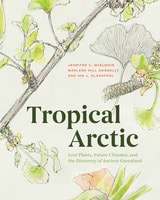
Tropical Arctic
Lost Plants, Future Climates, and the Discovery of Ancient GreenlandJennifer McElwain, Marlene Hill Donnelly, and Ian Glasspool
University of Chicago Press, 2021
While today’s Greenland is largely covered in ice, in the time of the dinosaurs the area was a lushly forested, tropical zone. Tropical Arctic tracks a ten-million-year window of Earth’s history when global temperatures soared and the vegetation of the world responded.
A project over eighteen years in the making, Tropical Arctic is the result of a unique collaboration between two paleobotanists, Jennifer C. McElwain and Ian J. Glasspool, and award-winning scientific illustrator Marlene Hill Donnelly. They began with a simple question: “What was the color of a fossilized leaf?” Tropical Arctic answers that question and more, allowing readers to experience Triassic Greenland through three reconstructed landscapes and an expertly researched catalog of extinct plants. A stunning compilation of paint and pencil art, photos, maps, and engineered fossil models, Tropical Arctic blends art and science to bring a lost world to life. Readers will also enjoy a front-row seat to the scientific adventures of life in the field, with engaging anecdotes about analyzing fossils and learning to ward off polar bear attacks.
Tropical Arctic explains our planet’s story of environmental upheaval, mass extinction, and resilience. By looking at Earth’s past, we see a glimpse of the future of our warming planet—and learn an important lesson for our time of climate change.