66 books match the query 'Government & Business' and 19 start with t
cover of Tax Policy and the Economy, Volume 26

Tax Policy and the Economy, Volume 26

Edited by Jeffrey R. Brown

University of Chicago Press Journals, 2012
There is no question that the US is facing significant fiscal challenges. Tax Policy and the Economy research papers make valuable contributions to our understanding of the economic effects of alternative approaches. The papers collected in Volume 26 include a study of an important determinant of the labor supply effects of Social Security; an examination of the budgetary and economic impact of changing how employer health insurance is treated in the tax code; an analysis of how US investment in Europe might be impacted by proposed corporate tax reform in the European Union; a look at the term “tax expenditures,” often used to describe governmental policies that show as reduction in taxes rather than as an increase in spending. The final paper in the volume shows how uncertainty about the restoration of US fiscal balance imposes additional efficiency costs on the economy in consumption, saving, labor supply and portfolio decisions, and how it reduces individual welfare.
[more]
cover of Tax Policy and the Economy, Volume 33

Tax Policy and the Economy, Volume 33

Edited by Robert A. Moffitt

University of Chicago Press Journals, 2019
This volume presents five new studies on taxation and government transfer programs.  Alexander Blocker, Laurence Kotlikoff, Stephen Ross, and Sergio Villar Vallenas show how asset pricing can be used to value implicit fiscal debts, which are currently rarely measured or adjusted for risk, while accounting for risk properties.  They apply their methodology to study Social Security.  Michelle Hanson, Jeffrey Hoopes, and Joel Slemrod examine the effects of the Tax Cuts and Jobs Act on corporation behavior and on firms’ statements about their behavior.  They focus on for four outcomes: bonuses, investment, share repurchases, and dividends. Scott Baker, Lorenz Kueng, Leslie McGranahan, and Brian Melzer explore whether “unconventional” fiscal policy in the form of pre-announced consumption tax changes can shift durables purchases intertemporally, how it such shifts are affected by consumer credit.  Alan Auerbach discusses “tax equivalences,” disparate sets of policies that have the same economic effects, and also illustrates when these equivalences break down.  Jeffrey Liebman and Daniel Ramsey use data from NBER’s TAXSIM model to investigate the equity implications of a switch from joint to independent taxation that could occur in conjunction with adoption of return-free tax filing.
[more]
cover of Tax Policy and the Economy, Volume 34

Tax Policy and the Economy, Volume 34

Edited by Robert A. Moffitt

University of Chicago Press Journals, 2020
This volume presents five new studies on current topics in taxation and government spending.  Mark Shepard, Katherine Baicker, and Jonathan Skinner explore implementation aspects of a Medicare-for-All program, which provides a uniform health insurance benefit to everyone, and contrast it with a program providing a basic benefit that can be supplemented voluntarily. John Beshears, James Choi, Mark Iwry, David John, David Laibson, and Brigitte Madrian examine the design and feasibility of firm-sponsored “rainy day funds,” short-term savings accounts for employees that can be used when faced with temporary periods of high expenditure. Robert Barro and Brian Wheaton investigate the impact of taxation on choice of corporate form, on the formation and legal structure of new businesses, and indirectly on productivity in the economy. Jonathan Meer and Benjamin Priday examine the impact of the 2017 federal income tax reform, which reduced marginal tax rates and the incentive for charitable giving, on such giving. Finally, Casey Mulligan analyzes the impact of the Affordable Care Act on whether firms employ fewer than 50 employees, the employment threshold below which they are exempt from the requirement to provide health insurance to their employees.
[more]
cover of Tax Policy and the Economy, Volume 35

Tax Policy and the Economy, Volume 35

Edited by Robert A. Moffitt

University of Chicago Press Journals, 2021
This volume presents six new studies on current topics in taxation and government spending. The first study looks at the costs of income tax filing, which have risen over time because of the numerous tax forms families have to fill out when filing their taxes and because of increased costs of itemizing deductions, and explores ways to simplify filing and reduce those costs. The second study investigates the design of income tax schedules when there is uncertainty about the way taxation affects household behavior. The third study provides new and comprehensive estimates of the impact of the US Earned Income Tax Credit on the employment of low-income men and women, finding that the large majority of the various expansions of that credit over the last forty years have increased employment of single mothers. The fourth study reviews the structure of business taxation in China and describes a number of tax distortions and potential inefficiencies in the system. The next paper considers how the Affordable Care Act has affected the health insurance and labor market choices of individuals who are between the ages of 60 and 64, and it finds increases in insurance coverage and reductions in employment for some groups. The last study considers how reimbursement rates for health care providers under various government insurance programs affect providers’ willingness to take on new patients and expand their patient capacity.
 
[more]
cover of Tax Policy and the Economy, Volume 36

Tax Policy and the Economy, Volume 36

Edited by Robert A. Moffitt

University of Chicago Press Journals, 2022

This volume presents five new studies on current topics in taxation and government spending.  
Natasha Sarin, Lawrence Summers, Owen Zidar, and Eric Zwick study how investors respond to taxes on capital gains, whether their incentives to invest are affected by those taxes, and whether that responsiveness has changed over time. Ethan Rouen, Suresh Nallareddy, and Juan Carlos Suárez Serrato revisit the question of whether cuts to corporate taxes increase income inequality, bringing new data and new statistical techniques to generate fresh findings. Alan Auerbach and William Gale investigate whether the advantages and disadvantages of different types of taxation are affected when interest rates stay low for long periods, as has been the case in the U.S. for many years. Nora Gordon and Sarah Reber study the distributional impact of emergency subsidies to schools made by the federal government during the recent COVID pandemic and whether those subsidies were sufficient to cover the increased school costs induced by the pandemic. Jacob Goldin, Elaine Maag, and Katherine Michelmore investigate the fiscal cost of an expansion of the U.S. child tax credit, which has been discussed extensively in policy circles recently. They take into account not only the direct expenditure on the allowance but how cost is affected by the existence of work incentives and by possible beneficial effects on childrens’ adult earnings.
[more]
cover of Tax Policy and the Economy: Volume 32

Tax Policy and the Economy

Volume 32

Edited by Robert A. Moffitt

University of Chicago Press Journals, 2018
The six research studies in Volume 32 of Tax Policy and the Economy analyze the U.S. tax and transfer system, in particular its effects on revenues, expenditures, and economic behavior. First, James Andreoni examines donor advised funds, which are financial vehicles offered by investment houses to provide savings accounts for tax-free charitable giving, and weighs their effects on donations against their tax cost. Second, Caroline Hoxby analyzes the use of tax credits by students enrolled in online post-secondary education. Third, Alex Rees-Jones and Dmitry Taubinsky explore taxpayers’ psychological biases that lead to incorrect perceptions and understanding of tax incentives. Fourth, Jeffrey Clemens and Benedic Ippolito investigate the implications of block grant reforms of Medicaid for receipt of federal support by different states. Fifth, Andrew Samwick examines means-testing of Medicare and federal health benefits under the Affordable Care Act. Sixth, Bruce Meyer and Wallace Mok study the incidence and effects of disability among U.S. women from 1968 to 2015, examining the impacts of disability on income, consumption, and public transfers.
[more]
cover of Taxation in the Global Economy

Taxation in the Global Economy

Edited by Assaf Razin and Joel Slemrod

University of Chicago Press, 1990

The increasing globalization of economic activity is bringing an awareness of the international consequences of tax policy. The move toward the common European market in 1992 raises the important question of how inefficiencies in the various tax systems—such as self-defeating tax competition among member nations—will be addressed. As barriers to trade and investment tumble, cross-national differences in tax structures may loom larger and create incentives for relocations of capital and labor; and efficient and equitable income tax systems are becoming more difficult to administer and enforce, particularly because of the growing importance of multinational enterprises. What will be the role of tax policy in this more integrated world economy?

Assaf Razin and Joel Slemrod gathered experts from two traditionally distinct specialties, taxation and international economics, to lay the groundwork for understanding these issues, which will require the attention of scholars and policymakers for years to come.

Contributors describe the basic provisions of the U.S. tax code with respect to international transactions, highlighting the changes contained in the U.S. Tax Reform Act of 1986; explore the ways that tax systems influence the decisions of multinationals; examine the effect of taxation on trade patterns and capital flows; and discuss the implications of the opening world economy for the design of optimal international tax policy. The papers will prove valuable not only to scholars and students, but to government economists and international tax lawyers as well.
[more]
cover of The Changing Frontier: Rethinking Science and Innovation Policy

The Changing Frontier

Rethinking Science and Innovation Policy

Edited by Adam B. Jaffe and Benjamin F. Jones

University of Chicago Press, 2015

In 1945, Vannevar Bush, founder of Raytheon and one-time engineering dean at MIT, delivered a report to the president of the United States that argued for the importance of public support for science, and the importance of science for the future of the nation. The report, Science: The Endless Frontier, set America on a path toward strong and well-funded institutions of science, creating an intellectual architecture that still defines scientific endeavor today.

In The Changing Frontier, Adam B. Jaffe and Benjamin Jones bring together a group of prominent scholars to consider the changes in science and innovation in the ensuing decades. The contributors take on such topics as changes in the organization of scientific research, the geography of innovation, modes of entrepreneurship, and the structure of research institutions and linkages between science and innovation. An important analysis of where science stands today, The Changing Frontier will be invaluable to practitioners and policy makers alike.
[more]
cover of The Changing Roles of Debt and Equity in Financing U.S. Capital Formation

The Changing Roles of Debt and Equity in Financing U.S. Capital Formation

Edited by Benjamin M. Friedman

University of Chicago Press, 1982

This volume, consisting of papers presented at a conference held at Williamsburg, Va., 2-3 April 1981, is a progress report on the National Bureau of Economic Research project, The Changing Roles of Debt and Equity in Financing U.S. Capital Formation. The National Bureau has undertaken this project—including the conference, the research described in this volume, and the publication of the volume itself—with the support of the American Council of Life Insurance.
[more]
cover of The Effects of Taxation on Capital Accumulation

The Effects of Taxation on Capital Accumulation

Edited by Martin Feldstein

University of Chicago Press, 1987
Research on capital formation has long been a major focus of studies sponsored by the National Bureau of Economic Research because of the crucial role of capital accumulation in the process of economic growth. The papers in this volume examine the influence of taxes on capital formation, with specific focus on the determinants of saving and the process of investment in plant and equipment.
[more]
cover of The Fatal Conceit: The Errors of Socialism

The Fatal Conceit

The Errors of Socialism

F. A. Hayek

University of Chicago Press, 1988

Hayek gives the main arguments for the free-market case and presents his manifesto on the "errors of socialism." Hayek argues that socialism has, from its origins, been mistaken on factual, and even on logical, grounds and that its repeated failures in the many different practical applications of socialist ideas that this century has witnessed were the direct outcome of these errors. He labels as the "fatal conceit" the idea that "man is able to shape the world around him according to his wishes."

"The achievement of The Fatal Conceit is that it freshly shows why socialism must be refuted rather than merely dismissed—then refutes it again."—David R. Henderson, Fortune.

"Fascinating. . . . The energy and precision with which Mr. Hayek sweeps away his opposition is impressive."—Edward H. Crane, Wall Street Journal

F. A. Hayek is considered a pioneer in monetary theory, the preeminent proponent of the libertarian philosophy, and the ideological mentor of the Reagan and Thatcher "revolutions."
[more]
cover of The People's Money: Pensions, Debt, and Government Services

The People's Money

Pensions, Debt, and Government Services

Edited by Michael A. Pagano

University of Illinois Press, 2019
American cities continue to experience profound fiscal crises. Falling revenues cannot keep pace with the increased costs of vital public services, infrastructure development and improvement, and adequately funded pensions. Chicago presents an especially vivid example of these issues, as the state of Illinois's rocky fiscal condition compounds the city's daunting budget challenges. In The People's Money, Michael A. Pagano curates a group of essays that emerged from discussions at the 2018 UIC Urban Forum. The contributors explore fundamental questions related to measuring the fiscal health of cities, including how cities can raise revenue, the accountability of today's officials for the future financial position of a city, the legal and practical obstacles to pension reform and a balanced budget, and whether political collaboration offers an alternative to the competition that often undermines regional governance.Contributors: Jered B. Carr, Rebecca Hendrick, Martin J. Luby, David Merriman, Michael A. Pagano, David Saustad, Casey Sebetto, Michael D. Siciliano, James E. Spiotto, Gary Strong, Shu Wang, and Yonghong Wu
[more]
cover of The Privatization Process in Central Europe

The Privatization Process in Central Europe

Roman Frydman

Central European University Press, 1993
In this work, comprehensive comparative information on five Central European countries has been collected by teams of researchers from both within the region and from the West. Following an introduction to the economic environment in each country, it provides an overview of the privatization process, including an account of the legal framework of ownership, institutions for state regulation, an overview of privatization programmes and the initial transformation of enterprises. A key feature of the book is the authors' access to hitherto unavailable information and their ability to present a vast amount of material in an easily available format. Aimed at policy makers and business people, the work should provide a strong foundation for future research.
[more]
cover of The Privatization Process in Russia, the Ukraine, and the Baltic States

The Privatization Process in Russia, the Ukraine, and the Baltic States

Roman Frydman

Central European University Press, 1993
In this work, comprehensive comparative information on five former Soviet republics has been collected by teams of researchers from both within the region and from the West. Following an introduction to the economic environment in each country, it provides an overview of the privatization process, including an account of the legal framework of ownership, institutions for state regulation, an overview of privatization programmes and the initial transformation of enterprises. A key feature of the book is the authors' access to hitherto unavailable information and their ability to present a vast amount of material in an easily available format. Aimed at policy makers and business people, the work should provide a strong foundation for future research.
[more]
cover of The Quality of Government: Corruption, Social Trust, and Inequality in International Perspective

The Quality of Government

Corruption, Social Trust, and Inequality in International Perspective

Bo Rothstein

University of Chicago Press, 2011
The relationship between government, virtue, and wealth has held a special fascination since Aristotle, and the importance of each frames policy debates today in both developed and developing countries. While it’s clear that low-quality government institutions have tremendous negative effects on the health and wealth of societies, the criteria for good governance remain far from clear.
 
In this pathbreaking book, leading political scientist Bo Rothstein provides a theoretical foundation for empirical analysis on the connection between the quality of government and important economic, political, and social outcomes. Focusing on the effects of government policies, he argues that unpredictable actions constitute a severe impediment to economic growth and development—and that a basic characteristic of quality government is impartiality in the exercise of power. This is borne out by cross-sectional analyses, experimental studies, and in-depth historical investigations. Timely and topical, The Quality of Government tackles such issues as political legitimacy, social capital, and corruption.
[more]
cover of The Roaring Nineties: Can Full Employment Be Sustained?

The Roaring Nineties

Can Full Employment Be Sustained?

Alan B. Krueger

Russell Sage Foundation, 2001
The positive social benefits of low unemployment are many—it helps to reduce poverty and crime and fosters more stable families and communities. Yet conventional wisdom—born of the stagflation of the 1970s—holds that sustained low unemployment rates run the risk of triggering inflation. The last five years of the 1990s—in which unemployment plummeted and inflation remained low—called this conventional wisdom into question. The Roaring Nineties provides a thorough review of the exceptional economic performance of the late 1990s and asks whether it was due to a lucky combination of economic circumstances or whether the new economy has somehow wrought a lasting change in the inflation-safe rate of unemployment. Led by distinguished economists Alan Krueger and Robert Solow, a roster of twenty-six respected economic experts analyzes the micro- and macroeconomic factors that led to the unexpected coupling of low unemployment and low inflation. The more macroeconomically oriented chapters clearly point to a reduction in the inflation-safe rate of unemployment. Laurence Ball and Robert Moffitt see the slow adjustment of workers' wage aspirations in the wake of rising productivity as a key factor in keeping inflation at bay. And Alan Blinder and Janet Yellen credit sound monetary policy by the Federal Reserve Board with making the best of fortunate circumstances, such as lower energy costs, a strong dollar, and a booming stock market. Other chapters in The Roaring Nineties examine how the interaction between macroeconomic and labor market conditions helped sustain high employment growth and low inflation. Giuseppe Bertola, Francine Blau, and Lawrence M. Kahn demonstrate how greater flexibility in the U.S. labor market generated more jobs in this country than in Europe, but at the expense of greater earnings inequality. David Ellwood examines the burgeoning shortage of skilled workers, and suggests policies—such as tax credits for businesses that provide on-the-job-training—to address the problem. And James Hines, Hilary Hoynes, and Alan Krueger elaborate the benefits of sustained low unemployment, including budget surpluses that can finance public infrastructure and social welfare benefits—a perspective often lost in the concern over higher inflation rates. While none of these analyses promise that the good times of the 1990s will last forever, The Roaring Nineties provides a unique analysis of recent economic history, demonstrating how the nation capitalized on a lucky confluence of economic factors, helping to create the longest peacetime boom in American history. Copublished with The Century Foundation
[more]
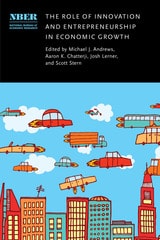
cover of The Role of Innovation and Entrepreneurship in Economic Growth

The Role of Innovation and Entrepreneurship in Economic Growth

Edited by Michael J. Andrews, Aaron Chatterji, Josh Lerner, and Scott Stern

University of Chicago Press, 2022

This volume presents studies from experts in twelve industries, providing insights into the future role of innovation and entrepreneurship in driving economic growth across sectors.

We live in an era in which innovation and entrepreneurship seem ubiquitous, particularly in regions like Silicon Valley, Boston, and the Research Triangle Park. But many metrics of economic growth, such as productivity growth and business dynamism, have been at best modest in recent years. The resolution of this apparent paradox is dramatic heterogeneity across sectors, with some industries seeing robust innovation and entrepreneurship and others seeing stagnation. By construction, the impact of innovation and entrepreneurship on overall economic performance is the cumulative impact of their effects on individual sectors. Understanding the potential for growth in the aggregate economy depends, therefore, on understanding the sector-by-sector potential for growth. This insight motivates the twelve studies of different sectors that are presented in this volume. Each study identifies specific productivity improvements enabled by innovation and entrepreneurship, for example as a result of new production technologies, increased competition, or new organizational forms. These twelve studies, along with three synthetic chapters, provide new insights on the sectoral patterns and concentration of the contributions of innovation and entrepreneurship to economic growth. 
[more]
cover of The Taxation of Income from Capital: A Comparative Study of the United States, the United Kingdom, Sweden and West Germany

The Taxation of Income from Capital

A Comparative Study of the United States, the United Kingdom, Sweden and West Germany

Mervyn A. King and Don Fullerton

University of Chicago Press, 1984
Taxation—both corporate and personal—has been held responsible for the low investment and productivity growth rates experienced in the West during the last decade. This book, a comparative study of the taxation of income from capital in the United States, the United Kingdom, Sweden, and West Germany, establishes for the first time a common framework for analysis that permits accurate comparison of tax systems.
[more]
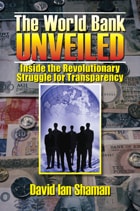
cover of The World Bank Unveiled: Inside the revolutionary struggle for transparency

The World Bank Unveiled

Inside the revolutionary struggle for transparency

David Ian Shaman

Parkhurst Brothers, Inc., 2009

Nobel Prize winning economist and former World Bank Chief Economist, Joseph Stiglitz, has repeatedly discussed the importance of transparency in policymaking at the World Bank and International Monetary Fund.  He believes a lack of transparency in the two institutions has lead to bad decisions.  Bad decisions at IMF and the World Bank mean real pain for the world’s poor.

There is a perception that “the suits” close the World Bank’s doors to deliberate the fate of earth’s poorest populations and only when the doors are unlocked do people living in poverty learn what has been decided about their future.  Meanwhile donations are down.  The bank’s critical International Development Association’s funding has dropped dramatically.  Managers are discouraged by studies examining the World Bank’s effectiveness.  How, they wonder, could such large beneficences have so little impact on poor populations? 

   Events of the past two years have only increased the stakes.  First, rising fuel prices caused a worldwide rise in the price of basic foods.  Then the deepest economic downturn since the Great Depression sapped donor nation’s coffers.  By the end of the Bush administration in 2009, giving by the USA lagged more than any other wealthy nation.  

   In 1999, two Bank researchers understood the situation was already on a precipice.  World Bank loans had ceased to make significant impact on poverty in many client nations.  Certain governments and multi-national corporations were destroying environments and desecrating indigenous cultures, all to achieve short-term gains for a fortunate few. 

 Demonstrable successes were few, and every World Bank conference became a melee of demonstrators and police.  The two researchers asked themselves whether it was possible to open up the institution by increased transparency, improve its accountability, and mute criticism.  They decided to launch an internet-based broadcast to disseminate unedited videos of internal discussions and debates.  The bank’s culture and bureaucracy, hardened over a half-century, presented them with a formidable foe.  Some powerful officials feared the transparency initiative; others withheld public support while standing on the sidelines.  The World Bank Unveiled documents this epic struggle.  It is the story of a revolution to transform the World Bank and a case study of the power of the Bank to transform people’s lives.

[more]