81 books match the query 'Handbook' and 12 start with t
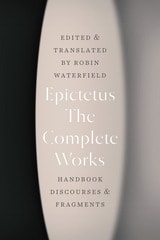
cover of The Complete Works: Handbook, Discourses, and Fragments

The Complete Works

Handbook, Discourses, and Fragments

Epictetus

University of Chicago Press, 2022

The complete surviving works of Epictetus, the most influential Stoic philosopher from antiquity.

“Some things are up to us and some are not.”
 
Epictetus was born into slavery around the year 50 CE, and, upon being granted his freedom, he set himself up as a philosophy teacher. After being expelled from Rome, he spent the rest of his life living and teaching in Greece. He is now considered the most important exponent of Stoicism, and his surviving work comprises a series of impassioned discourses, delivered live and recorded by his student Arrian, and the Handbook, Arrian’s own take on the heart of Epictetus’s teaching.
 
In Discourses, Epictetus argues that happiness depends on knowing what is in our power to affect and what is not. Our internal states and our responses to events are up to us, but the events themselves are assigned to us by the benevolent deity, and we should treat them—along with our bodies, possessions, and families—as matters of indifference, simply making the best use of them we can. Together, the Discourses and Handbook constitute a practical guide to moral self-improvement, as Epictetus explains the work and exercises aspirants need to do to enrich and deepen their lives. Edited and translated by renowned scholar Robin Waterfield, this book collects the complete works of Epictetus, bringing to modern readers his insights on how to cope with death, exile, the people around us, the whims of the emperor, fear, illness, and much more.

CUSTOMER NOTE: THE HARDCOVER IS FOR LIBRARIES AND HAS NO JACKET.
 
[more]
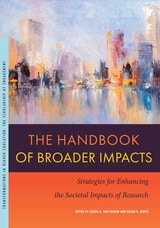
cover of The Handbook of Broader Impacts: Strategies for Enhancing the Societal Impacts of Research

The Handbook of Broader Impacts

Strategies for Enhancing the Societal Impacts of Research

Laurie A. Van Egeren

Michigan State University Press, 2026

The Handbook of Broader Impacts is an essential resource for researchers, administrators, policymakers, and anyone interested in the societal benefits of research. The volume brings together experts who trace the history of broader impacts as a U.S. National Science Foundation policy, explore its relationship to engaged scholarship, and provide models for institutional infrastructure and support. The book equips readers with tools to build the institutional capacity to advance the societal impacts of research, from developing researcher identities and competencies to navigating promotion and tenure. The Handbook of Broader Impacts explores a wide range of initiatives—open science, science communication, citizen science, informal STEM learning, K–12 partnerships, undergraduate research, teacher development, international collaborations, and more. By blending policy context, practical strategies, and real-world examples, the handbook spells out the value of broader impacts and demonstrates how research can contribute to direct and meaningful change.

[more]
cover of The Handbook of Electrical Resistivity: New materials and pressure effects

The Handbook of Electrical Resistivity

New materials and pressure effects

Gordon Dyos

The Institution of Engineering and Technology, 2012
This book updates and expands the editor's acclaimed Electrical Resistivity Handbook, bringing together advances in the field over the last two decades. In this period, much has been achieved in the fields of new materials and superconductivity.
[more]
cover of The Handbook of International Migration: The American Experience

The Handbook of International Migration

The American Experience

Charles Hirschman

Russell Sage Foundation, 1999
The historic rise in international migration over the past thirty years has brought a tide of new immigrants to the United States from Asia, South America, and other parts of the globe. Their arrival has reverberated throughout American society, prompting an outpouring of scholarship on the causes and consequences of the new migrations. The Handbook of International Migration gathers the best of this scholarship in one volume to present a comprehensive overview of the state of immigration research in this country, bringing coherence and fresh insight to this fast growing field. The contributors to The Handbook of International Migration—a virtual who's who of immigration scholars—draw upon the best social science theory and demographic research to examine the effects and implications of immigration in the United States. The dramatic shift in the national background of today's immigrants away from primarily European roots has led many researchers to rethink traditional theories of assimilation,and has called into question the usefulness of making historical comparisons between today's immigrants and those of previous generations. Part I of the Handbook examines current theories of international migration, including the forces that motivate people to migrate, often at great financial and personal cost. Part II focuses on how immigrants are changed after their arrival, addressing such issues as adaptation, assimilation, pluralism, and socioeconomic mobility. Finally, Part III looks at the social, economic, and political effects of the surge of new immigrants on American society. Here the Handbook explores how the complex politics of immigration have become intertwined with economic perceptions and realities, racial and ethnic divisions,and international relations. A landmark compendium of richly nuanced investigations, The Handbook of International Migration will be the major reference work on recent immigration to this country and will enhance the development of a truly interdisciplinary field of international migration studies.
[more]
cover of The Handbook of Pediatric Audiology

The Handbook of Pediatric Audiology

Sanford Gerber

Gallaudet University Press, 2000

The Handbook of Pediatric Audiology presents 14 comprehensive chapters written by the preeminent expert in each discipline. Clinicians and students now can refer to specific subjects in pediatric audiology for treating children from infancy through their elementary school years.

       Practitioners will be able to rely upon this complete volume as they would a trusted consultant thoroughly knowledgeable about indications and treatments for every condition. The Handbook of Pediatric Audiology offers contributions by Yash Pal Kapur, Franklin A. Katz, Robert J. Ruben, Allan O. Diefendorf and Judith S. Gravel, Jane R. Madell, Shlomo Silman and Carol A. Silverman, and Herbert Jay Gold and Maurice Mendel. Judith A. Brimacombe and Anne L. Beiter present the latest clinical information on cochlear implants in children, including the current debate on cultural considerations. Audiology and education are discussed by E. Harris Nober, and George T. Mencher advises audiologists on counseling families of deaf and hard of hearing children. Evelyn Cherow presents several models of service delivery. These well-known authorities and the many others within make The Handbook of Pediatric Audiology an indispensable resource for clinicians and students alike.
[more]
cover of The Handbook of Research Synthesis

The Handbook of Research Synthesis

Harris Cooper

Russell Sage Foundation, 1994
"The Handbook is a comprehensive treatment of literature synthesis and provides practical advice for anyone deep in the throes of, just teetering on the brink of, or attempting to decipher a meta-analysis. Given the expanding application and importance of literature synthesis, understanding both its strengths and weaknesses is essential for its practitioners and consumers. This volume is a good beginning for those who wish to gain that understanding." —Chance "Meta-analysis, as the statistical analysis of a large collection of results from individual studies is called, has now achieved a status of respectability in medicine. This respectability, when combined with the slight hint of mystique that sometimes surrounds meta-analysis, ensures that results of studies that use it are treated with the respect they deserve….The Handbook of Research Synthesis is one of the most important publications in this subject both as a definitive reference book and a practical manual."—British Medical Journal The Handbook of Research Synthesis is the definitive reference and how-to manual for behavioral and medical scientists applying the craft of research synthesis. It draws upon twenty years of ground-breaking advances that have transformed the practice of synthesizing research literature from an art into a scientific process in its own right. Editors Harris Cooper and Larry V. Hedges have brought together leading authorities to guide the reader through every stage of the research synthesis process—problem formulation, literature search and evaluation, statistical integration, and report preparation. The Handbook of Research Synthesis incorporates in a single volume state-of-the-art techniques from all quantitative synthesis traditions, including Bayesian inference and the meta-analytic approaches. Distilling a vast technical literature and many informal sources, the Handbook provides a portfolio of the most effective solutions to problems of quantitative data integration. The Handbook of Research Synthesis also provides a rich treatment of the non-statistical aspects of research synthesis. Topics include searching the literature, managing reference databases and registries, and developing coding schemes. Those engaged in research synthesis will also find useful advice on how tables, graphs, and narration can be deployed to provide the most meaningful communication of the results of research synthesis. The Handbook of Research Synthesis is an illuminating compilation of practical instruction, theory, and problem solving. It provides an accumulation of knowledge about the craft of reviewing a scientific literature that can be found in no other single source. The Handbook offers the reader thorough instruction in the skills necessary to conduct powerful research syntheses meeting the highest standards of objectivity, systematicity, and rigor demanded of scientific enquiry. This definitive work will represent the state of the art in research synthesis for years to come.
[more]
cover of The Handbook of Research Synthesis and Meta-Analysis

The Handbook of Research Synthesis and Meta-Analysis

Harris Cooper

Russell Sage Foundation, 2009
Praise for the first edition: "The Handbook is a comprehensive treatment of literature synthesis and provides practical advice for anyone deep in the throes of, just teetering on the brink of, or attempting to decipher a meta-analysis. Given the expanding application and importance of literature synthesis, understanding both its strengths and weaknesses is essential for its practitioners and consumers. This volume is a good beginning for those who wish to gain that understanding." —Chance "Meta-analysis, as the statistical analysis of a large collection of results from individual studies is called, has now achieved a status of respectability in medicine. This respectability, when combined with the slight hint of mystique that sometimes surrounds meta-analysis, ensures that results of studies that use it are treated with the respect they deserve….The Handbook of Research Synthesis is one of the most important publications in this subject both as a definitive reference book and a practical manual."—British Medical Journal When the first edition of The Handbook of Research Synthesis was published in 1994, it quickly became the definitive reference for researchers conducting meta-analyses of existing research in both the social and biological sciences. In this fully revised second edition, editors Harris Cooper, Larry Hedges, and Jeff Valentine present updated versions of the Handbook's classic chapters, as well as entirely new sections reporting on the most recent, cutting-edge developments in the field. Research synthesis is the practice of systematically distilling and integrating data from a variety of sources in order to draw more reliable conclusions about a given question or topic. The Handbook of Research Synthesis and Meta-Analysis draws upon years of groundbreaking advances that have transformed research synthesis from a narrative craft into an important scientific process in its own right. Cooper, Hedges, and Valentine have assembled leading authorities in the field to guide the reader through every stage of the research synthesis process—problem formulation, literature search and evaluation, statistical integration, and report preparation. The Handbook of Research Synthesis and Meta-Analysis incorporates state-of-the-art techniques from all quantitative synthesis traditions. Distilling a vast technical literature and many informal sources, the Handbook provides a portfolio of the most effective solutions to the problems of quantitative data integration. Among the statistical issues addressed by the authors are the synthesis of non-independent data sets, fixed and random effects methods, the performance of sensitivity analyses and model assessments, and the problem of missing data. The Handbook of Research Synthesis and Meta-Analysis also provides a rich treatment of the non-statistical aspects of research synthesis. Topics include searching the literature, and developing schemes for gathering information from study reports. Those engaged in research synthesis will also find useful advice on how tables, graphs, and narration can be used to provide the most meaningful communication of the results of research synthesis. In addition, the editors address the potentials and limitations of research synthesis, and its future directions. The past decade has been a period of enormous growth in the field of research synthesis. The second edition Handbook thoroughly revises original chapters to assure that the volume remains the most authoritative source of information for researchers undertaking meta-analysis today. In response to the increasing use of research synthesis in the formation of public policy, the second edition includes a new chapter on both the strengths and limitations of research synthesis in policy debates
[more]
cover of The Handbook of Research Synthesis and Meta-Analysis

The Handbook of Research Synthesis and Meta-Analysis

Harris Cooper

Russell Sage Foundation, 2019

Research synthesis is the practice of systematically distilling and integrating data from many studies in order to draw more reliable conclusions about a given research issue. When the first edition of The Handbook of Research Synthesis and Meta-Analysis was published in 1994, it quickly became the definitive reference for conducting meta-analyses in both the social and behavioral sciences. In the third edition, editors Harris Cooper, Larry Hedges, and Jeff Valentine present updated versions of classic chapters and add new sections that evaluate cutting-edge developments in the field.
 
The Handbook of Research Synthesis and Meta-Analysis draws upon groundbreaking advances that have transformed research synthesis from a narrative craft into an important scientific process in its own right. The editors and leading scholars guide the reader through every stage of the research synthesis process—problem formulation, literature search and evaluation, statistical integration, and report preparation. The Handbook incorporates state-of-the-art techniques from all quantitative synthesis traditions and distills a vast literature to explain the most effective solutions to the problems of quantitative data integration. Among the statistical issues addressed are the synthesis of non-independent data sets, fixed and random effects methods, the performance of sensitivity analyses and model assessments, the development of machine-based abstract screening, the increased use of meta-regression and the problems of missing data. The Handbook also addresses the non-statistical aspects of research synthesis, including searching the literature and developing schemes for gathering information from study reports. Those engaged in research synthesis will find useful advice on how tables, graphs, and narration can foster communication of the results of research syntheses.
 
The third edition of the Handbook provides comprehensive instruction in the skills necessary to conduct research syntheses and represents the premier text on research synthesis.


Praise for the first edition: "The Handbook is a comprehensive treatment of literature synthesis and provides practical advice for anyone deep in the throes of, just teetering on the brink of, or attempting to decipher a meta-analysis. Given the expanding application and importance of literature synthesis, understanding both its strengths and weaknesses is essential for its practitioners and consumers. This volume is a good beginning for those who wish to gain that understanding." —Chance "Meta-analysis, as the statistical analysis of a large collection of results from individual studies is called, has now achieved a status of respectability in medicine. This respectability, when combined with the slight hint of mystique that sometimes surrounds meta-analysis, ensures that results of studies that use it are treated with the respect they deserve….The Handbook of Research Synthesis is one of the most important publications in this subject both as a definitive reference book and a practical manual."—British Medical Journal When the first edition of The Handbook of Research Synthesis was published in 1994, it quickly became the definitive reference for researchers conducting meta-analyses of existing research in both the social and biological sciences. In this fully revised second edition, editors Harris Cooper, Larry Hedges, and Jeff Valentine present updated versions of the Handbook's classic chapters, as well as entirely new sections reporting on the most recent, cutting-edge developments in the field. Research synthesis is the practice of systematically distilling and integrating data from a variety of sources in order to draw more reliable conclusions about a given question or topic. The Handbook of Research Synthesis and Meta-Analysis draws upon years of groundbreaking advances that have transformed research synthesis from a narrative craft into an important scientific process in its own right. Cooper, Hedges, and Valentine have assembled leading authorities in the field to guide the reader through every stage of the research synthesis process—problem formulation, literature search and evaluation, statistical integration, and report preparation. The Handbook of Research Synthesis and Meta-Analysis incorporates state-of-the-art techniques from all quantitative synthesis traditions. Distilling a vast technical literature and many informal sources, the Handbook provides a portfolio of the most effective solutions to the problems of quantitative data integration. Among the statistical issues addressed by the authors are the synthesis of non-independent data sets, fixed and random effects methods, the performance of sensitivity analyses and model assessments, and the problem of missing data. The Handbook of Research Synthesis and Meta-Analysis also provides a rich treatment of the non-statistical aspects of research synthesis. Topics include searching the literature, and developing schemes for gathering information from study reports. Those engaged in research synthesis will also find useful advice on how tables, graphs, and narration can be used to provide the most meaningful communication of the results of research synthesis. In addition, the editors address the potentials and limitations of research synthesis, and its future directions. The past decade has been a period of enormous growth in the field of research synthesis. The second edition Handbook thoroughly revises original chapters to assure that the volume remains the most authoritative source of information for researchers undertaking meta-analysis today. In response to the increasing use of research synthesis in the formation of public policy, the second edition includes a new chapter on both the strengths and limitations of research synthesis in policy debates
[more]
cover of The Handbook of Research on Black Males: Quantitative, Qualitative, and Multidisciplinary

The Handbook of Research on Black Males

Quantitative, Qualitative, and Multidisciplinary

Theodore S. Ransaw

Michigan State University Press, 2018

Drawing from the work of top researchers in various fields, The Handbook of Research on Black Males explores the nuanced and multifaceted phenomena known as the black male. Simultaneously hyper-visible and invisible, black males around the globe are being investigated now more than ever before; however, many of the well-meaning responses regarding media attention paid to black males are not well informed by research. Additionally, not all black males are the same, and each of them have varying strengths and challenges, making one-size-fits-all perspectives unproductive. This text, which acts as a comprehensive tool that can serve as a resource to articulate and argue for policy change, suggest educational improvements, and advocate judicial reform, fills a large void. The contributors, from multidisciplinary backgrounds, focus on history, research trends, health, education, criminal and social justice, hip-hop, and programs and initiatives. This volume has the potential to influence the field of research on black males as well as improve lives for a population that is often the most celebrated in the media and simultaneously the least socially valued.
 
[more]
cover of The Music of James Tenney: Volume 2: A Handbook to the Pieces

The Music of James Tenney

Volume 2: A Handbook to the Pieces

Robert Wannamaker

University of Illinois Press, 2021

A work-by-work guide to the composer's groundbreaking music

Robert Wannamaker's monumental two-volume study explores the influential music and ideas of American composer, theorist, writer, performer, and educator James Tenney. Delving into the whole of Tenney's far-ranging oeuvre, Wannamaker offers close, aurally grounded analyses of works linked to the artist's revolutionary theories of musical form, timbre, and harmonic perception.

Written as a reference work, Volume 2, A Handbook to the Pieces, presents detailed entries on Tenney's significant post-1959 experimental works (excepting pieces covered in volume 1). Wannamaker includes technical information, an analysis of intentions and goals, graphs and musical examples, historical and biographical context, and thoughts from Tenney and others on specific works. Throughout, he discusses the striking compositional ideas found in Tenney's music and, where appropriate, traces an idea's appearance from one piece to the next to reveal the evolution of the composer's art and thought.

A landmark in experimental music scholarship, The Music of James Tenney is a first-of-its-kind consideration of the experimental music titan and his work.

[more]
cover of The Organs of J.S. Bach: A Handbook

The Organs of J.S. Bach

A Handbook

Christoph Wolff and Markus Zepf

University of Illinois Press, 2012

The Organs of J. S. Bach is a comprehensive and fascinating guide to the organs encountered by Bach throughout Germany in his roles as organist, concert artist, examiner, teacher, and visitor. Newly revised and updated, the book's entries are listed alphabetically by geographical location, from Arnstadt to Zschortau, providing an easy-to-reference overview.
 
Includes detailed organ-specific information:
high-quality color photographs
each instrument's history, its connection to Bach, and its disposition as Bach would have known it
architectural histories of the churches housing the instruments
identification of church organists
 
Lynn Edwards Butler's graceful translation of Christoph Wolff and Markus Zepf's volume incorporates new research and many corrections and updates to the original German edition. Bibliographical references are updated to include English-language sources, and the translation includes an expanded essay by Christoph Wolff on Bach as organist, organ composer, and organ expert.
 
The volume includes maps, a timeline of organ-related events, transcriptions of Bach's organ reports, a guide to examining organs attributed to Saxony's most famous organ builder Gottfried Silbermann, and biographical information on organ builders.
 
Publication of this volume is supported by the American Bach Society.
[more]
cover of Theater Games for the Lone Actor: A Handbook

Theater Games for the Lone Actor

A Handbook

Viola Spolin

Northwestern University Press, 2001

Viola Spolin's Theater Games for the Lone Actor offers theater games and side coaching for the solo player. Available for the first time, this handbook presents more than forty exercises that allow actors to side coach themselves at home, in rehearsal, or in performance.

Spolin's improvisational techniques changed the nature and practice of modern theater. Her work has inspired actors, directors, teachers, and writers in theater, television, and film. Her techniques have also influenced the fields of education, mental health, social work, and psychology.
[more]