Results by title
89 books match the query 'Historic sites' and 11 start with t
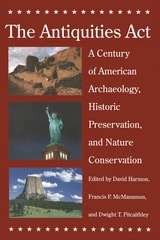
The Antiquities Act
A Century of American Archaeology, Historic Preservation, and Nature ConservationEdited by David Harmon, Frances P. McManamon, and Dwight T. Pitcaithley
University of Arizona Press, 2006
Enacted in 1906, the Antiquities Act is one of the most important pieces of conservation legislation in American history and has had a far-reaching influence on the preservation of our nation’s cultural and natural heritage. Thanks to the foresight of thirteen presidents, parks as diverse as Acadia, Grand Canyon, and Olympic National Park, along with historic and archaeological sites such as Thomas Edison’s Laboratory and the Gila Cliff Dwellings, have been preserved for posterity.
A century after its passage, this book presents a definitive assessment of the Antiquities Act and its legacy, addressing the importance and breadth of the act—as well as the controversy it has engendered. Authored by professionals intimately involved with safeguarding the nation’s archaeological, historic, and natural heritage, it describes the applications of the act and assesses its place in our country’s future. With a scope as far-reaching as the resources the act embraces, this book offers an unparalleled opportunity for today’s stewards to reflect on the act’s historic accomplishments, to remind fellow professionals and the general public of its continuing importance, and to look ahead to its continuing implementation in the twenty-first century.
The Antiquities Act invites all who love America’s natural and cultural treasures not only to learn about the act’s rich legacy but also to envision its next hundred years.
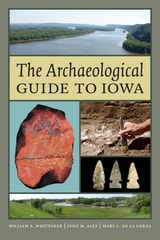
The Archaeological Guide to Iowa
William E. Whittaker, Lynn M. Alex, Mary De La Garza
University of Iowa Press, 2015
Fortunately, there are many sites open to the public where the remnants of the past are visible, either in their original location or in nearby museum exhibits. Few things are more inspiring than walking among the Malchow Mounds, packed so tightly it is hard to tell where one ends and the other begins. Strolling around downtown Des Moines is a lot more interesting when you are aware of the mounds, Indian villages, and the fort that once stood there. And, although you can’t visit the Wanampito site, you can see the splendid seventeenth-century artifacts excavated from it at Heery Woods State Park.
For people who want to experience Iowa’s archaeological heritage first hand, this one-of-a-kind guidebook shows the way to sixty-eight important sites. Many are open to visitors or can be seen from a public location; others, on private land or no longer visible on the landscape, live on through artifact displays. The guide also includes a few important sites that are not open to visitors because these places have unique stories to tell. Sites of every type, from every time period, and in every corner of the state are featured. Whether you have a few hours to indulge your curiosity or are planning a road trip across the state, this guide will take you to places where Iowa’s deep history comes to life.
The Assassination of Paris
Louis Chevalier
University of Chicago Press, 1994
He describes an almost continual parade of garish and grandiose plans: some, like the destruction of the glorious marketplace of les Halles for him the heart of the city, were realized; others, like the superhighway along the left bank of the Seine, were bitterly and successfully resisted.
Almost twenty years later, we find it difficult to remember the city as it was. And while Paris looks to many much the way it always has, behind the carefully sandblasted stone and restored shop fronts is a city radically transformed—emptied of centuries of popular life; of entire neighborhoods and the communities they housed engineered out to desolate suburban slums. The battle over the soul and spirit of the city continues.
This book is not entirely about the loss of physical places. Or a romance about a world that never really was. It is a cautionary tale filled with lessons for all who struggle to protect the human scale, the diversity, and the welcoming public life that are the threatened gifts of all great cities.
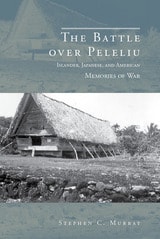
The Battle over Peleliu
Islander, Japanese, and American Memories of WarStephen C. Murray
University of Alabama Press, 2016
The expansionist Japanese empire annexed the inhabited archipelago of Palau in 1914. The airbase built on Peleliu Island became a target for attack by the United States in World War II. The Battle over Peleliu: Islander, Japanese, and American Memories of War offers an ethnographic study of how Palau and Peleliu were transformed by warring great powers and further explores how their conflict is remembered differently by the three peoples who shared that experience.
Author Stephen C. Murray uses oral histories from Peleliu’s elders to reconstruct the island’s prewar way of life, offering a fascinating explanation of the role of land and place in island culture. To Palauans, history is conceived geographically, not chronologically. Land and landmarks are both the substance of history and the mnemonic triggers that recall the past. Murray then offers a detailed account of the 1944 US invasion against entrenched Japanese forces on Peleliu, a seventy-four-day campaign that razed villages, farms, ancestral cemeteries, beaches, and forests, and with them, many of the key nodes of memory and identity.
Murray also explores how Islanders’ memories of the battle as shattering their way of life differ radically from the ways Japanese and Americans remember the engagement in their histories, memoirs, fiction, monuments, and tours of Peleliu. Determination to retrieve the remains of 11,000 Japanese soldiers from the caves of Peleliu has driven high-profile civic groups from across the Japanese political spectrum to the island. Contemporary Japan continues to debate pacifist, right-wing apologist, and other interpretations of its aggression in Asia and the Pacific. These disputes are exported to Peleliu, and subtly frame how Japanese commemoration portrays the battle in stone and ritual. Americans, victors in the battle, return to the archipelago in far fewer numbers. For them, the conflict remains controversial but is most often submerged into the narrative of “the good war.”
The Battle over Peleliu is a study of public memory, and the ways three peoples swept up in conflict struggle to create a common understanding of the tragedy they share.
The Chora of Metaponto 2
Archaeozoology at Pantanello and Five Other SitesStudies by Sándor Bökönyi and Erika Gál
University of Texas Press, 2010
From 1974 to the present, the Institute of Classical Archaeology at the University of Texas at Austin has carried out archaeological excavations in the ancient territory (chora) of Metaponto, now located in the modern province of Basilicata on the southern coast of Italy. This wide-ranging investigation, which covers a number of sites and a time period ranging from prehistory to the Roman Empire, has unearthed a wealth of new information about the ancient rural economy in southern Italy. These discoveries will be published in a multi-volume series titled The Chora of Metaponto. This volume on archaeozoology—the study of animal remains from archaeological sites—is the second in the series, following The Chora of Metaponto: The Necropoleis (1998).
Archaeozoology at Pantanello and Five Other Sites describes the animal remains found throughout Metaponto and discusses what they reveal about ancient practices of hunting and herding, domestication and importation of new breeds, people's attitudes toward animals, and what animal remains indicate about past environments. A chapter devoted to bird bones, which are a relatively rare find because of their fragility, provides high quality information on the environment and methods of fowling, as well as on the beliefs and symbolism associated with birds. The final chapter covers tools—some simple, others sophisticated and richly decorated—made from animal bones.
The Michigan Roadside Naturalist
J. Alan Holman and Margaret B. Holman
University of Michigan Press, 2003
Did you know . . . ?
- Michigan is seventeenth in oil production in the United States.
- The Great Lakes are said to be the only glacially produced structures that can be seen from the moon.
- Michigan was once part of a coral reef.
- The wood frog is one of the commonest true frogs of moist woodland floors in Michigan today and is able to freeze solid during the winter without harmful effects.
These and many more amazing facts await the curious traveler in The Michigan Roadside Naturalist, J. Alan and Margaret B. Holman's captivating guide to the natural treasures of Michigan. A perfect accompaniment to the classic Michigan Trees and The Forests of Michigan, this user-friendly guide offers a Who's Who of the geology, biology, and archaeology of the Great Lakes State, as well as highway adventures along the state's major routes.
The book begins with an educational yet accessible tour of important points in Michigan's natural and archaeological history, followed by seven road trips based on commonly traveled state routes, moving from south to north in the Lower Peninsula and east to west in the Upper Peninsula. Readers can proceed directly to the road trips or familiarize themselves with the state's treasure trove of fascinating features before embarking. Either way, an informative and fun odyssey awaits the passionate naturalist, amateur or otherwise.
J. Alan Holman is Curator Emeritus of Vertebrate Paleontology at the Michigan State University Museum and Emeritus Professor of Geology and Zoology at Michigan State University. Margaret B. Holman is Research Associate at Michigan State University Museum and Department of Anthropology, Michigan State University.
The Night I Freed John Brown
John Michael Cummings
West Virginia University Press, 2016
Winner of The Paterson Prize for Books for Young People
Recommended by USA Today for Black History Month as "a blend of history and suspense."
In this novel for young adults, Josh knows there is something about the tall Victorian House on the Harpers Ferry Hill, the one his father grew up in, that he can’t quite put his finger on. And his impossible father won’t give him any clues. He’s hiding something.
And then there’s the famous John Brown. The one who all the tourists come to hear about. The one whose statue looms over Josh’s house. Why does he seem to haunt Josh and his whole family? When the fancy Richmonds come to town and move right next door, their presence forces Josh to find the answers and stand up to the secrets of the House, to his father—and to John Brown, too.
The historic village of Harpers Ferry comes alive in this young boy’s brave search for answers and a place of his own in this brilliant first novel by John Michael Cummings.
The Road to Blair Mountain
Saving a Mine Wars Battlefield from King CoalCharles B. Keeney
West Virginia University Press, 2021
In 1921 Blair Mountain in southern West Virginia was the site of the country’s bloodiest armed insurrection since the Civil War, a battle pitting miners led by Frank Keeney against agents of the coal barons intent on quashing organized labor. It was the largest labor uprising in US history. Ninety years later, the site became embroiled in a second struggle, as activists came together to fight the coal industry, state government, and the military- industrial complex in a successful effort to save the battlefield—sometimes dubbed “labor’s Gettysburg”—from destruction by mountaintop removal mining.
The Road to Blair Mountain is the moving and sometimes harrowing story of Charles Keeney’s fight to save this irreplaceable landscape. Beginning in 2011, Keeney—a historian and great-grandson of Frank Keeney—led a nine-year legal battle to secure the site’s placement on the National Register of Historic Places. His book tells a David-and-Goliath tale worthy of its own place in West Virginia history. A success story for historic preservation and environmentalism, it serves as an example of how rural, grassroots organizations can defeat the fossil fuel industry.
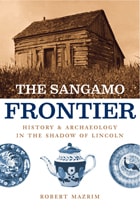
The Sangamo Frontier
History and Archaeology in the Shadow of LincolnRobert Mazrim
University of Chicago Press, 2006
When Abraham Lincoln moved to Illinois’ Sangamo Country in 1831, he found a pioneer community transforming from a cluster of log houses along an ancient trail to a community of new towns and state roads. But two of the towns vanished in a matter of years, and many of the activities and lifestyles that shaped them were almost entirely forgotten. In The Sangamo Frontier, archaeologist Robert Mazrim unearths the buried history of this early American community, breathing new life into a region that still rests in Lincoln’s shadow.
Named after a shallow river that cuts through the prairies of central Illinois, the Sangamo Country—an area that now encompasses the capital city of Springfield and present-day Sangamon County—was first colonized after the War of 1812. For the past fifteen years, Mazrim has conducted dozens of excavations there, digging up pieces of pioneer life, from hand-forged iron and locally made crockery to pewter spoons and Staffordshire teacups. And here, in beautifully illustrated stories of each dig, he shows how each of these small artifacts can teach us something about the lifestyles of people who lived on the frontier nearly two hundred years ago. Allowing us to see past the changed modern landscape and the clichés of pioneer history, Mazrim deftly uses his findings to portray the homes, farms, taverns, and pottery shops where Lincoln’s neighbors once lived and worked.
Drawing readers into the thrill of discovery, The Sangamo Frontier inaugurates a new kind of archaeological history that both enhances and challenges our written history. It imbues today’s landscape with an authentic ghostliness that will reawaken the curiosity of anyone interested in the forgotten people and places that helped shape our nation.
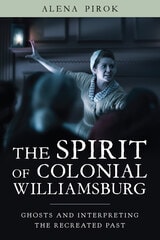
The Spirit of Colonial Williamsburg
Ghosts and Interpreting the Recreated PastAlena Pirok
University of Massachusetts Press, 2022
On any given night, hundreds of guests walk the darkened streets of Colonial Williamsburg looking for ghosts. Since the early 2000s, both the museum and private companies have facilitated these hunts, offering year-round ghost tours. Critics have called these excursions a cash grab, but in truth, ghosts and hauntings have long been at the center of the Colonial Williamsburg project.
The Spirit of Colonial Williamsburg examines how the long-dead past comes alive at this living-history museum. In the early twentieth century, local stories about the ghosts of former residents—among them Revolutionary War soldiers and nurses, tavern owners and prominent attorneys, and enslaved African Americans—helped to turn Williamsburg into a desirable site for historical restoration. But, for much of the twentieth century, the museum tried diligently to avoid any discussion of ghosts, considering them frivolous and lowbrow. Alena Pirok explores why historic sites have begun to embrace their spectral residents in recent decades, arguing that through them, patrons experience an emotional connection to place and a palpable understanding of the past through its people.

The Wages of History
Emotional Labor on Public History's Front LinesAmy M. Tyson
University of Massachusetts Press, 2013
Although many who are drawn to such work initially see it as a privilege—an opportunity to connect with the public in meaningful ways through the medium of history—the realities of the job almost inevitably alter that view. Not only do interpreters make considerable sacrifices, both emotional and financial, in order to pursue their work, but their sense of special status can lead them to avoid confronting troubling conditions on the job, at times fueling tensions in the workplace.
This case study also offers insights—many drawn from the author's seven years of working as an interpreter at Fort Snelling—into the way gendered roles and behaviors from the past play out among the workers, the importance of creative autonomy to historical interpreters, and the ways those on public history's front lines both resist and embrace the site's more difficult and painful histories relating to slavery and American Indian genocide.