Results by title
61 books match the query 'Histories' and 13 start with t
Teller Tales
HistoriesJo Carson
Ohio University Press, 2007
“All my work fits in my mouth,” Jo Carson says. “I write performance material no matter what else the pieces get called, and whether they are for my voice or other characters’ voices … they are first to be spoken aloud.” Following an oral tradition that has strong roots in her native Tennessee, the author of Teller Tales invites the reader to participate in events in a way that no conventional history book can.
Both stories in this book are set in East Tennessee in the mid-eighteenth century and share certain characters. The first narrative, “What Sweet Lips Can Do,” recounts the story of the Overmountain Men and the battle of King’s Mountain, a tide-turning battle in the American Revolution. “Men of Their Time” is an exploration of white-Cherokee relationships from early contact through the time of the Revolution.
Although not well known to the outside world, the stories recounted in Teller Tales are cornerstones in the heritage of the Appalachian region and of American history. In ways that will appeal to young and old alike, Jo Carson’s irreverent telling will broaden the audience and the understanding for the stories of native Americans, settlers, explorers, and revolutionaries of early America.

The Anthropology Art and Cultural Production
Histories, Themes, PerspectivesMaruska Svasemaruska Svasek
Pluto Press, 2007
The Bars Are Ours
Histories and Cultures of Gay Bars in America,1960 and AfterLucas Hilderbrand
Duke University Press, 2024
The Burden of Representation
Essays on Photographies and HistoriesJohn Tagg
University of Minnesota Press, 2021
A powerhouse in photographic theory—updated and with a new essay
Every day, photographic images are relied upon as documents, evidence, and records in courtrooms, hospitals, and police work. But how did such usages come to be established, and when? What agencies and institutions had the power to give them this status? And what are the consequences of photographic representation? Drawing on semiotics, cultural theory, and the work of Foucault and Althusser, John Tagg rejects the idea of photography as a record of reality and traces a history that has profound implications not only for the theory of photography but also for understanding the role of new means of representation in modern social regulation. Now with a new essay situating this volume in the changed horizon of cultural politics, The Burden of Representation argues for a rigorous analysis of the meaning, status, and effects of photographs, rooted in a historical grasp of the growth of the modern state.

The Global South
Histories, Politics, MapsPamela Gupta, Christopher Lee, Marissa Moorman, and Sandhya Shukla, special issue editors
Duke University Press, 2018
Contributors: Afro-Asian Networks Research Collective, Phineas Bbaala, Emily Callaci, Aharon de Grassi, Pamila Gupta, Mingwei Huang, Sean Jacobs, Maurice Jr. M. LaBelle, Christopher J. Lee, Roseann Liu, Marissa J. Moorman, Michelle Moyd, Ronald C. Po, Savannah Shange, Sandhya Shukla, Pahole Sookkasikon, Quito Swan, Sarah Van Beurden, Sarah E. Vaughn, Jelmer Vos, Keith B. Wagner
The Hidden 1970s
Histories of RadicalismBerger, Dan
Rutgers University Press, 2010
This powerful collection is a compelling assessment of left-wing social movements in a period many have described as dominated by conservatism or confusion. Scholars examine critical and largely buried legacies of the 1970s. The decade of Nixon's fall and Reagan's rise also saw widespread indigenous militancy, prisoner uprisings, transnational campaigns for self-determination, pacifism, and queer theories of play as political action. Contributors focus on diverse topics, including the internationalization of Black Power and Native sovereignty, organizing for Puerto Rican independence among Latinos and whites, and women's self-defense. Essays and ideas trace the roots of struggles from the 1960s through the 1970s, providing fascinating insight into the myriad ways that radical social movements shaped American political culture in the 1970s and the many ways they continue to do so today.
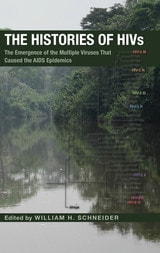
The Histories of HIVs
The Emergence of the Multiple Viruses That Caused the AIDS EpidemicsWilliam H. Schneider
Ohio University Press, 2021
This new collection of essays on HIV viruses spans disciplines to topple popular narratives about the origins of the AIDS pandemic and the impact of the disease on public health policy.
With a death toll in the tens of millions, the AIDS pandemic was one of the worst medical disasters of the past century. The disease was identified in 1981, at the height of miraculous postwar medical achievements, including effective antibiotics, breakthrough advances in heart surgery and transplantations, and cheap, safe vaccines—smallpox had been eradicated just a few years earlier. Arriving as they did during this era of confidence in modern medicine, the HIV epidemics shook the public’s faith in health science. Despite subsequent success in identifying, testing, and treating AIDS, the emergence of epidemics and outbreaks of Ebola, Zika, and the novel coronaviruses (SARS and COVID-19) are stark reminders that such confidence in modern medicine is not likely to be restored until the emergence of these viruses is better understood.
This collection combines the work of major social science and humanities scholars with that of virologists and epidemiologists to provide a broader understanding of the historical, social, and cultural circumstances that produced the pandemic. The authors argue that the emergence of the HIV viruses and their epidemic spread were not the result of a random mutation but rather broader new influences whose impact depended upon a combination of specific circumstances at different places and times. The viruses emerged and were transmitted according to population movement and urbanization, changes in sexual relations, new medical procedures, and war. In this way, the AIDS pandemic was not a chance natural occurrence, but a human-made disaster.
Essays by: Ernest M. Drucker, Tamara Giles-Vernick, Ch. Didier Gondola, Guillaume Lachenal, Amandine Lauro, Preston A. Marx, Stephanie Rupp, François Simon, Jorge Varanda
The Nursing Clio Reader
Histories of Sex, Reproduction, and JusticeJacqueline D. The Nursing Clio Editorial Collective
Rutgers University Press, 2025
The Nursing Clio Reader answers that call, bringing together essays that examine reproductive health through historical research and personal experience. Featuring both new and classic pieces from the Nursing Clio blog, leading historians of reproductive health provide insights that connect past struggles with today’s ongoing battles over bodies, reproductive rights, and health care. This collection offers intimate, urgent scholarship that speaks to the present moment.
A powerful resource for classrooms and individual readers alike, The Nursing Clio Reader invites reflection on how the past informs current debates, urging us to engage deeply with the history of reproductive justice in a time of unprecedented change, underscoring that indeed "the personal is historical."
Theatre Things
Material Theories and HistoriesEdited by Andrew Friedman and Eero Laine
University of Michigan Press, 2026
Theatre Things: Material Theories and Histories considers key theatrical objects through a comparative approach, examining the uses and histories of different parts of the theatre throughout time and across culture and geography. The ten “theatre things” at the heart of the book are: entrances, tickets, programs, concessions, seats, lights, curtains, stages, trapdoors, and exits. For every object, three different scholars offer short chapters that examine it from different angles across eras, places, and performance traditions to result in a set of diverse and provocative accounts of the many ways objects have functioned throughout theatre history. Written in an accessible style, the book draws on real examples from theatre history around the world to reveal that even the smallest details—where you sit, how the lights shift, what the program says—carry meaning. Whether you’re a regular theatregoer or a curious fan, Theatre Things offers a fresh way to look at the spaces and objects that shape every night at the theatre—and makes them feel newly interesting long after the curtain call.
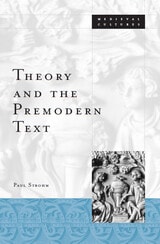
Theory And The Premodern Text
Paul Strohm
University of Minnesota Press, 2000
A major reconsideration of relations between new theories and old texts.
Medieval Studies/Literary Theory
A major reconsideration of relations between new theories and old texts. The work of Paul Strohm allies the most distinguished traditions of medieval study with the most challenging and innovative of theoretical approaches. These features, working together to revise and expand our understanding of both medieval texts and contemporary critical practice, are apparent in full and compelling force in this collection of essays, most now in print for the first time. In a range of theoretical engagements with late medieval texts, dealing with social practice, time, and narrative, this volume proposes a "practical" relation between the text and the theory that illuminates it.Insisting on the imaginative multiplicity of the text, Strohm finds in theory an augmentation of interpretive possibilities-an augmentation that sometimes requires respectful disagreement with what a work says-or seems to want known-about itself. He thus defines theory as "any standpoint from which we might challenge a text’s self-understanding." Coupled with this strategic disrespect is a new and amplified form of respect-for the text as a meaning-making system, for its unruly power and its unpredictable effects in the world.In this spirit, Strohm offers new and illustrative readings of Hoccleve’s "Male Regle" and Regiment of Princes, Ricardian coronation documents, Chaucer’s "Cook’s Tale," Capgrave’s chronicle, the Gesta Henrici Quinti, records of the king’s bench, Malory’s "Knight of the Cart," and other later medieval texts. Throughout, Strohm traverses categories of "literary" and "non-literary" in the service of a more comprehensive understanding of texts and the resourcefulness with which they accomplish their social work.Medieval Cultures Series, volume 26Translation Inquiries: University of Minnesota Press
These Valiant Dead
Past Shakespeare'S HistoriesRobert C. Jones
University of Iowa Press, 1991
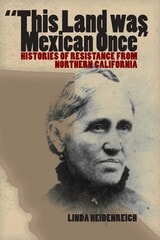
This Land Was Mexican Once
Histories of Resistance from Northern CaliforniaBy Linda Heidenreich
University of Texas Press, 2007
The territory of Napa County, California, contains more than grapevines. The deepest roots belong to Wappo-speaking peoples, a group whose history has since been buried by the stories of Spanish colonizers, Californios (today's Latinos), African Americans, Chinese immigrants, and Euro Americans. Napa's history clearly is one of co-existence; yet, its schoolbooks tell a linear story that climaxes with the arrival of Euro Americans. In "This Land was Mexican Once," Linda Heidenreich excavates Napa's subaltern voices and histories to tell a complex, textured local history with important implications for the larger American West, as well.
Heidenreich is part of a new generation of scholars who are challenging not only the old, Euro-American depiction of California, but also the linear method of historical storytelling—a method that inevitably favors the last man writing. She first maps the overlapping histories that comprise Napa's past, then examines how the current version came to dominate—or even erase—earlier events. So while history, in Heidenreich's words, may be "the stuff of nation-building," it can also be "the stuff of resistance." Chapters are interspersed with "source breaks"—raw primary sources that speak for themselves and interrupt the linear, Euro-American telling of Napa's history. Such an inclusive approach inherently acknowledges the connections Napa's peoples have to the rest of the region, for the linear history that marginalizes minorities is not unique to Napa. Latinos, for instance, have populated the American West for centuries, and are still shaping its future. In the end, "This Land was Mexican Once" is more than the story of Napa, it is a multidimensional model for reflecting a multicultural past.
Time Binds
Queer Temporalities, Queer HistoriesElizabeth Freeman
Duke University Press, 2010