Results by title
2646 books match the query 'History & Criticism' and 549 start with t
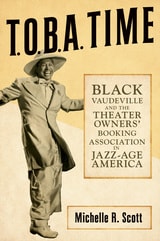
T.O.B.A. Time
Black Vaudeville and the Theater Owners’ Booking Association in Jazz-Age AmericaMichelle R. Scott
University of Illinois Press, 2023
Michelle R. Scott’s institutional history details T.O.B.A.’s origins and practices while telling the little-known stories of the managers, producers, performers, and audience members involved in the circuit. Looking at the organization over its eleven-year existence (1920–1931), Scott places T.O.B.A. against the backdrop of what entrepreneurship and business development meant in black America at the time. Scott also highlights how intellectuals debated the social, economic, and political significance of black entertainment from the early 1900s through T.O.B.A.’s decline during the Great Depression.
Clear-eyed and comprehensive, T.O.B.A. Time is a fascinating account of black entertainment and black business during a formative era.
TV Family Values
Gender, Domestic Labor, and 1980s SitcomsAlice Leppert
Rutgers University Press, 2019
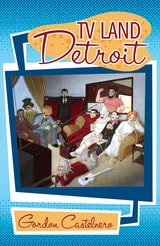
TV Land--Detroit
Gordon Castelnero
University of Michigan Press, 2006
Long before cable, prepackaged syndication, infomercials, do-it-yourselfers, and reality shows cluttered the television dial, there was a brand of entertainment that has today nearly vanished from the airwaves: local TV. And with its colorful and quirky cast of characters, Detroit TV arguably offered some of the best of the best of local programming anywhere in the nation-a smorgasbord of exuberant, one-of-a-kind television shows.
Based on actual interviews with the people who made Detroit TV, Gordon Castelnero's TV Land-Detroit awakens the emotional attachment and nostalgia our community has for these shows, bringing the beloved characters and memorable programs back to life.
From the glamorous Rita Bell to the insanity of the Ghoul, the zany Jingles in Boofland to the opinionated and often confrontational Lou Gordon and the gruff-voiced and somnolent George Pierrot, Castelnero reacquaints us with the talent and behind-the-scenes people, of the creative spirit in Detroit, and the intimacy they shared with the community both on and off the air.
Gordon Castelnero was a producer at WNIC radio for four years. He produced the acclaimed documentaries for WDIV and WTVS, Michigan, It Started Here! Michigan and the American Dream, and Titanic: The Final Chapter. He currently lives in Livonia, Michigan, and works at Technicolor in DVD and game media distribution. He can be contacted by e-mail at tvlanddetroit@yahoo.com
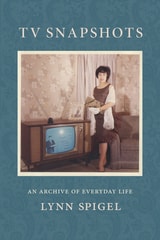
TV Snapshots
An Archive of Everyday LifeLynn Spigel
Duke University Press, 2022
TV Socialism
Anikó Imre
Duke University Press, 2016
TV by Design
Modern Art and the Rise of Network TelevisionLynn Spigel
University of Chicago Press, 2008
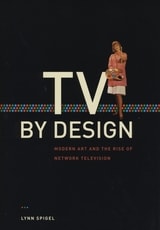
Whereas most histories of television focus on the way older forms of entertainment were recycled for the new medium, Lynn Spigel shows how TV was instrumental in introducing the public to the latest trends in art and design. Abstract expressionism, pop art, art cinema, modern architecture, and cutting-edge graphic design were all mined for staging techniques, scenic designs, and an ever-growing number of commercials. As a result, TV helped fuel the public craze for trendy modern products, such as tailfin cars and boomerang coffee tables, that was vital to the burgeoning postwar economy. And along with influencing the look of television, many artists—including Eero Saarinen, Ben Shahn, Saul Bass, William Golden, and Richard Avedon—also participated in its creation as the networks put them to work designing everything from their corporate headquarters to their company cufflinks.

Tableaux Vivants of the Russian Empire
Yelena Severina
University of Wisconsin Press, 2027
The practice of tableaux vivants, or “living pictures,” involves arranging people and objects into a motionless scene, often re-creating a work of art. After emerging in France, this dramatic art form quickly burst national boundaries, becoming a popular pastime. It took strong root in Russia toward the end of the eighteenth century, traversing the social and political scene, from its debut as an aristocratic parlor game to common street performance; from the inner circles of the tsarist court to agitprop theater and cinema; and from political meetings to public schools and city parades.
In this book, the first English-language history of tableaux vivants in Russia, Yelena Severina traces the development of this art form from the late eighteenth into the early twentieth century. She links its introduction, rise, influence on later entertainments like photography and film, and ultimate decline to concomitant changes in Russian society, politics, and technology, arguing that while this art form may now be nearly forgotten, it should be remembered and studied for its critical role in Imperial Russian culture.
Tabloid Culture
Trash Taste, Popular Power, and the Transformation of American TelevisionKevin Glynn
Duke University Press, 2000
Glynn begins by situating these media shifts within the context of Reaganism, which gave rise to distinctive ideological currents in society and led the socially and economically disenfranchised to access new forms of information via the exploding television industry. He then tackles specific daytime talk shows and tabloid newscasts such as Jerry Springer and A Current Affair, reality-TV programs such as Cops and America’s Most Wanted, and two different supermarket tabloids’ coverage of the O.J. Simpson case. Tabloid Culture is the first book to treat these diverse yet related media forms and events in tandem. Rejecting the elitist dismissal of sensationalist media, Glynn instead traces the cultural currents and countercurrents running through their forms and products. Locating both reactionary and oppositional meanings in these texts, he demonstrates how these particular media genres draw on and contribute to important cultural struggles over the meanings of race, sexuality, gender, class, “normality,” “truth,” and “reality.” The study ends by discussing how the growing use of the Internet provides an entirely new realm in which such material can circulate, distort, inform, and flourish.
This innovative and provocative study of contemporary mainstream media culture in the United States will be valuable to those interested in both print and television media, the cultural-political influence of the Reagan era, and American culture in general.
Taking It to the Bridge
Music as PerformanceNicholas Cook and Richard Pettengill
University of Michigan Press, 2013
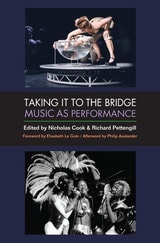
The overriding aim of this groundbreaking volume—whether the subject is vocal ornamentation in 19th-century opera or the collective improvisation of the Grateful Dead—is to give new recognition to performance as the core of musical culture. The collection brings together renowned scholars from performance studies and musicology (including Philip Auslander, David Borgo, Daphne Brooks, Nicholas Cook, Maria Delgado, Susan Fast, Dana Gooley, Philip Gossett, Jason King, Elisabeth Le Guin, Aida Mbowa, Ingrid Monson, Roger Moseley, Richard Pettengill, Joseph Roach, and Margaret Savilonis), with the intent of sparking a productive new dialogue on music as performance. Taking It to the Bridge is on the one hand a series of in-depth studies of a broad range of performance artists and genres, and on the other a contribution to ongoing methodological developments within the study of music, with the goal of bridging the approaches of musicology and performance studies, to enable a close, interpretive listening that combines the best of each. At the same time, by juxtaposing musical genres that range from pop and soul to the classics, and from world music to games and web-mediated performances, Taking It to the Bridge provides an inventory of contrasted approaches to the study of performance and contributes to its developing centrality within music studies.
Taking Liberties
Gender, Transgressive Patriotism, and Polish Drama, 1786–1989Halina Filipowicz
Ohio University Press, 2014
As narrow, nationalist views of patriotic allegiance have become widespread and are routinely invoked to justify everything from flag-waving triumphalism to xenophobic bigotry, the concept of a nonnationalist patriotism has vanished from public conversation. Taking Liberties is a study of what may be called patriotism without borders: a nonnational form of loyalty compatible with the universal principles and practices of democracy and human rights, respectful of ethnic and cultural diversity, and, overall, open-minded and inclusive.
Moving beyond a traditional study of Polish dramatic literature, Halina Filipowicz turns to the plays themselves and to archival materials, ranging from parliamentary speeches to polemical pamphlets and verse broadsides, to explore the cultural phenomenon of transgressive patriotism and its implications for society in the twenty-first century.
In addition to recovering lost or forgotten materials, the author builds an innovative conceptual and methodological framework to make sense of those materials. The result is not only a significant contribution to the debate over the meaning and practice of patriotism, but a masterful intellectual history.
Tales Out of School
Gender, Longing, and the Teacher in Fiction and FilmJo Keroes
Southern Illinois University Press, 1999
Jo Keroes's scope is wide: she examines the teacher as represented in fiction and film in works ranging from the twelfth-century letters of Abelard and Heloise to contemporary films such as Dangerous Minds and Educating Rita. And from the twelfth through the twentieth century, Keroes shows, the teaching encounter is essentially erotic.
Tracing the roots of eros from cultural as well as psychological perspectives, Keroes defines erotic in terms broader than the merely sexual. She analyzes ways in which teachers serve as convenient figures on whom to map conflicts about gender, power, and desire. To show how portrayals of men and women differ, she examines pairs of texts, using a film or a novel with a woman protagonist (Up the Down Staircase, for example) as counterpoint to one featuring a male teacher (Blackboard Jungle) or The Prime of Miss Jean Brodie balanced against Dead Poets Society.
The portrayals of teachers, like all images a culture presents of itself, reveal much about our private and social selves. Keroes points out authentic accounts of authoritative women teachers who are admired and respected by colleagues and students alike. Real teachers differ from the stereotypes we see in fiction and film, however. Male teachers are often portrayed as heroes in film and fallibly human in fiction, whereas women in either genre are likely to be monstrous or muddled and are virtually never women of color. Among other things, Keroes demonstrates, the tension between reality and representation reveals society's ambivalence about power in the hands of women.
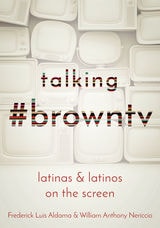
Talking #browntv
Latinas and Latinos on the ScreenFrederick Luis Aldama and William Anthony Nericcio
The Ohio State University Press, 2019
From the subversive critiques embedded in well-loved children’s characters like Speedy Gonzalez to the perpetuation of racial stereotypes in modern-era pornography, from Eva Longoria as ethnic mannequin to J-Lo flipping the sexy Latina music video on its head in “I Luh Ya Papi,” and with more than 150 full-color images, Aldama and Nericcio seek to expose the underlying causes as to why Latina/os constitute only 2 percent of mainstream cultural production when they’re the majority minority in the US. In a moment when anti-Mexican and anti-immigrant rhetoric oozes from TV sets and medias platform, Talking #browntv emerges as a bold antidote, an eloquent rejoinder, and a thoughtful meditation on Latina/os on the American screen and in America today.
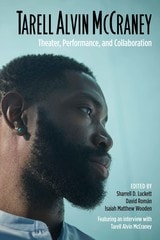
Tarell Alvin McCraney
Theater, Performance, and CollaborationEdited by Sharrell D. Luckett, David Román, and Isaiah Matthew Wooden
Northwestern University Press, 2020
Contributors consider McCraney’s innovations as a playwright, adapter, director, performer, teacher, and collaborator, bringing fresh and diverse perspectives to their observations and analyses. In so doing, they expand and enrich the conversations on his much-celebrated and deeply resonant body of work, which includes the plays Choir Boy, Head of Passes, Ms. Blakk for President, The Breach, Wig Out!, and the critically acclaimed trilogy The Brother/Sister Plays: In the Red and Brown Water, The Brothers Size, and Marcus; Or the Secret of Sweet, as well as the Oscar Award–winning film Moonlight, which was based on his play In Moonlight Black Boys Look Blue.

Teachers and Teaching on Stage and on Screen
Dramatic DepictionsEdited by Diane Conrad and Monica Prendergast
Intellect Books, 2019

Tear Down the Walls
White Radicalism and Black Power in 1960s RockPatrick Burke
University of Chicago Press, 2021
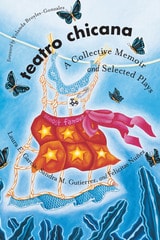
Teatro Chicana
A Collective Memoir and Selected PlaysEdited by Laura E. Garcia, Sandra M. Gutierrez, and Felicitas Nuñez
University of Texas Press, 2008
Winner, Susan Koppelman Award, Best Edited Volume in Women's Studies in Popular and American Culture, 2008
The 1970s and 1980s saw the awakening of social awareness and political activism in Mexican-American communities. In San Diego, a group of Chicana women participated in a political theatre group whose plays addressed social, gender, and political issues of the working class and the Chicano Movement. In this collective memoir, seventeen women who were a part of Teatro de las Chicanas (later known as Teatro Laboral and Teatro Raíces) come together to share why they joined the theatre and how it transformed their lives. Teatro Chicana tells the story of this troupe through chapters featuring the history and present-day story of each of the main actors and writers, as well as excerpts from the group's materials and seven of their original short scripts.
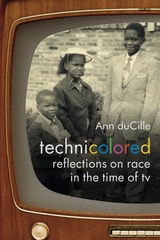
Technicolored
Reflections on Race in the Time of TVAnn duCille
Duke University Press, 2018
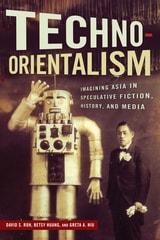
Techno-Orientalism
Imagining Asia in Speculative Fiction, History, and MediaRoh, David S.
Rutgers University Press, 2015
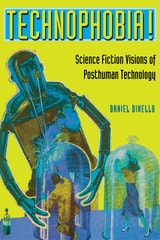
Technophobia!
Science Fiction Visions of Posthuman TechnologyBy Daniel Dinello
University of Texas Press, 2006
Techno-heaven or techno-hell? If you believe many scientists working in the emerging fields of twenty-first-century technology, the future is blissfully bright. Initially, human bodies will be perfected through genetic manipulation and the fusion of human and machine; later, human beings will completely shed the shackles of pain, disease, and even death, as human minds are downloaded into death-free robots whereby they can live forever in a heavenly "posthuman" existence. In this techno-utopian future, humanity will be saved by the godlike power of technology.
If you believe the authors of science fiction, however, posthuman evolution marks the beginning of the end of human freedom, values, and identity. Our dark future will be dominated by mad scientists, rampaging robots, killer clones, and uncontrollable viruses. In this timely new book, Daniel Dinello examines "the dramatic conflict between the techno-utopia promised by real-world scientists and the techno-dystopia predicted by science fiction."
Organized into chapters devoted to robotics, bionics, artificial intelligence, virtual reality, biotechnology, nanotechnology, and other significant scientific advancements, this book summarizes the current state of each technology, while presenting corresponding reactions in science fiction. Dinello draws on a rich range of material, including films, television, books, and computer games, and argues that science fiction functions as a valuable corrective to technological domination, countering techno-hype and reflecting the "weaponized, religiously rationalized, profit-fueled" motives of such science. By imaging a disastrous future of posthuman techno-totalitarianism, science fiction encourages us to construct ways to contain new technology, and asks its audience perhaps the most important question of the twenty-first century: is technology out of control?
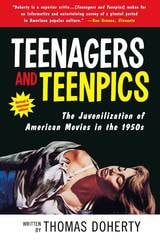
Teenagers And Teenpics
Juvenilization Of American MoviesThomas Doherty
Temple University Press, 2002
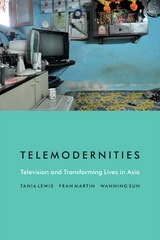
Telemodernities
Television and Transforming Lives in AsiaTania Lewis, Fran Martin, and Wanning Sun
Duke University Press, 2016
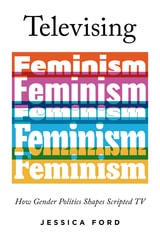
Televising Feminism
How Gender Politics Shapes Scripted TVJessica Ford
University of Illinois Press, 2026
Jessica Ford examines popular media’s tendency to apply the feminist label to all women-centric TV. Focusing on the post-Sex and the City era that began in 2005, Ford explores how women-centric scripted TV absorbed the feminisms of its past. It now televises these feminisms in divergent, diffuse, and distinct ways that find expression as a sensibility rather than a cogent politic, genre, or category. Ford’s analysis examines shows identified as feminist alongside programs that negotiate ideas, offer critiques, generate feelings and sentiments, and deploy aesthetics in both low-key and visible political ways.
Innovative and insightful, Televising Feminism looks at the construction and expression of the many feminisms at work on American scripted television.
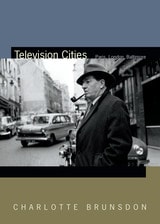
Television Cities
Paris, London, BaltimoreCharlotte Brunsdon
Duke University Press, 2018
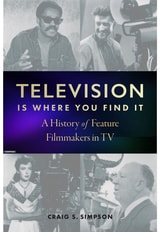
Television Is Where You Find It
A History of Feature Filmmakers in TVCraig S. Simpson
Rutgers University Press, 0
Television Is Where You Find It is a revelatory journey into the overlooked world of feature filmmakers who brought their cinematic vision to the small screen between 1955 and 1990—long before directing for television became trendy in the age of “Prestige TV.” With ten compelling case studies—from legends like Alfred Hitchcock, David Lynch, and Orson Welles to trailblazers like Ida Lupino, Melvin Van Peebles, and Martin Scorsese—author Craig S. Simpson uncovers how these directors reshaped the language of television with style and imagination.
Far from simply dabbling in a “lesser” medium, these filmmakers pushed the boundaries of what TV could do, crafting bold, innovative work that challenges the old notion that television belongs solely to writers and producers. In this fresh, critical study, Television Is Where You Find It makes a case for rediscovering and reevaluating a rich chapter of television history—one in which cinematic artistry quietly flourished, often hidden in plain sight.
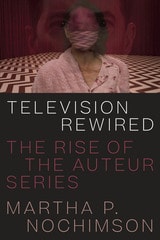
Television Rewired
The Rise of the Auteur SeriesBy Martha P. Nochimson
University of Texas Press, 2019
In 1990, American television experienced a seismic shift when Twin Peaks premiered, eschewing formulaic plots and clear lines between heroes and villains. This game-changing series inspired a generation of show creators to experiment artistically, transforming the small screen in ways that endure to this day.
Focusing on six shows (Twin Peaks, with a critical analysis of both the original series and the 2017 return; The Wire; Treme; The Sopranos; Mad Men; and Girls), Television Rewired explores what made these programs so extraordinary. As their writers and producers fought against canned plots and moral simplicity, they participated in the evolution of the exhilarating new auteur television while underscoring the fact that art and entertainment don't have to be mutually exclusive. Nochimson also makes provocative distinctions between true auteur television and shows that were inspired by the freedom of the auteur series but nonetheless remained entrenched within the parameters of formula. Providing opportunities for vigorous discussion, Television Rewired will stimulate debates about which of the new television series since 1990 constitute “art” and which are tweaked “business-driven storytelling.”
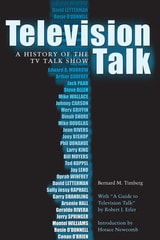
Television Talk
A History of the TV Talk ShowBy Bernard M. Timberg
University of Texas Press, 2002
A CHOICE Outstanding Academic Book
Flip through the channels at any hour of the day or night, and a television talk show is almost certainly on. Whether it offers late-night entertainment with David Letterman, share-your-pain empathy with Oprah Winfrey, trash talk with Jerry Springer, or intellectual give-and-take with Bill Moyers, the talk show is one of television's most popular and enduring formats, with a history as old as the medium itself.
Bernard Timberg here offers a comprehensive history of the first fifty years of television talk, replete with memorable moments from a wide range of classic talk shows, as well as many of today's most popular programs. Dividing the history into five eras, he shows how the evolution of the television talk show is connected to both broad patterns in American culture and the economic, regulatory, technological, and social history of the broadcasting industry. Robert Erler's "A Guide to Television Talk" complements the text with an extensive "who's who" listing of important people and programs in the history of television talk.
Television after TV
Essays on a Medium in TransitionLynn Spigel and Jan Olsson, eds.
Duke University Press, 2004
With historical, critical, and speculative essays by some of the leading television and media scholars, Television after TV examines both commercial and public service traditions and evaluates their dual (and some say merging) fates in our global, digital culture of convergence. The essays explore a broad range of topics, including contemporary programming and advertising strategies, the use of television and the Internet among diasporic and minority populations, the innovations of new technologies like TiVo, the rise of program forms from reality tv to lifestyle programs, television’s changing role in public places and at home, the Internet’s use as a means of social activism, and television’s role in education and the arts. In dialogue with previous media theorists and historians, the contributors collectively rethink the goals of media scholarship, pointing toward new ways of accounting for television’s past, present, and future.
Contributors. William Boddy, Charlotte Brunsdon, John T. Caldwell, Michael Curtin, Julie D’Acci, Anna Everett, Jostein Gripsrud, John Hartley, Anna McCarthy, David Morley, Jan Olsson, Priscilla Peña Ovalle, Lisa Parks, Jeffrey Sconce, Lynn Spigel, William Uricchio
Television and Criticism
Edited by Solange Davin and Rhona Jackson
Intellect Books, 2008
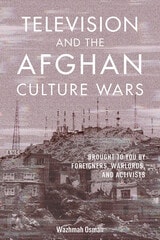
Television and the Afghan Culture Wars
Brought to You by Foreigners, Warlords, and ActivistsWazhmah Osman
University of Illinois Press, 2020
Fieldwork from across Afghanistan allowed Osman to record the voices of many Afghan media producers and people. Afghans offer their own seldom-heard views on the country's cultural progress and belief systems, their understandings of themselves, and the role of international interventions. Osman analyzes the impact of transnational media and foreign funding while keeping the focus on local cultural contestations, productions, and social movements. As a result, she redirects the global dialogue about Afghanistan to Afghans and challenges top-down narratives of humanitarian development.
Television as Digital Media
James Bennett and Niki Strange, eds.
Duke University Press, 2011
Introducing the collection, James Bennett explains how television as digital media is a non-site-specific, hybrid cultural and technological form that spreads across platforms such as mobile phones, games consoles, iPods, and online video services, including YouTube, Hulu and the BBC’s iPlayer. Television as digital media threatens to upset assumptions about television as a mass medium that has helped define the social collective experience, the organization of everyday life, and forms of sociality. As often as we are promised the convenience of the television experience “anytime, anywhere,” we are invited to participate in communities, share television moments, and watch events live. The essays in this collection demonstrate the historical, production, aesthetic, and audience changes and continuities that underpin the emerging meaning of television as digital media.
Contributors. James Bennett, William Boddy, Jean Burgess, John Caldwell, Daniel Chamberlain, Max Dawson, Jason Jacobs, Karen Lury, Roberta Pearson, Jeanette Steemers, Niki Strange, Julian Thomas, Graeme Turner
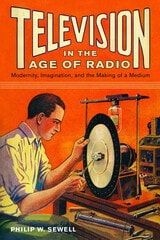
Television in the Age of Radio
Modernity, Imagination, and the Making of a MediumSewell, Philip W
Rutgers University Press, 2014
Television existed for a long time before it became commonplace in American homes. Even as cars, jazz, film, and radio heralded the modern age, television haunted the modern imagination. During the 1920s and 1930s, U.S. television was a topic of conversation and speculation. Was it technically feasible? Could it be commercially viable? What would it look like? How might it serve the public interest? And what was its place in the modern future? These questions were not just asked by the American public, but also posed by the people intimately involved in television’s creation. Their answers may have been self-serving, but they were also statements of aspiration. Idealistic imaginations of the medium and its impact on social relations became a de facto plan for moving beyond film and radio into a new era.
In Television in the Age of Radio, Philip W. Sewell offers a unique account of how television came to be—not just from technical innovations or institutional struggles, but from cultural concerns that were central to the rise of industrial modernity. This book provides sustained investigations of the values of early television amateurs and enthusiasts, the fervors and worries about competing technologies, and the ambitions for programming that together helped mold the medium.
Sewell presents a major revision of the history of television, telling us about the nature of new media and how hopes for the future pull together diverse perspectives that shape technologies, industries, and audiences.

Television, History, and American Culture
Feminist Critical EssaysMary Beth Haralovich and Lauren Rabinovitz, eds.
Duke University Press, 1999
The essays collected here focus on women in front of, behind, and on the TV screen, as producers, viewers, and characters. Using feminist and historical criticism, the contributors investigate how television has shaped our understanding of gender, power, race, ethnicity, and sexuality from the 1950s to the present. The topics range from the role that women broadcasters played in radio and early television to the attempts of Desilu Productions to present acceptable images of Hispanic identity, from the impact of TV talk shows on public discourse and the politics of offering viewers positive images of fat women to the negotiation of civil rights, feminism, and abortion rights on news programs and shows such as I Spy and Peyton Place.
Innovative and accessible, this book will appeal to those interested in women’s studies, American studies, and popular culture and the critical study of television.
Contributors. Julie D’Acci, Mary Desjardins, Jane Feuer, Mary Beth Haralovich, Michele Hilmes, Moya Luckett, Lauren Rabinovitz, Jane M. Shattuc, Mark Williams
Television, Nation, and Culture in Indonesia
Ris Sea#104Philip Kitley
Ohio University Press, 2000
Televisuality
Style, Crisis, and Authority in American TelevisionJohn T Caldwell
Rutgers University Press, 2020
Ten Thousand Nights
Highlights from 50 Years of Theatre-GoingMarvin Carlson
University of Michigan Press, 2017
Terence Davies
Michael Koresky
University of Illinois Press, 2014
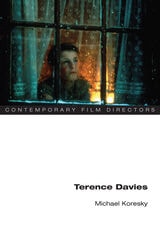
Film critic Michael Koresky explores the unique emotional tenor of Davies's work by focusing on four paradoxes within the director's oeuvre: films that are autobiographical yet fictional; melancholy yet elating; conservative in tone and theme yet radically constructed; and obsessed with the passing of time yet frozen in time and space. Through these contradictions, the films' intricate designs reveal a cumulative, deeply personal meditation on the self. Koresky also analyzes how Davies's ongoing negotiation of--and struggle with--questions of identity related to his past and his homosexuality imbue the details and jarring juxtapositions in his films with a queer sensibility, which is too often overlooked due to the complexity of Davies's work and his unfashionable ambivalence toward his own sexual orientation.
Terrence Malick
Lloyd Michaels
University of Illinois Press, 2008
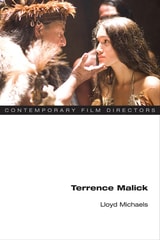
For a director who has made a limited number of feature films over four-plus decades, Terrence Malick sustains an extraordinary reputation as one of America’s most original and independent directors. Lloyd Michaels analyzes Malick’s first four features in depth, emphasizing both repetitive formal techniques such as voiceover and long lens cinematography as well as recurrent themes drawn from the director’s academic training in modern philosophy. Like Heidegger, Malick seems to regard the human experience of nature as a mystery revealed primarily through moods rather than cognition. Like Wittgenstein, he is less concerned with apprehending the world than with simply acknowledging its beingness
Michaels's critical approach explores Malick’s synthesis of the romance of mythic American experience and the aesthetics of European art film. He pays particular attention to paradigmatic moments: the billboard sequence in Badlands, the opening credits for Days of Heaven, the philosophical colloquies between Witt and Welsh in The Thin Red Line, and the epilogue of The New World. Michaels also sheds light on the two dark decades separating Days of Heaven from The Thin Red Line, when the director mostly lived as an expatriate in Paris. Two 1975 interviews with the famously elusive Malick round out the volume.
That Old-Time Rock & Roll
A Chronicle of an Era, 1954-63Richard Aquila
University of Illinois Press, 1989
Elvis Presley and Bill Haley. Sam Cooke and the Shirelles. The Crows and the Chords. American Bandstand and Motown. From its first rumblings in the outland alphabet soup of R&B and C&W, rock & roll music promised to change the world--and did it.
Combining social history with a treasure trove of trivia, Richard Aquila unleashes the excitement of rock's first decade and shows how the music reflected American life from the mid-1950s through the dawn of Beatlemania. His year-by-year timelines and a photo essay place the music in historical perspective by linking artists and their hits to the news stories, movies, TV shows, fads, and lifestyles. In addition, he provides a concise biographical dictionary of the performers who made the charts between 1954 and 1963, along with the label and chart position of each of their hit songs.
That's the Way It Is
A History of Television News in AmericaCharles L. Ponce de Leon
University of Chicago Press, 2015
The critics may be right. But, as Charles L. Ponce de Leon explains in That’s the Way It Is, TV news has always walked a fine line between hard news and fluff. The familiar story of decline fails to acknowledge real changes in the media and Americans’ news-consuming habits, while also harking back to a golden age that, on closer examination, is revealed to be not so golden after all. Ponce de Leon traces the entire history of televised news, from the household names of the late 1940s and early ’50s, like Eric Sevareid, Edward R. Murrow, and Walter Cronkite, through the rise of cable, the political power of Fox News, and the satirical punch of Colbert and Stewart. He shows us an industry forever in transition, where newsmagazines and celebrity profiles vie with political news and serious investigations. The need for ratings success—and the lighter, human interest stories that can help bring it—Ponce de Leon makes clear, has always sat uneasily alongside a real desire to report hard news.
Highlighting the contradictions and paradoxes at the heart of TV news, and telling a story rich in familiar figures and fascinating anecdotes, That’s the Way It Is will be the definitive account of how television has showed us our history as it happens.
The Academy and the Award
The Coming of Age of Oscar and the Academy of Motion Picture Arts and SciencesBruce Davis
Brandeis University Press, 2026
For all the near-fanatic attention brought each year to the Academy Awards, the organization that dispenses those awards—the Academy of Motion Picture Arts and Sciences—has yet to be understood. To date, no one has ever produced a thorough account of the Academy’s birth and its awkward adolescence, and the few reports on those periods from outside the organization have always had a glancing, cursory quality. Yet the story of the Academy’s creation and development is a critical piece of Hollywood’s history.
Now that story is finally being told. Bruce Davis, executive director of the Academy for over twenty years, was given unprecedented access to its archives, and the result is a revealing and compelling story of the men and women, famous and infamous, who shaped one of the best-known organizations in the world. Davis writes about the Academy with an intimate view of its workings, its awards, and its world-famous membership. Thorough and long overdue, The Academy and the Award fills a crucial gap in Hollywood history. Available now for the first time in paperback.
The Accordion in the Americas
Klezmer, Polka, Tango, Zydeco, and More!Edited by Helena Simonett
University of Illinois Press, 2012
This rich collection considers the accordion and its myriad forms, from the concertina, button accordion, and piano accordion familiar in European and North American music to the exotic-sounding South American bandoneon and the sanfoninha. Capturing the instrument's spread and adaptation to many different cultures in North and South America, contributors illuminate how the accordion factored into power struggles over aesthetic values between elites and working-class people who often were members of immigrant and/or marginalized ethnic communities. Specific histories and cultural contexts discussed include the accordion in Brazil, Argentine tango, accordion traditions in Colombia and the Dominican Republic, cross-border accordion culture between Mexico and Texas, Cajun and Creole identity, working-class culture near Lake Superior, the virtuoso Italian-American and Klezmer accordions, Native American dance music, and American avant-garde.
Contributors are María Susana Azzi, Egberto Bermúdez, Mark DeWitt, Joshua Horowitz, Sydney Hutchinson, Marion Jacobson, James P. Leary, Megwen Loveless, Richard March, Cathy Ragland, Helena Simonett, Jared Snyder, Janet L. Sturman, and Christine F. Zinni.
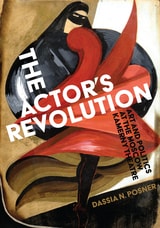
The Actor’s Revolution
Art and Politics at the Moscow Kamerny TheatreDassia N. Posner
Northwestern University Press, 2027
Reclaims the lost history of one of the twentieth century’s most innovative theaters
The Moscow Kamerny Theatre created stage worlds of movement, color, and light. Cofounded in 1914 by Alexander Tairov, a Jewish director from Ukraine, and Alisa Koonen, a Moscow-born actress from an immigrant family, the company celebrated the actor’s virtuosic inventiveness during an era when most theaters imitated daily life or prioritized the autocratic director’s vision. By the 1920s, it had become the most famous Soviet theater in the world, renowned for its actors’ acrobatic grace, its bold collaborations with avant-garde artists, and its revolutionary redefinition of what theater can be. But the accusations of Soviet disloyalty that were used to destroy the Kamerny during Stalin’s post–World War II antisemitic purge have rendered it little known outside Russia today and frequently misunderstood even there.
The Actor’s Revolution vividly reclaims this lost history by reconstructing the theater’s most illustrious premieres, analyzing them within the turbulent artistic and political context of the early Soviet era. Drawing on a decade of archival research, Dassia N. Posner restores Tairov’s legacy as one of history’s most significant directors and celebrates Koonen’s liberatory creative expressiveness as a vital alternative to Konstantin Stanislavsky’s better-known acting system. Building on rich archival sources, from unpublished memoirs to vibrant scenic and costume designs, this timely volume grapples with the entangled histories of art, politics, and erasure and celebrates the radical power of human creativity under—and in spite of—totalitarianism.
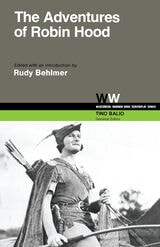
The Adventures of Robin Hood
Edited, with an introduction by Rudy Behlmer; Tino T. Balio, Series Editor
University of Wisconsin Press, 1979
For sheer screen entertainment, few motion pictures have ever matched the 1938 Warner Brothers production of The Adventures of Robin Hood. Even today, after more than four decades. Errol Flynn's dashing performance places this picture high in any list of all-time favorites.
It is one of the most studied of motion pictures, not only because of its popularity but also because of the extremely high level of talent brought to bear in its creation and the sharply honed production and editing techniques that allow an incredible amount of action and movement in the 102 minutes of the film.
Includes the complete screenplay.

The Adventures of a Cello
Revised Edition, with a New EpilogueBy Carlos Prieto
University of Texas Press, 2011
In 1720, Antonio Stradivari crafted an exquisite work of art—a cello known as the Piatti. Over the next three centuries of its life, the Piatti cello left its birthplace of Cremona, Italy, and resided in Spain, Ireland, England, Italy, Germany, and the United States. In 1978, the Piatti became the musical soul mate of world-renowned cellist Carlos Prieto, with whom it has given concerts around the world.
In this delightful book, Mr. Prieto recounts the adventurous life of his beloved "Cello Prieto," tracing its history through each of its previous owners from Stradivari in 1720 to himself. He then describes his noteworthy experiences of playing the Piatti cello, with which he has premiered some eighty compositions. In this part of their mutual story, Prieto gives a concise summary of his own remarkable career and his relationships with many illustrious personalities, including Igor Stravinsky, Dmitry Shostakovich, Pablo Casals, Mstislav Rostropovich, Yo-Yo Ma, and Gabriel García Márquez. A new epilogue, in which he describes recent concert tours in Moscow, Siberia, and China and briefer visits to South Korea, Taiwan, and Venezuela, as well as recent recitals with Yo-Yo Ma, brings the story up to 2009.
To make the story of his cello complete, Mr. Prieto also provides a brief history of violin making and a succinct review of cello music from Stradivari to the present. He highlights the work of composers from Latin America, Spain, and Portugal, for whose music he has long been an advocate and principal performer.
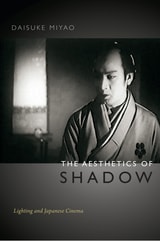
The Aesthetics of Shadow
Lighting and Japanese CinemaDaisuke Miyao
Duke University Press, 2013
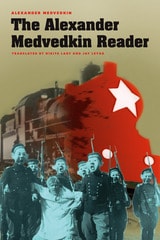
The Alexander Medvedkin Reader
Alexander Medvedkin
University of Chicago Press, 2016
Although he was a dedicated Communist, Medvedkin’s satirical approach and social critiques ultimately led to his suppression by the Soviet regime. State institutions held back or marginalized his work, and for many years, his films were assumed to have been lost or destroyed. These texts, many assembled for this volume by Medvedkin himself, document for the first time his considerable achievements, experiments in film and theater, and attempts to develop satire as a major Soviet film genre. Through scripts, letters, autobiographical writings, and more, we see a Medvedkin supported and admired by figures like Eisenstein, Dovzhenko, and Maxim Gorky.
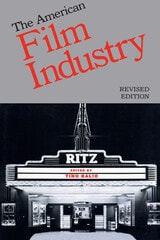
The American Film Industry
Edited by Tino T. Balio
University of Wisconsin Press, 1985
Upon its original publication in 1976, The American Film Industry was welcomed by film students, scholars, and fans as the first systematic and unified history of the American movie industry. Now this indispensible anthology has been expanded and revised to include a fresh introductory overview by editor Tino Balio and ten new chapters that explore such topics as the growth of exhibition as big business, the mode of production for feature films, the star as market strategy, and the changing economics and structure of contemporary entertainment companies. The result is a unique collection of essays, more comprehensive and current than ever, that reveals how the American movie industry really worked in a century of constant change-from kinetoscopes and the coming of sound to the star system, 1950s blacklisting, and today's corporate empires.
The American Girl Goes to War
Women and National Identity in U.S. Silent FilmLiz Clarke
Rutgers University Press, 2022
The American Historical Imaginary
Contested Narratives of the PastCaroline Guthrie
Rutgers University Press, 2023
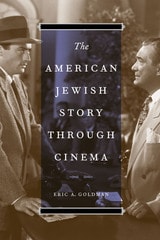
The American Jewish Story through Cinema
By Eric A. Goldman
University of Texas Press, 2013
Like the haggadah, the traditional “telling” of the story of the Israelites’ exodus from Egypt that is read at the Passover seder, cinema offers a valuable text from which to gain an understanding of the social, political, and cultural realities of Jews in America. In an industry strongly influenced by Jewish filmmakers who made and continue to make the decisions as to which films are produced, the complex and evolving nature of the American Jewish condition has had considerable impact on American cinema and, in particular, on how Jews are reflected on the screen. This groundbreaking study analyzes select mainstream films from the beginning of the sound era to today to provide an understanding of the American Jewish experience over the last century.
In the first half of the twentieth century, Hollywood’s movie moguls, most of whom were Jewish, shied away from asserting a Jewish image on the screen for fear that they might be too closely identified with that representation. Over the next two decades, Jewish moviemakers became more comfortable with the concept of a Jewish hero and with an overpowered, yet heroic, Israel. In time, the Holocaust assumed center stage as the single event with the greatest effect on American Jewish identity. Recently, as American Jewish screenwriters, directors, and producers have become increasingly comfortable with their heritage, we are seeing an unprecedented number of movies that spotlight Jewish protagonists, experiences, and challenges.