Results by title
95 books match the query 'History & Culture' and 21 start with t
Tel Dan in Its Northern Cultic Context
Andrew R. Davis
SBL Press, 2013
Texts from the Pyramid Age
Nigel C. Strudwick
SBL Press, 2005
Textual History and the Reception of Scripture in Early Christianity
Johannes de Vries
SBL Press, 2013
The Ancient Martyrdom Accounts of Peter and Paul
David L. Eastman
SBL Press, 2015
New English translations based upon the most up-to-date critical editions
This book for the first time collects the various ancient accounts of the martydoms of Peter and Paul, which number more than a dozen, along with more than forty references to the martyrdoms from early Christian literature. At last a more complete picture of the traditions about the deaths of Peter and Paul is able to emerge.
Features:
- Greek, Latin, and Syriac accounts from antiquity translated into English
- Introductions and notes for each text
- Original texts are produced on facing pages for specialists
The Archaeology of the Kingdom of Judah
Yosef Garfinkel
SBL Press, 2025
The Bible in the Sixteenth Century
David C. Steinmetz
Duke University Press, 1990
Contributors. Irena Backus, Guy Bedouelle, Kalman P. Bland, Kenneth G. Hagen, Scott H. Hagen, Scott H. Hendrix, R. Gerald Hobbs, Jean-Claude Margolin, H. C. Erik Midelfort, Richard A. Muller, John B. Payne, David C. Steinmetz
The Community Rule
A Critical Edition with TranslationSarianna Metso
SBL Press, 2019
An authoritative critical edition
The discovery and translation of the Dead Sea Scrolls transformed our understanding of the life and history of ancient Jewish communities when both rabbinic Judaism and early Christianity were emerging. As part of this rich discovery, the Community Rule serves to illuminate the religious beliefs and practices as well as the organizational rules of the group behind the Dead Sea Scrolls. However, there is no single, unified text of the Community Rule; rather, multiple manuscripts of the Community Rule show considerable variation and highlight the work of ancient Jewish scribes and their intentional literary development of the text. In this volume, Sarianna Metso brings together the surviving evidence in a new edition that presents a critically established Hebrew text with an introduction and an English translation.
Features:
- A critical apparatus and textual notes
- All the surviving evidence of the Community Rule
- A new method for presenting complex developments and transmission history of ancient texts
The Craft of History and the Study of the New Testament
Beth M. Sheppard
SBL Press, 2012

The Dead Sea Scrolls in Scholarly Perspective
A History of ResearchDevorah Dimant
SBL Press, 2016
Now in paperback!
The volume covers Qumran scholarship in separate countries: the USA, Canada, Israel, France, Germany, Spain, the Netherlands, Scandinavia, Italy, and Eastern Europe. Each essay carries a detailed bibliography for the respective country. Biographies of all the major scholars active in the field are briefly given as well. This book thereby exhaustively surveys past and present Qumran research, outlining its particular development in various circumstances and national contexts. For the first time, perspectives and information not recorded in any other publication are highlighted.
Features:
The First Urban Churches 5
Colossae, Hierapolis, and LaodiceaJames R. Harrison
SBL Press, 2019
A fresh examination of early Christianity by an international team of New Testament and classical scholars
Volume 5 of The First Urban Churches investigates the urban context of Christian churches in first-century Roman Colossae, Hierapolis, and Laodicea. Building on the methodologies introduced in the first volume and supplementing the in-depth studies of Corinth, Ephesus, and Philippi (vols. 2-4), essays in this volume challenge readers to reexamine preconceived understandings of the early church and to grapple with the meaning and context of Christianity in its first-century Roman colonial context.
Features:
- Analysis of urban evidence found in inscriptions, papyri, archaeological remains, coins, and iconography
- Proposed reconstructions of the past and its social, religious, and political significance
- A nuanced, informed portrait of ancient urban life in the cities of the Lycus Valley
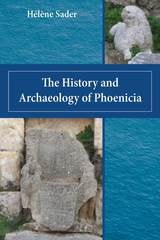
The History and Archaeology of Phoenicia
Hélène Sader
SBL Press, 2019
An insightful historical account of Phoenicia that illustrates its cities, culture, and daily life
Hélène Sader presents the history and archaeology of Phoenicia based on the available contemporary written sources and the results of archaeological excavations in Phoenicia proper. Sader explores the origin of the term Phoenicia; the political and geographical history of the city-states Arwad, Byblos, Sidon, and Tyre; and topography, climate, and natural resources of the Phoenician homeland. Her limited focus on Phoenicia proper, in contrast to previous studies that included information from Phoenician colonies, presents the bare realities of the opportunities and difficulties shaping Phoenician life. Sader’s evaluation and synthesis of the evidence offers a corrective to the common assumption of a unified Phoenician kingdom.
Features
- Historical as well as modern maps with the locations of all relevant archaeological sites
- Faunal and floral analyses that shed light on the Phoenician diet
- Petrographic analysis of pottery that sheds light on trading patterns and developments
The Inspiration and Truth of Scripture
Testing the Ratzinger ParadigmAaron Pidel, SJ
Catholic University of America Press, 2023
The Kingdoms of Israel and Judah in the Eighth and Seventh Centuries B.C.E.
Antoon Schoors
SBL Press, 2013
The Last Century in the History of Judah
The Seventh Century BCE in Archaeological, Historical, and Biblical PerspectivesFilip Čapek
SBL Press, 2019
An incomparable interdisciplinary study of the history of Judah
Experts from a variety of disciplines examine the history of Judah during the seventh century BCE, the last century of the kingdom’s existence. This important era is well defined historically and archaeologically beginning with the destruction layers left behind by Sennacherib’s Assyrian campaign (701 BCE) and ending with levels of destruction resulting from Nebuchadnezzar’s Babylonian campaign (588-586 BCE). Eleven essays develop the current ongoing discussion about Judah during this period and extend the debate to include further important insights in the fields of archaeology, history, cult, and the interpretation of Old Testament texts.
Features
- A new chronological frame for the Iron Age IIB-IIC
- Close examinations of archaeology, texts, and traditions related to the reigns of Hezekiah, Manasseh, and Josiah
- An evaluation of the religious, cultic, and political landscape < /UL>
The Middle Maccabees
Archaeology, History, and the Rise of the Hasmonean KingdomAndrea M. Berlin
SBL Press, 2021
A focused, interdisciplinary examination of a tumultuous, history-making era
The Middle Maccabees lays out the charged, complicated beginnings of the independent Jewish state founded in the second century BCE. Contributors offer focused analyses of the archaeological, epigraphic, numismatic, and textual evidence, framed within a wider world of conflicts between the Ptolemies of Egypt, the Seleucids of Syria, and the Romans. The result is a holistic view of the Hasmonean rise to power that acknowledges broader political developments, evolving social responses, and the particularities of local history. Contributors include Uzi ‘Ad, Donald T. Ariel, Andrea M. Berlin, Efrat Bocher, Altay Coşkun, Benedikt Eckhardt, Gerald Finkielsztejn, Christelle Fischer-Bovet, Yuval Gadot, Erich Gruen, Sylvie Honigman, Jutta Jokiranta, Paul J. Kosmin, Uzi Leibner, Catharine Lorber, Duncan E. MacRae, Dvir Raviv, Helena Roth, Débora Sandhaus, Yiftah Shalev, Nitsan Shalom, Danny Syon, Yehiel Zelinger, and Ayala Zilberstein.
Features
- Up-to-date, generously illustrated essays analyzing the relevant archaeological remains
- A revised understanding of how local and imperial histories overlapped and intersected
- New analysis of the book of 1 Maccabees as a tool of Hasmonean strategic interest
The Philistines and Other Sea Peoples in Text and Archaeology
Ann E. Killebrew
SBL Press, 2013
The Qumran Paradigm
Critical Evaluation of Some Foundational Hypotheses in the Construction of the QGwynned de Looijer
SBL Press, 2015
A fundamentally revisionist approach that leaves behind the constructed social reality of a “sectarian” paradigm
Gwynned de Looijer reexamines the key hypotheses that have driven scholars’ understandings of the Dead Sea Scrolls, the archaeological site of Khirbet Qumran, and the textual descriptions of the Essenes. She demonstrates that foundational hypotheses regarding a sect at Qumran have heavily influenced the way the texts found in the surrounding caves are interpreted. De Looijer’s approach abandon’s those assumptions to illustrate that the Dead Sea Scrolls reflect a wider range of backgrounds reflecting the many diverse forms of Judaism that existed in the Second Temple period.
Features:
- In depth analysis of 4QMMT
- Reevaluation of the concept of dualism as it has been applied to Qumran texts
- Charts and tables illustrate complex theories, concepts, and connections
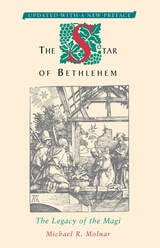
The Star of Bethlehem
The Legacy of the MagiMolnar, Michael R.
Rutgers University Press, 2013
Could the $50 purchase of an ancient coin by a Rutgers astronomer have unlocked the mystery of the Christmas Star? For years, scientists have looked, with little success, to astronomical records for an explanation of the magical star that guided the Magi to Christ’s manger. Intrigued by the image he found on the latest addition to his coin collection, Michael Molnar thought there might be more to learn by looking, instead, at the teachings of ancient astrologers.
Molnar argues in his book that the Star of Bethlehem was not a star at all, but rather a regal portent centering around the planet Jupiter that was eclipsed by the moon. He bases this theory on the actual beliefs of astrologers, such as the Magi, who lived around the time of Christ. Molnar found some intriguing clues to the mystery while researching the meaning of astrological symbols he found an ancient coin, which bore the image of Aries looking back at a star. He found that Aries was a symbol of Judea at the time, and that ancient astrologers believed that a new king would be born when the moon passed in front of Jupiter. Molnar wondered, could the coin have been issued as a response to the Great Messianic Portent, the Star of Bethlehem?
To match the story of the appearance of the Christmas star, Molnar also knew the event had to happen when Jupiter was “in the east.” Using these criteria and a computer program, he was able to chart an eclipse of Jupiter in Aries on April 17, 6 B.C., a day when Jupiter was precisely “in the east,” which confirmed his theory. Moreover, he found that a Roman astrologer described the conditions of that day as fitting the birth of a “divine and immortal” person.
According to Harvard University Professor Owen Gingerich, “this is the most original and important contribution of the entire 20th century” about the Magi’s star. Using clues from astronomy, astrology, and history, Molnar has created a provocative, fascinating theory on the Christmas Star. He weaves together an intriguing scientific detective story which resolves one of the world’s greatest mysteries: The Star of Bethlehem at the birth of Christ.
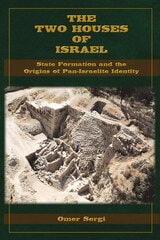
The Two Houses of Israel
State Formation and the Origins of Pan-Israelite IdentityOmer Sergi
SBL Press, 2023
The Two Houses of Israel: State Formation and the Origins of Pan-Israelite Identity bridges the gap between the biblical narrative of the great united monarchy ruled by David and Solomon and archaeological and historical reconstructions of a gradual, independent formation of Israel and Judah. Based on a thorough examination of the material remains and settlement patterns in the southern Levant during the Late Bronze Age and the Iron Age and on a review of the relevant historical sources, this book provides a detailed reconstruction of the ways in which Israel and Judah were formed as territorial polities and specifically how the house of David rose to power in Jerusalem and Judah. Omer Sergi further situates the stories of Saul and David in their accurate social and historical context in order to illuminate the historical conception of the united monarchy and the pan-Israelite ideology out of which it grew. Sergi provides a new history of the early Israelite monarchies, their formation, and the ways in which these social and political developments were commemorated in the cultural memory of generations to come.
The Ways That Often Parted
Essays in Honor of Joel MarcusLori Baron
SBL Press, 2018
Focused studies on the historical interactions and formations of Judaism and Christianity
This volume of essays, from an internationally renowned group of scholars, challenges popular ways of understanding how Judaism and Christianity came to be separate religions in antiquity. Essays in the volume reject the belief that there was one parting at an early point in time and contest the argument that there was no parting until a very late date. The resulting volume presents a complex account of the numerous ways partings occurred across the ancient Mediterranean spanning the first four centuries CE.
Features:
- Case studies that explore how Jews and Christians engaged in interaction, conflict, and collaboration
- Examinations of the gospels, Paul’s letters, the book of James, as well as rabbinic and noncanonical Christian texts
- New evidence for historical reconstructions of how Christianity came on the world scene
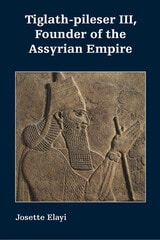
Tiglath-pileser III, Founder of the Assyrian Empire
Josette Elayi
SBL Press, 2022